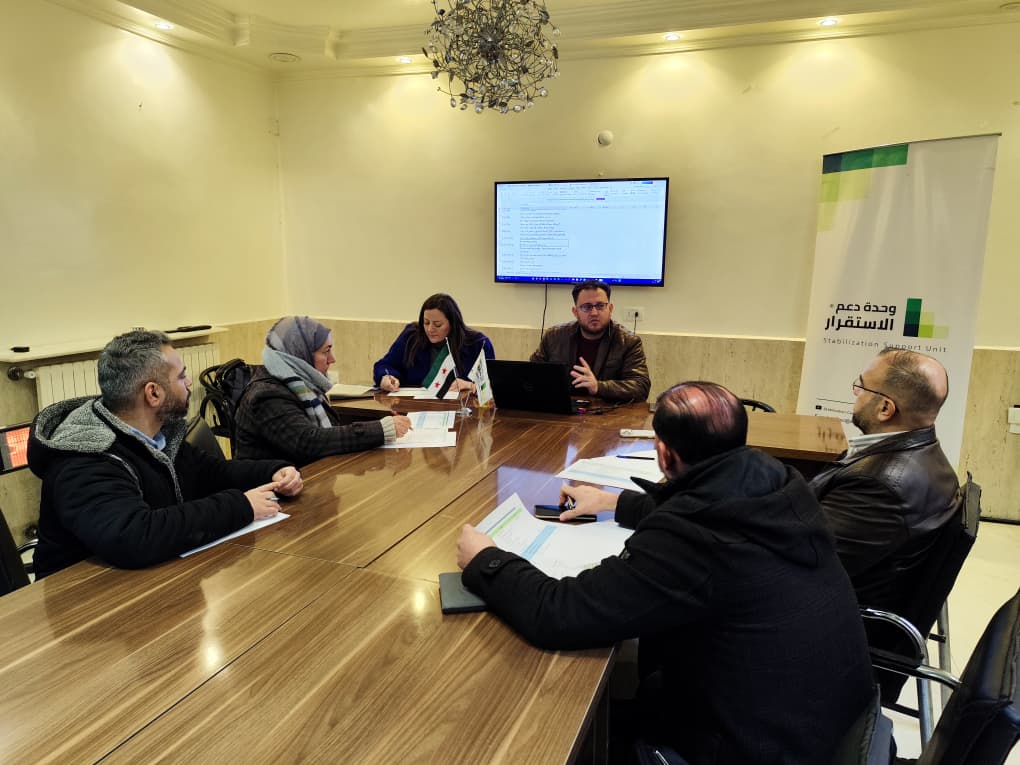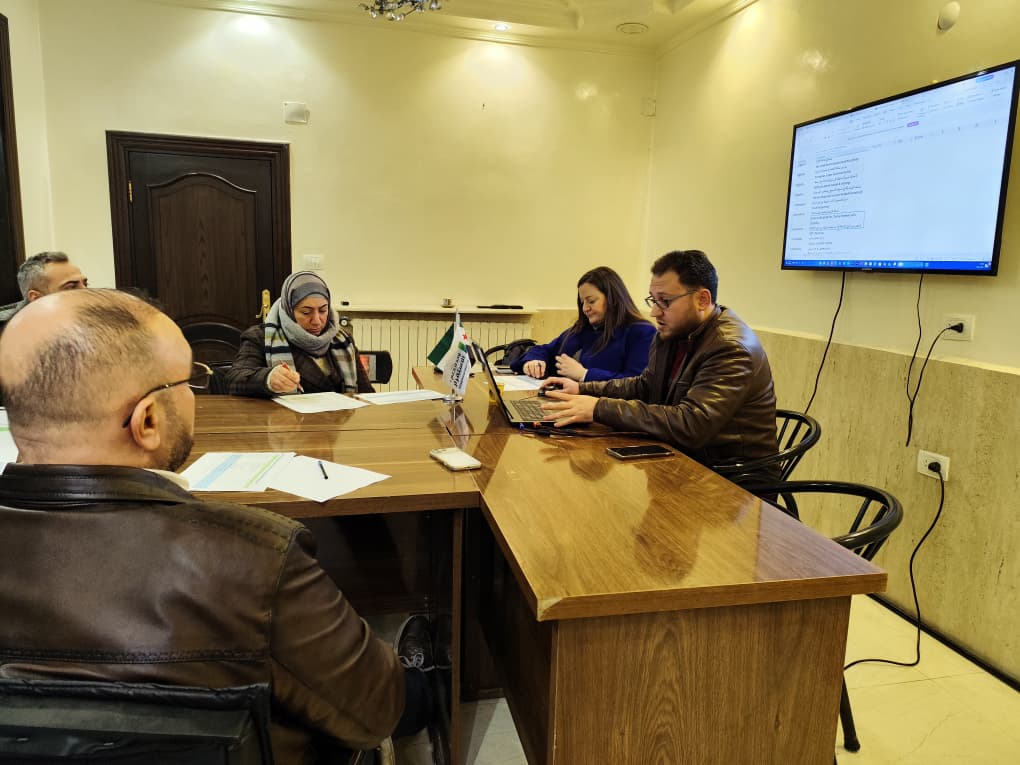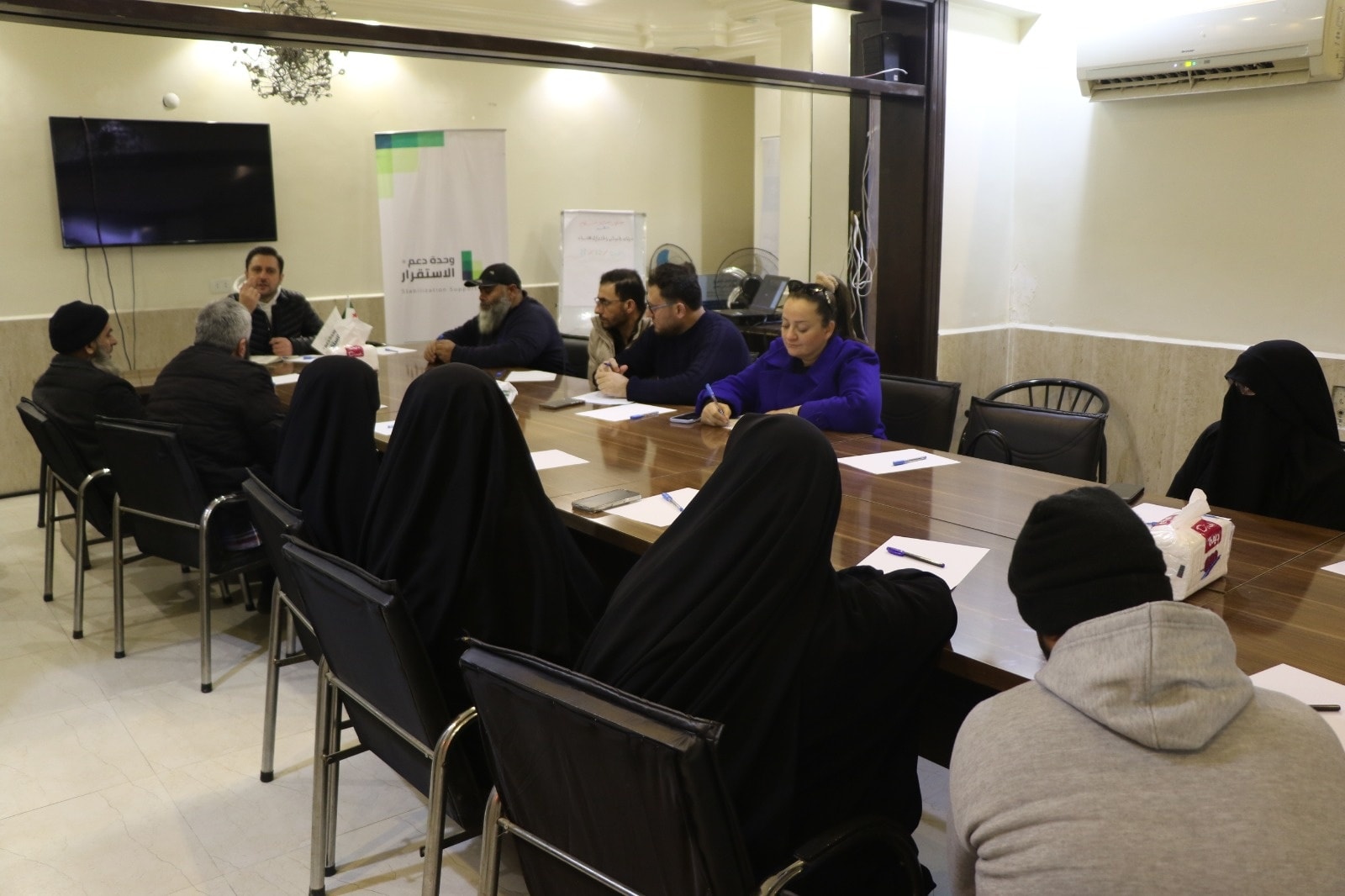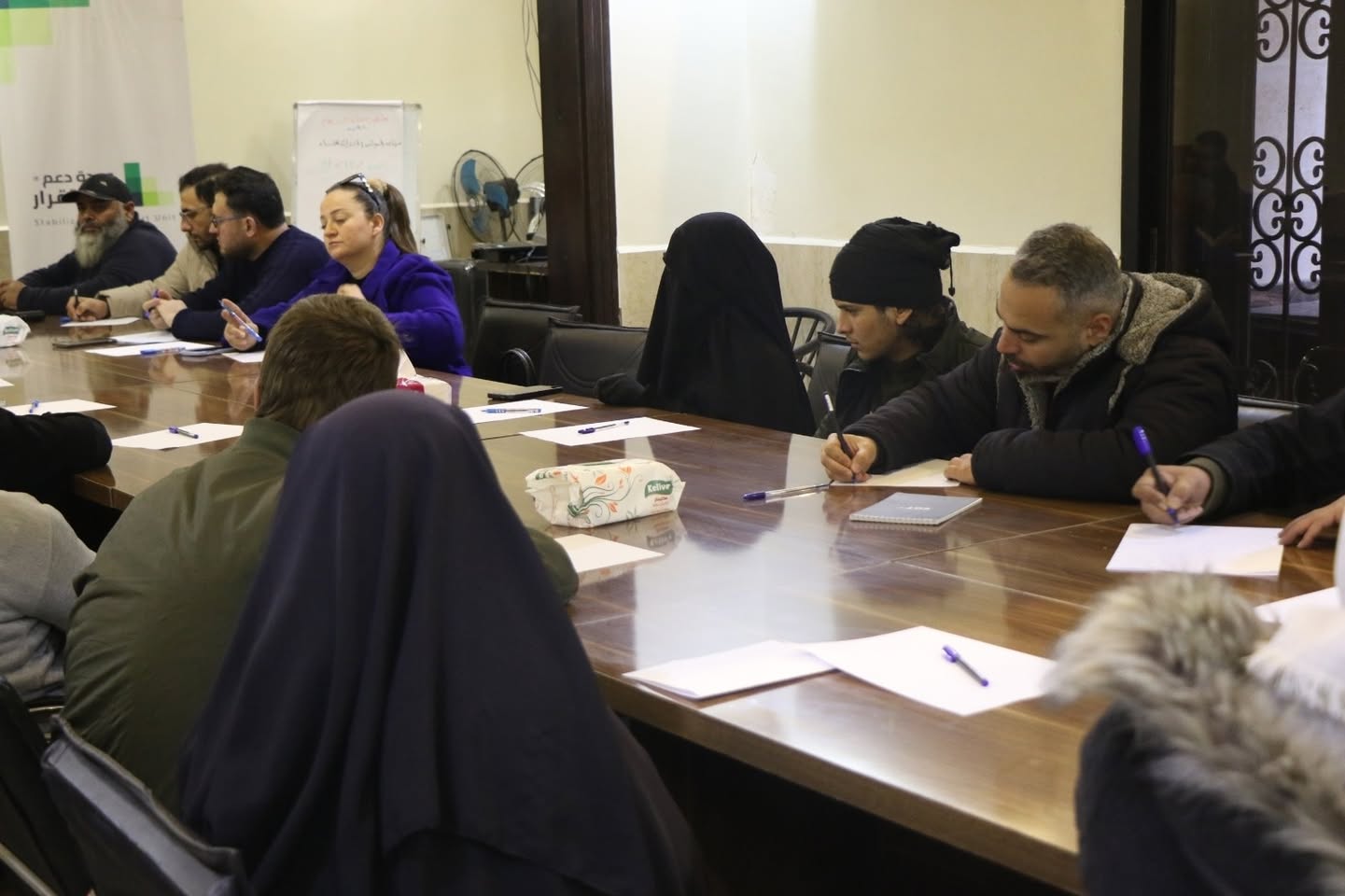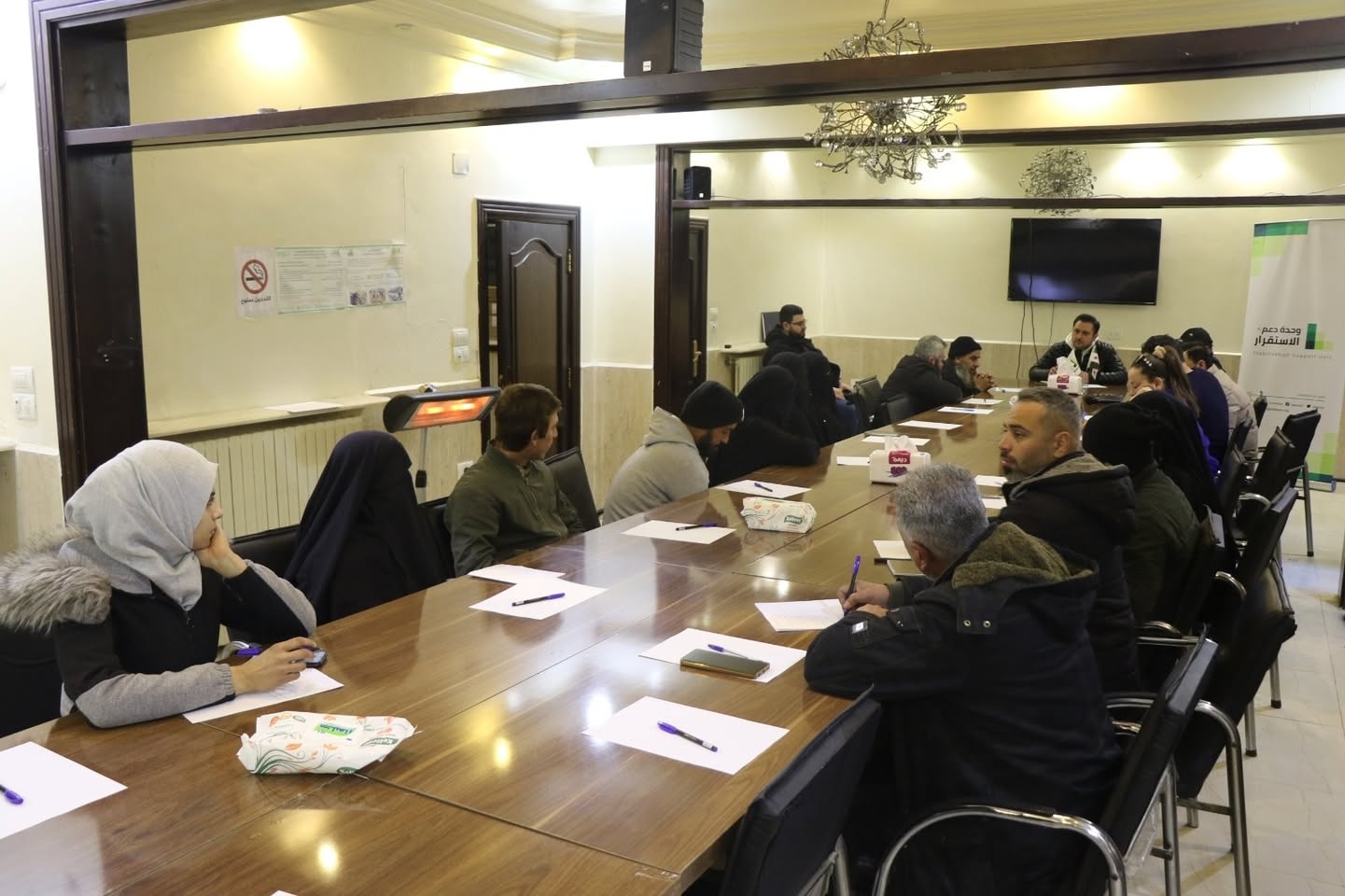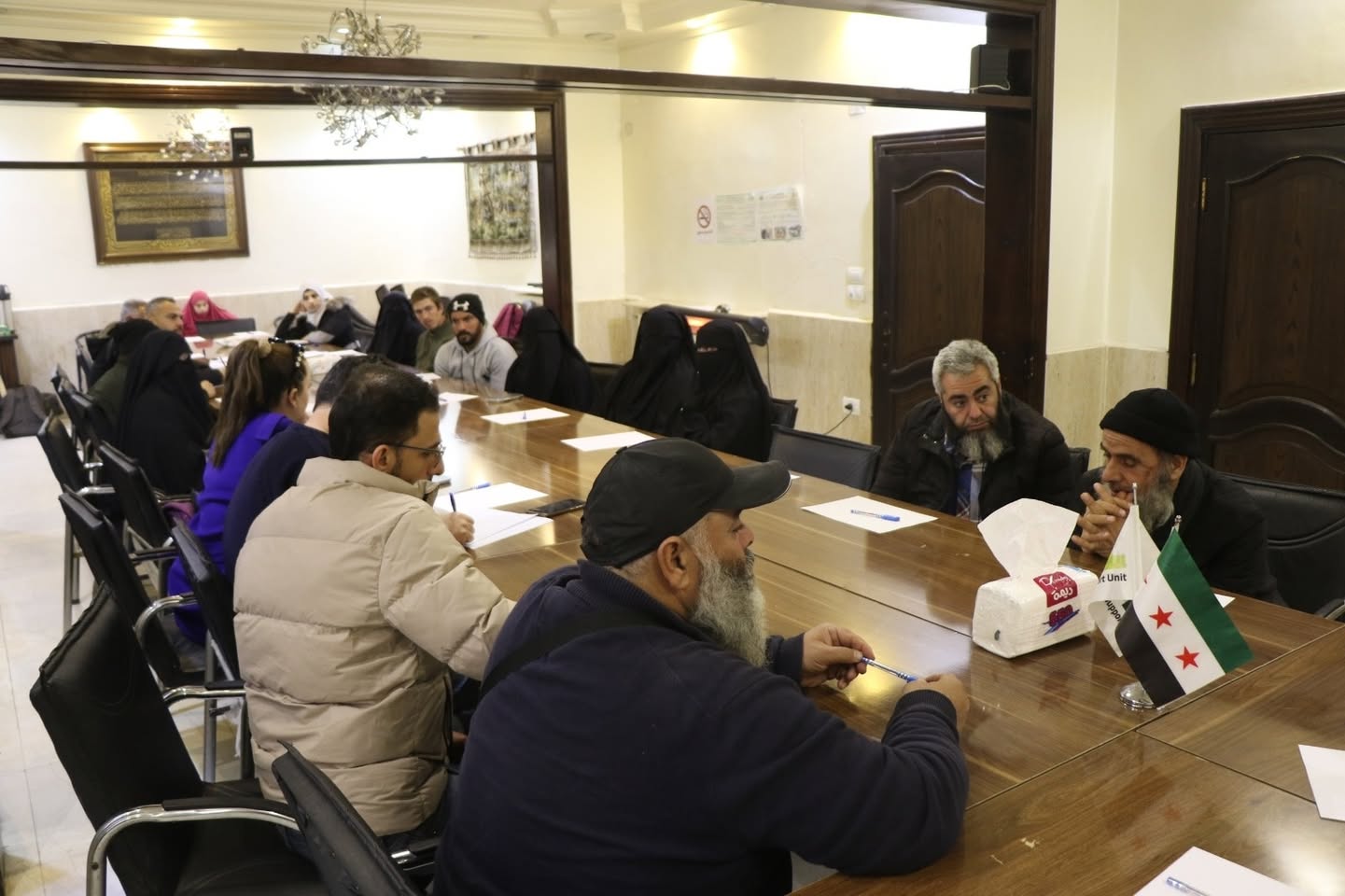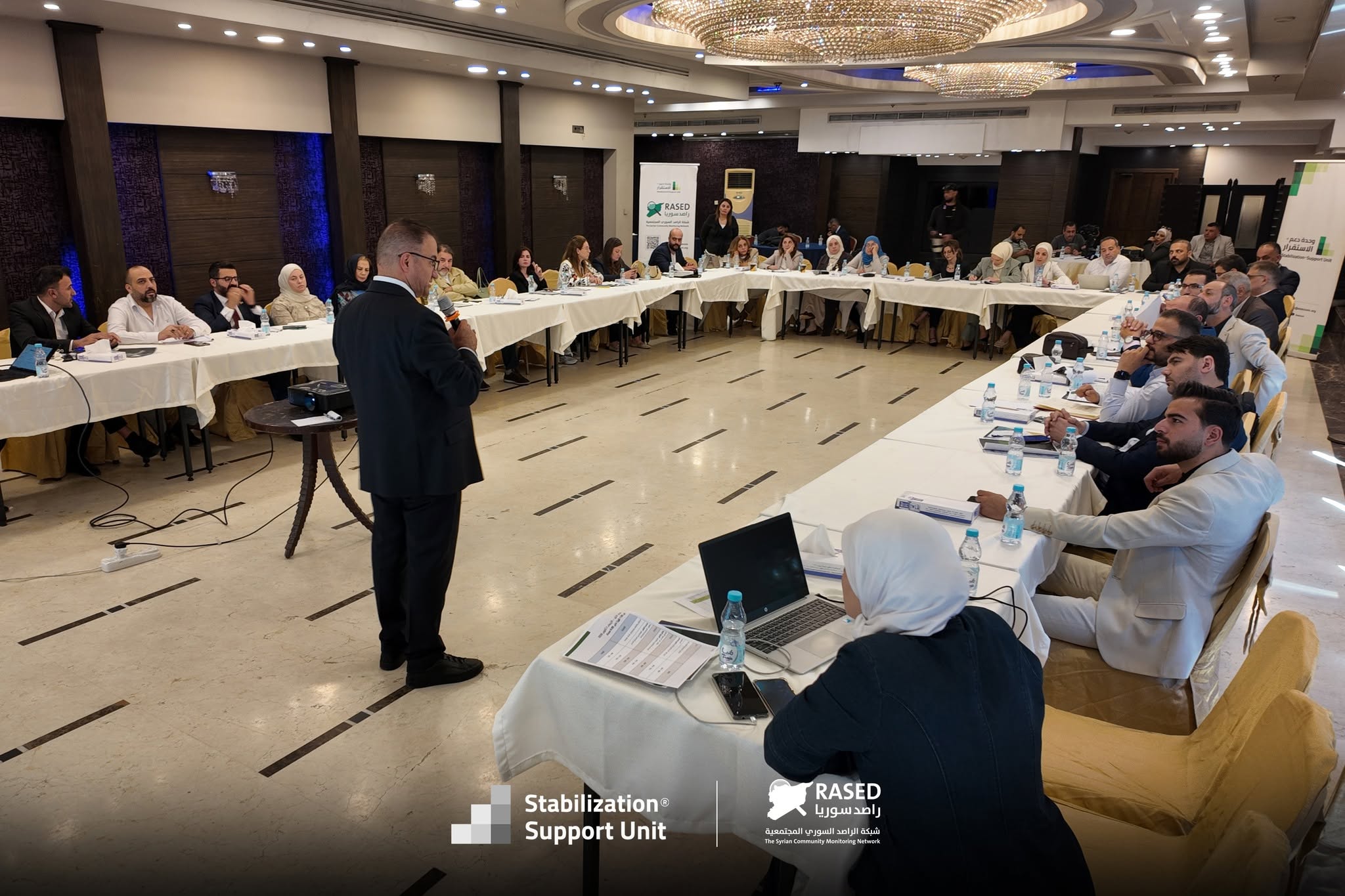
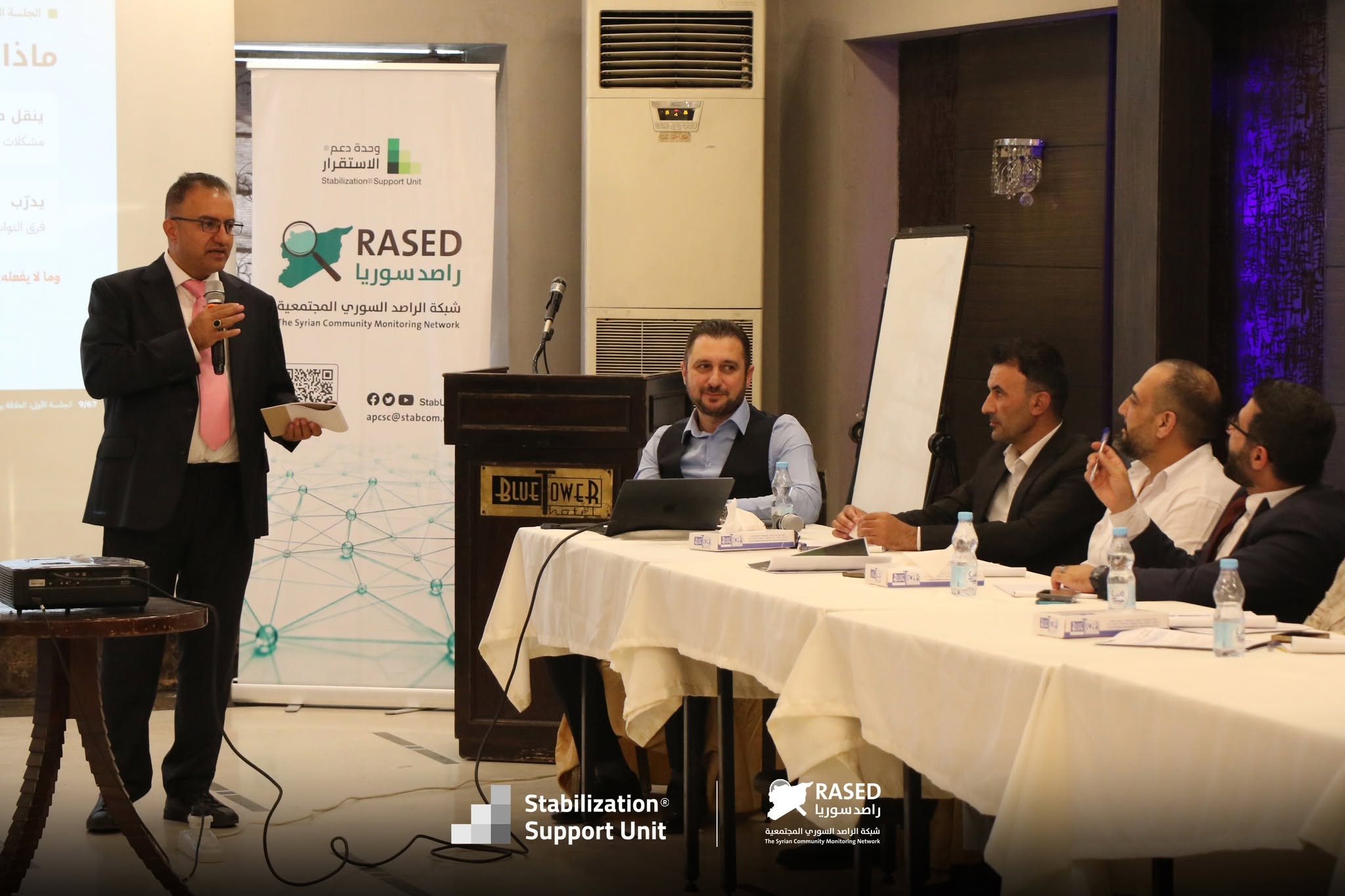
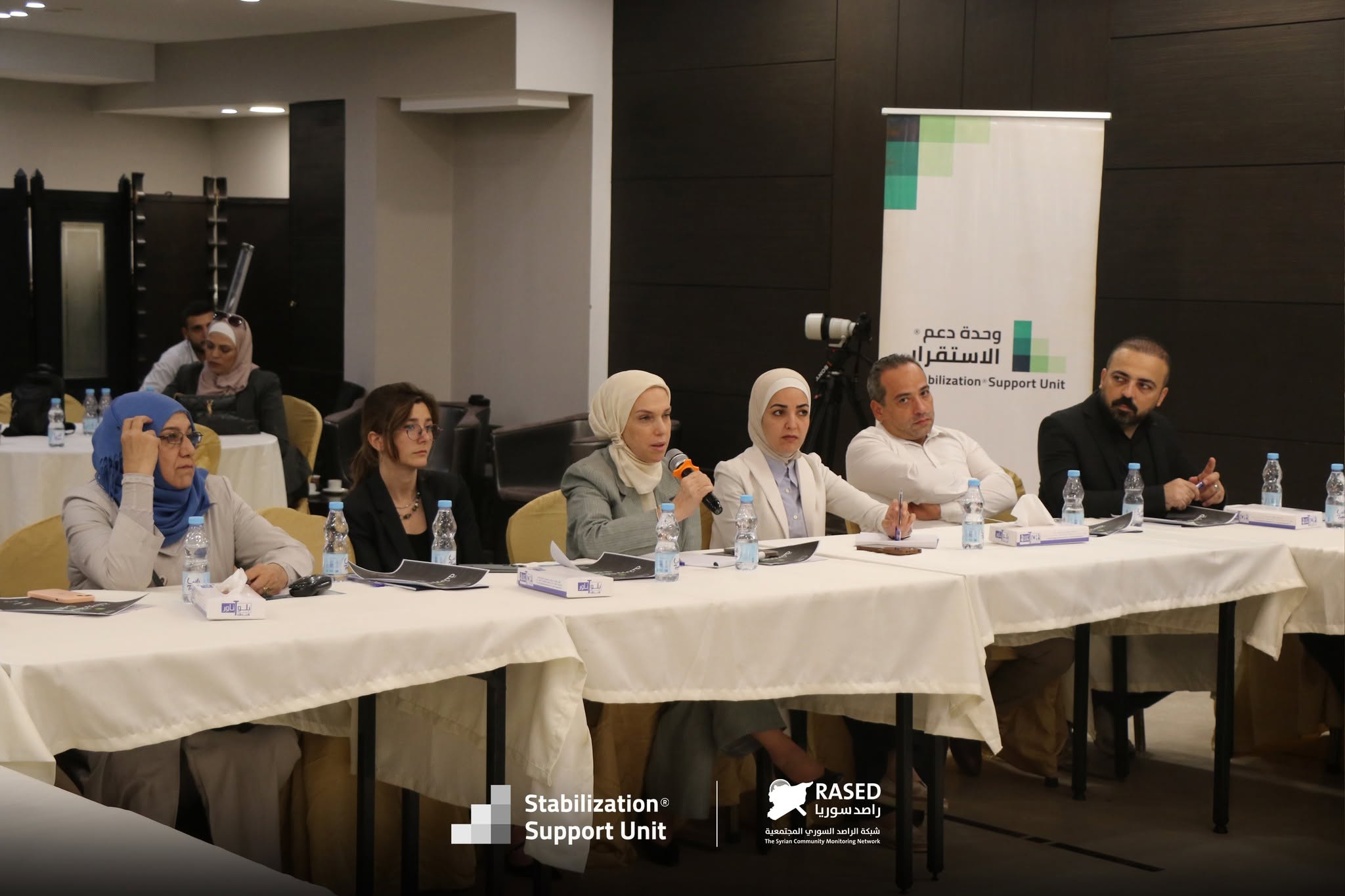
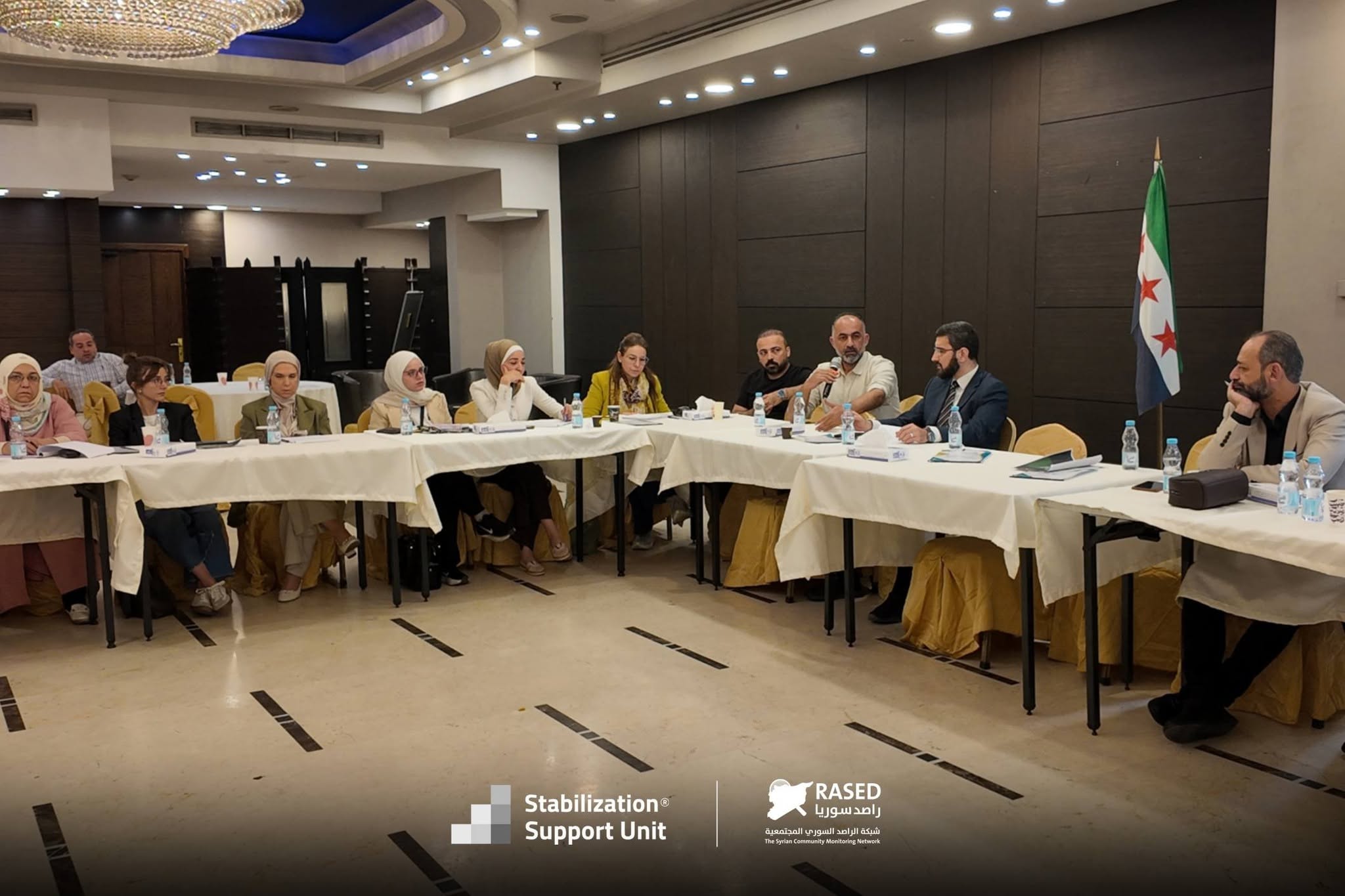
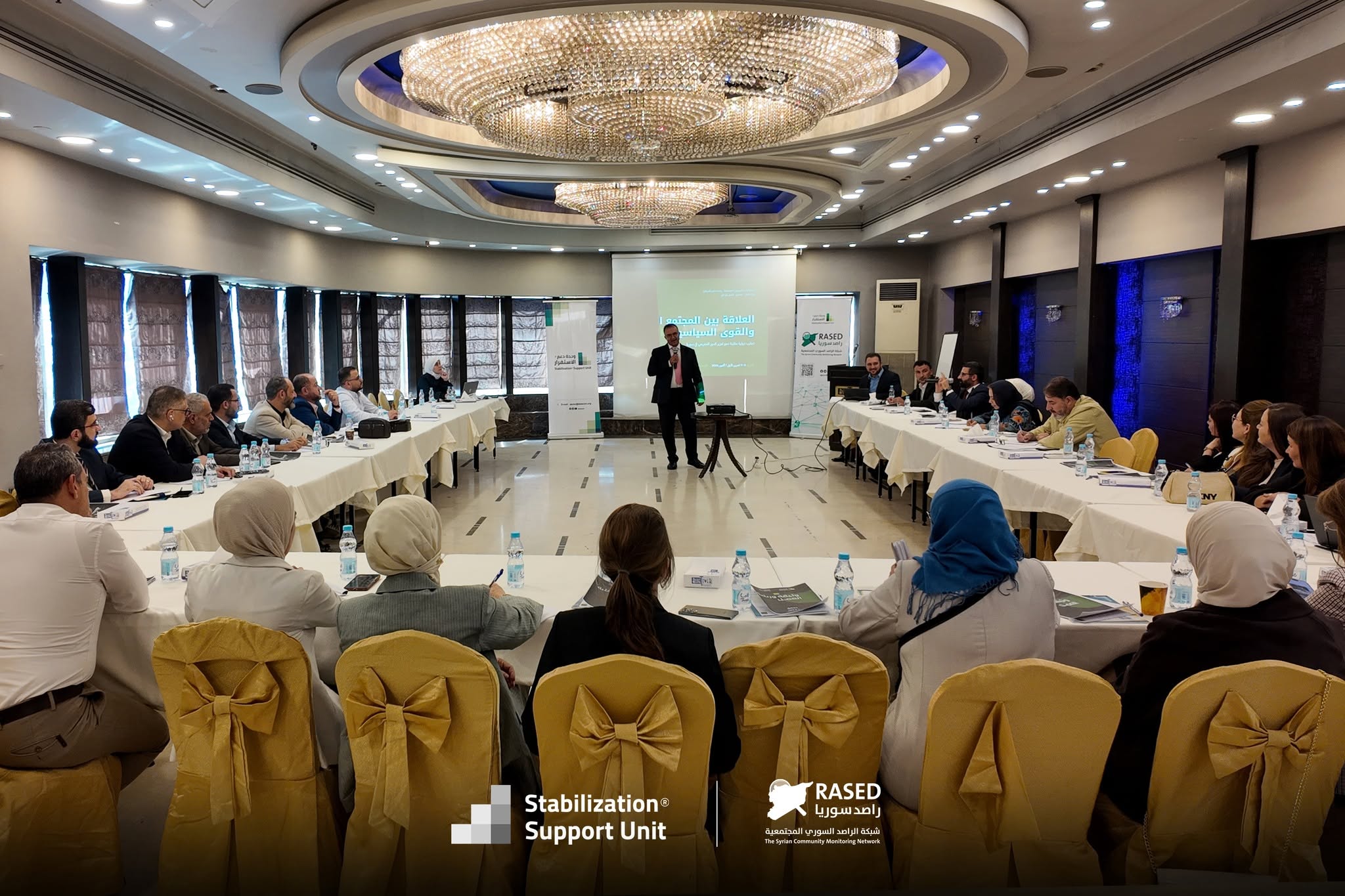
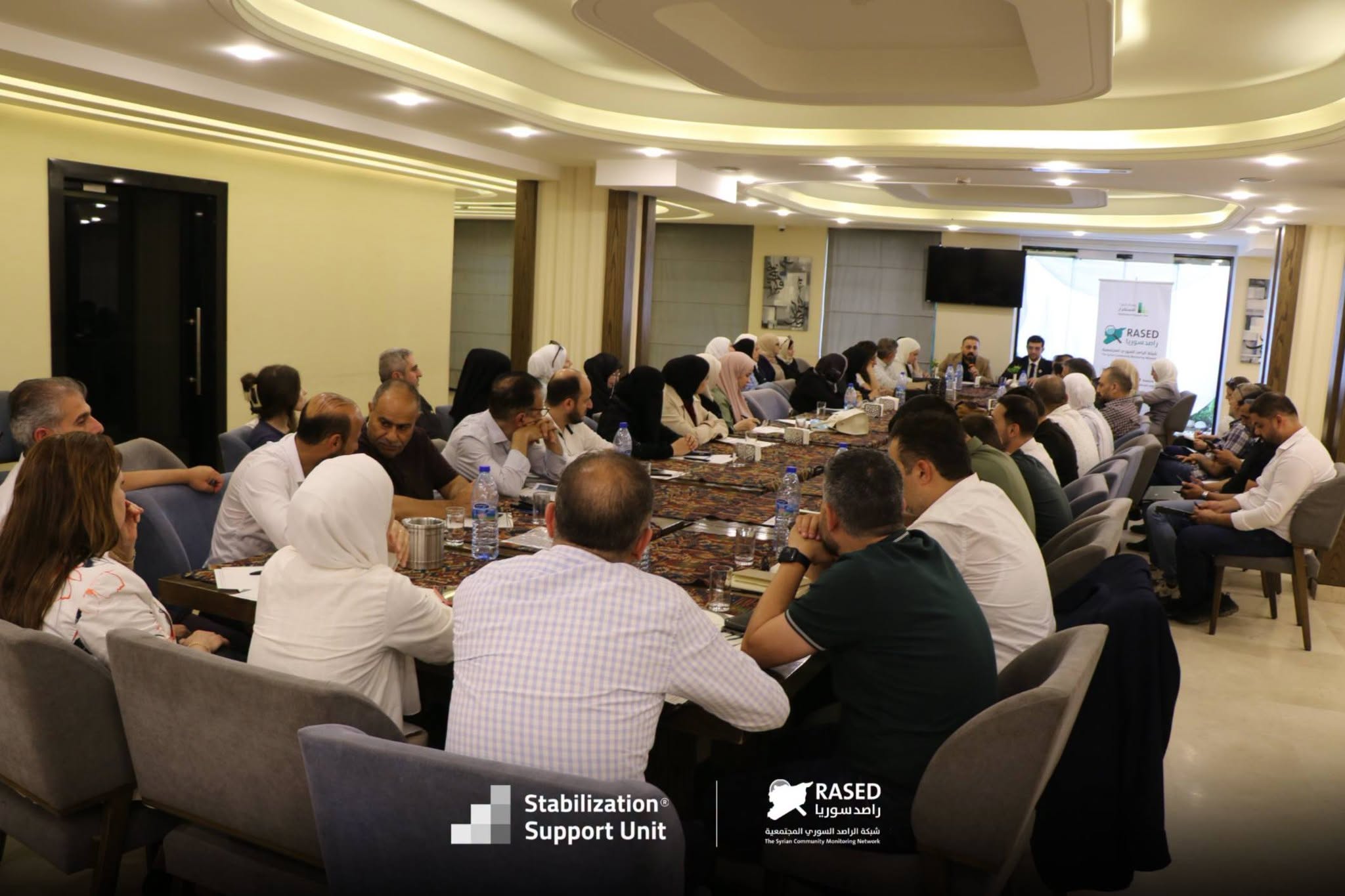
Damascus, 8 October 2026 — The workshop titled “The Relationship Between Civil Society, Political Forces, and Parliament: Comparative International Experiences to Strengthen the Legislative Role in Syria” concluded in Damascus. The two-day event, held on 7–8 October at the Blue Tower Hotel, was organized by the Syrian Community Monitoring Network (Raased Syria) within the Stabilization Support Unit (SSU), in partnership with Al-Hayat Center – RASED Jordan and the National Democratic Institute (NDI).
The workshop brought together members of the Syrian People’s Assembly, representatives of civil society organizations, activists from various Syrian regions, and experts. Its objective was to strengthen understanding of the mechanisms through which civil society, parliament, and political forces interact, while drawing on international experiences to develop legislative work and improve the quality of legislation.
The programme combined knowledge-sharing sessions, interactive discussions, and practical workshops, linking comparative experiences with local priorities and creating space for exchanging perspectives on how to build a more effective relationship between civil society and legislative institutions.
The first day addressed the nature of the relationship between civil society, political forces, and parliament, examining their respective roles in discussing public issues and developing legislation. An interactive discussion was also dedicated to identifying the legislative priorities of local communities and civil society in Syria, connecting the dialogue to citizens’ needs and the issues affecting their communities.
The programme also featured a presentation on Jordan’s experience in strengthening the legislative role, followed by an open discussion to draw lessons and explore how these experiences could be applied within the Syrian context.
The second day focused on comparative international experiences from Tunisia, Morocco, Eastern Europe, the Balkans, Latin America, and Asia. These presentations were followed by discussions comparing the different experiences and identifying lessons that could be relevant to Syria, while taking into account differences in political, institutional, and social contexts.
This session facilitated knowledge exchange on mechanisms for engagement between civil society and legislative institutions, while exploring options for expanding public participation and improving the quality of legislative work.
The workshop’s concluding sessions shifted towards practical application, with working groups developing proposals to strengthen the legislative role. The groups then presented their findings for discussion. This component connected locally identified priorities with insights drawn from international experiences, aiming to translate shared knowledge into proposals that could be further developed.
The programme also concluded with an agreement on a follow-up mechanism to sustain communication and support continued work on the proposals beyond the workshop.
The workshop provided an opportunity for direct engagement among parliamentarians, civil society representatives, activists, and experts, enabling them to exchange perspectives on legislative priorities and potential avenues for cooperation. The diversity of participants helped strengthen connections among the organizations and stakeholders involved, while allowing voices from different Syrian regions to bring their concerns into a shared discussion.
Overall, the workshop centred on three interconnected areas: transferring knowledge from comparative international experiences, discussing local legislative priorities, and developing proposals alongside a follow-up mechanism. Together, these areas lay the groundwork for stronger cooperation between civil society and legislative institutions and for ensuring that citizens’ needs are better reflected in discussions on legislation and public policy.
.jpg)
In the city of Aleppo, Riyada Center continues its activities as one of the initiatives overseen by Space of Hope Association, in partnership with the Stabilization Support Unit (SSU), with the aim of providing a supportive educational and community environment for adolescent boys and girls returning from within Syria and abroad, as well as those returning from camps. The center supports them in continuing their education, developing their skills, and reintegrating into society.
Halem Qawwas, Project Manager at Space of Hope Association, told Syria Plus that the center provides remedial education programs to help adolescents catch up on education they missed during the years of conflict. The center also offers interactive educational activities and drawing workshops that promote learning through play, encourage creativity and self-expression, and provide a safe space for adolescents.
Targeting the Age Group Most in Need
The center targets adolescent boys and girls between the ages of 11 and 18, a group that faces particular challenges in returning to education and reintegrating socially. The center aims to provide psychosocial support and promote social cohesion among both the host community in Aleppo and those returning from neighboring countries and camps.
Life Skills and Non-Formal Education
The center offers life-skills courses covering effective communication, emotional and time management, decision-making, and problem-solving. It also provides non-formal and remedial education programs for children who have dropped out of school, as well as returnees from abroad who face difficulties with Arabic that affect their ability to reintegrate into schools.
Psychosocial Support and a Safe Space
The center also provides awareness sessions, as well as group and individual psychosocial support based on the needs of each case. In addition, it offers a safe space for adolescent boys and girls equipped with materials for activities and games, along with a library containing a collection of books and stories. Adolescents can also borrow books to read outside the center, helping promote a culture of reading and giving them an opportunity to express themselves.
Management and Implementation
The project is directly managed and implemented by Space of Hope Association for Development, in partnership with the Stabilization Support Unit, as part of efforts to support adolescents’ reintegration and rebuild community ties. These efforts contribute to local recovery and help open new doors of hope for a new generation.
.jpg)
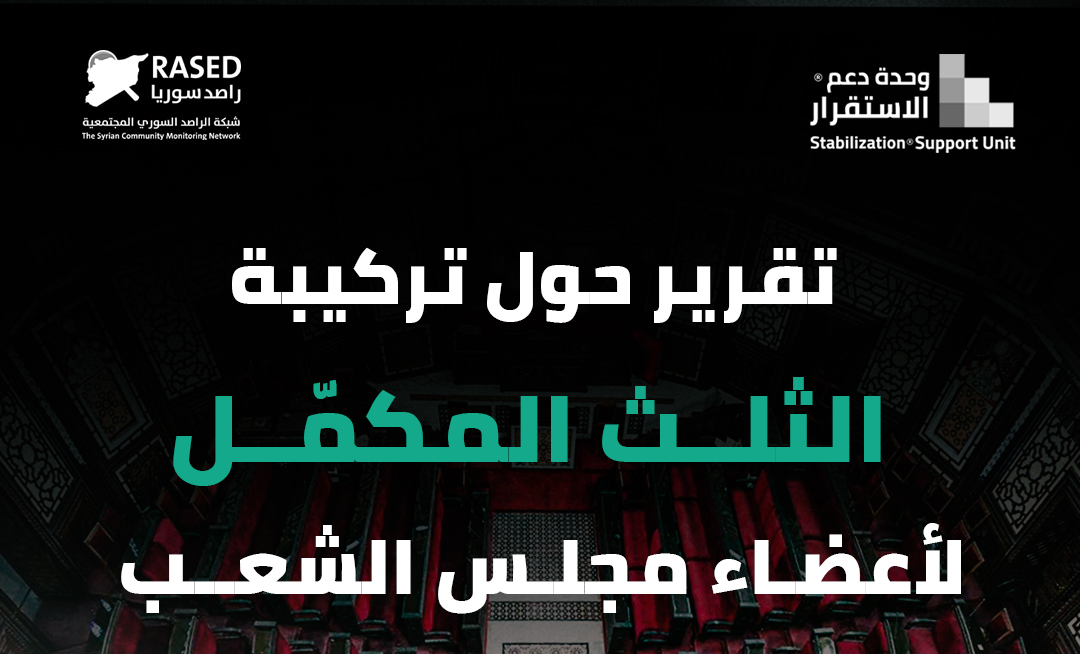
Report on Parliamentary and Oversight Performance and the Representation of Provincial Issues during the Third Session of the Syrian People’s Assembly on the State of the Education Sector
This report is part of Raased Syria’s work to monitor parliamentary and oversight performance and the representation of provincial issues within the Syrian People’s Assembly. Its purpose is not limited to documenting what was said during the session; rather, it seeks to analyze how the Assembly exercises its oversight function: What issues did MPs raise? To what extent were these issues linked to the needs of citizens and provinces? How did the government respond? What commitments did it announce? And what can be followed up and measured after the session?
The report adopts an oversight-based approach that moves from question to answer, from answer to commitment, and from commitment to follow-up and outcome. The effectiveness of parliamentary oversight is not measured solely by the number of interventions, but by its ability to identify problems, obtain information, and encourage the executive authority to announce policies, measures, and commitments that can be revisited and assessed at a later stage. Accordingly, the report monitors four interconnected dimensions: the regularity and management of the session, the quality of MPs’ oversight performance, the representation of provincial issues and affected groups, and the nature of the government’s response and the extent to which its commitments can be followed up.
To read the full report, please visit the following link:
https://drive.google.com/file/d/1UQL_v85G8wiibfj5omwKmxxL2eygxvDa/view?usp=drive_link
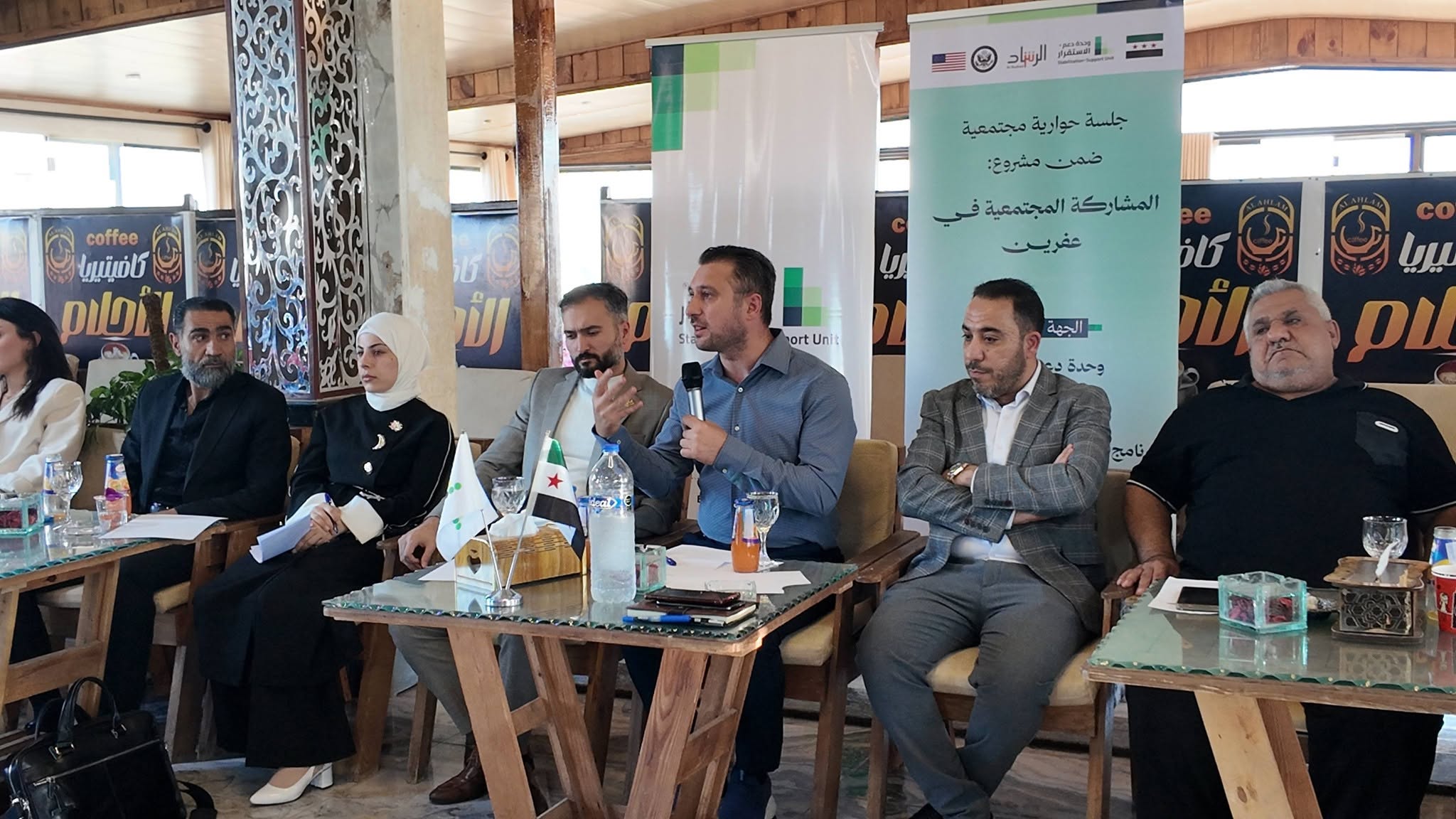
The Stabilization Support Unit (SSU), in coordination with the Administration of the Afrin Region, organized a community dialogue session in the city of Jindires as part of the Community Participation Project, supported by the Rishad Program and funded by the U.S. Department of State.
The session was attended by Mr. Hadi Hassano, Director of the Jindires Subdistrict, the Head of the Relations Office of the Internal Security Forces Command in Aleppo, as well as community leaders, local representatives, and civil society actors from Jindires Subdistrict.
Participants discussed key local issues and needs, particularly strengthening security and social peace, improving service provision, addressing challenges facing residents, and listening to their demands and proposals. The dialogue aimed to strengthen community participation and foster trust and cooperation between residents and institutions.
The session is part of a series of community dialogue workshops implemented by the Stabilization Support Unit across the Afrin, Sheikh Maqsoud, Ashrafieh, and Shuyukh areas, with the aim of involving local communities in identifying their priorities and strengthening community partnerships.
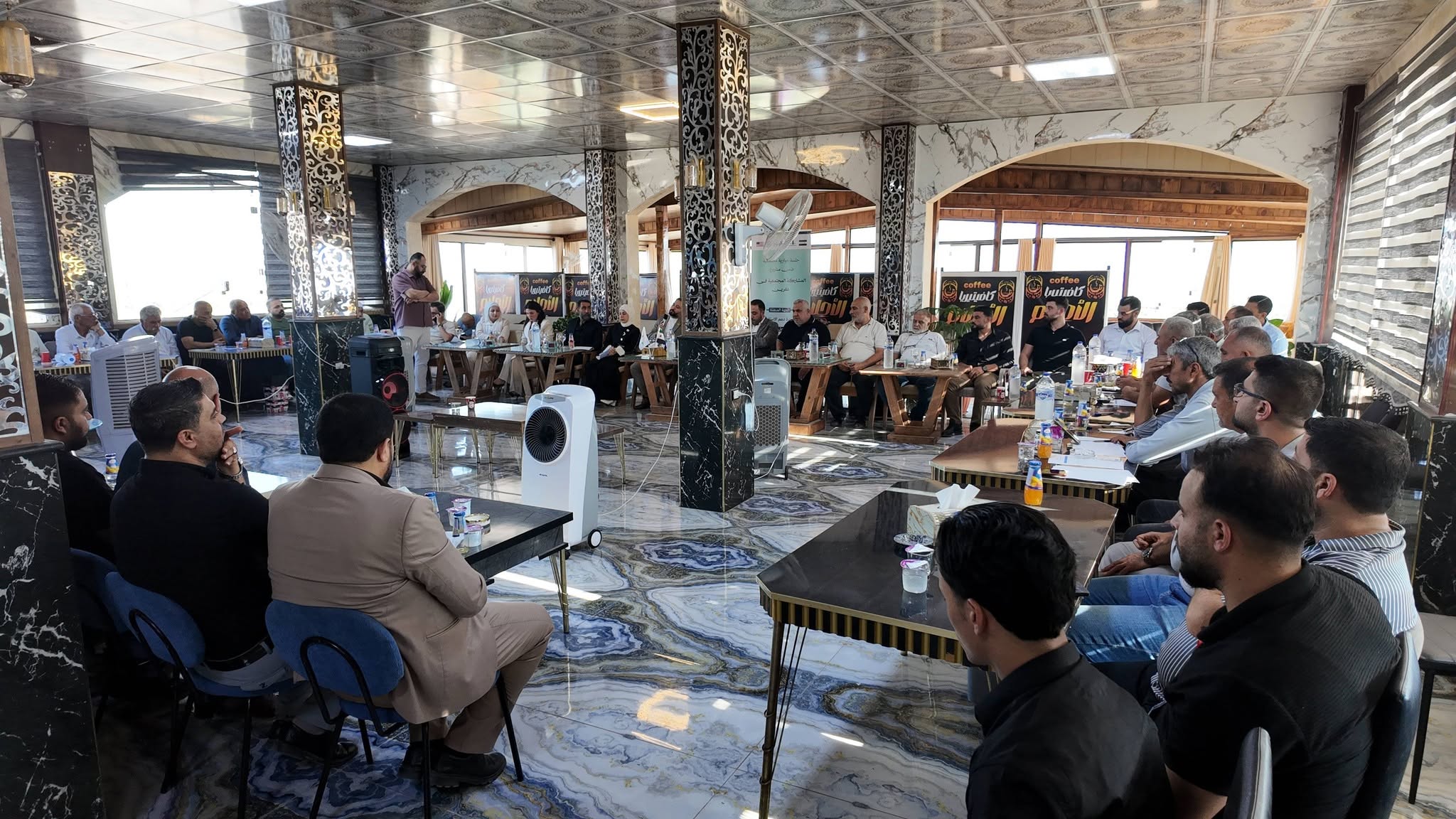
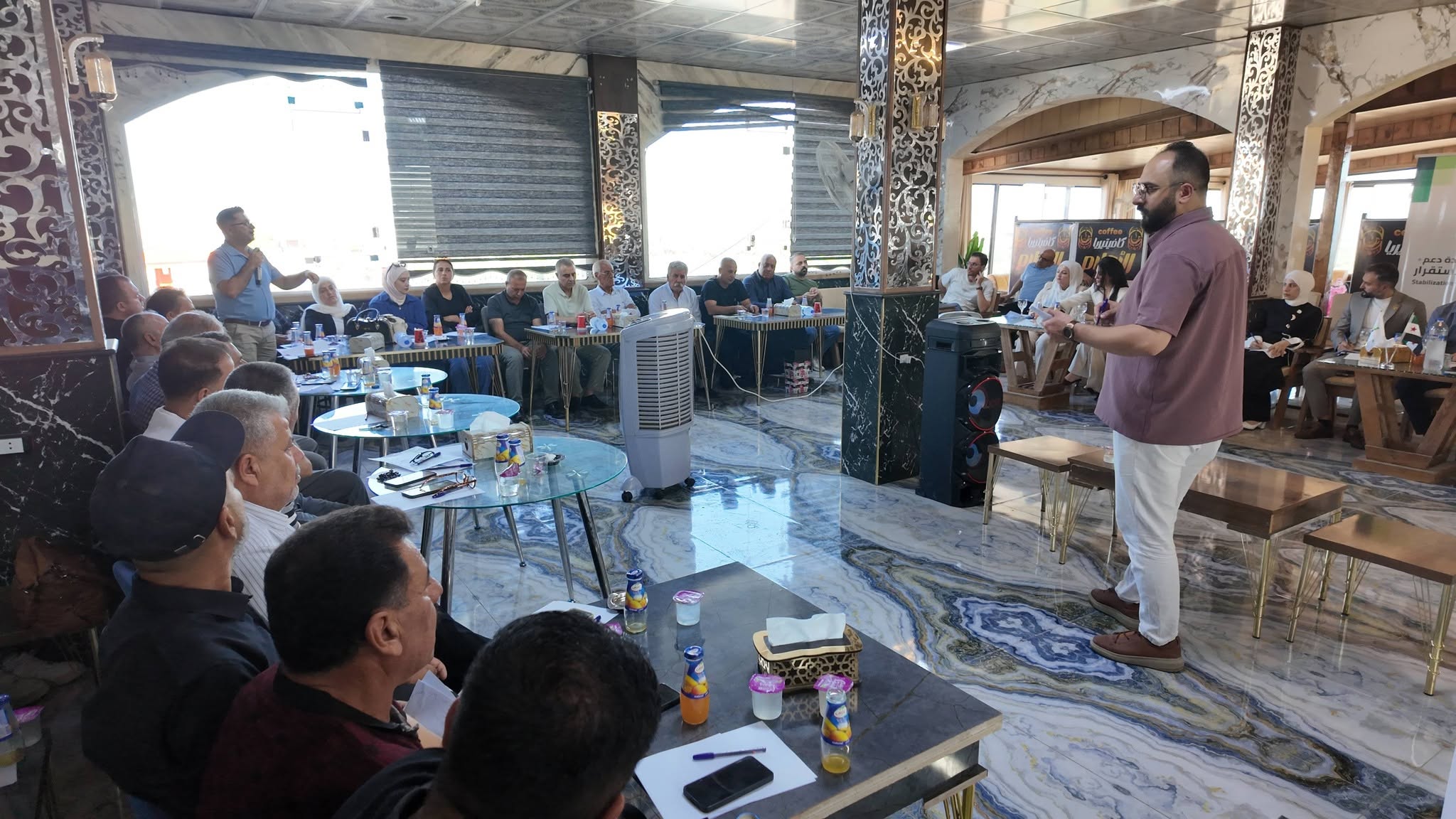
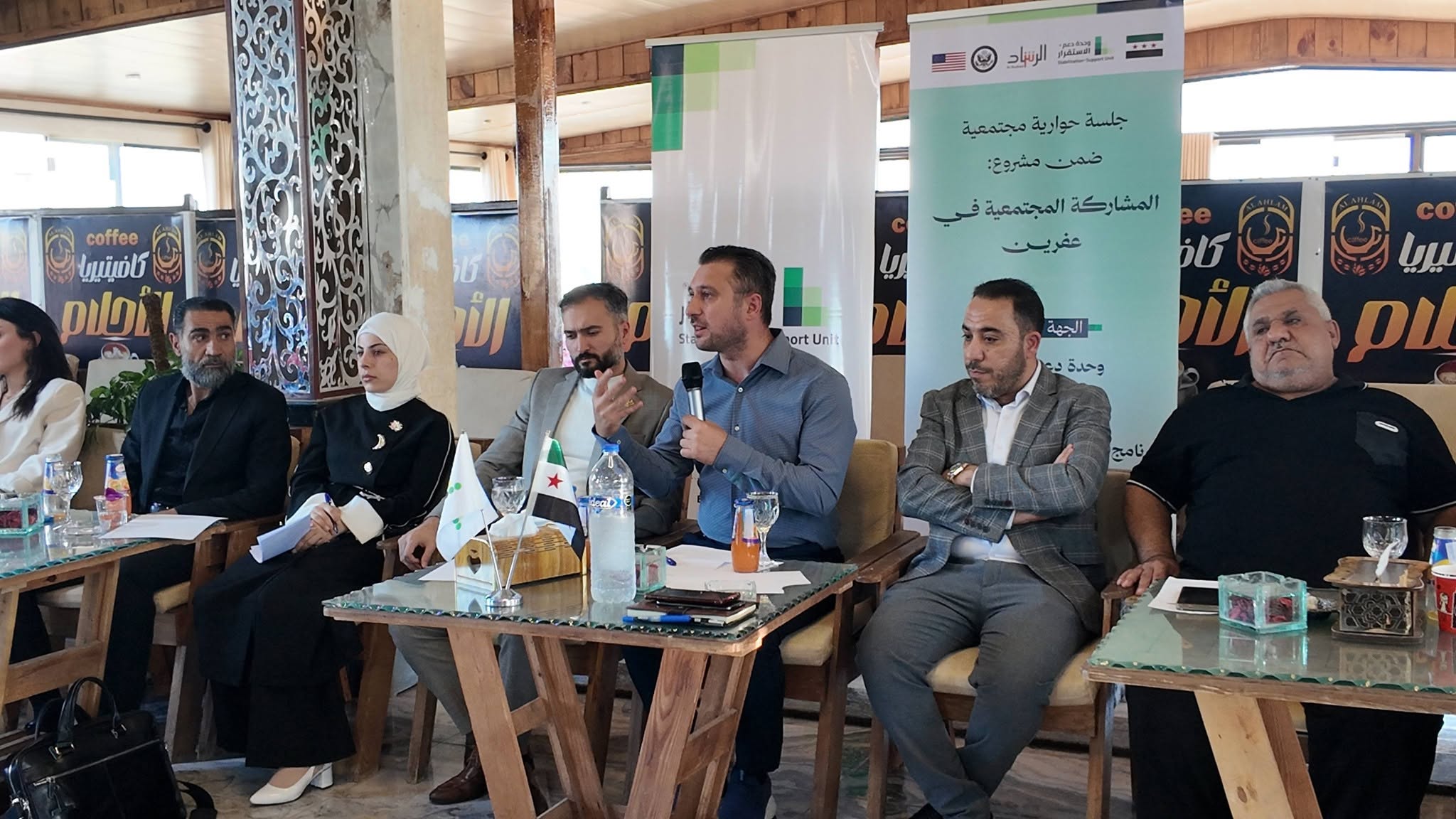
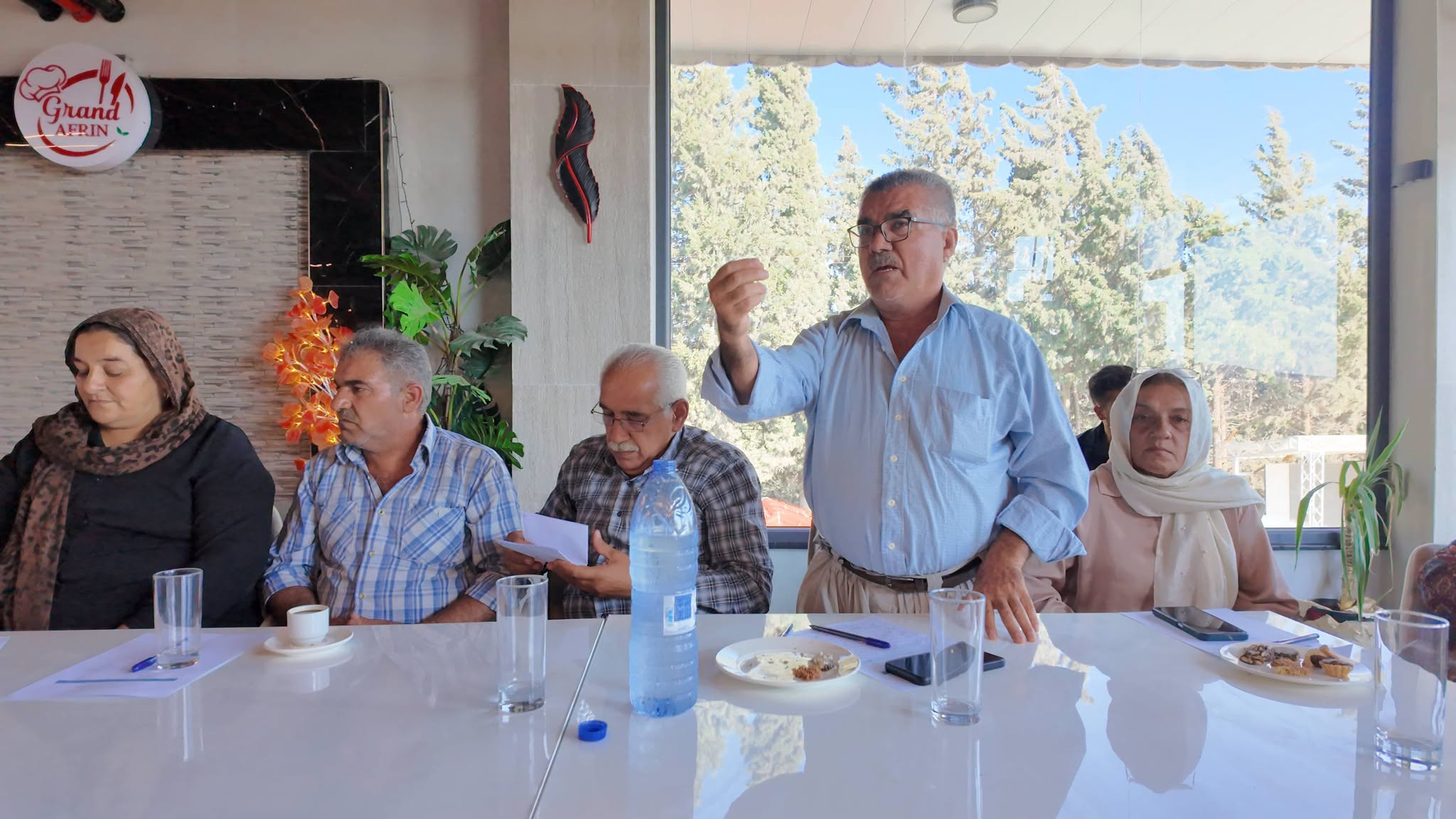
The Administration of the Afrin Region and the Stabilization Support Unit (SSU) organized the third community dialogue session in the Afrin region as part of the Community Participation Project, supported by the Rishad Program and funded by the U.S. Department of State. The session brought together representatives of security and administrative institutions, as well as local community leaders and civil society representatives.
The session was attended by Nour Al-Din Al-Baba, Spokesperson for the Ministry of Interior; the Security Director of the Afrin Region; representatives of the Public Relations Office of the Security Directorate in Aleppo Governorate; directors of the subdistricts of the Afrin Region; as well as community leaders, local representatives, civil society actors, and a number of returnees to the Afrin region from areas in northeastern Syria.
Participants discussed key local issues and needs, particularly strengthening security and social peace, improving local services, addressing challenges facing residents, and listening to their demands and proposals.
The discussion also addressed the importance of increasing security patrols as the olive harvesting season approaches, organizing harvesting operations, and strengthening efforts to combat drugs. Participants also proposed holding a dedicated dialogue session for women with the region’s administrators, as well as another session with the National Authority for Missing Persons to discuss the issue of missing persons and listen to residents’ demands.
These sessions contribute to strengthening communication channels between the local community and institutions, providing a direct space for raising and discussing local issues and needs, supporting community participation, fostering trust and cooperation, and contributing to strengthening security and social peace.
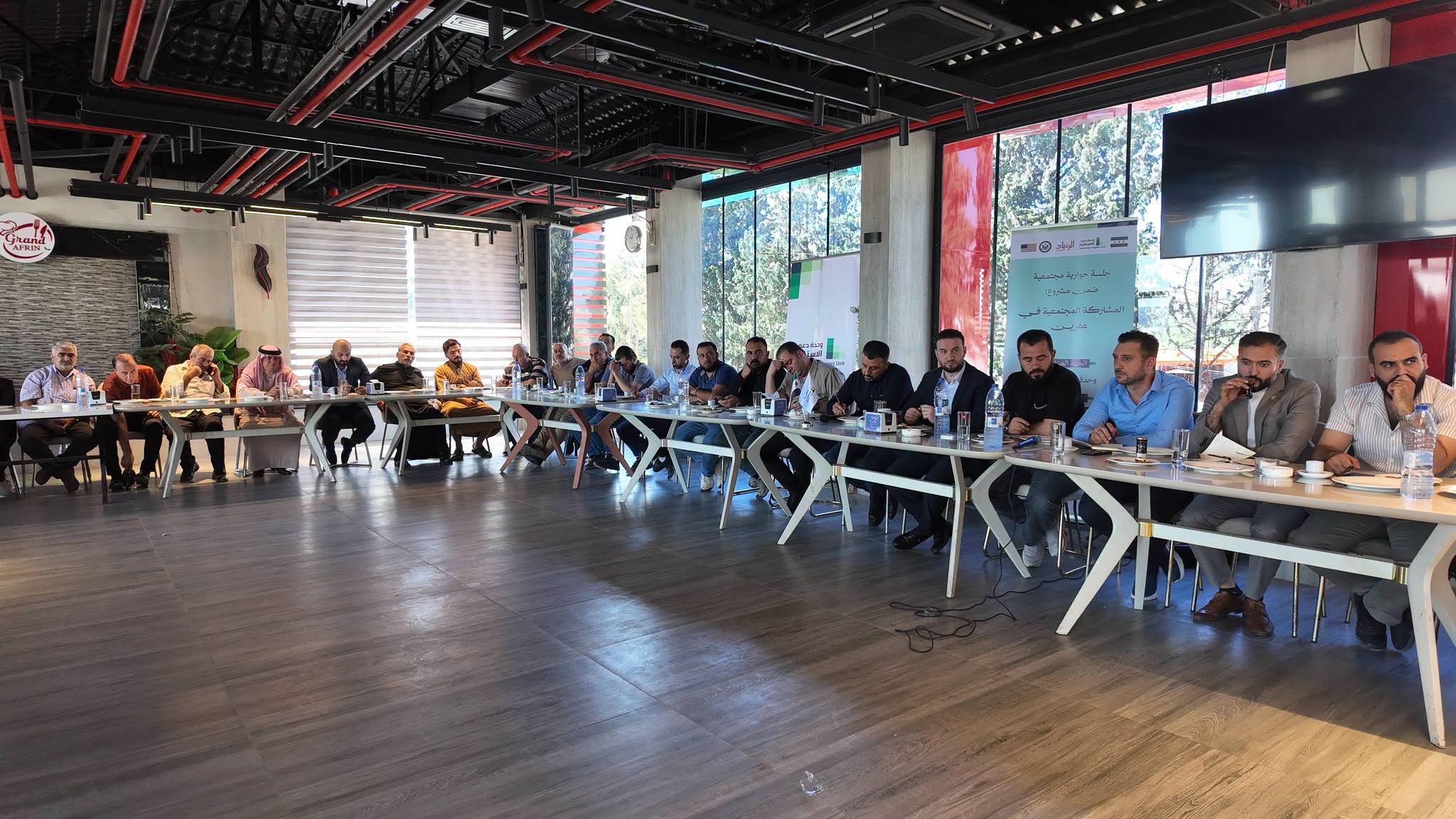
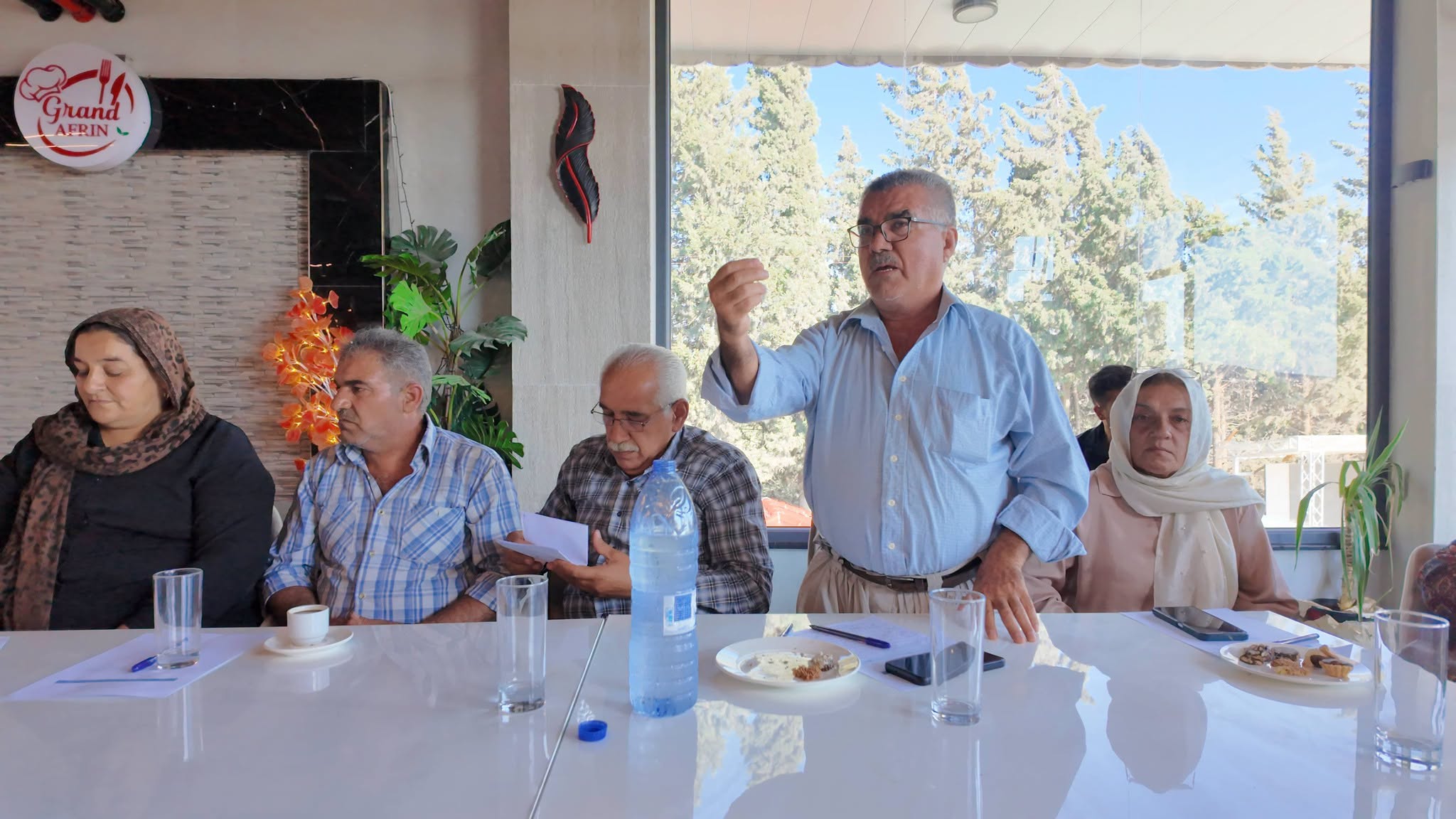
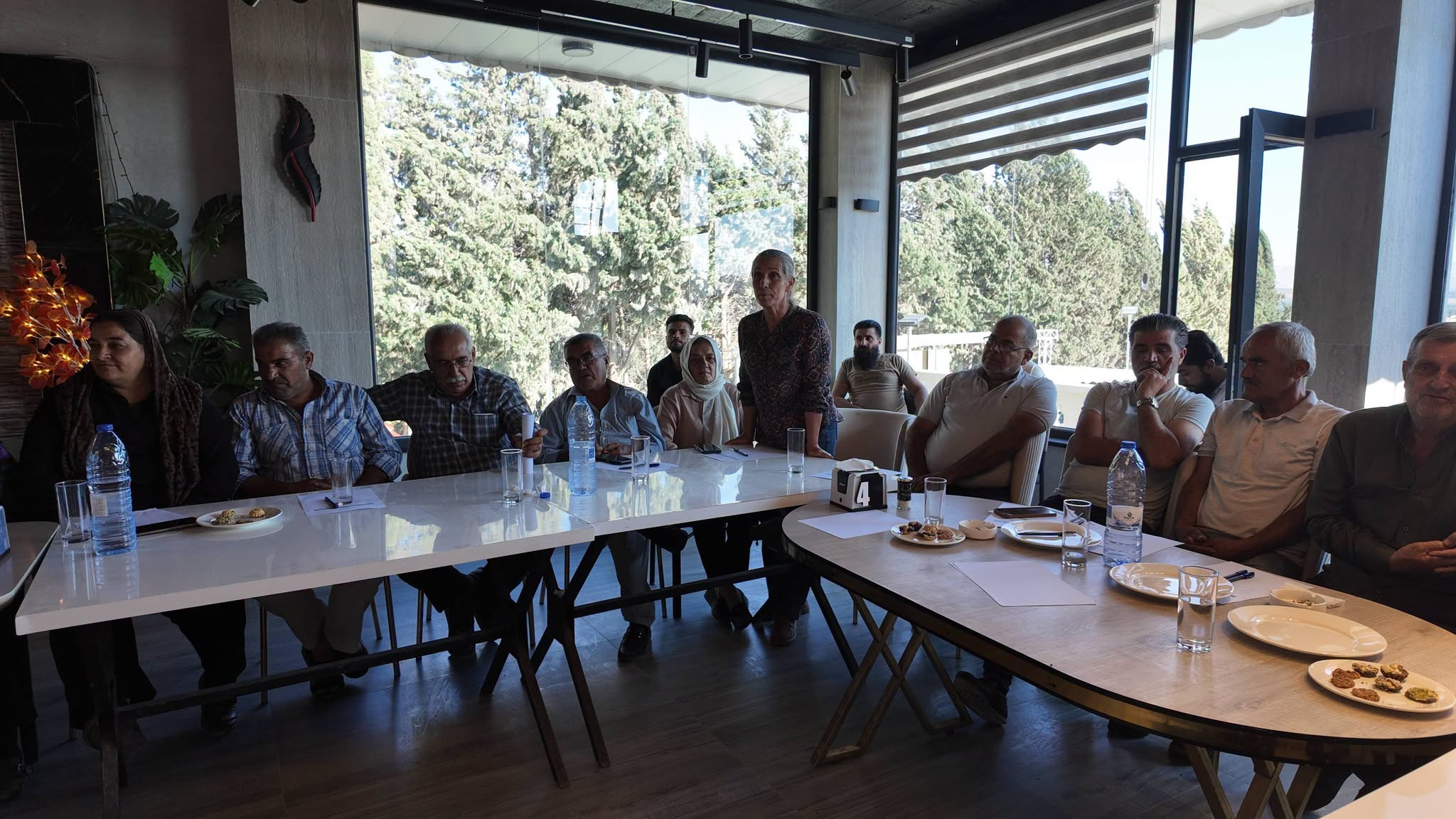
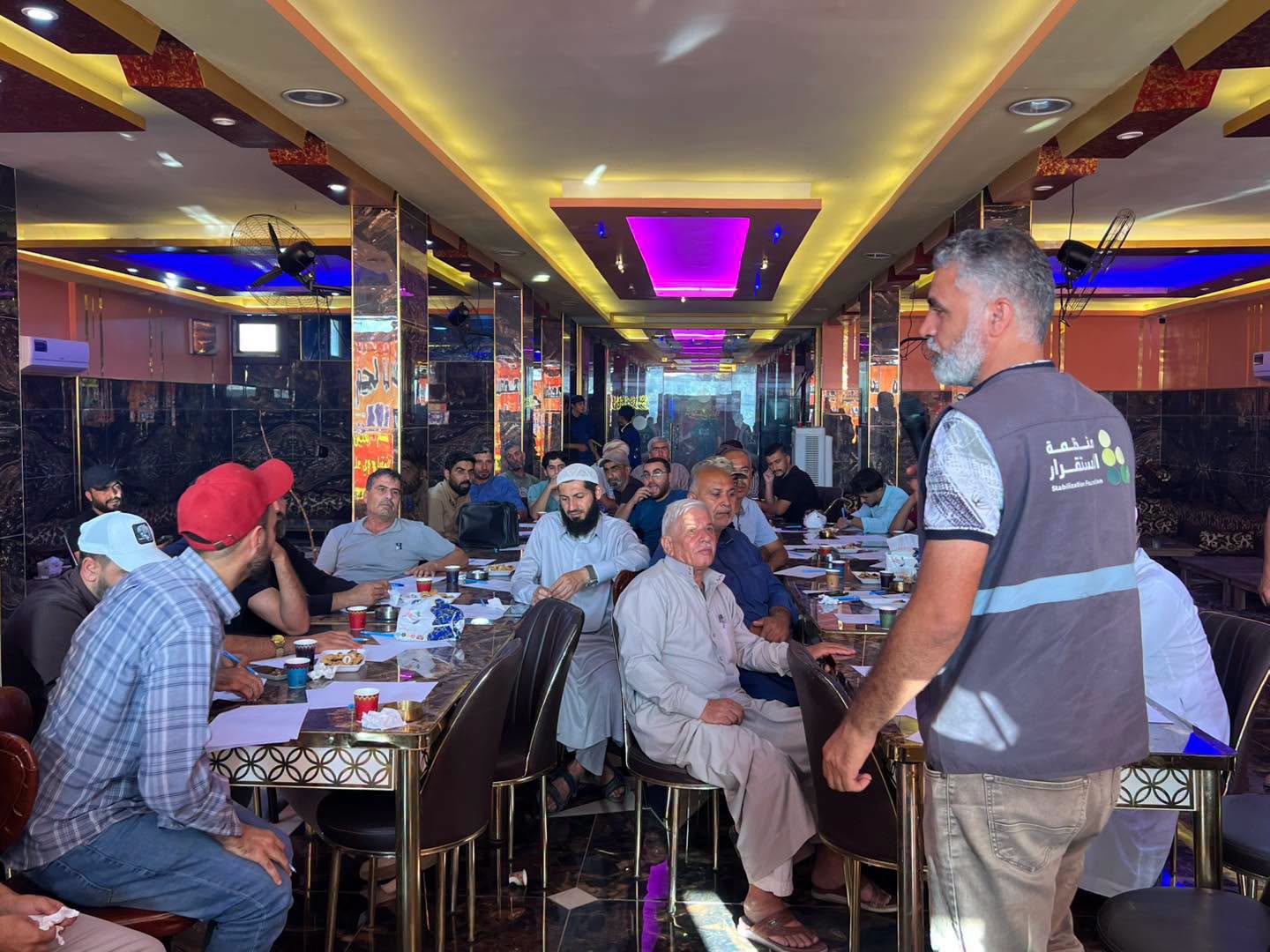
The Stabilization Support Unit (SSU), in coordination with the Administration of the Ain Al-Arab (Kobani) Region, organized the first community dialogue session with residents of Shuyukh Subdistrict. The session aimed to listen to their needs and concerns and discuss the key issues and challenges facing the area.
The session was held as part of the activities of the “Supporting Stability in Shuyukh Subdistrict” project, implemented by the Stabilization Support Unit in partnership with Furat 3 – Creative, and funded by the U.S. Department of State.
The session was attended by representatives of the Administration of the Ain Al-Arab (Kobani) Region, officials from the municipalities of Shuyukh Subdistrict, as well as a number of community leaders and members of the local community.
The discussion addressed a range of demands and proposals related to the service and living conditions in the area, contributing to stronger engagement with the local community, a better understanding of its needs, and follow-up on the issues and proposals raised within the framework of the project.
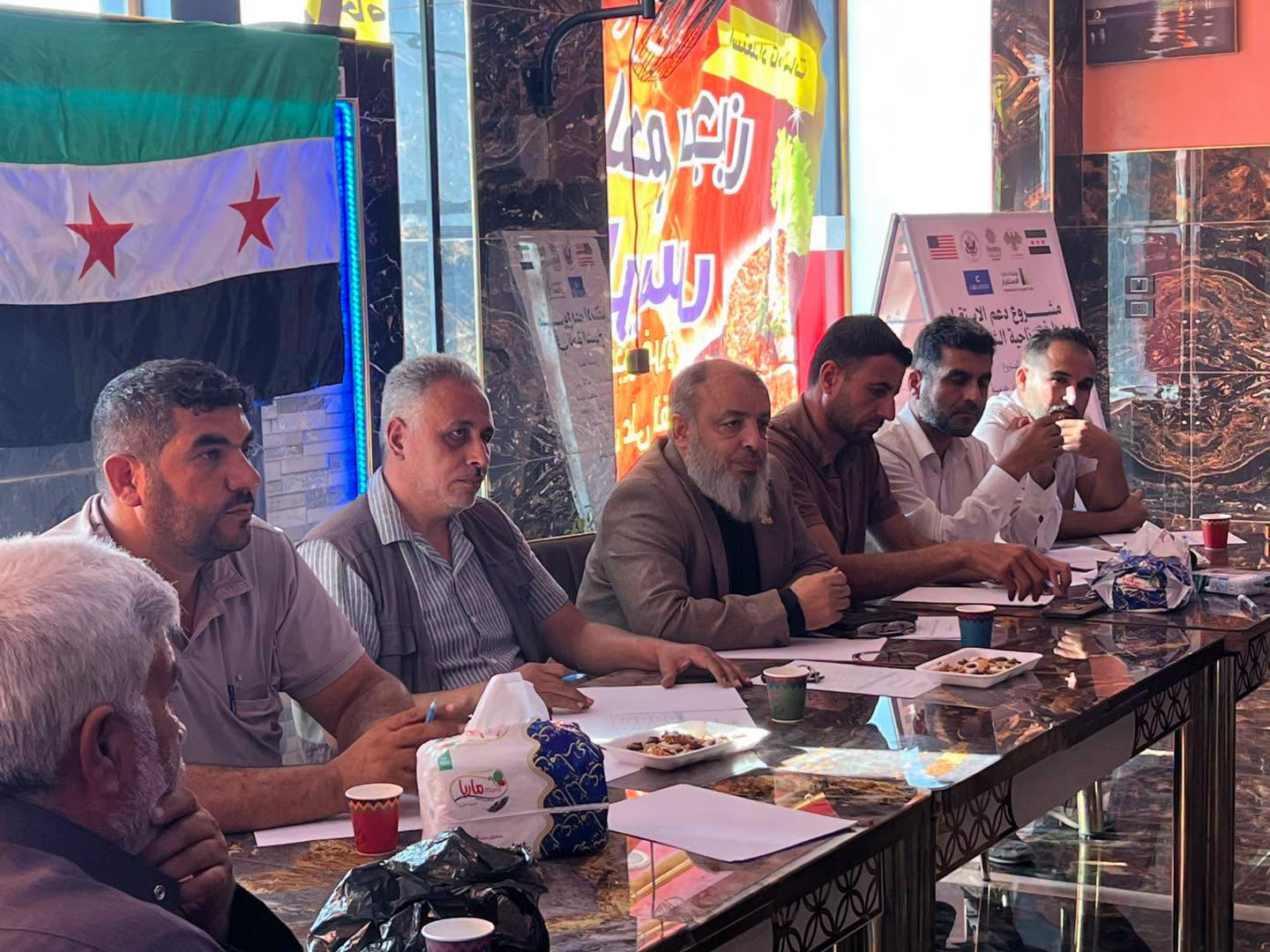
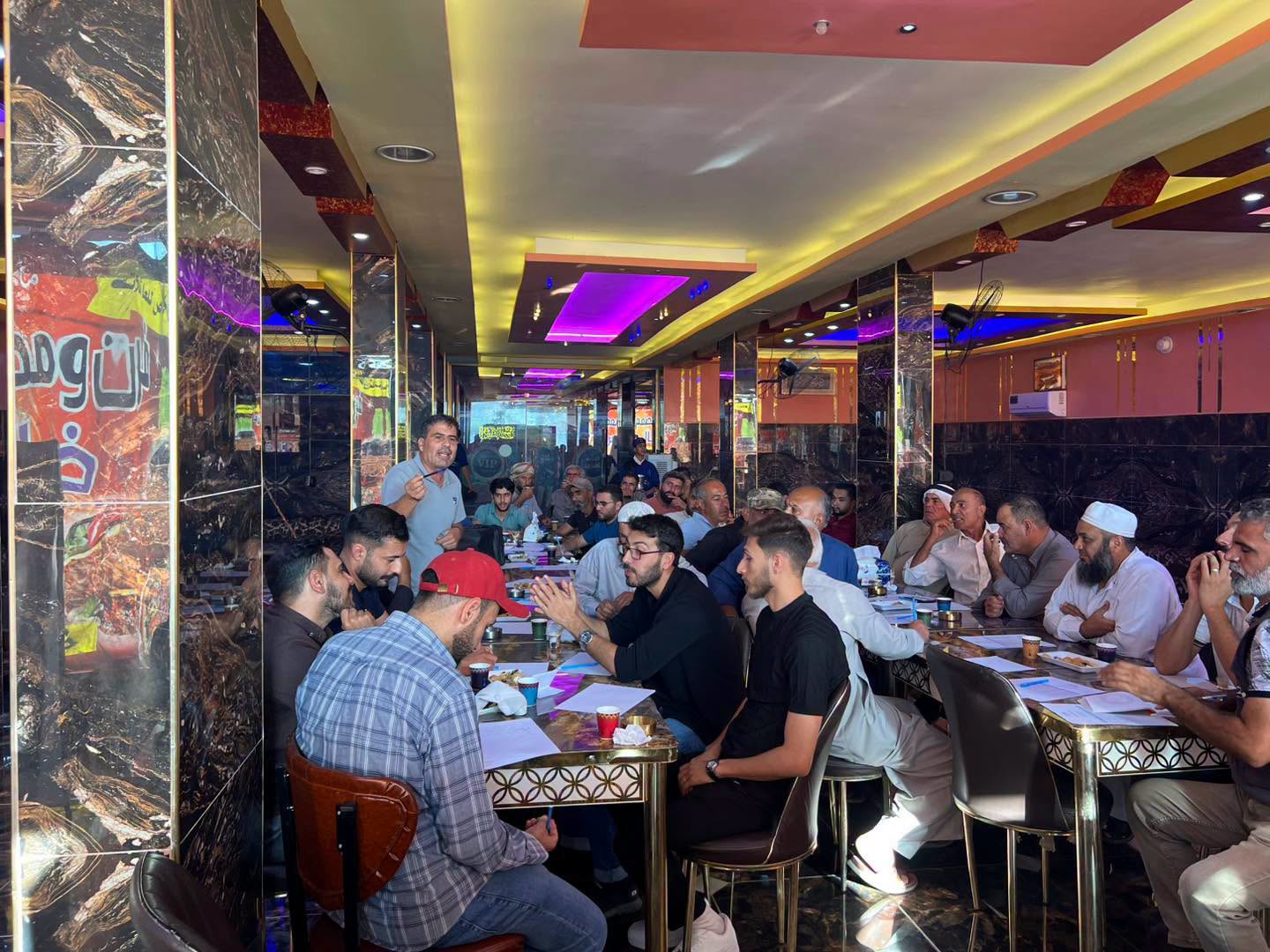
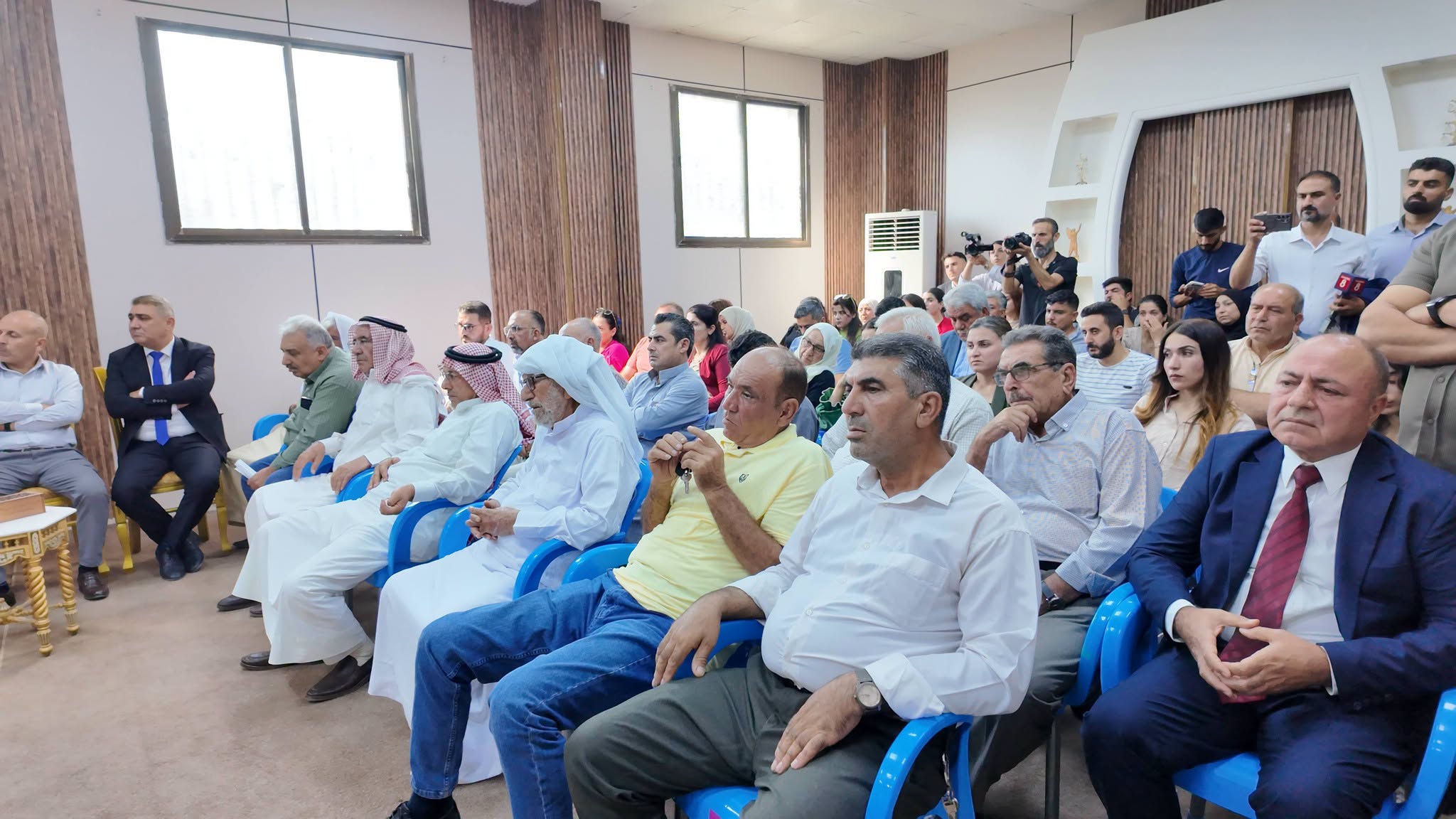
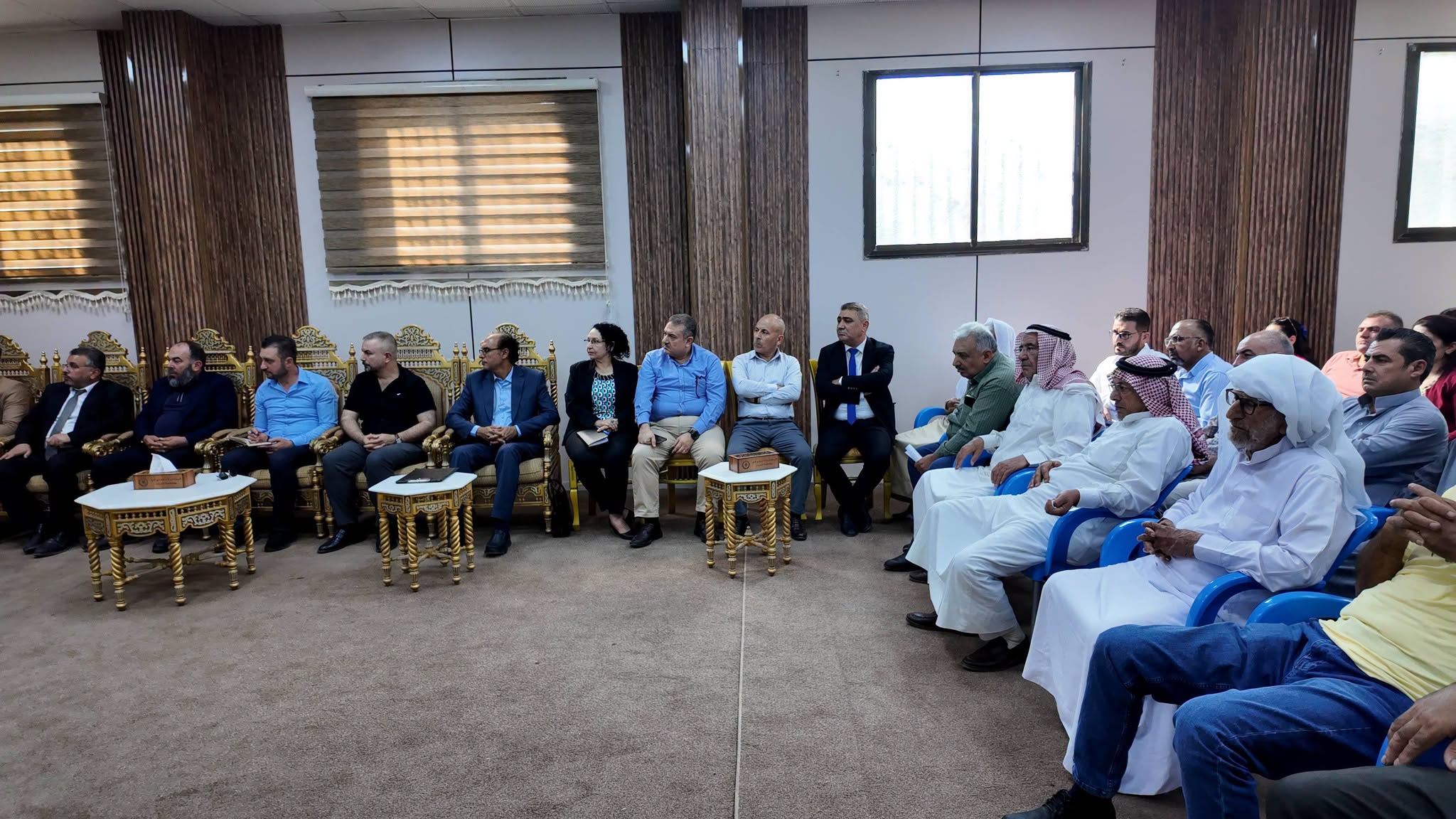
The Stabilization Support Unit (SSU), in the Ayn al-Arab area – #Kobani, organized a dialogue session in cooperation with the Ayn al-Arab Area Administration, as part of the Community Engagement Project, supported by the Al-Rashad Program and funded by the U.S. Department of State.
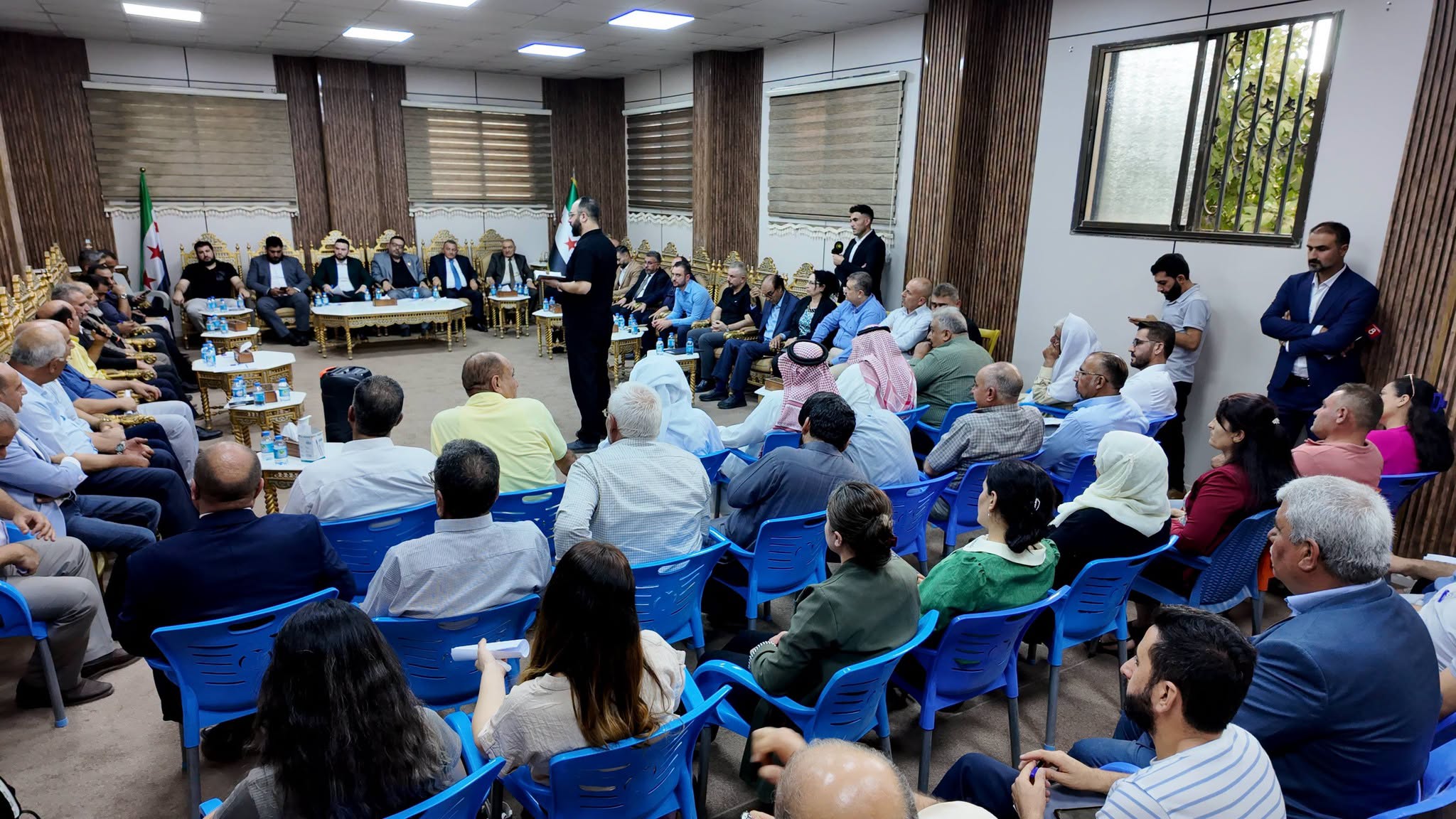
The session was attended by Mr. Ibrahim Muslim, Head of the Area Administration; Mr. Nour al-Din al-Baba, Official Spokesperson for the Ministry of Interior; Mr. Majd al-Din al-Sheikh, Director of Internal Security; Mr. Farhad Shaheen, Member of the People’s Assembly; representatives of the Public Relations Office of Internal Security in Aleppo Governorate; as well as local dignitaries, community representatives, and civil society actors from the area and the city of Kobani.
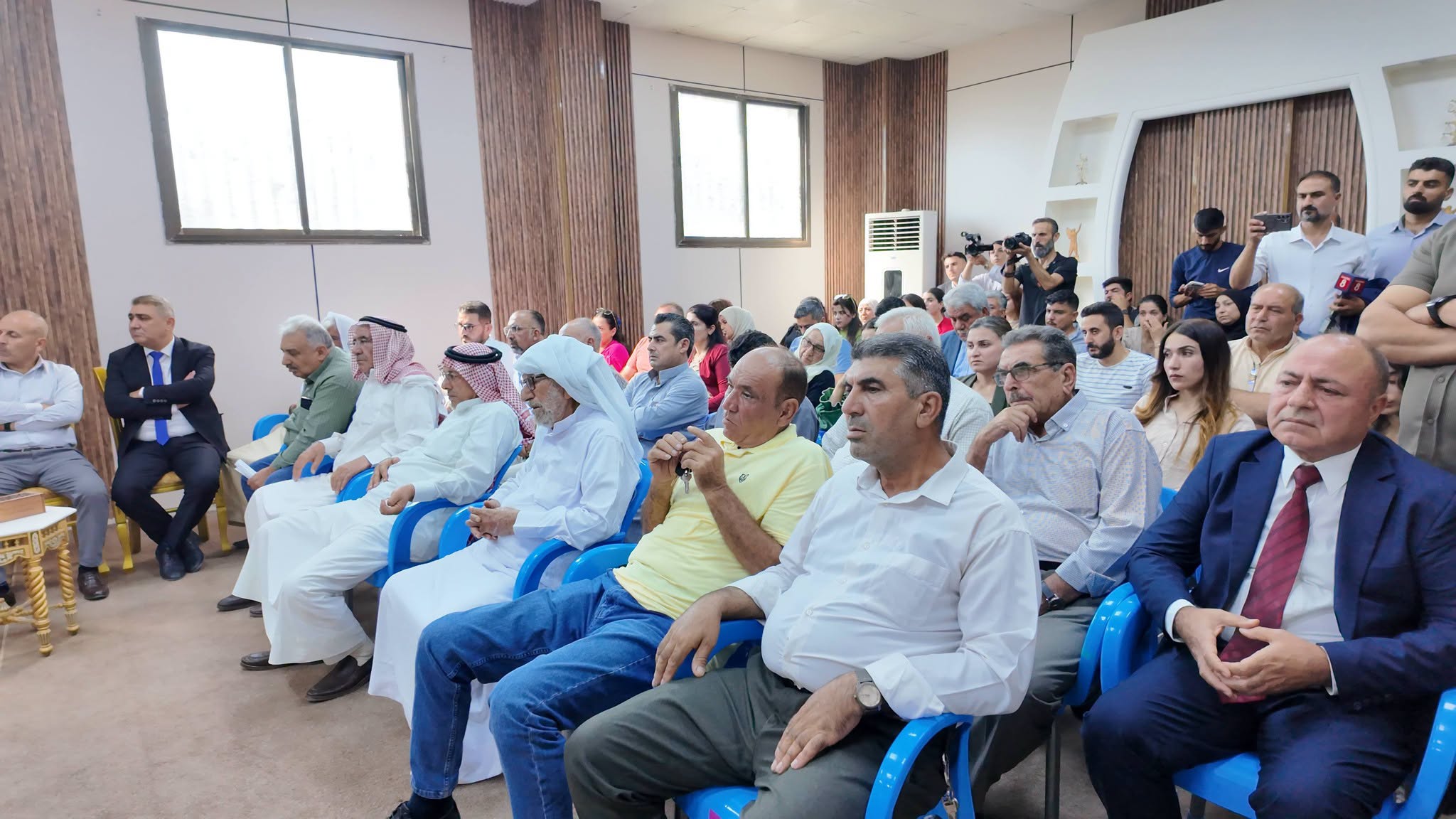
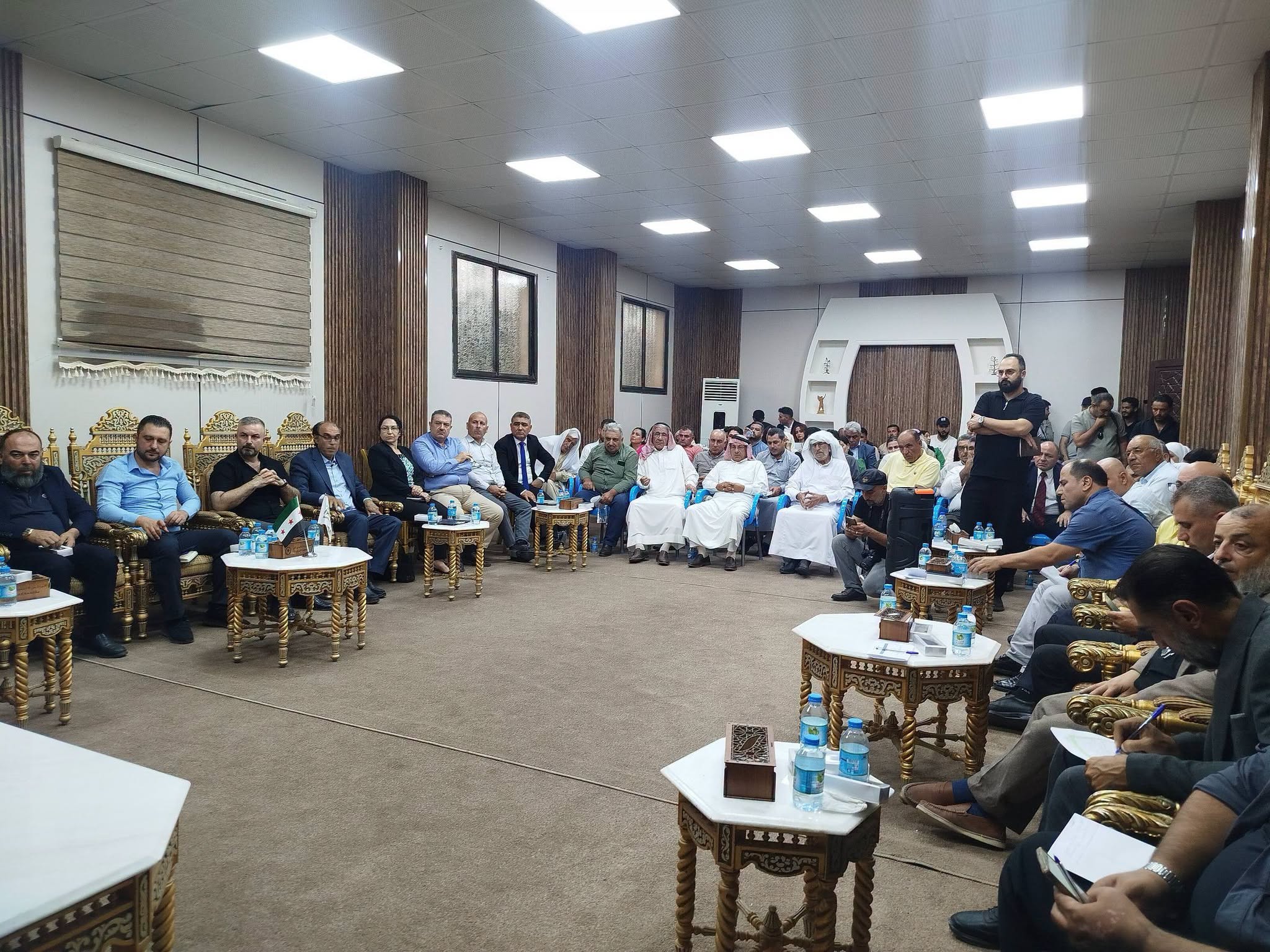
The session focused on directly listening to residents’ complaints and demands, identifying the area’s key needs, and discussing priority service and livelihood issues. It also aimed to strengthen communication channels between institutions and local communities, follow up on community needs, and work toward identifying appropriate solutions.
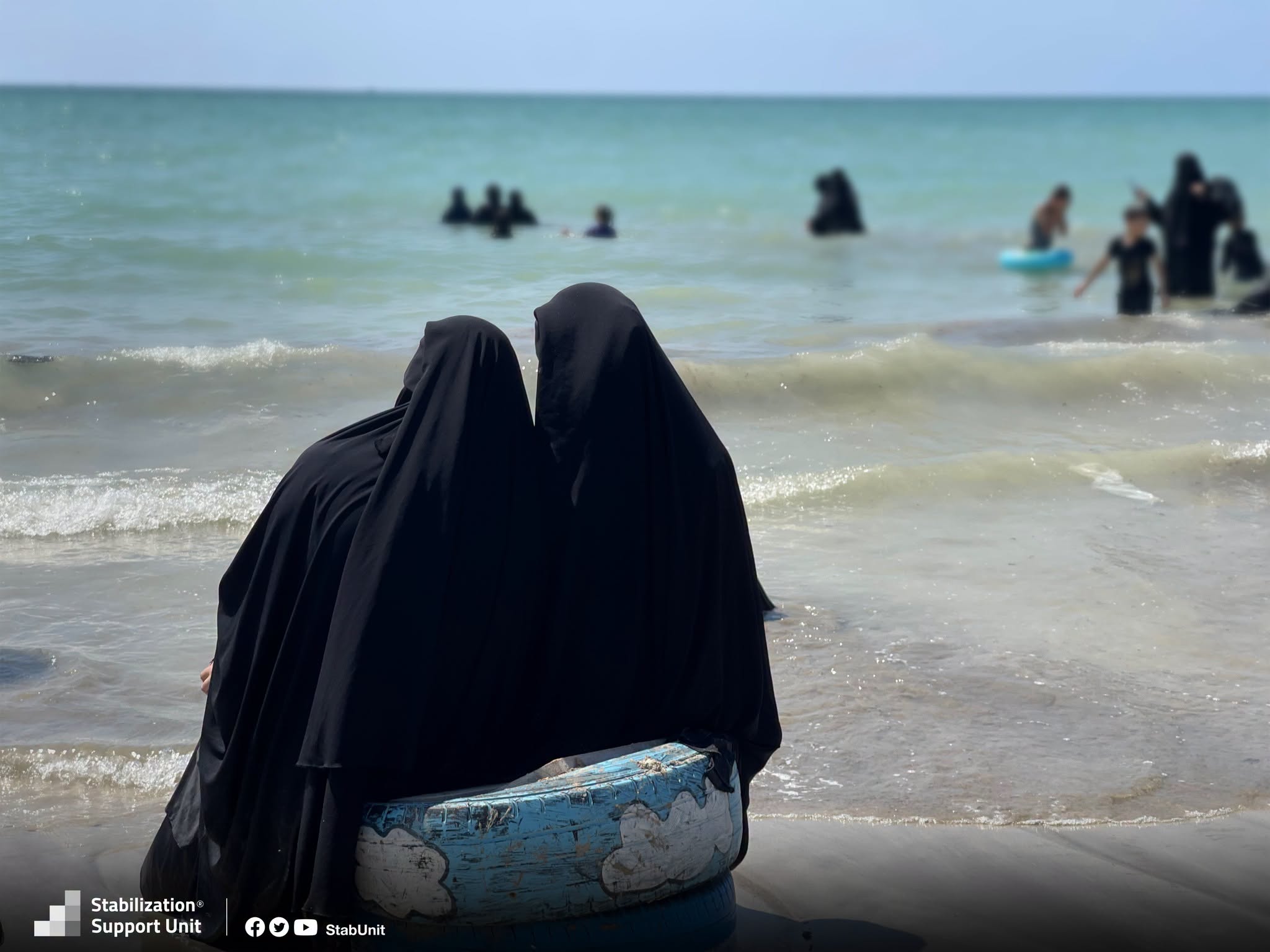
“Beaches of Safety”.. From the Memory of the Camp to a New Horizon
In the city of Latakia, families who recently returned from Al-Hol Camp experienced a different kind of day—one away from the camp environment and closer to the sea, nature, and moments of joy. The day was part of the “Beaches of Safety” activity, implemented by the Stabilization Unit in cooperation with Sheraa Al-Kheer, with the aim of providing a safe space for families, strengthening psychosocial support, and creating positive experiences that contribute to restoring a sense of safety and belonging.
The full-day activity included a range of recreational and interactive activities designed for women and children, offering them an opportunity to relax, connect, and enjoy quality family time away from the pressures and experiences of the past.
The activity was implemented in coordination with the Directorate of Social Affairs and Labor in Aleppo, Latakia Governorate, and the Security Directorate and Tourist Police in Latakia, highlighting the importance of coordinated local efforts to support returning families and assist them in their path toward reintegration and stability within their communities.
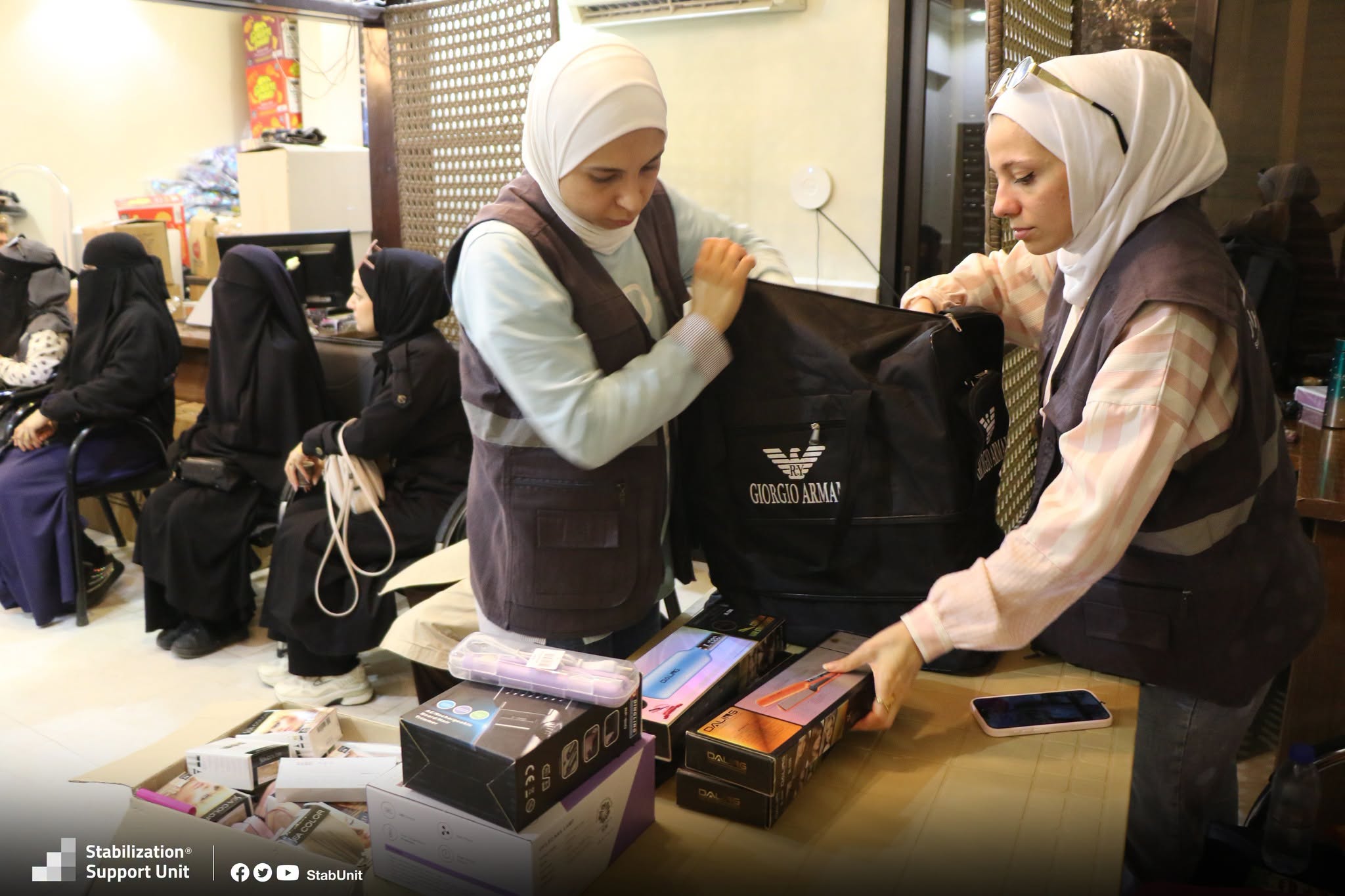
As part of the Stabilization Support Unit’s efforts to support livelihoods, promote self-reliance, and support returnees, specialized livelihood kits for hairdressing and beauty services were distributed in Aleppo to women returnees and members of the host community who had previously completed vocational training in this field.
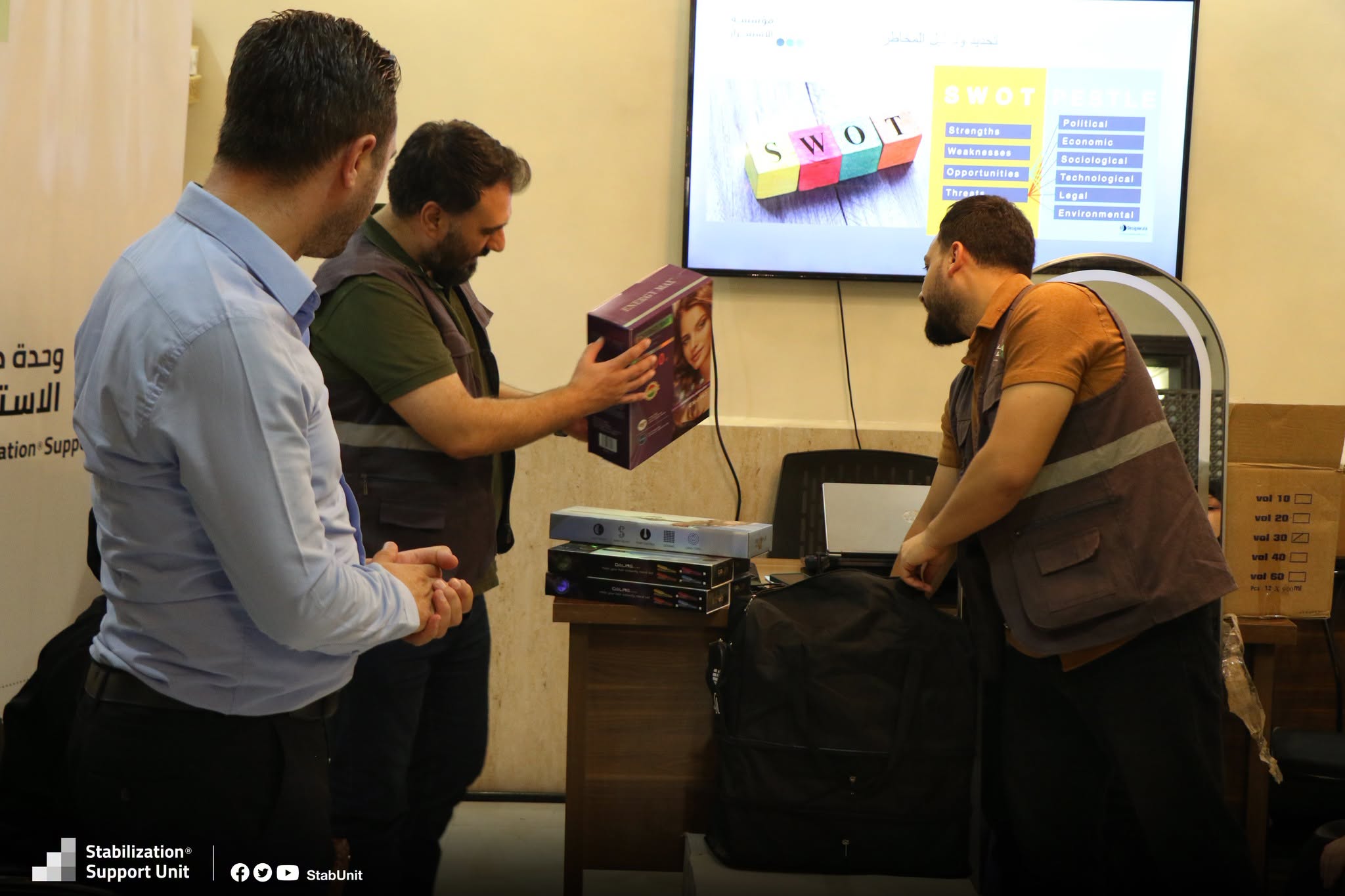
The kits were distributed following the completion of entrepreneurship training, helping participants move from acquiring vocational skills to applying them in practice as a source of income, while strengthening their ability to manage small and sustainable businesses.
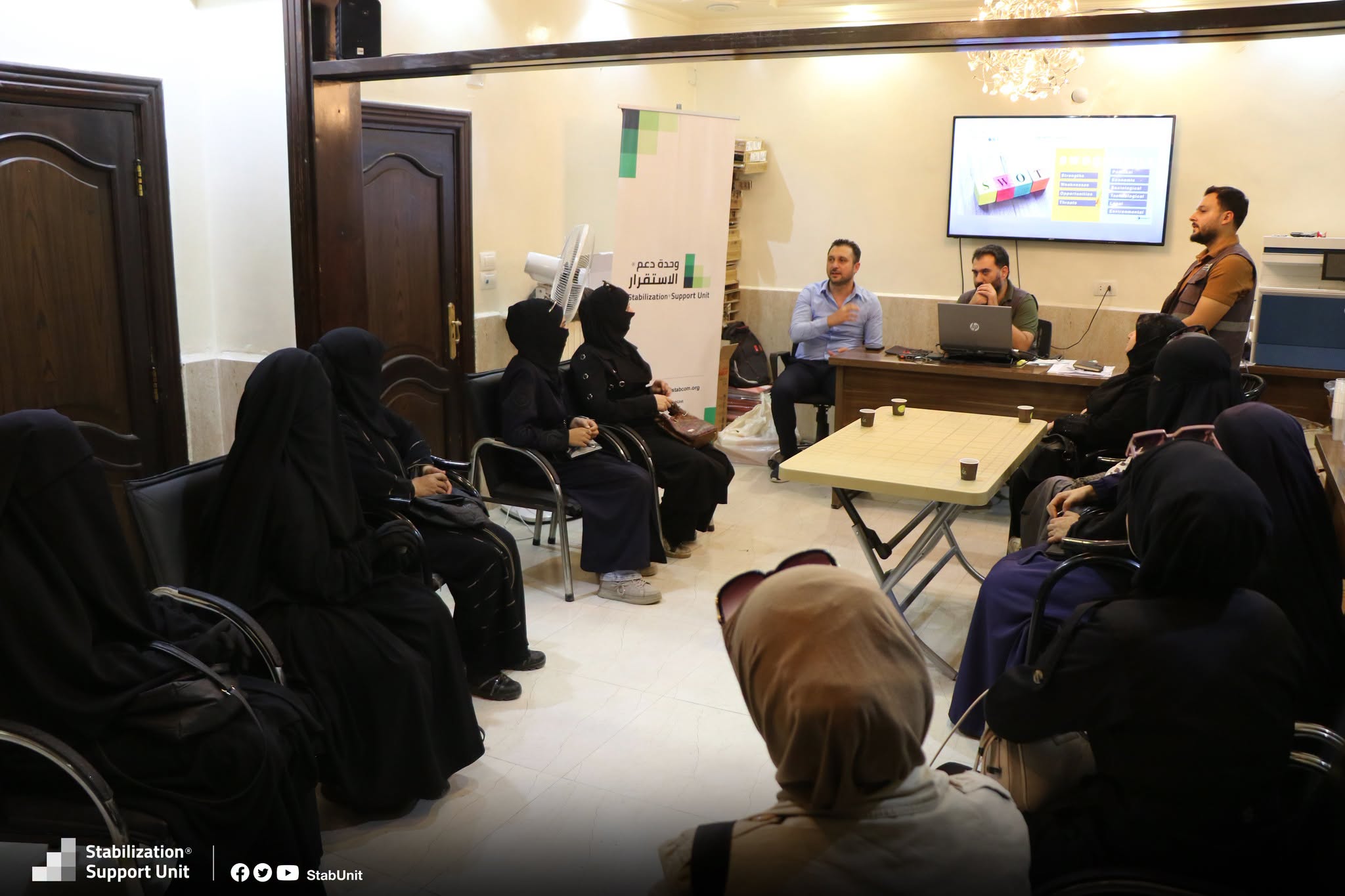
This initiative is part of efforts to support women and enhance their economic participation by providing them with the skills and tools needed to turn their capabilities into real income-generating opportunities and improve their livelihoods, contributing to greater stability at both the household and community levels.
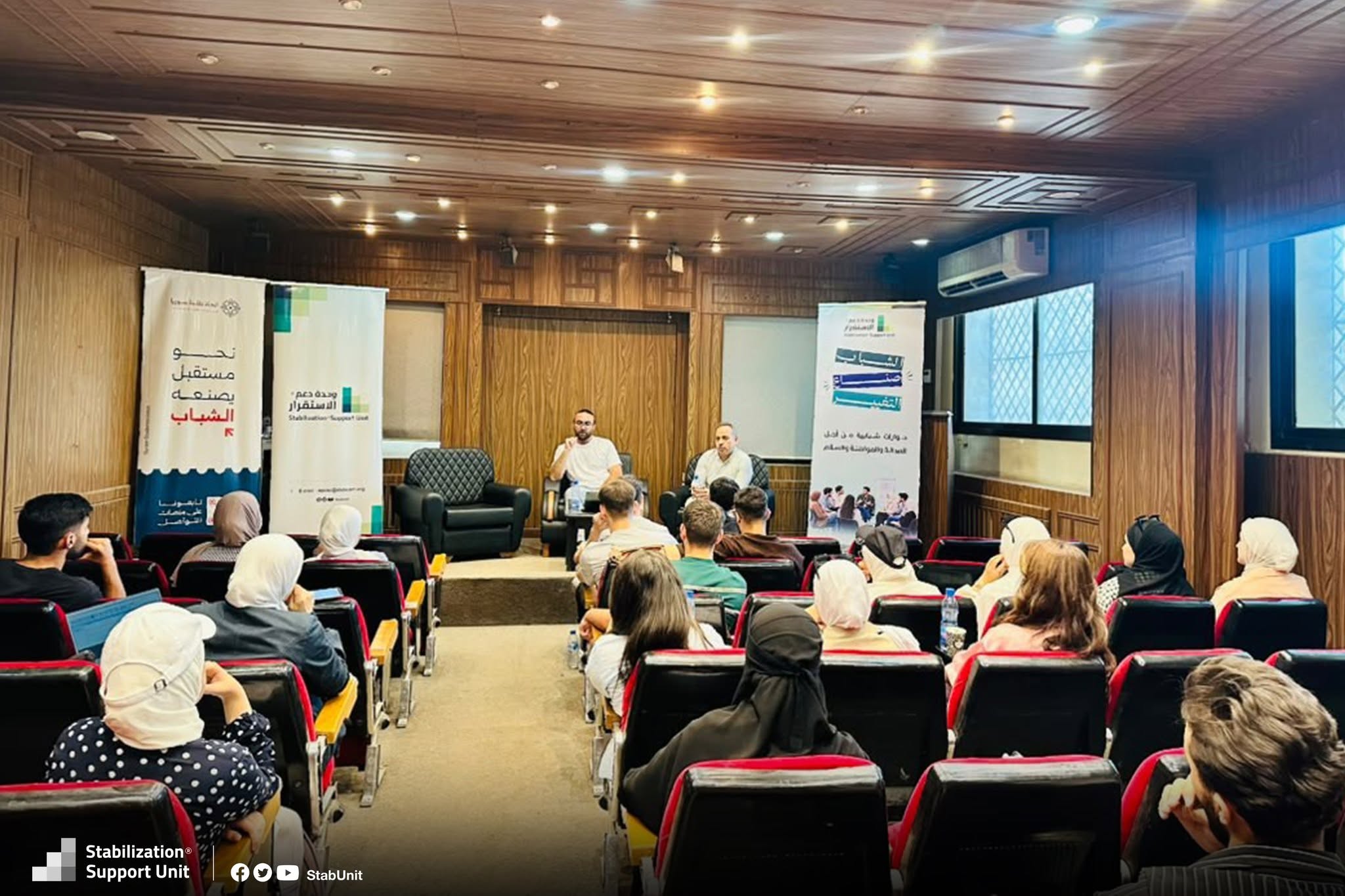
The Stabilization Support Unit (SSU), in partnership with the Syrian Students Union, held the second session of the “Change Makers” program at Damascus University, with the participation of a group of university students.
The session explored the concept of diversity and the importance of managing differences, with a focus on the impact of polarization on how people respond to differing opinions and positions, and how differences can be transformed from a source of division into an opportunity for dialogue and mutual understanding.
The session also discussed the importance of strengthening dialogue, listening, and acceptance of diverse perspectives, helping young people approach differences in a more positive and responsible manner and contribute to building a more cooperative and cohesive university and community environment.
This session is part of the “Change Makers” program, which aims to empower Syrian youth, strengthen their participation in dialogue and community engagement, and build bridges of communication among students from different regions and backgrounds.
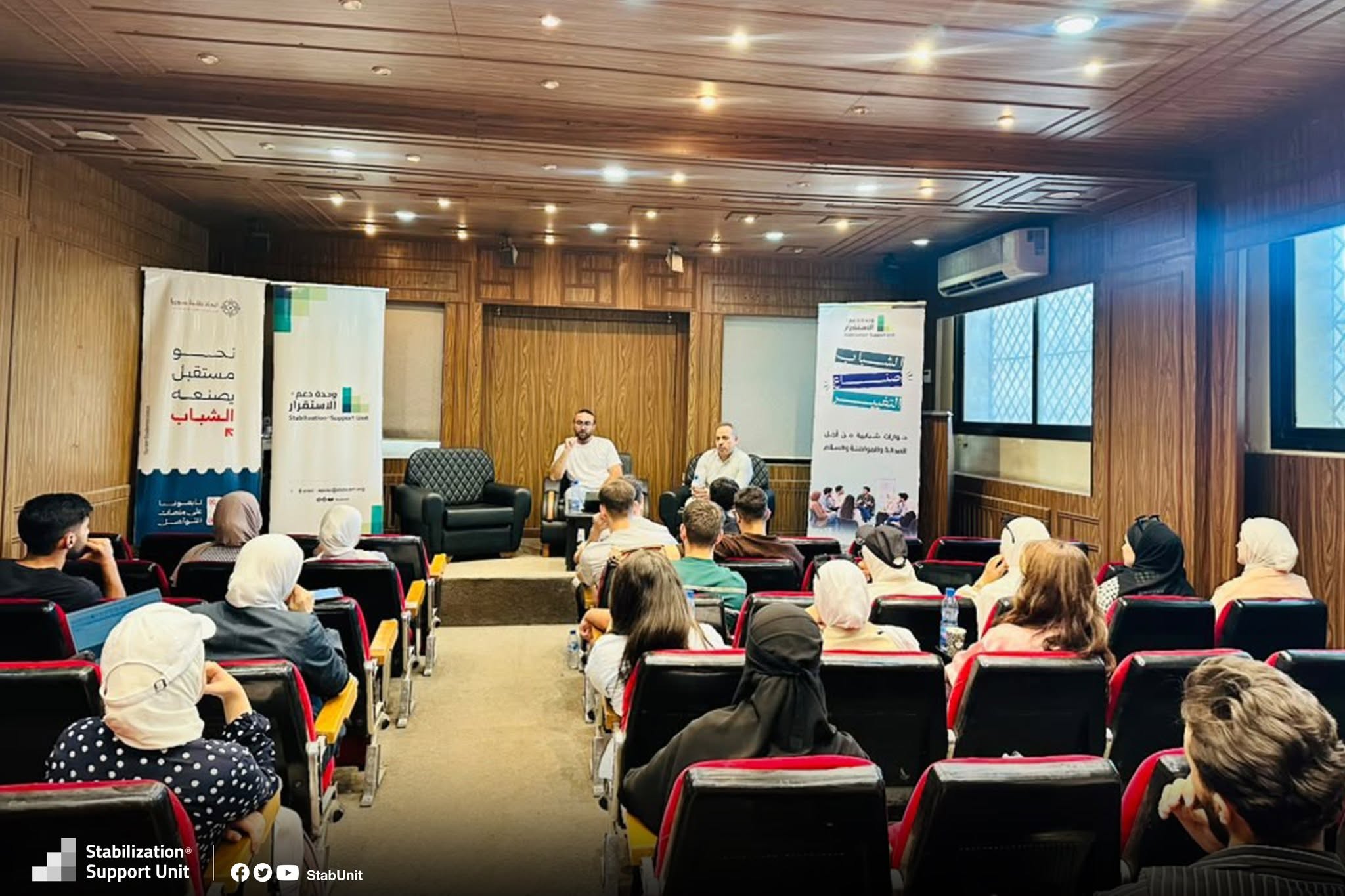
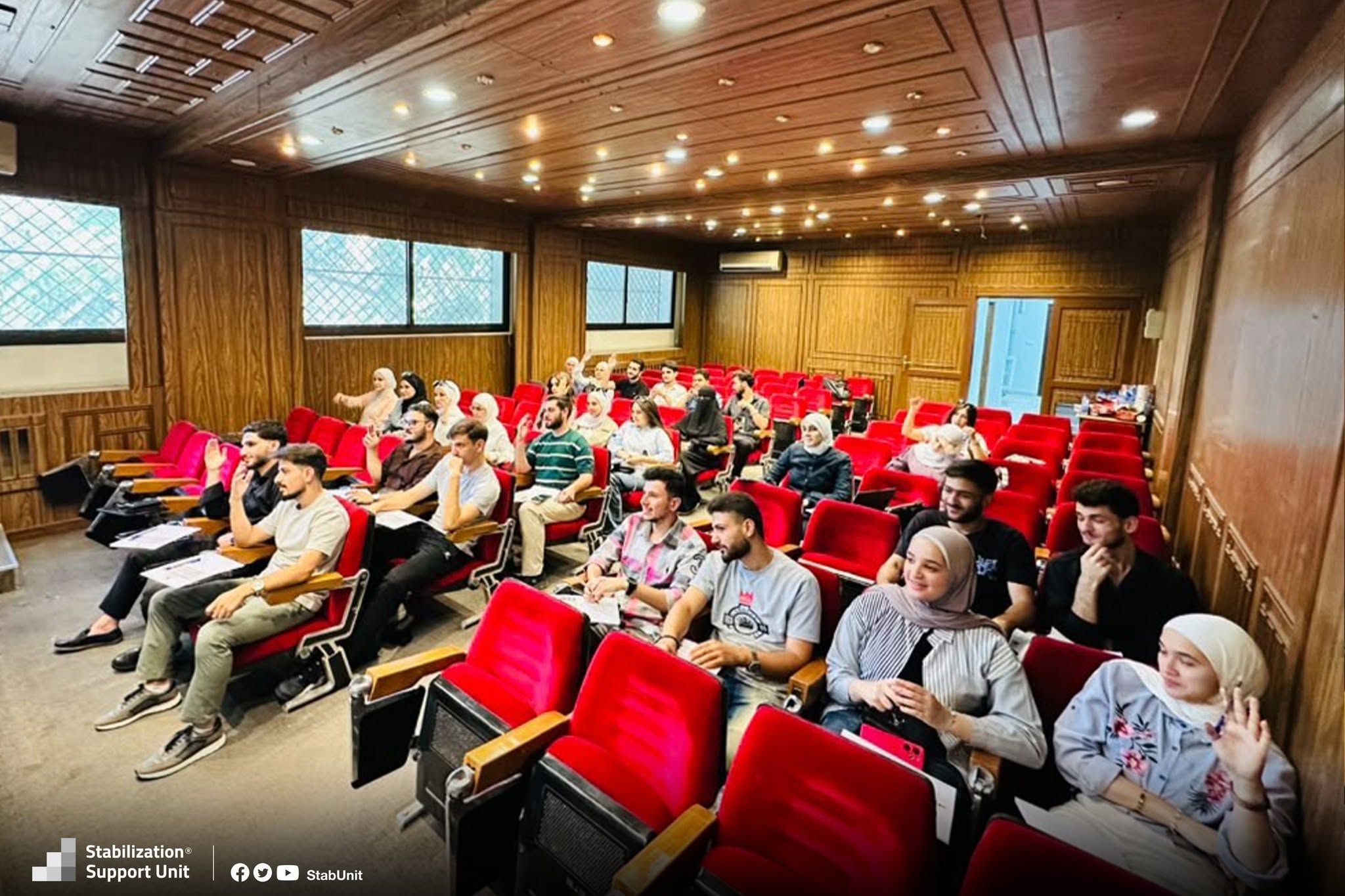
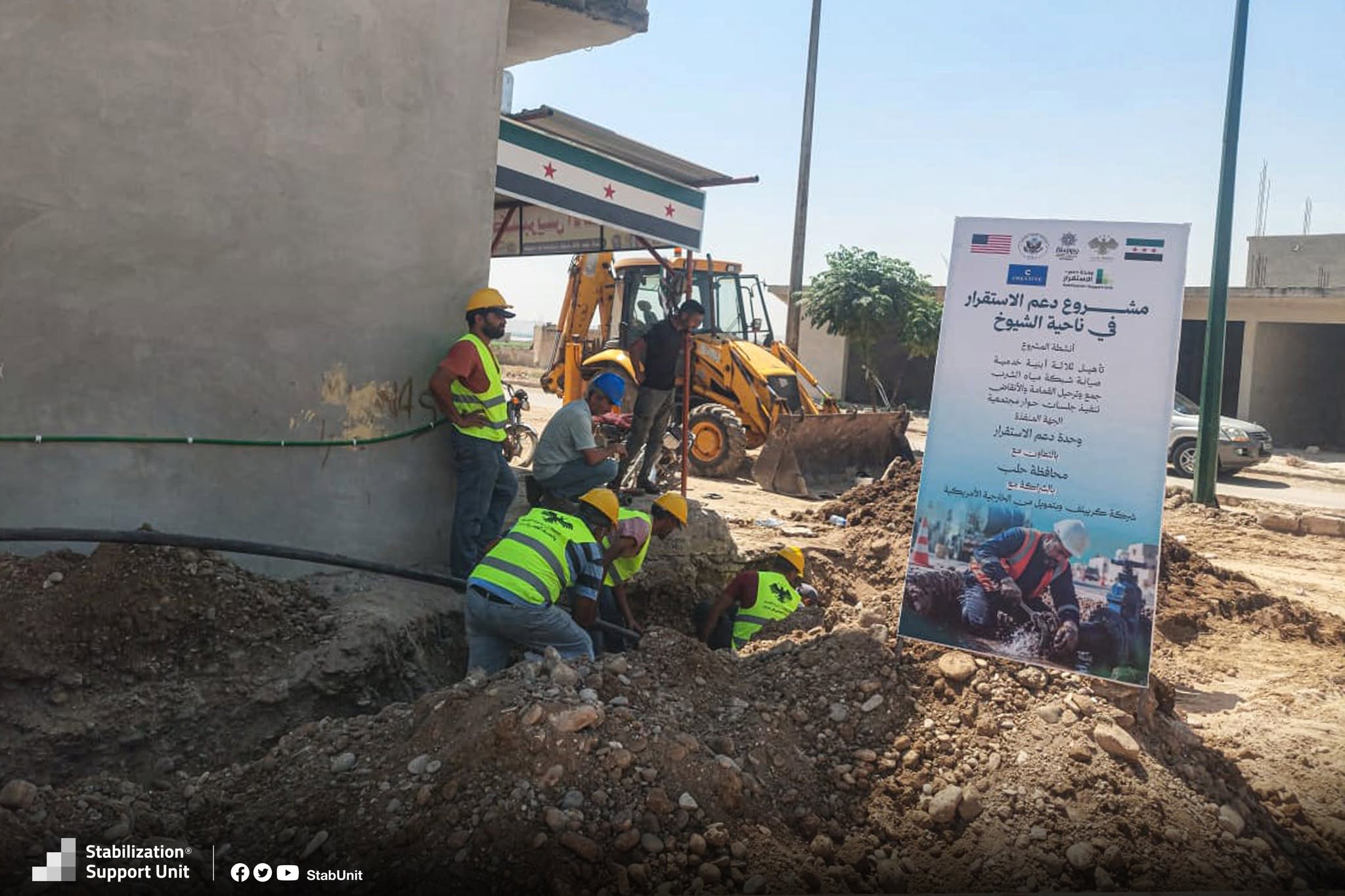
As part of efforts to support recovery, strengthen stability, and create conditions conducive to the return of residents, the Stabilization Support Unit (SSU) is implementing the “Stabilization Support in Al-Shuyukh Subdistrict” project, in coordination with the Administration of Ain Al-Arab District, in partnership with Furat 3 Program – Creative Associates International, and funded by the U.S. Department of State.
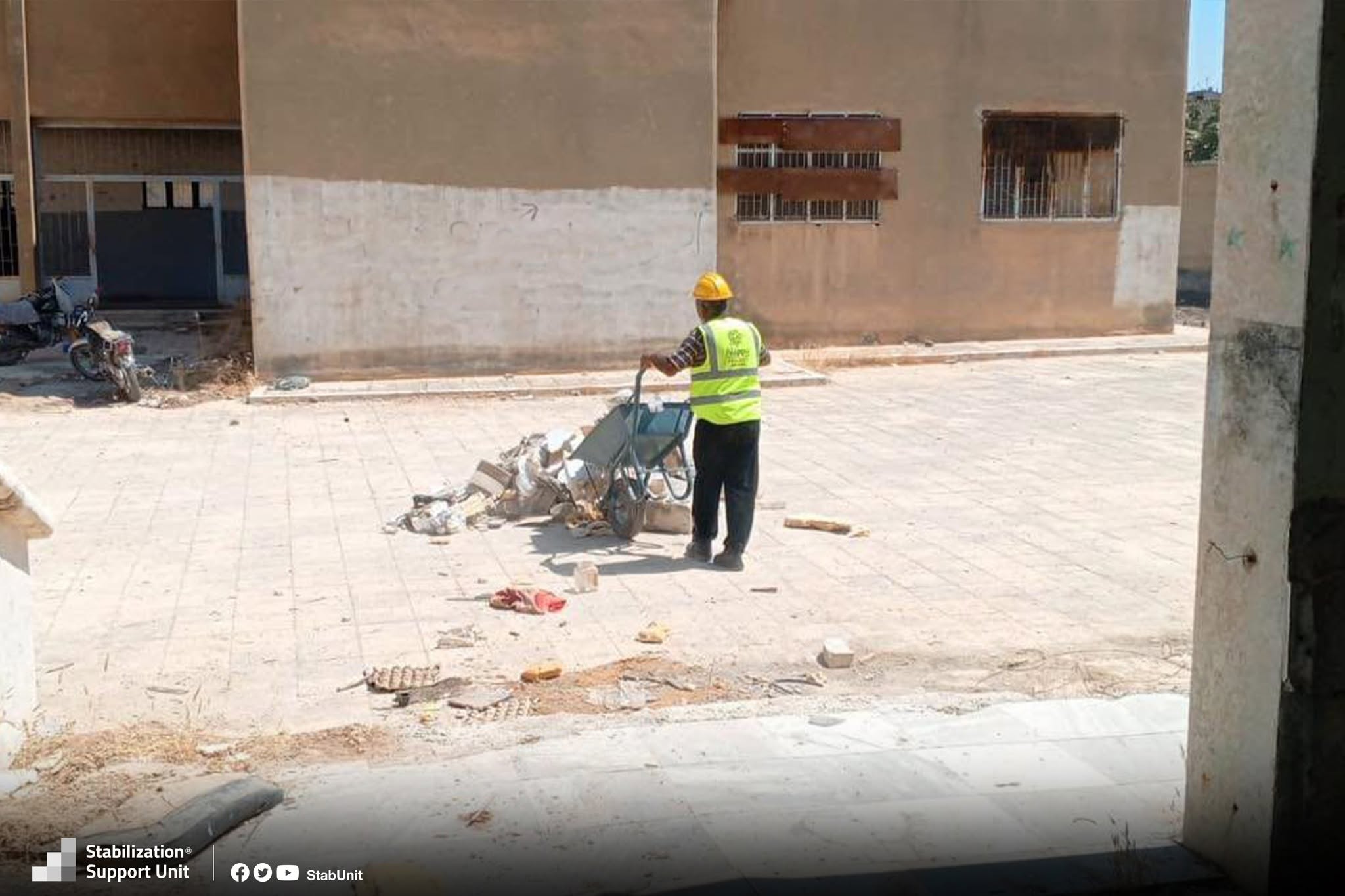
The project’s core activities focus on implementing a number of essential service interventions, including:
- Cleaning operations and the removal of waste and debris from streets and targeted areas.
- Maintenance of drinking water networks, contributing to improved access to essential services for residents.
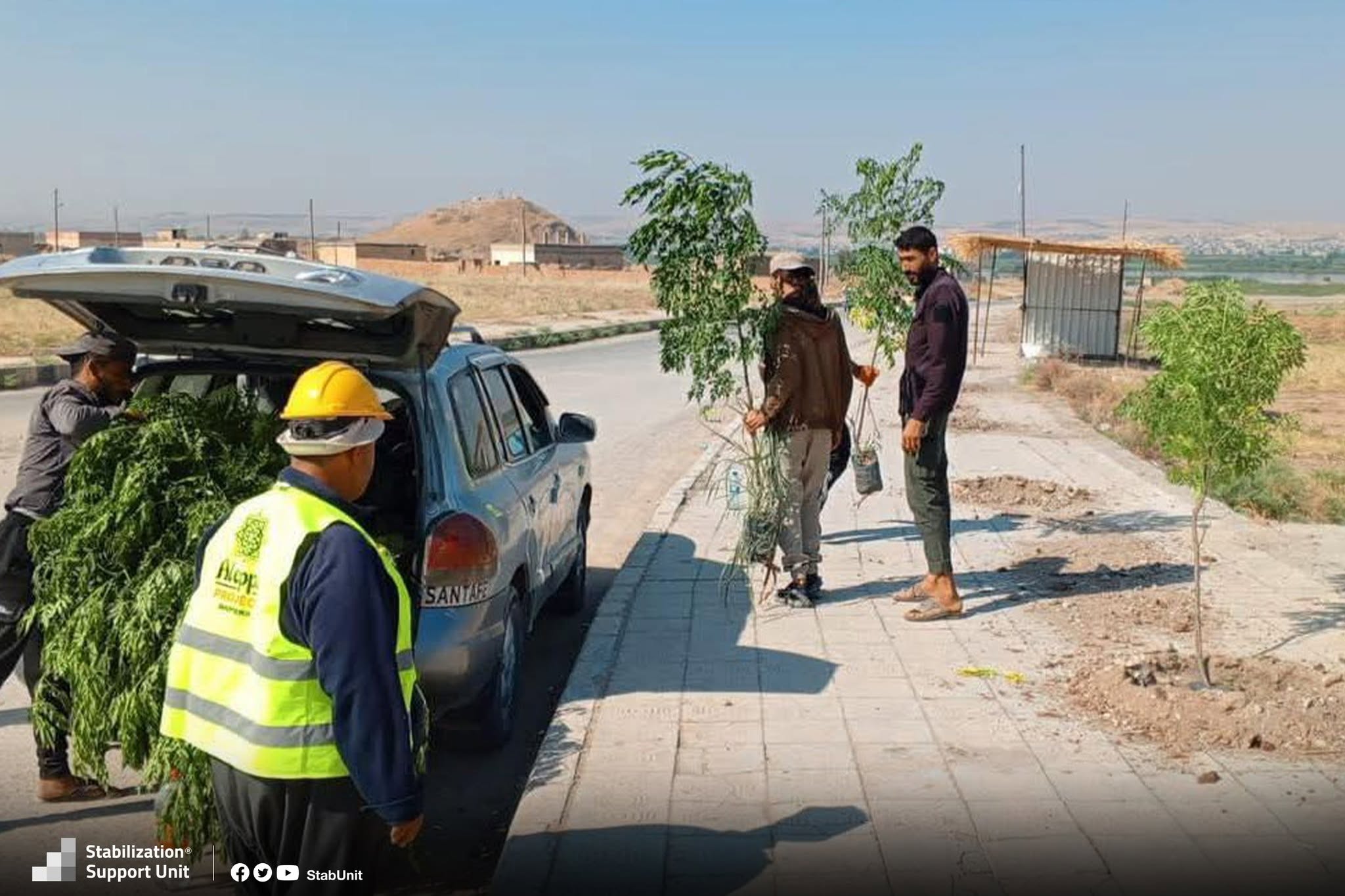
Alongside the implementation of the project activities and the start of the new school year, a campaign was launched in cooperation with local residents and authorities to clean schools and educational facilities, in addition to a tree-planting campaign along sidewalks and main streets in Al-Shuyukh Subdistrict. These efforts aim to improve the school environment and the overall appearance of the area, while expanding green spaces across the community.
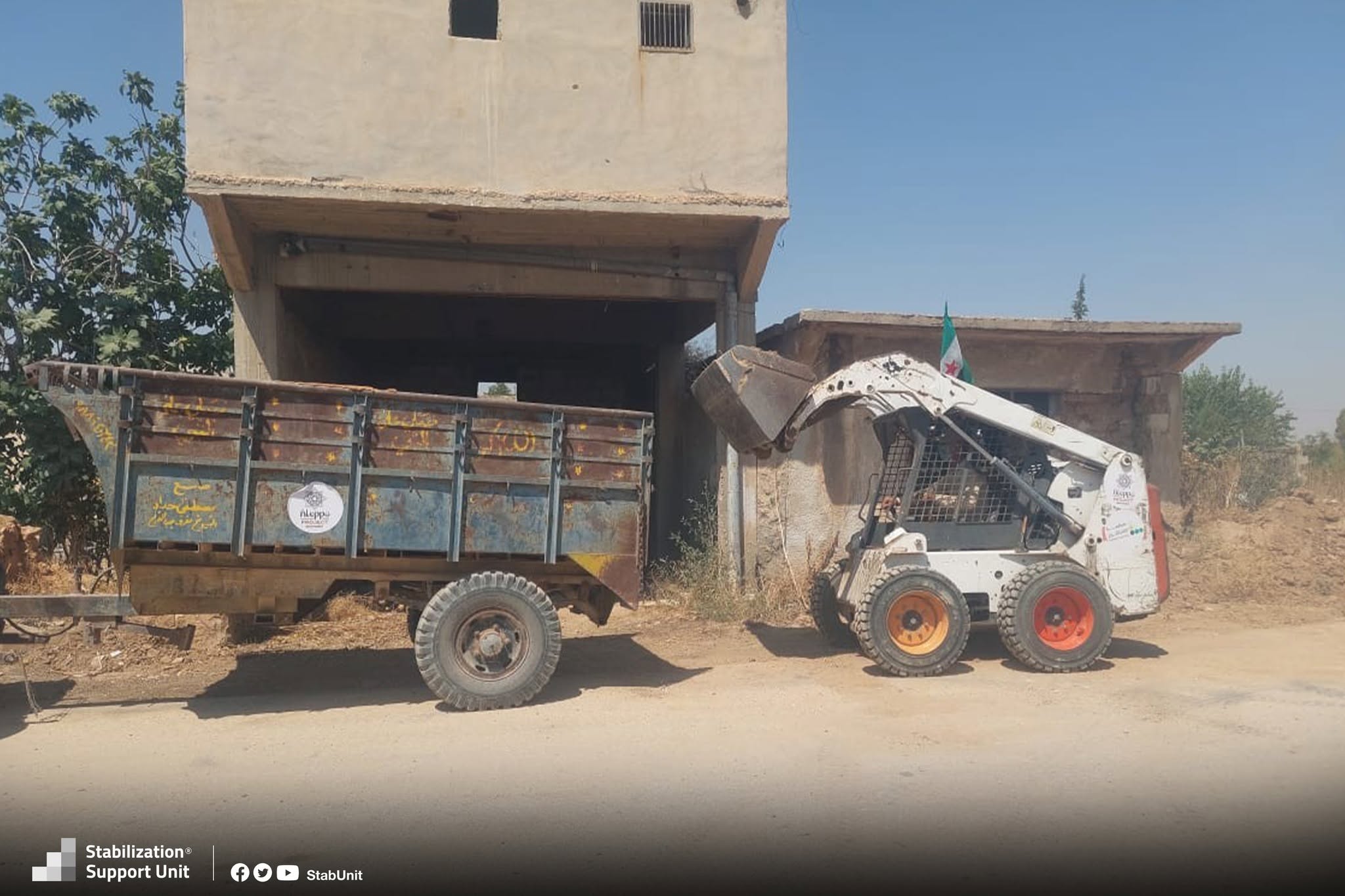
These activities are part of broader efforts to support the service and environmental conditions in the subdistrict and strengthen local community participation in recovery efforts, contributing to a better environment for residents and helping create the conditions necessary for the return of families to the area.
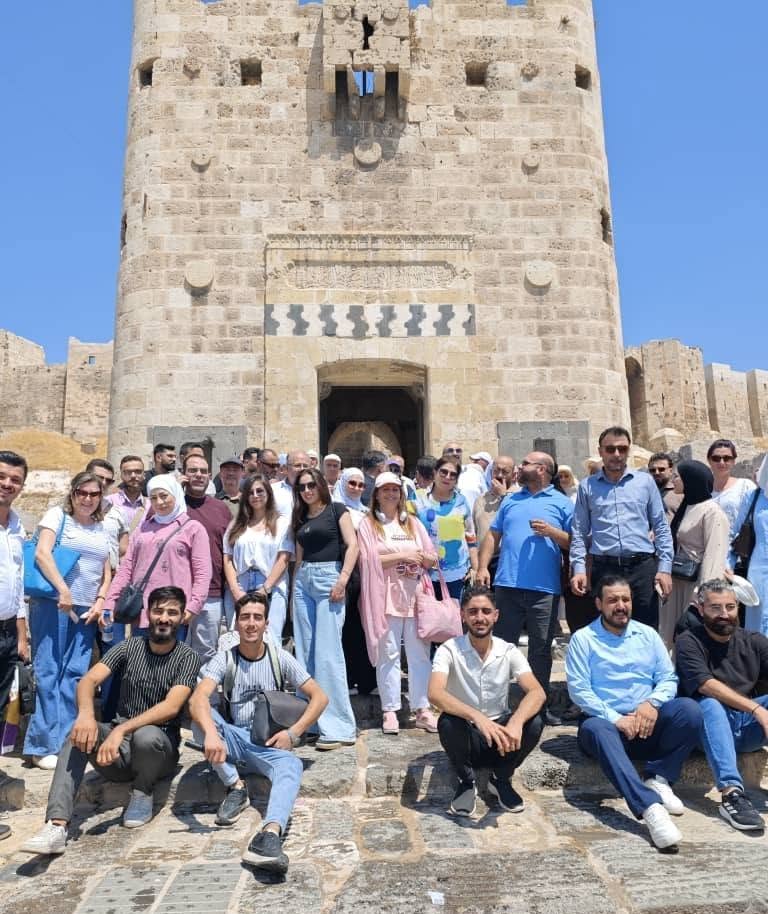
As part of the “Syrian Bridges” initiative, and in partnership with the Syrian Recovery Initiative (SRI), the Syrian Family Caravan set out with a delegation bringing together representatives from various Syrian communities and regions. The journey aimed to foster mutual understanding, exchange experiences, and explore the diversity of local narratives.
The caravan began its first stop in Aleppo with a visit to the Chaldean Church, followed by a tour of the Aleppo Citadel and the neighborhoods and alleyways of the Old City. The delegation then headed to Azaz, where the area’s administration hosted the caravan, represented by Mr. Khaled Yassin, Director of the Azaz District.
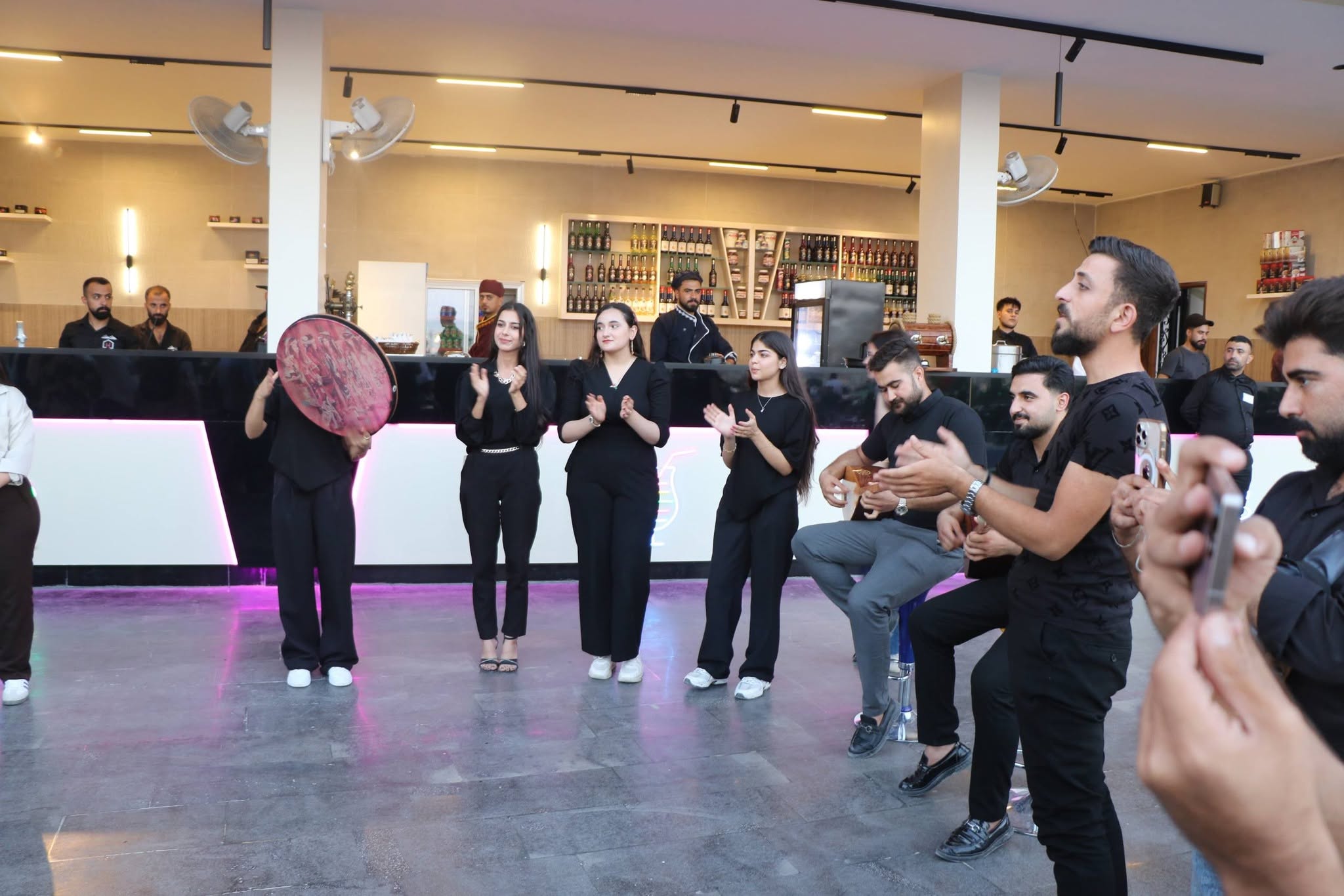
In Azaz, a dialogue session titled “Syrian Narratives” was held, during which activists from the city spoke about Azaz and its narrative throughout the years of the revolution, as well as the experiences and memories of that period that have become part of the local collective memory.
The visit concluded with a trip to Afrin, where a luncheon was held in the presence of Mr. Khairo Al-Dawoud, Director of the Afrin District, and members of the People’s Assembly representing the area. The gathering featured musical and singing performances by a local ensemble, showcasing aspects of Afrin’s rich cultural and artistic heritage.
A journey that brought Syrians from different regions and communities together, creating a space for mutual understanding and listening to one another’s stories—helping strengthen dialogue, communication, and the building of new bridges among the people of Syria.
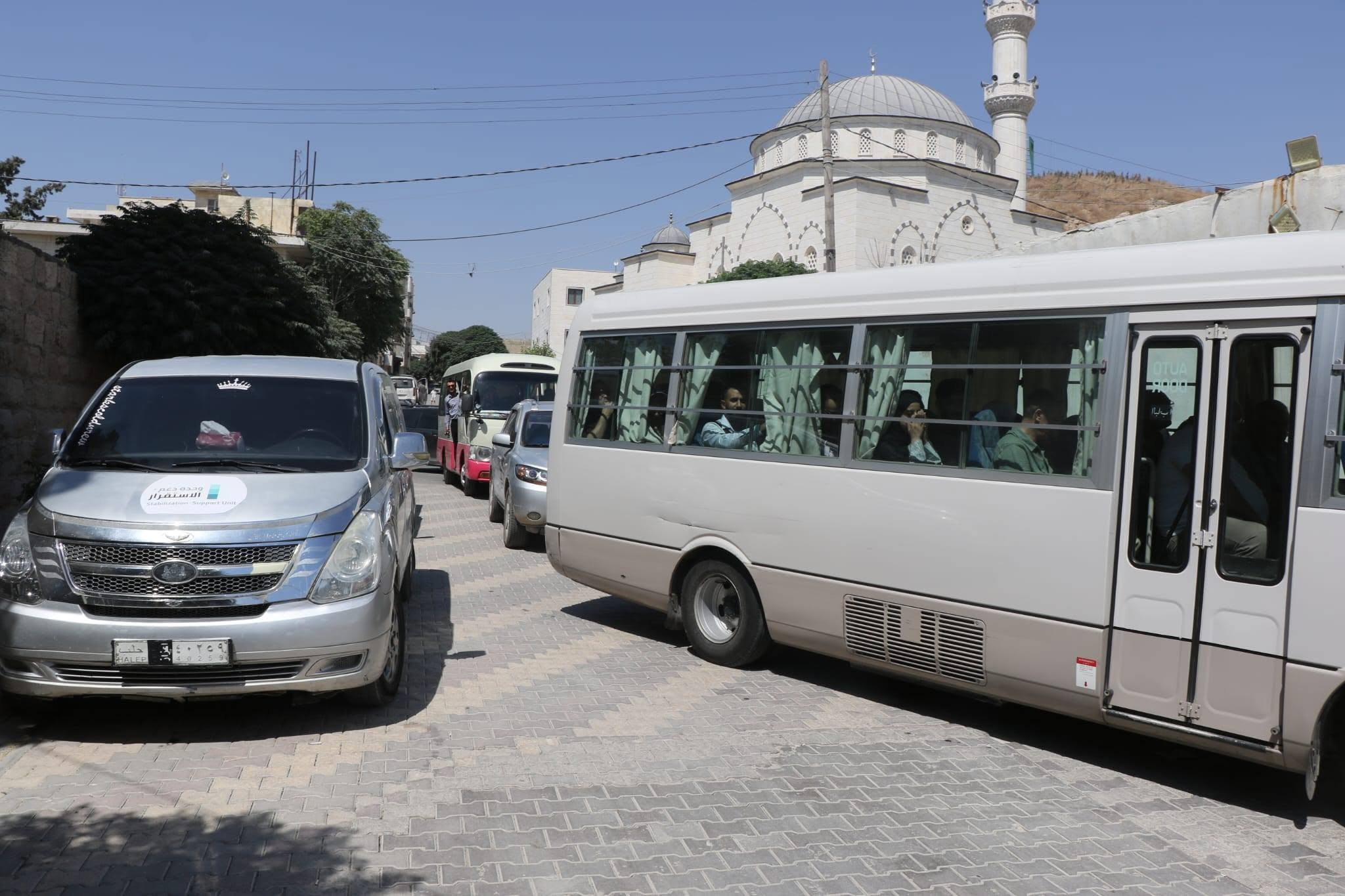
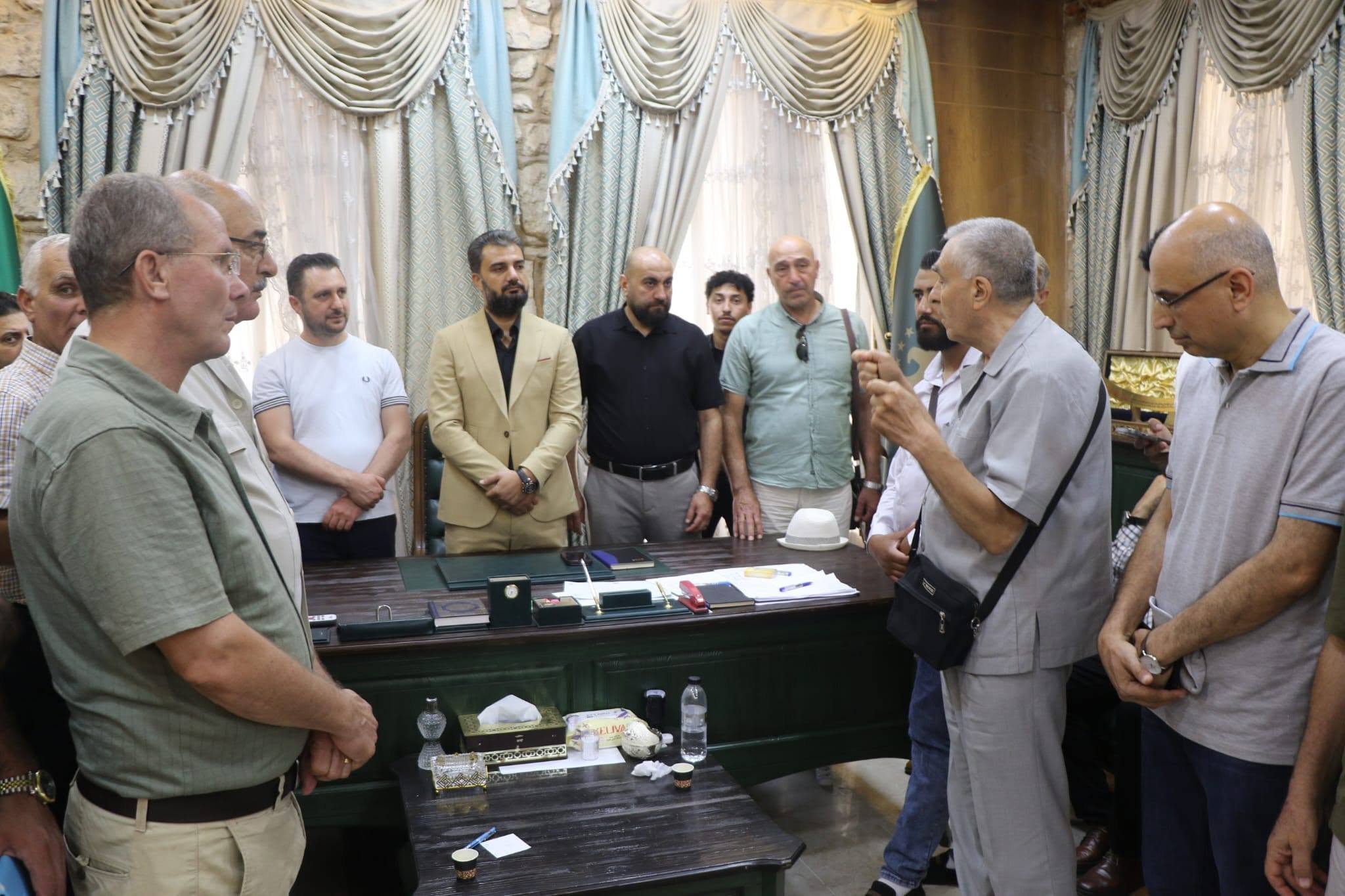
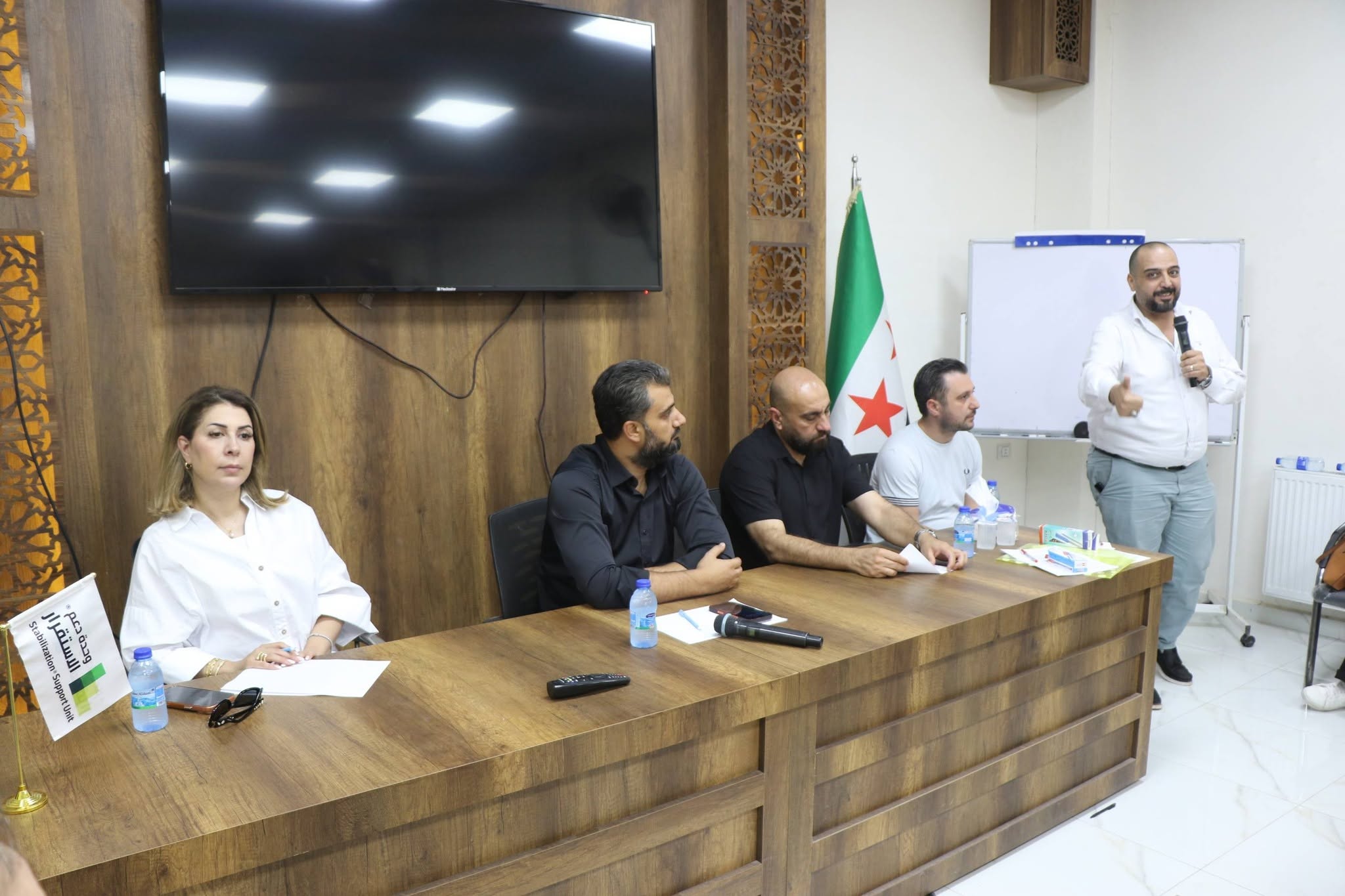
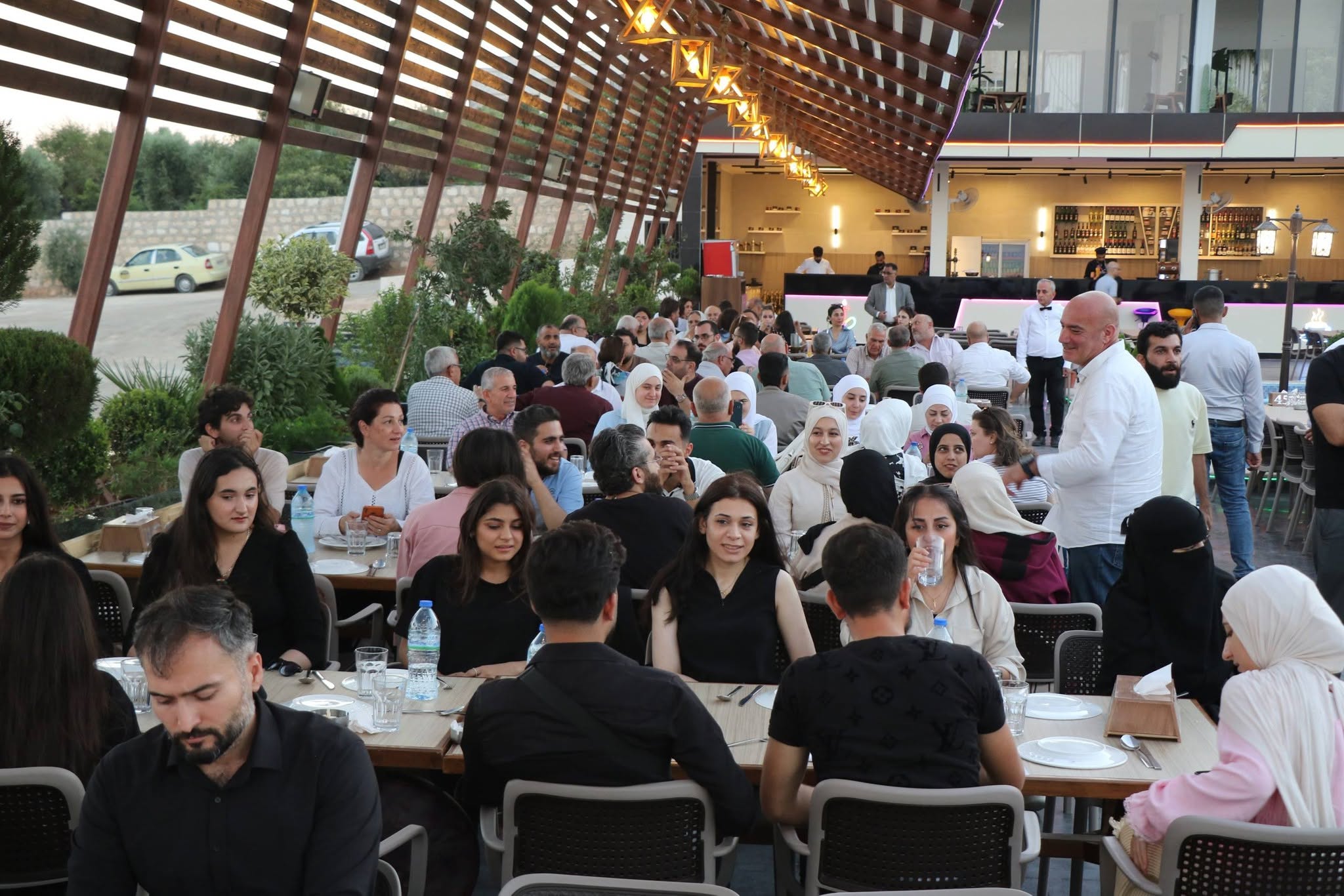
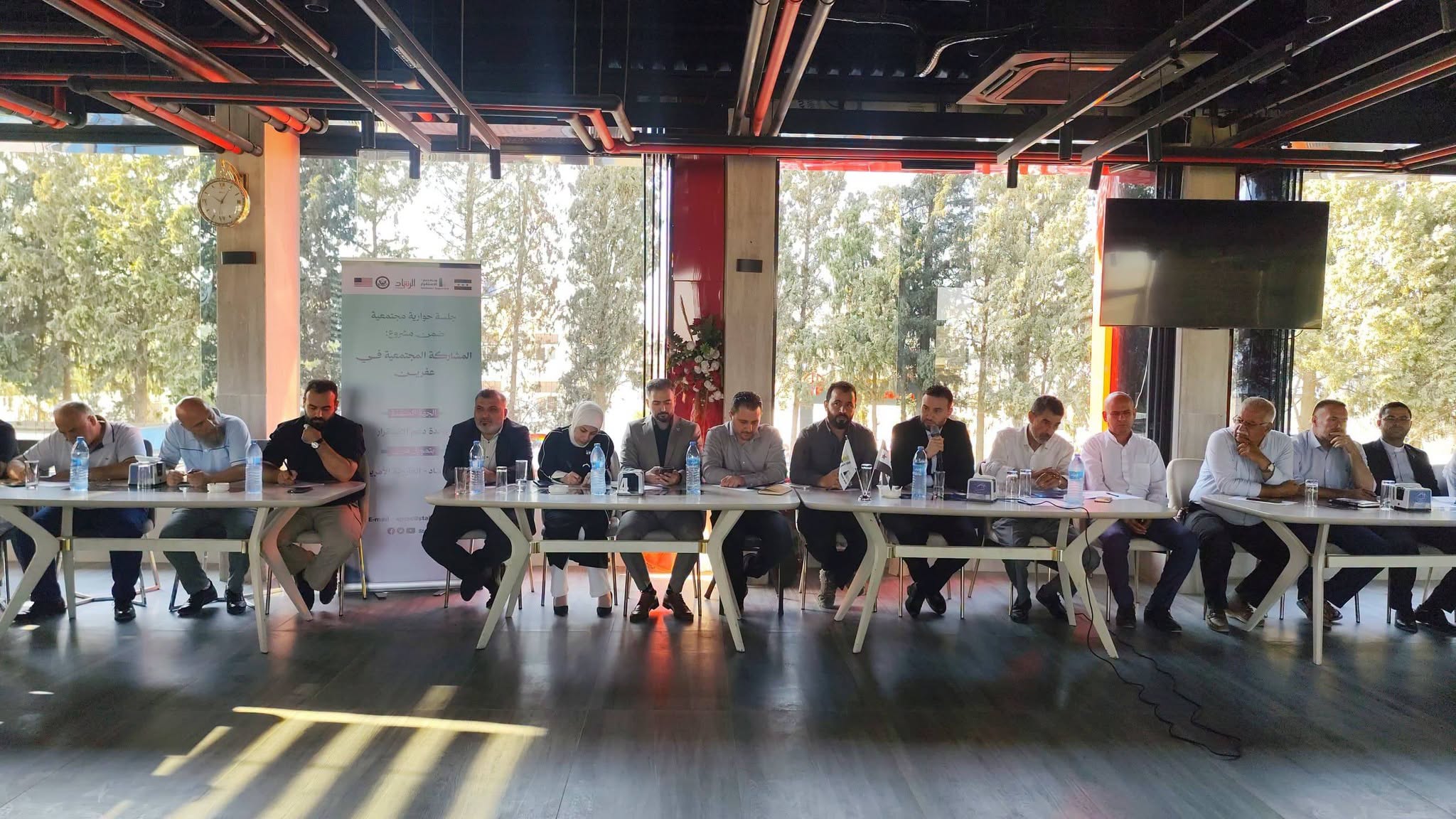
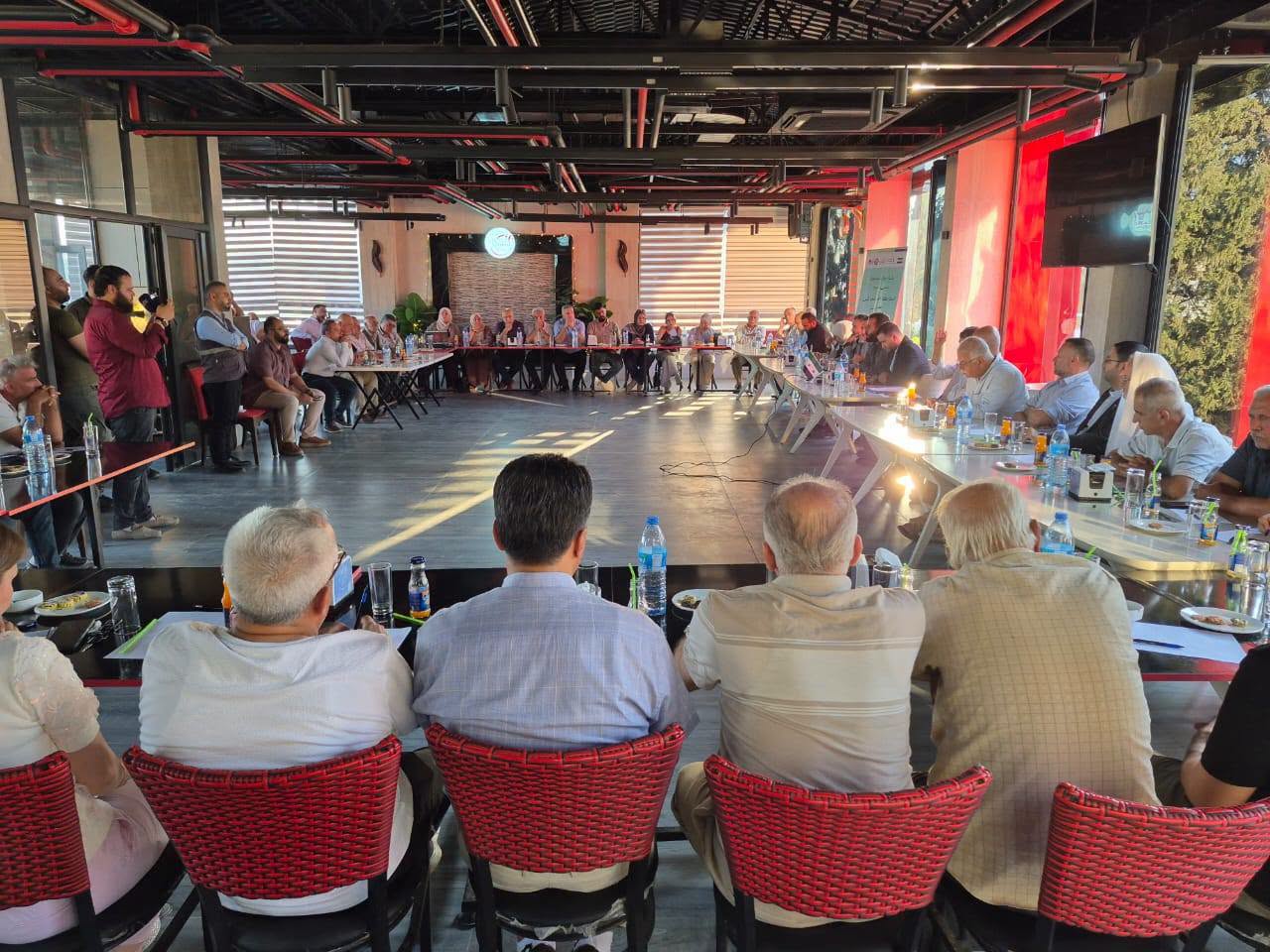
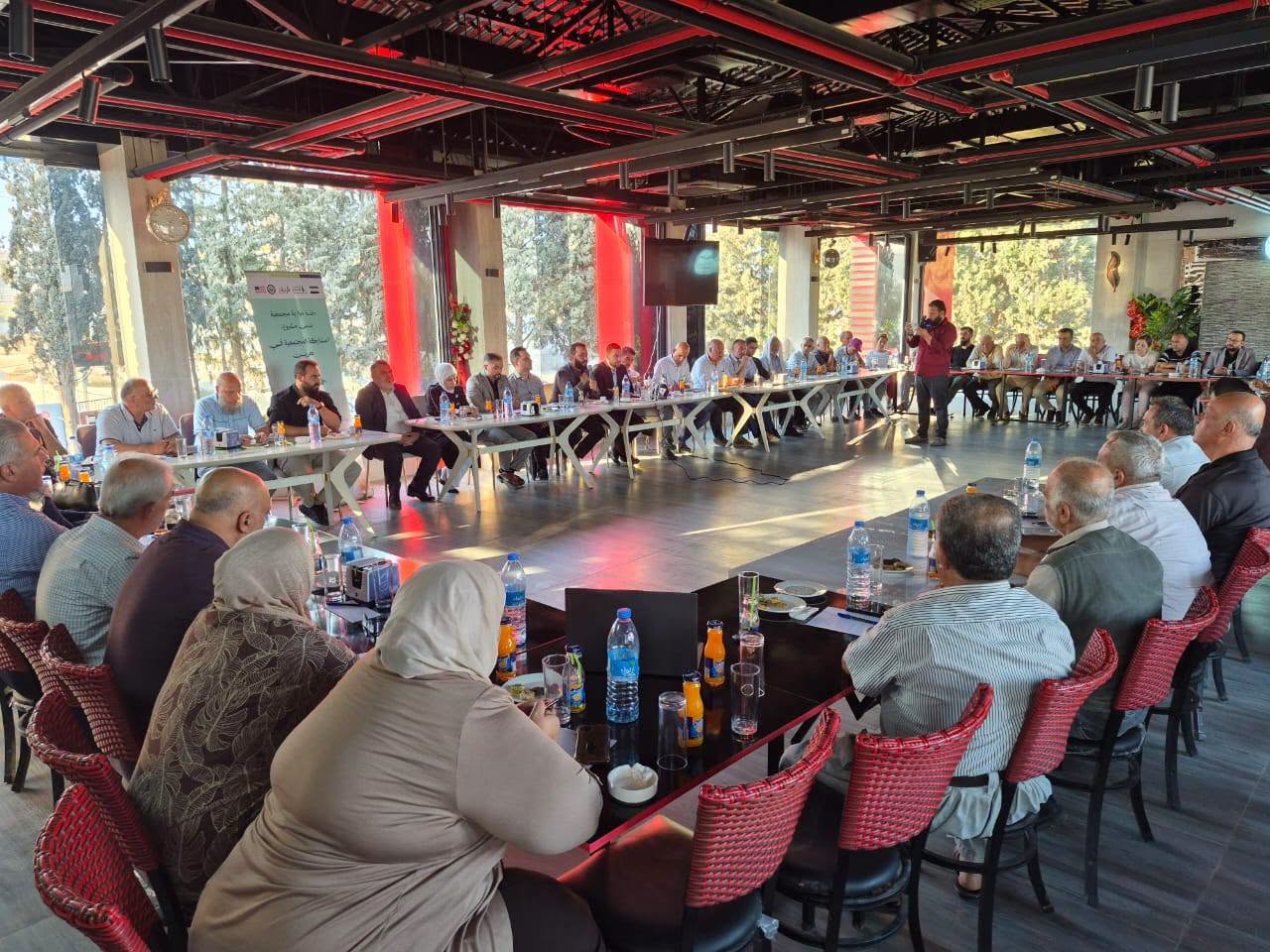
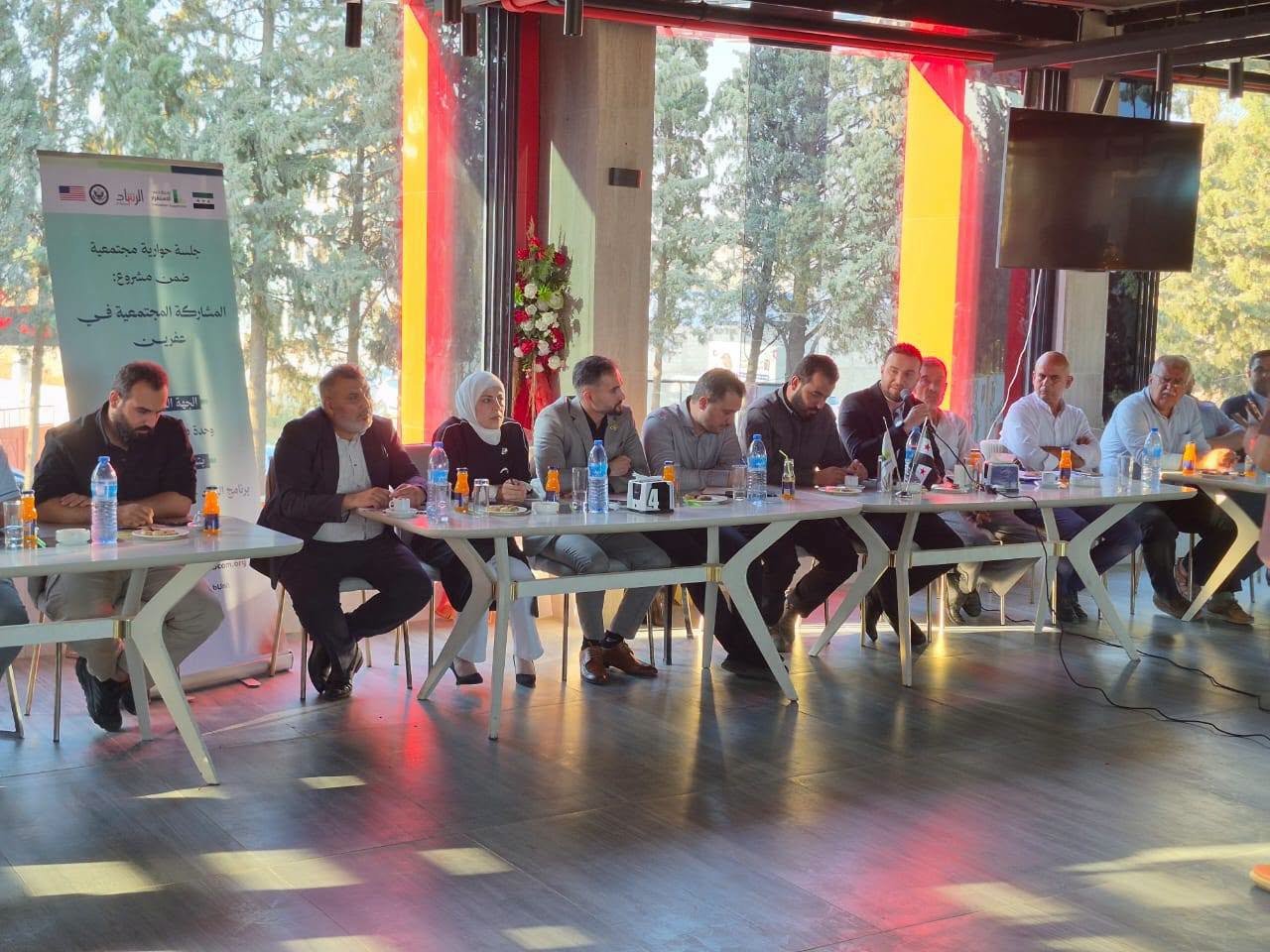
The Stabilization Support Unit (SSU) organized the first community dialogue session in #Afrin, as part of the Community Participation Project, supported by the Al-Rashad Program and funded by the U.S. Department of State.
The session was attended by the official spokesperson of the Ministry of Interior, Nour al-Din al-Baba, the Security Officer for the Afrin area, representatives from the Public Relations Office of the Security Directorate in Aleppo Governorate, local dignitaries, as well as representatives of the local community and civil society actors.
Participants discussed key local issues and needs, foremost among them strengthening security and social peace, improving public services, addressing the challenges facing residents, and listening to their demands and proposals. These efforts aim to enhance community participation and strengthen trust and cooperation between residents and institutions.
The session is part of a series of community dialogue workshops implemented by the Stabilization Support Unit in Sheikh Maqsoud, Al-Ashrafiyah, Al-Shuyukh, and Afrin, with the aim of engaging local communities in identifying their priorities and strengthening community partnerships.
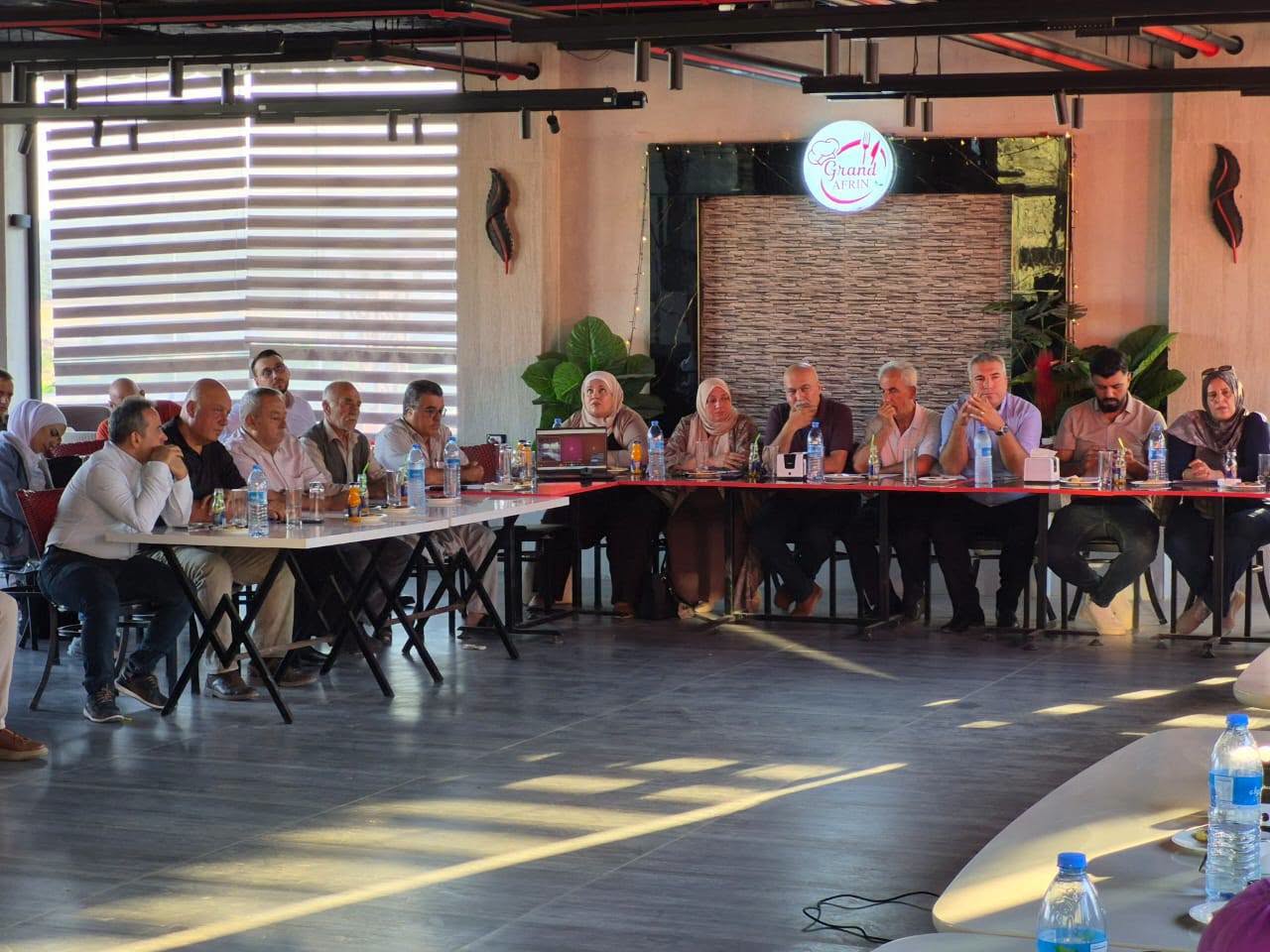
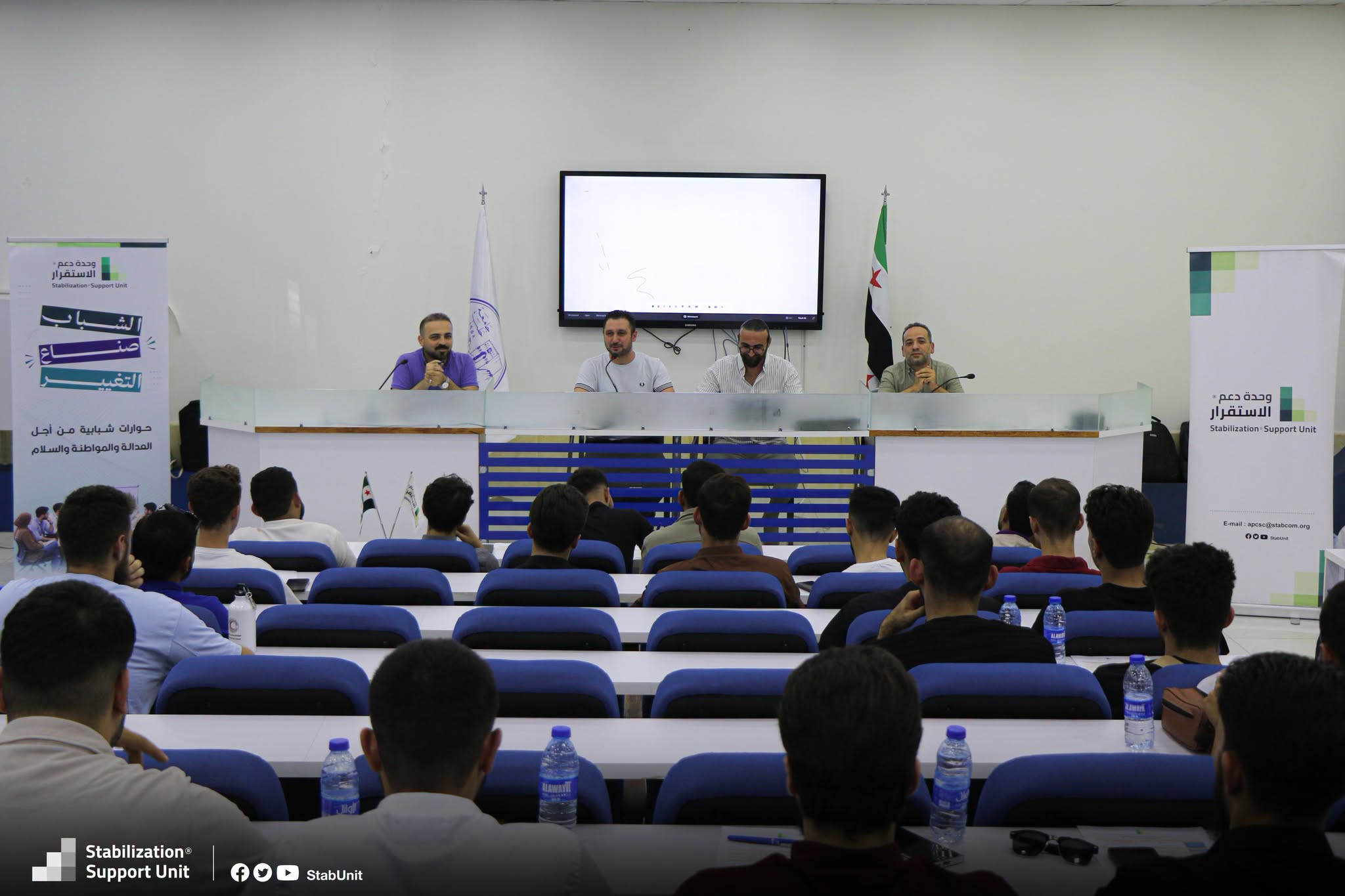
Youth as Changemakers – University of Aleppo
The Stabilization Support Unit, in partnership with the Syrian Students’ Union, launched the “Changemakers” program, bringing together students from the Universities of Aleppo and Damascus, as part of a vision aimed at strengthening the role of university youth in building a more cohesive and open future for Syria.
The program includes a series of workshops and training sessions, alongside support for a number of student-led initiatives, enabling students to develop their skills and turn their ideas into initiatives that create a positive impact in their communities.
This initiative stems from the Stabilization Support Unit’s belief that Syrian youth are among the most important drivers of change, and that universities, which bring together students from diverse regions and backgrounds, provide an important space for communication, knowledge exchange, and building bridges of understanding among the different components of Syrian society.
Through “Changemakers,” we seek to empower young people to become ambassadors of positive messages and active partners in promoting dialogue, cooperation, and social cohesion, while contributing to leading change towards a better future across Syria.
The program represents a first step in a partnership that we hope will continue and expand, creating more opportunities for Syrian youth to participate in shaping change and building a more cohesive society.
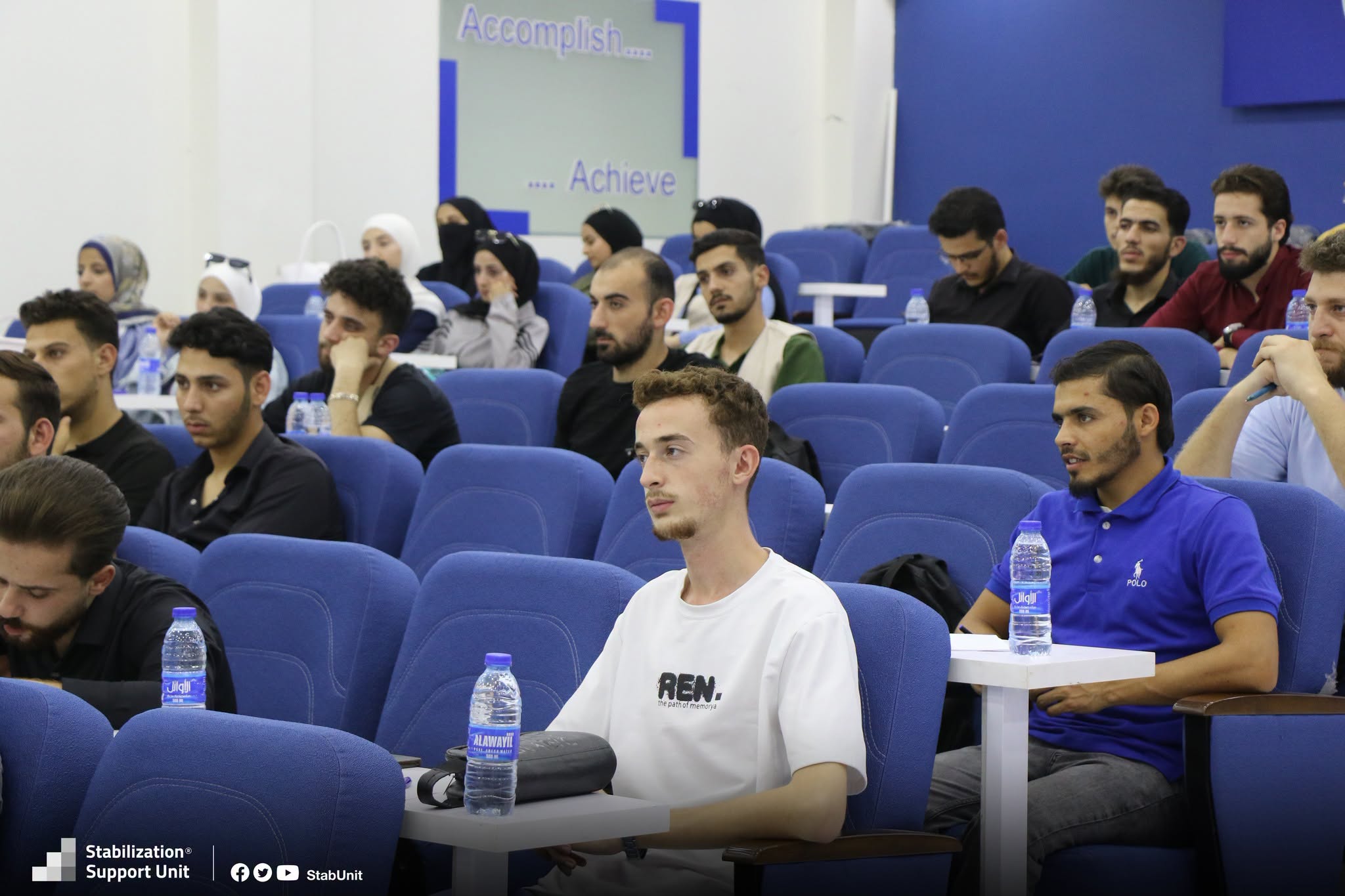
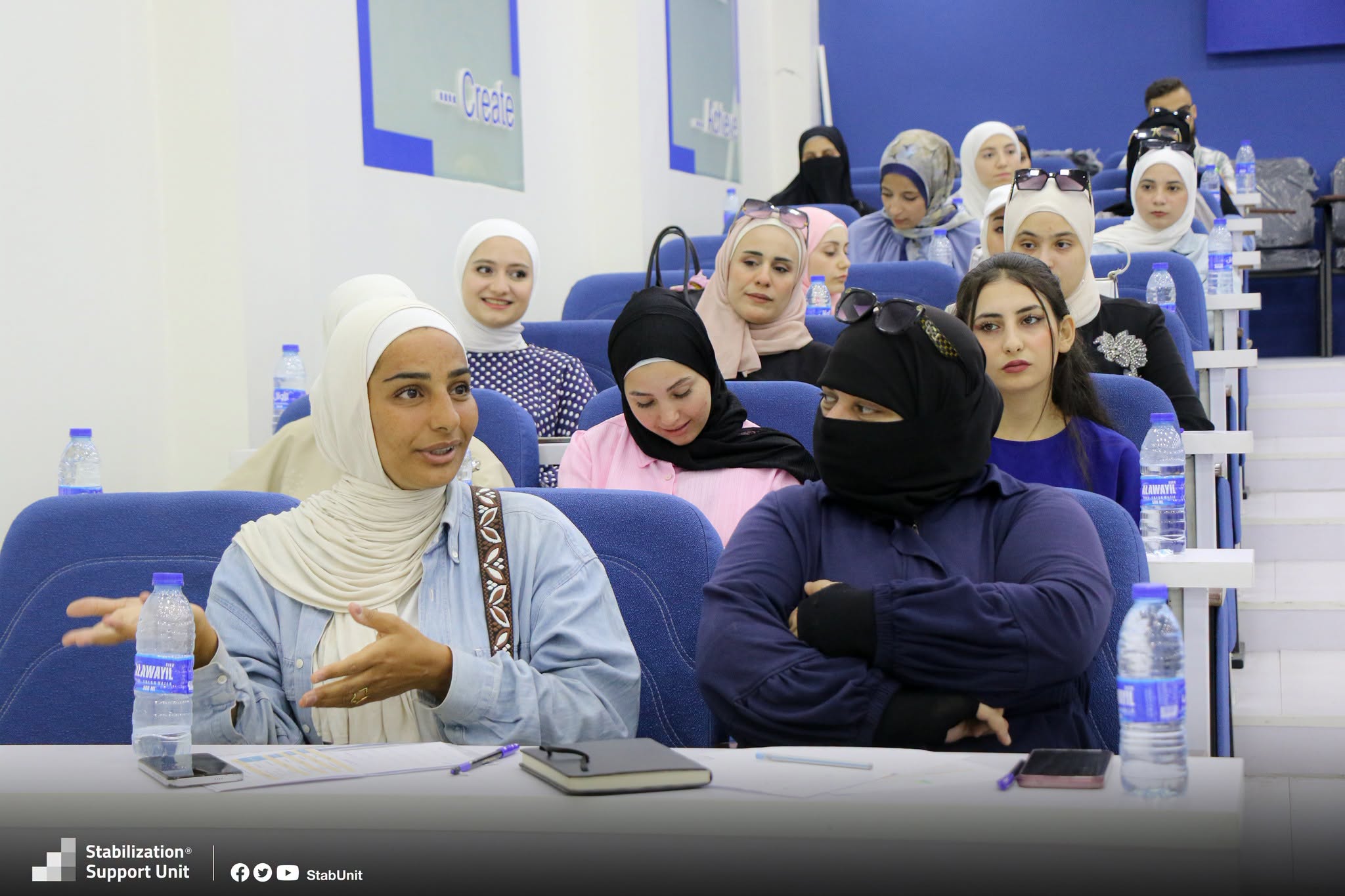
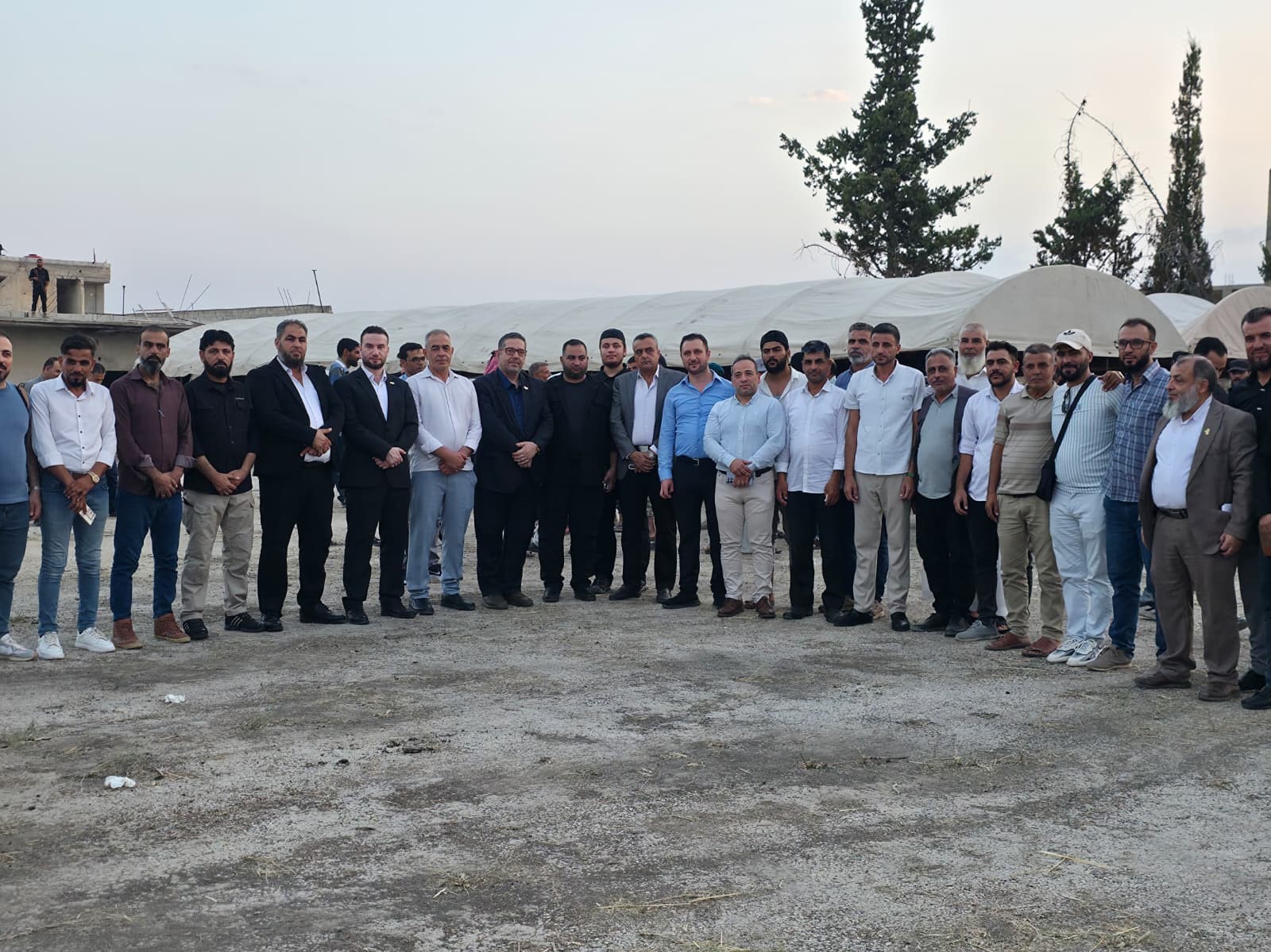
The Stabilization Unit (SSU) organized the first community dialogue session in Al-Shuyukh District, in cooperation with the administration of the Ayn al-Arab Region, as part of the Community Participation Project, supported by Al Rashad Program and funded by the U.S. Department of State.
The session was attended by Nour al-Din Al-Baba, Official Spokesperson for the Ministry of Interior; Ibrahim Muslim, Head of the Ayn al-Arab Region; Shawak Assaf, Member of the People’s Assembly; as well as representatives of the Internal Security and Public Security forces, local dignitaries, community representatives, and civil society actors.
Participants discussed key local issues and needs, particularly strengthening security and social peace, improving public services, addressing challenges facing local residents, and listening to their demands and proposals. The discussions aimed to enhance community participation, improve service delivery, and strengthen trust and cooperation between residents and local institutions.
The session is part of a series of community dialogue workshops implemented by the Stabilization Unit in Sheikh Maqsoud, Al-Ashrafieh, Al-Shuyukh, and Afrin, with the aim of engaging local communities in identifying their priorities and strengthening community partnerships.
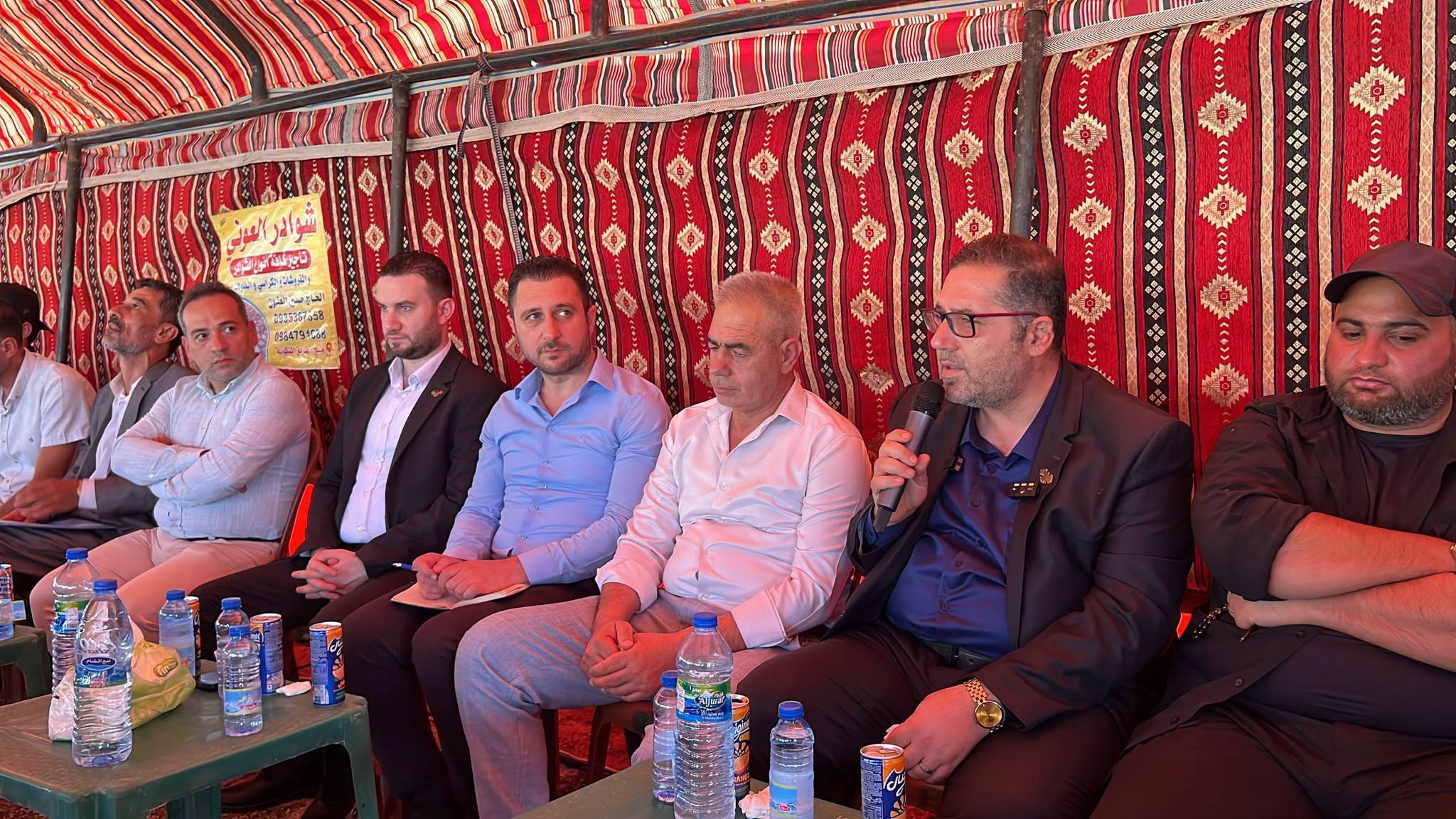
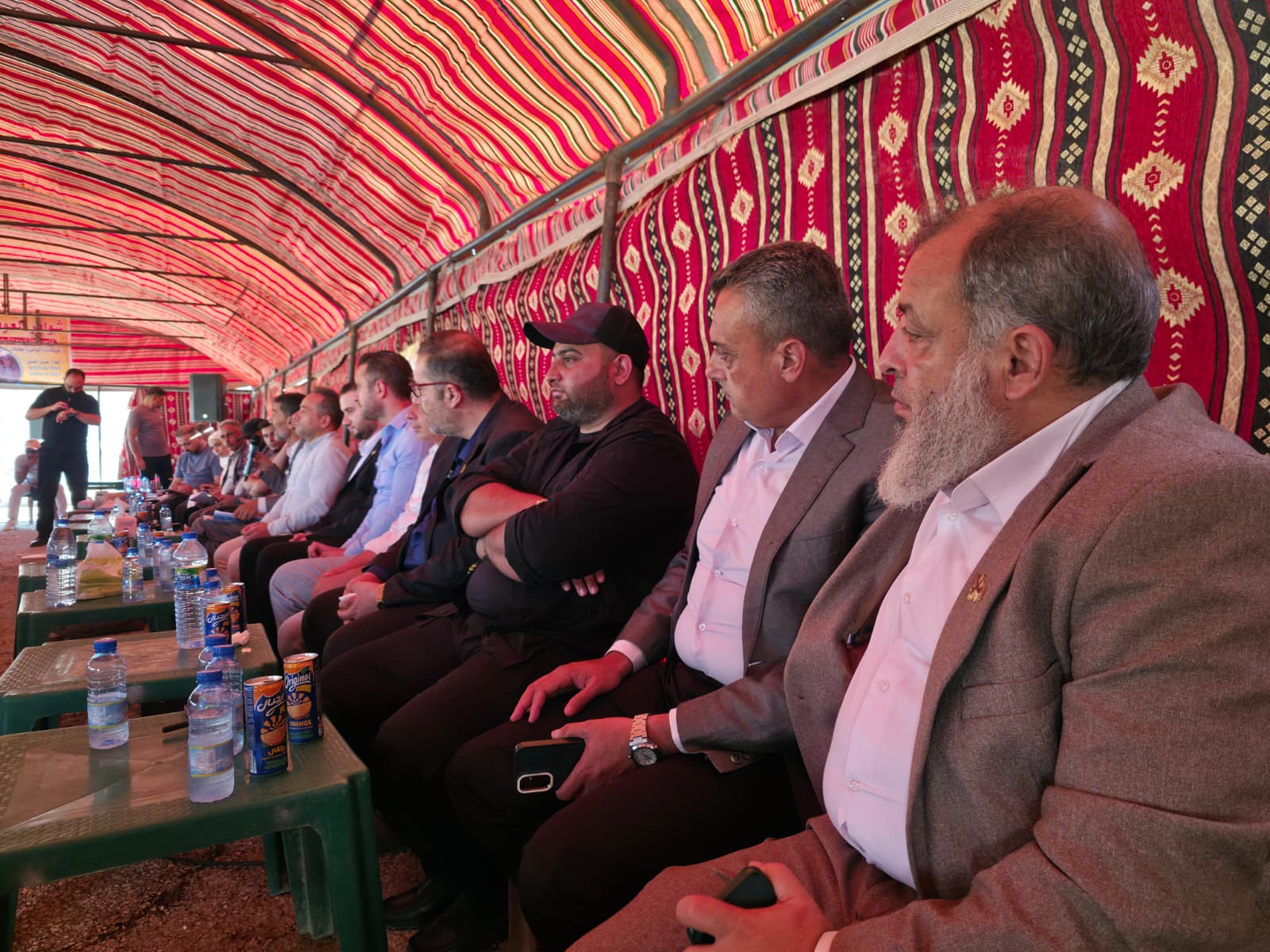
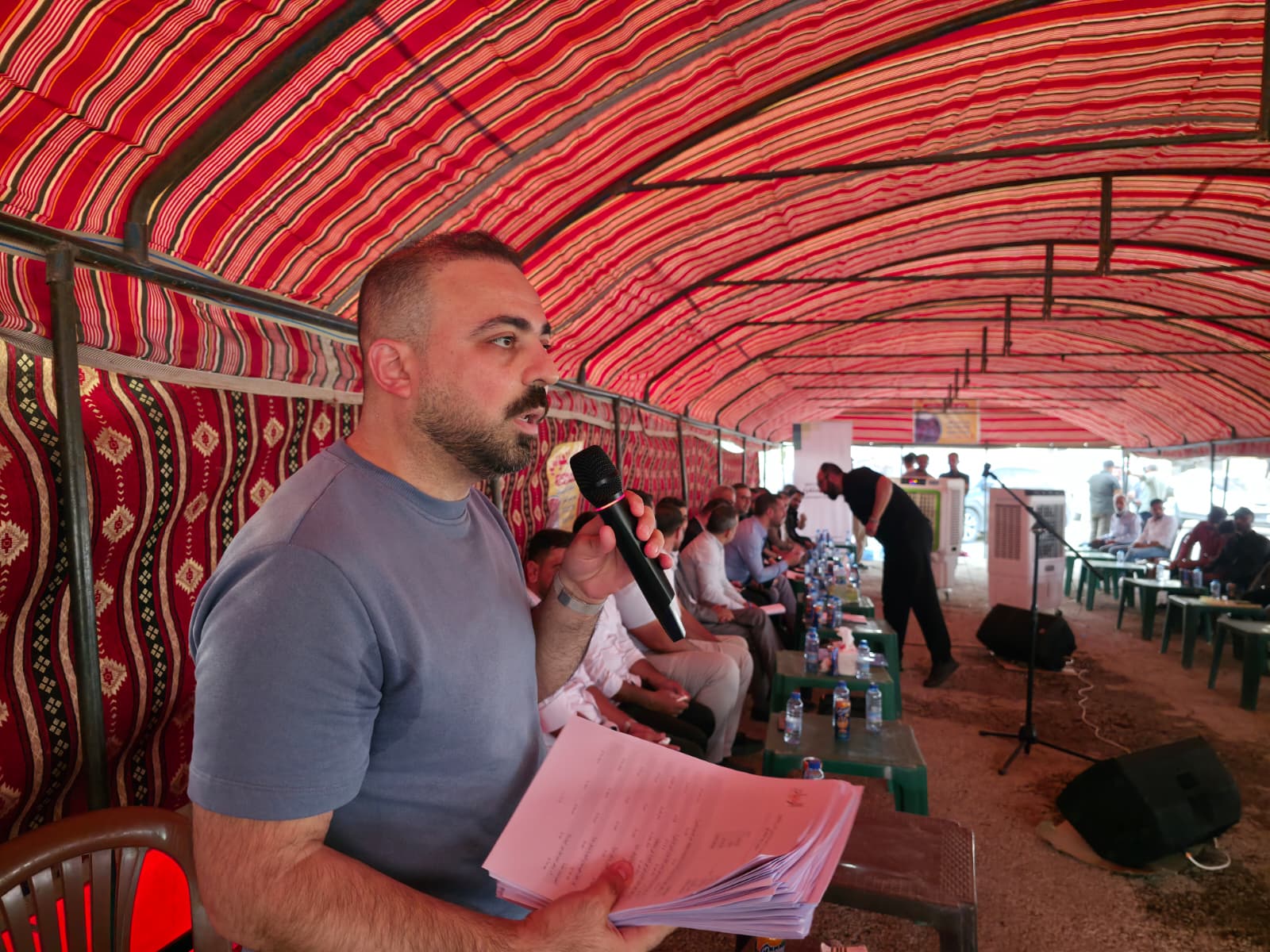
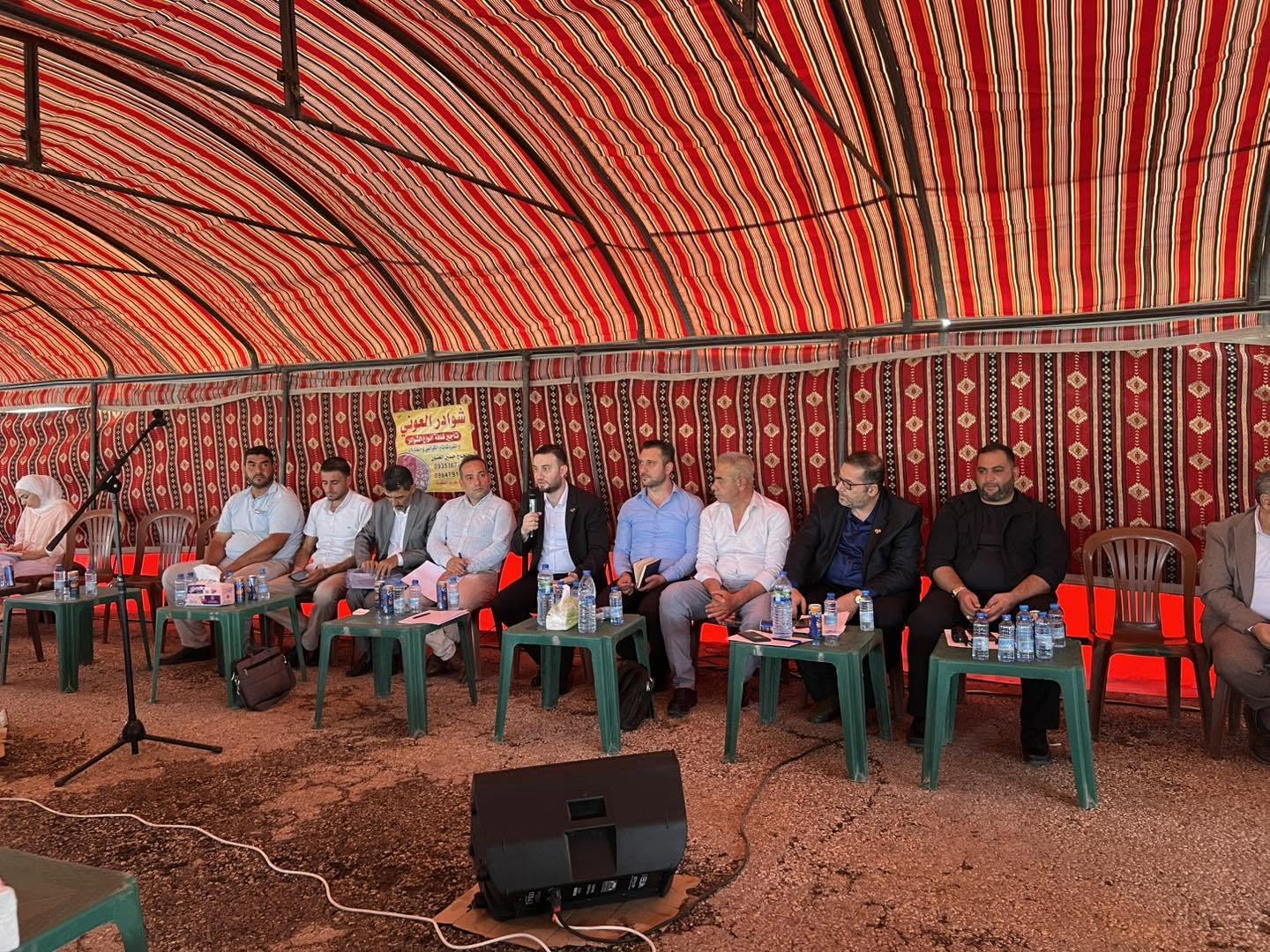
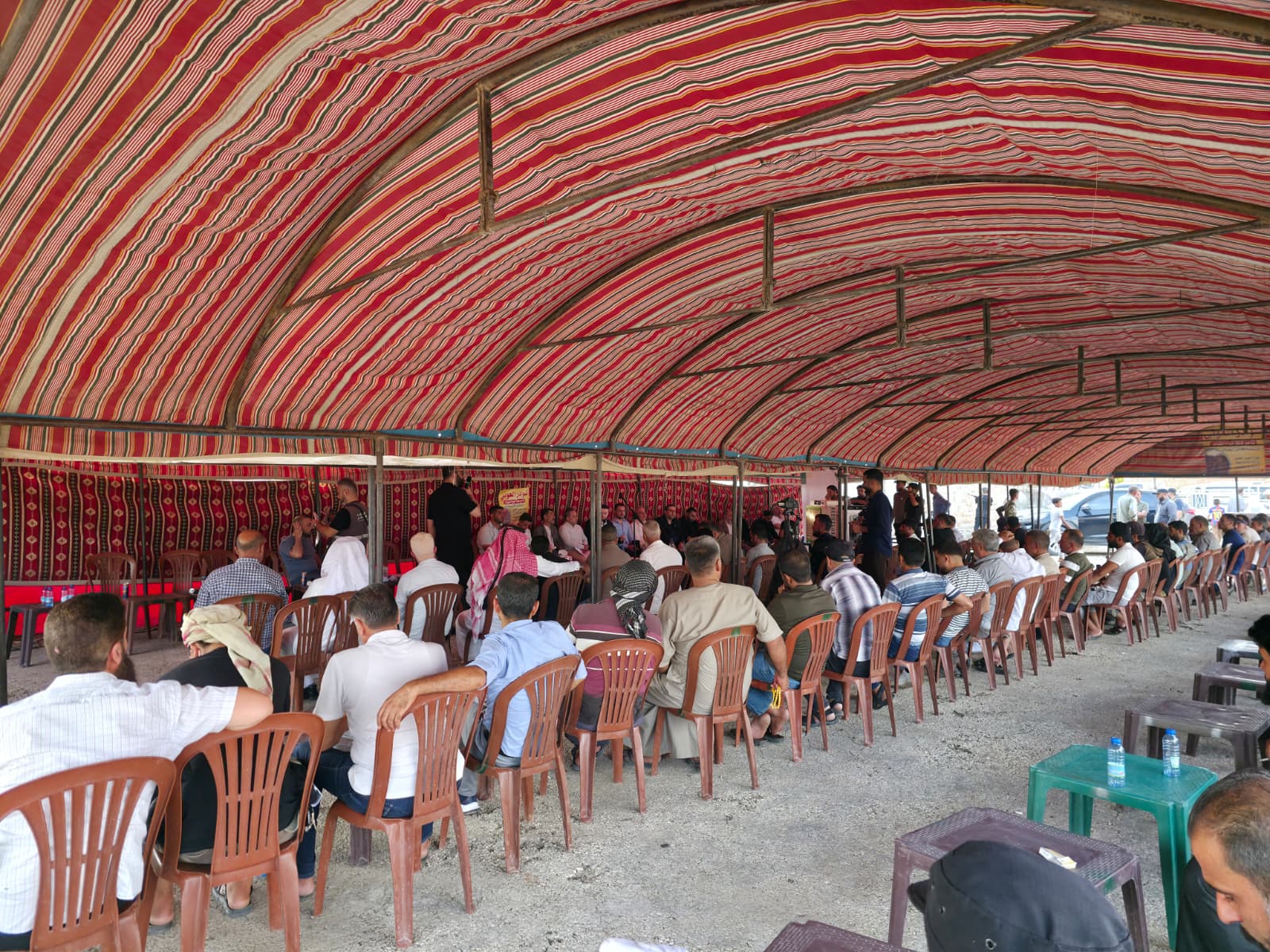
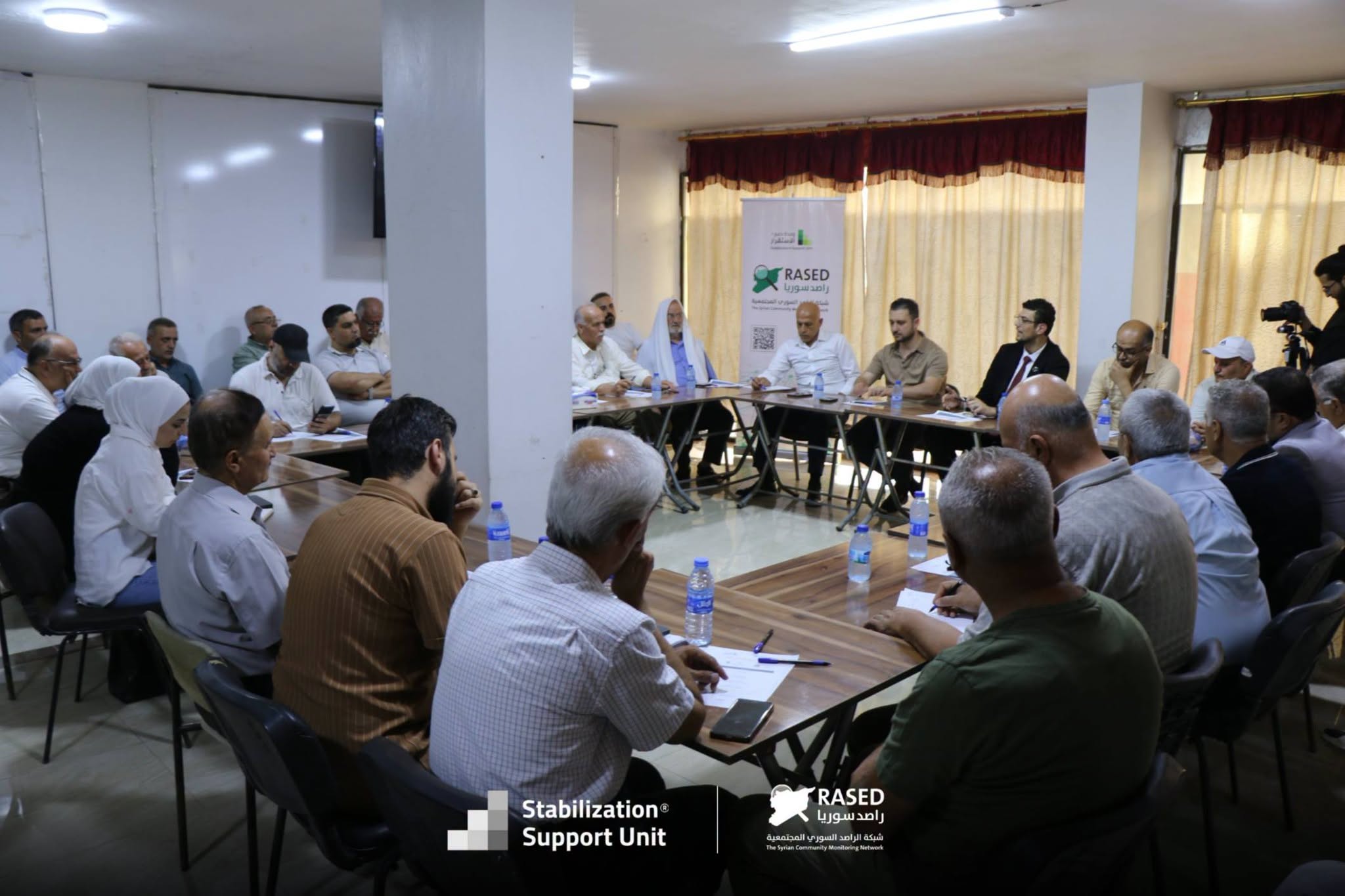
On Tuesday, Syria Observer, a program of the Stabilization Support Unit (SSU), organized the third dialogue session of its kind following the assumption of office by the newly elected members of the Syrian People's Assembly.
The session brought together representatives of civil society organizations, legal experts, and activists to discuss legislative priorities for the coming phase, support the legislative reform process, and strengthen communication between the People's Assembly and society.
Participants discussed several priority legislative issues, including:
- Reviewing the law governing border-area property ownership in Afrin.
- Reviewing the regulations related to the so-called Orontes Basin procedures affecting agricultural lands near the region.
- Enacting legislation to curb the spread of weapons and place them under the exclusive authority of the state.
- Introducing laws to combat sectarian incitement and address the spread of misinformation.
The session also featured an open discussion on the most urgent legislative priorities that could pave the way for broader legal reforms and contribute to strengthening social stability.
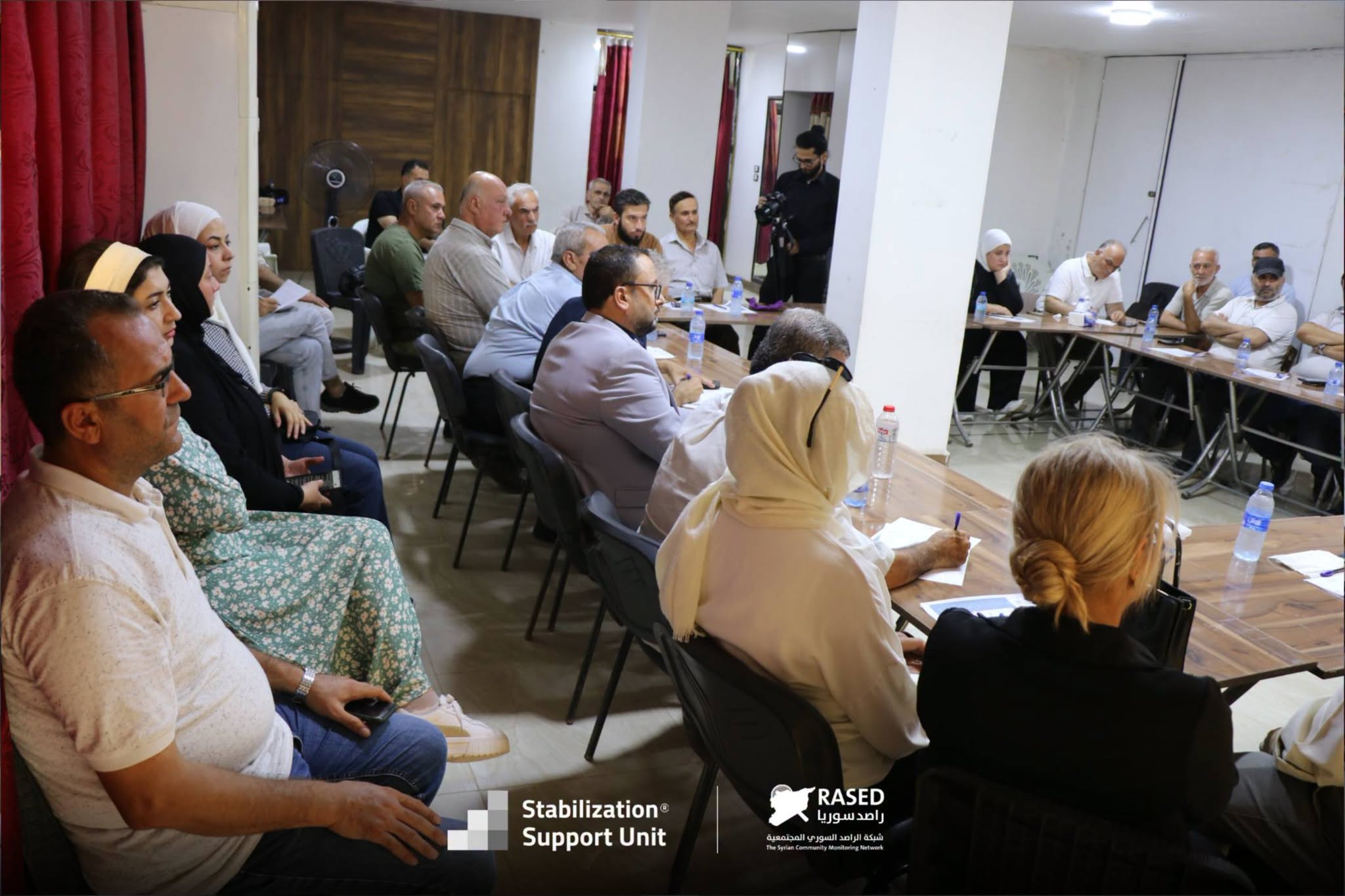
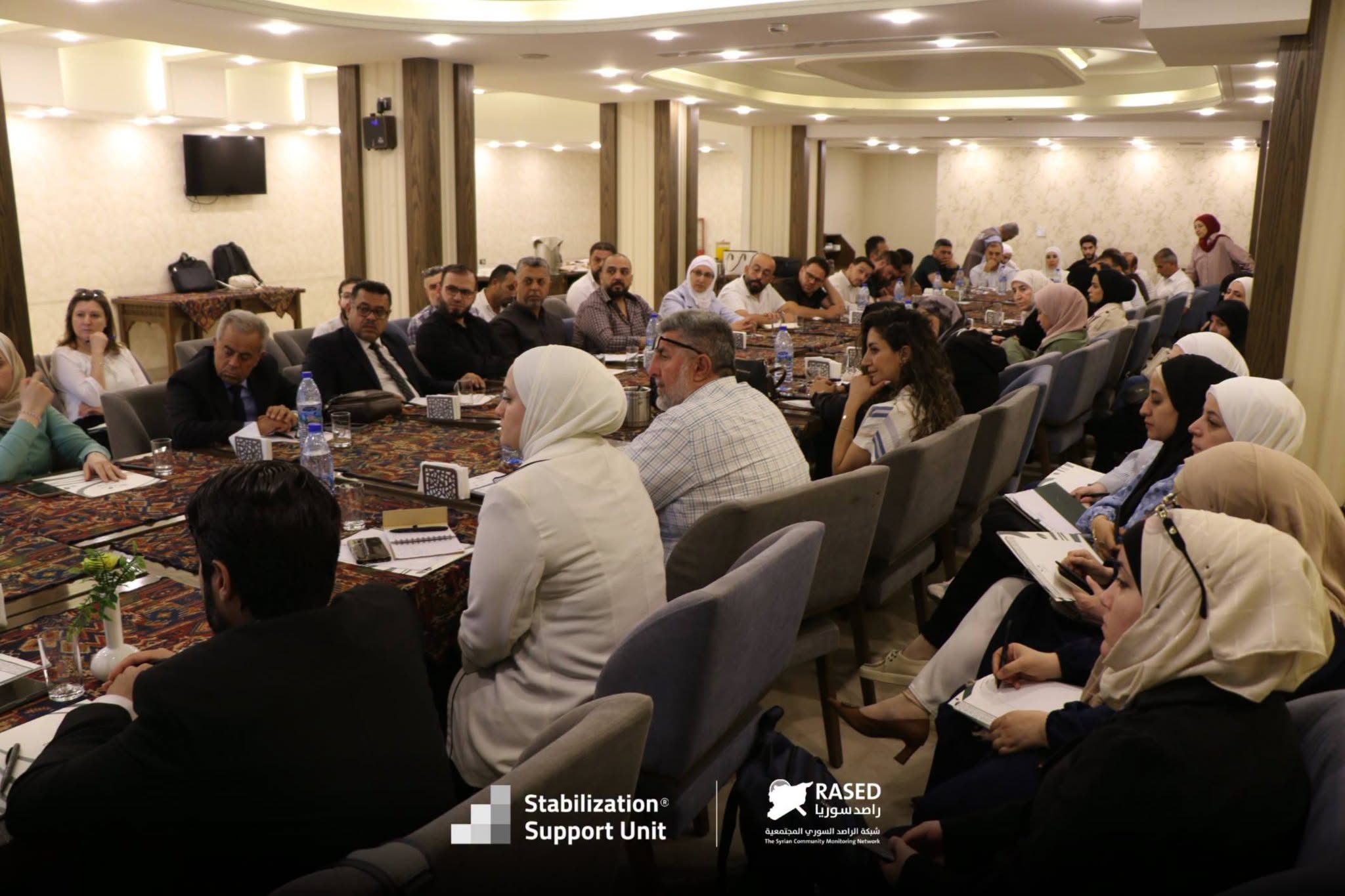
On Wednesday, Syria Observer, a program of the Stabilization Support Unit (SSU), organized the fourth dialogue session of its kind following the assumption of office by the newly elected members of the Syrian People's Assembly.
The session brought together representatives of the Aleppo Provincial Council, the Political Affairs Directorate, and the Social Affairs Directorate, along with a large number of representatives from civil society organizations, legal experts, and activists. The discussion aimed to identify legislative priorities for the coming phase, support the legislative reform process, and strengthen communication between the People's Assembly and society.
Participants discussed several priority legislative issues, including:
- Transitional justice legislation, political isolation measures, and mechanisms to support and provide redress for victims and their families.
- Economic recovery laws, the development of a legal framework to encourage investment, stimulate economic growth, and facilitate reconstruction.
- Legislation related to the reintegration of workers and the promotion of social justice.
- Laws protecting freedom of opinion and expression, as well as legislation regulating political party life.
- The urgent need to ensure meaningful civil society participation in the legislative process through engagement with the Assembly's specialized committees.
The session also featured an open discussion on the most pressing legislative priorities that could pave the way for broader legal reforms and contribute to strengthening social stability.
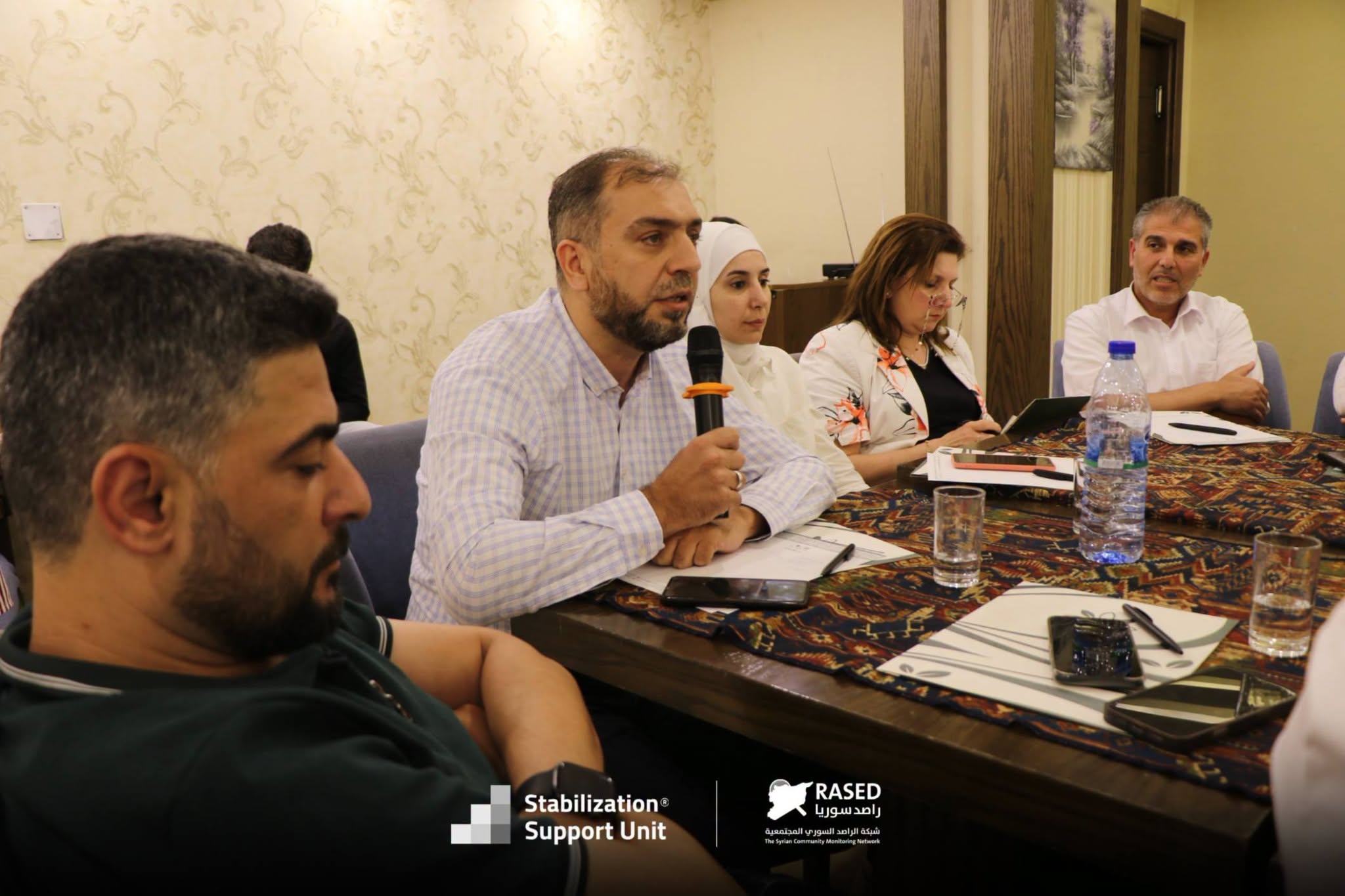
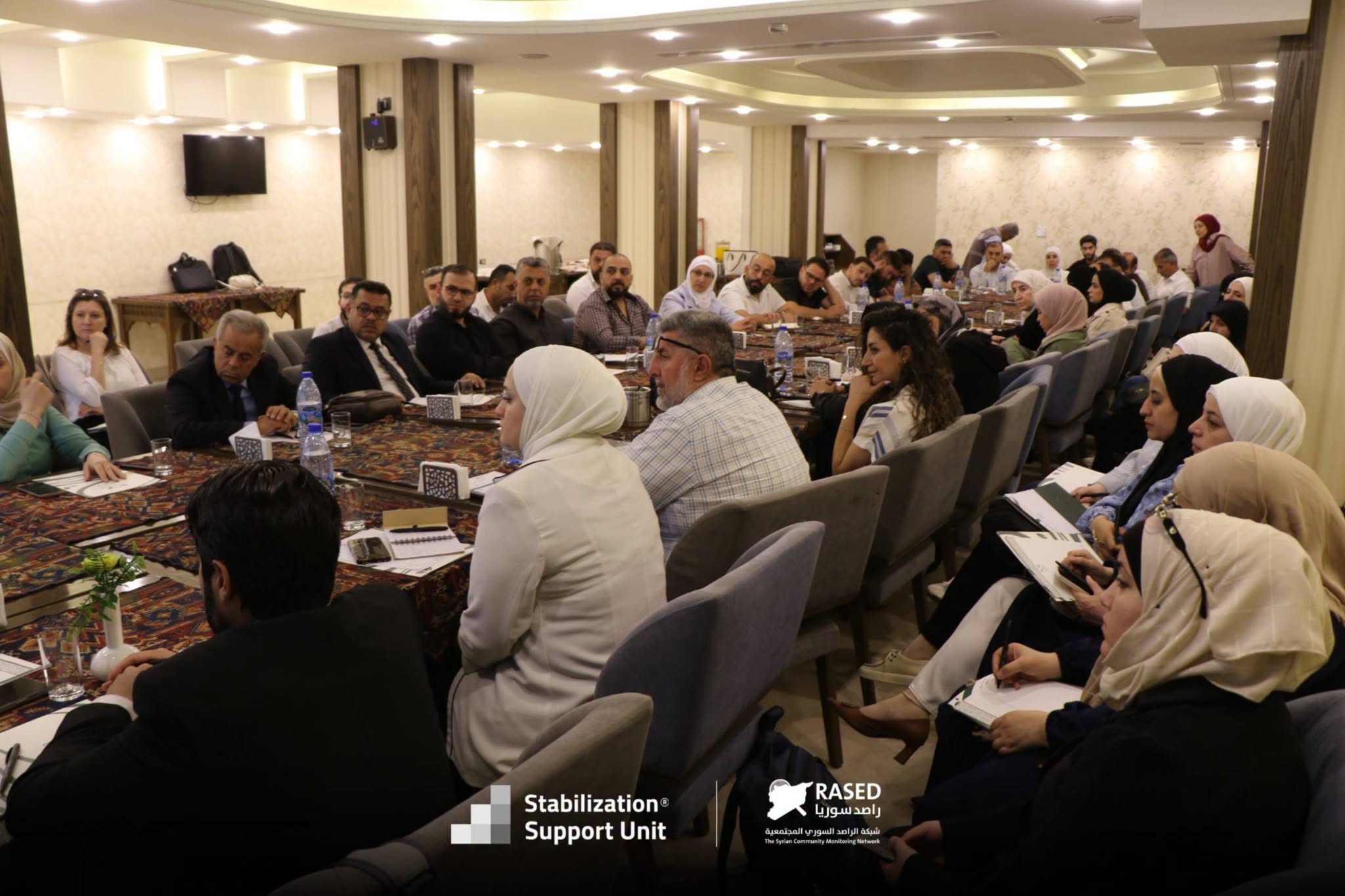
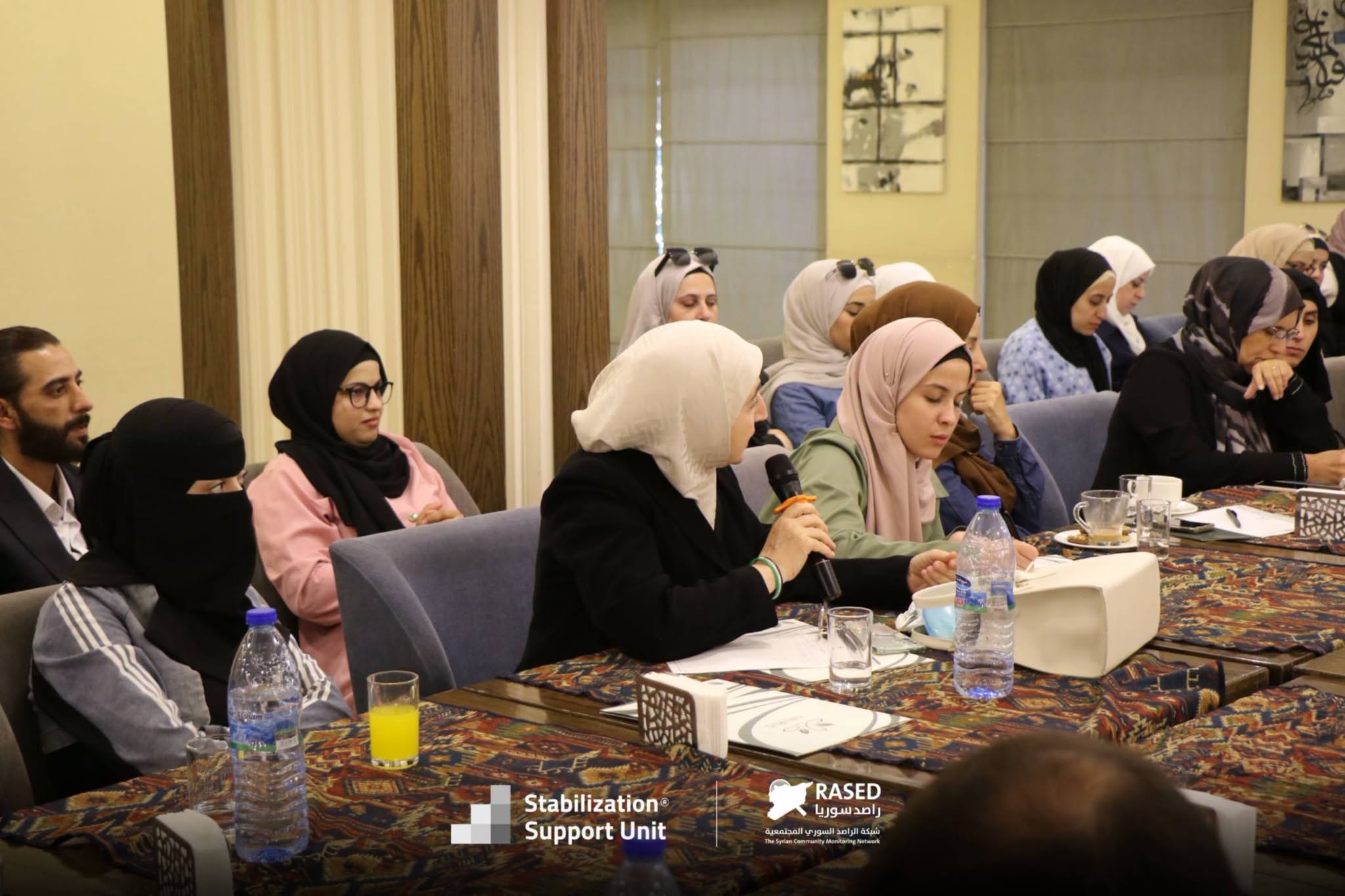
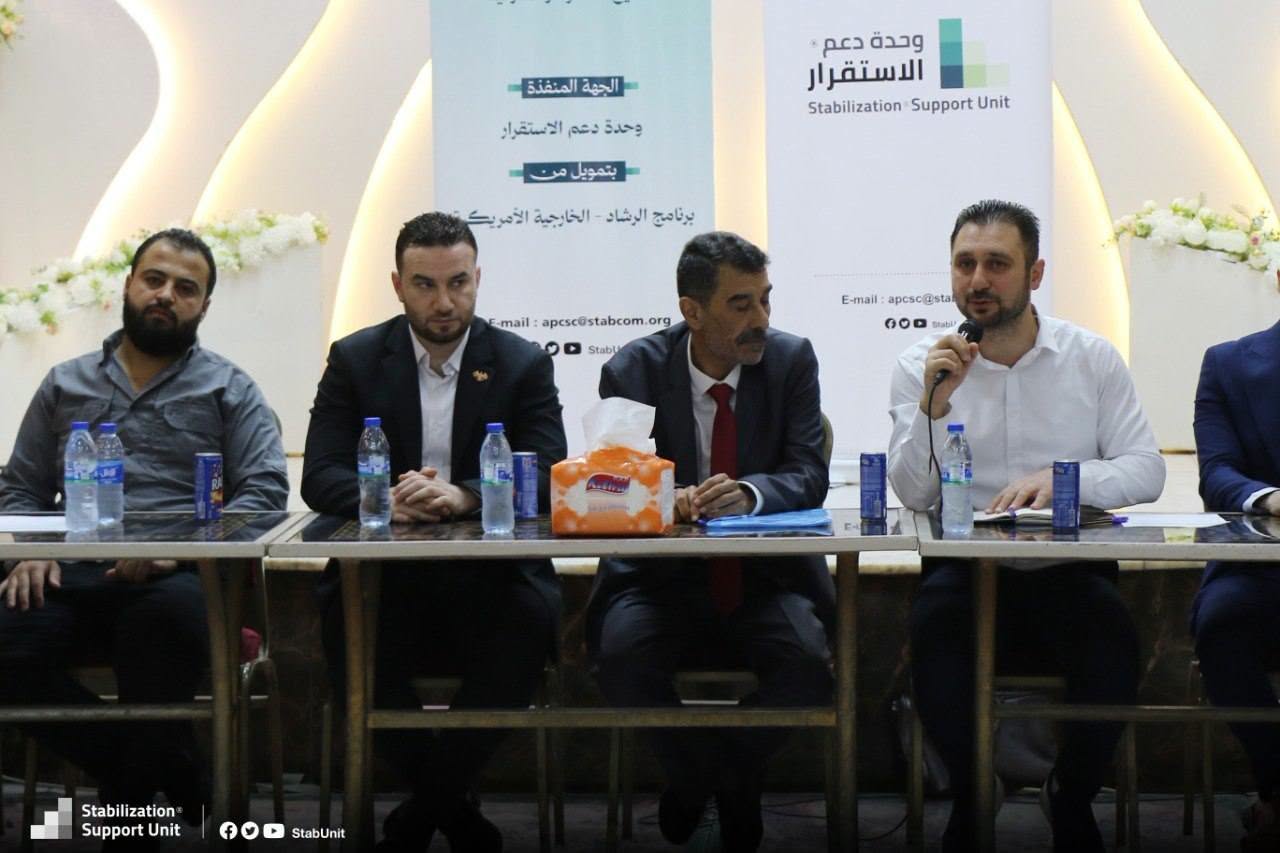
On Saturday, the Stabilization Support Unit (SSU) organized the first community dialogue session as part of the "Community Participation and Street Lighting in Sheikh Maqsoud, Al-Ashrafieh, and Al-Shuyoukh" project, in partnership with the Rishad Program, funded by the U.S. Department of State.
The session was attended by Noureddine Al-Baba, Spokesperson for the Ministry of Interior, the Head of the Public Relations Office of the Internal Security Command in Aleppo, the Public Security and Internal Security officials for the Sheikh Maqsoud and Al-Ashrafieh neighborhoods, members of the Second Bloc of Aleppo Governorate, as well as community leaders, local representatives, and civil society actors.
The session opened with an introduction to the project, its objectives, and implementation phases, followed by an open dialogue with participants to discuss key issues affecting the local community. Discussions focused on promoting security and social peace, community safety priorities, security and economic challenges, and the role of community participation in supporting stability and strengthening trust between citizens and public institutions.
Participants also discussed the current state of street lighting in Sheikh Maqsoud and Al-Ashrafieh and highlighted the project's importance in improving public safety, enhancing essential services, and responding to the needs of local residents. They emphasized the importance of maintaining dialogue and coordination between the community and relevant authorities to ensure sustainable impact.
This session is part of a series of community dialogue workshops that SSU will implement in Al-Shuyoukh, Afrin, Sheikh Maqsoud, and Al-Ashrafieh, with the aim of engaging local communities in identifying their priorities and strengthening community partnership.
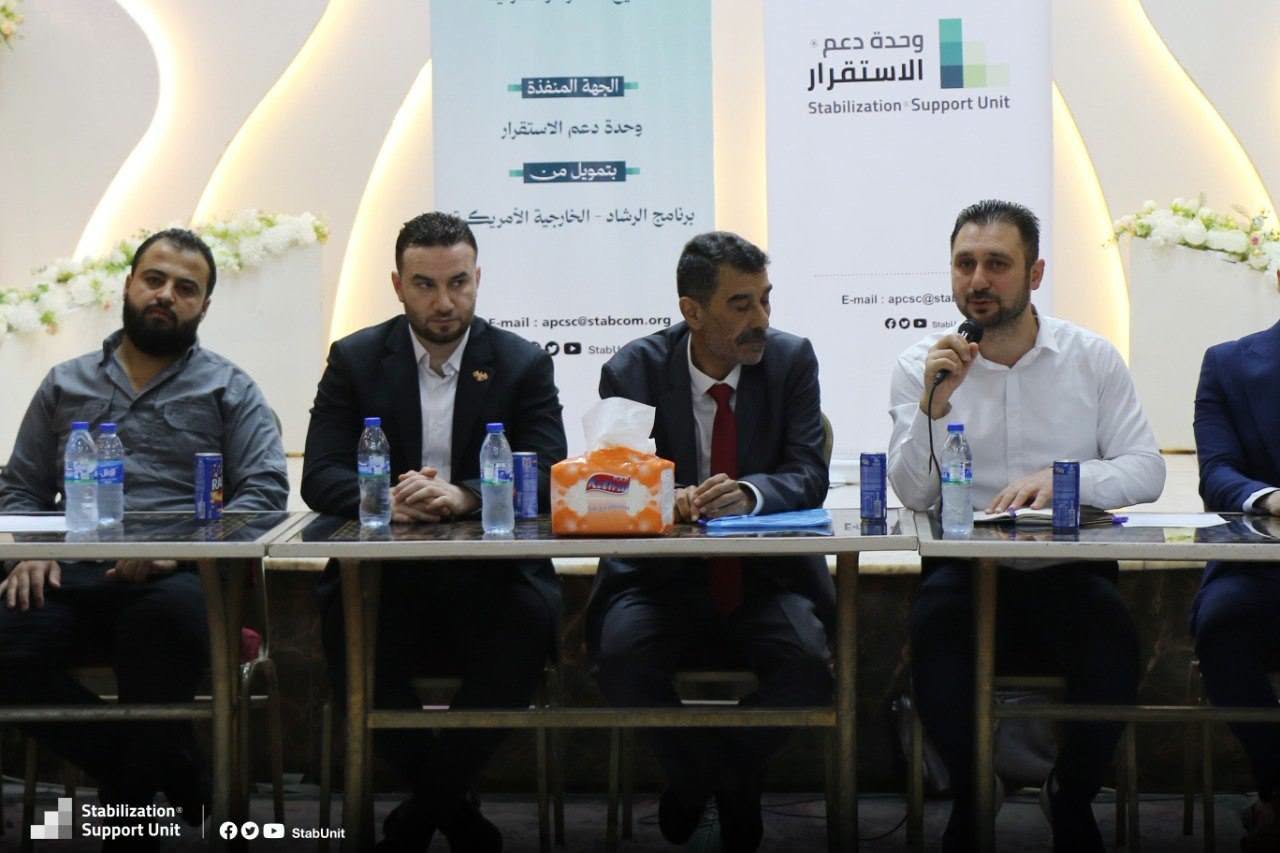
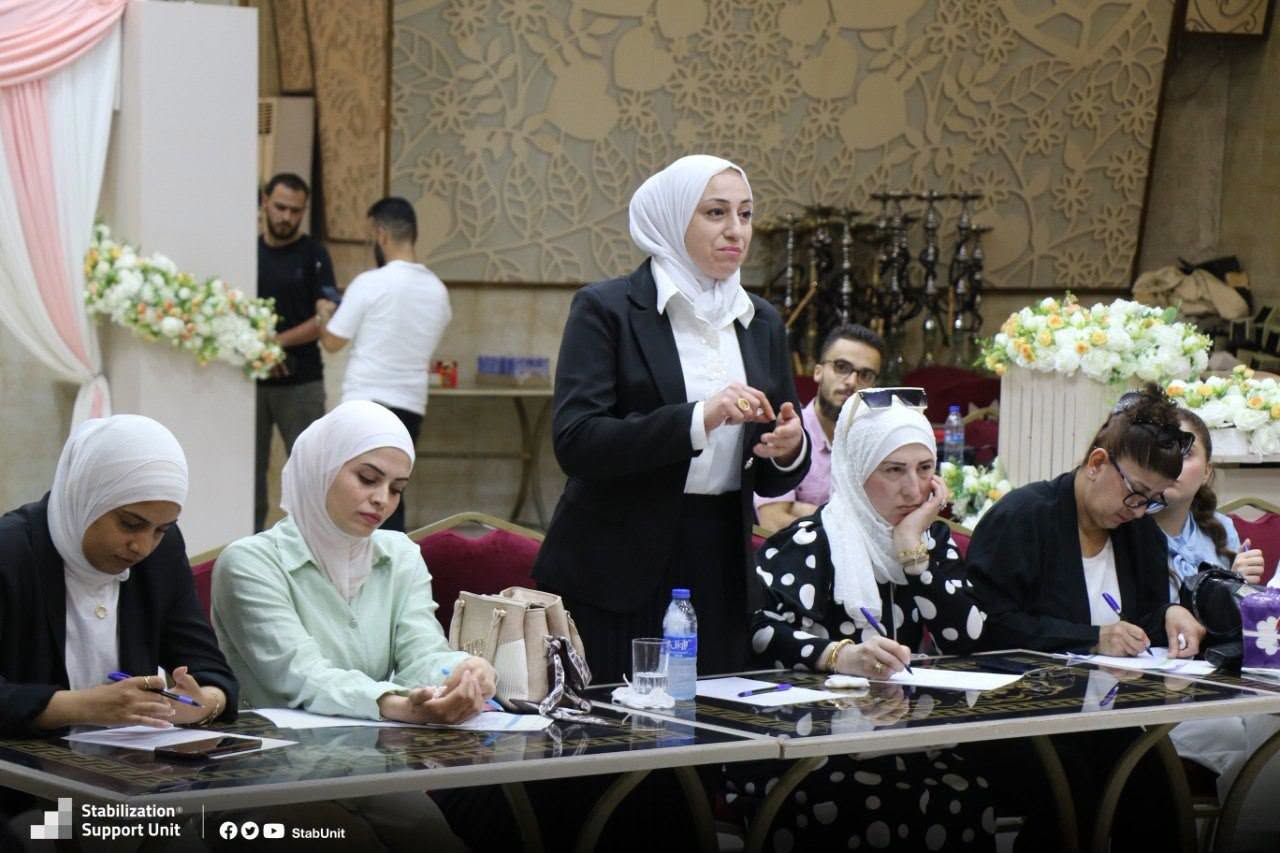
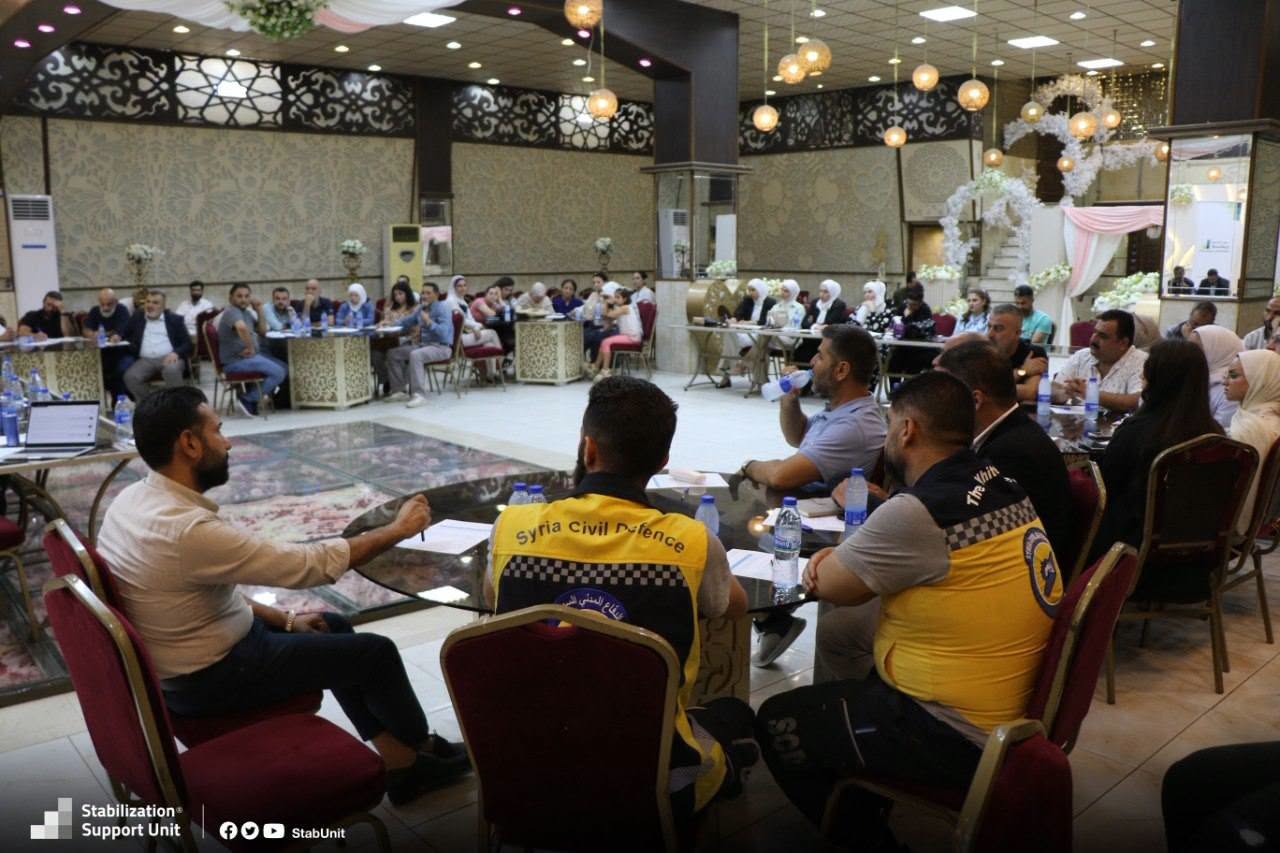
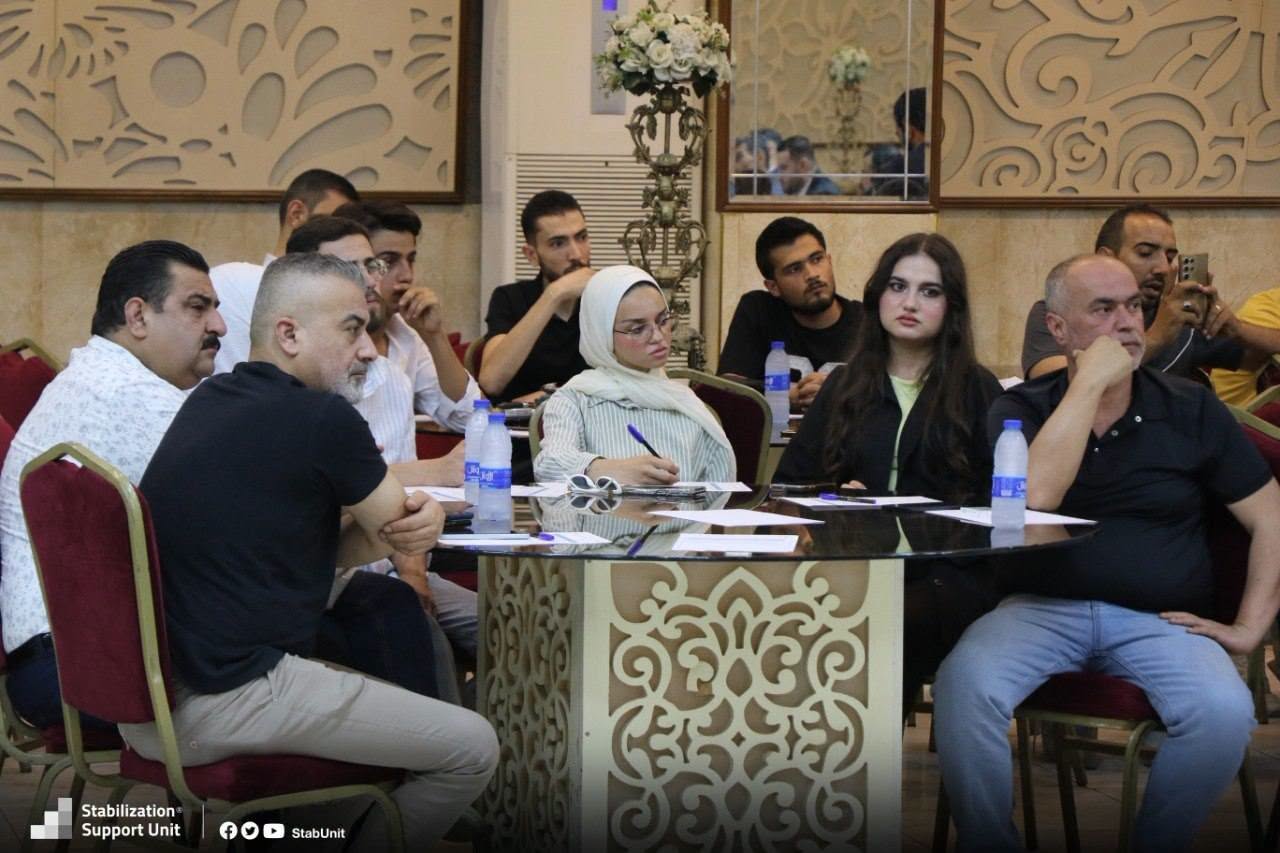
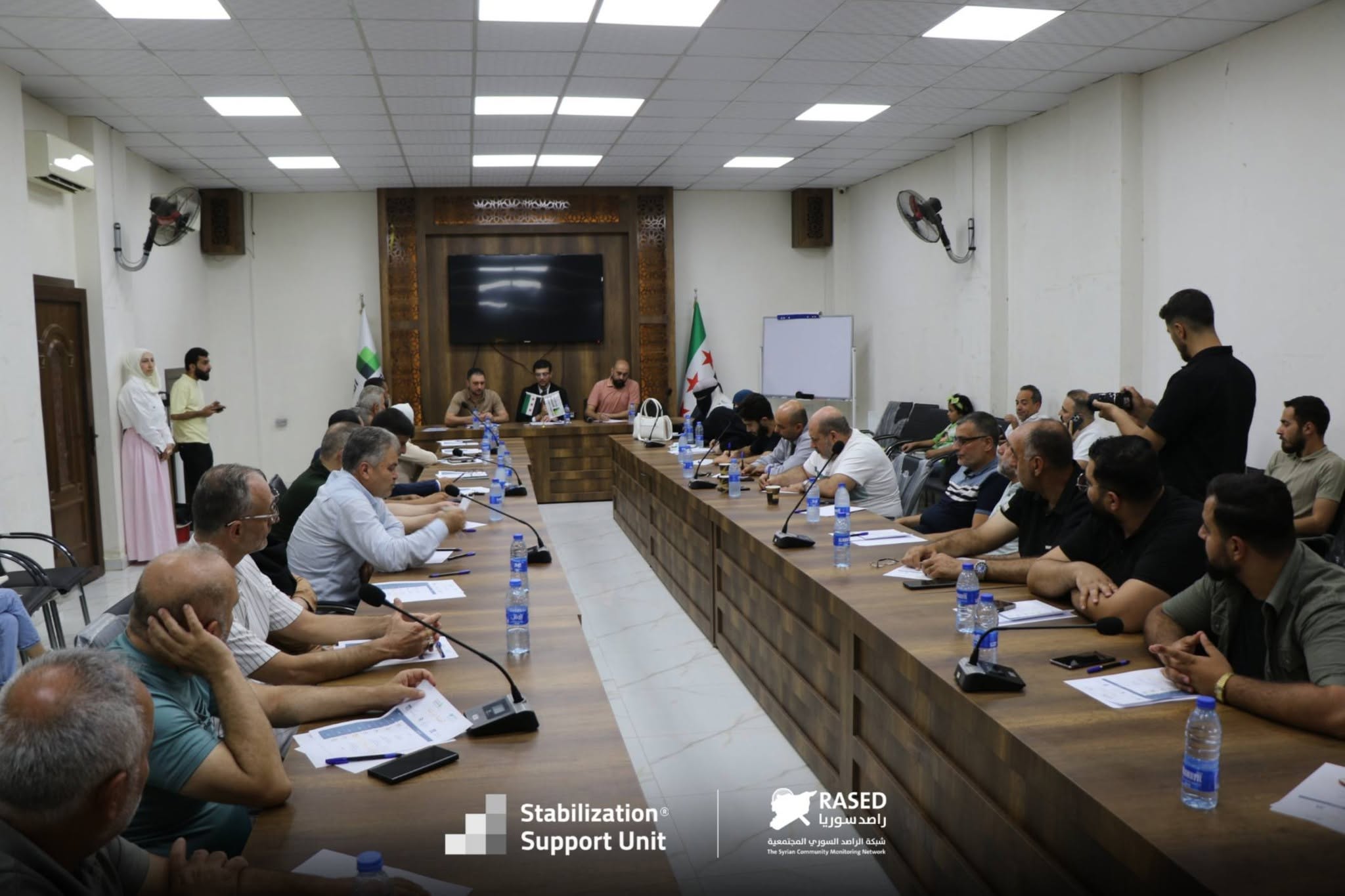
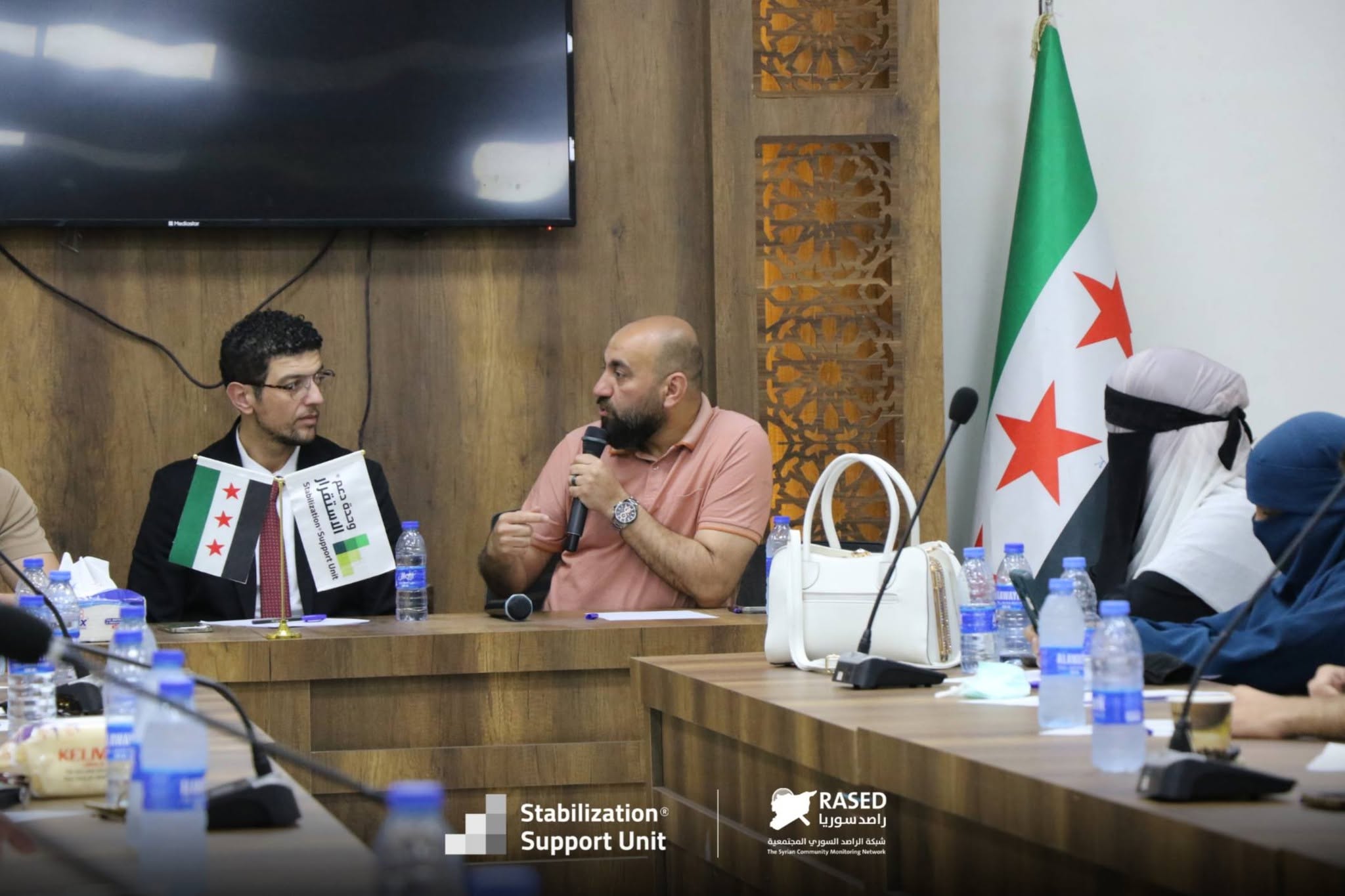
On Tuesday, Rased Syria, a program of the Stabilization Support Unit (S.S.U.), organized its second dialogue session in the city of Azaz following the commencement of duties by the newly elected members of the Syrian People's Assembly.
The session was attended by the Deputy Director of the Azaz District, alongside representatives of civil society organizations, legal experts, and activists. The discussion aimed to identify legislative priorities for the upcoming phase, contribute to the legislative reform process, and strengthen communication between the People's Assembly and society.
Participants discussed a number of key legislative priorities, including:
Enacting laws that support economic recovery, create a favorable legal environment for investment, stimulate economic growth, and facilitate reconstruction.
Adopting legislation that promotes workforce reintegration and strengthens social justice.
Addressing issues related to transitional justice and institutional reform, while introducing laws to support the families of martyrs, provide reparations, and establish political isolation measures.
Enacting legislation that guarantees the protection of freedom of opinion and expression.
Developing the legislative framework to better respond to community needs and the requirements of the current phase.
The session also featured an open discussion on the most urgent legislative measures that could pave the way for broader legal reforms, contributing to greater social stability and supporting Syria's transition toward a more effective and responsive legislative framework.
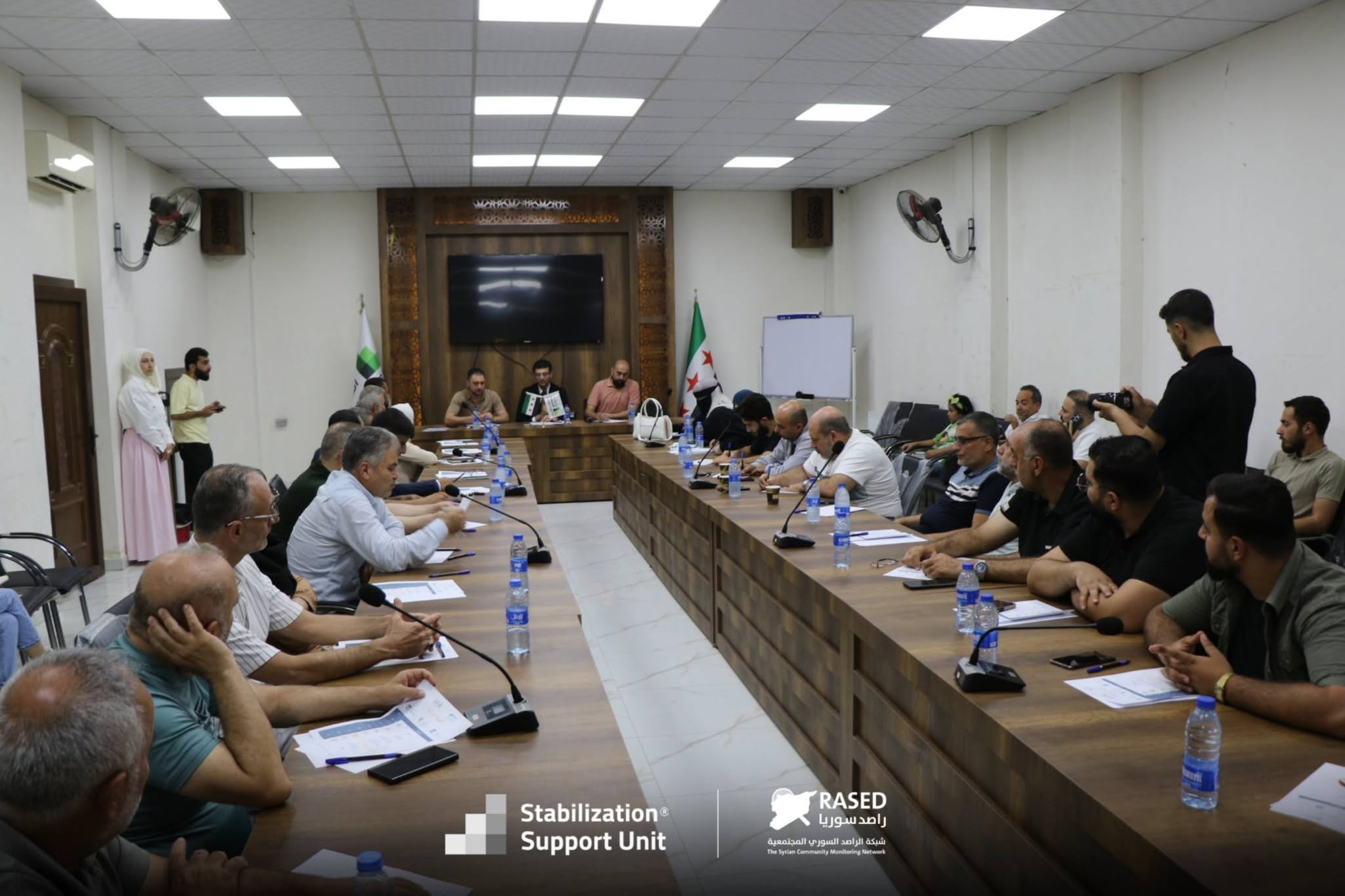
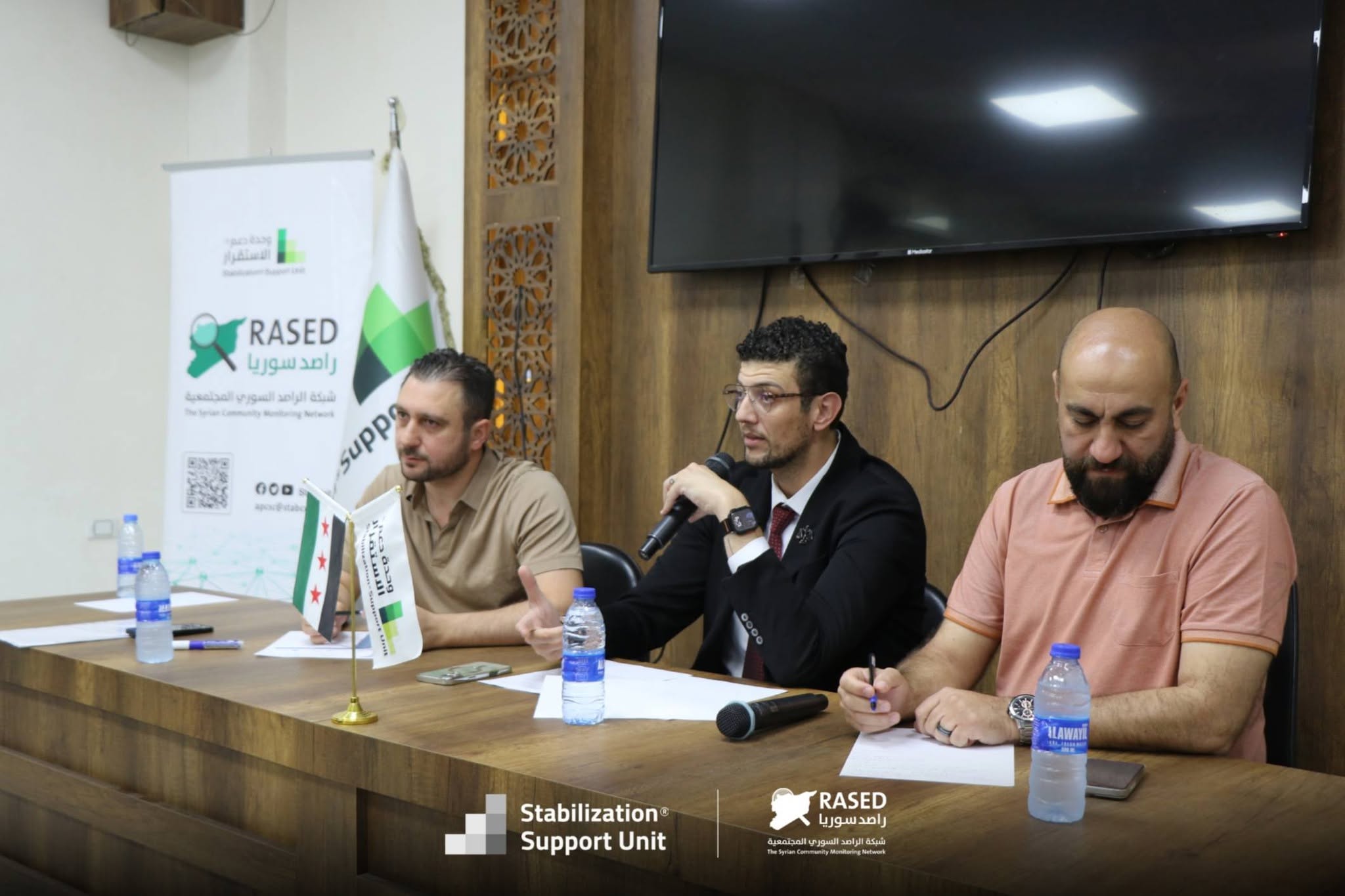
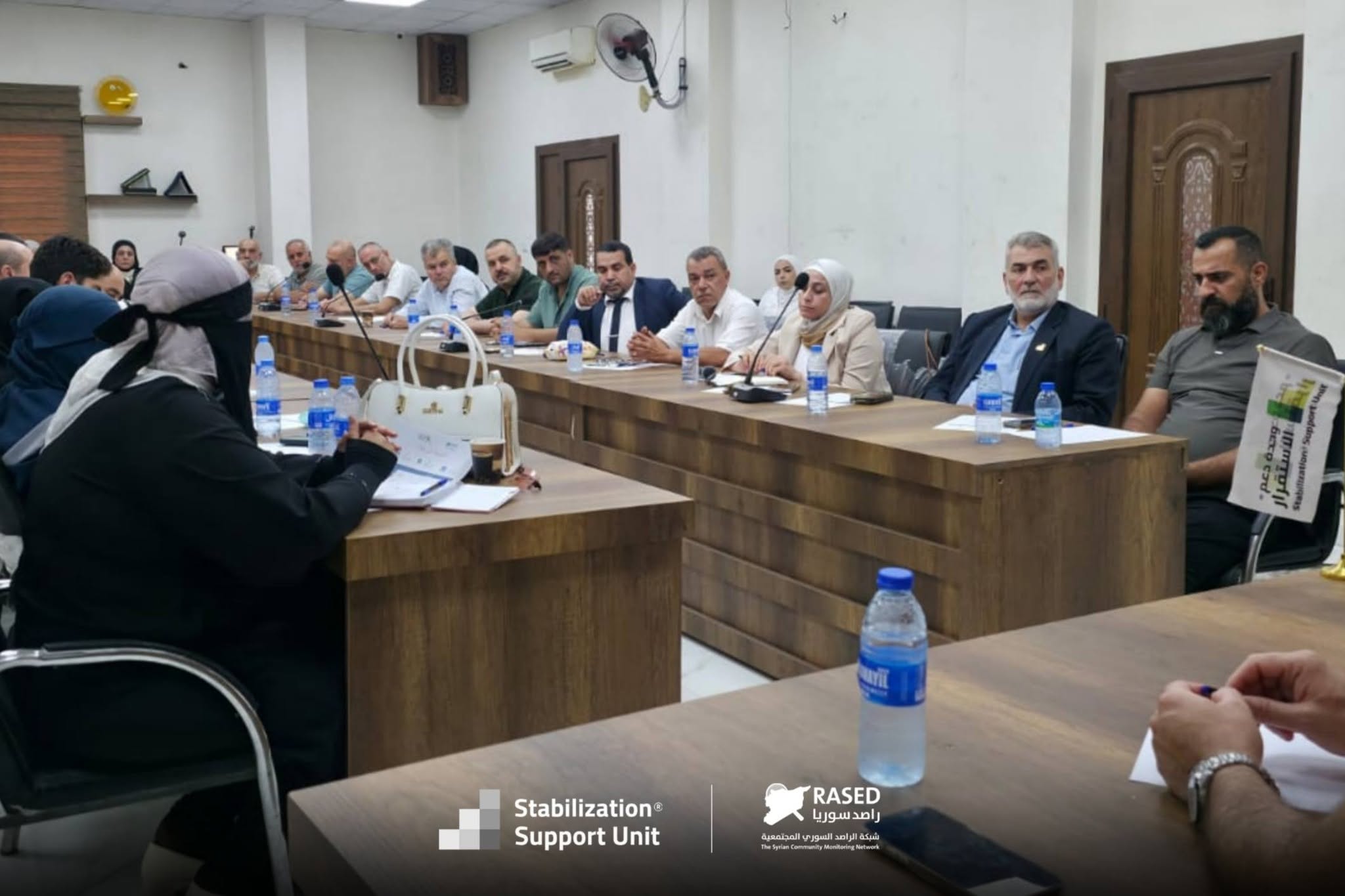
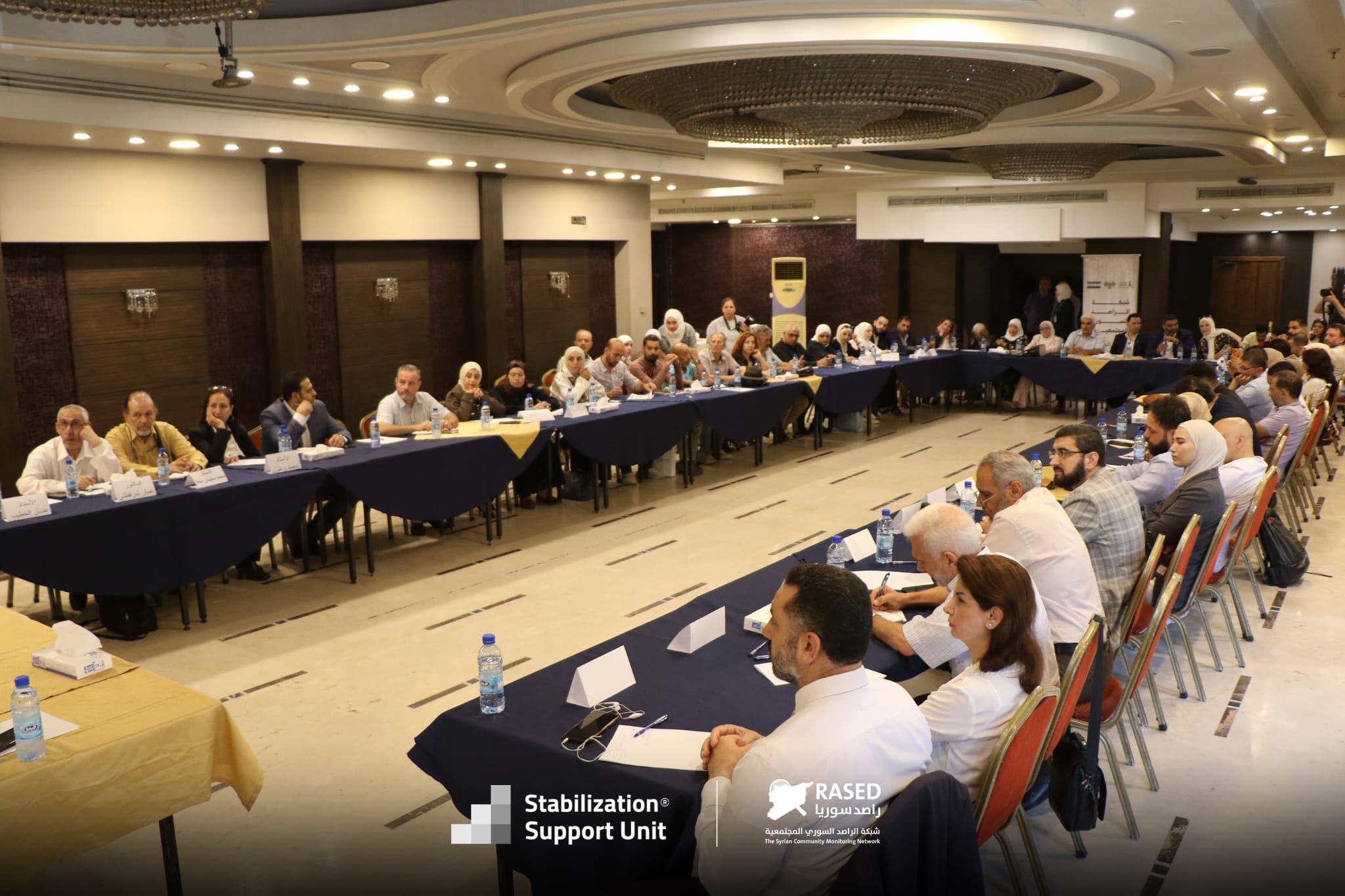
Damascus Hosts the First Dialogue Session Between the People's Assembly and Civil Society to Discuss Legislative Priorities
On Saturday, the Syria Observer Program, an initiative of the Stabilization Support Unit (SSU), organized the first dialogue session of its kind in Damascus following the commencement of duties by the newly elected members of the Syrian People's Assembly.
The session brought together members of the Syrian People's Assembly:
- Mr. Basel Heilem
- Mr. Nader Sanoufi
- Mr. Mustafa Saqr
- Mr. Fadi Al-Halabi
- Ms. May Khlouf
- Mr. Adnan Al-Khatib
They were joined by representatives of civil society organizations, legal experts, and activists to discuss legislative priorities for the coming period, support the legislative reform process, and strengthen communication between the People's Assembly and society.
The discussion focused on several key priorities, including:
- Empowering all segments of society and reintegrating groups affected by the years of conflict.
- Adopting legislation that promotes investment and stimulates economic growth.
- Addressing transitional justice and institutional reform.
- Responding to community needs and advancing Syria's legislative framework.
The session also featured an open discussion on the most urgent laws that could pave the way for broader legislative reforms and contribute to strengthening social stability.
In addition, participants reviewed a draft report prepared by the Syria Observer Program on monitoring the electoral process, emphasizing the importance of maintaining direct dialogue between parliamentarians and citizens to ensure that legislation reflects the perspectives of both sides and enhances public participation.
The Syria Observer Program is a national initiative launched by the Stabilization Support Unit (SSU) to promote transparency, accountability, and civic participation in Syrian public affairs. The program monitors electoral processes, organizes dialogue sessions on legislative, constitutional, and public service priorities, and implements training programs to empower women and youth while promoting their participation in public life and peacebuilding.
Launch of the Return Support and Essential Services Project in Al-Shuyoukh
As part of the Stabilization and Essential Services Program, the Aleppo
Governorate and the Ain al-Arab (Kobani) Area Administration have launched the
Recovery and Return Support Project in Al-Shuyoukh Subdistrict.
The project is funded by
Creative Associates International
,
in partnership with the Stabilization Support Unit (SSU), and with support from the
U.S. Department of State.
Project Objectives
The project aims to improve essential public services while supporting the safe and
voluntary return of residents through the rehabilitation of critical infrastructure
and restoration of municipal services.
- Rehabilitating priority public facilities.
- Repairing damaged sections of the water supply network.
- Restoring municipal sanitation services.
- Removing debris from streets and public spaces.
- Improving the quality and accessibility of essential services.
Community Engagement
In addition to infrastructure rehabilitation, the project strengthens communication
between local authorities and residents to ensure that interventions are transparent,
responsive, and aligned with community priorities.
- Promoting transparent implementation of project activities.
- Ensuring services reflect the needs of returnees.
- Encouraging community participation in identifying priorities.
- Supporting local monitoring of service delivery.
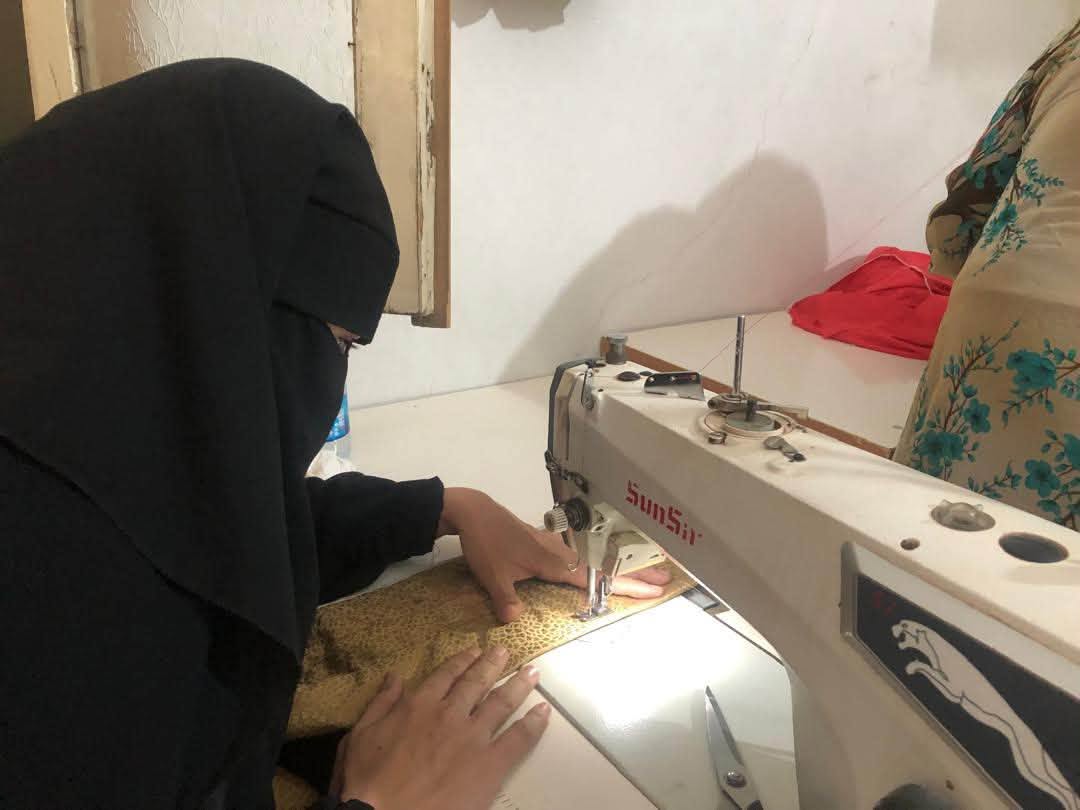
Vocational Tailoring Training for Women Returning from Al-Hol Camp in Raqqa
The Stabilization Support Unit has launched a vocational training program in women's tailoring in the city of Raqqa as part of its livelihoods support and economic empowerment initiatives for women returning from Al-Hol Camp, alongside women from the host community.
Training Overview
The training focused on developing participants' fundamental tailoring and garment-making skills through hands-on practical sessions designed to strengthen their technical abilities and build a solid foundation in the profession.
- Practical vocational training in women's tailoring.
- Development of essential garment-making skills.
- Hands-on learning to enhance technical competencies.
- Building a strong professional foundation for participants.
Program Goals
The program will continue with additional practical training sessions aimed at further enhancing participants' vocational skills, preparing them to enter the labor market or establish their own small businesses.
- Strengthen sustainable livelihood opportunities.
- Support women's economic empowerment.
- Prepare participants for employment opportunities.
- Encourage entrepreneurship through small business creation.
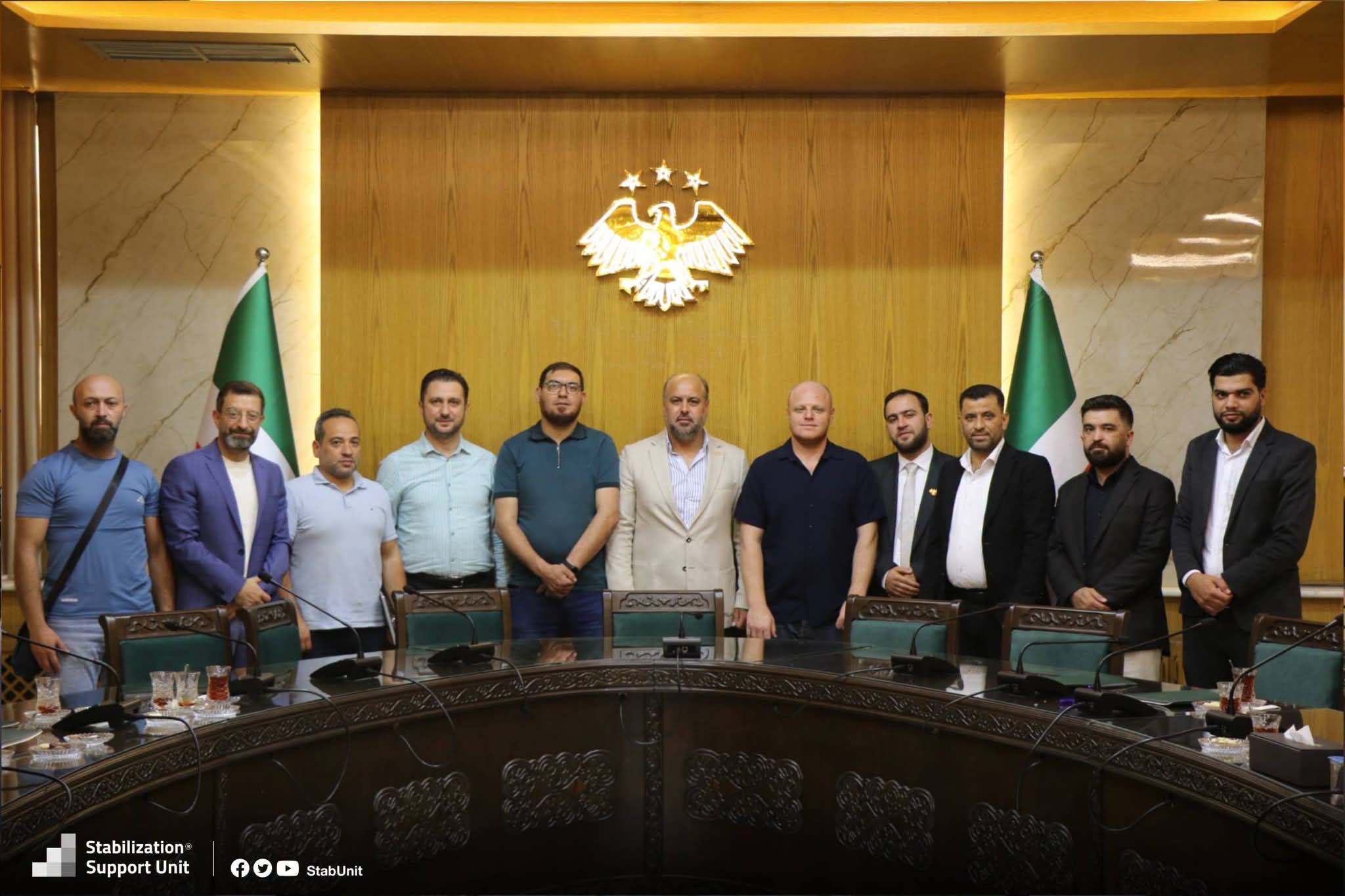
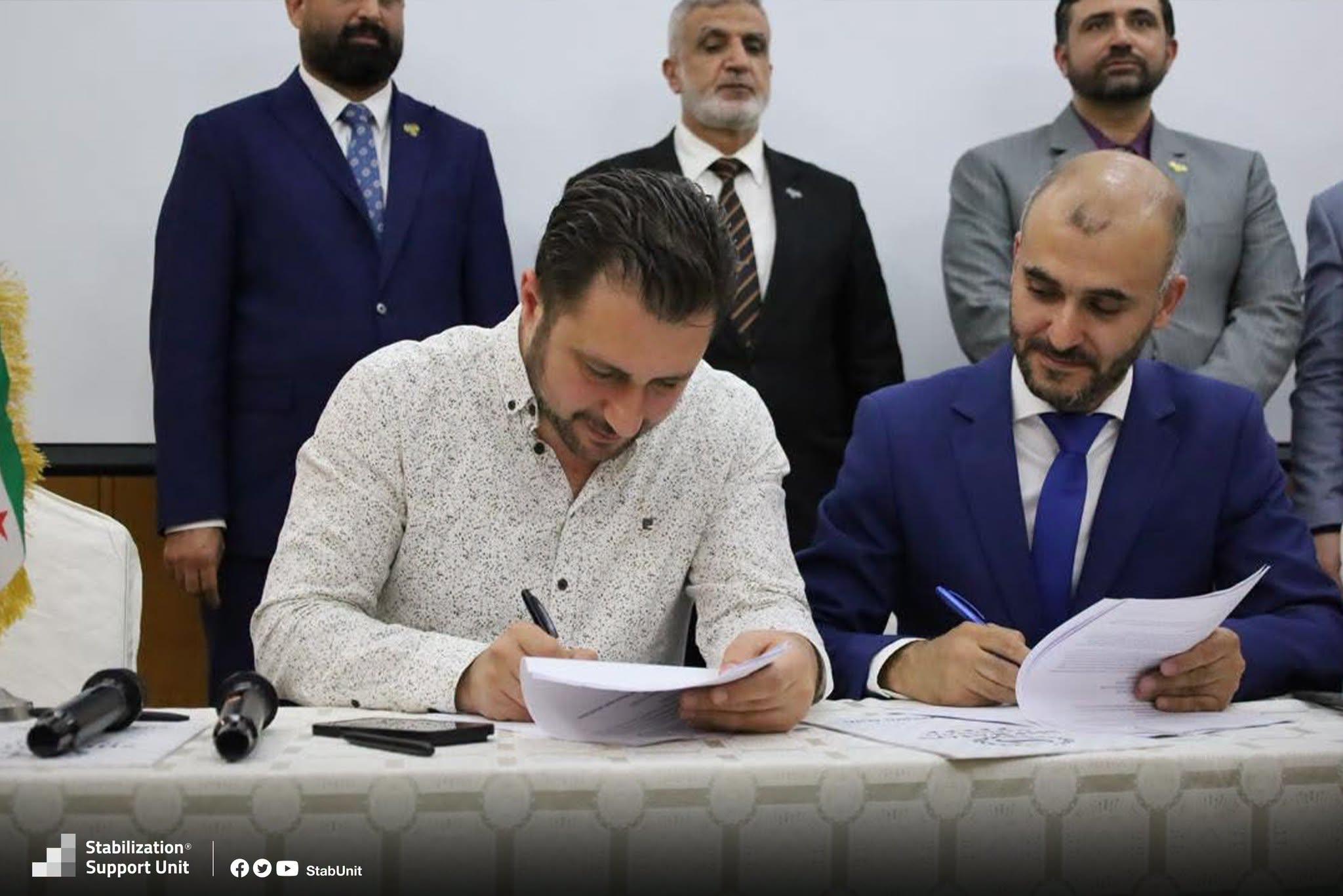
As part of joint efforts to improve infrastructure and strengthen essential public services, the Stabilization Support Unit (SSU) signed a Memorandum of Understanding (MoU) with the Street Lighting Department of Aleppo City Council and the Internal Security Directorate to implement a solar-powered street lighting project in the targeted neighborhoods.
The project is supported by the Rashad Program and funded by the U.S. State Department.
Project Objectives
The project aims to enhance public safety, community security, and service delivery by installing solar-powered street lighting systems across the neighborhoods of Al-Shiyoukh, Al-Sheikh Maqsoud, and Al-Ashrafiyah in Aleppo Governorate.
- Installation of 331 solar-powered streetlights with new lighting poles.
- Improving nighttime mobility and public safety.
- Providing a sustainable and environmentally friendly energy source.
- Enhancing essential public services within targeted communities.
Community Engagement Activities
In addition to infrastructure rehabilitation, the project includes a series of community dialogue and engagement sessions that will bring together representatives of the Internal Security Directorate and members of the local community.
- Strengthening communication between local institutions and communities.
- Promoting cooperation and mutual understanding.
- Building trust between citizens and public institutions.
- Contributing to greater community security and social stability.
Partnership and Impact
This partnership reflects a shared commitment to supporting stability, improving essential services, and strengthening collaboration between local institutions and communities to better respond to the needs of residents in Aleppo Governorate.
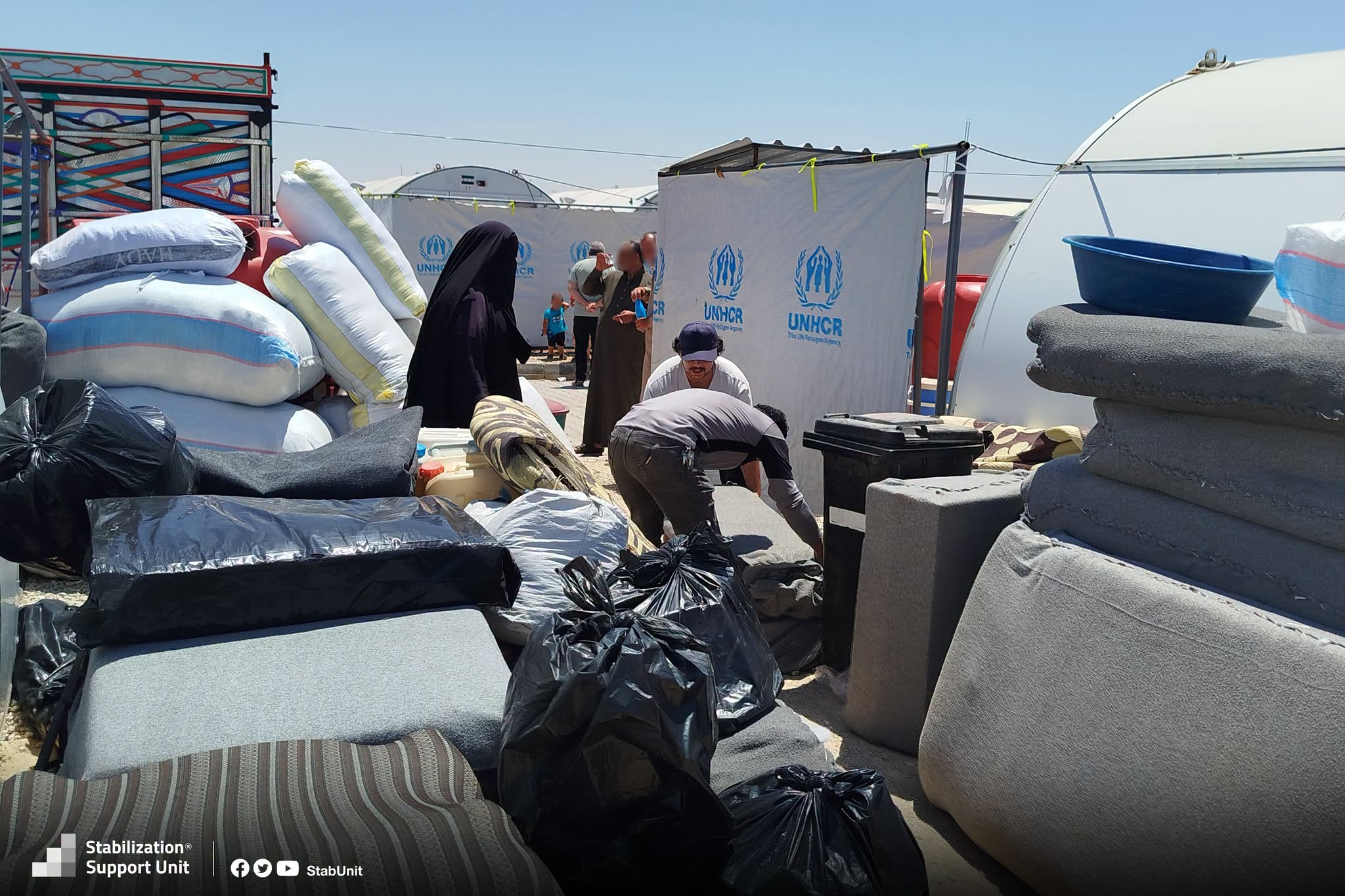
The Stability Support Unit, in coordination with the Directorate of Social Affairs and Labor in Aleppo and with support from the United Nations High Commissioner for Refugees (UNHCR), continues to implement activities aimed at supporting families residing in Aq Burhan Camp.
Emergency Response and Relocation Support
During the previous phase, the Unit supervised the relocation of a number of families from Aq Burhan Camp in Akhtarin as part of the emergency medical response. Transportation was provided for individuals and their belongings, and all necessary arrangements were made to ensure their safe arrival at their destinations.
- Coordinated relocation of families requiring urgent support.
- Provided transportation for beneficiaries and their belongings.
- Ensured safe and organized transfers to designated destinations.
- Supported emergency medical response efforts in the area.
Ongoing Monitoring and Reintegration Efforts
The Stability Support Unit continues to maintain communication with families, monitor their living conditions, and assess their evolving needs. The Unit also follows up on the reintegration of returning families within their communities of origin.
- Regular communication with beneficiary families.
- Assessment of humanitarian and social needs.
- Monitoring reintegration and community inclusion.
- Supporting stability and improving living conditions.
Stability Support Foundation announces the availability of several job vacancies within its programs and activities and invites qualified and experienced candidates to apply and join its team. Successful candidates will contribute to delivering effective humanitarian services that meet beneficiaries’ needs and enhance the quality of implemented programs and activities.
📌 To apply, please complete the employment application form through the link provided in the vacancy announcement.
https://docs.google.com/forms/d/e/1FAIpQLSdrPxGhOsLzXVgP6YulM6SXhiD3623q-BtRlxqX8v02656kUg/viewform
Important Notes
Applicants are encouraged to carefully review the requirements of the position and ensure that their qualifications and experience match the vacancy before submitting their application.
Each applicant may apply for only one position unless otherwise stated in the announcement.
Only shortlisted candidates whose qualifications and experience match the requirements, nature, and location of the position will be contacted.
The Foundation reserves the right to close the application process once a sufficient number of applications has been received or upon the expiration of the announcement period.
We wish all applicants the best of luck.
.jpg)
The Stabilization Support Unit (SSU) – the Syrian Community Monitoring Network (RASED Syria) organized a dialogue session in Aleppo, moderated by Dr. Abdul Hamid Al-Awak, with the participation of members of the Syrian People's Assembly, legal experts, human rights advocates, and civil society activists.
Legal and Regulatory Framework for Electoral Campaigns
The session featured discussions on the legal and regulatory requirements governing electoral campaigns, focusing on safeguards that ensure fair competition among candidates and promote transparent electoral practices.
- Reviewing the legal framework governing electoral campaigns.
- Examining mechanisms that guarantee fair competition among candidates.
- Discussing campaign finance management and accountability measures.
- Promoting transparency and integrity throughout the electoral process.
The Role of Media in Electoral Integrity
Participants highlighted the important role of media in fostering a balanced electoral environment by ensuring equitable access to media platforms and strengthening voters’ right to receive accurate and objective information.
- Ensuring equal access to media platforms for all candidates.
- Supporting voters with accurate and objective information.
- Encouraging balanced and professional media coverage.
- Contributing to informed public participation in elections.
Strengthening Electoral Integrity
The dialogue further explored ways to enhance the integrity of the electoral process through oversight, disclosure mechanisms, and measures aimed at preventing practices that may undermine voters’ free choice or the fairness of electoral competition.
- Enhancing oversight and monitoring procedures.
- Promoting disclosure and transparency standards.
- Protecting voters from undue influence.
- Safeguarding the fairness of electoral competition.
Tender Announcement
Street Lighting Project in Al-Shuyoukh Town (4 km)
Tender No. SNFI-SSU 024
The Stabilization Support Unit (SSU) announces its intention to conduct a sealed-bid tender in accordance with the General Conditions, Technical Specifications, and Financial and Legal Terms applicable to the project.
Tender Objective
Supply and implementation of materials for a street lighting project in Al-Shuyoukh Town covering a total length of 4 km.
Estimated Budget
USD 125,105.00
(One Hundred Twenty-Five Thousand One Hundred Five US Dollars only)
Tender Requirements
Bid Security
Bidders must submit a bid security of USD 6,000 (Six Thousand US Dollars only) in the form of:
- A certified bank cheque, or
- A bank guarantee in favor of the Stabilization Organization, or
- An official receipt issued by the organization's finance department.
The successful bidder shall provide a performance guarantee equal to 10% of the total contract value, payable through a certified bank cheque in favor of the organization or through the organization's finance department before contract signing.
Bid Validity
Bidders shall remain committed to their offers for a period of one month from the date of bid opening.
Required Documents
Bids must be submitted in four sealed envelopes:
Envelope 1 – Administrative Offer
The envelope must be sealed, stamped, and labeled with the offer name (Administrative Offer), date, tender name, bidder's name, address, and phone number. It shall contain:
- Copy of personal ID card or valid civil registration extract.
- Valid Certificate of Non-Conviction.
- Supplier General Information Form (as attached).
- Valid Company Registration Certificate / Commercial Registration.
- Valid Contractors Syndicate Registration Certificate.
- Bid security deposit receipt or bank guarantee.
- At least three previous contracts related to similar project activities, or certificates of completion for similar works supported by certified financial documentation.
- Detailed implementation schedule showing activities by week.
- CVs of the project implementation engineers (Civil Engineer and Electrical Engineer) from the contractor's executive technical team assigned to the project, with copies of graduation certificates.
- Written commitment guaranteeing the lighting system for a period of three years, clearly stated, signed, and stamped by the bidder.
- Copy of the tender announcement signed and stamped.
- All submitted documents must be signed and stamped by the bidder.
Envelope 2 – Technical Offer
The envelope must be sealed, stamped, and clearly marked as "Technical Offer" and contain:
- General Terms and Conditions Booklet and Technical Specifications Booklet, duly signed and stamped.
Envelope 3 – Financial Offer
The envelope must be sealed, stamped, and clearly marked as "Financial Offer" and contain:
- Financial offer in US Dollars using the form provided by the Procurement Department, signed and stamped by the bidder.
Note: The contract will be signed in US Dollars; however, payments will be made in the equivalent amount in Syrian Pounds.
Envelope 4 – Outer Envelope
This envelope must be sealed and stamped and contain the three separate sealed envelopes mentioned above.
Obtaining Tender Documents
Tender forms may be obtained from the Procurement Department at the Aleppo Office of the Stabilization Organization or through the following link:
Submission Period
Bid submissions will be accepted daily at the Procurement Department in Al-Furqan District starting:
Monday, 15 June 2026, at 10:00 AM
and ending:
Tuesday, 23 June 2026, at 11:00 AM
Submission Address
Procurement Department – Stabilization Organization Office
Aleppo, Al-Furqan District, Express Street, before Police Roundabout, next to Dollar Kingdom Store.
Bid Opening Session
Bid opening will take place on:
Tuesday, 23 June 2026, at 02:00 PM
at the organization's office.
Financial offers will only be opened for bids that successfully pass the administrative and technical requirements. The contract will be awarded to the technically compliant bidder offering the lowest price.
General Notes
- Bidders may participate in both tenders SNFI-SSU 023 and SNFI-SSU 024, but may only be awarded one of them.
- Financial offers of bids that fail to provide all required documents in Envelope 1 will not be opened.
- Any missing documents or misplaced documents between envelopes will result in bid disqualification.
- Project duration: 90 calendar days.
- Delay penalties: 0.001 (one per thousand) of the total contract value for each day of delay.
- Late submissions will not be accepted.
- The sequence of tender opening sessions shall be determined by a decision of the Chairperson of the Bid Opening Committee.
- No technical scoring system will be applied; selection will be based on technical compliance and the lowest financial offer.
Inquiries and Complaints
Any questions or requests for clarification should be directed to the Procurement Department or sent via email to:
within two days from the date of this announcement.
For complaints, including matters related to this tender, please send a detailed email to:
The program will record and process all complaints in accordance with its Customer Relationship Management Policy.
Tender Announcement
Street Lighting Project in Ashrafiyeh and Sheikh Maqsoud (4.85 km)
Tender No. SNFI-SSU 023
The Stabilization Support Unit (SSU) announces its intention to conduct a sealed-bid tender in accordance with the General Conditions, Technical Specifications, and Financial and Legal Terms applicable to the project.
Tender Objective
Supply and implementation of materials for a street lighting project in Ashrafiyeh and Sheikh Maqsoud neighborhoods, covering a total length of 4.85 km.
Estimated Budget
USD 188,950.00
(One Hundred Eighty-Eight Thousand Nine Hundred Fifty US Dollars only)
Tender Requirements
Bid Security
Bidders must submit a bid security of USD 10,000 (Ten Thousand US Dollars only) in the form of:
- A certified bank cheque, or
- A bank guarantee in favor of the Stabilization Organization, or
- An official receipt issued by the organization's finance department.
The successful bidder shall provide a performance guarantee equal to 10% of the total contract value, payable through a certified bank cheque in favor of the organization or through the organization's finance department before contract signing.
Bid Validity
Bidders shall remain committed to their offers for a period of one month from the date of bid opening.
Required Documents
Bids must be submitted in four sealed envelopes:
Envelope 1 – Administrative Offer
The envelope must be sealed, stamped, and labeled with the tender name, tender number, bidder's name, address, phone number, and submission date. It shall contain:
- Copy of personal ID card or valid civil registration extract.
- Valid Certificate of Non-Conviction.
- Supplier General Information Form (as attached).
- Valid Company Registration Certificate / Commercial Registration.
- Valid Contractors Syndicate Registration Certificate.
- Bid security deposit receipt or bank guarantee.
- At least three previous contracts related to similar project activities, or certificates of completion for similar works supported by certified financial documentation.
- Detailed implementation schedule showing activities by week.
- CVs of the project implementation engineers (Civil Engineer and Electrical Engineer) along with copies of graduation certificates.
- Written commitment guaranteeing the lighting system for a period of three years, signed and stamped by the bidder.
- Copy of the tender announcement signed and stamped.
- All submitted documents must be signed and stamped by the bidder.
Envelope 2 – Technical Offer
The envelope must be sealed, stamped, and clearly marked as "Technical Offer" and contain:
- General Terms and Conditions Booklet and Technical Specifications Booklet, duly signed and stamped.
Envelope 3 – Financial Offer
The envelope must be sealed, stamped, and clearly marked as "Financial Offer" and contain:
- Financial offer in US Dollars using the form provided by the Procurement Department, signed and stamped by the bidder.
Note: The contract will be signed in US Dollars; however, payments will be made in the equivalent amount in Syrian Pounds.
Envelope 4 – Outer Envelope
This envelope must be sealed and stamped and contain the three separate sealed envelopes mentioned above.
Obtaining Tender Documents
Tender forms may be obtained from the Procurement Department at the Aleppo Office of the Stabilization Support Unit or through the following link:
Submission Period
Bid submissions will be accepted daily at the Procurement Department in Al-Furqan District starting:
Monday, 15 June 2026, at 10:00 AM
and ending:
Tuesday, 23 June 2026, at 11:00 AM
Submission Address
Procurement Department – Stabilization Support Unit Office
Aleppo, Al-Furqan District, Express Street, before Police Roundabout, next to Dollar Kingdom Store.
Bid Opening Session
Bid opening will take place on:
Tuesday, 23 June 2026, at 12:00 PM
at the organization's office.
Financial offers will only be opened for bids that successfully pass the administrative and technical requirements. The contract will be awarded to the technically compliant bidder offering the lowest price.
General Notes
- Bidders may participate in both tenders SNFI-SSU 023 and SNFI-SSU 024, but may only be awarded one of them.
- Financial offers of bids that fail to provide all required documents in Envelope 1 will not be opened.
- Any missing documents or misplaced documents between envelopes will result in bid disqualification.
- Project duration: 90 calendar days.
- Delay penalties: 0.001 (one per thousand) of the total contract value for each day of delay.
- Late submissions will not be accepted.
- The sequence of tender opening sessions shall be determined by a decision of the Bid Opening Committee Chairperson.
- No technical scoring system will be applied; selection will be based on technical compliance and the lowest financial offer.
Inquiries and Complaints
Any questions or requests for clarification should be directed to the Procurement Department or sent via email to:
within two days from the date of this announcement.
For complaints, including matters related to this tender, please send a detailed email to:
The program will record and process all complaints in accordance with its Customer Relationship Management Policy.
Job Announcement – Information Technology Officer (IT Officer)
The Stability Support Unit (SSU) is seeking to recruit an Information Technology Officer (IT Officer) to work on a part-time basis (hours/days to be agreed upon), with the possibility of working from the office or remotely when required.
📍 Work Location: Main office in Aleppo / Remote support
🕒 Contract Type: Part-time
Duties and Responsibilities:
-
Install, maintain, and upgrade desktop and laptop computers, printers, scanners, projectors, and network equipment, as well as regularly manage and update the technical assets inventory.
-
Set up, administer, and maintain Local Area Networks (LAN) and Wireless Networks (Wi-Fi), ensure stable connectivity, troubleshoot issues such as slow or interrupted internet, configure network devices (routers, switches, access points), and manage IP addressing, DHCP, and DNS services.
-
Provide technical support for operating systems (Windows and macOS), office suites (Microsoft 365 and Google Workspace), and email systems, including installation, updates, and troubleshooting.
-
Manage cybersecurity tools including antivirus software and firewalls, implement regular backup procedures (on servers, cloud storage, or external drives), enforce strong password policies, and manage user access rights to ensure the protection of staff and beneficiary data.
-
Install and manage internal systems and software such as databases, accounting systems, and case management systems, including user account administration (create, modify, delete, and assign permissions), and support integration with monitoring and evaluation tools such as KoboToolbox, ODK, and Power BI when required.
-
Coordinate with internet service providers, maintenance companies, and hardware/software vendors, follow up on maintenance contracts, and propose technical solutions aligned with organizational needs and budget.
-
Document technical issues, procedures, and solutions, and prepare periodic reports (monthly or quarterly) covering system status, key issues, implemented solutions, and improvement recommendations, while maintaining updated records of devices and software licenses.
-
Train staff on safe computer, internet, and email usage, prepare simplified step-by-step guides (including visual instructions) for common technical issues, and conduct awareness sessions on information security and data protection.
-
Perform any other technical duties assigned by the direct supervisor within the scope of the role.
🔗 Application Link: https://forms.gle/hAfhXVHPywcKN4x37
We wish all applicants the best of luck.
Stability Support Unit (SSU)
📢 Job Announcement
The Stability Support Unit (SSU) is pleased to announce several job opportunities within its projects and activities in Northern Syria. Qualified candidates with the required skills and experience are encouraged to apply for the following positions:
1. Psychosocial Support (PSS) Counselor
📍 Duty Station: Al-Safira, Manbij, and Rural Aleppo
👥 Number of Positions: 3
🔗 Application Link:
https://www.job.sy/company/vacancy/view.php?id=48761
2. Registration Officer
📍 Duty Station: Al-Safira and Manbij
👥 Number of Positions: 4
📌 Applicants must reside in Al-Safira or Manbij.
🔗 Application Link:
https://www.job.sy/company/vacancy/view.php?id=48759
3. Psychosocial Support (PSS) Facilitator
📍 Duty Station: Al-Safira and Manbij
👥 Number of Positions: 2
🔗 Application Link:
https://www.job.sy/company/vacancy/view.php?id=48768
4. Psychosocial Support (PSS) Officer – Mobile Team
📍 Duty Station: Al-Safira, Manbij, and Rural Aleppo
👥 Number of Positions: 3
🔗 Application Link:
https://www.job.sy/company/vacancy/view.php?id=48756
5. Community Initiatives and Outreach Volunteers Officer
📍 Duty Station: Manbij
📌 Preference will be given to candidates residing in Manbij and its surrounding areas.
🔗 Application Link:
https://www.job.sy/company/vacancy/view.php?id=48754
📌 Applicants are kindly requested to apply through the designated link for each vacancy and carefully review the job description and requirements before submitting their application.
We wish all applicants the best of luck.
Stability Support Unit (SSU)
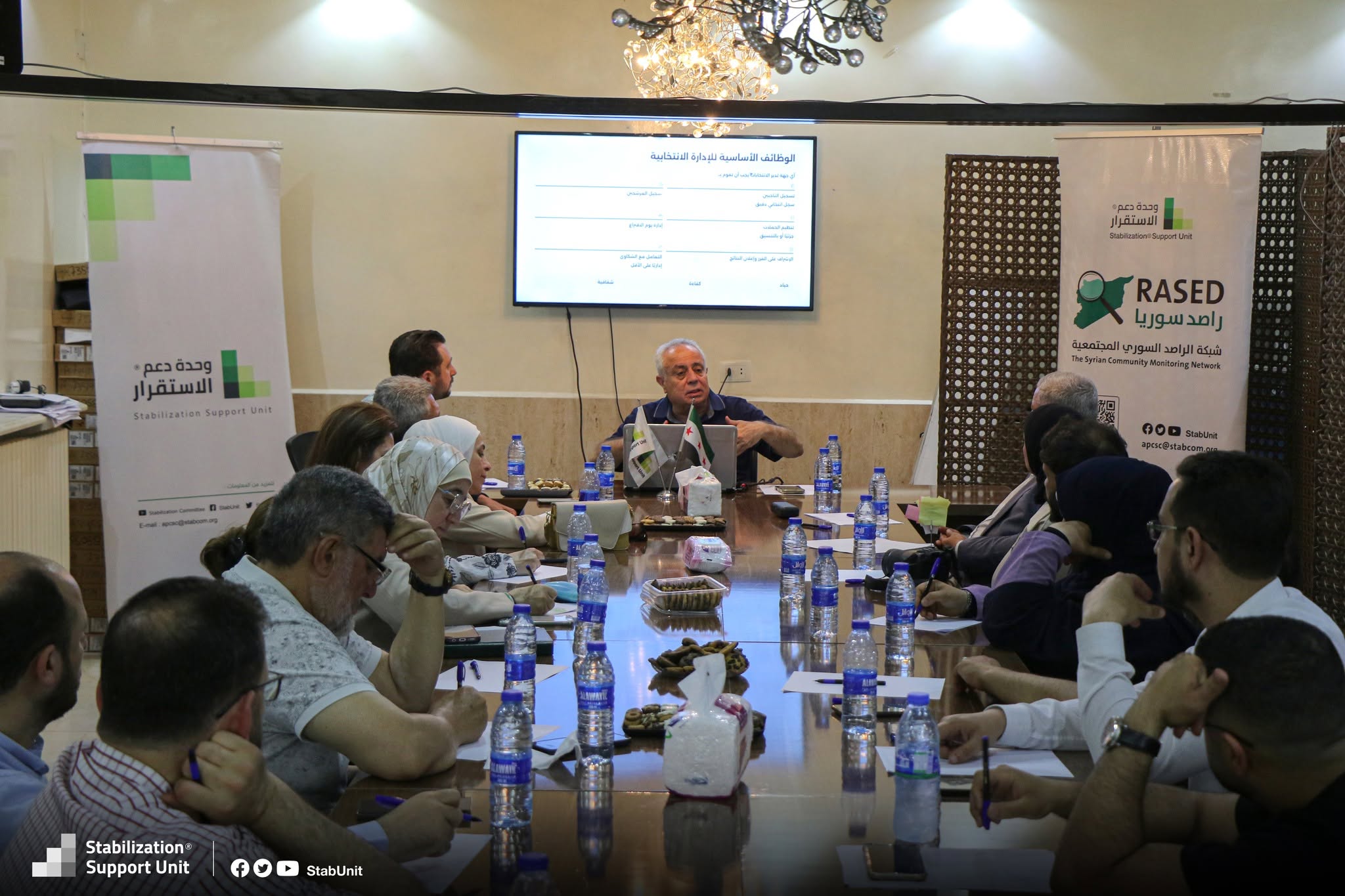
#Aleppo | Dialogue Session Discusses Electoral Administration and Prospects for Building Independent Institutions
The Stabilization Support Unit (SSU) – the Syrian Community Monitoring Network (RASED Syria)
organized a dialogue session titled "Electoral Administration".
The session was moderated by Dr. Abdul Hamid Al-Awak and brought together a number of members
of the Syrian People's Assembly, alongside legal experts, human rights advocates,
and civil society activists.
Main Discussion Topics
- Exploring different models of electoral administration.
- Discussing levels of public trust associated with electoral institutions.
- Identifying the foundations and criteria for establishing an independent and effective electoral body.
- Examining appointment mechanisms and institutional mandates.
- Reviewing accountability and oversight mechanisms.
- Sharing perspectives among parliamentarians, legal experts, and civil society representatives.
Session Outcomes
The session served as a platform for exchanging perspectives on electoral governance
and institutional reform. Participants discussed practical approaches to building
transparent and accountable electoral institutions capable of enhancing public trust
and strengthening democratic processes.
This dialogue forms part of broader efforts to support governance reforms and create
constructive spaces for discussion among stakeholders involved in public affairs.
```
Final Analytical Report on the Syrian People's Assembly Elections in Al-Hasakah and Aleppo Governorates
This report, prepared by the Stability Support Unit – Syria Observer Network, provides a comprehensive analytical assessment of the electoral process in the constituencies of Al-Hasakah, Qamishli, Al-Malikiyah (Derik), and Ain al-Arab (Kobani).
The report is based on the results of the October 2025 elections and follows subsequent electoral developments, aiming to provide a deeper understanding of key electoral indicators, including:
▪️ Levels of political and social representation
▪️ Voter participation rates
▪️ The nature of competition among candidates and electoral lists
▪️ The impact of the Electoral Bodies System as a transitional mechanism for parliamentary representation
For more details, please refer to the attached link.
https://drive.google.com/drive/folders/1H9mlr_WiGIXy5K_kkbMi5sOrdFM60V9i
Report on the Electoral Lists in Ain al-Arab / Kobani
The published lists of candidates for the Ain al-Arab (Kobani) elections indicate ethnic and social diversity among Arabs and Kurds, with a clear absence of women's representation on the main list of candidates.
The current list includes 12 candidates, distributed almost equally between Arabs and Kurds, in an attempt to demonstrate some balance within the electoral process.
According to the latest circulated lists, the number of members of the electoral body is approximately 100, distributed among representatives of the city, the countryside, and the various social components of the region.
Key Points of the Report
- Analysis of the ethnic distribution between Arabs and Kurds on the electoral lists.
- Observation of the absence of women’s representation on the main list of candidates.
- Presenting the numerical balance between the components participating in the elections.
- Analysis of the composition of the electoral body and its social and geographical distribution.
- A preliminary assessment of the impact of this composition on the electoral process and parliamentary representation.
A Detailed Report on the Electoral Bodies and Parliamentary Candidates in Al-Hasakah Governorate
An analysis of the composition of the electoral bodies and the distribution of parliamentary candidates across the Al-Hasakah, Qamishli, and Al-Malikiyah districts, according to gender, ethnicity, and age groups.
According to the lists published by the High Electoral Commission, the approximate total number of members of the electoral bodies in the main districts of Al-Hasakah Governorate is around 450, distributed among Al-Hasakah, Qamishli, and Al-Malikiyah.
There is a clear ethnic and social diversity among Arabs, Kurds, and Christians, in addition to variations in the proportions of males and females and age groups.
Key Points of the Report
- Analysis of the distribution of the electoral bodies within the main electoral districts.
- A study of the age groups of candidates and voters.
- Clarification of the representation ratios between males and females.
- Presentation of the ethnic and social diversity within Al-Hasakah Governorate.
- Preliminary analysis of the electoral structure and its impact on parliamentary representation.
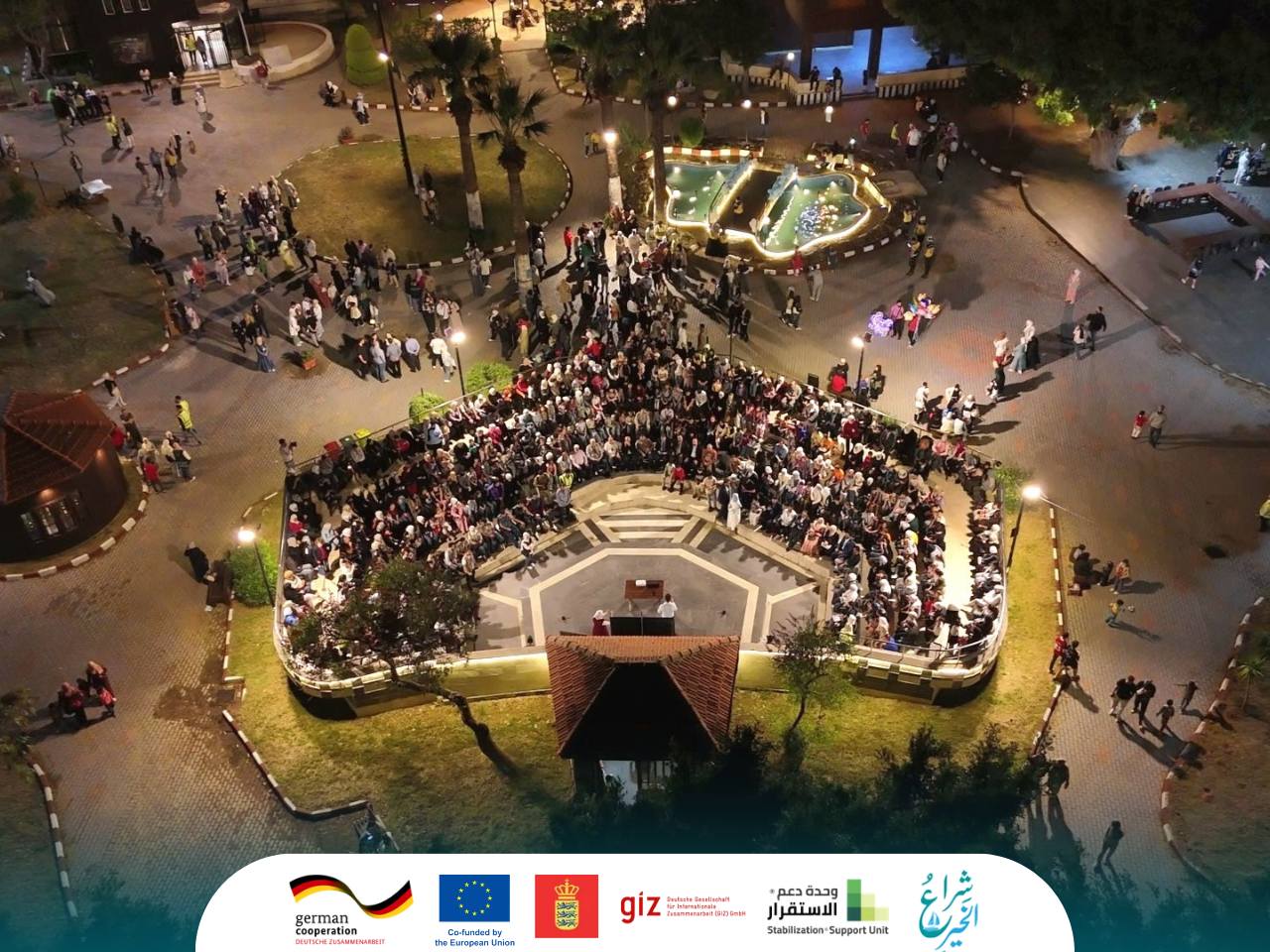
Reopening of Al-Orouba Park in Latakia
Under the patronage of the Governorate of Latakia, and in the presence of members of the Executive Office of the Governor of Latakia, the Director of Local Administration Mr. Ali Assi, the Director of Culture Dr. Ahmad Shreiki, and the Executive Director of the Stabilization Support Unit Mr. Mounzer Al-Sallal, along with a large public attendance from the local community, Sheraa Al-Khair, in cooperation with the Stabilization Support Unit, reopened Al-Orouba Park in the Martaqla neighborhood following its rehabilitation and restoration.
Community Initiative
```
The reopening ceremony reflected the importance of restoring public spaces that support community interaction and social cohesion, while creating safe and welcoming environments for local residents and families.
```
Project Framework
```
This event comes within the framework of the project “Enhancing National Participation and Trust-Building Bridges (Jusoor),” funded by the European Union, Germany, and Denmark as part of the Peace Initiative for Syria implemented by the German Agency for International Cooperation (GIZ).
```
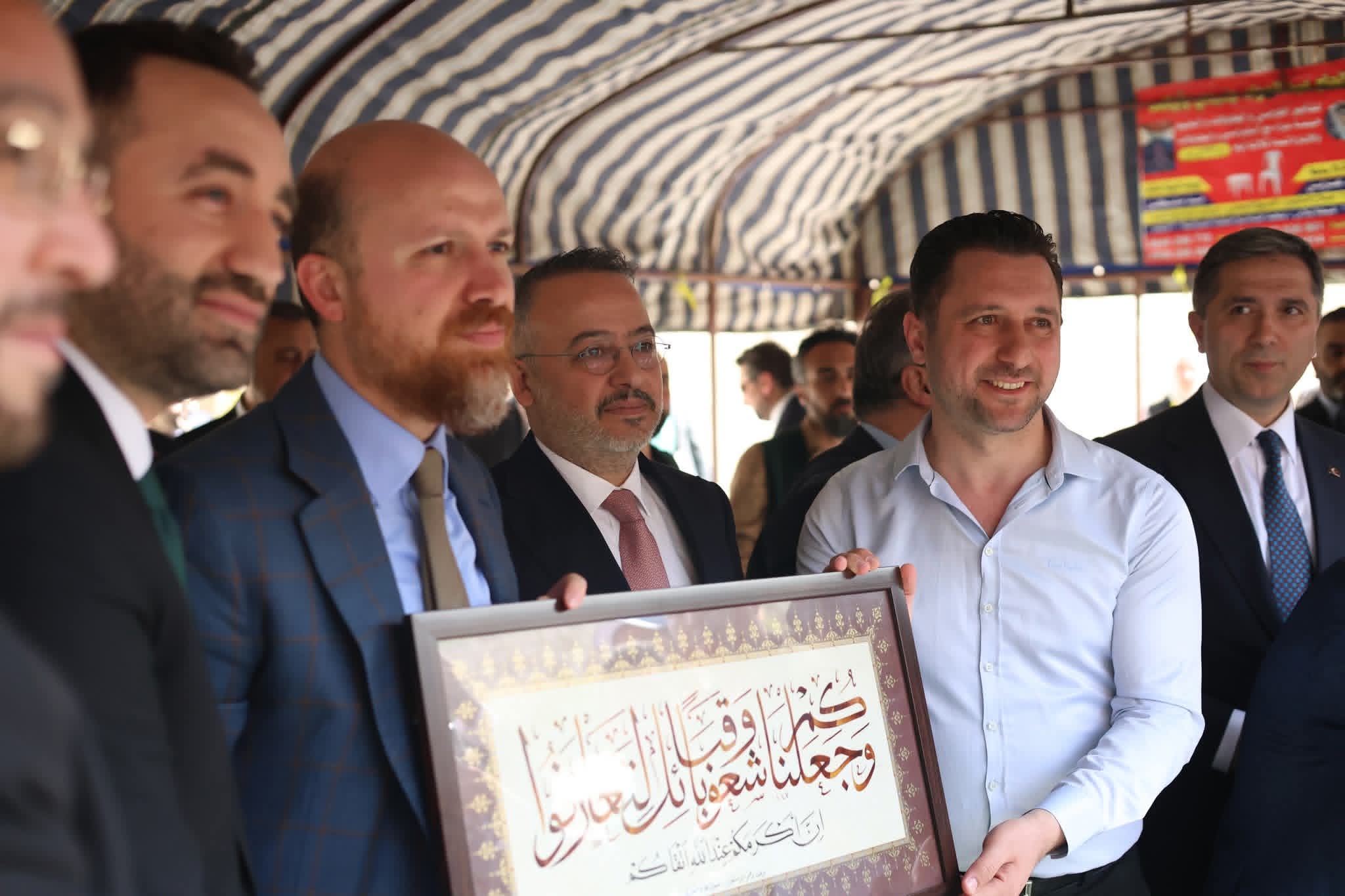
An official delegation comprising representatives from Aleppo Governorate, alongside a delegation from the Republic of Türkiye headed by the Turkish Vice President, with the participation of Mr. Bilal Erdoğan and several Turkish officials, visited the city of Aleppo to explore its cultural, heritage, and economic landscape.
The visit included a tour of the “Jarat Al Qalaa” Weekly Market, supported by the Stabilization Support Unit (SSU), one of Aleppo’s most prominent heritage markets. During the tour, the delegation viewed handicrafts, traditional works, and local products that reflect the city’s cultural identity and rich history.
The delegation also attended traditional artistic performances held within the market atmosphere, including special traditional songs and performances from Aleppo and whirling dervish dances (Sufi Whirling).
In addition, the delegation visited the shops and popular markets and met with several craftsmen and traditional artisans.
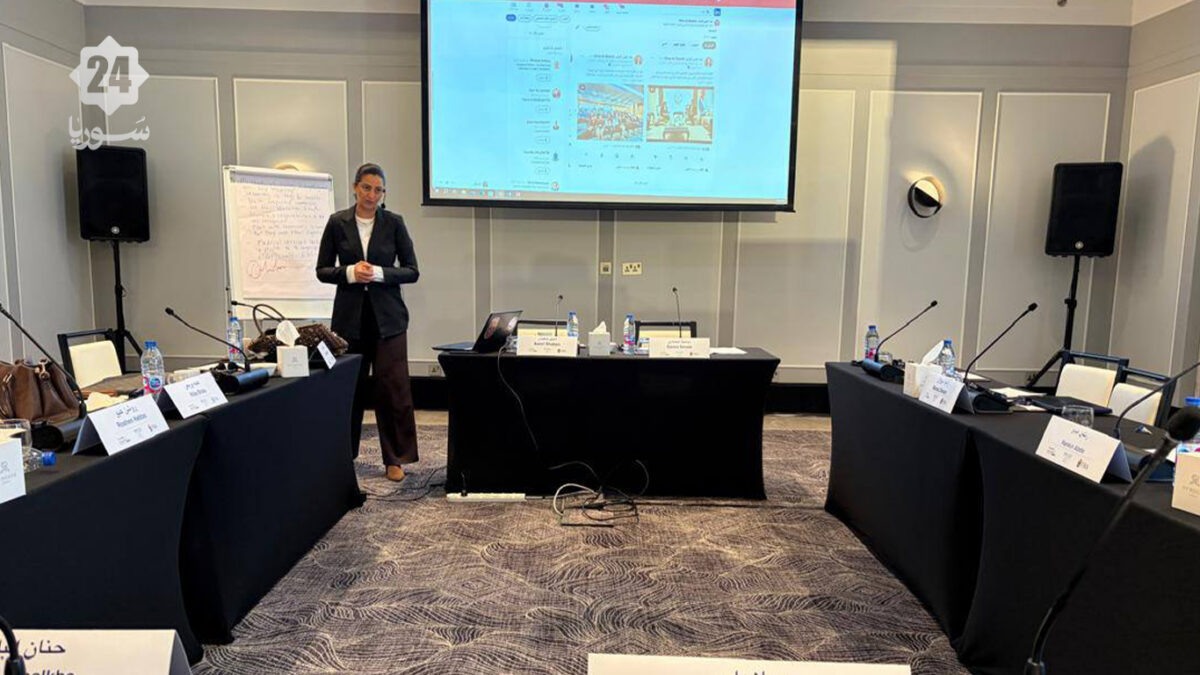
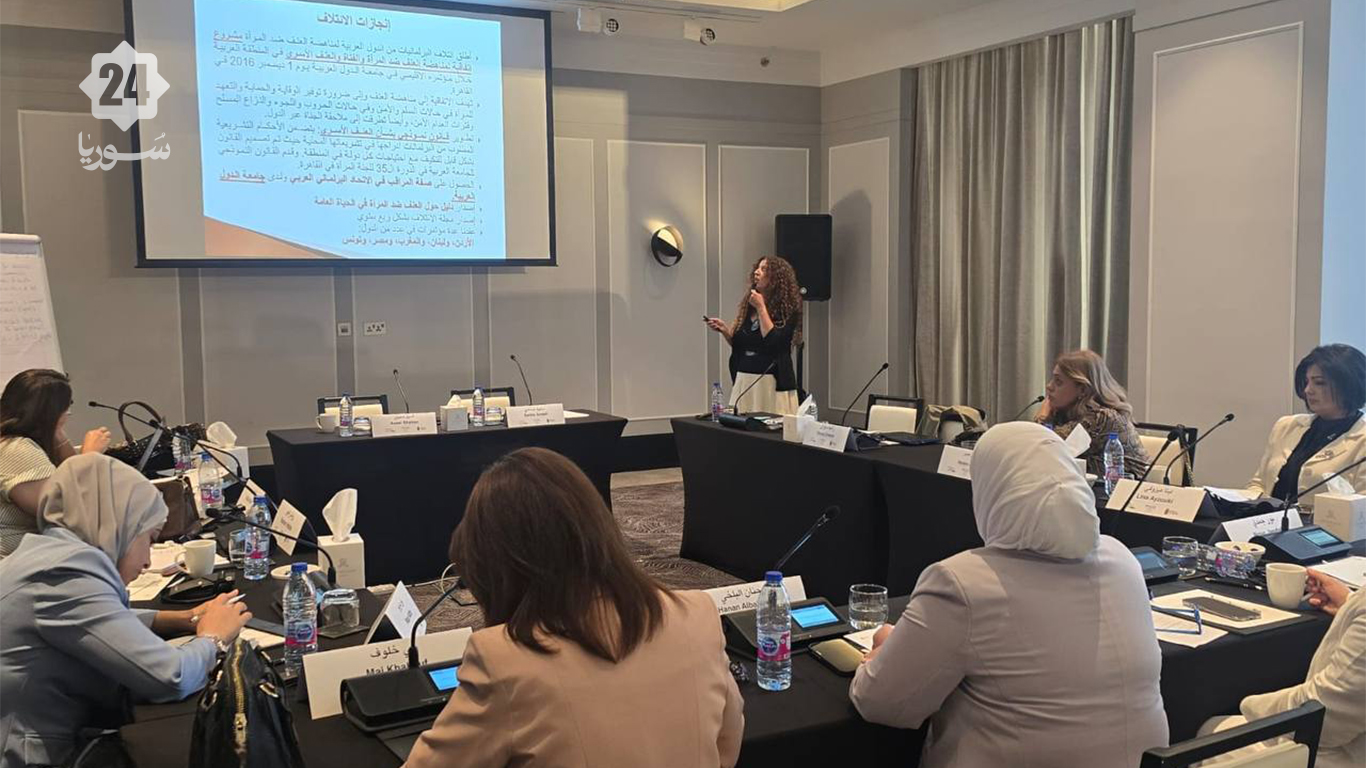
“Rased Syria – Stability Support Unit,” in cooperation with the National Democratic Institute and the Folke Bernadotte Academy, launched a series of specialized training workshops that lasted five days in the Jordanian capital, Amman, under the patronage of the Higher Committee for the Elections of the People’s Assembly.
The workshops target a group of Syrian women legislators, with the participation of several female members of the Jordanian Parliament, alongside a distinguished group of legal experts, specialists, and professionals in legislative and political affairs. The initiative aims to support Syrian women’s participation in public life and strengthen their presence in legislative institutions.
The workshops focus on exchanging expertise and knowledge through direct sessions and meetings among participants, contributing to the development of parliamentary and legislative skills and enhancing dialogue on issues related to women’s role in political work.
The workshops covered several key topics, including legislation and political representation, the role of women in legislative authorities, confidence-building and strengthening public image and political leadership, institutional power and coalition-building in parliamentary work, advocacy and enhancing cooperation between legislative councils and civil society, as well as discussing constitutional and legislative priorities for Syrian women.
Monther Al-Sallal, Executive Director of the Stability Support Unit, told “Syria 24” that these workshops are part of efforts to strengthen the presence of Syrian women within legislative and political institutions and enhance their effective participation in decision-making. He noted that the program aims to provide a space for dialogue and the exchange of experiences among participants while benefiting from Arab parliamentary experiences.
Al-Sallal added that the workshops seek to develop participants’ leadership and legislative skills, enabling them to play a more influential role in the coming phase. He stressed the importance of building sustainable partnerships and cooperation between Syrian women parliamentarians, civil society organizations, and regional legislative bodies.
He also affirmed that these activities come within joint efforts aimed at enhancing the capacities of Syrian women in the legislative and political fields and supporting their participation in building a more inclusive and just future.
These workshops come amid anticipation for the first session of the new Syrian People’s Assembly, following the completion of elections in Al-Hasakah Governorate and President Ahmed al-Sharaa issuing a decision to appoint 70 members to the council, in a move considered a step toward completing the legislative authority’s structure during the current phase.
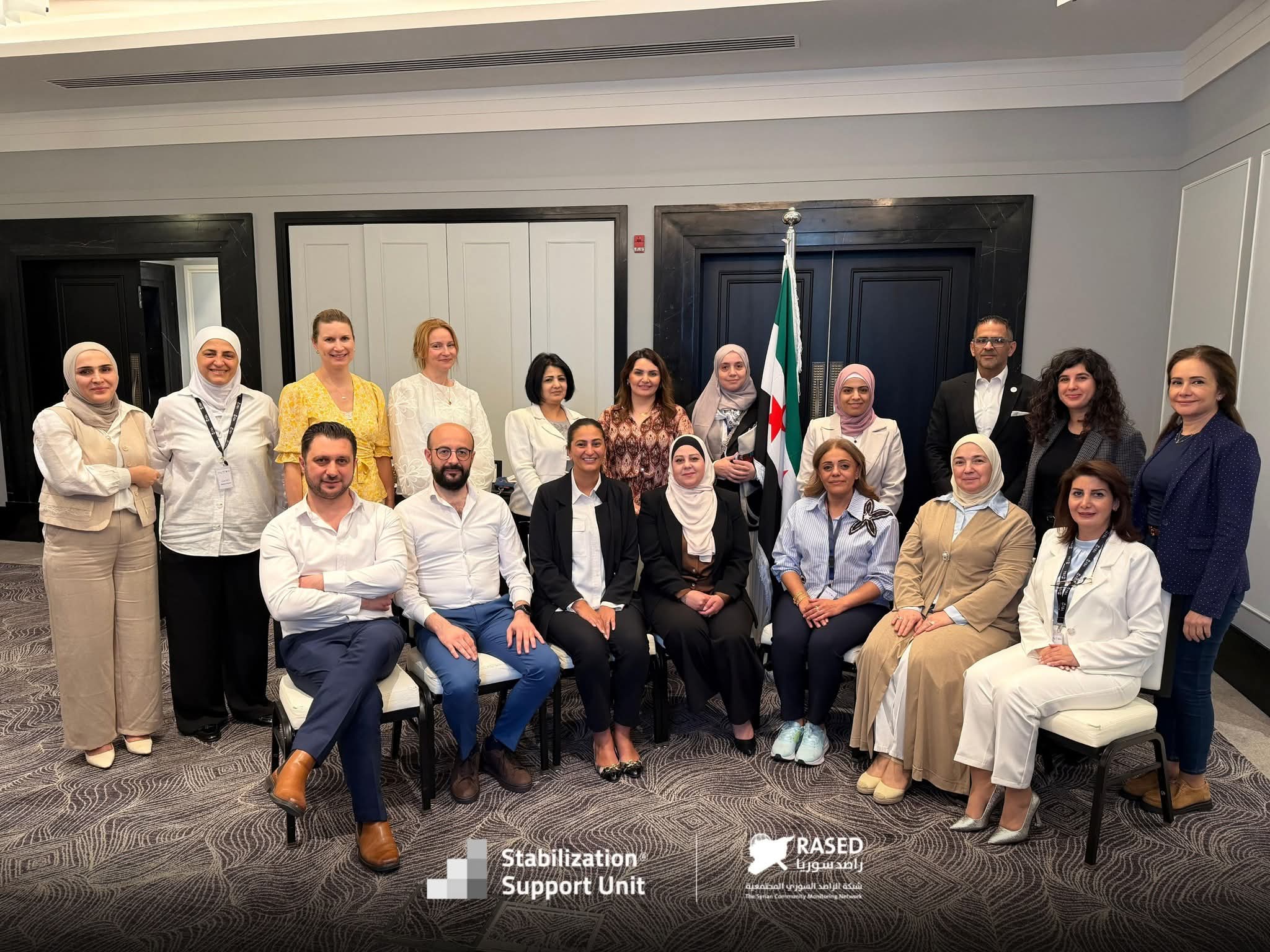
Conclusion of Training Workshops for Empowering Syrian Women Legislators in Amman
The training workshops dedicated to empowering Syrian women legislators concluded in the Amman/ Jordan. The workshops were implemented over five days by the Syrian Community Monitoring Network (RASED) of the Stabilization Support Unit (SSU), the National Democratic Institute (NDI), and the Folke Bernadotte Academy (FBA), as part of the “Support and Empowerment of Syrian Women Parliamentarians” Program, under the patronage of the Higher Committee for the Elections of the People’s Assembly.
The final day featured sessions focused on strengthening cooperation between legislative councils and civil society, mechanisms for advocacy and coalition-building, as well as discussions on the constitutional and legislative priorities for Syrian women in the coming phase, in a way that supports their presence and active participation in political and legislative life.
The workshops also provided a space for exchanging expertise and practical experiences through direct meetings and interactive discussions addressing political leadership, alliance-building, and institutional parliamentary work. The sessions brought together a group of Syrian women legislators, several Jordanian female parliamentarians, and a distinguished group of experts and specialists in legislative and political affairs.
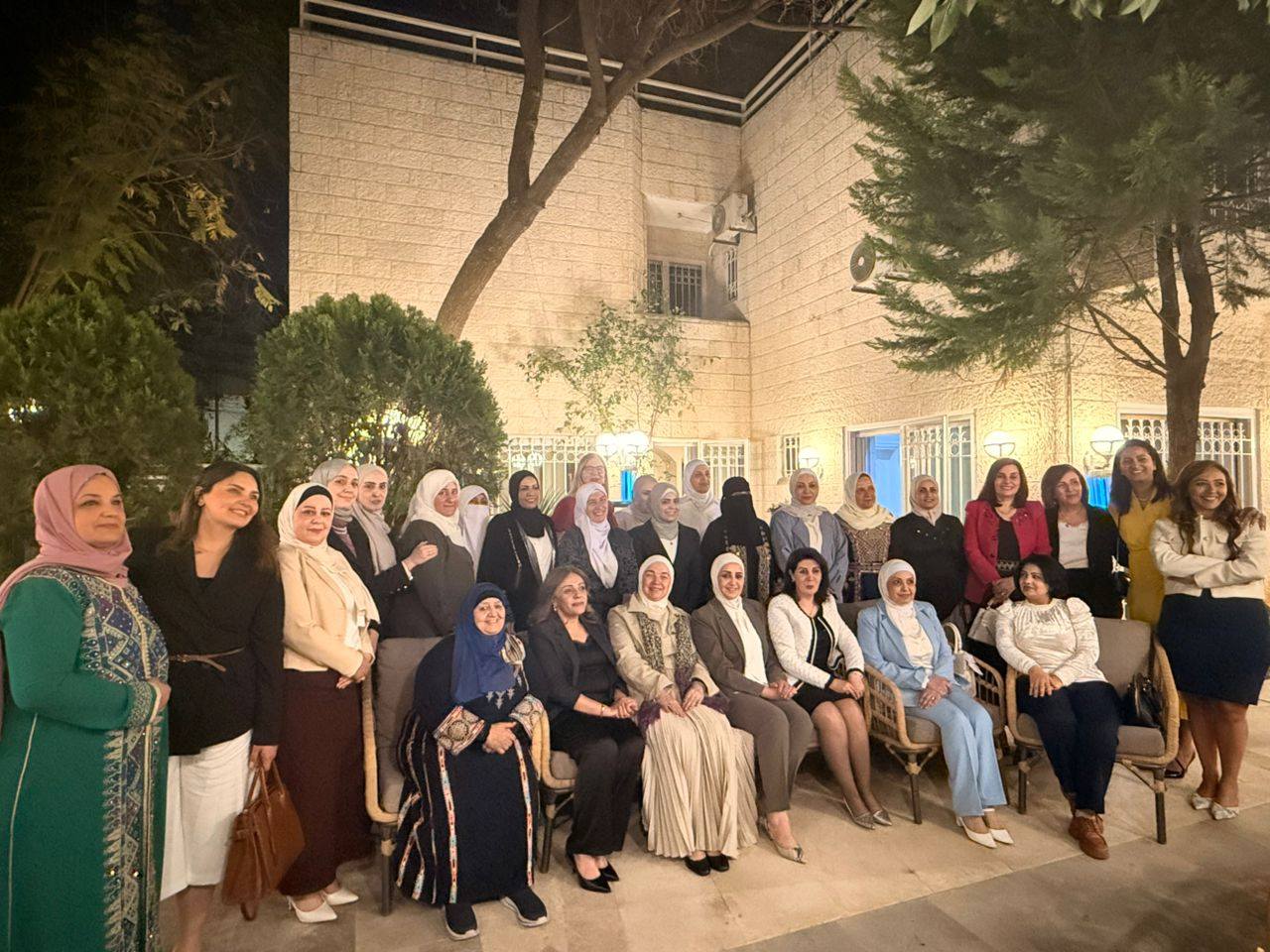
Meeting of Jordanian and Syrian Women Parliamentarians in Amman
With the generous hosting of the Swedish Dialogue Institute for the Middle East and North Africa, Syrian and Jordanian women parliamentarians were invited to a dinner held alongside the training sessions organized within the framework of the “Support and Empowerment of Syrian Parliamentarians” Program.
```
The program is implemented by the RASED Community Monitoring Network of the Stabilization Support Unit (SSU), in cooperation with the National Democratic Institute (NDI) and the Folke Bernadotte Academy (FBA).
The Jordanian capital, Amman, witnessed a series of meetings bringing together Jordanian and Syrian women parliamentarians in an atmosphere focused on dialogue, cooperation, and exchange of parliamentary experiences.
```
Exchange of Experiences
```
During the meetings, participants introduced themselves and exchanged experiences aimed at strengthening communication and benefiting from diverse parliamentary practices, in a way that supports women’s presence in legislative work and expands opportunities for cooperation and knowledge exchange.
```
Official Meetings and Visits
```
These meetings come as part of a broader tour taking place in Jordan, which includes several training sessions and official visits, most notably a meeting with the Jordanian Minister of Social Development, Ms. Wafa Bani Mustafa, in addition to meetings with several officials and the Independent Election Commission in Jordan.
The events were also attended by Ms. Hanan Balkhi, representing the Higher Committee for the Elections of the Syrian People’s Assembly.
```
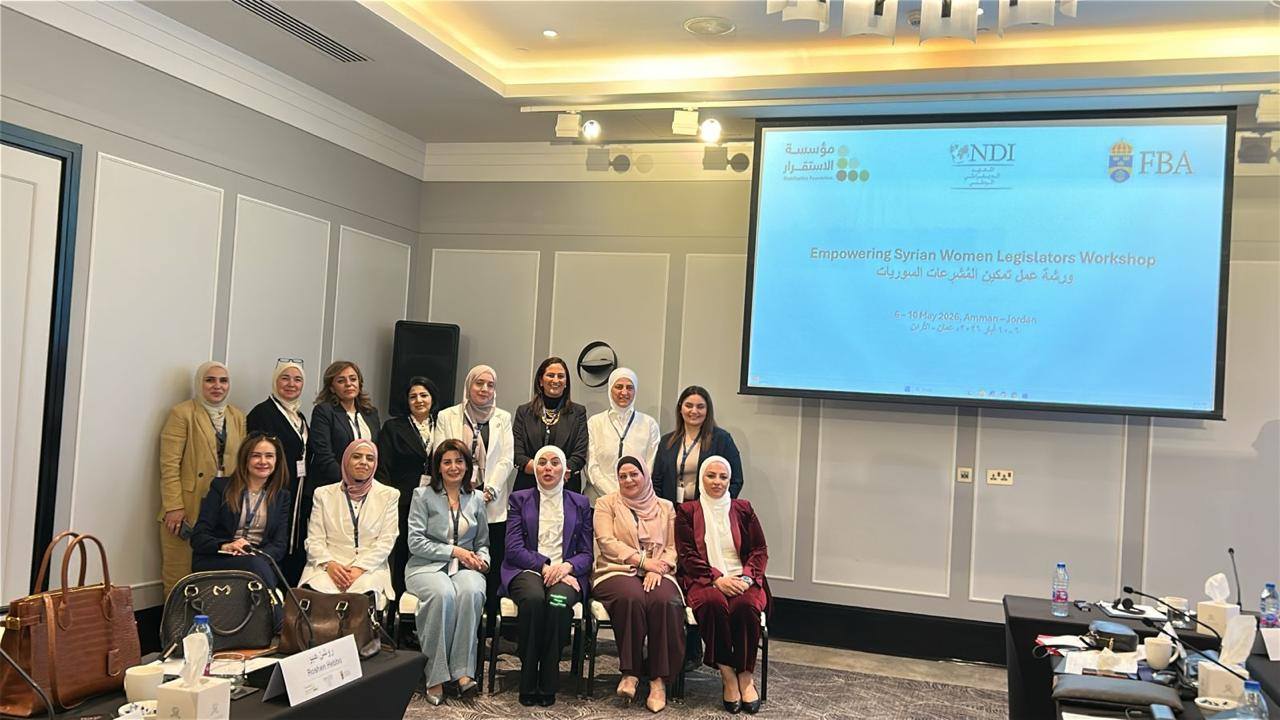
Under the patronage of the Higher Committee for the Elections of the People’s Assembly, the Stabilization Support Unit (SSU) – Rased Syria, in cooperation with the National Democratic Institute (NDI) and the Folke Bernadotte Academy (FBA), organized a series of specialized 5-day training workshops in Amman, Jordan.
The workshops targeted a group of Syrian women legislators, with the participation of Jordanian women parliamentarians alongside legal experts, specialists, and professionals in legislative and political affairs.
These workshops created a platform for exchanging expertise and knowledge through direct dialogue among participants, contributing to strengthening cooperation and sharing experiences in parliamentary and legislative work.
Main Workshop Themes
- Legislation, representation, and the role of women in legislative authorities
- Building trust, enhancing public image, and political leadership
- Institutional strength, coalition-building, and parliamentary work
- Advocacy and strengthening cooperation between councils and civil society
- Identifying constitutional and legislative priorities for Syrian women
Workshop Objectives
The workshops come within the framework of joint efforts aimed at strengthening the capacities of Syrian women in legislative and political fields and supporting their active participation in building a more inclusive and just future.
```
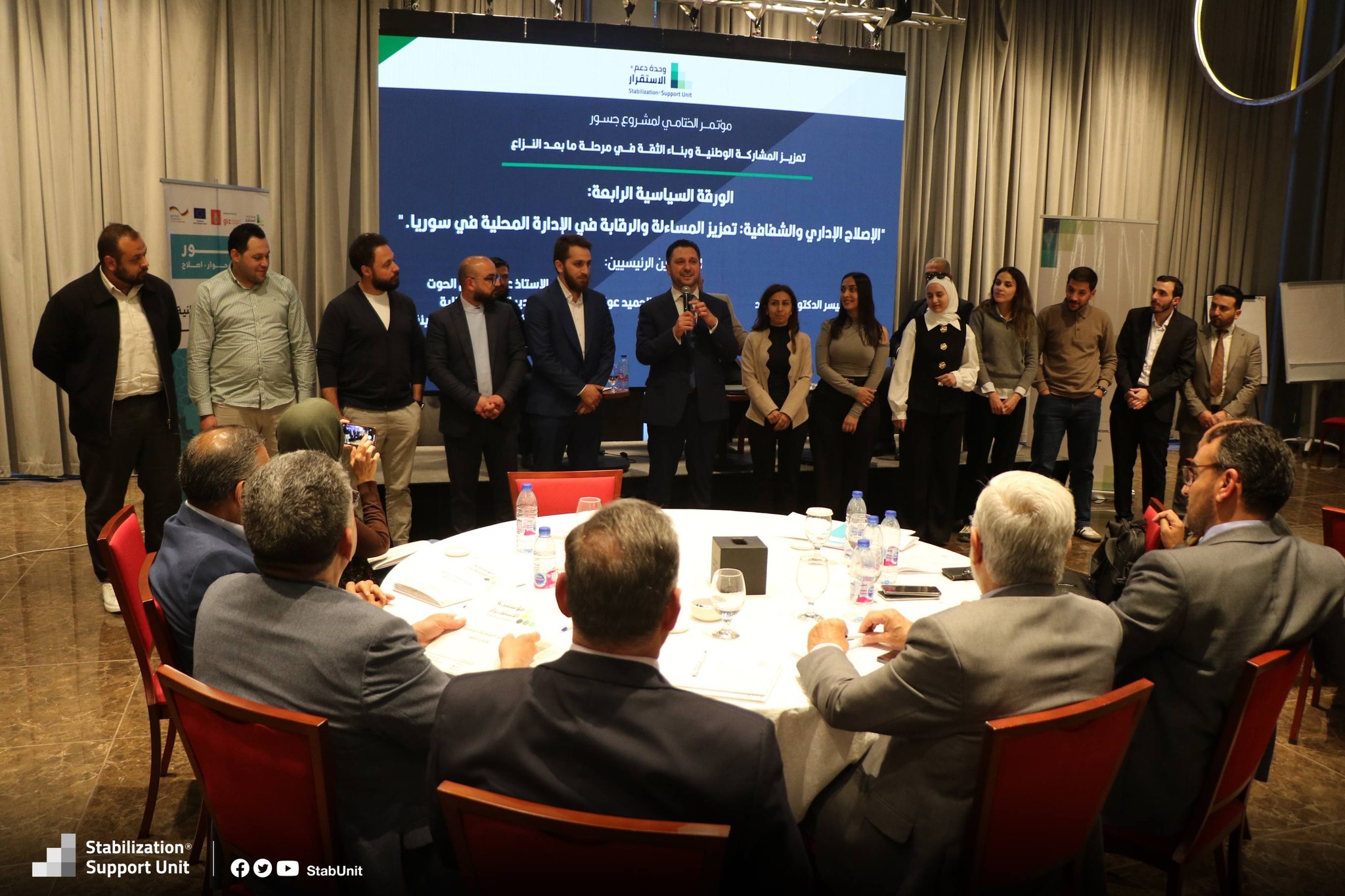
Final Conference of the “Jusoor” Project
The Stabilization Support Unit (SSU) organized the final conference of the
“Jusoor” project at Golden Mezzeh Hotel in Damascus. This event comes after
seven months of continuous work aimed at enhancing national participation
and building trust.
The event was attended by representatives from the Ministry of Local
Administration and Environment, the Ministry of Justice, the Ministry of
Emergency and Disaster Management, directorates, political bodies,
academics, and public affairs experts.
Keynote Speakers
- Dr. Abdul Hamid Awak – Legal Advisor at SSU
- Dr. Abdul Razzaq Al-Hussein – Advisor to the Minister of Justice
- Mr. Ali Al-Hamad – Director of Public Relations at the Ministry of Local Administration and Environment
- Mr. Abdul Moneim Al-Hout – Director of Internal Audit at the Ministry of Local Administration and Environment
- Dr. Zaidoun Al-Zoubi
Project Activities and Outcomes
The conference marked the culmination of extensive community dialogues
implemented across seven Syrian governorates: Damascus, Rural Damascus,
Hama, Homs, Tartous, Latakia, and Aleppo.
SSU conducted 64 dialogue sessions and implemented 12 cultural and artistic
community initiatives that reflected social cohesion and encouraged collective
participation among different segments of society.
- Promoting safe spaces for dialogue
- Enhancing trust-building among communities
- Supporting decentralization and administrative reform discussions
- Encouraging legal reform and rule of law
- Strengthening participation and collective action
Main Dialogue Themes
Discussions focused on several national priorities, including the social
contract, trust-building, decentralization, administrative reform, and
the rule of law.
- The Social Contract and Trust-Building
- Local Governance and Decentralization
- Legal System Reform in Syria
- Administrative Reform and Transparency
The resulting recommendations and working papers reflected local communities’
aspirations and visions for Syria’s future and will be submitted to relevant
authorities to support policy development.
Conference Conclusion
The conference concluded with a strong emphasis on sustaining national
dialogue and transforming the “Jusoor” project’s outcomes into actionable
plans in cooperation with relevant stakeholders to achieve tangible impact.
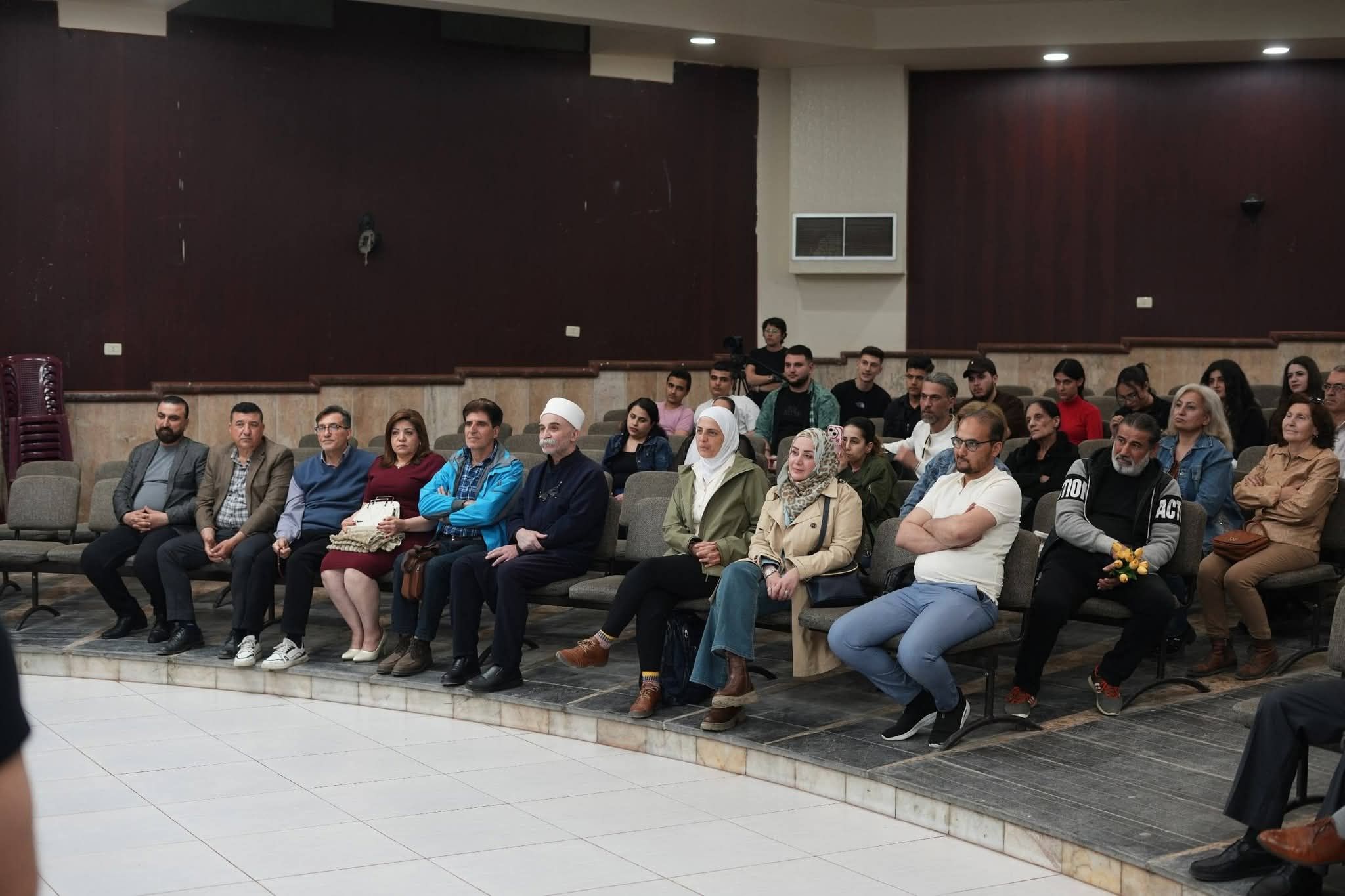
Screening of the Film “Jaramana from Within”
As part of the activities of the “Shared Spaces for Living” initiative, the film
“Jaramana from Within” was screened. The film documents the city’s experience
in coexistence and social cohesion, showcasing real-life examples of harmony
among its diverse communities.
This activity comes as part of ongoing efforts to highlight positive experiences
and promote a culture of shared living, contributing to building trust among
community members.
Project Background
This event is part of the project “Enhancing National Participation and
Trust-Building Bridges (Jusoor)”, funded by the European Union, Germany,
and Denmark, within the framework of the Peace Initiative for Syria
implemented by the German Agency for International Cooperation (GIZ).
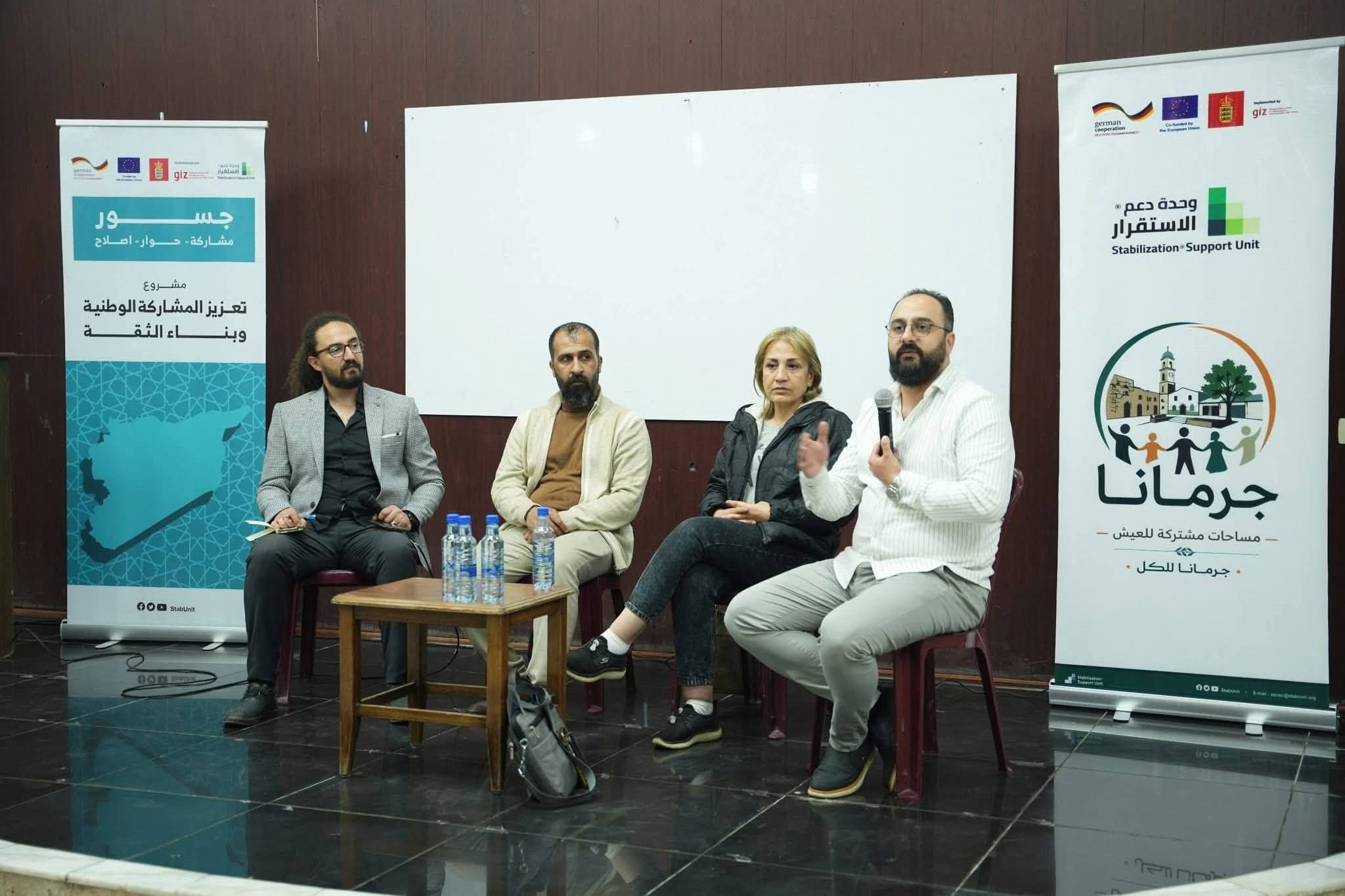
As part of the closing day of the “Shared Spaces for Living” initiative in Jaramana, the Stabilization Support Unit (SSU) organized an interactive session titled “Sharing Experiences of Civil Society Work in Syria” in Jaramana. The session brought together speakers from different Syrian governorates, who shared their practical experiences in civil society work and the reality of community initiatives in their local contexts.
The session provided a platform for exchanging experiences and lessons learned, where participants discussed the challenges facing civil society work and explored ways to enhance its effectiveness in supporting local communities.
It also highlighted successful models of initiatives that have contributed to strengthening community participation and building trust among different social groups.
The discussions emphasized the importance of coordination and complementarity among civil society actors to achieve sustainable impact and enhance communities’ ability to respond to challenges through a collaborative, dialogue-based approach.
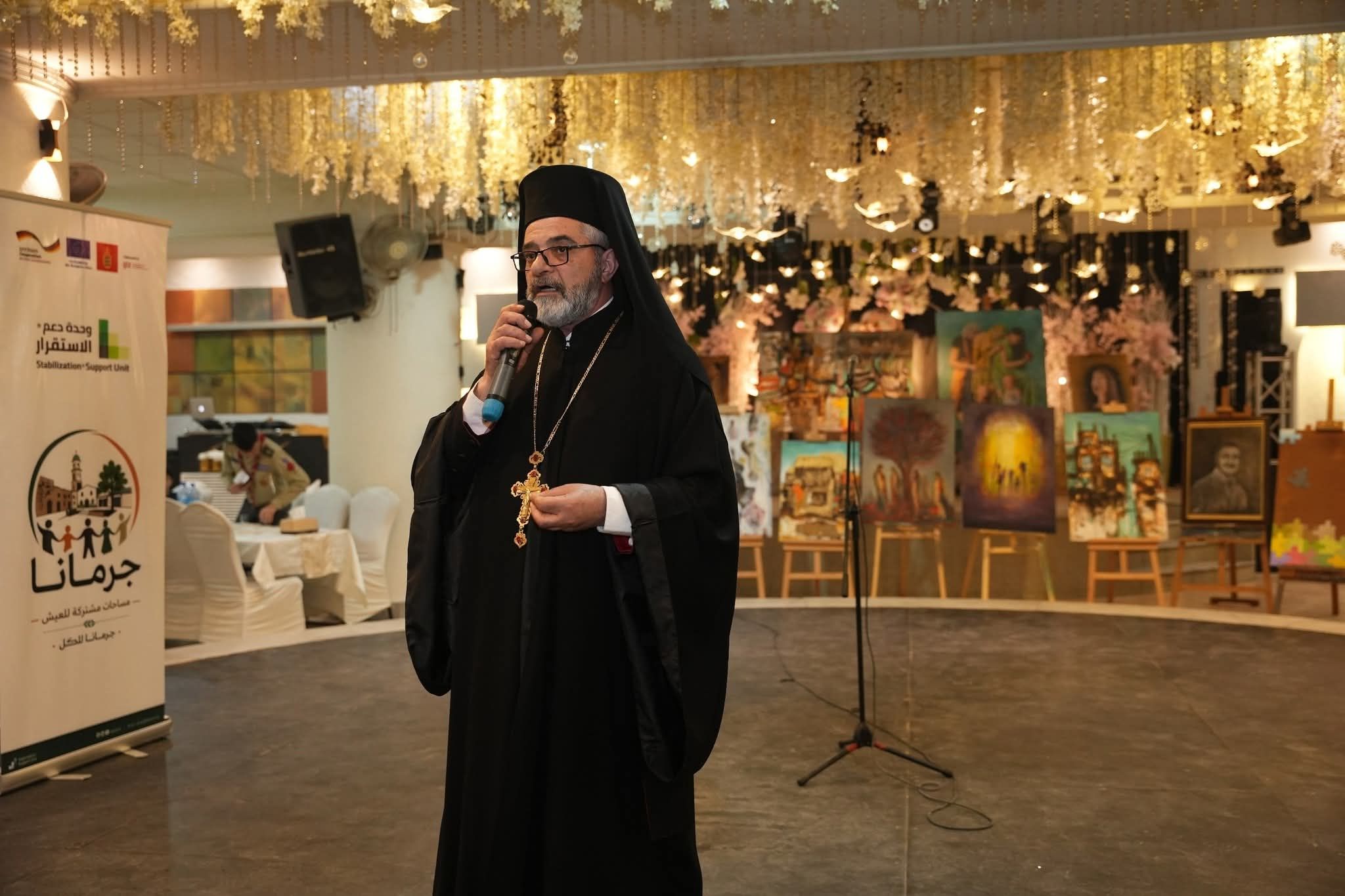
Final Day of the “Shared Spaces for Living” Initiative in Jaramana
Activities of the “Shared Spaces for Living” initiative were concluded in the city of Jaramana
with a dialogue session dedicated to presenting and discussing the Civil Cohesion Document.
The session hosted a large number of participants representing different segments of the local community.
The session provided a genuine space for exchanging views and experiences, where multiple
perspectives on coexistence in the Syrian context were presented, with a focus on the importance
of responsible dialogue as a means to enhance understanding and reduce divisions.
Participants also discussed the role of civil society and local initiatives in strengthening
social cohesion and building trust among individuals and communities.
Key Outcomes
- Encouraging open and responsible dialogue among community members
- Highlighting diverse perspectives on coexistence
- Strengthening trust between individuals and local groups
- Promoting the role of civil society in social cohesion
Project Background
This event is part of the project “Enhancing National Participation and
Trust-Building Bridges (Jusoor)”, funded by the European Union, Germany,
and Denmark, within the framework of the Peace Initiative for Syria
implemented by the German Agency for International Cooperation (GIZ).
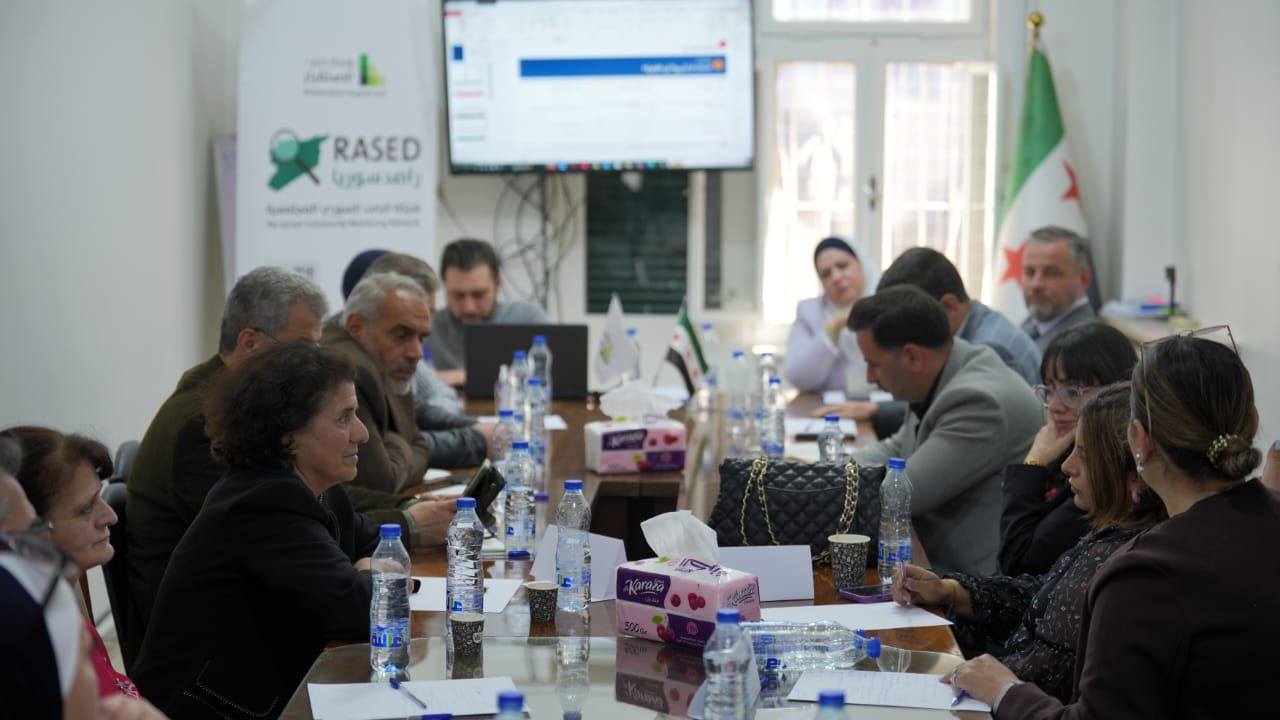
Discussion Session on Legislative Priorities
Damascus – The Syrian Community Observatory Network – Stabilization Support Unit held a dialogue session in Damascus,
aimed at discussing legislative priorities during the current phase and enhancing the exchange of perspectives and expertise
in a way that contributes to improving legislative performance.
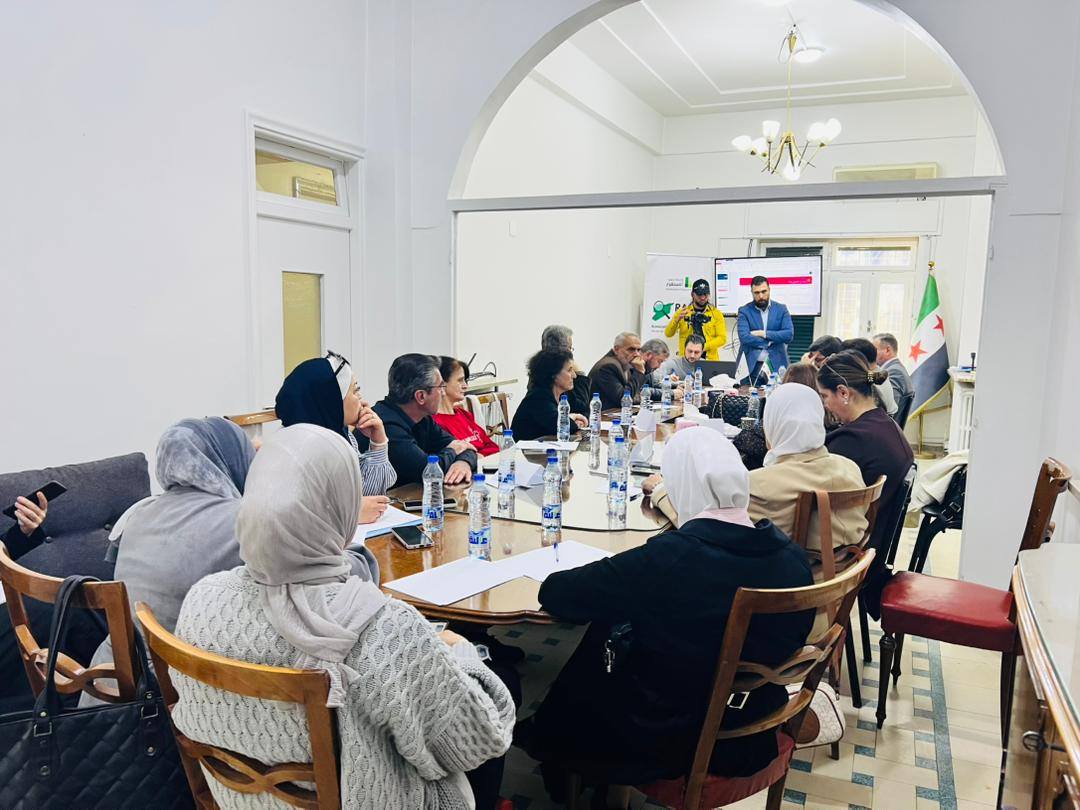
The session was moderated by Bashar Al-Hawi, where discussions focused on the importance of integration
between parliamentary work and the needs of society, as well as the necessity of aligning legislative priorities
with the requirements of the current stage.
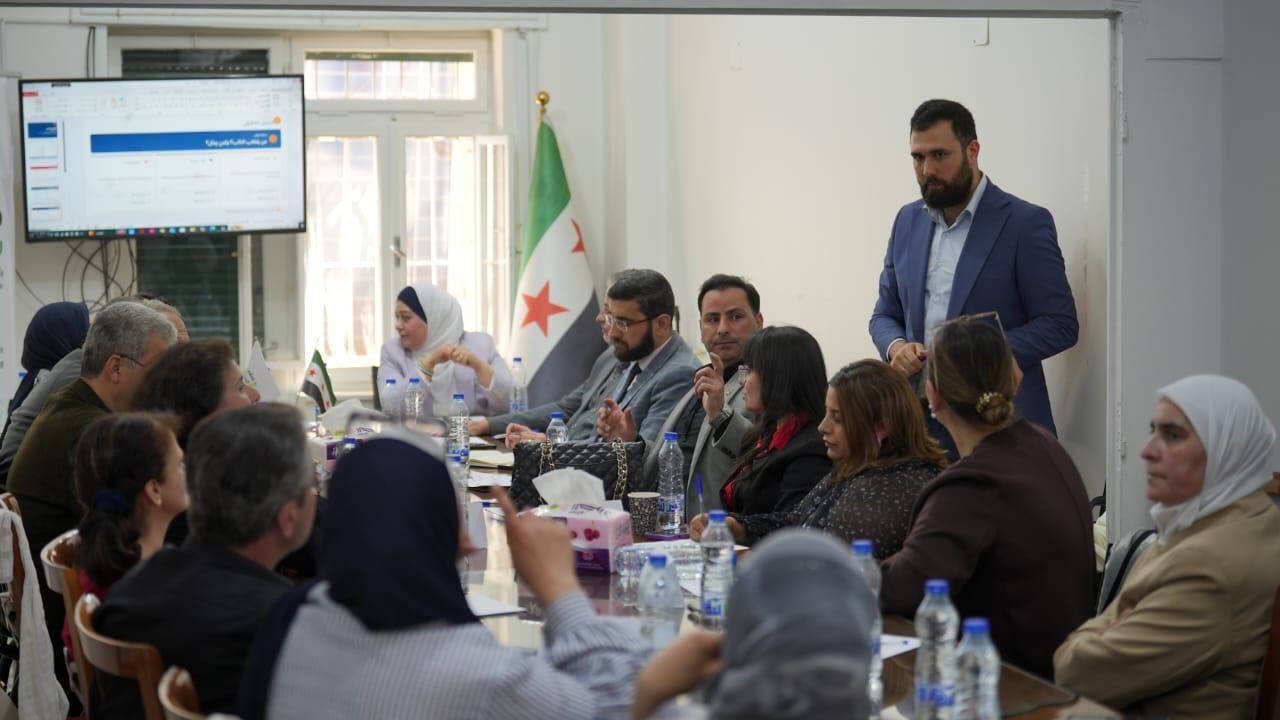
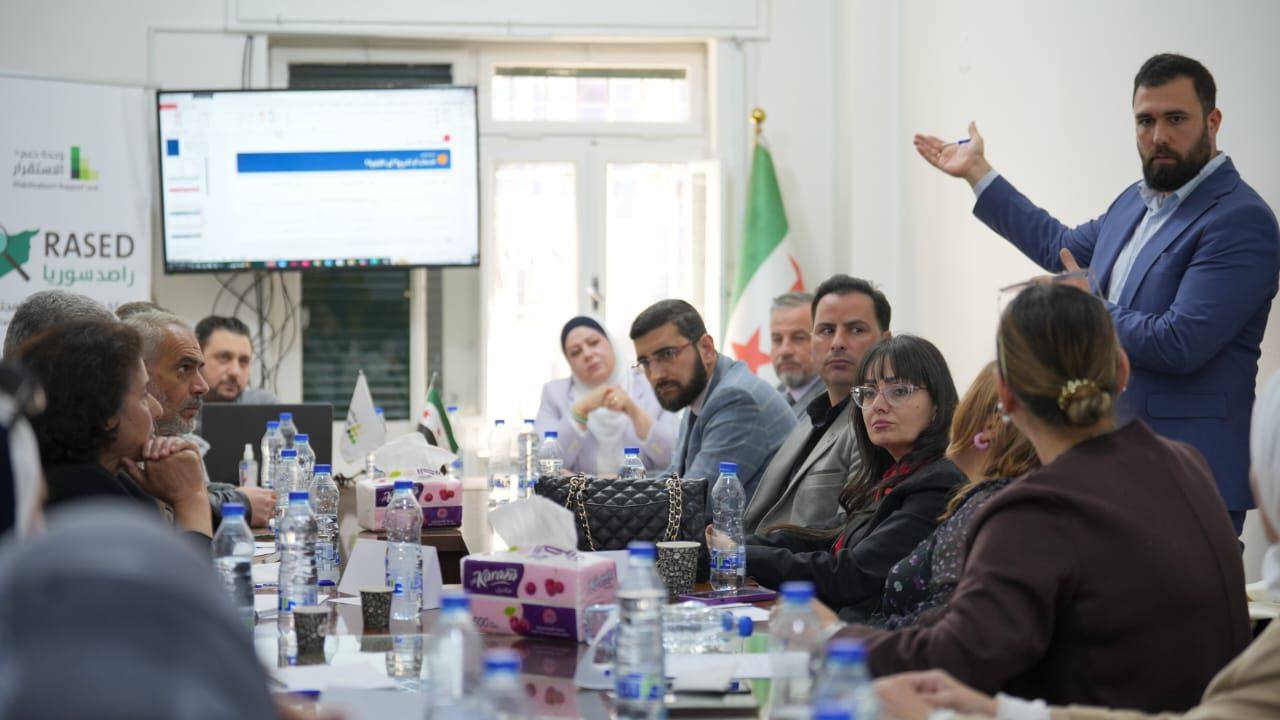
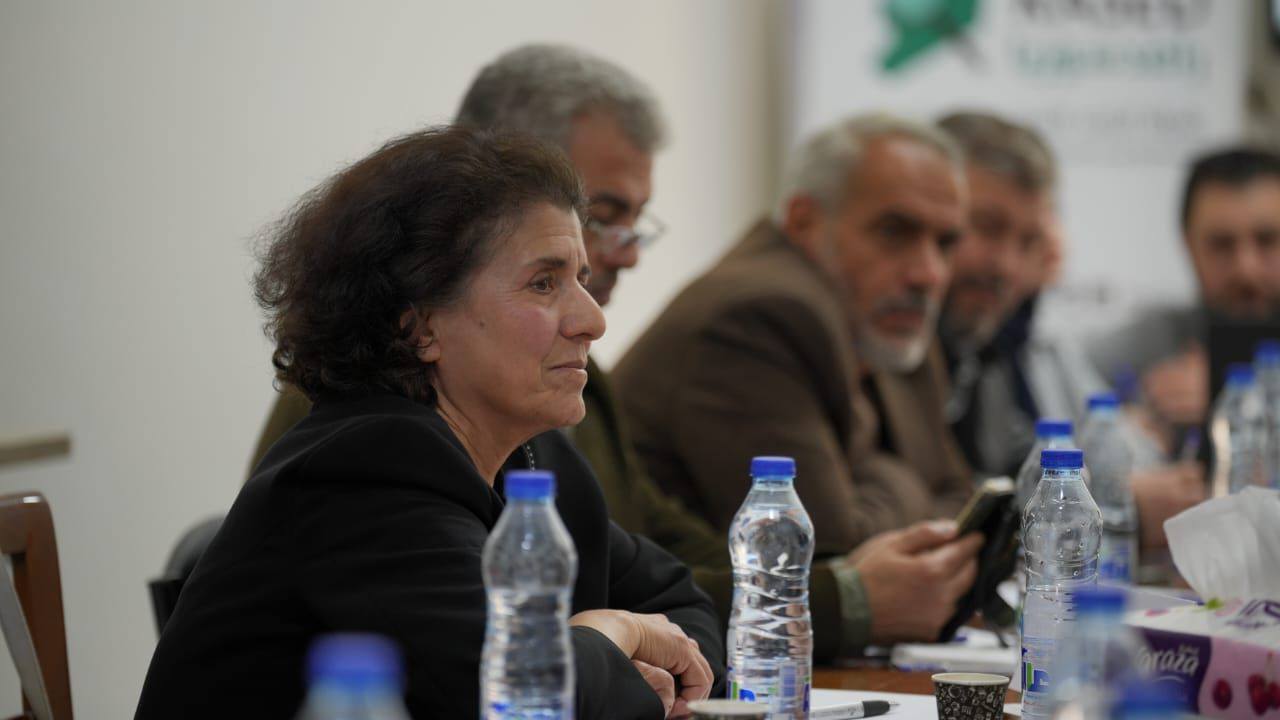
The session was attended by a number of parliament members, representatives from the Ministry of Foreign Affairs
and the Directorate of Social Affairs and Labor, in addition to the Higher Elections Committee, alongside representatives
of unions, civil society organizations, and persons with disabilities.
The session addressed several key themes, most notably:
- The role and responsibilities of parliament members.
- Legislative priorities during the current phase.
- The priorities of Syrian society during the current stage.
The session witnessed in-depth discussions that reflected the diversity and expertise of the participants,
while emphasizing the importance of strengthening partnerships between official institutions and civil society
in order to achieve a more effective response to citizens’ needs.
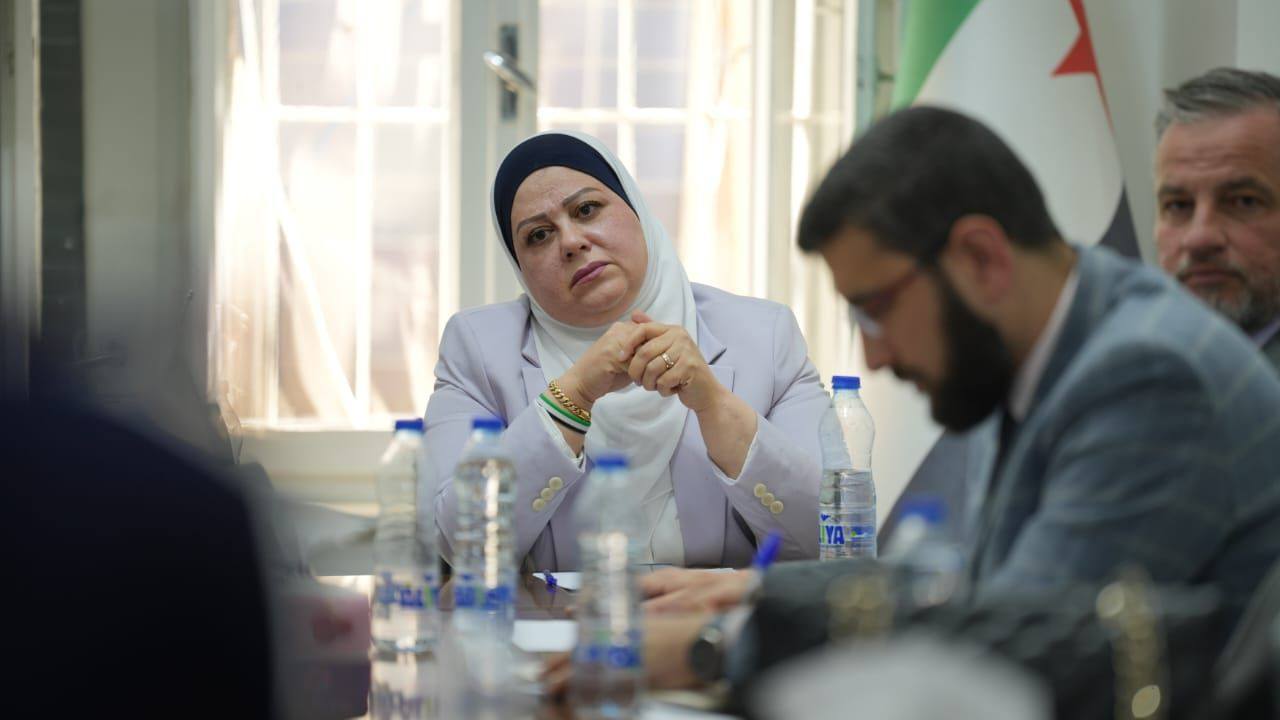
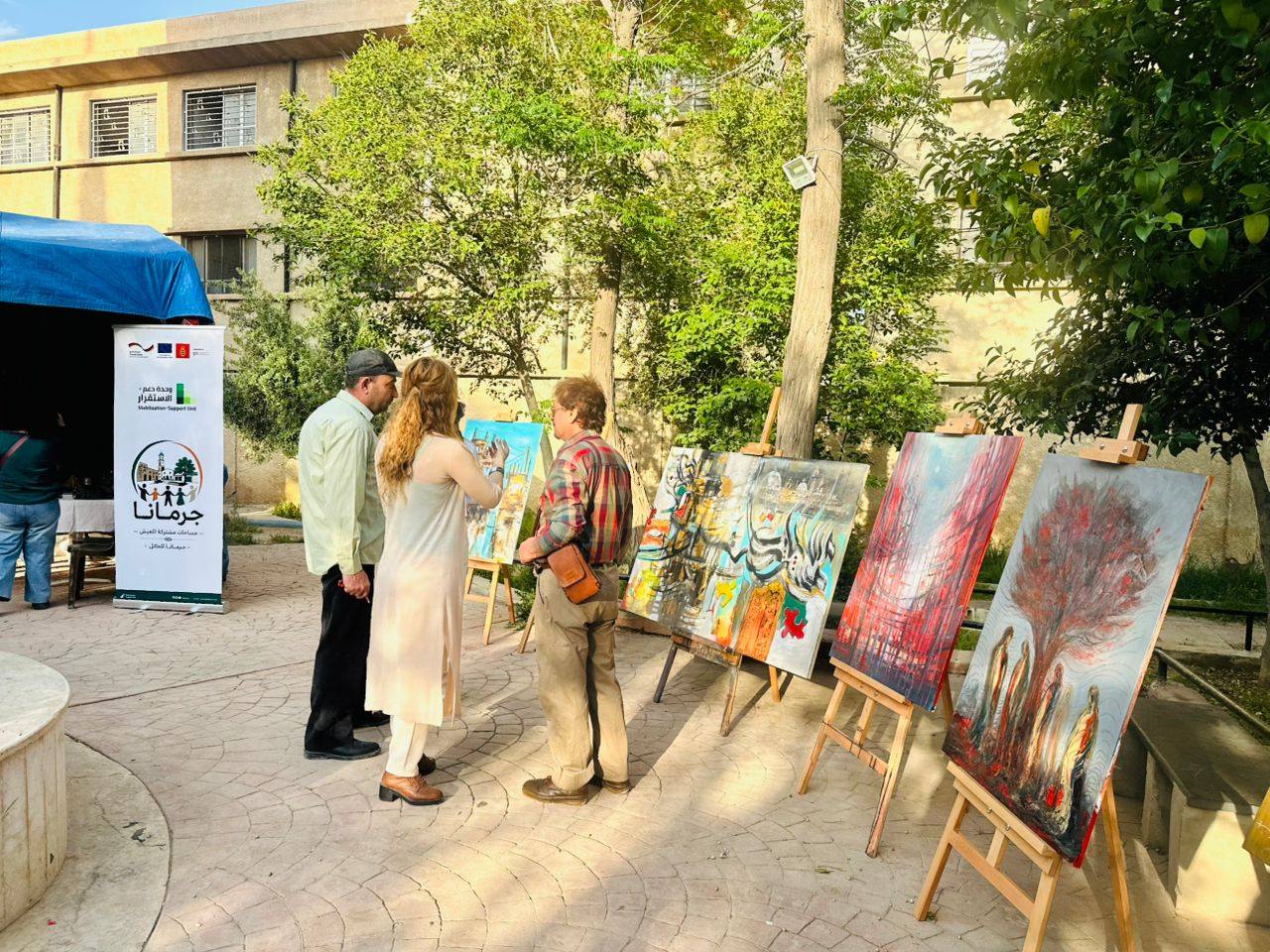
Art Exhibition – Shared Spaces for Living
The art exhibition, held as part of the "Shared Spaces for Living" initiative,
has officially opened in a vibrant and lively atmosphere. Artists and visitors gathered around
paintings that reflect the values of connection and coexistence, creating spaces for dialogue
and creative expression.
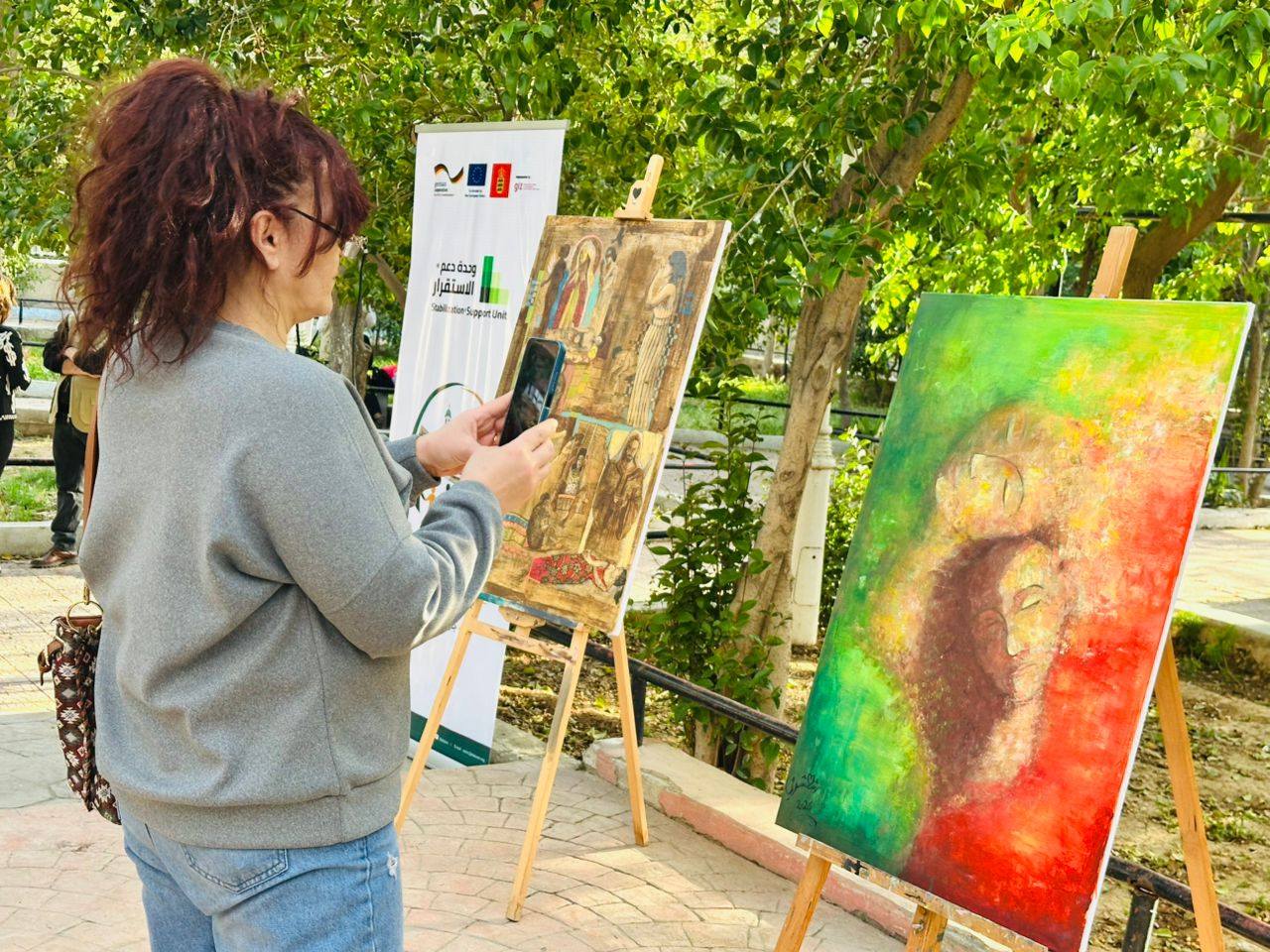
📍 We look forward to welcoming you at Rawad Al-Bi’a Park – Jaramana
🗓 Starting April 26 for three days
🕔 From 5:00 PM to 8:00 PM
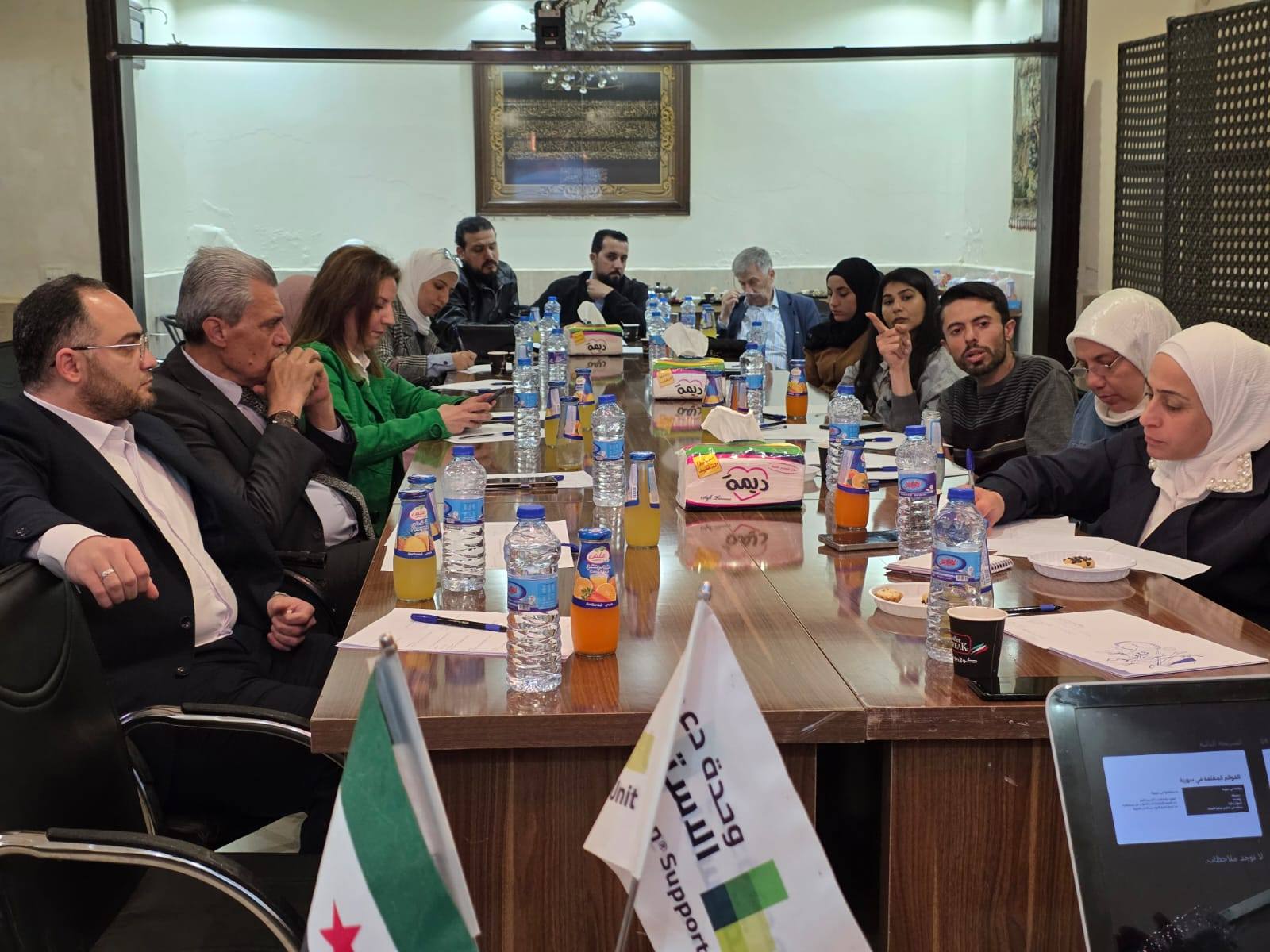
Dialogue Workshop on the Electoral System and Constituency Division
Aleppo – The Syrian Community Observatory Network – Stabilization Support Unit organized a dialogue workshop in the city of Aleppo titled
"The Electoral System and Constituency Division", as part of its efforts to promote public discussions on developing the political process in Syria.
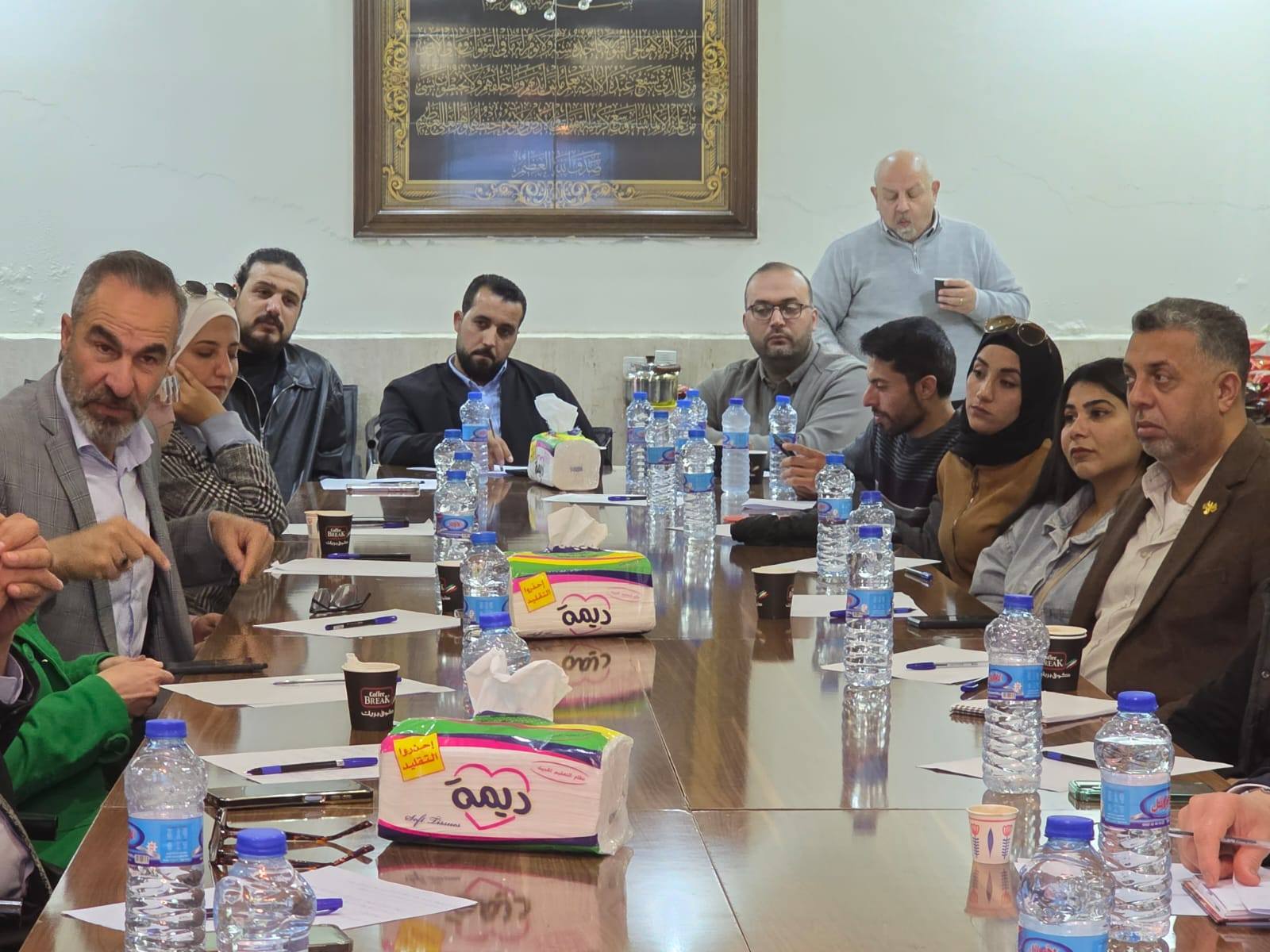
The workshop was attended by a number of members of the People’s Assembly, along with representatives from political affairs,
the subcommittee for elections, and the Fifth Bloc in Aleppo Governorate, in addition to a group of legal experts,
human rights advocates, and civil society activists.
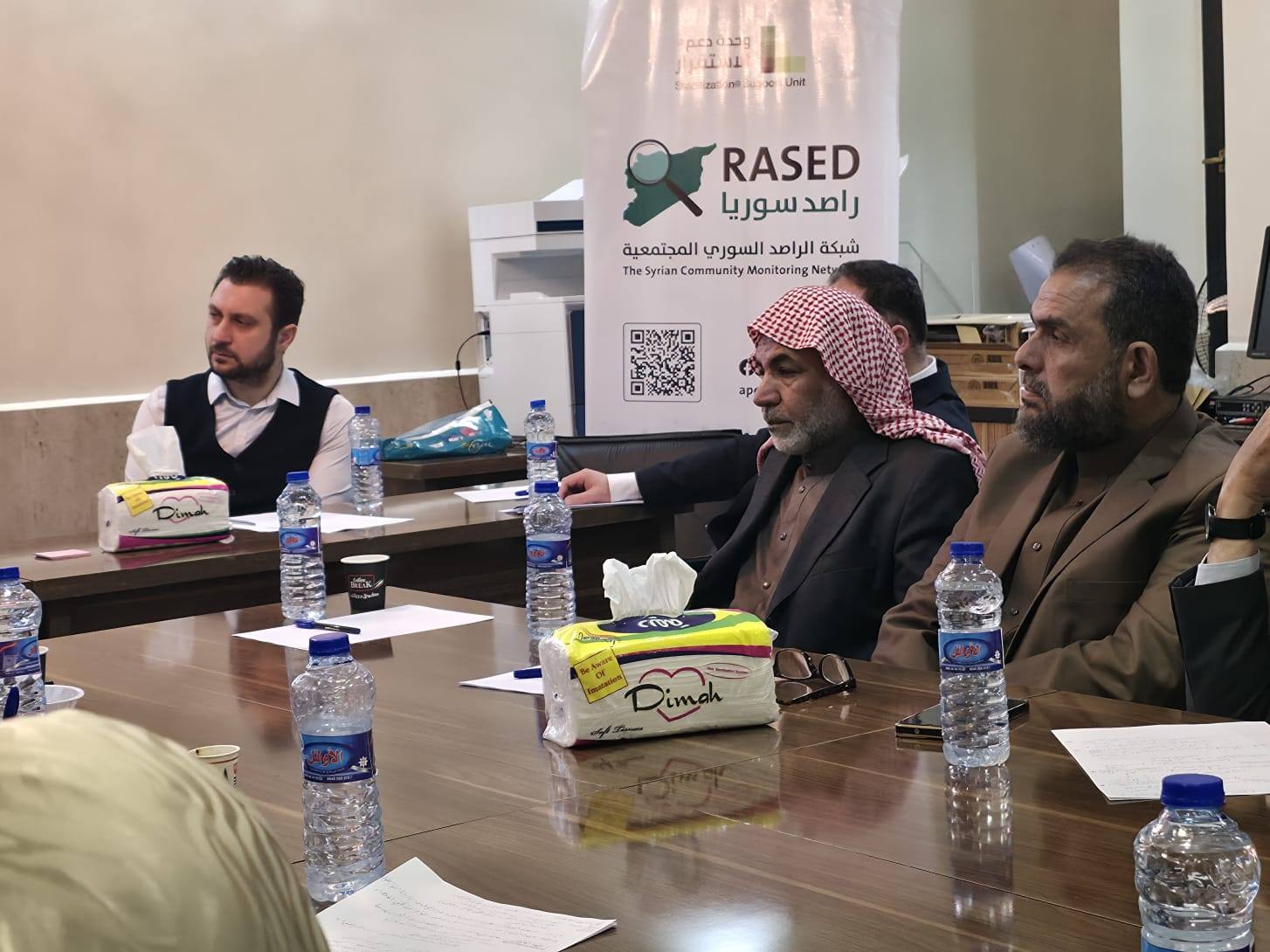
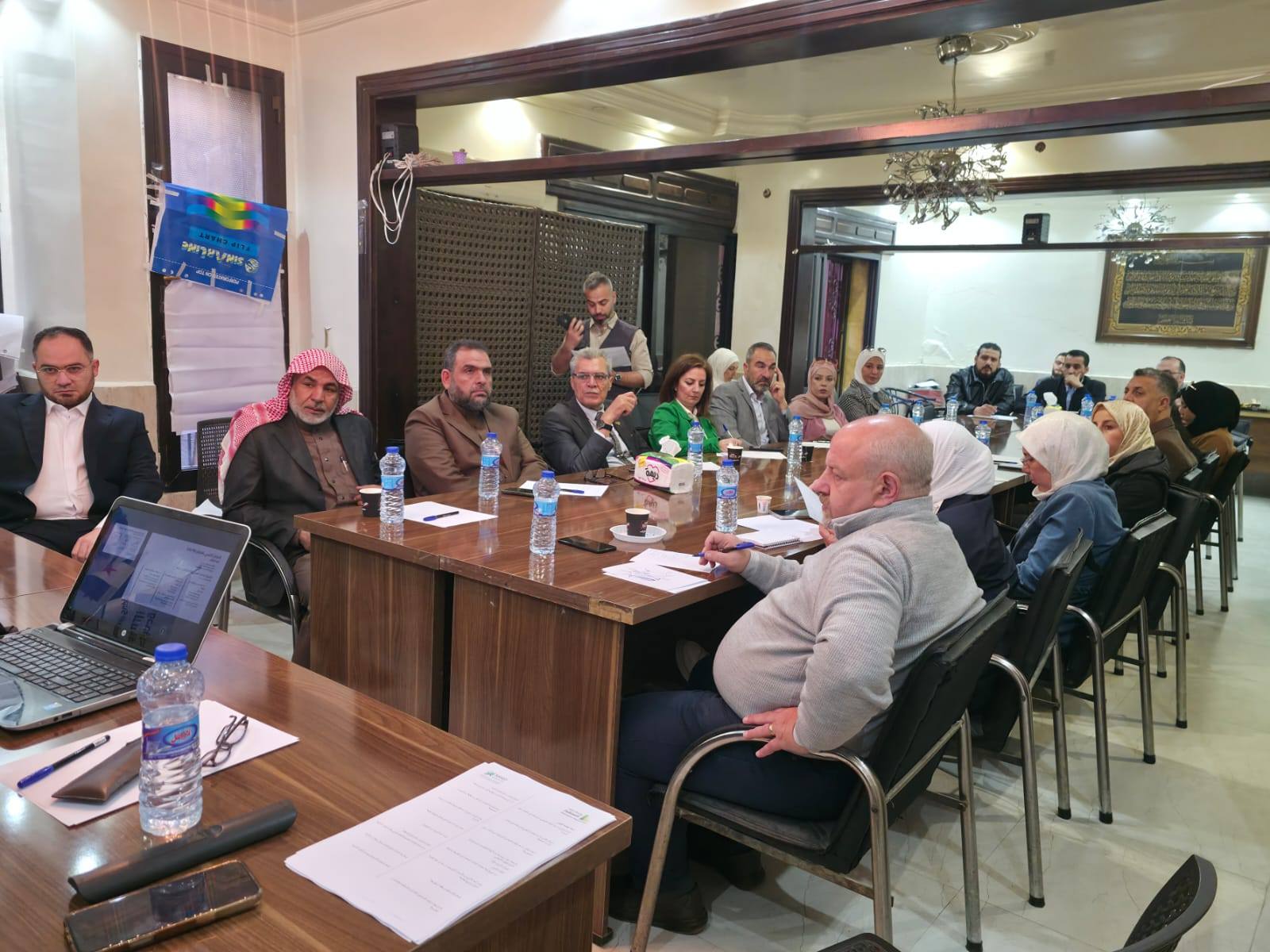
The workshop addressed two main themes: reviewing different electoral systems and their impact on political representation in Syria,
as well as discussing the desired form of political representation that meets the aspirations of Syrians and reflects their diversity.
The session was moderated by Dr. Abdulhamid Al-Awak, and featured in-depth and interactive discussions focusing on the importance
of designing a fair and transparent electoral system that enhances political participation and reinforces the principles of genuine representation.
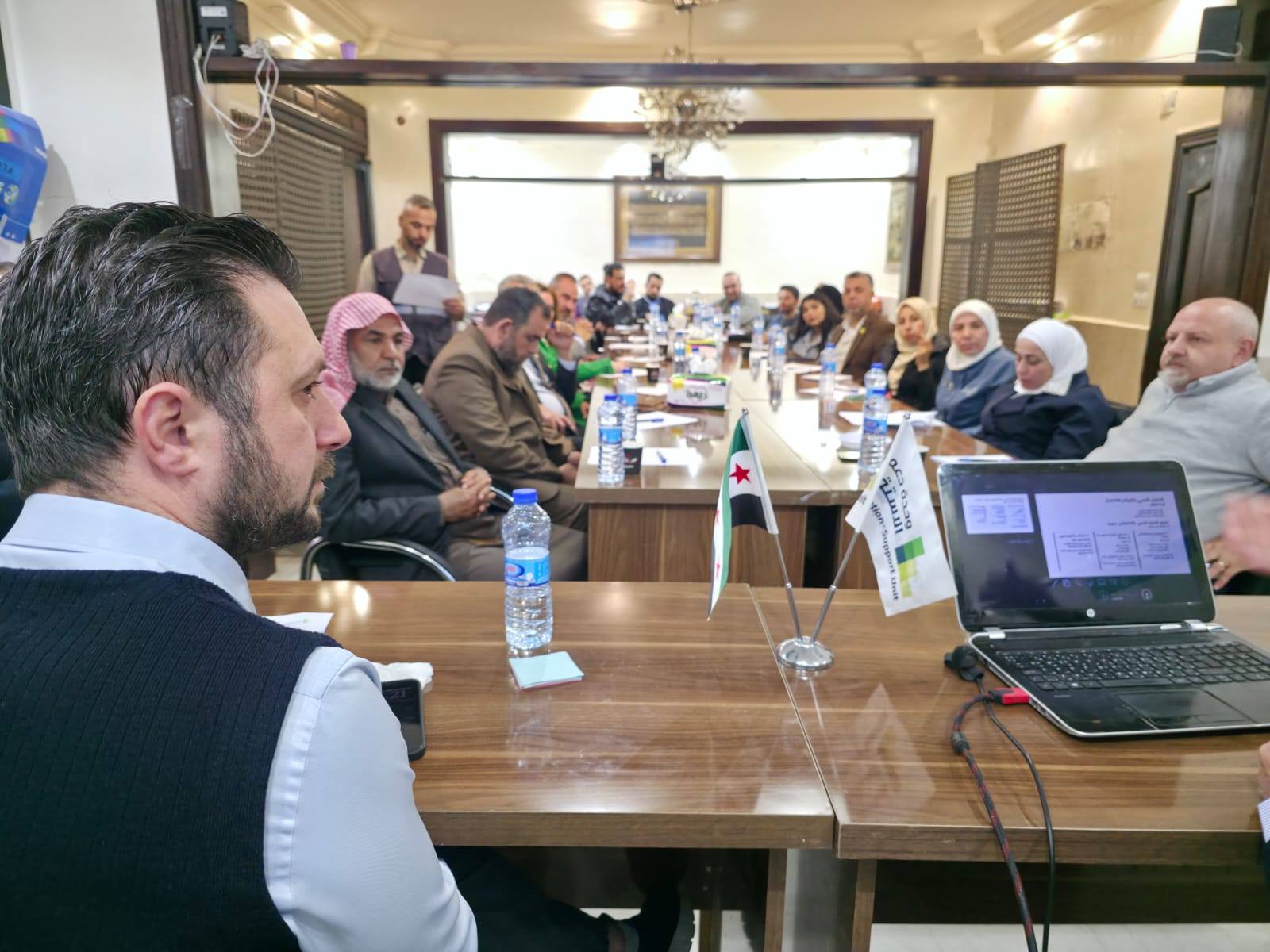
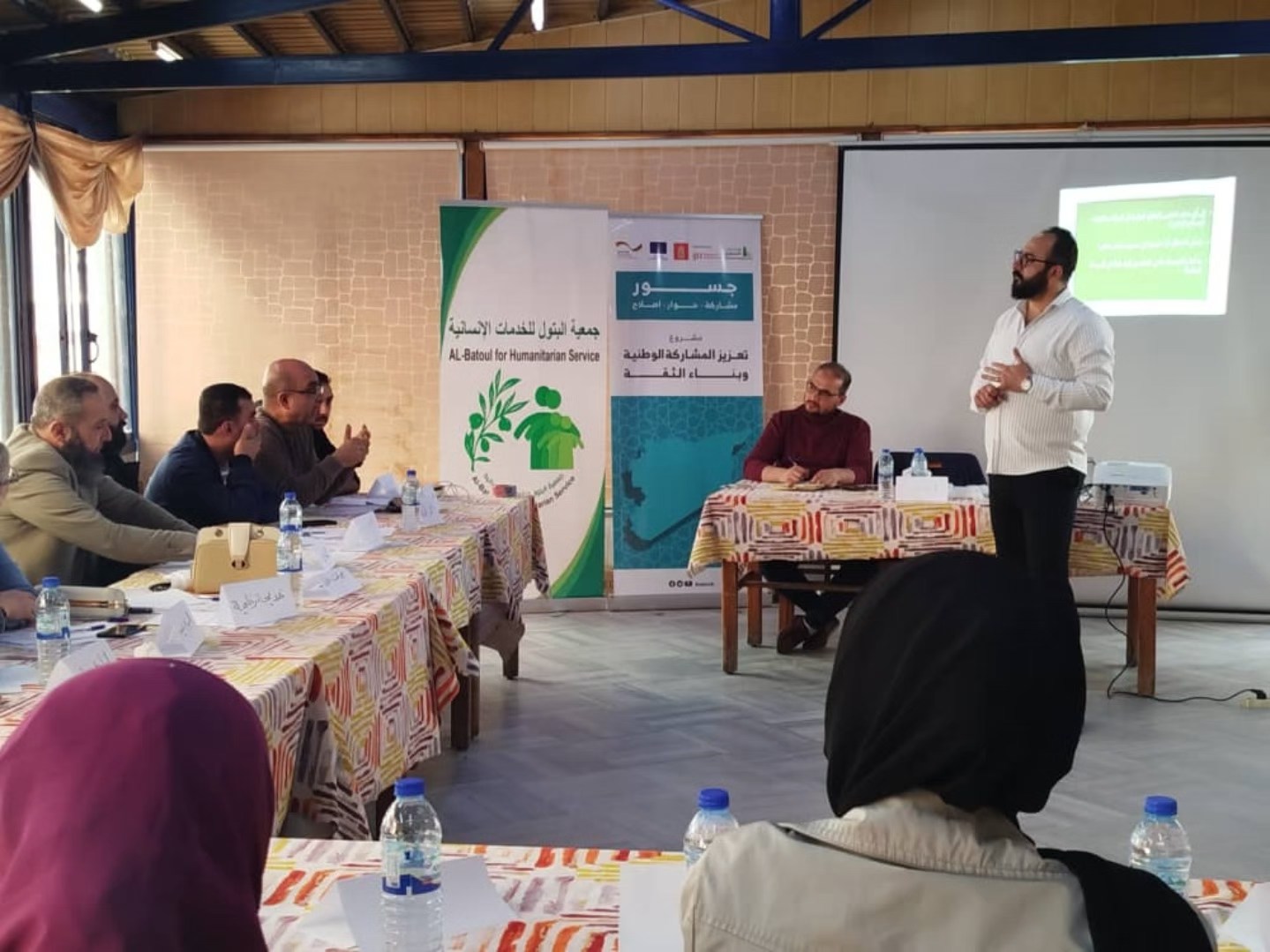
Community Dialogue Session on Administrative Reform and Transparency
The Stabilization Support Unit, in partnership with Al-Batoul Humanitarian Services Association,
organized a community dialogue session in the city of Tartous under the title
"Administrative Reform and Transparency".
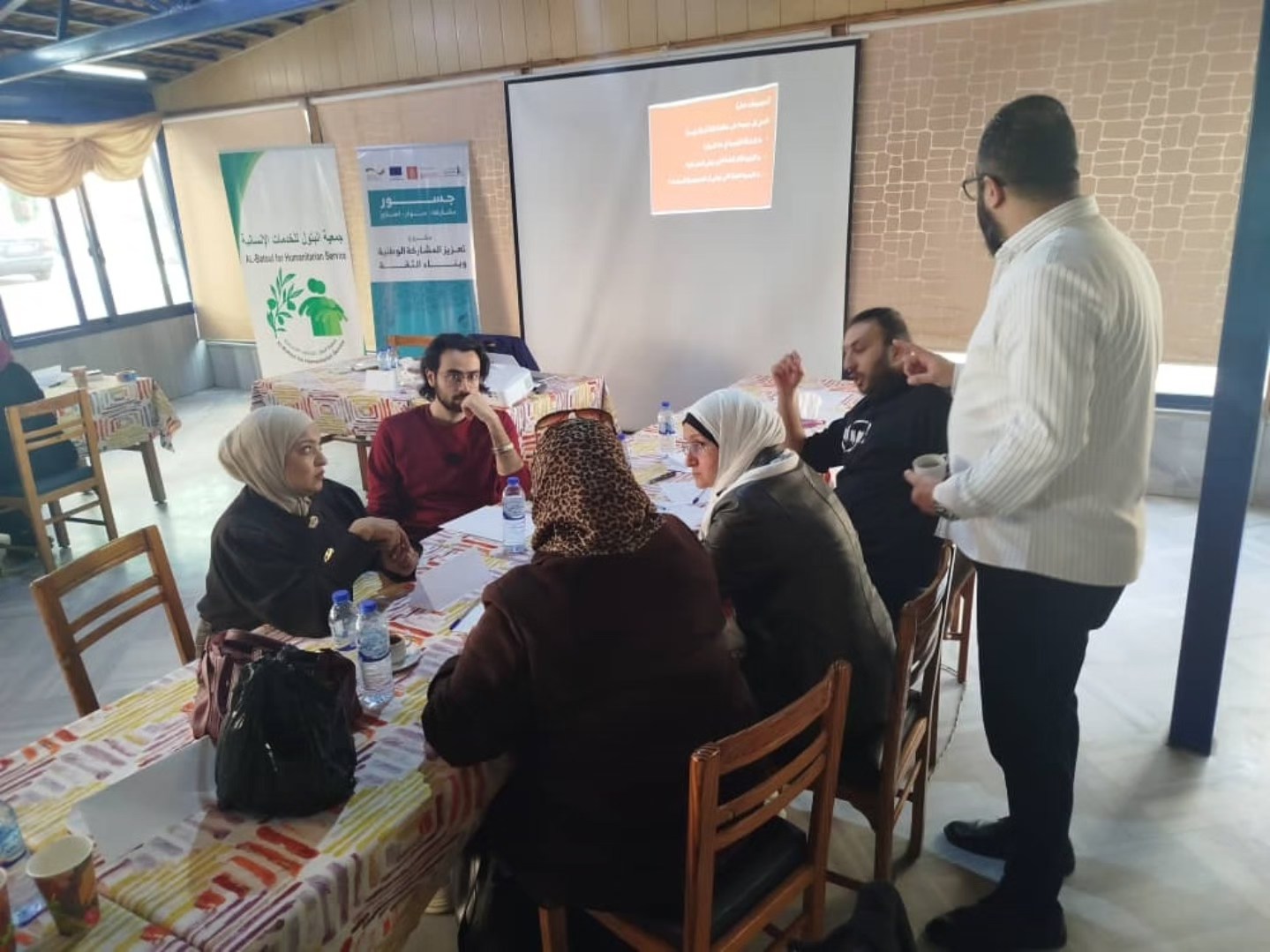
This session represents an advanced step within the ongoing efforts to develop the outcomes of the
Bridges Project. During the session, the draft paper—prepared based on the outcomes of dialogue sessions
conducted across various governorates—was presented and discussed interactively with participants.
The aim was to review the document, collect feedback and recommendations, and endorse its content.
The session witnessed broad participation, including representatives from the Relations Office in Tartous Governorate,
political affairs representatives, civil society organizations, and community figures, in addition to academics
and local activists.
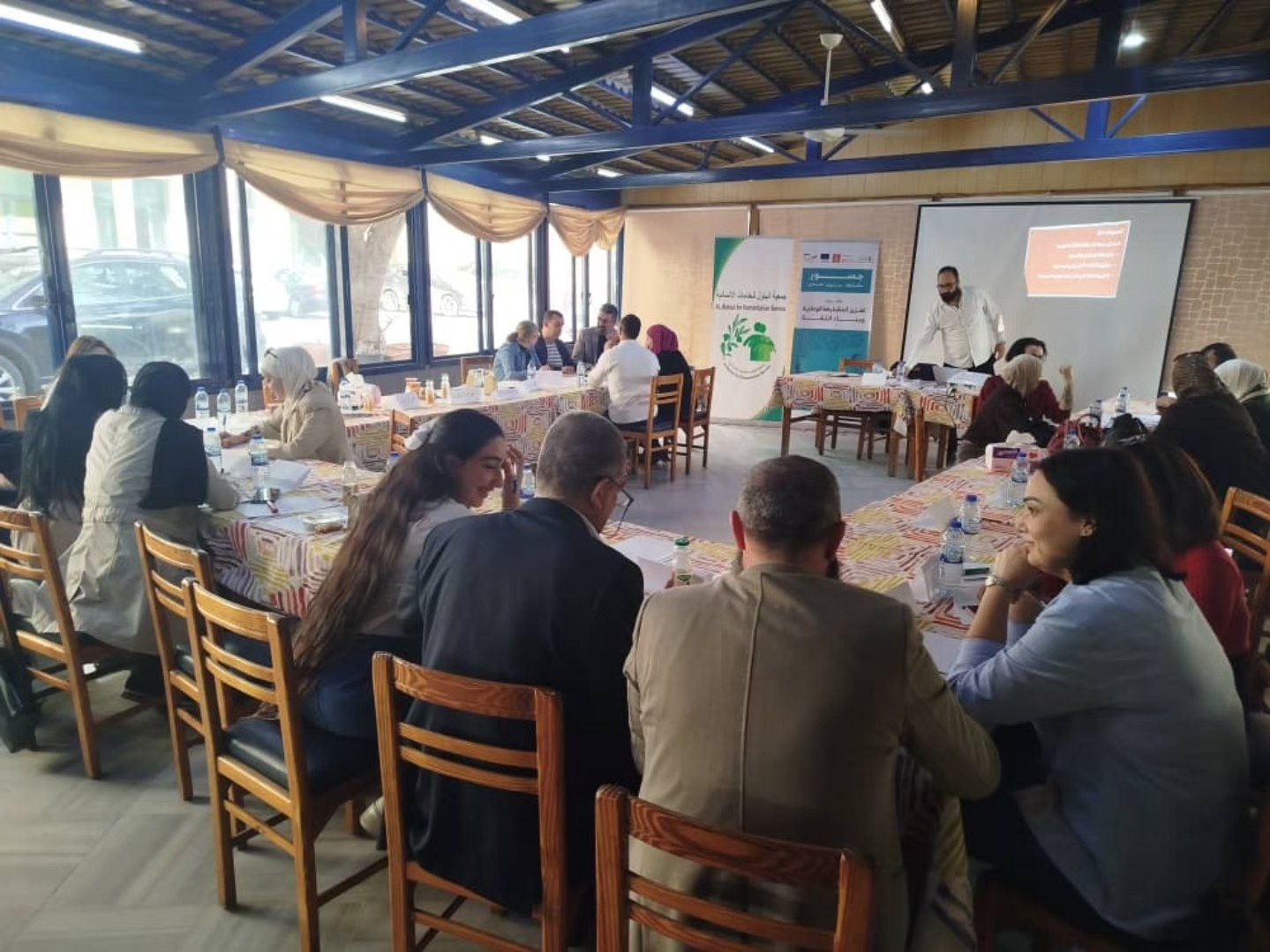
Discussions focused on the importance of promoting transparency principles and improving administrative performance
within public institutions. Emphasis was placed on simplifying procedures and enhancing the quality of services
provided to citizens, in a way that strengthens trust between society and institutions.
This session is part of the activities of the "Enhancing National Participation and Building Trust – Bridges" project,
funded by the European Union, Germany, and Denmark, as part of the Peace Initiative in Syria implemented by
the German Agency for International Cooperation (GIZ).
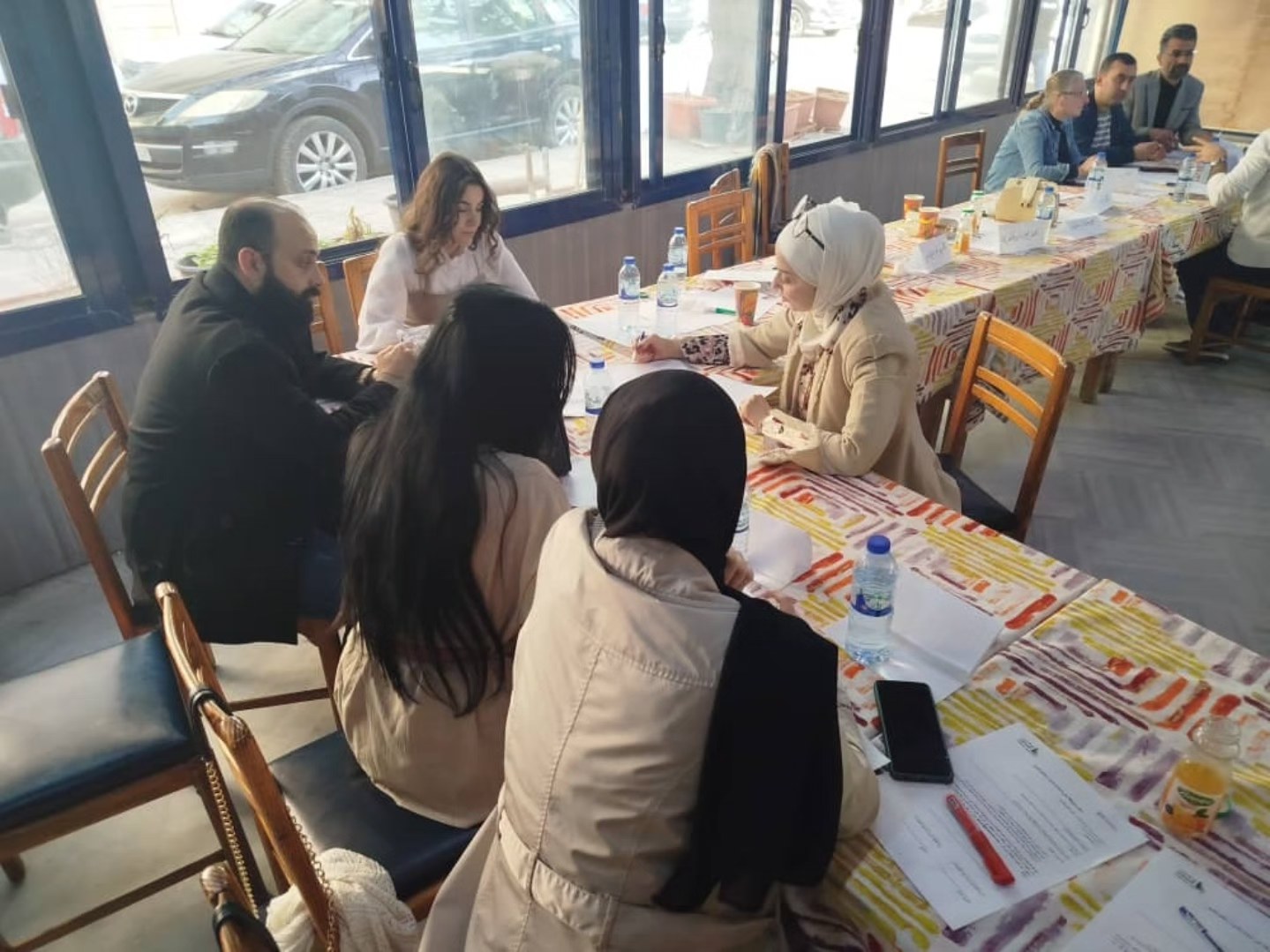
The Bridges Project continues to support spaces for community dialogue and to strengthen the active participation
of various segments of society in discussing national issues and shaping shared visions for reform.
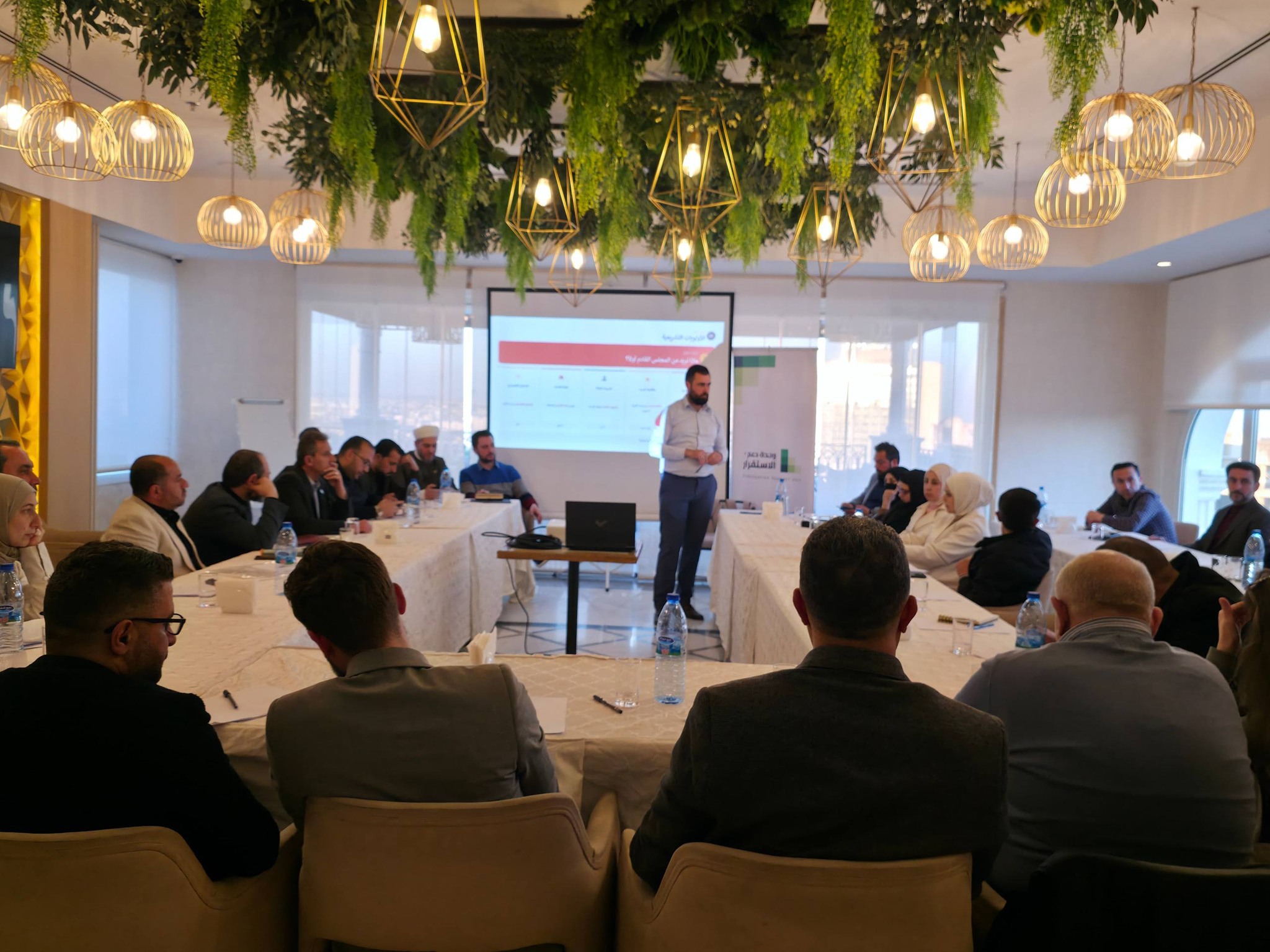
Dialogue Session on Legislative Priorities
The Syrian Community Observatory Network – Stabilization Support Unit held a dialogue session in Aleppo Governorate,
focusing on legislative priorities in the current phase. The session aimed to enhance the exchange of perspectives and expertise,
contributing to the development of legislative performance.
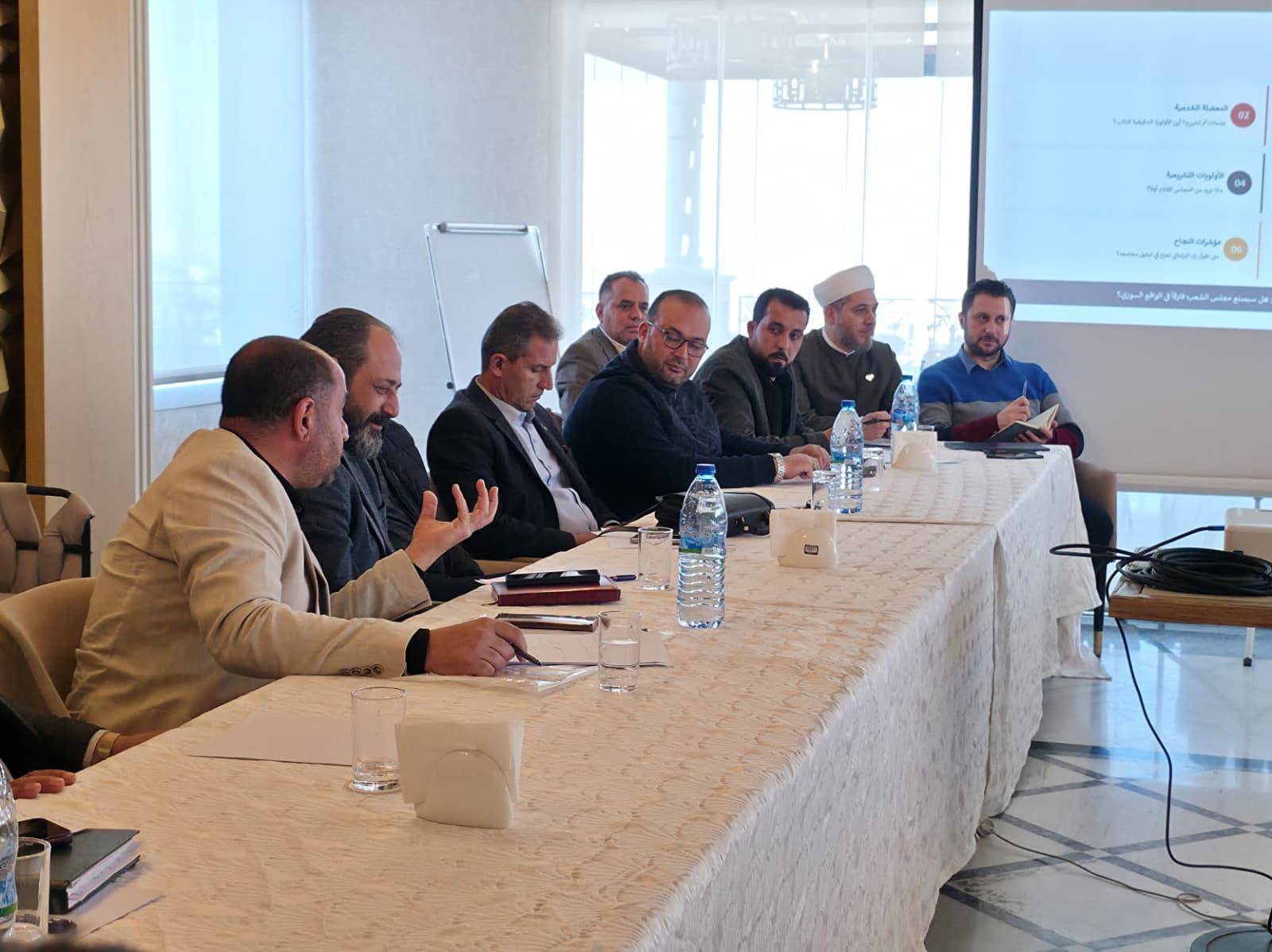
The session was moderated by Bashar Al-Hawi, where discussions focused on legislative priorities,
the importance of integrating parliamentary work with community needs, and the necessity of aligning legislative priorities
with the requirements of the current stage.
The session was attended by a number of elected members of the People’s Assembly, along with representatives from Aleppo Governorate,
political affairs, and the Directorate of Social Affairs and Labor. It also included a group of legal experts, human rights advocates,
representatives of unions and associations, and civil society activists.
The session addressed several key themes, most notably:
- The role of parliamentarians and their responsibilities during this critical phase.
- Legislative priorities in light of current challenges.
- The priorities of Syrian society and ways to reflect them within the parliamentary agenda.
The session featured in-depth discussions reflecting the diversity and expertise of participants, emphasizing the importance
of strengthening partnerships between public institutions and civil society to ensure a more effective response to citizens’ needs.
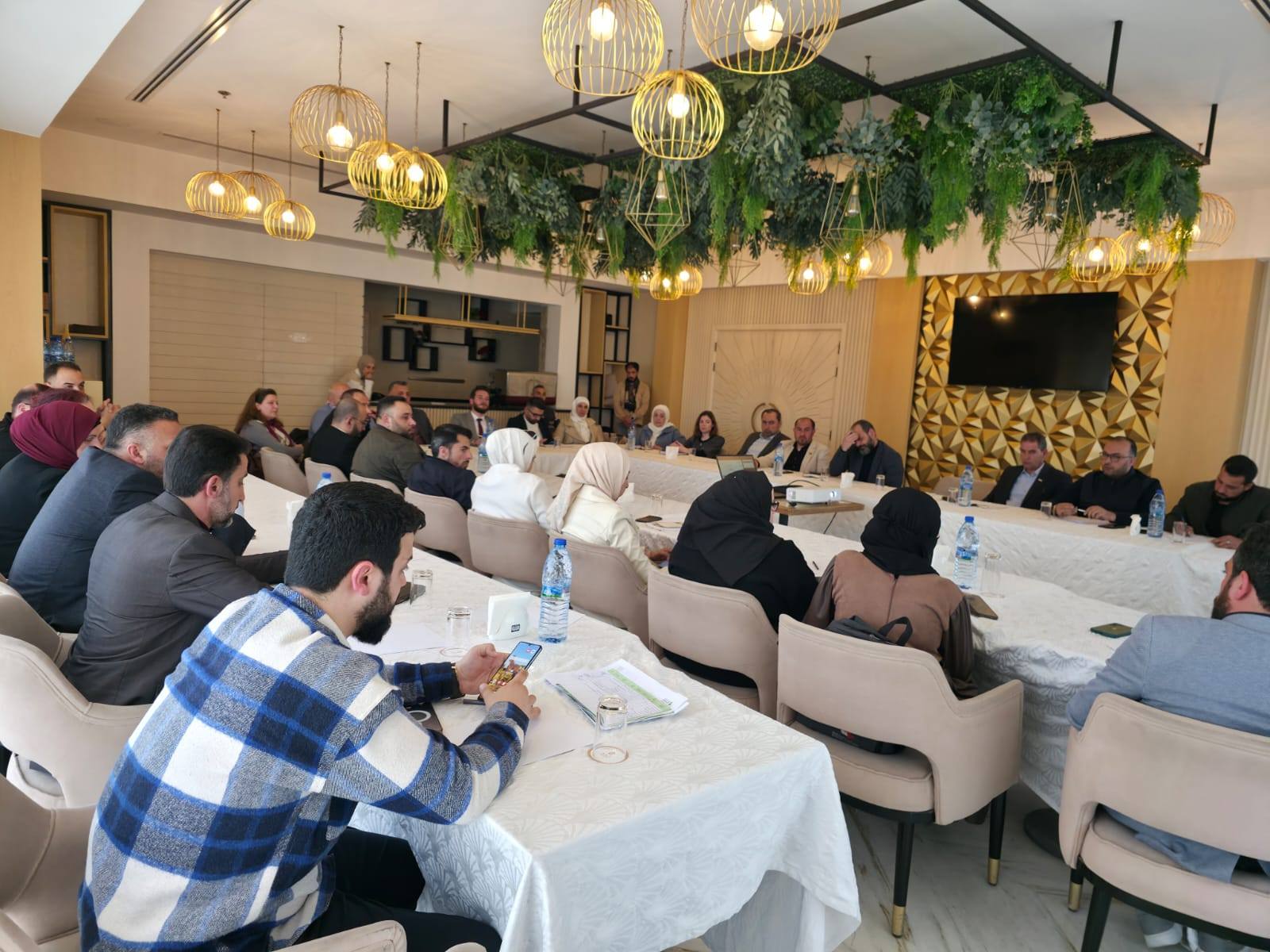
At Riada Center, we believe that every child deserves a safe space that embraces their dreams,
and every young person deserves the opportunity to grow and build a future full of hope.
Through the project "Enhancing Child Protection and Psychosocial Support in Aleppo",
we work to provide a supportive environment that empowers children and adolescents to learn, express themselves,
and discover their abilities with confidence and safety.
In partnership with Space Of Hope and funded by Fondation de France.
Together, we cultivate reassurance, create hope, and build a brighter future.
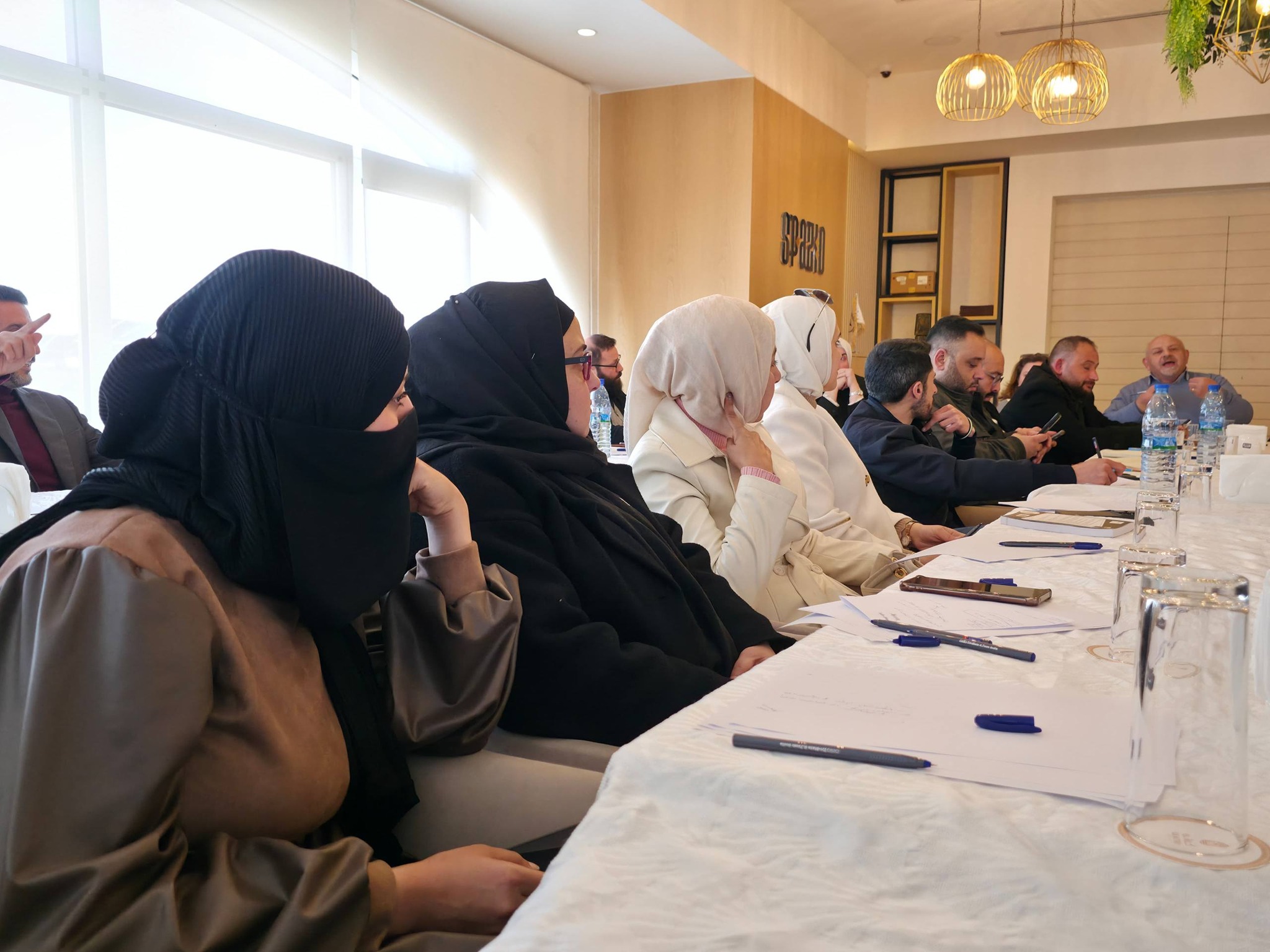
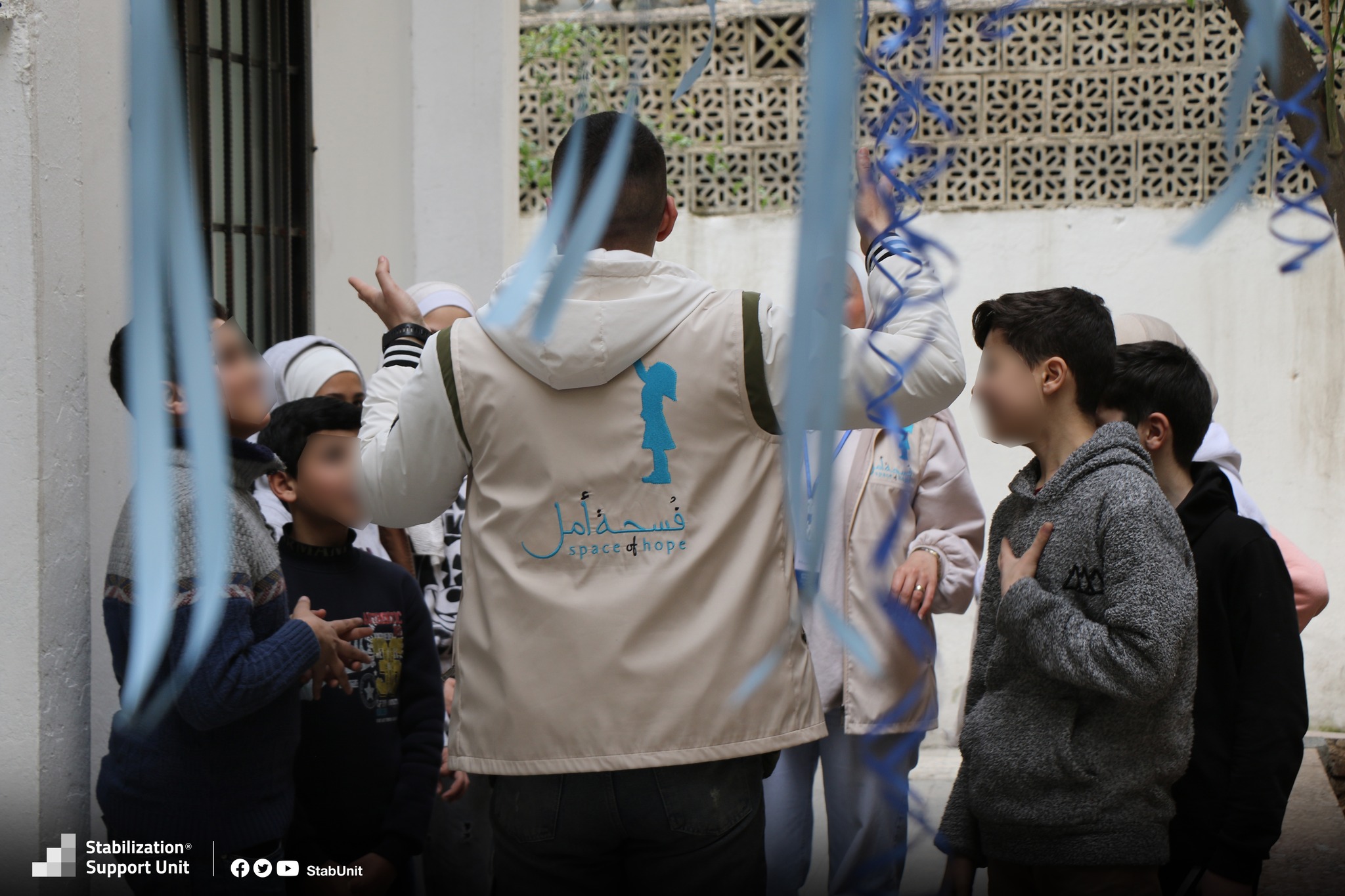
Administrative Reform and Transparency Discussion Workshop
In cooperation between the Stabilization Support Unit (SSU) and Shiraa Al-Khair Association, a dialogue workshop titled "Administrative Reform and Transparency" was held as part of the "Enhancing National Participation and Building Trust – Bridges" project.
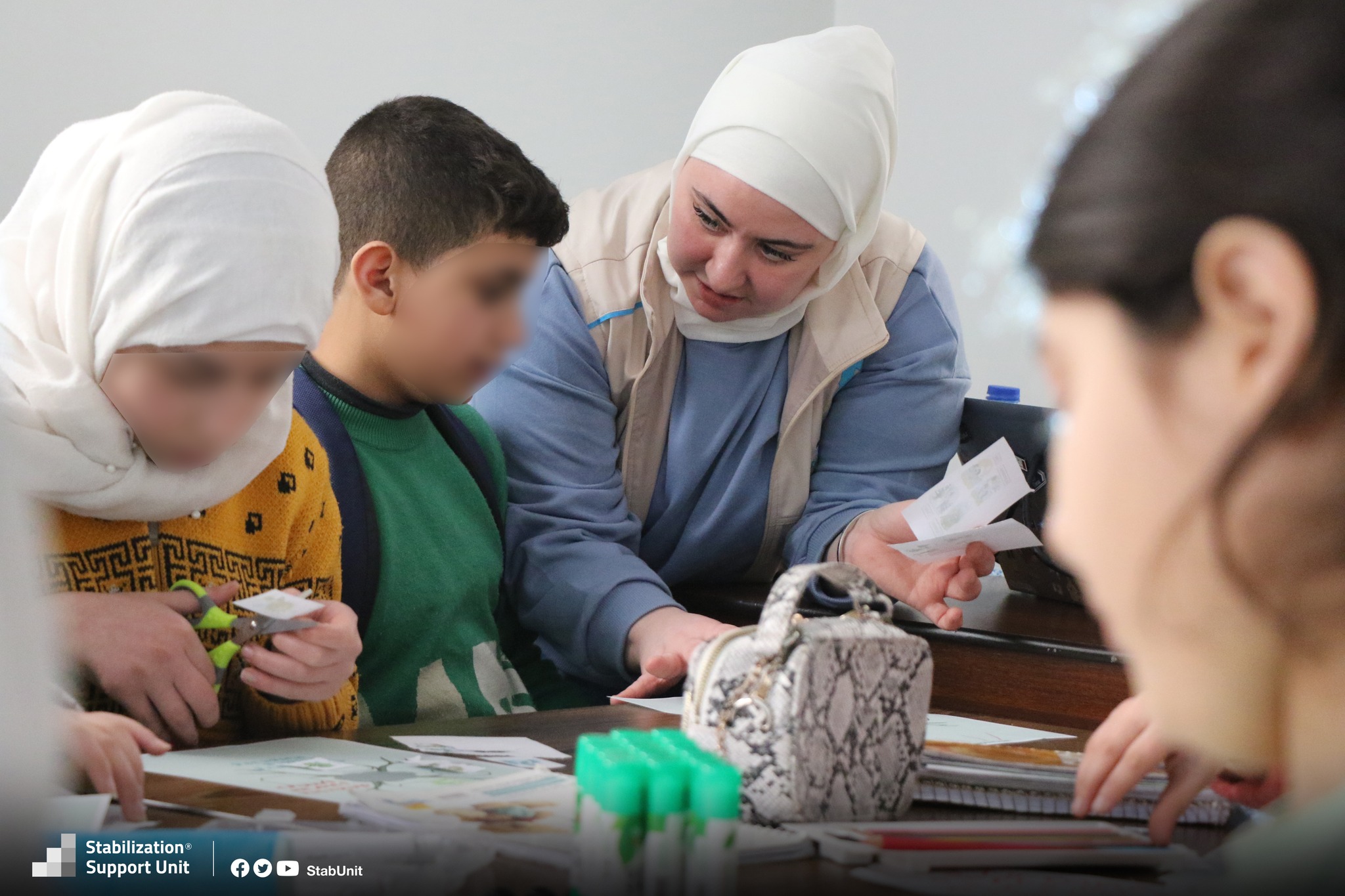
The workshop was facilitated by Anas Al-Rawi and held at Sea View Hotel. This session is part of a series of dialogue meetings under the project, aiming to promote participation, exchange perspectives, and build trust.
During the session, participants reviewed the draft paper prepared based on discussions and sessions conducted across different governorates within the project.
The workshop focused on discussing and reviewing the document’s content, while exchanging feedback, remarks, and ideas that contribute to refining and improving it.
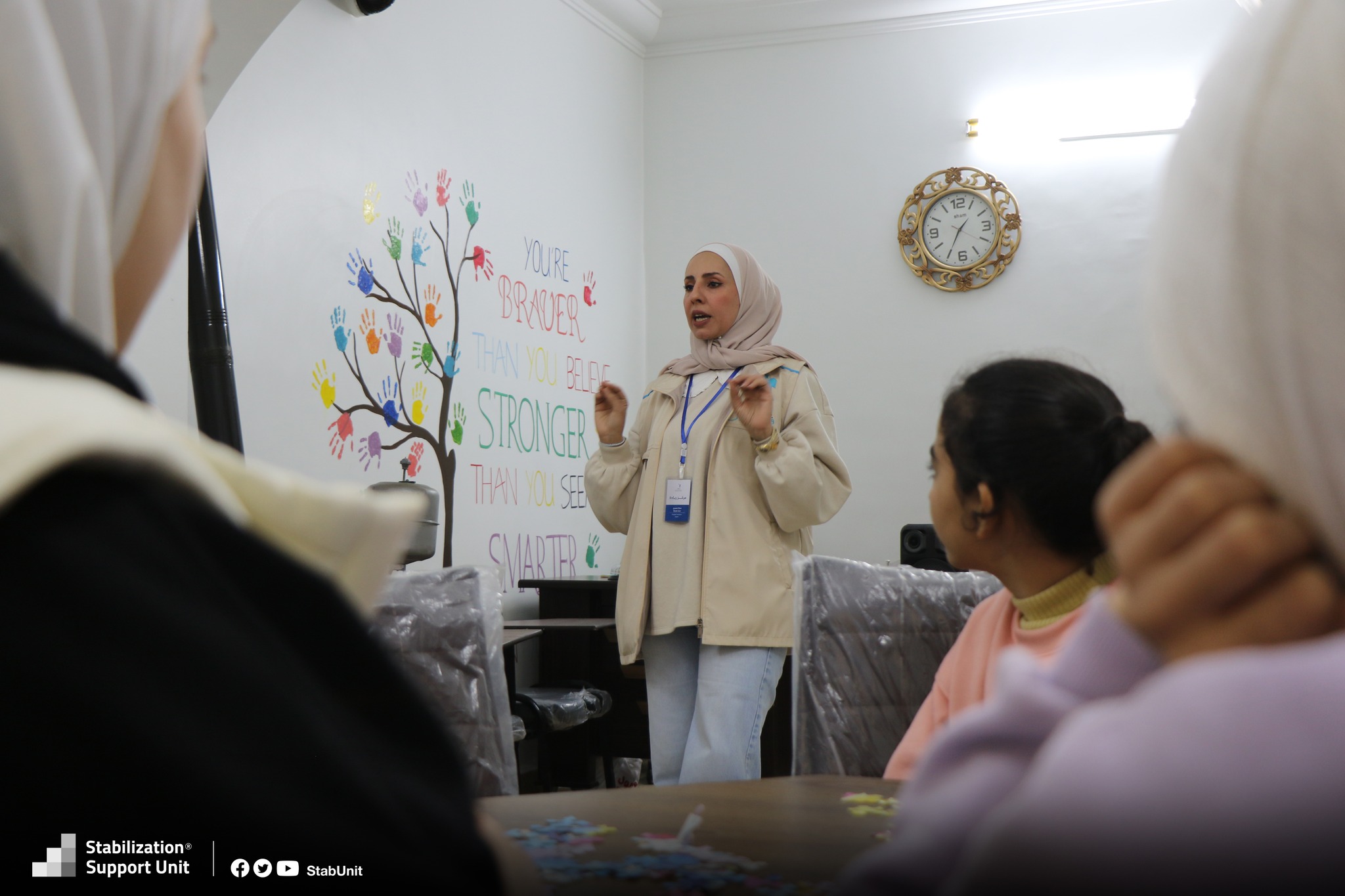
The session concluded with a constructive exchange of insights among participants, supporting the development of more effective and transparent administrative practices.
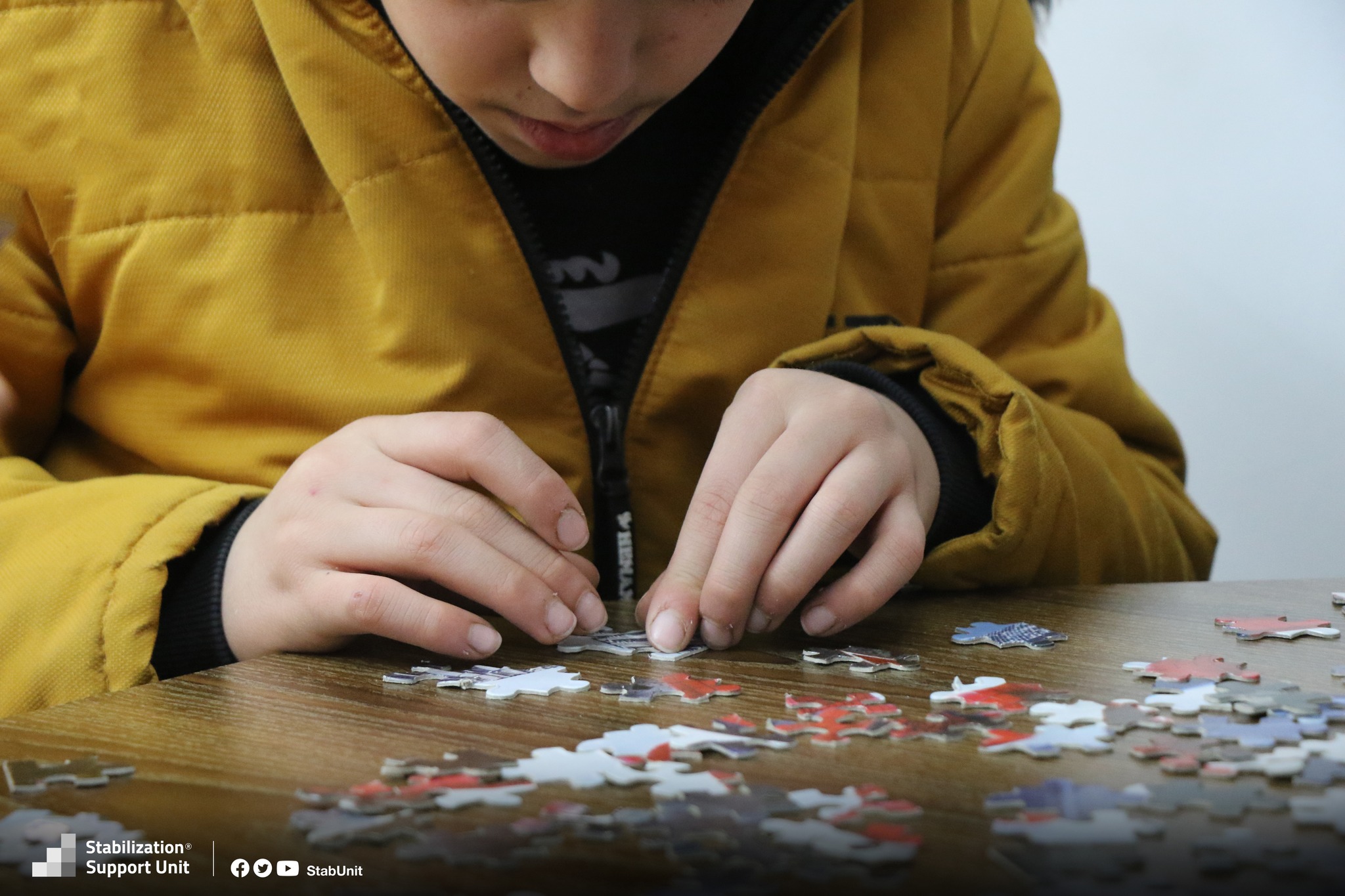
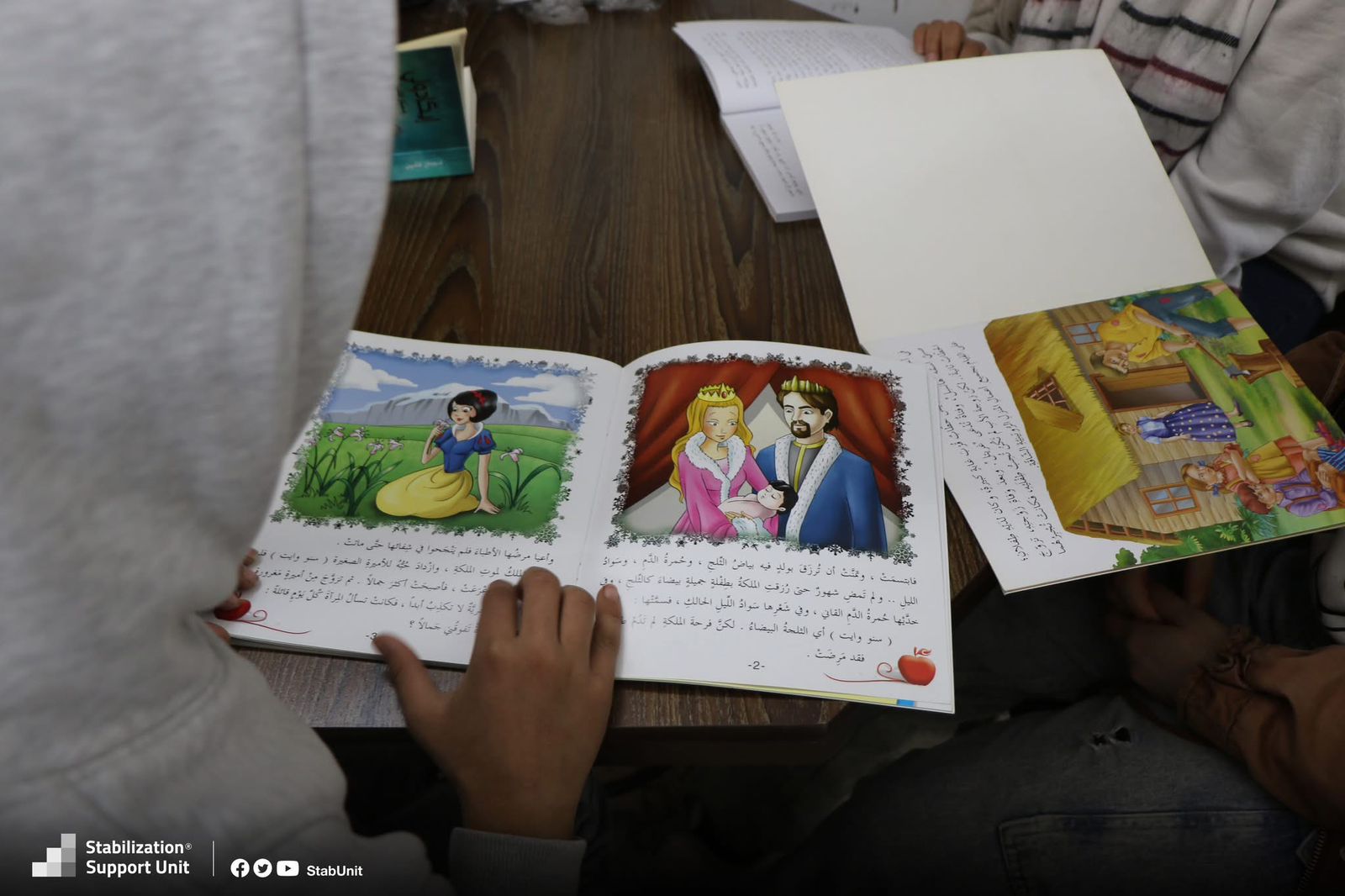
At Riada Center, we believe that every child deserves a safe space that embraces their dreams, and every young person deserves the opportunity to grow and build a future full of hope.
Through the project "Enhancing Child Protection and Psychosocial Support in Aleppo", we work to provide a supportive environment that empowers children and adolescents to learn, express themselves, and discover their abilities with confidence and safety.
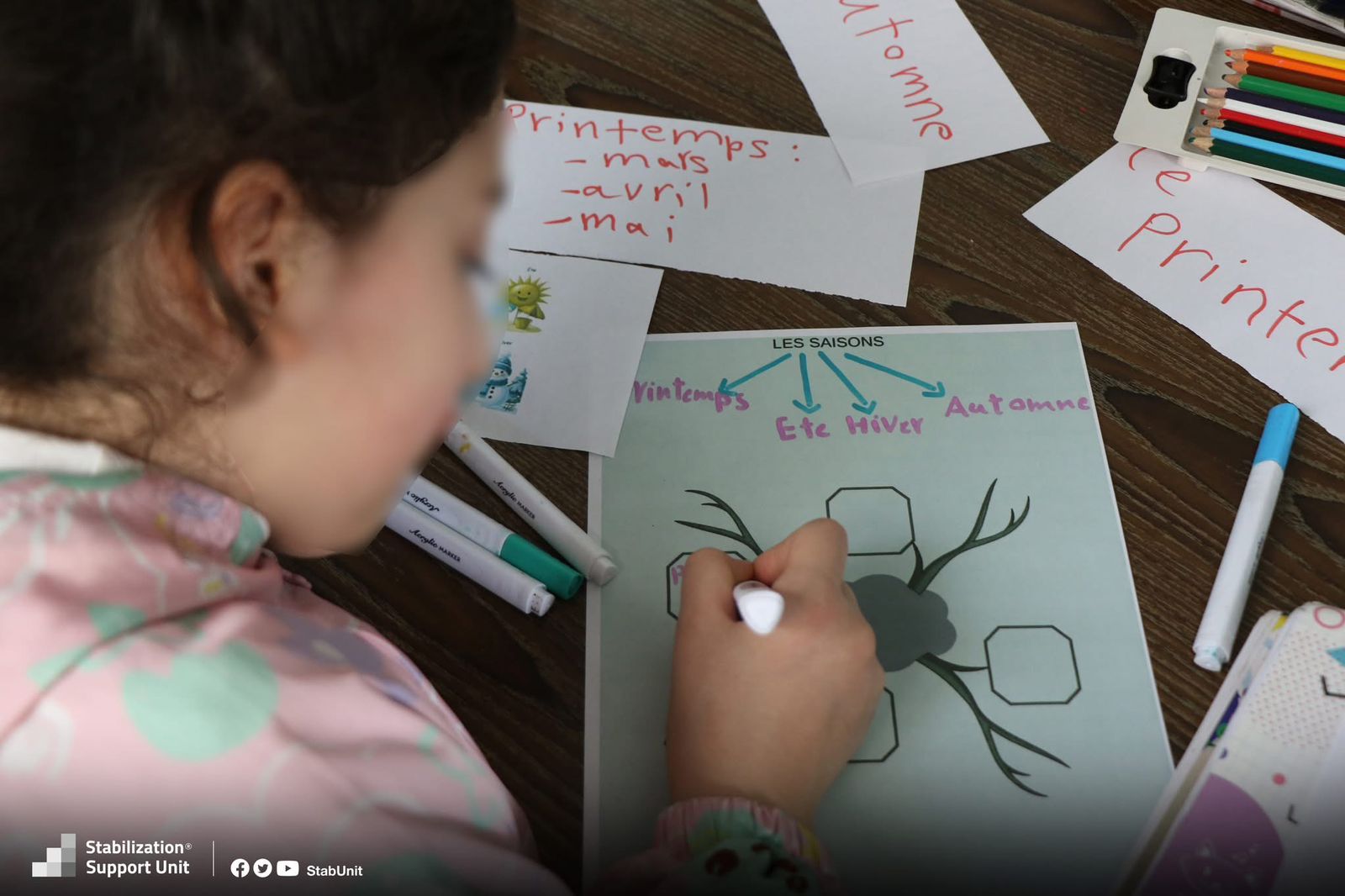
In partnership with Space Of Hope and funded by Fondation de France.
Together, we cultivate reassurance, create hope, and build a brighter future.
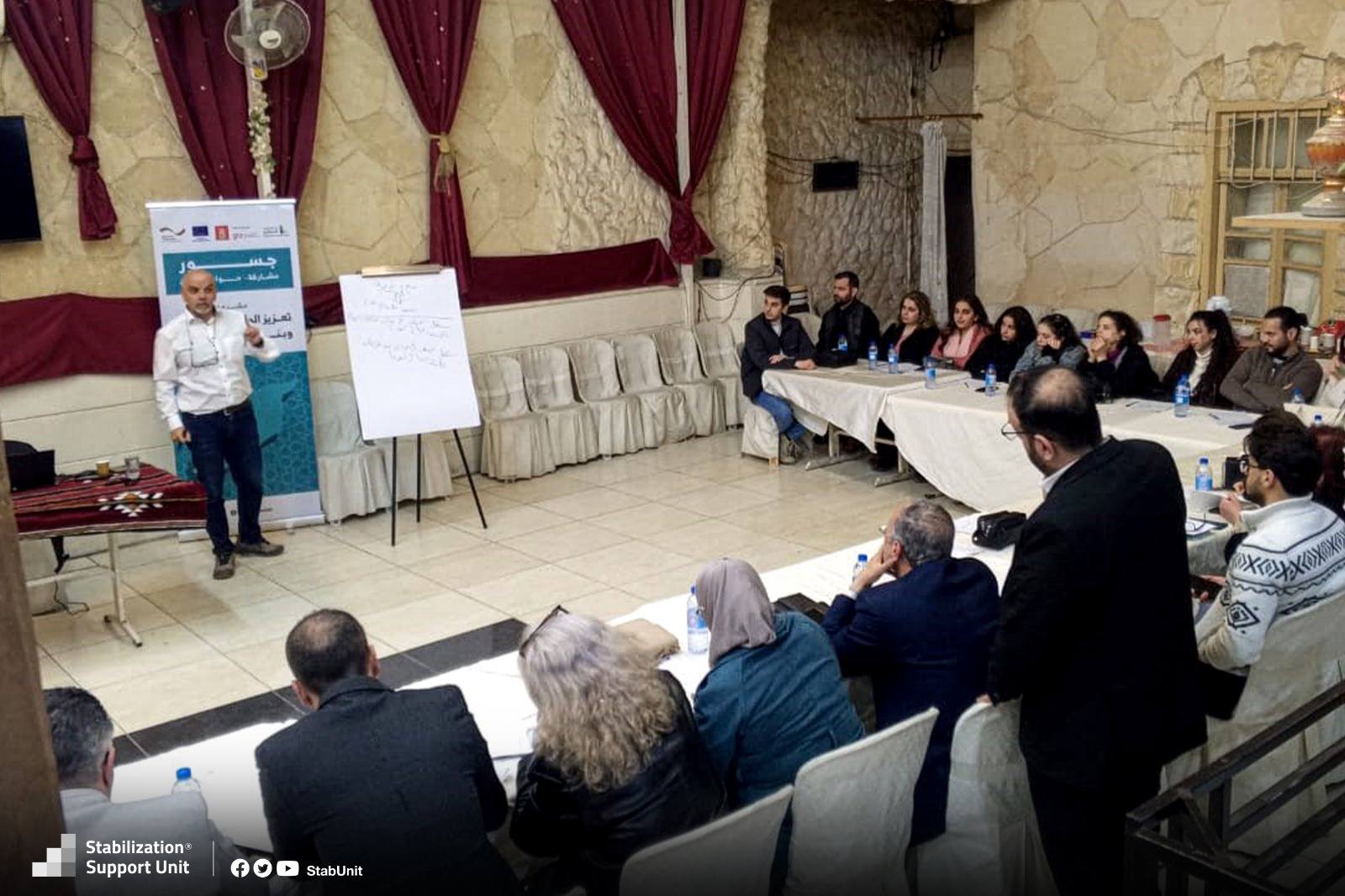
Community Dialogue Session – Social Contract | Jaramana
The Stabilization Support Unit (SSU) organized a community dialogue session in
Jaramana titled "Social Contract", as part of a series of meetings
aimed at fostering community dialogue and addressing key societal issues.
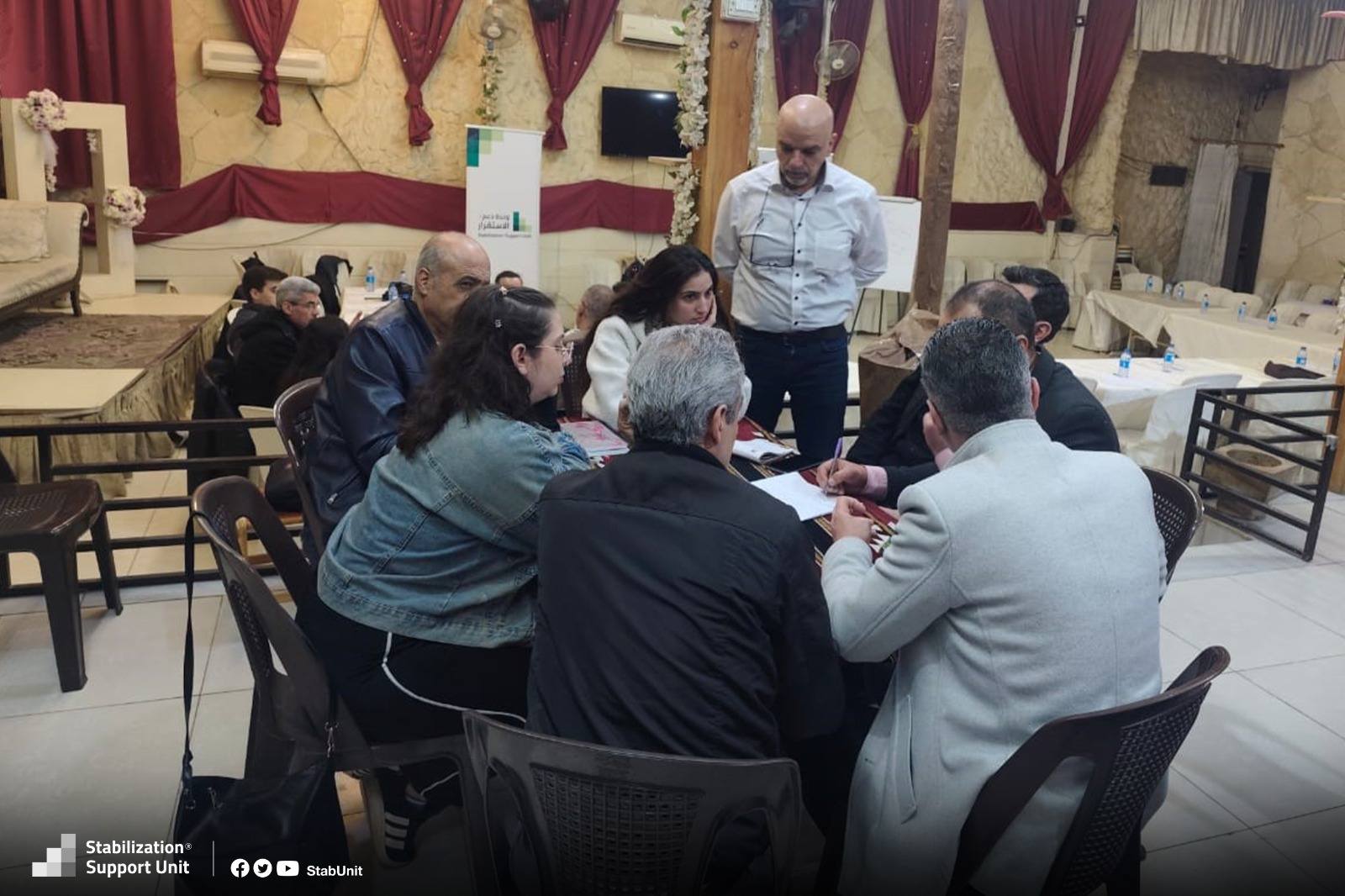
The session was facilitated by Dr. Zaidoun Al-Zoubi and brought together more than
30 participants representing diverse segments of Syrian society, engaging in in-depth
and comprehensive discussions on the concept of the social contract.
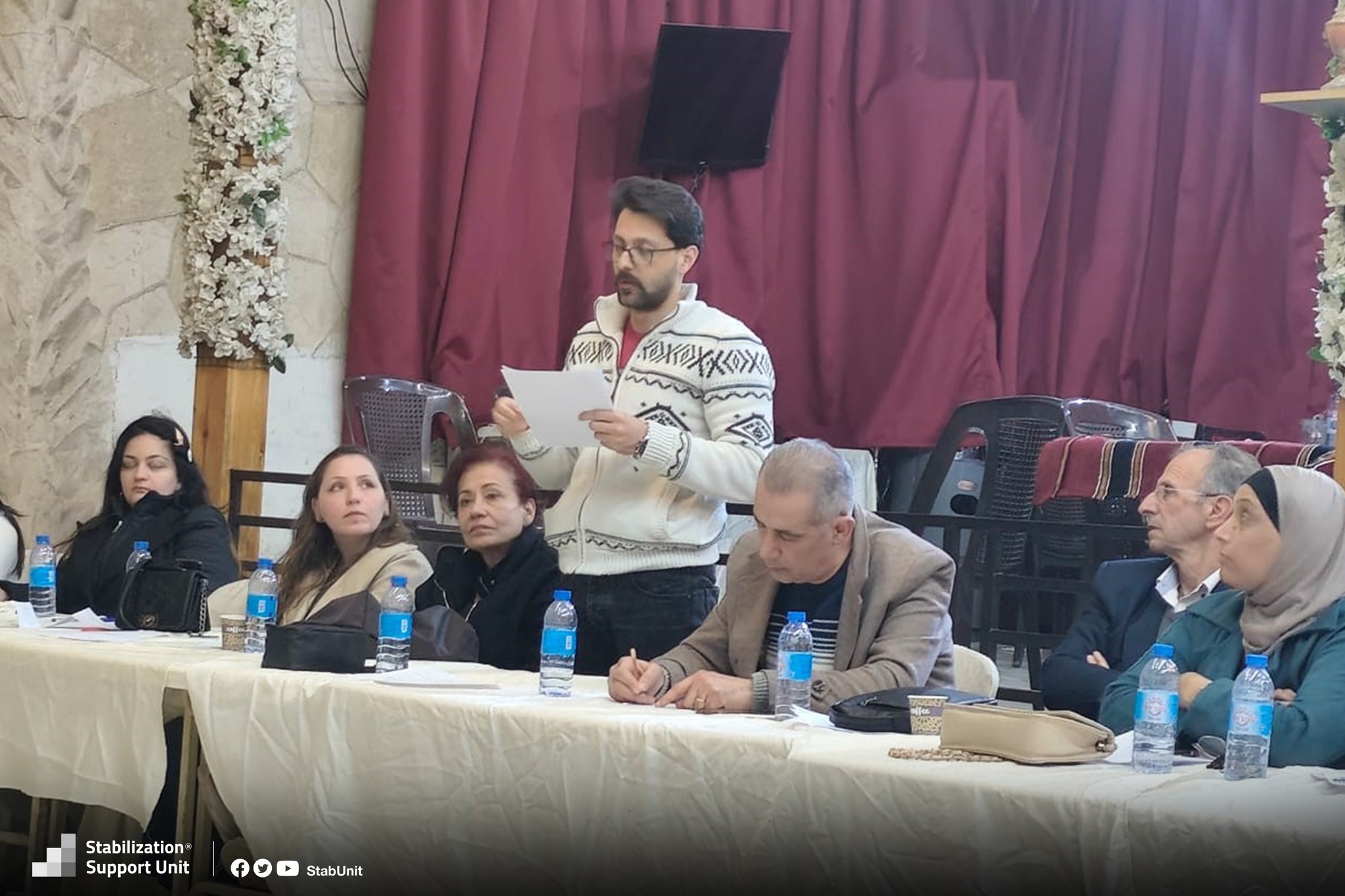
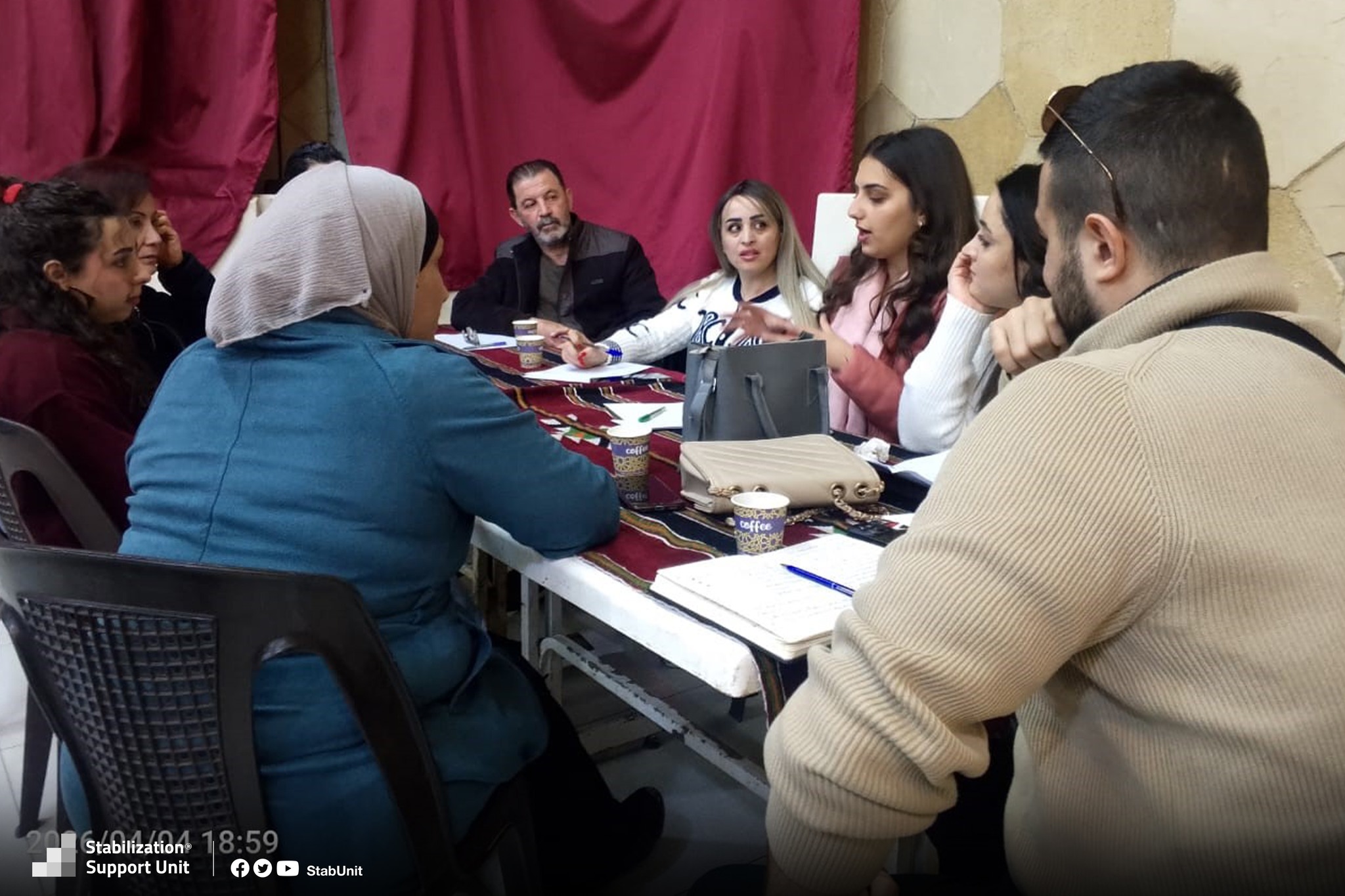
Participants reviewed key historical theories of the social contract, analyzed its main actors,
and discussed the rights and responsibilities associated with each party within this framework.
The session concluded with initial insights and proposals on how to develop a balanced social contract
that reflects the current reality and contextual specificities of Syria.
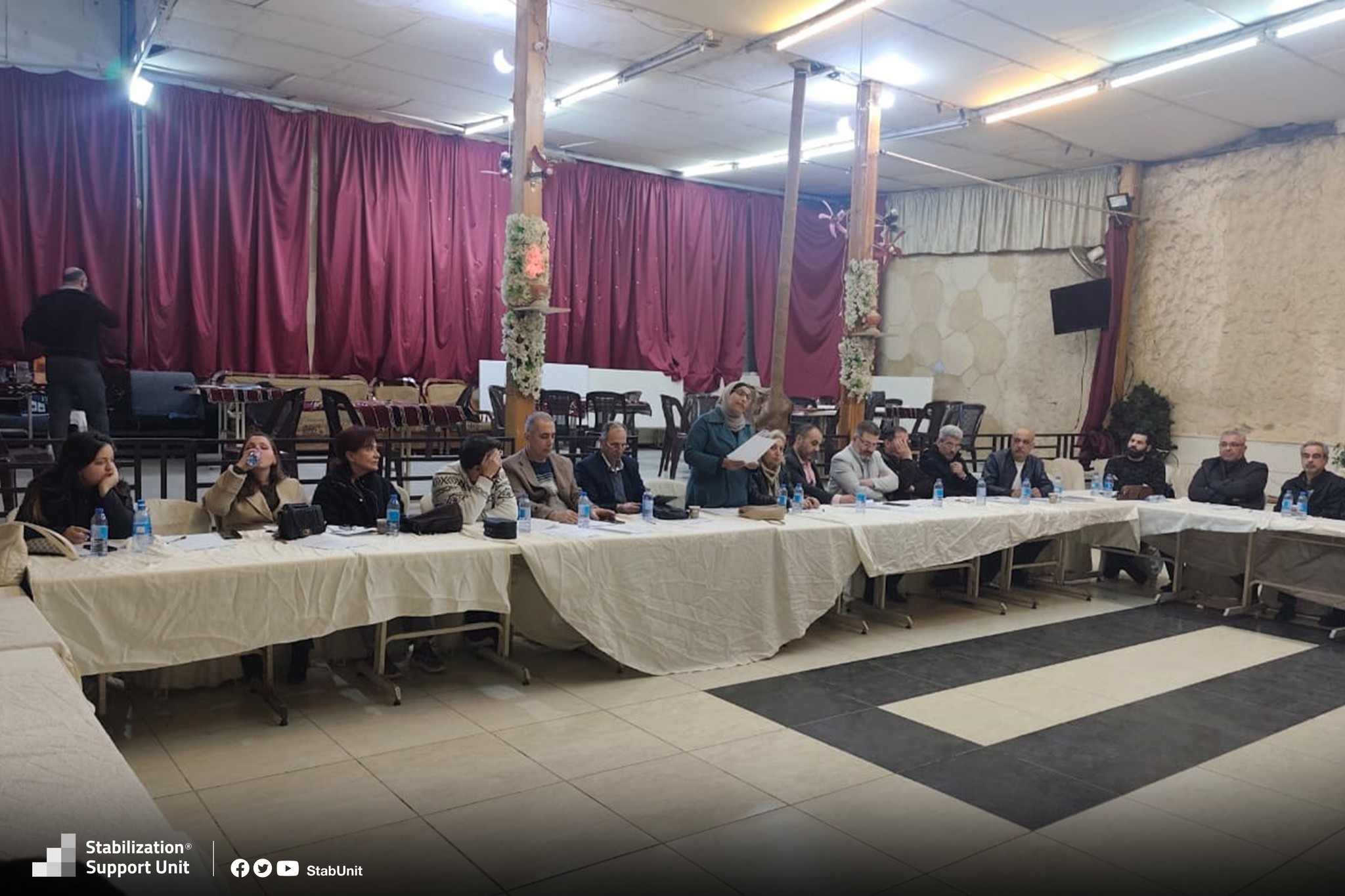
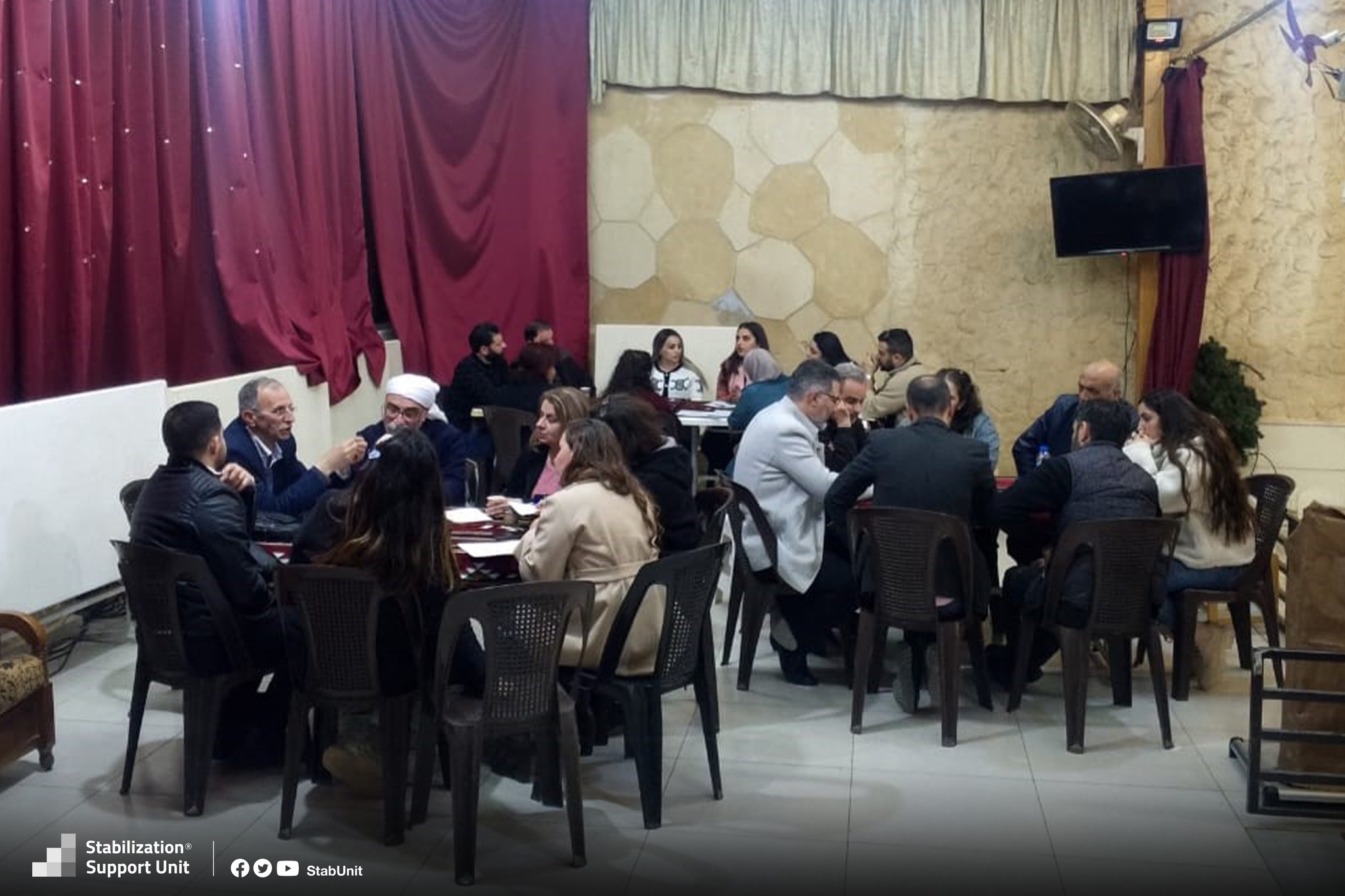
This session marks the tenth dialogue organized by the Stabilization Support Unit in Jaramana, as part
of an ongoing series addressing critical societal topics, including state-building, governance and
institutional strengthening, social cohesion, and the development of local services.
These efforts fall under the project "Enhancing National Participation and Building Trust – Bridges",
funded by the European Union and the governments of Germany and Denmark, as part of the Peace Initiative in Syria
implemented by the German Agency for International Cooperation (GIZ).
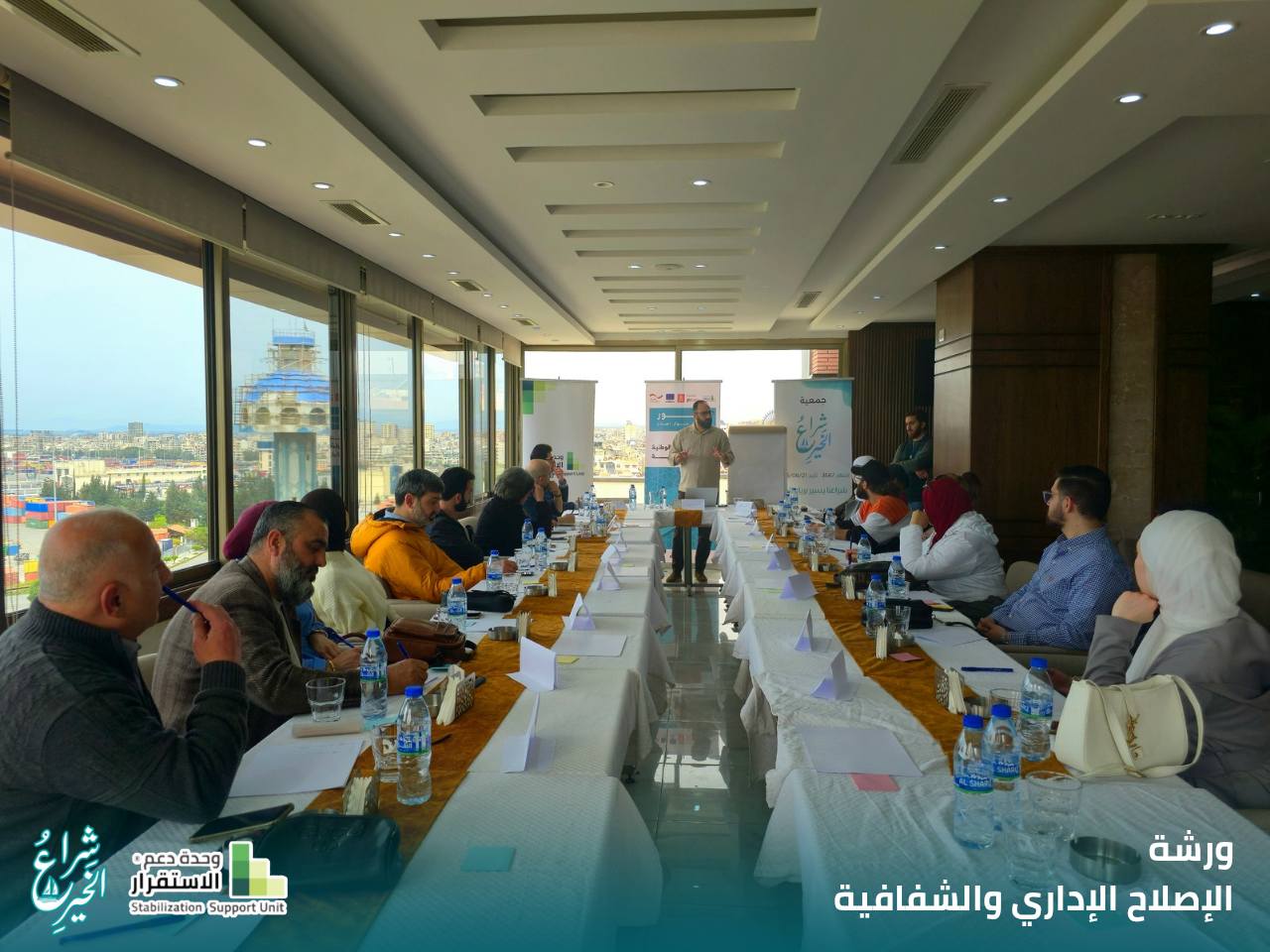
Administrative Reform and Transparency Dialogue Workshop
In cooperation between the Stabilization Support Unit (SSU) and
Shiraa Al-Khair Association, a dialogue workshop titled
"Administrative Reform and Transparency" was held as part of the
"Enhancing National Participation and Building Trust – Bridges" project.
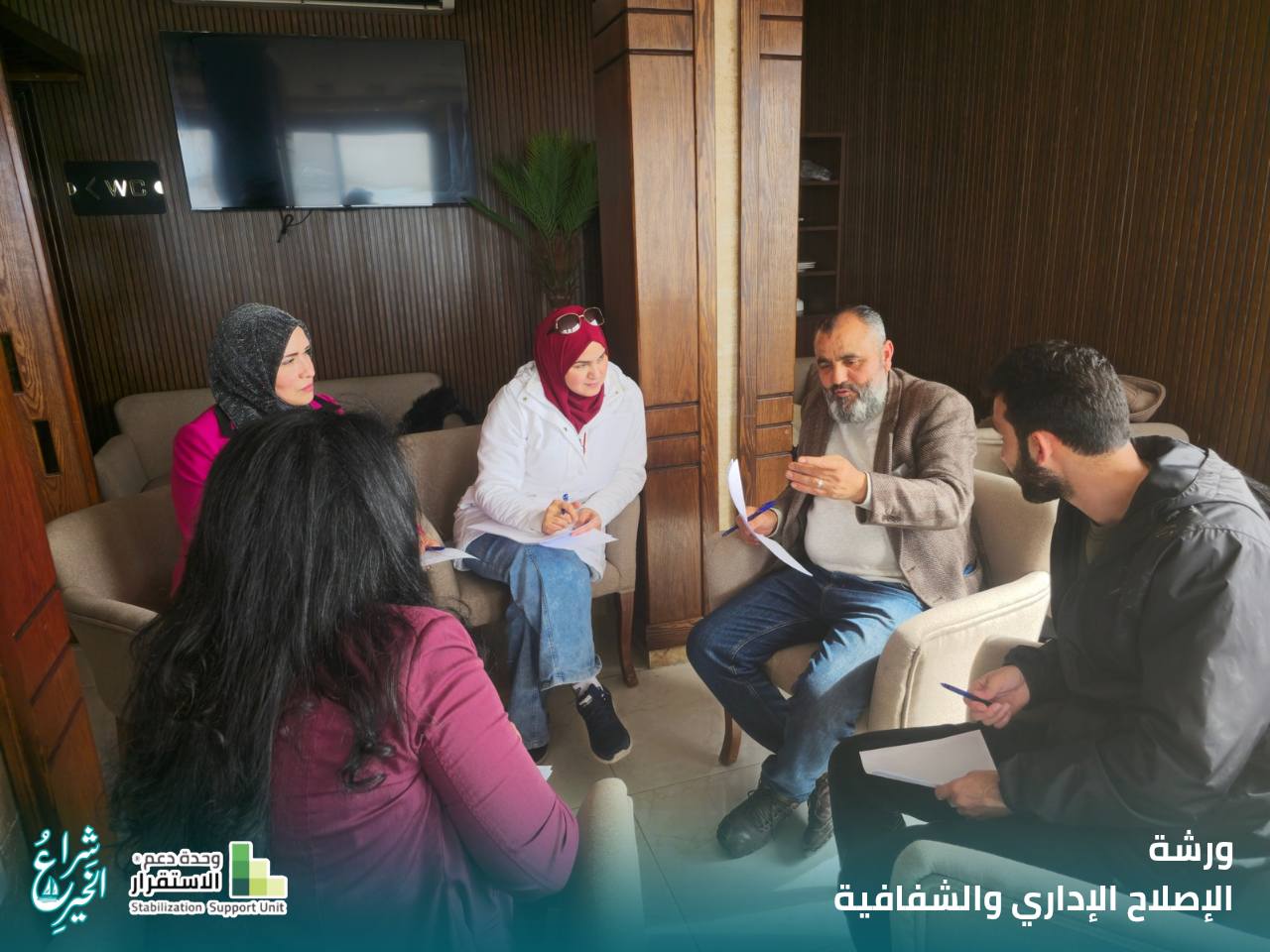
The workshop was facilitated by Anas Al-Rawi and took place at
Sea View Hotel. The session was part of a series of dialogue meetings
under the project, aiming to promote participation, exchange perspectives, and build trust.
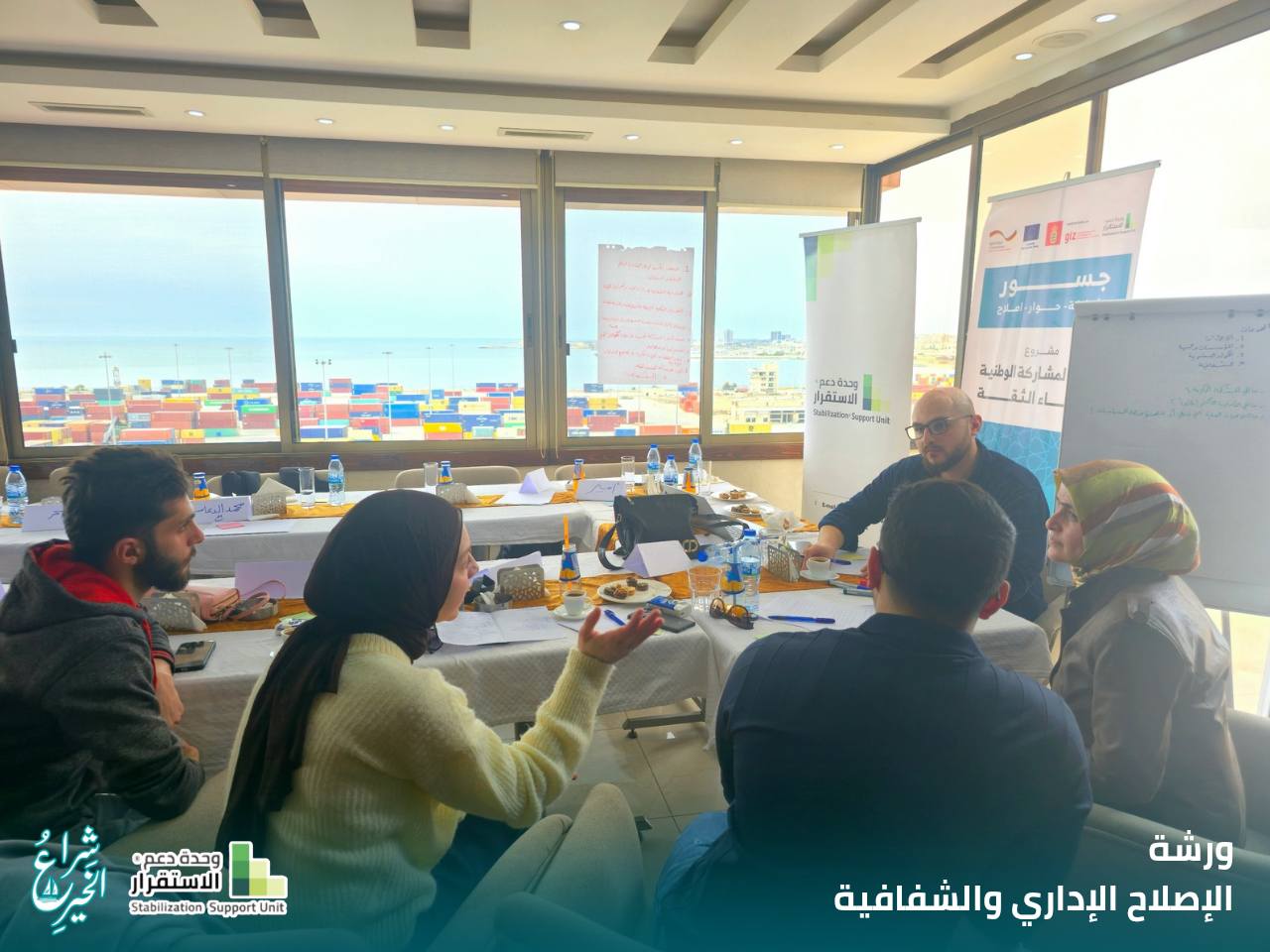
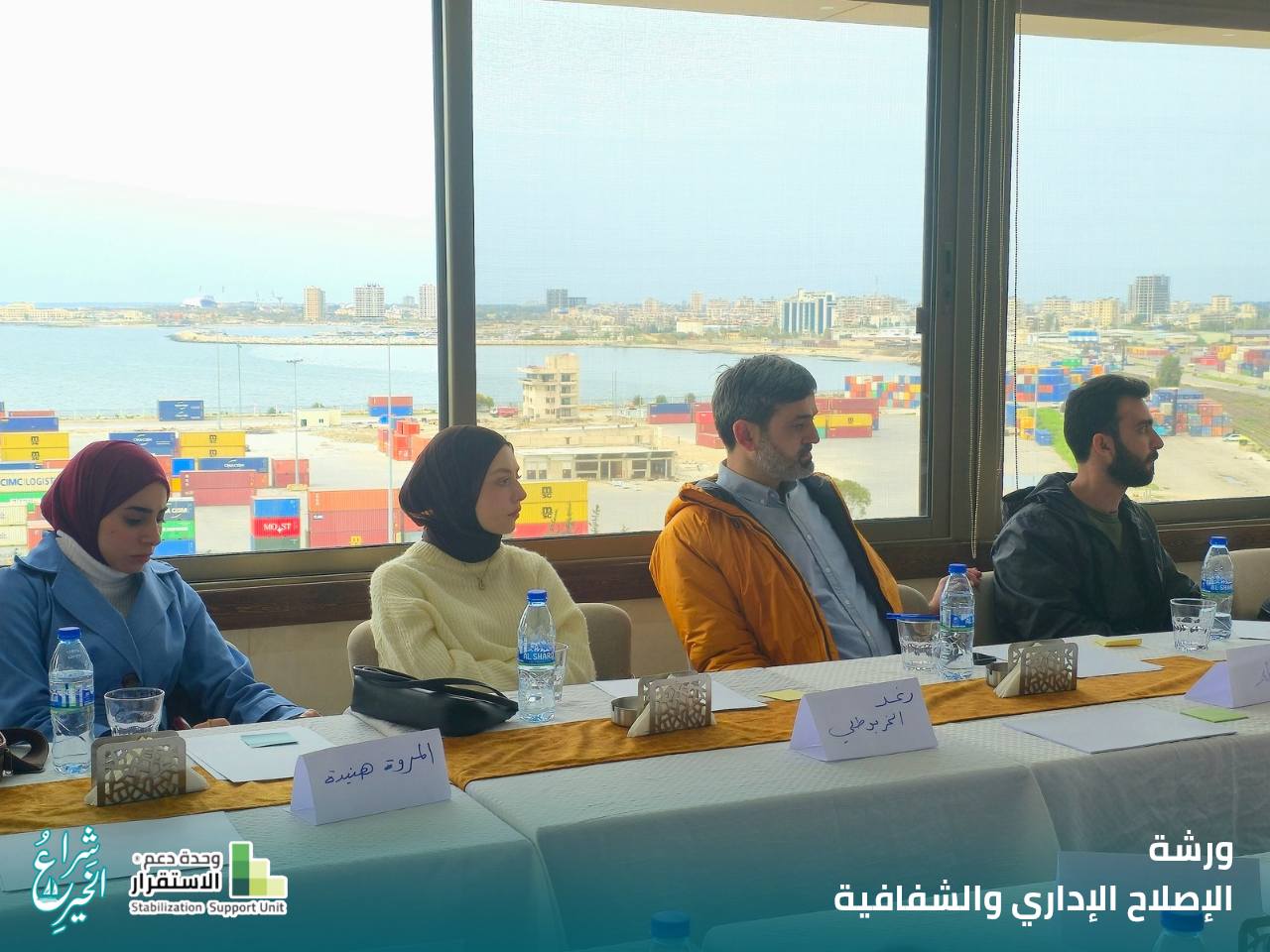
During the session, participants reviewed the draft paper that had been prepared based on
discussions and sessions conducted across different governorates within the project.
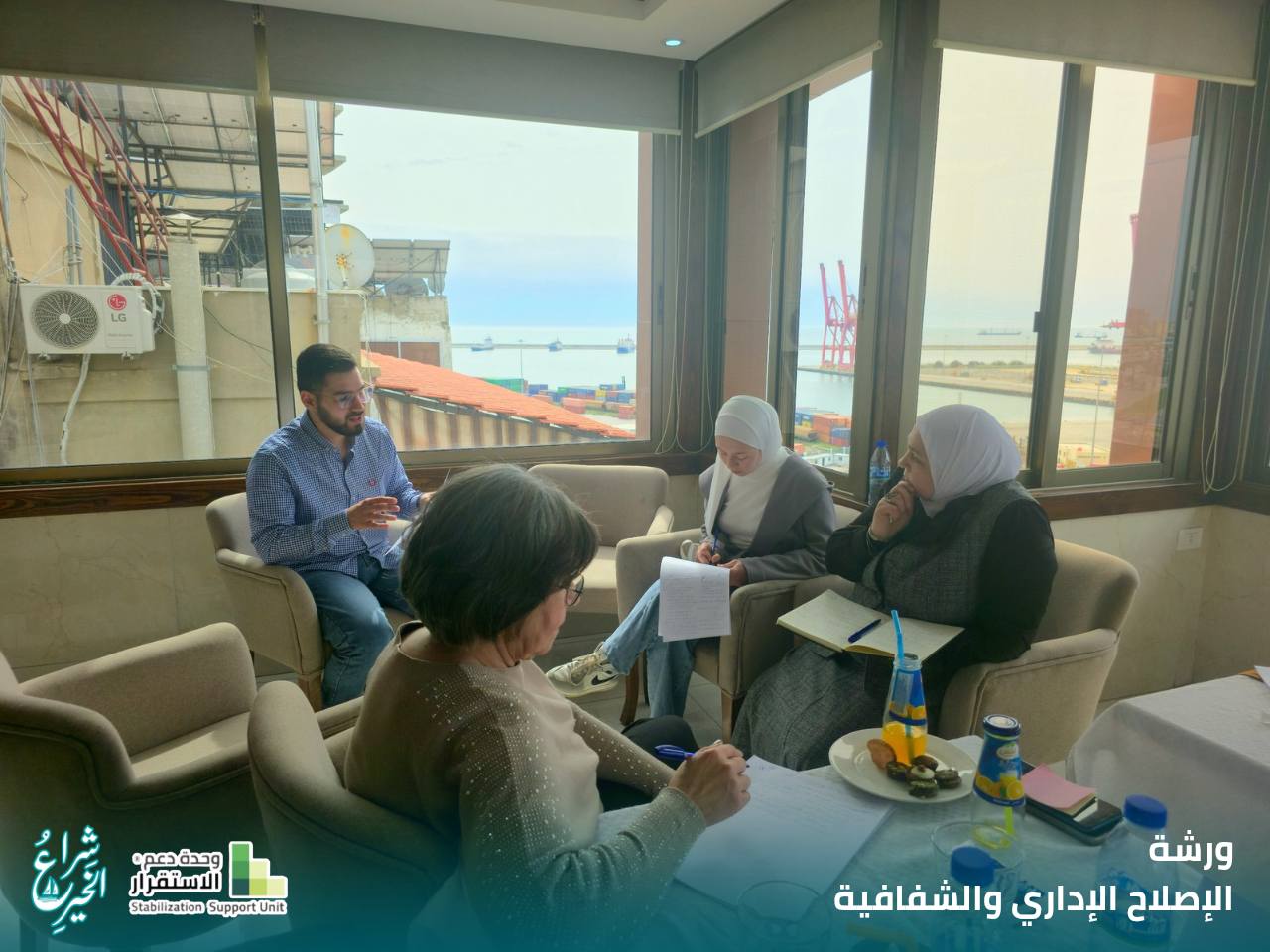
The workshop focused on discussing and reviewing the document’s content, while exchanging
feedback, remarks, and ideas that contribute to refining and improving it.
The session concluded with a constructive exchange of insights among participants, supporting
the development of more effective and transparent administrative practices.
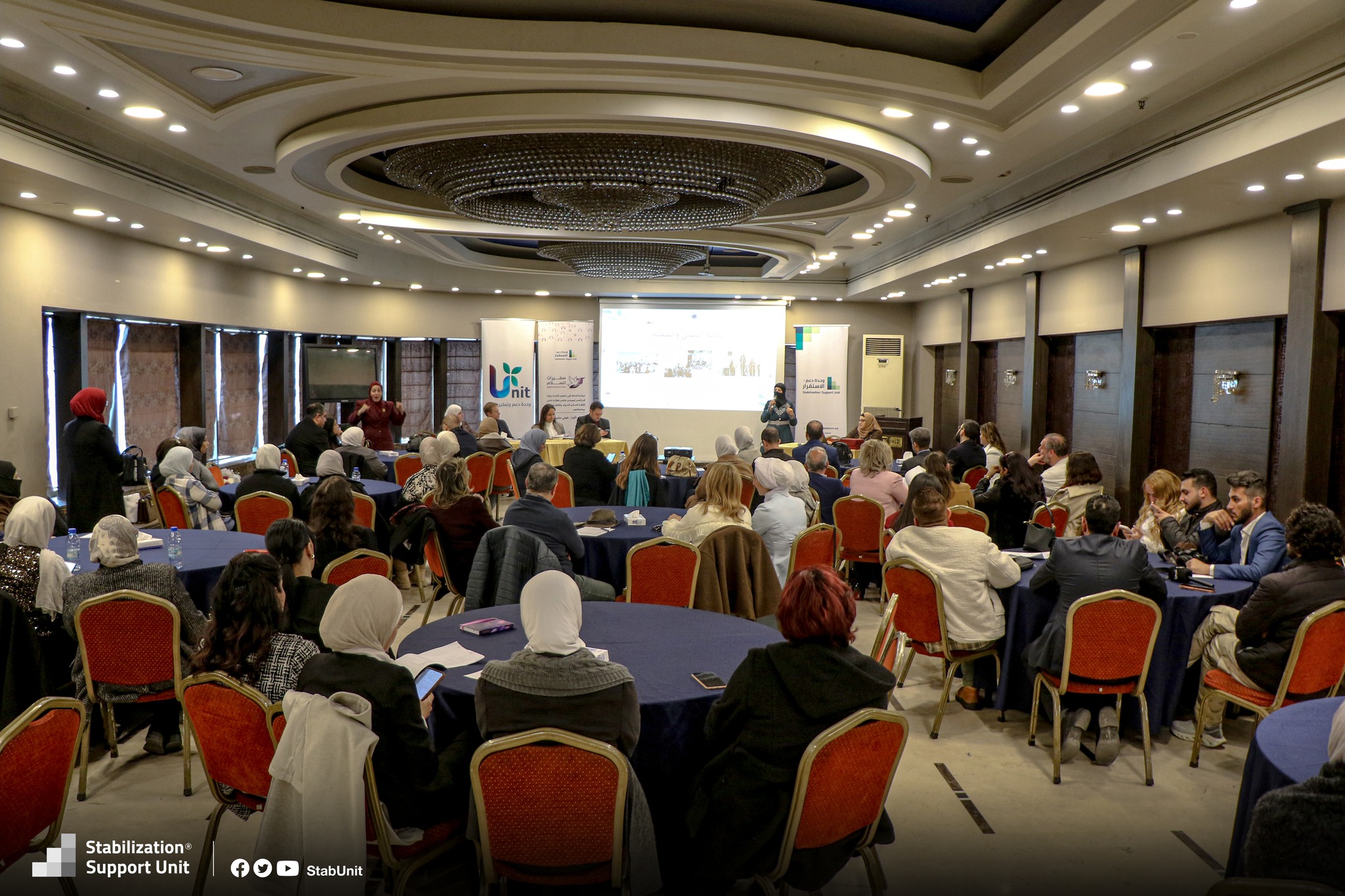
The First Peace Ambassadors Forum in Damascus
The Stabilization Support Unit (SSU) organized the first forum for
Peace Ambassadors, launching the reference document for the Peace Ambassadors program in Syria.
This initiative aims to enhance women's role in building civil peace and social cohesion,
and to promote a culture of dialogue among different components of society, in cooperation with the
Women's Empowerment and Support Unit.
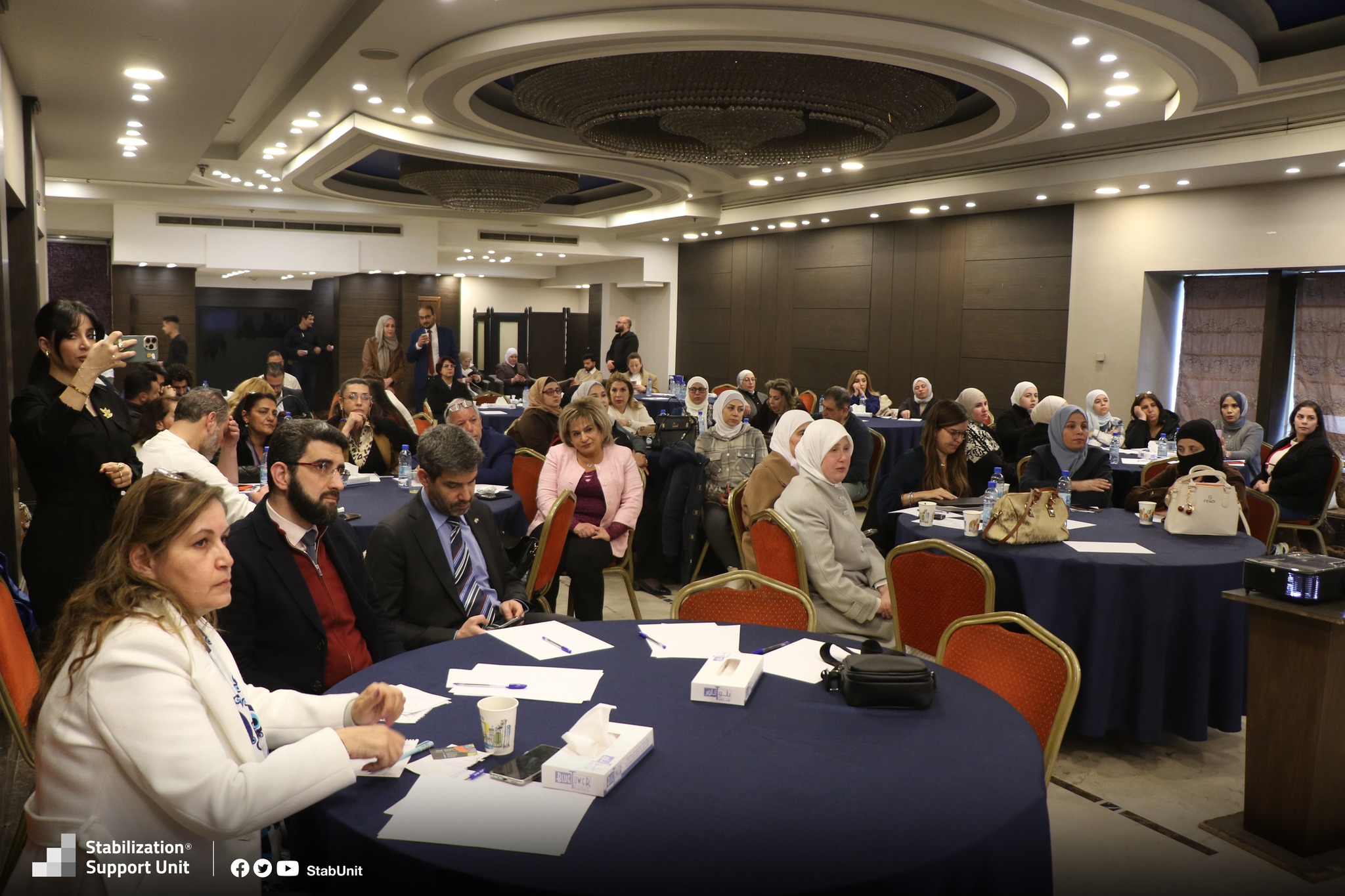
The forum was attended by the Ministry of Social Affairs and Labor in Syria,
along with the Acting French Ambassador in Syria, Mr. Jean-Baptiste Favre,
as well as various community representatives, civil society actors, and organizations working in
development and social affairs.
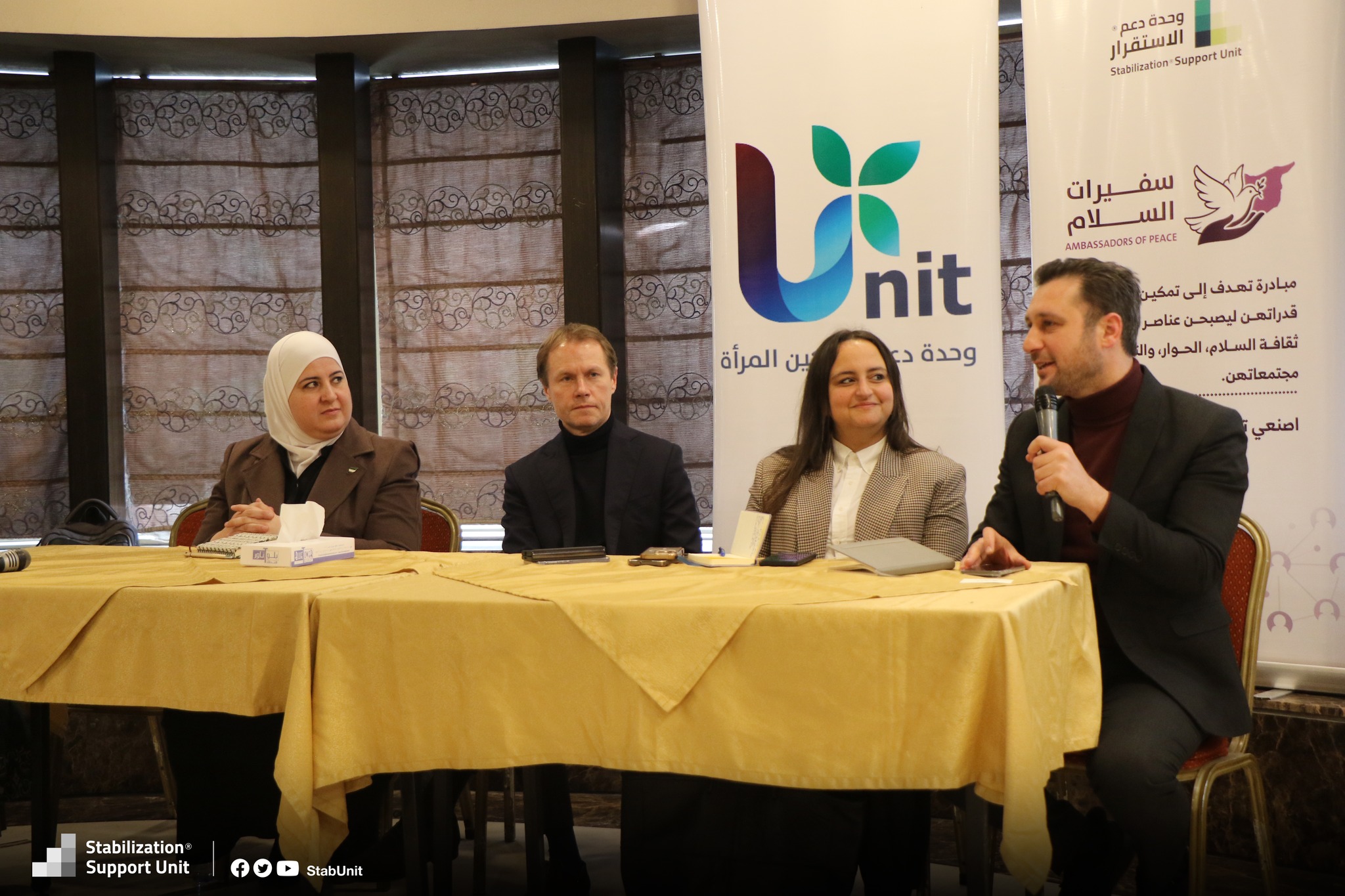
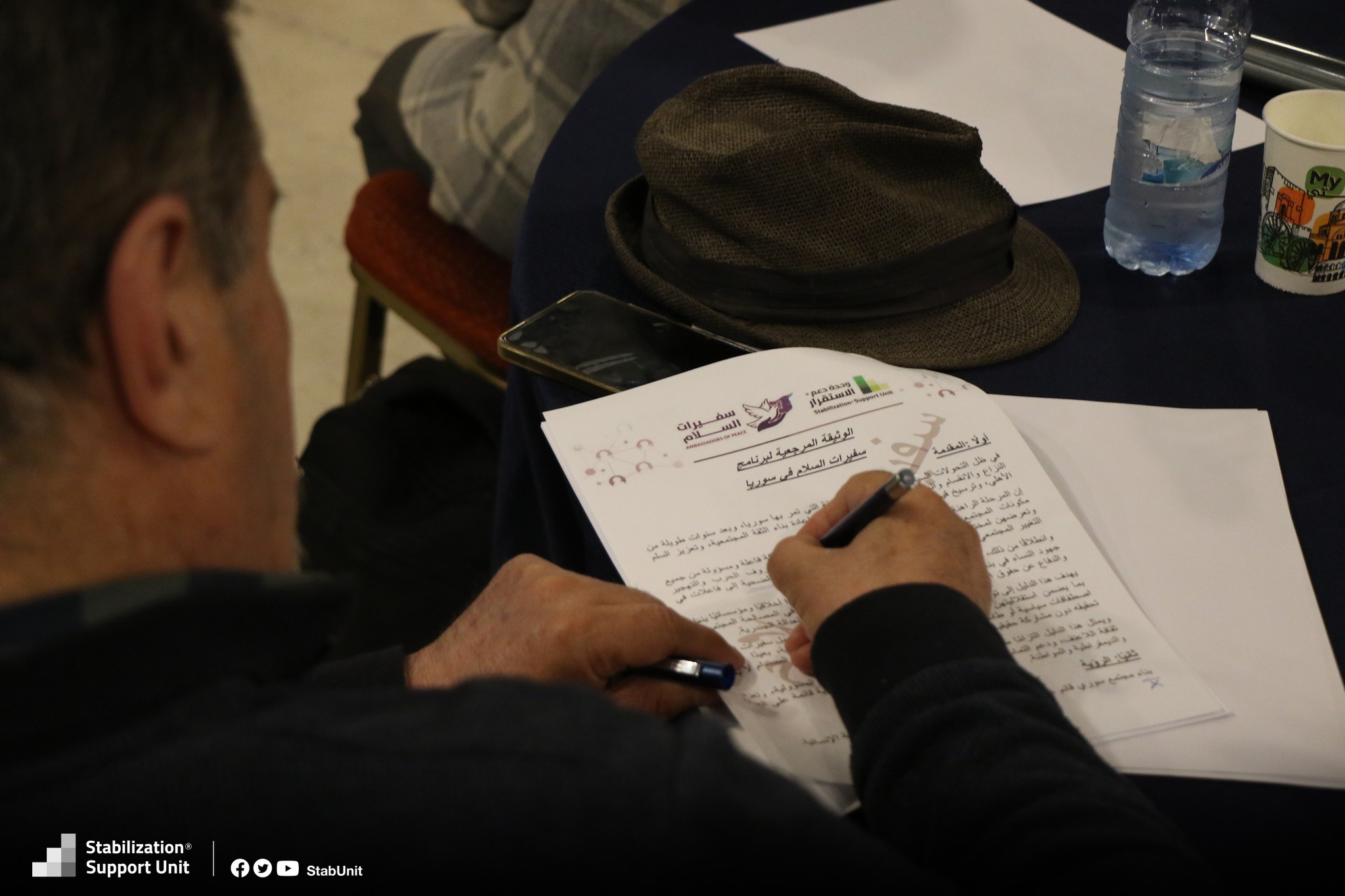
During the forum, the ambassadors from different governorates presented highlights of the main activities
and initiatives implemented during the first phase of the program, emphasizing their role in supporting
social cohesion and enhancing local dialogue.
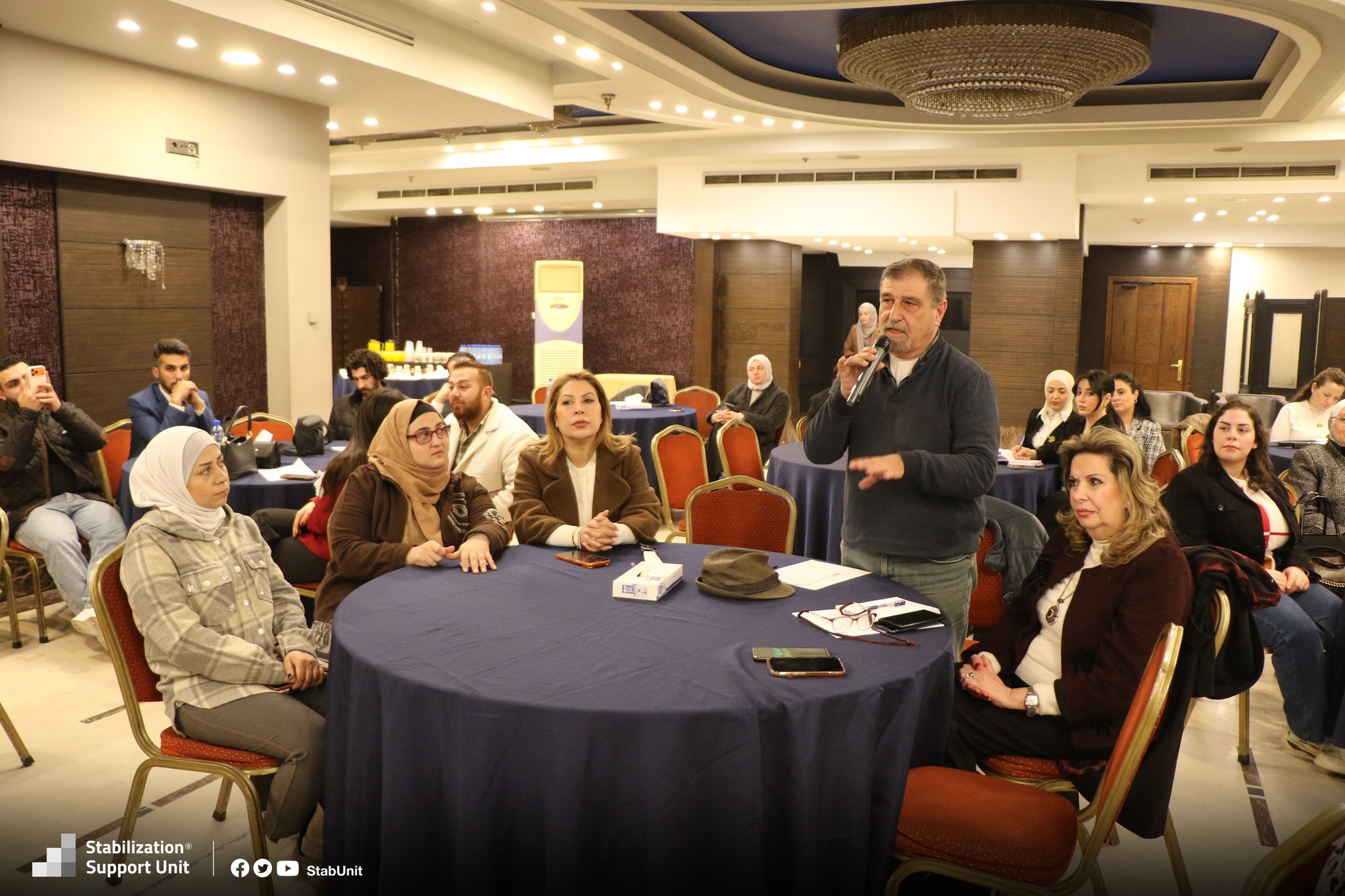
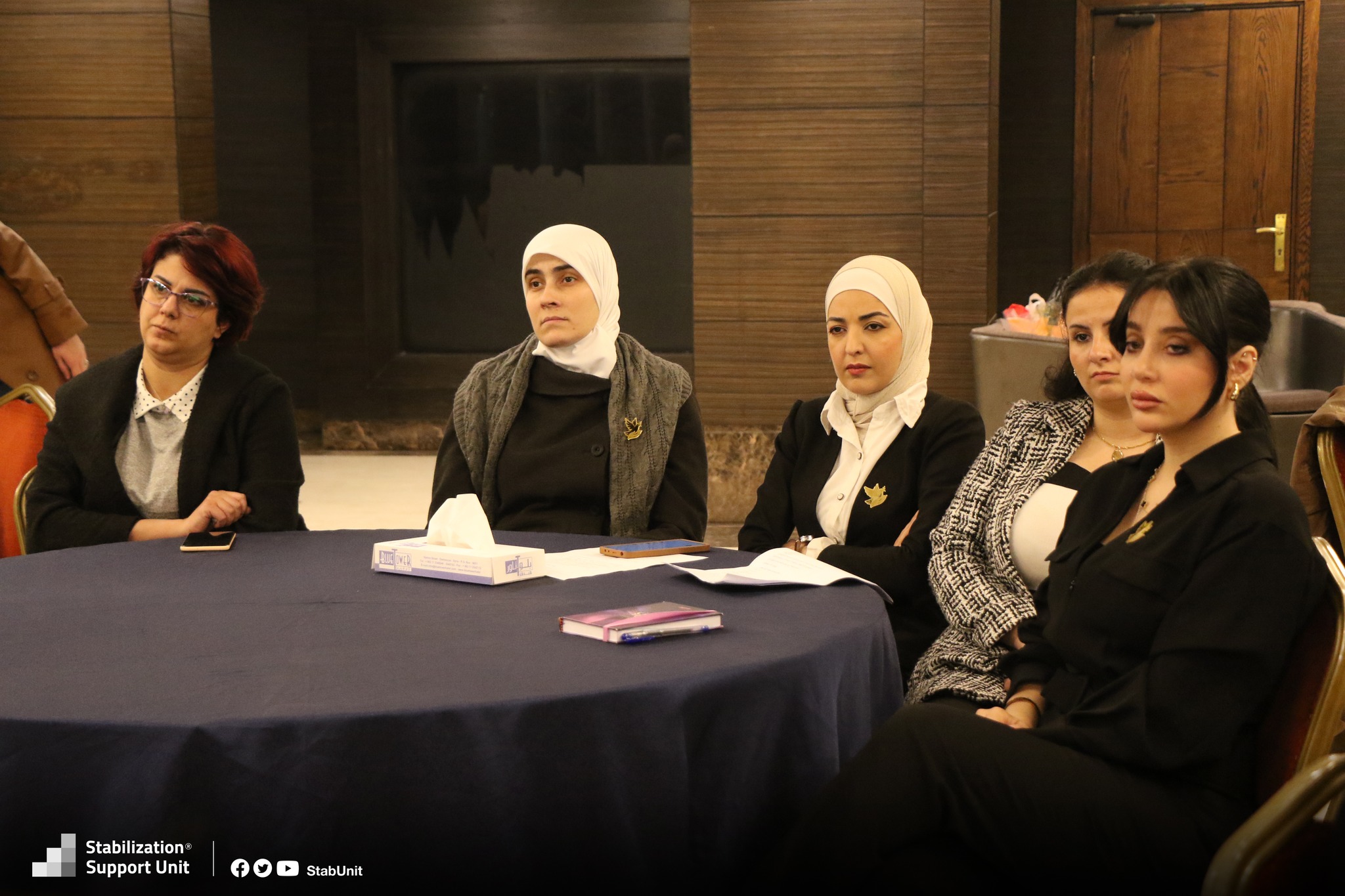
The forum also reviewed the reference document, which serves as the program’s main framework,
aiming to unify working mechanisms and guide the ambassadors’ efforts to achieve a sustainable impact
in their communities.
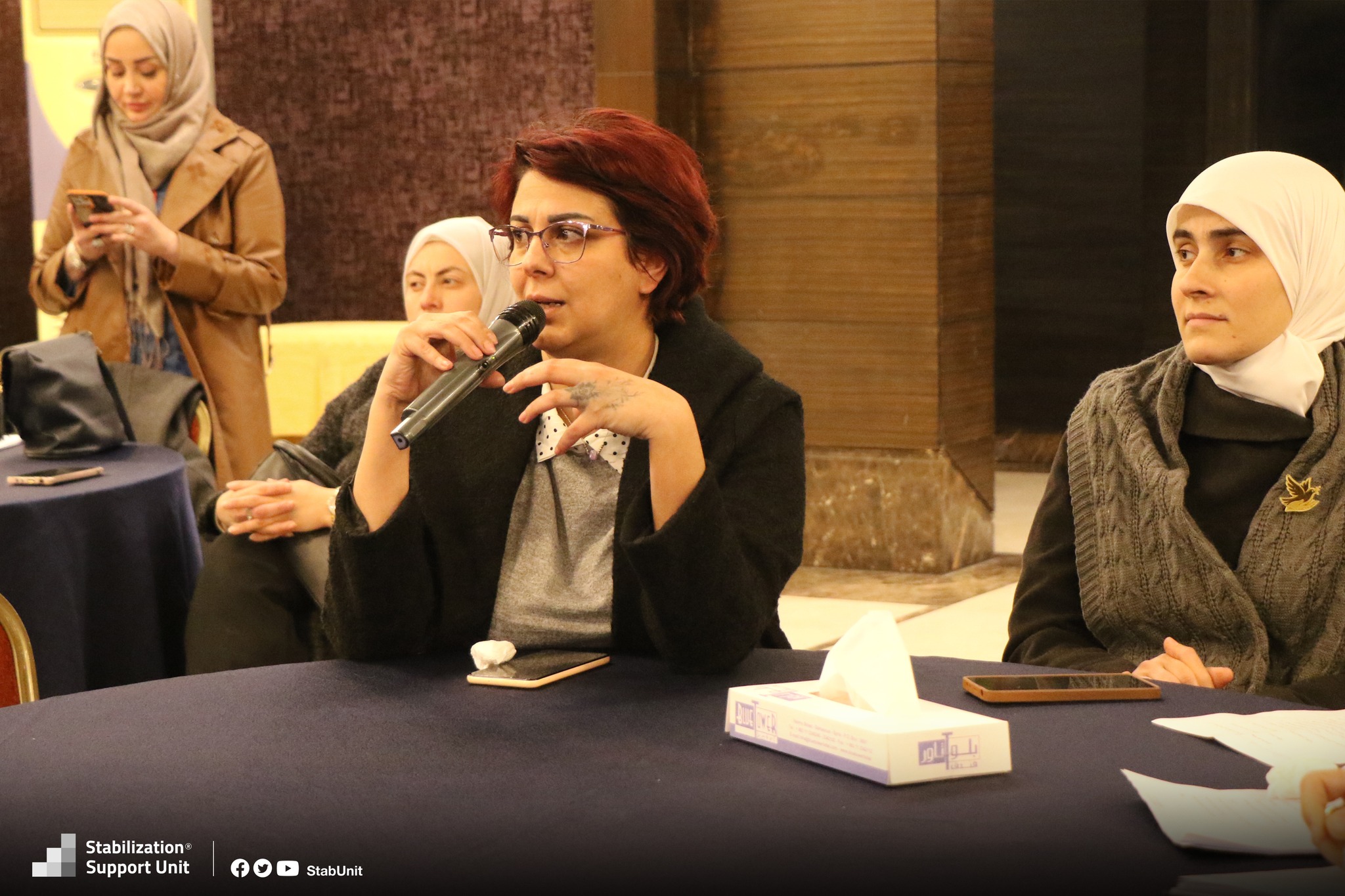
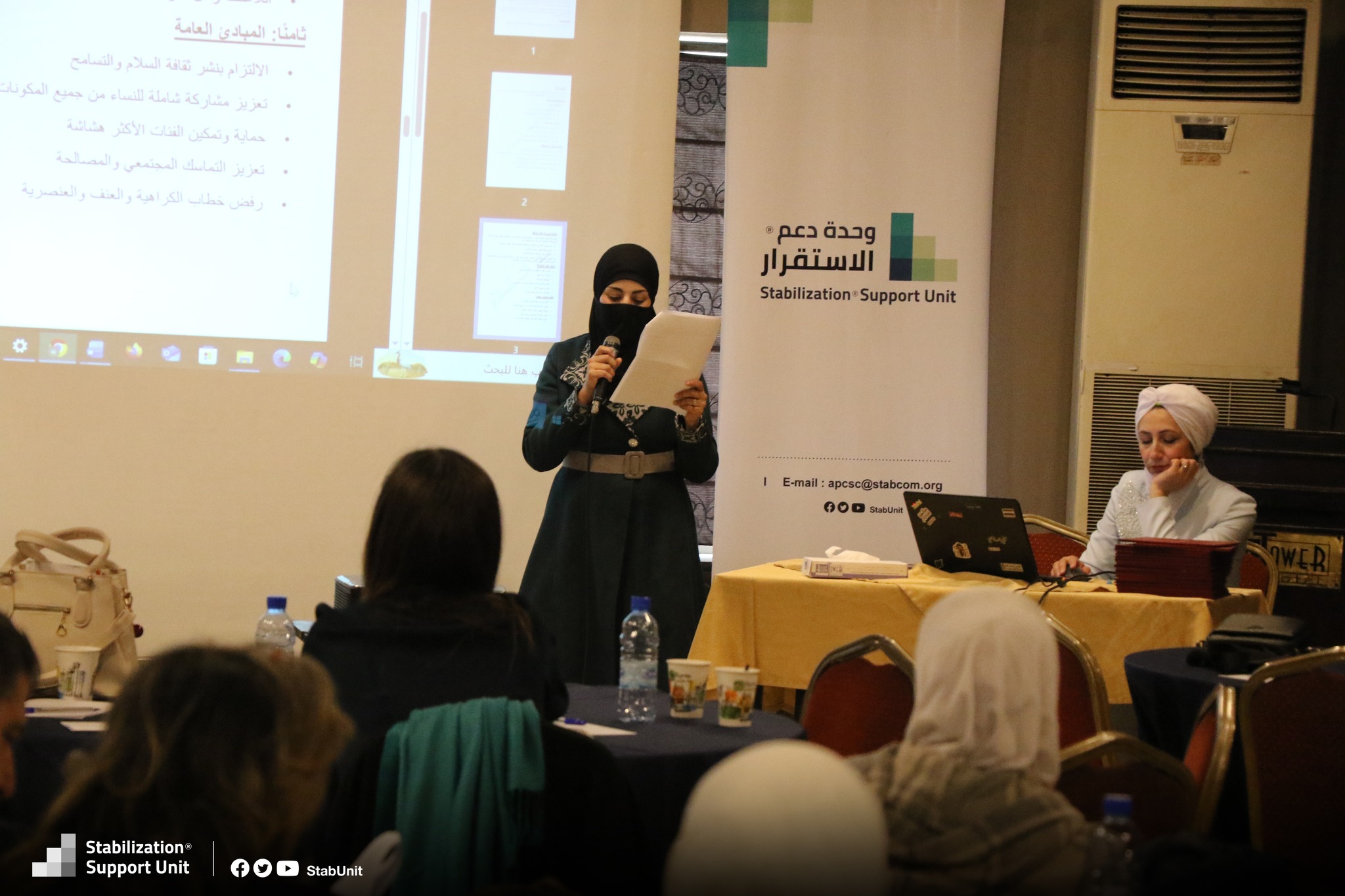
The forum concluded with the distribution of certificates of appreciation to the participating ambassadors,
recognizing their efforts and contributions to the successful completion of the first phase of the program.
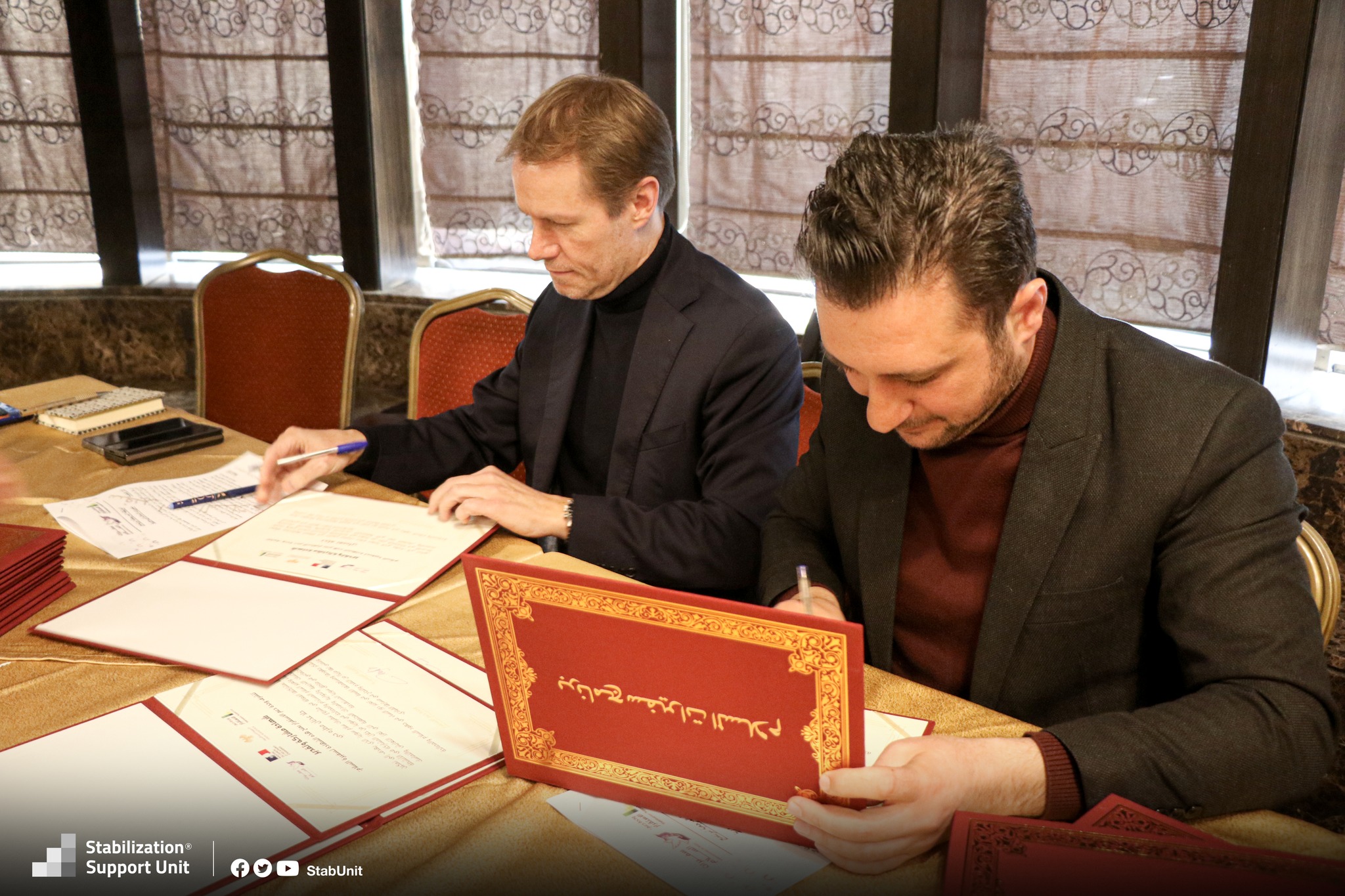
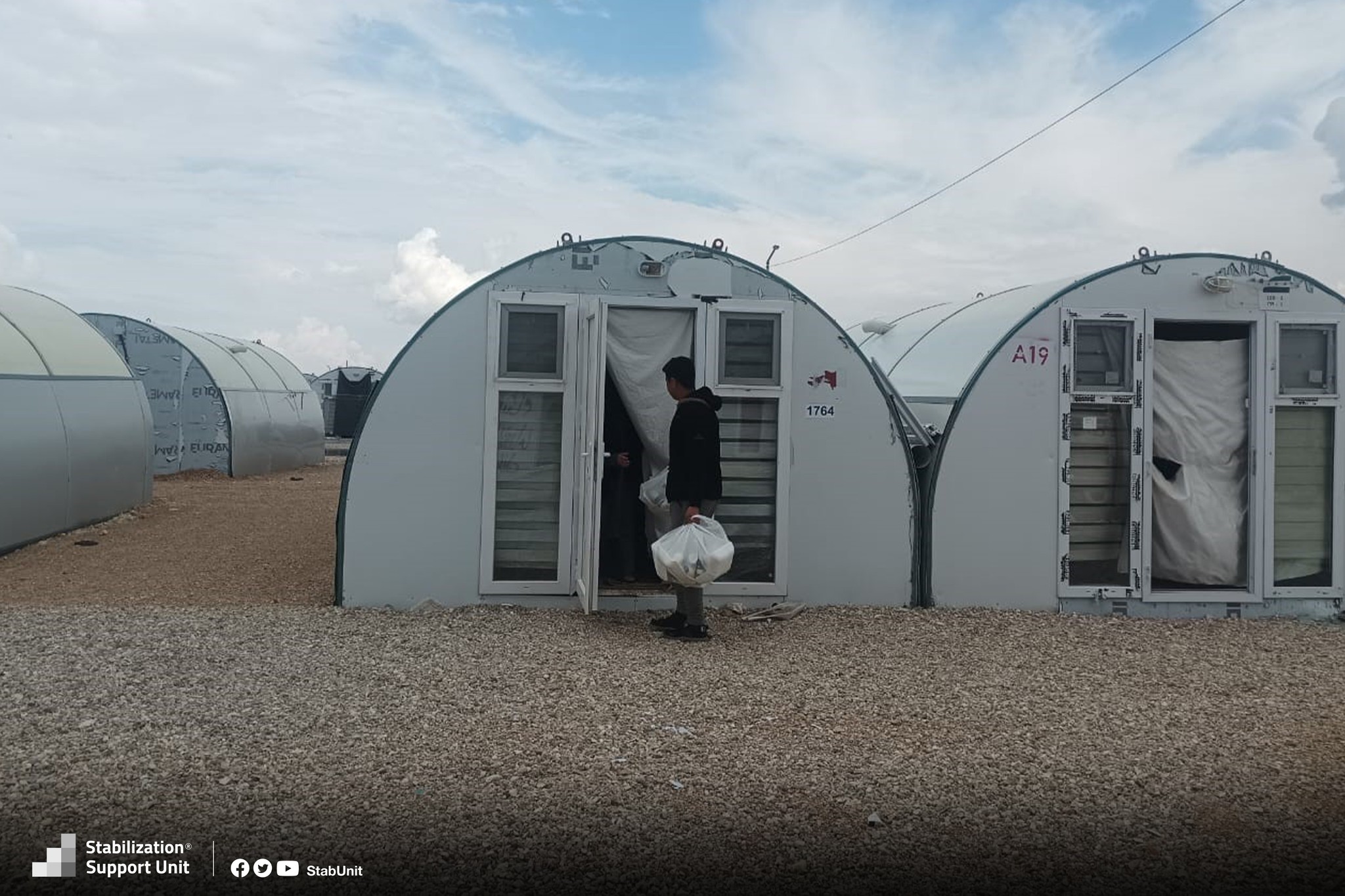
Daily Humanitarian Response in Aq Burhan Camp
The teams of the Stability Support Unit, with support from
UNHCR, the UN Refugee Agency, continue implementing humanitarian response efforts
in Aq Burhan Camp – Akhtarin to support families arriving from
Al-Hol Camp.
These ongoing efforts aim to improve daily living conditions and provide essential services
for newly arrived families, helping create a safer and healthier environment inside the camp.
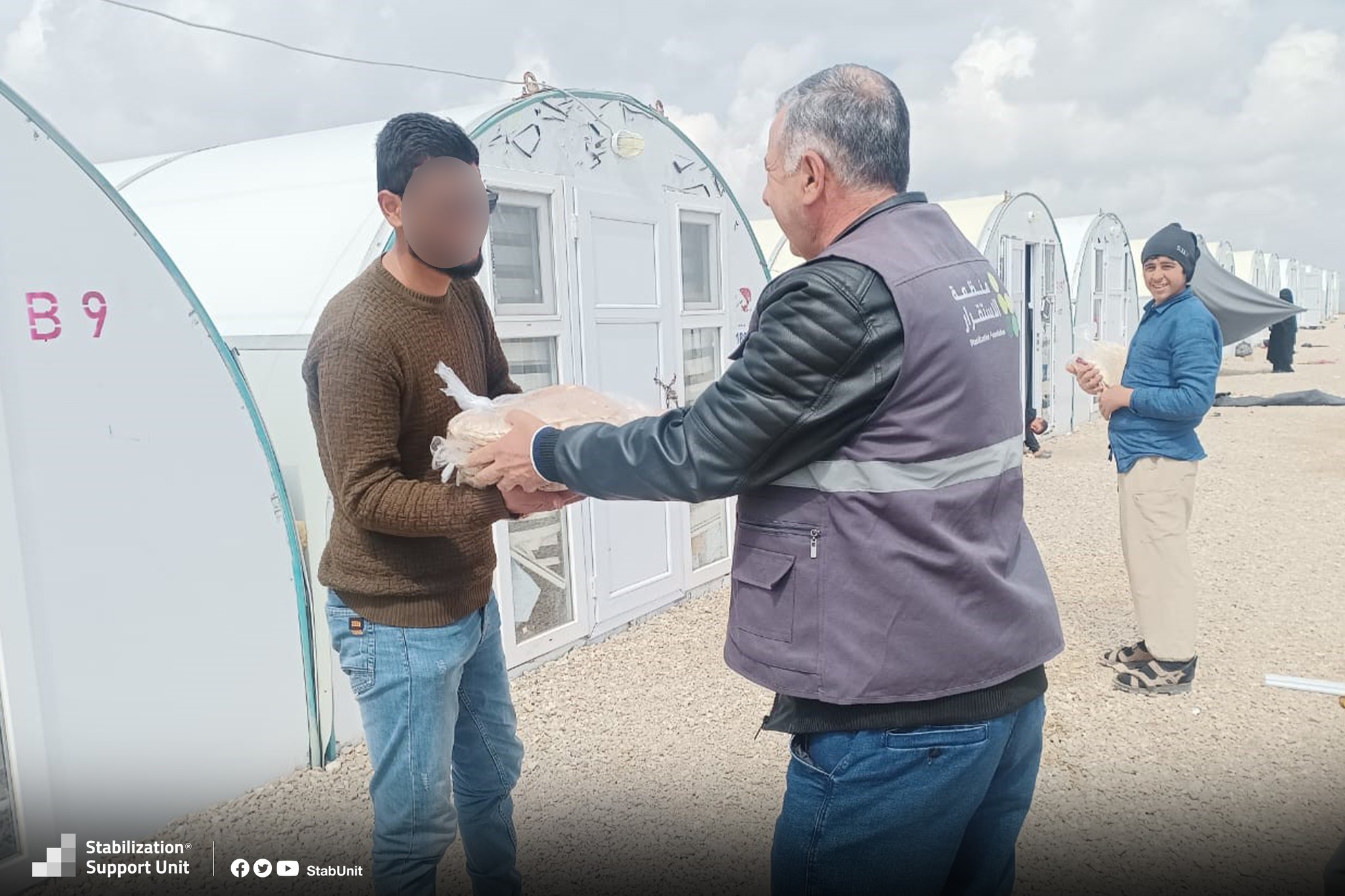
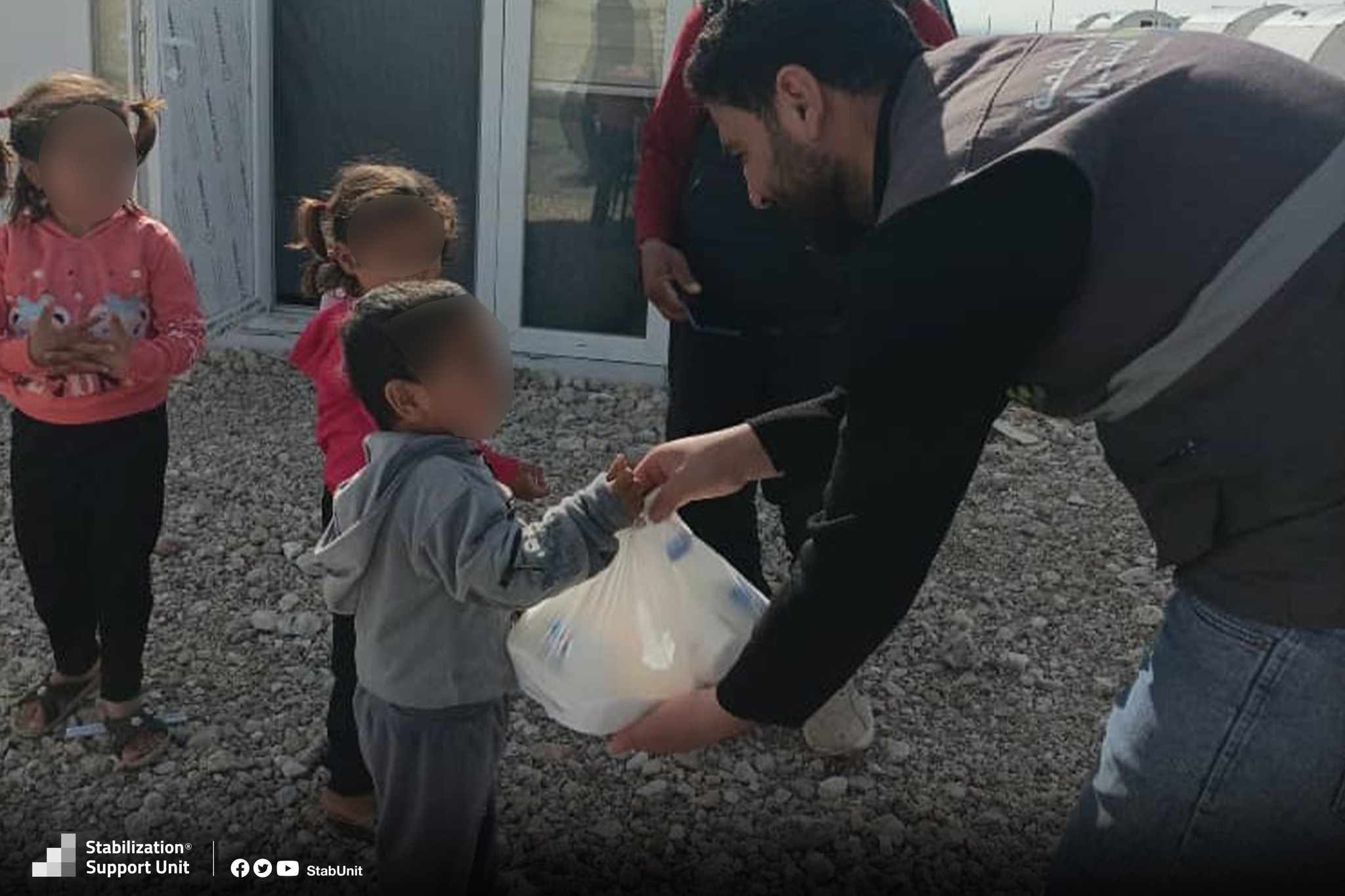
The daily response includes a range of basic humanitarian services designed to meet urgent needs
and ease the hardship faced by residents.
- Cleaning works and waste removal.
- Bread distribution.
- Providing daily meals.
Through these continuous interventions, the teams seek to reduce the suffering of families
by meeting their basic needs on an ongoing basis, while supporting a more stable, safe,
and dignified living environment for camp residents.
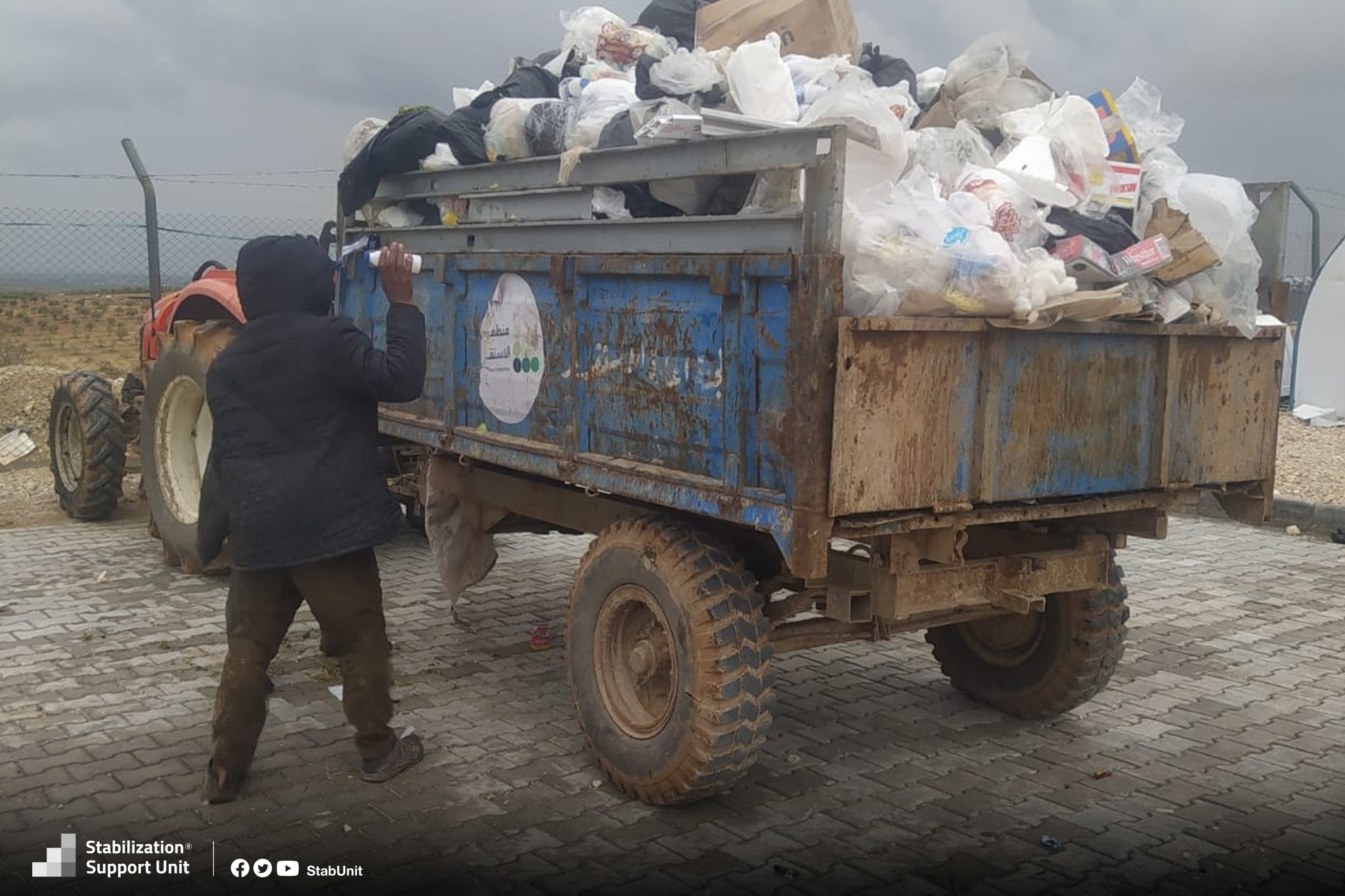
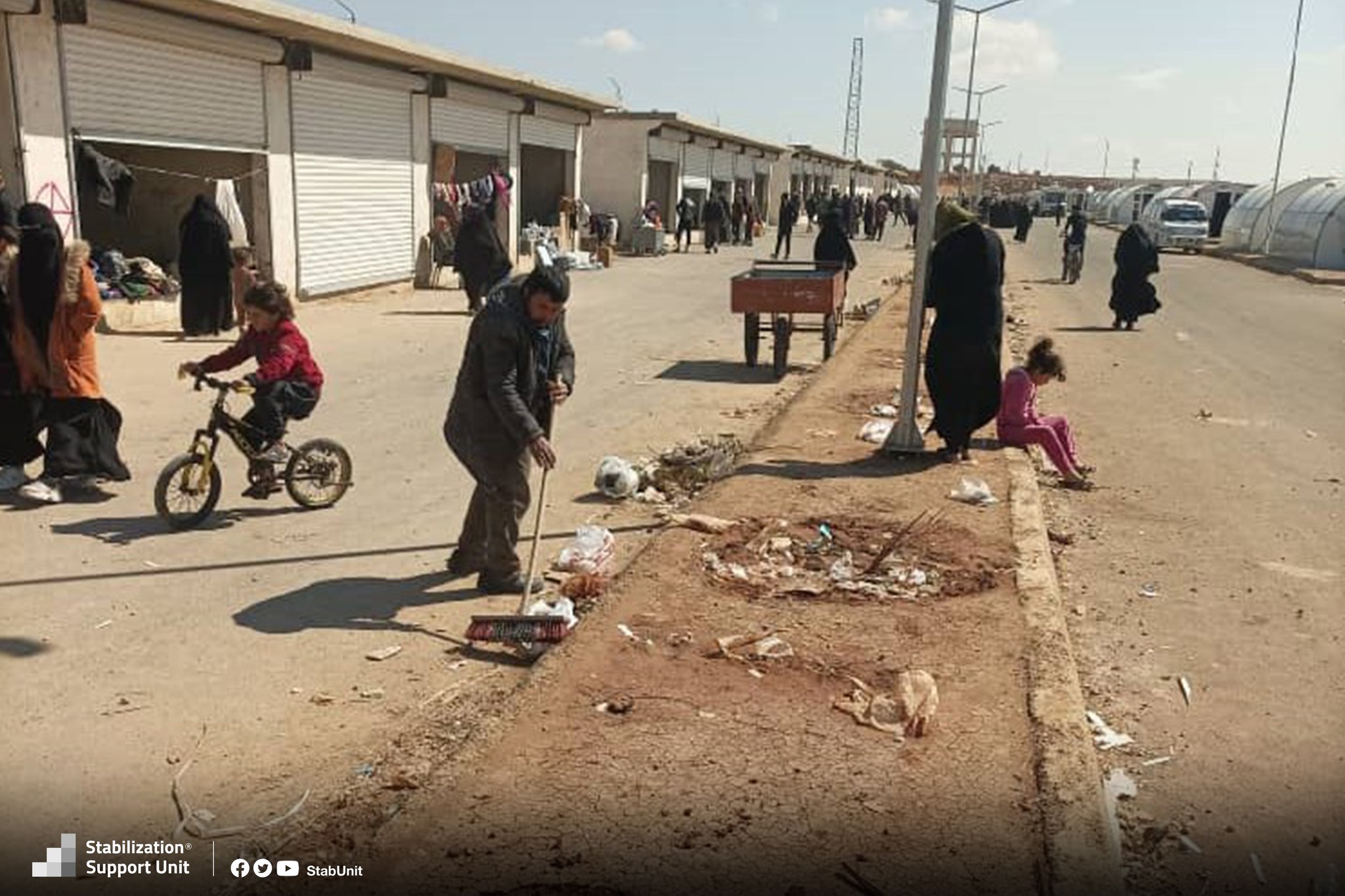
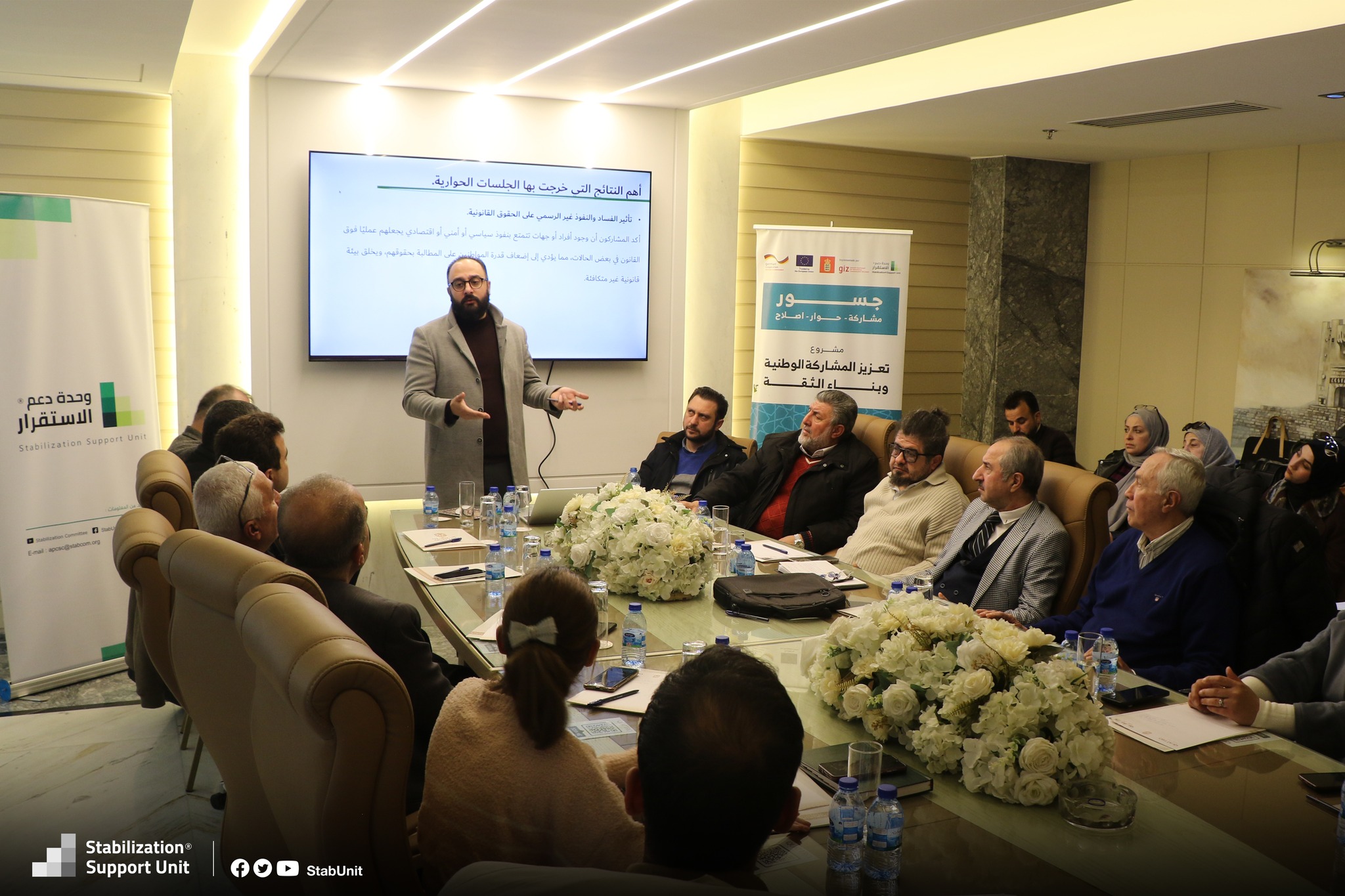
Aleppo: Community Dialogue Session
The Stabilization Support Unit (SSU), in partnership with
Al-Hadara Association and
Basmeh & Zeitooneh Syria, organized a community dialogue session
titled “Policies and the Legal Framework in Syria.”
The session was attended by legal experts, lawyers, academics, and public affairs activists.
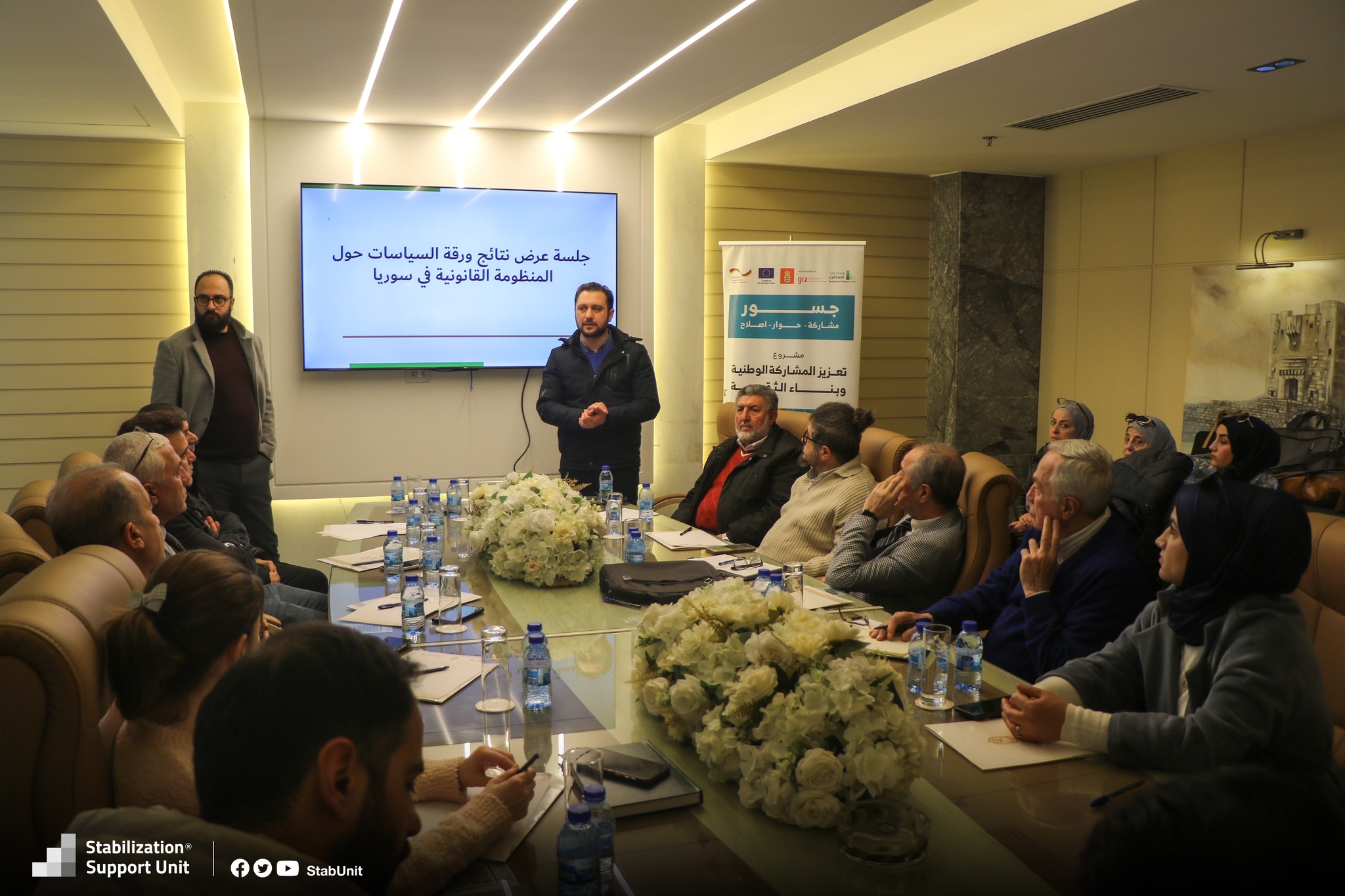
The session included the presentation of a draft paper prepared based on the outcomes
of dialogue sessions conducted across various governorates within the project.
Participants engaged in discussions to review its content and exchange perspectives
and feedback on the recommendations included, contributing to refining and strengthening
its final outputs.
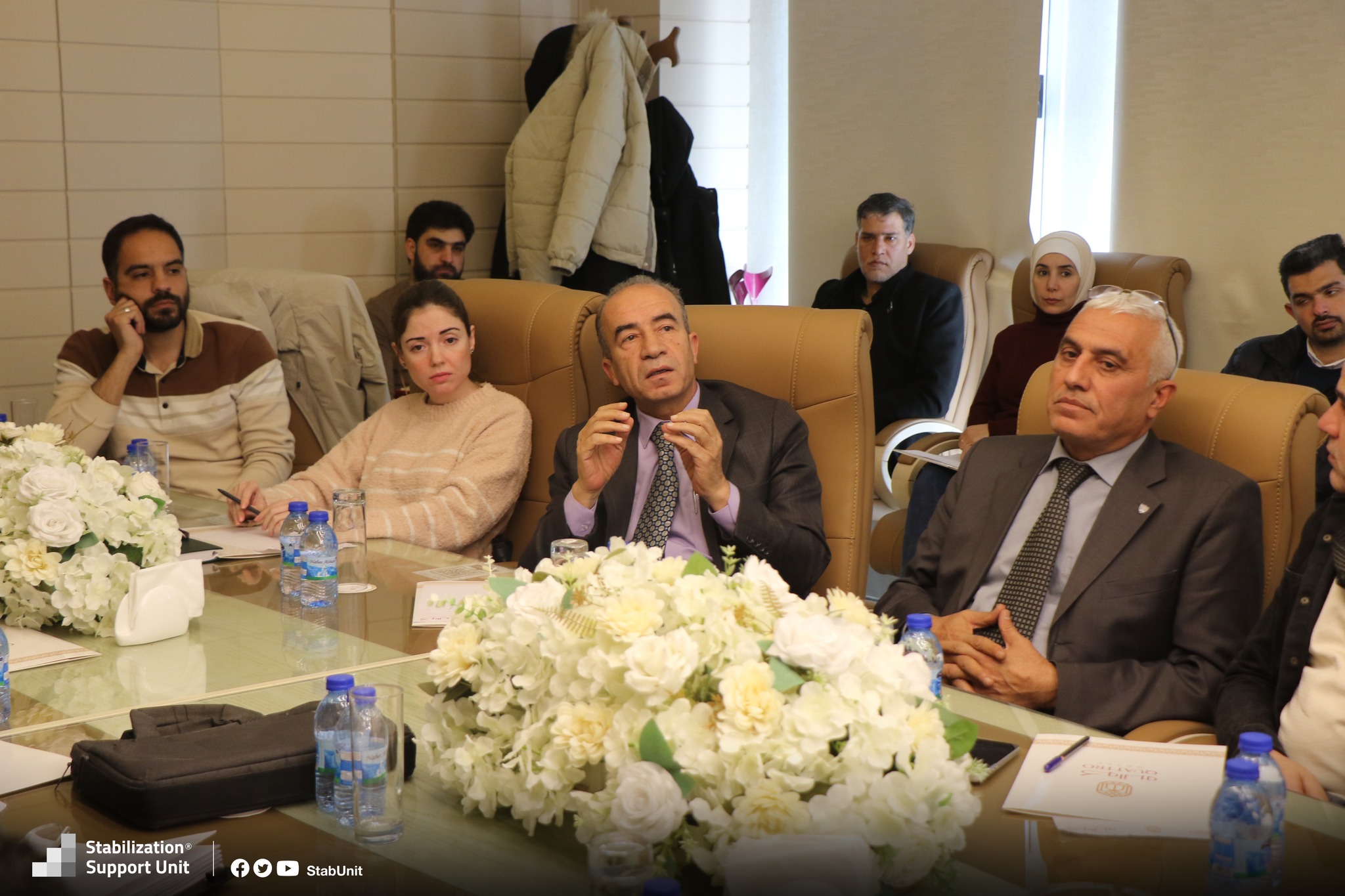
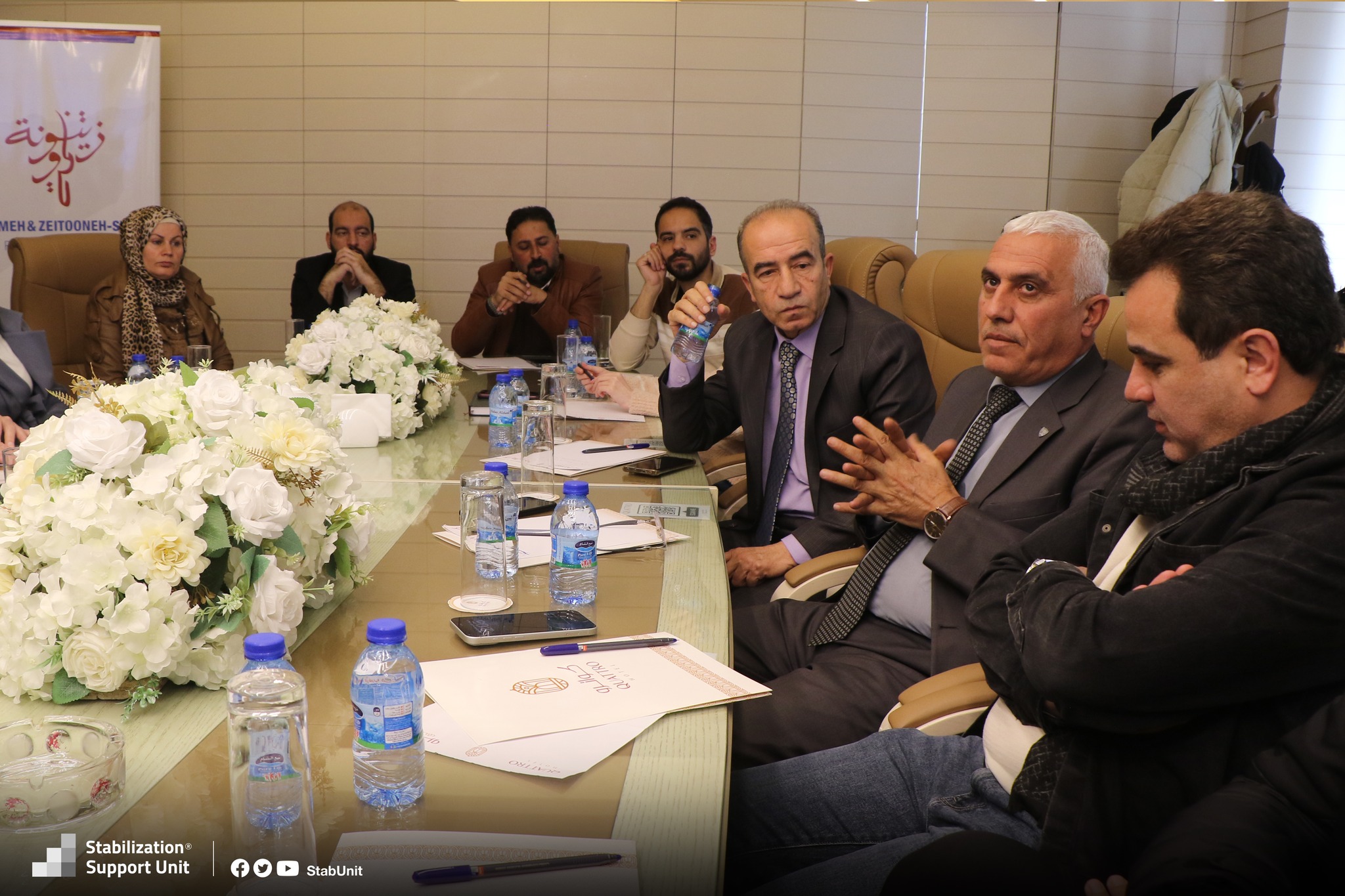
This interactive session provided a platform for participants to share insights and
expertise, fostering constructive dialogue around legal and policy-related issues
in Syria, and encouraging collaborative thinking toward more effective frameworks.
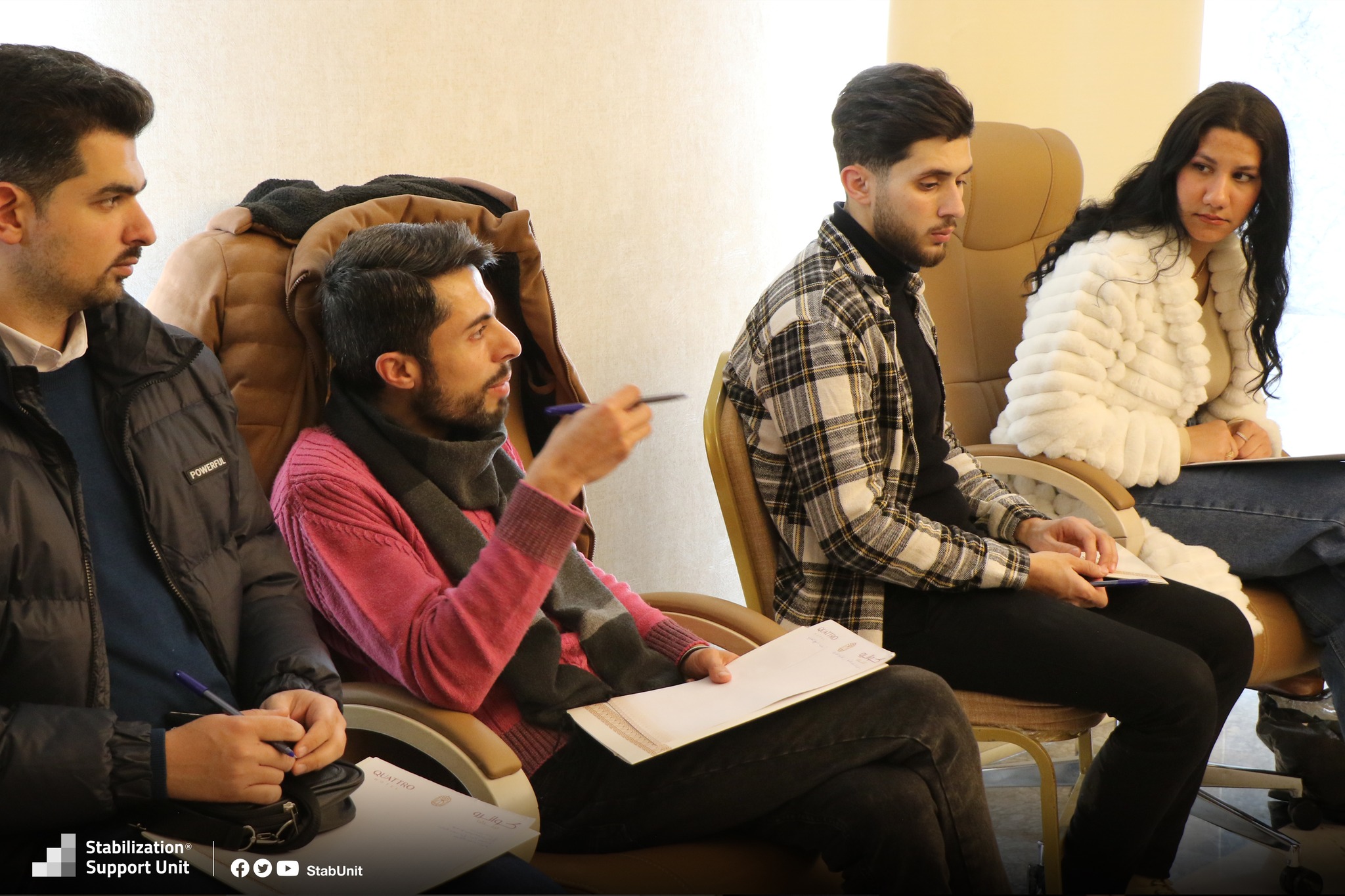
The session is part of the project
“Enhancing National Participation and Building Trust – Jusoor,”
which aims to strengthen community engagement and build trust among different
components of society through dialogue, consultation, and capacity building.
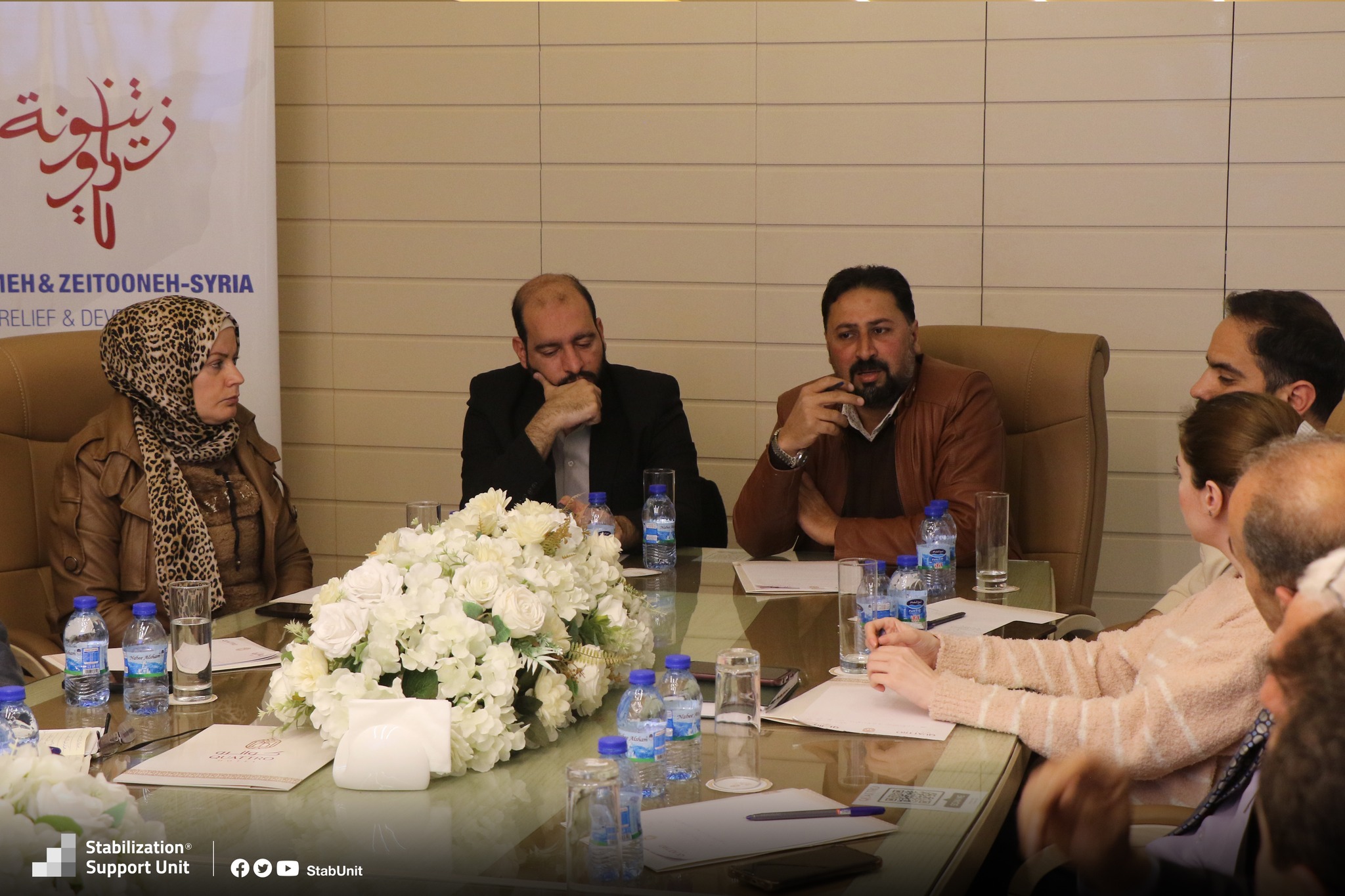
The project is funded by the European Union,
Germany, and Denmark, as part of the
Peace in Syria Initiative implemented by the
German Agency for International Cooperation (GIZ).
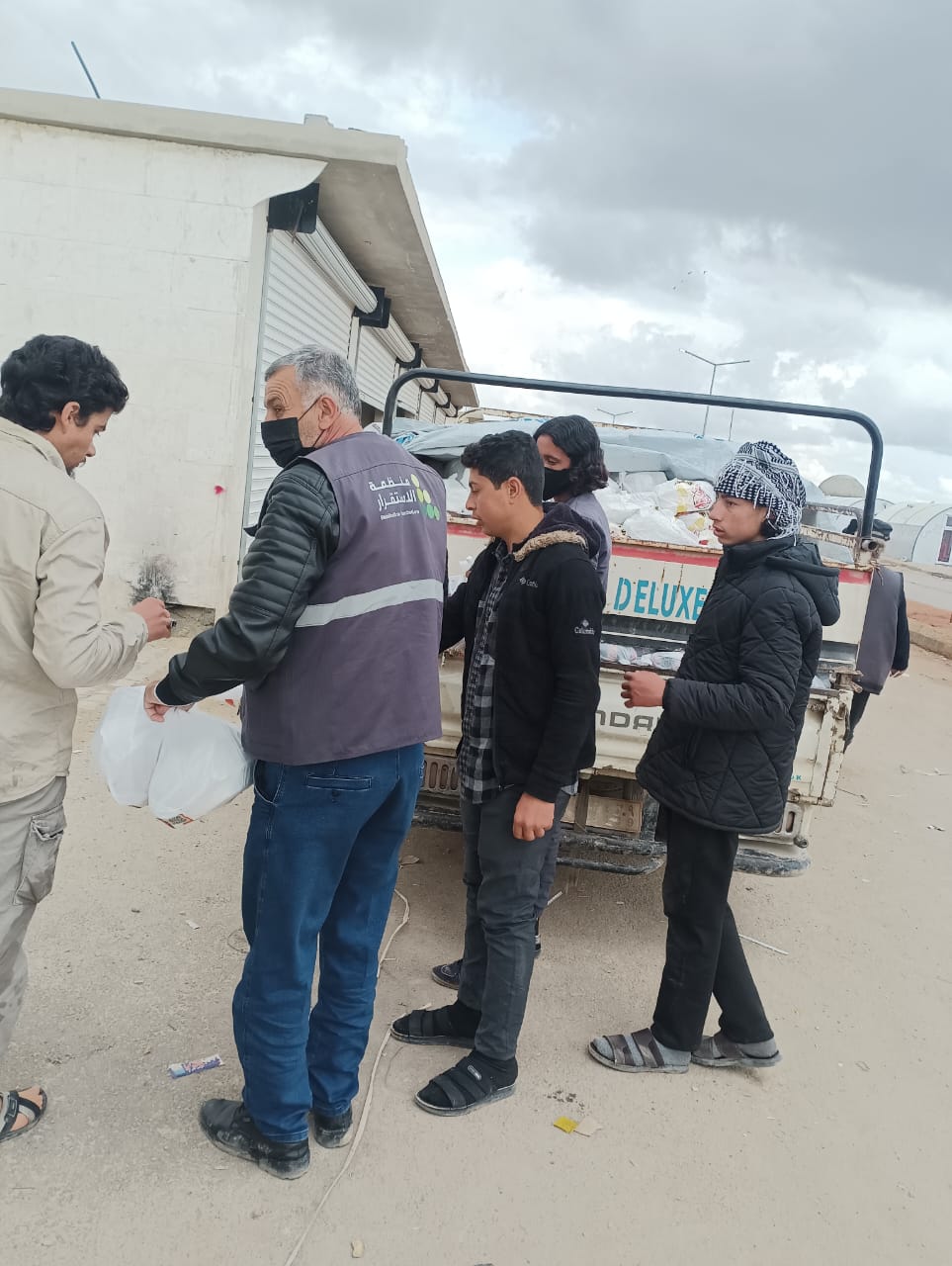
Food Assistance for Families in Aq Burhan Camp During Eid Al-Fitr
As part of its ongoing efforts to improve the conditions of families who recently arrived from
Al-Hol Camp to
Aq Burhan Camp in Akhtarin, and in cooperation with the
United Nations High Commissioner for Refugees
#UNHCR, the
Stabilization Support Unit (SSU) continued to provide
food assistance during the days of Eid Al-Fitr by distributing meals to these families.
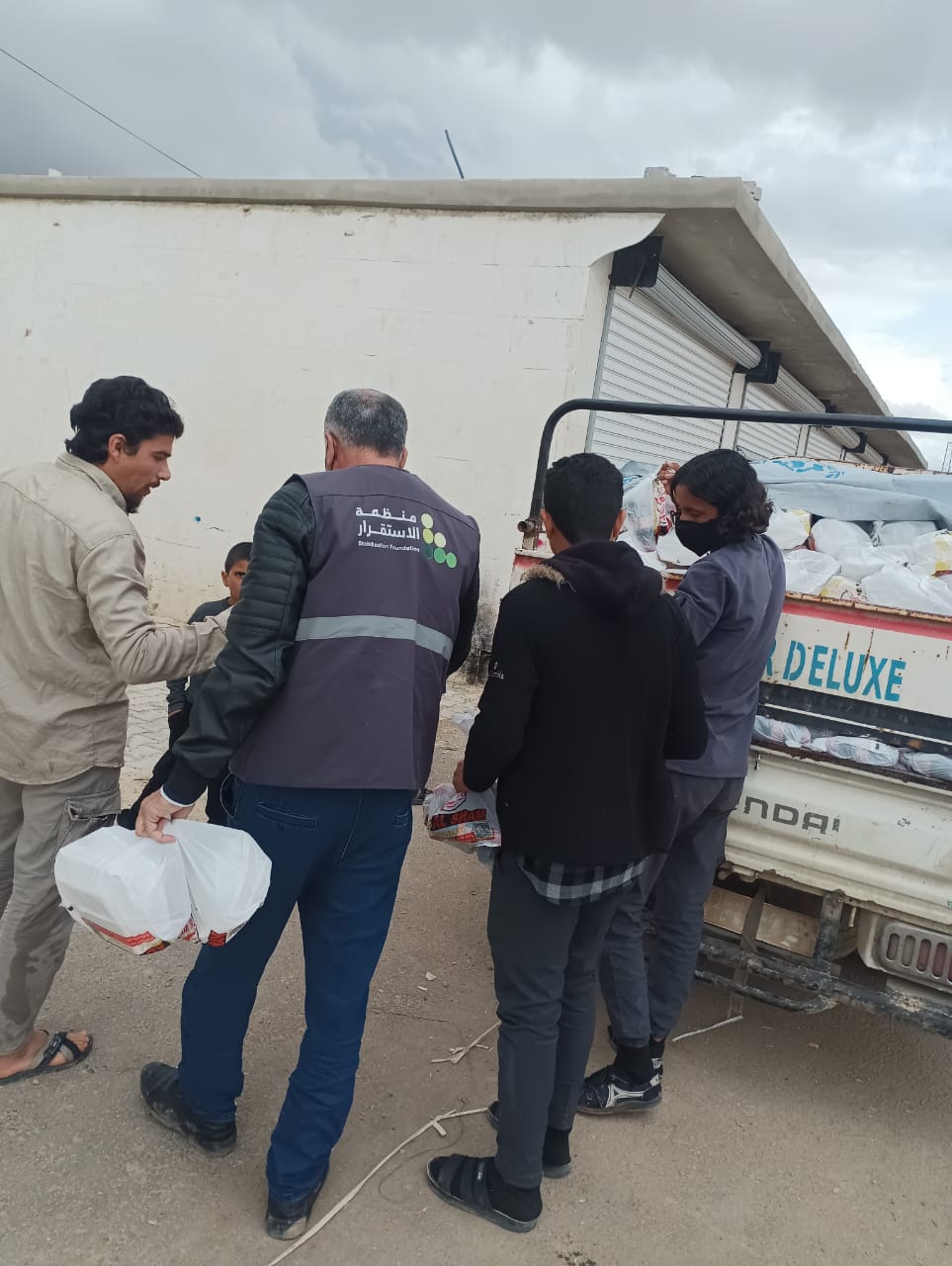
.jpeg)
These efforts come as part of a series of humanitarian interventions carried out by the Unit
to ensure better living conditions for Syrians and to support them in meeting their basic needs.
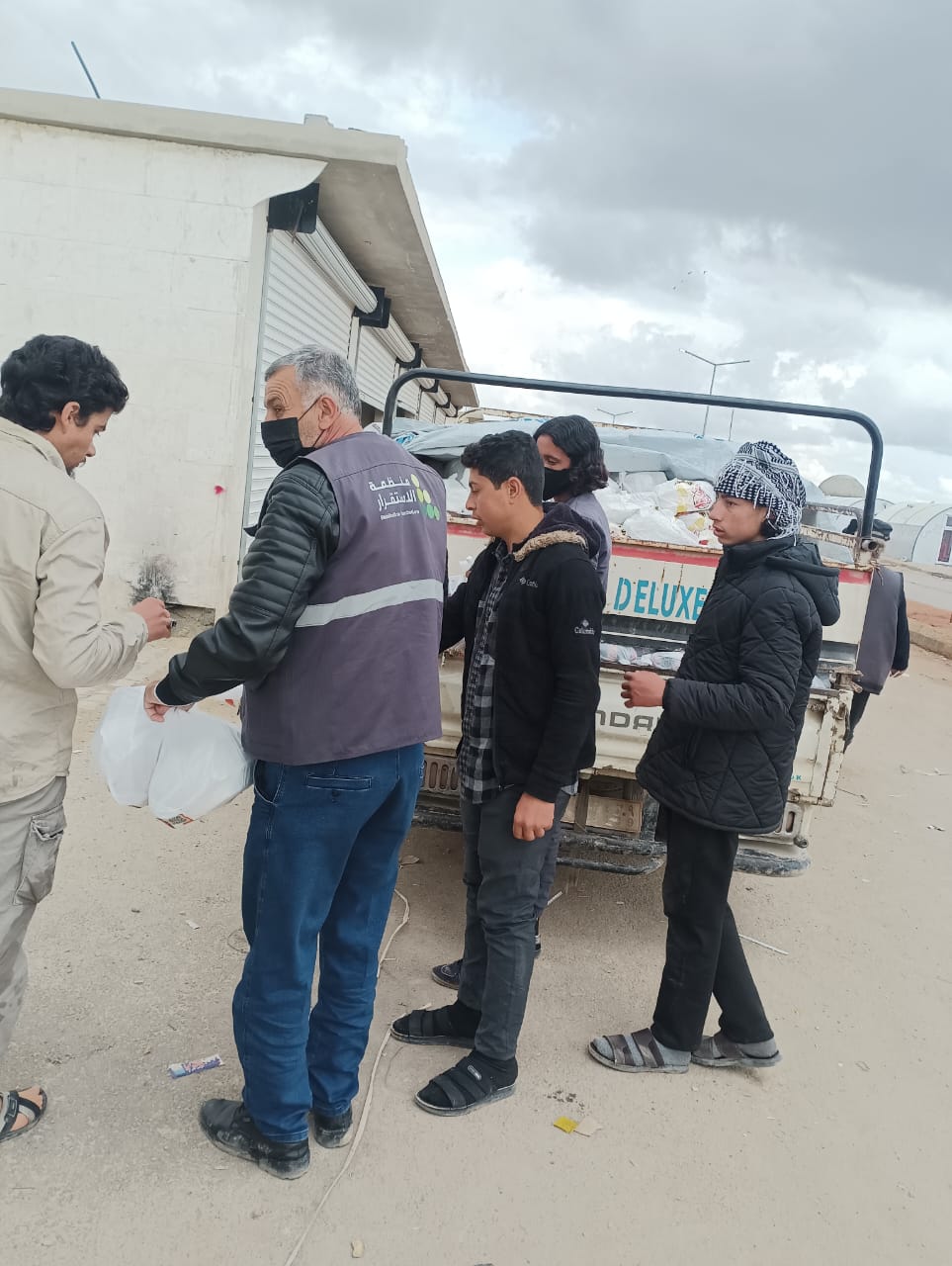
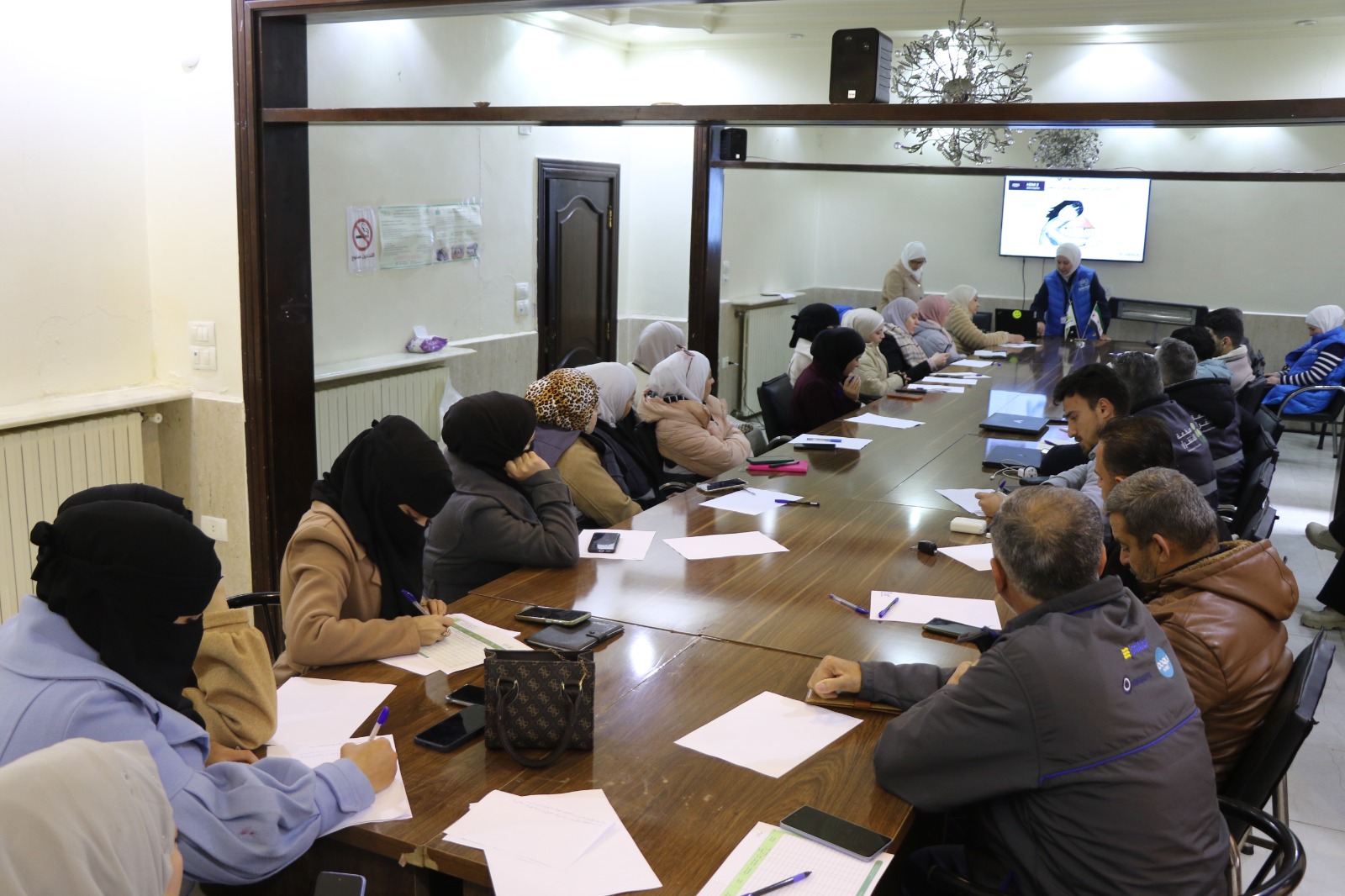
Specialized Training to Strengthen Humanitarian Response Capacities in Aleppo
As part of ongoing efforts to strengthen the capacities of humanitarian workers,
the United Nations High Commissioner for Refugees (UNHCR)
organized a specialized training with the participation of the
Stability Support Unit (SSU) team.
.jpeg)
.jpeg)
The training program covered key protection topics, focusing on
community-based protection,
accountability to affected populations (AAP),
gender-based violence (GBV) awareness,
child protection, and
legal aspects, in addition to
mental health and psychosocial support (MHPSS).
The training was conducted at the Stability Support Unit office in Aleppo,
where participants were divided into two groups to ensure continuity of services
within Aq Burhan Camp in Akhtarin without interruption.
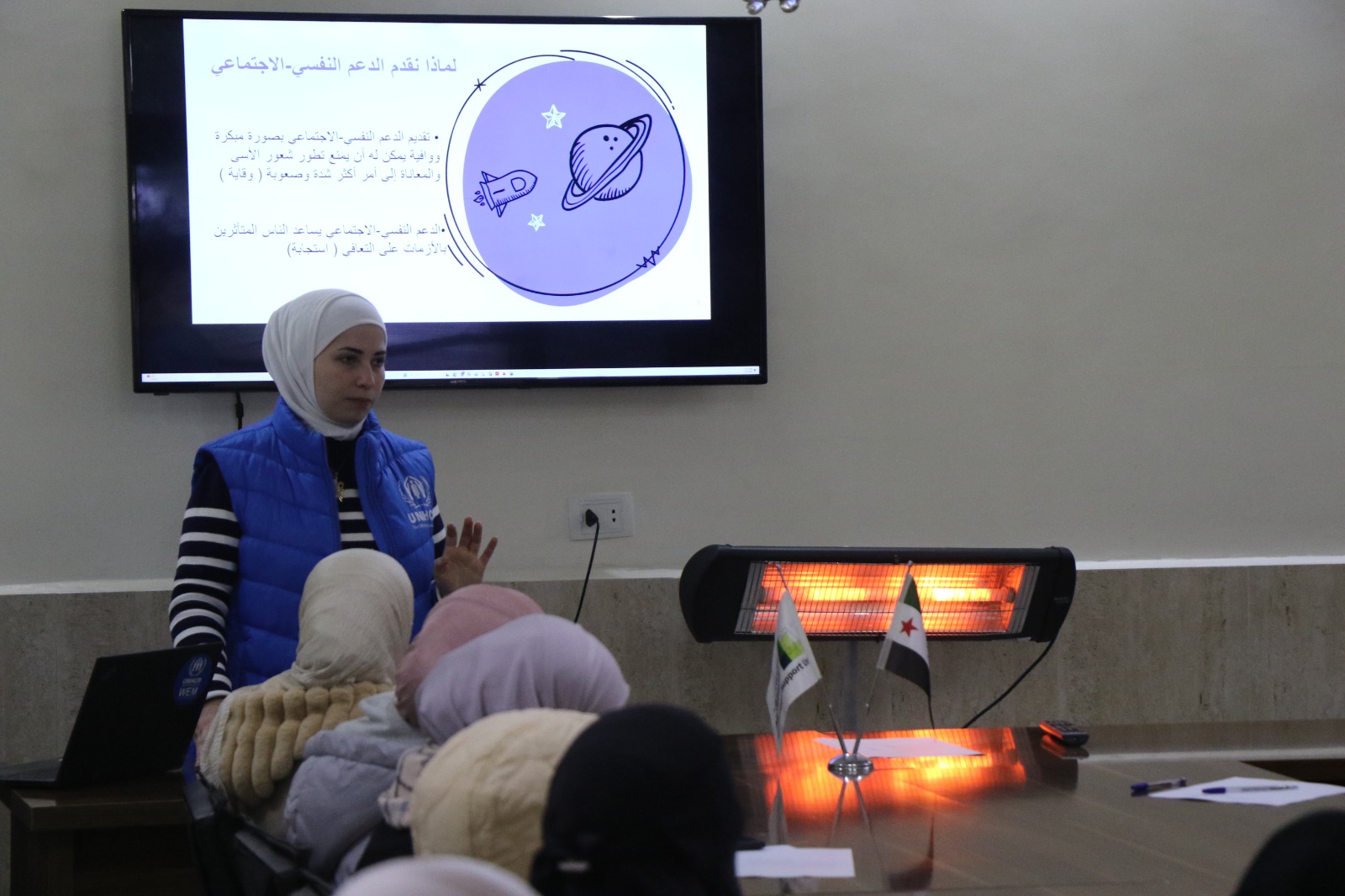
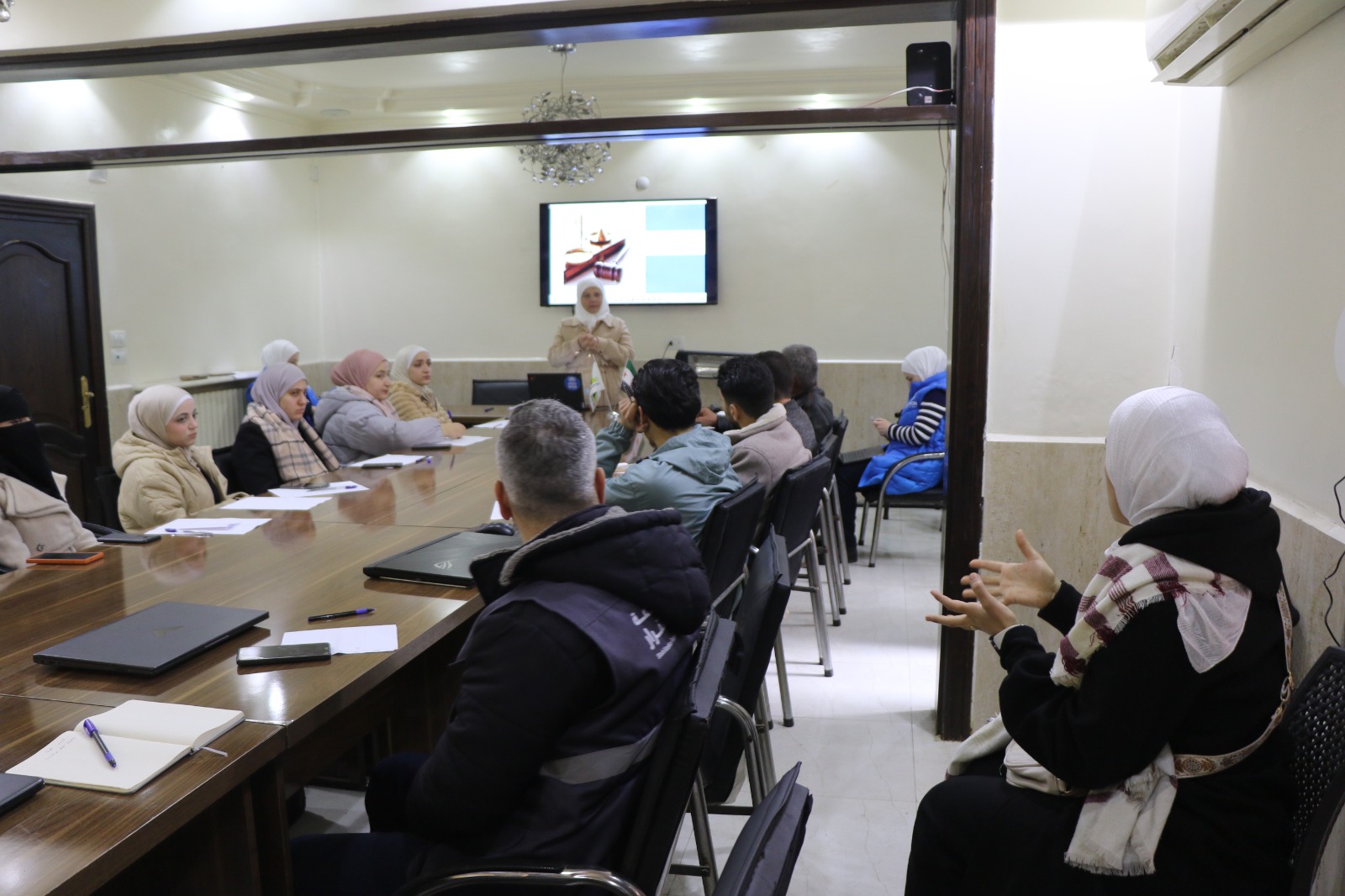
This training comes as part of ongoing efforts to enhance the skills of field teams
and improve the quality of humanitarian response, ensuring it better meets the needs
of communities in a more effective and sustainable manner.
.jpeg)
A Step Toward Safe Return: Syrian Families Relocated from Al-Rouj Camp
The Stability Support Unit (SSU), in cooperation with the
United Nations High Commissioner for Refugees (UNHCR),
camp management, and the
Department of Social Affairs and Labor in Al-Hasakah,
contributed to facilitating the relocation of a number of Syrian families
from Al-Rouj Camp in Northeast Syria.
.jpeg)
This effort was carried out as part of ongoing initiatives aimed at supporting
the return of displaced Syrians to their areas of origin and enhancing
opportunities for stability and community recovery.
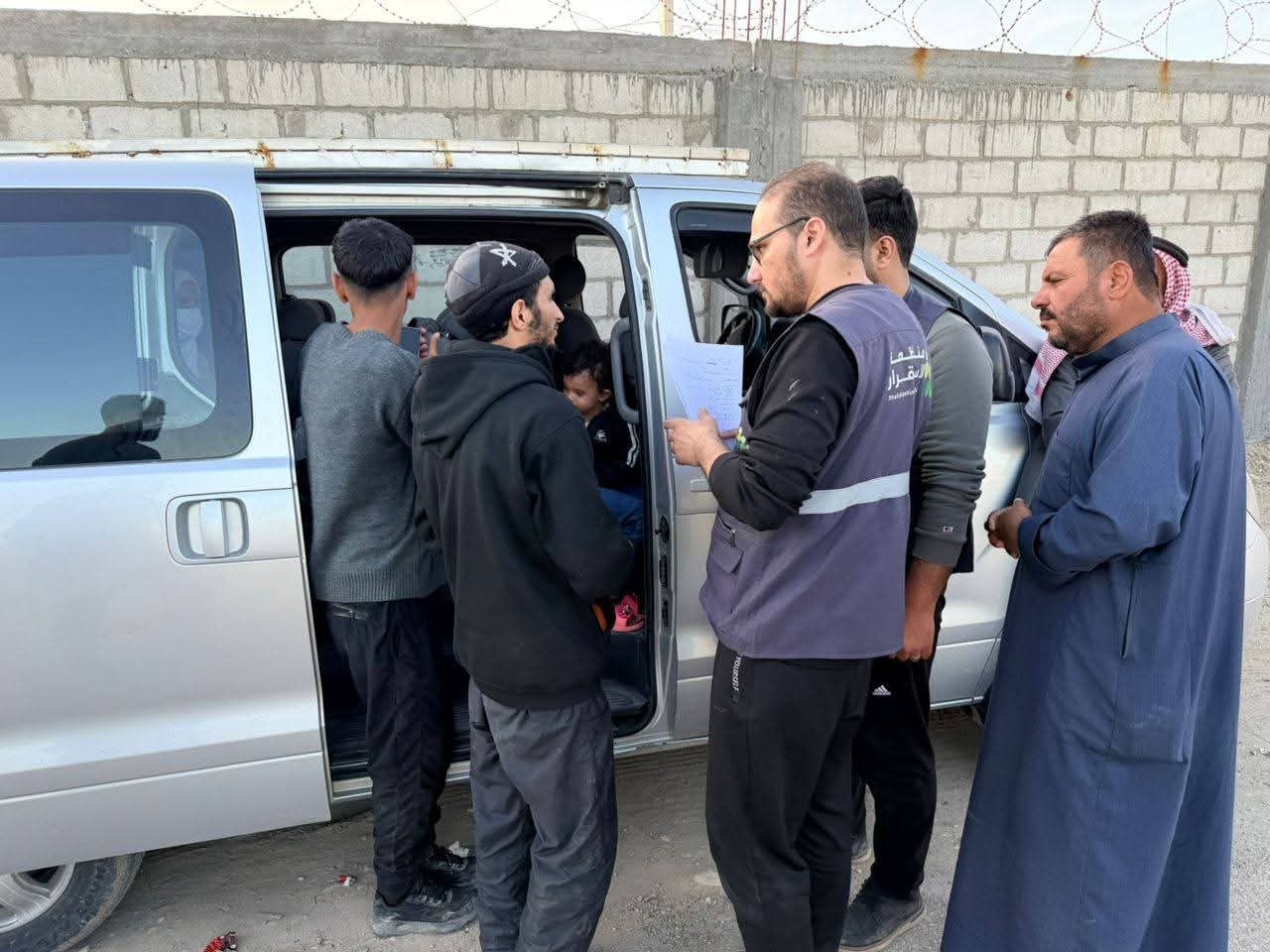
The visit also included a review of the humanitarian conditions the camp,
in addition to assessing the living conditions of its residents and the broader
challenges they continue to face.
.jpeg)
.jpeg)
This step comes as part of a broader series of humanitarian interventions that
seek to support safe and dignified return pathways for Syrians, while also
contributing to the improvement of their living conditions and prospects for
long-term stability.
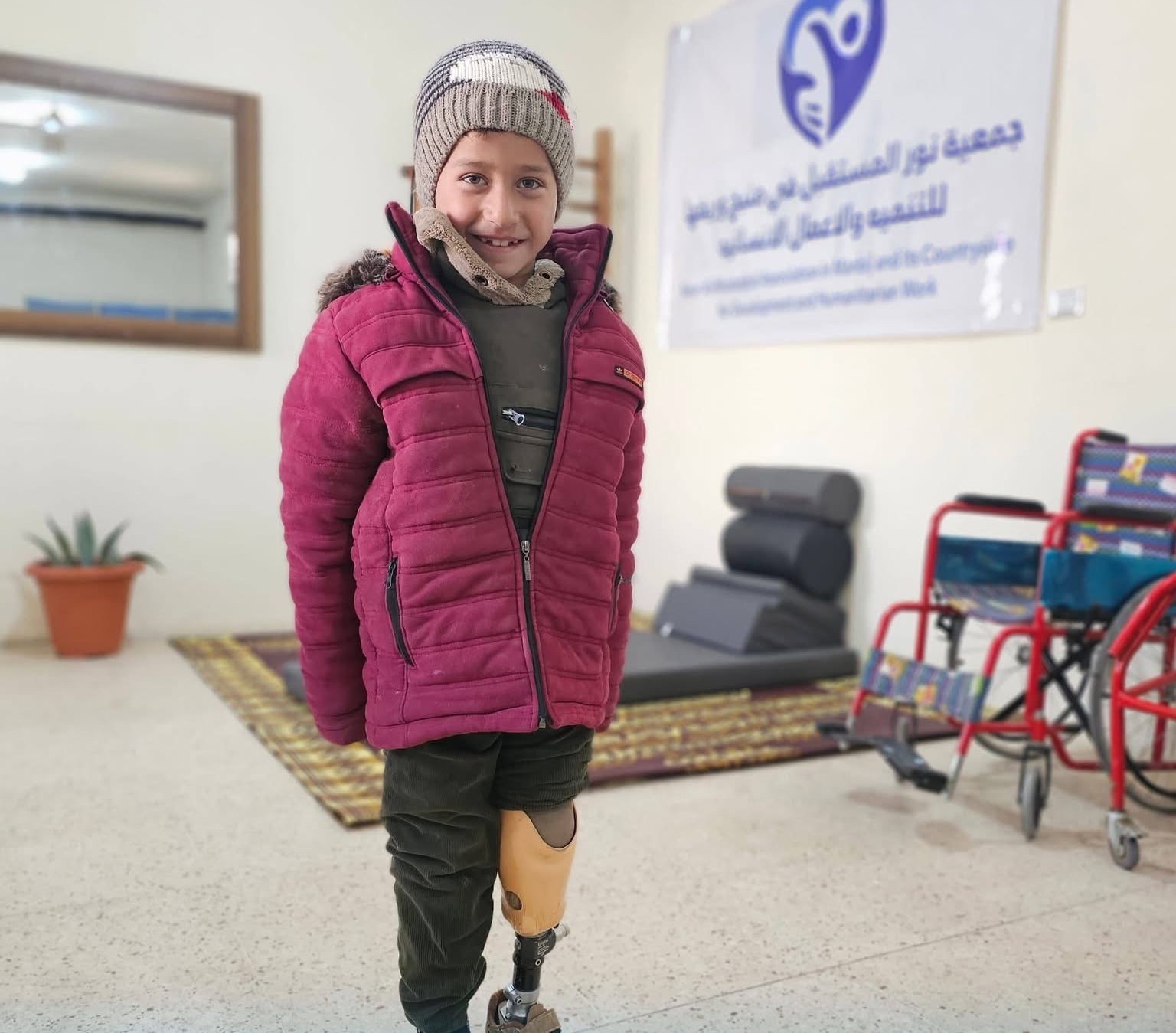
Prosthetic Limb Support Project for Amputees in Manbij
With the support of the Stability Support Unit through the
#Fazaa_Manbij initiative, Noor Al-Mustaqbal Association
in the city of Manbij, in cooperation with
Happy Steps Association, continues implementing a project aimed
at supporting amputees by providing prosthetic limbs to help them
regain mobility and improve their quality of life.
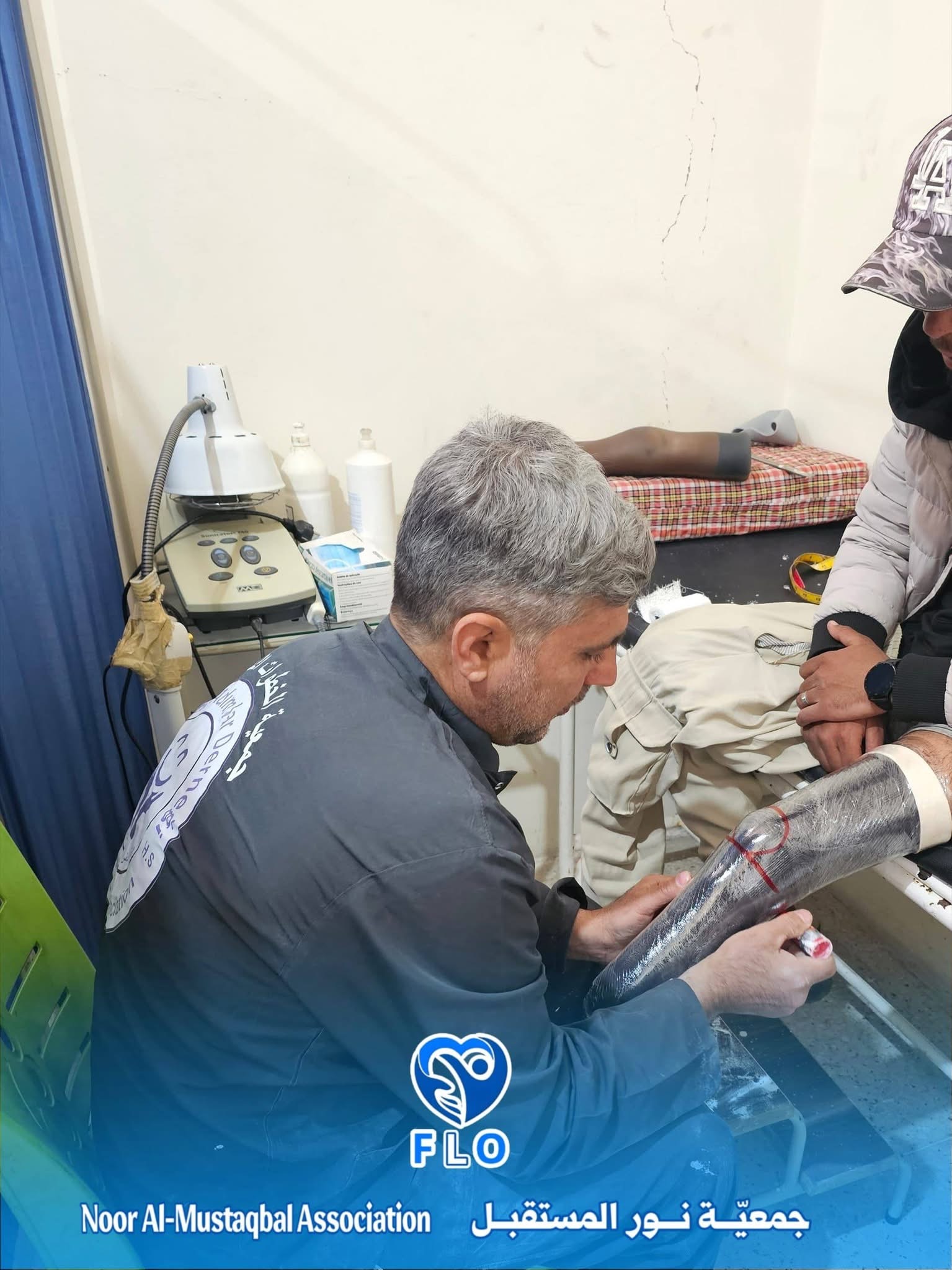
As part of the project activities, measurements were recently taken for
seven amputees in preparation for manufacturing and fitting
lower prosthetic limbs for them in the upcoming phase.
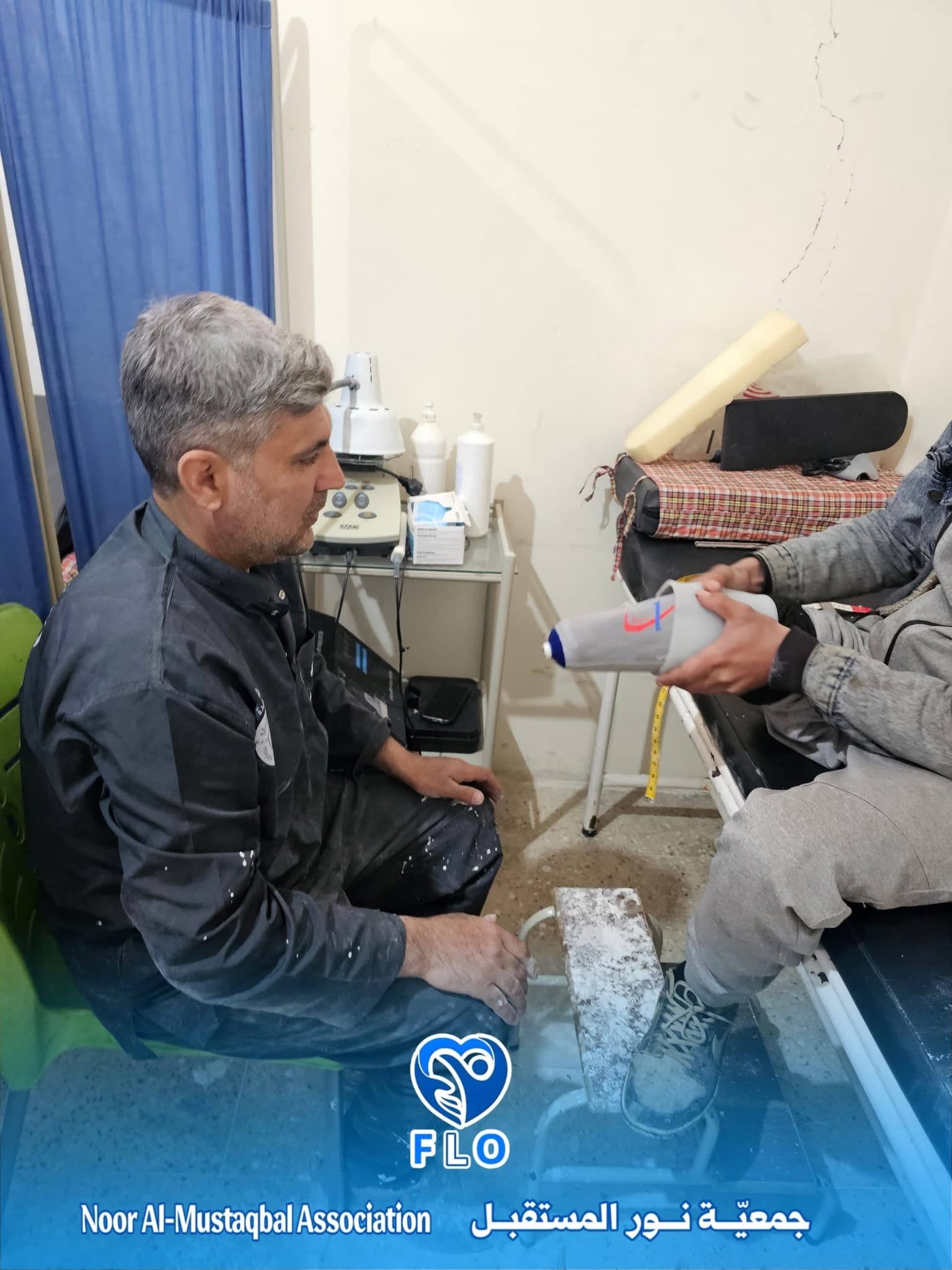
As a result, the total number of beneficiaries supported by the project has now
exceeded 60 individuals since its launch, reflecting the ongoing
efforts to improve the living conditions of amputees and enable them to regain
independence and reintegrate into society.
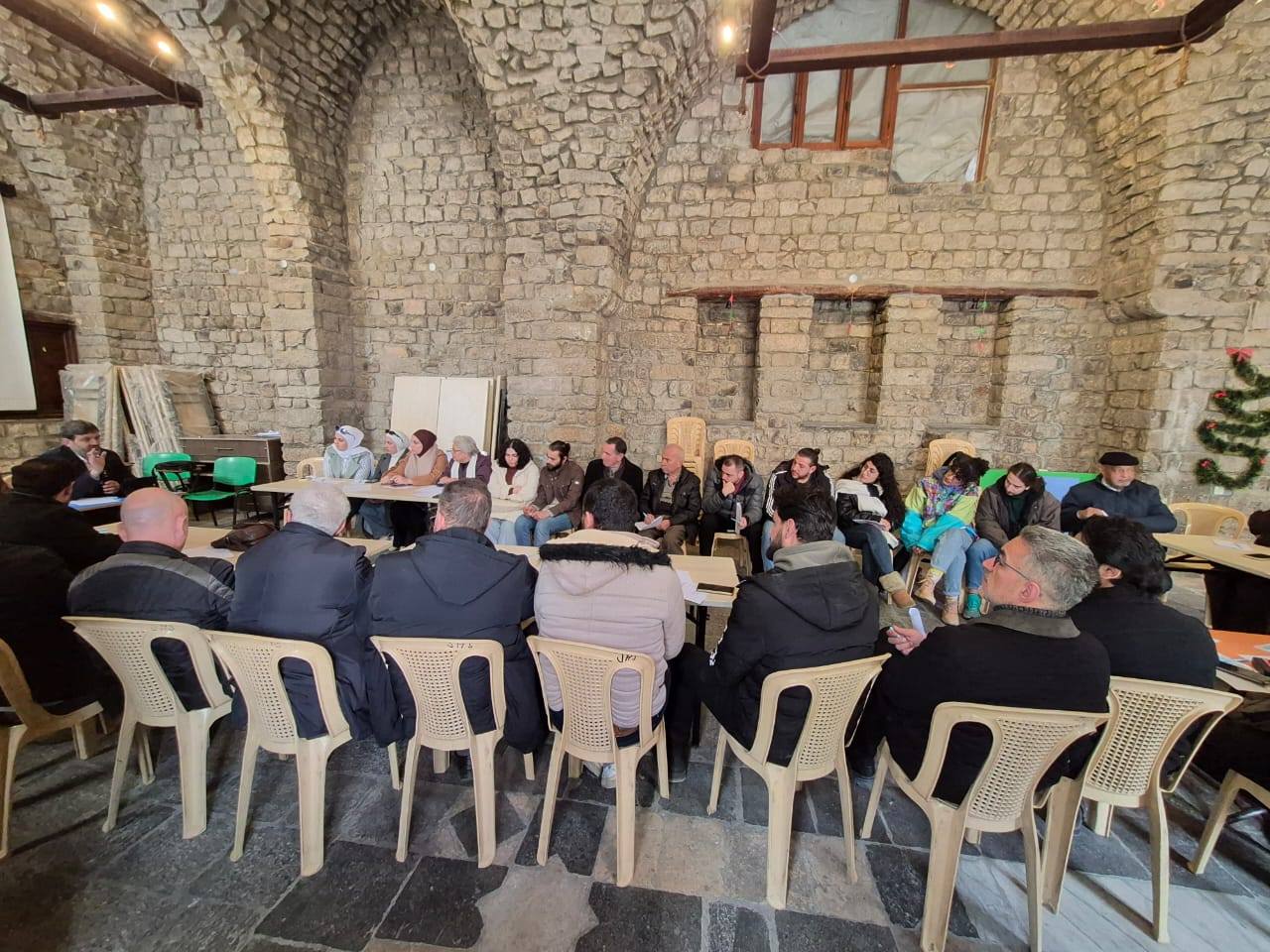
Community Dialogue Session in Homs Discusses the Social Contract
The Stabilization Support Unit (SSU) organized a community dialogue session
in the city of Homs in cooperation with
Yalla Syria Foundation and the Harmony Project Forum,
titled “The Social Contract.”
The session was held as part of efforts to enhance spaces for community dialogue
around shared national issues.
The session focused on discussing the concept of the social contract as one of the
key foundations that regulate the relationship between the state and society.
Participants explored the nature of this contract and its various parties, in
addition to examining the mutual rights and responsibilities between them, and
the role this relationship plays in strengthening stability and community
security in Syria.
The session also provided an interactive space for exchanging perspectives and
experiences among participants from diverse social backgrounds, contributing to
a deeper understanding of shared issues and opening the door for constructive
dialogue on ways to strengthen social cohesion during the current phase.
This session comes as part of the activities of the project
“Enhancing National Participation and Building Trust – Jusoor,”
which aims to expand community participation and strengthen trust among
different components of society through dialogue, consultation, and community
capacity building.
The project is funded by the European Union,
Germany, and Denmark, as part of the
Peace in Syria Initiative implemented by the
German Agency for International Cooperation (GIZ).
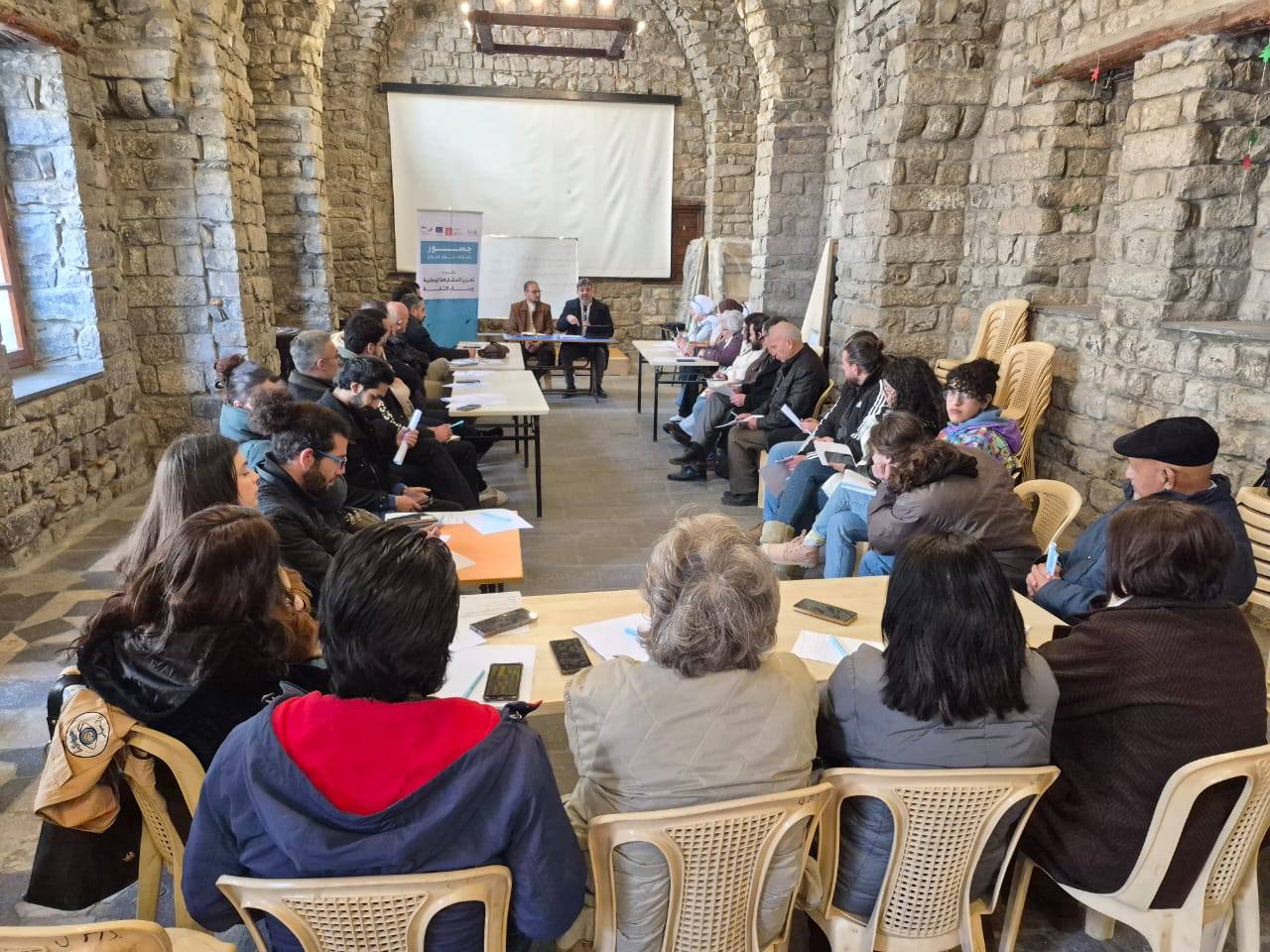
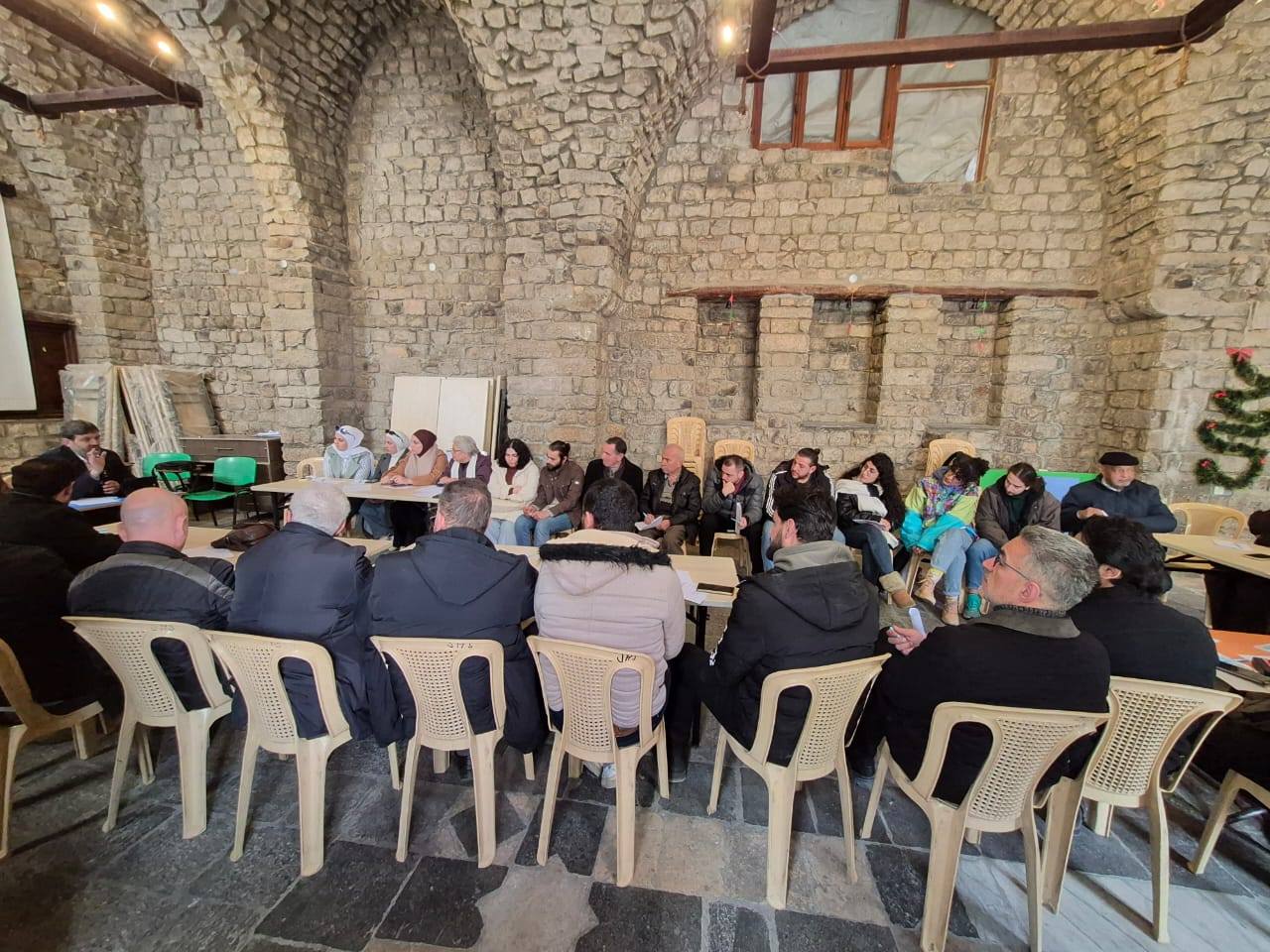
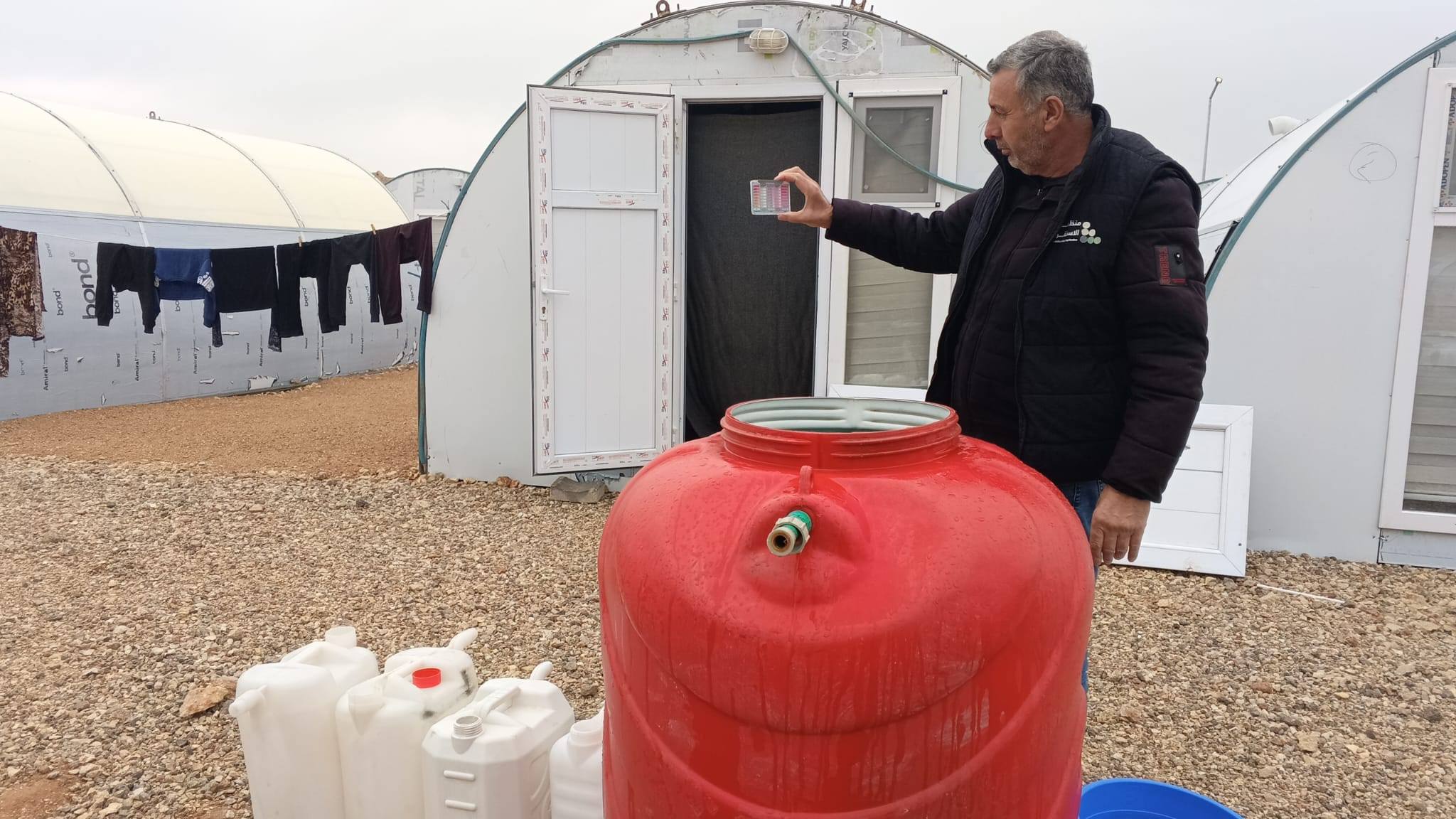
Ongoing Humanitarian Response to Support Families in Aq Burhan Camp in Akhtarin
As part of its ongoing emergency response efforts to support families coming from
Al-Hol Camp and currently residing in
#Aq_Burhan_Camp in Akhtarin, and with the support of the
United Nations High Commissioner for Refugees
#UNHCR, the
Stabilization Support Unit (SSU) continues to provide
various forms of assistance to these families on a daily basis.
These humanitarian efforts focus on meeting the essential needs of families living in the camp through:
- Distributing bread to families
- Providing daily iftar meals
- Supplying tanks of clean drinking water
- Operating cleaning tractors for waste removal inside the camp
These efforts aim to ensure a safer and healthier environment for camp residents and
to alleviate the humanitarian challenges faced by families through continuous support
and essential service delivery.
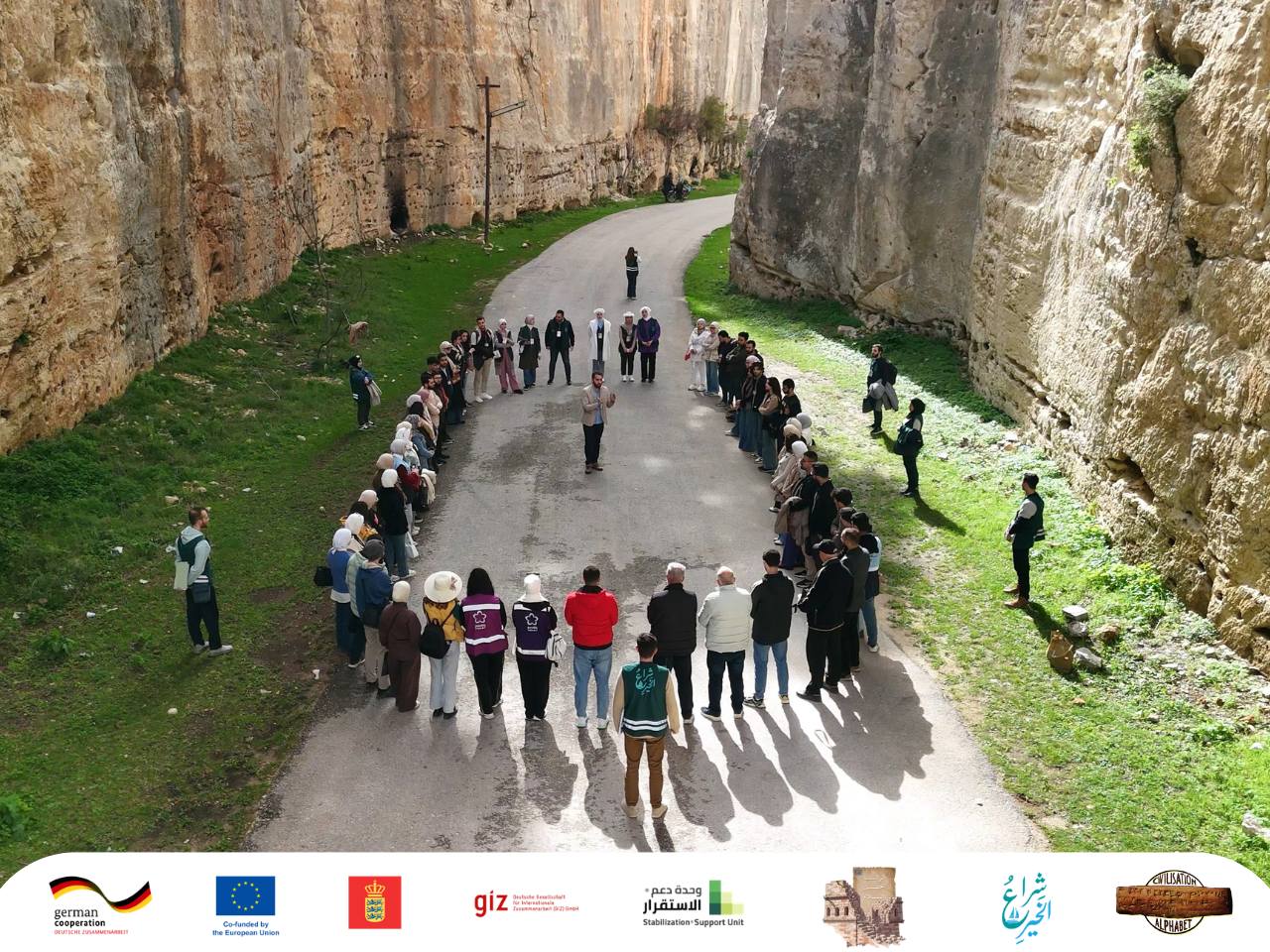
Our Heritage… The Fortress of Peace, Where History Meets the Present
From Citadel of Saladin, where history meets the present,
Sheraa Al-Kheer, in cooperation with the Stability Support Unit, organized the event
“Our Heritage… The Fortress of Peace.”
The initiative brought together a distinguished group of participants in an inclusive
dialogue space characterized by in-depth discussions and constructive meetings.
The event served as an effective platform for exchanging perspectives on history and shared
narratives, contributing to the promotion of belonging and coexistence, and strengthening
the foundations of trust and mutual understanding among diverse community components.
- Encouraging inclusive and constructive dialogue.
- Promoting shared historical narratives.
- Strengthening trust among diverse community groups.
- Reinforcing values of belonging and peaceful coexistence.
The event comes within the framework of the project
“Enhancing National Participation and Building Trust – Bridges,”
funded by the European Union, Germany, and Denmark, under the Peace in Syria initiative
implemented by the German Agency for International Cooperation (GIZ).
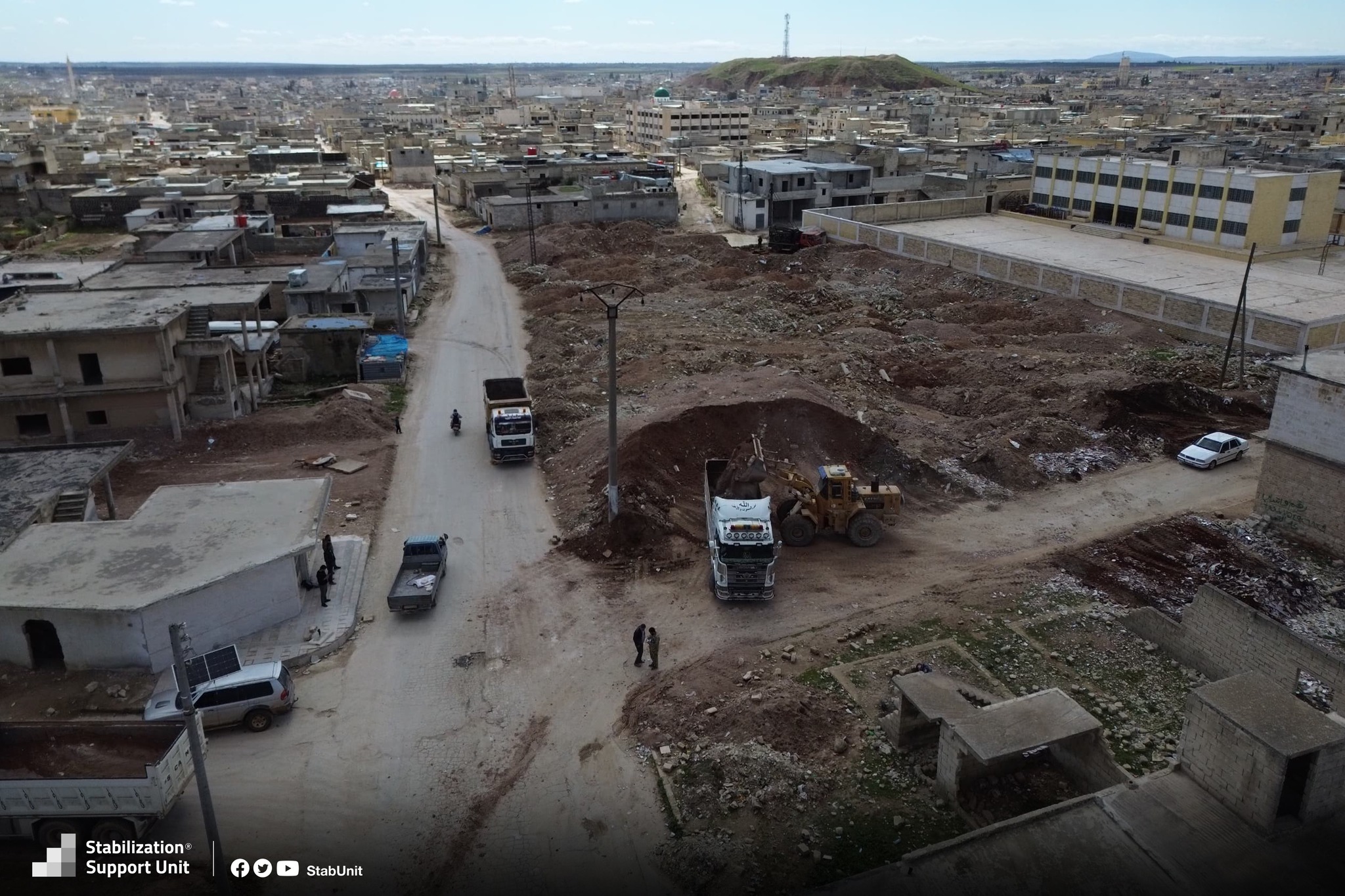
The Stabilization Support Unit (SSU) continues its efforts within the work done in previous phases in terms of rubble removal and debris clearance operations, which are ongoing in the city of Tal Rifaat. This comes as part of a service plan aimed at improving the overall situation and reorganizing the affected neighborhoods.
These efforts are carried out within the scope of the "Aleppo for All" Campaign in cooperation and coordination with Aleppo Governorate, and under the supervision of the Azaz Area Administration.
The activities include removing debris from streets and internal roads and transporting it to designated sites, contributing to facilitating residents’ movement, reducing health and environmental risks, and improving the city’s overall appearance.
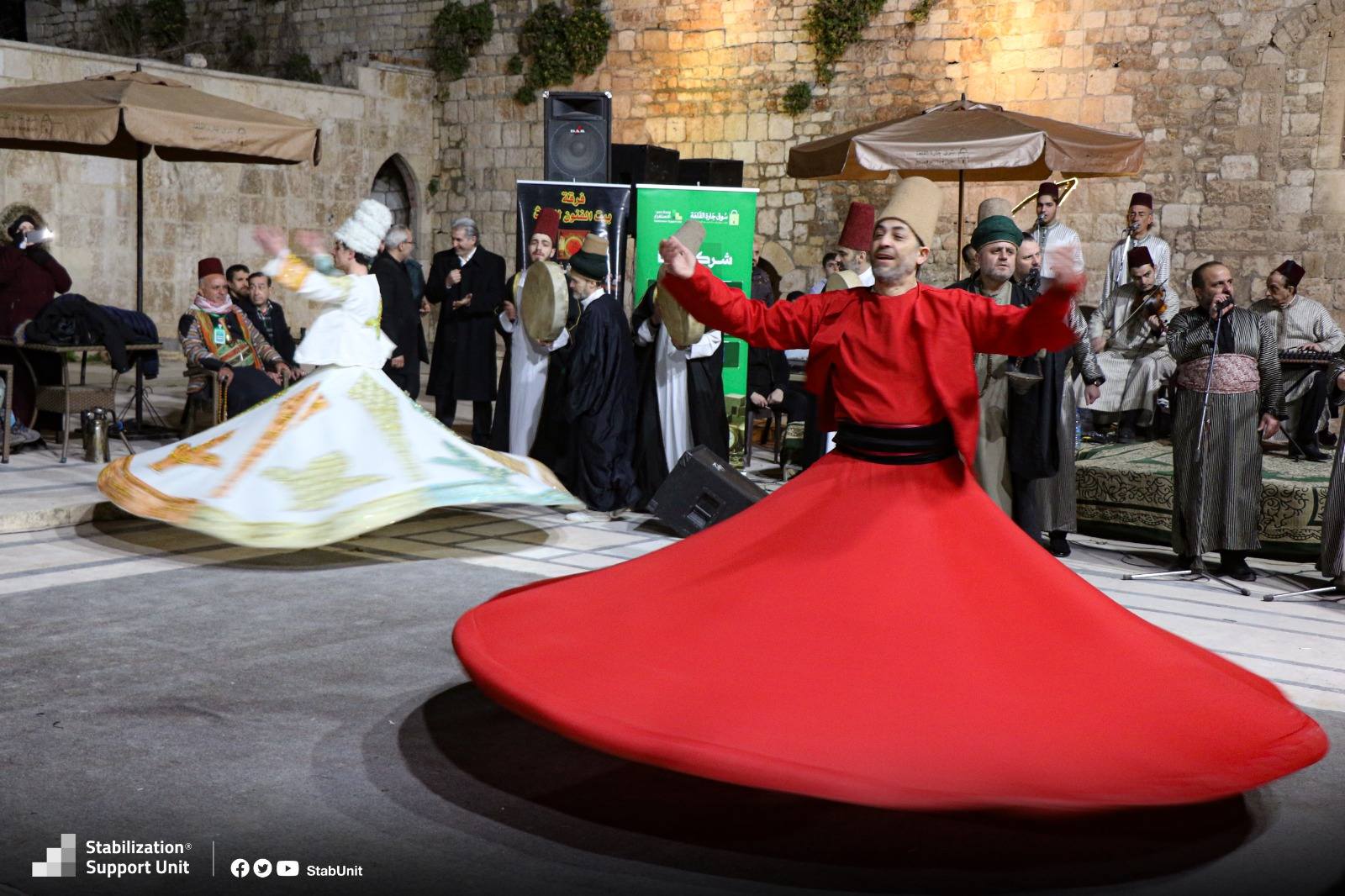
Souq Jaret Al-Qalaa Market Revitalizes Commercial and Cultural Life in Aleppo
Aleppo witnessed yesterday, Saturday, the activities of the second day of the weekly
Souq Jaret Al-Qalaa market at Khan Al-Shouneh in the Old City,
with notable attendance from residents and visitors, alongside continued support
for artisans and small business owners.
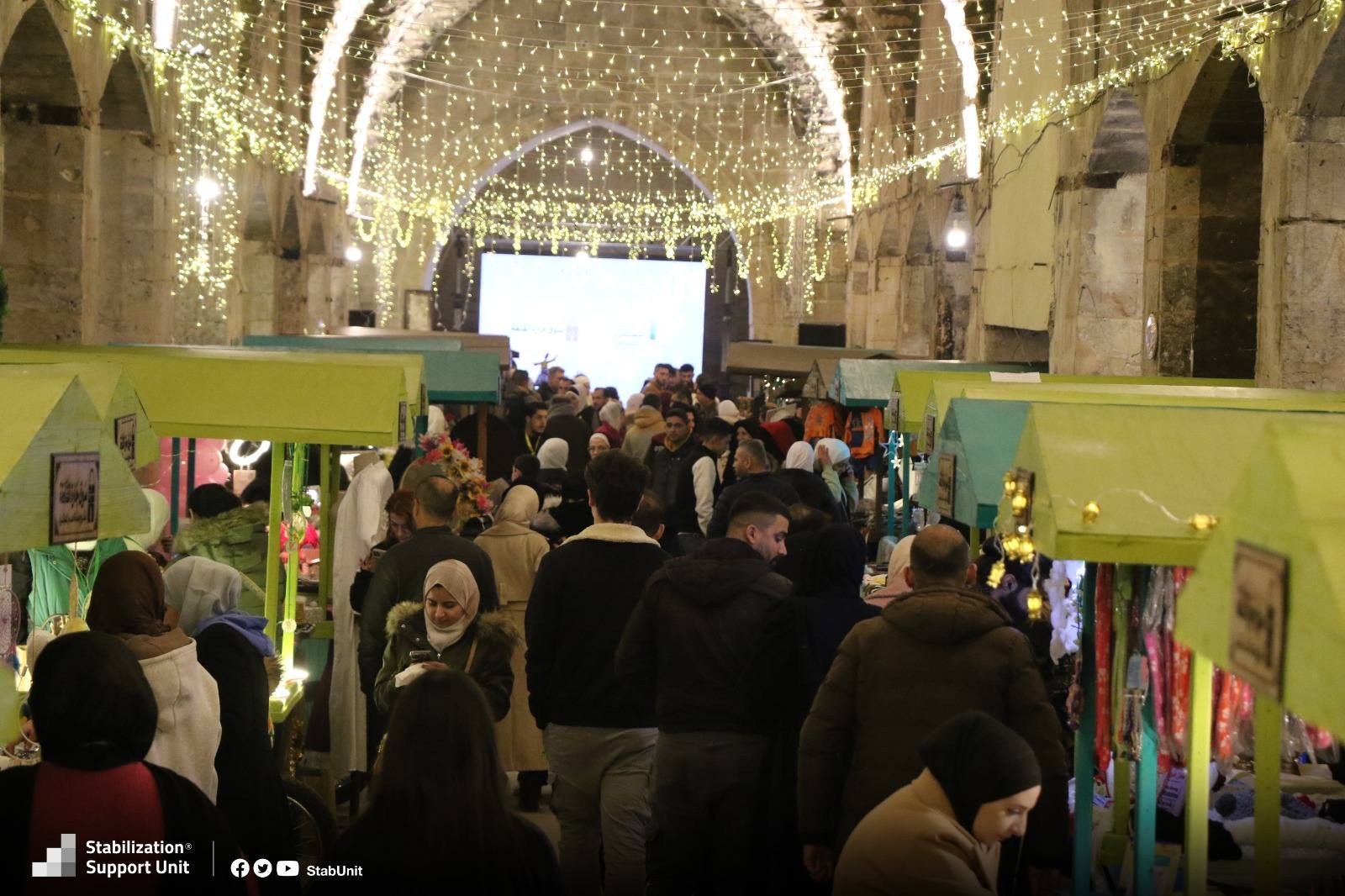
Market Support and Activities
The market, inaugurated by the Aleppo Governorate in cooperation with the
Stabilization Support Unit, comes as part of efforts to revitalize
commercial and craft activity by allocating tables and carts that enable artisans
and small traders to display their products directly.
- Supporting artisans and small business owners.
- Providing dedicated tables and display carts.
- Enhancing direct sales opportunities.
- Stimulating the local economic cycle.
Engagement and Cultural Significance
The second day saw good turnout and positive engagement, reflecting the importance
of initiatives aimed at reviving heritage markets and activating historical sites
with a productive spirit that preserves the authentic character of the area.
- Reviving traditional markets in the Old City.
- Encouraging community participation.
- Preserving the cultural identity of Aleppo.
- Supporting the “Aleppo, Set El Kol” campaign.
Traditional Crafts and Local Identity
The continuation of the market’s activities represents a practical step toward
reinforcing the presence of traditional crafts as an integral part of Aleppo’s
economic and cultural identity, and strengthening the position of the Old City
as a vibrant hub of life and work.
- Reinforcing traditional craftsmanship.
- Preserving Aleppo’s economic heritage.
- Revitalizing historical urban spaces.
- Promoting sustainable local development.
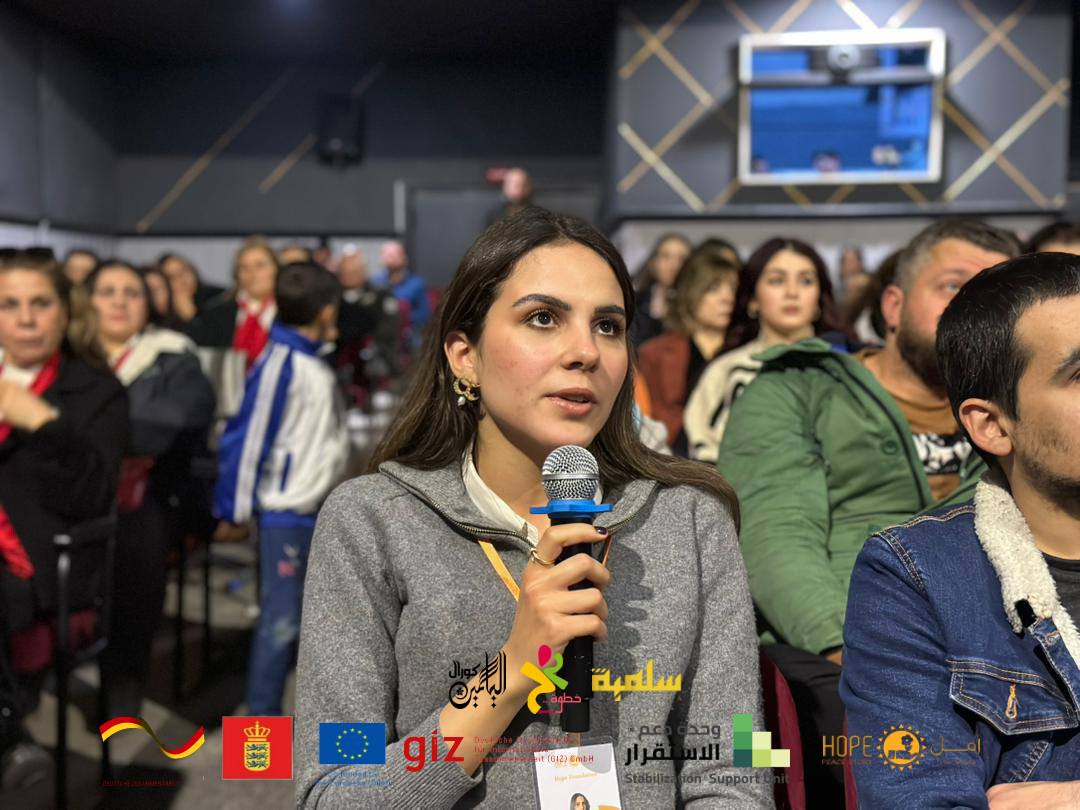
Peaceful Spaces: Dialogue and Peace Event
Amal Foundation – Amal Volunteer Team, in partnership with the
Stabilization Support Unit, organized the “Peaceful Spaces: Dialogue and Peace”
event over two days at Salamiyah Cinema Hall.
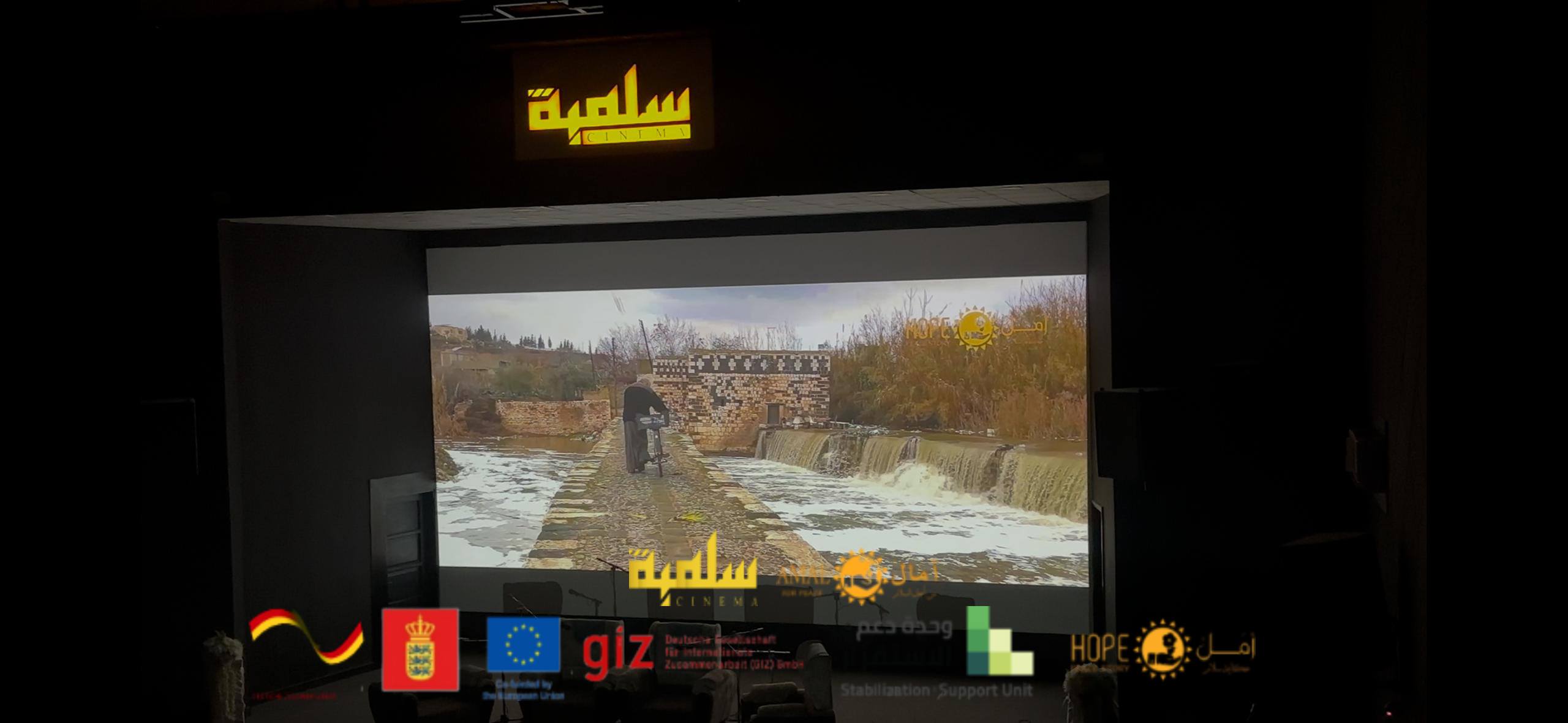
First Day Highlights
The event opened with a performance of Syrian musical heritage presented by
Amaal Band, followed by a visual presentation highlighting
the historical dimension of Hama Governorate and emphasizing the unique character
of Salamiyah as a model of diversity and coexistence.
- Syrian heritage musical performance
- Historical overview of Hama Governorate
- Celebration of Salamiyah’s diversity and coexistence
- Dialogue session: “Salamiyah Tells the Story”
- Participation of religious leaders and community representatives
The day concluded with a dialogue session that embodied civil peace values
and affirmed the strength of the social fabric.
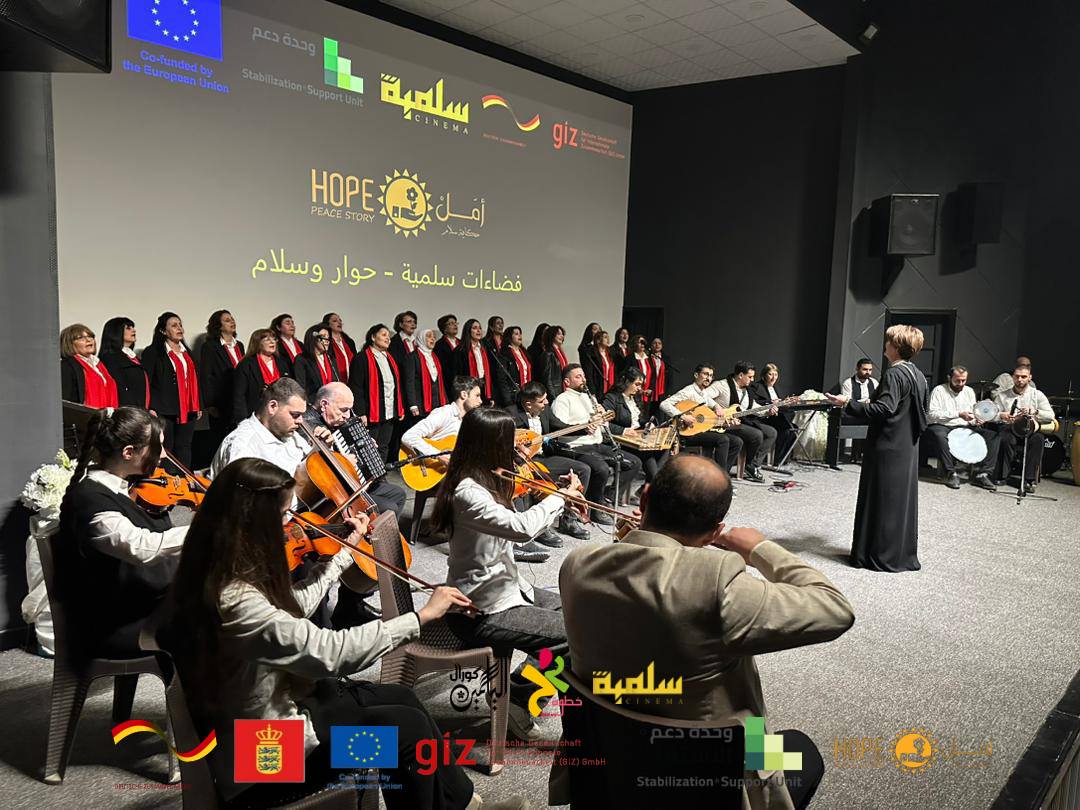
Second Day Highlights
The second day featured an artistic performance by Yasmeen Choir,
presenting songs expressing peace and freedom values.
- Musical performance promoting peace and freedom
- Theatrical performances by Khotwa Foundation:
- “Keys”
- “The Court of the Wise”
- “The Archive”
- Topics addressed:
- Local governance and decentralization
- Rule of law and justice
- Transparency and accountability
- Interactive discussions with the audience
The event concluded with open discussions that reinforced active citizenship
and strengthened community cohesion.
Project Background
This event is part of the “Enhancing National Participation and Building Trust – Bridges” project,
funded by the
European Union,
Germany, and
Denmark,
and implemented under the Peace in Syria Initiative through the
German Agency for International Cooperation (GIZ).
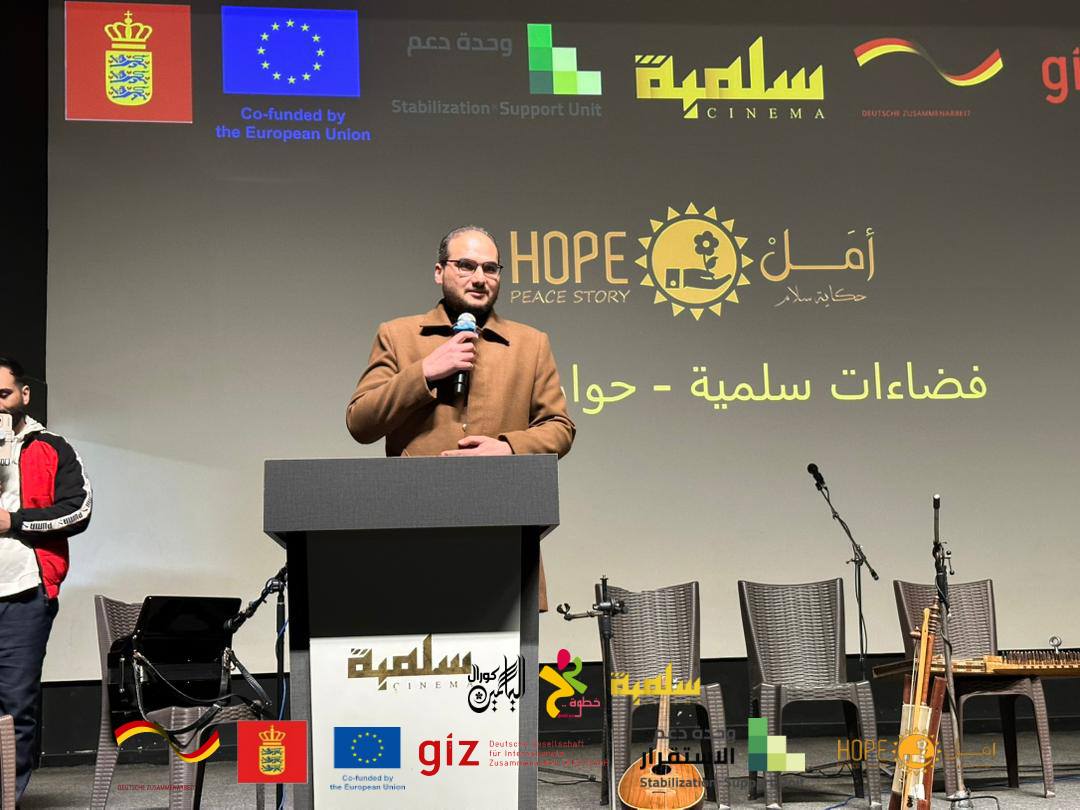
.jpg)
Urgent Tender Announcement – Returnees Support Project
Stability Foundation announces Tender No. (SNFI-SSU 011) for:
“Supply of Food Baskets for Families Residing in Aq Burhan Camp.”
The Stability Foundation in Syria invites qualified suppliers to submit bids for providing food baskets to families residing in Aq Burhan Camp. The purpose of this tender announcement is to ensure a fair evaluation process for all bidders and to provide clear evaluation criteria that will be used in assessing submitted proposals.
---
Objective and Purpose of the Tender
The objective of this tender is to supply food baskets to families residing in Aq Burhan Camp through contracting a supplier to provide the specified materials according to the required specifications.
---
Tender Conditions
Applicants must pay an initial bid bond amounting to 116,000 Syrian Pounds (new currency).
The successful bidder shall complete the bid bond so that it becomes 10% of the total contract value. The amount must be deposited in Syrian Pounds (new currency) into the organization’s bank account as a final guarantee upon contract signing. The final guarantee will be returned to the contractor after completing all project activities.
Implementation period: Five (5) months.
The bidder shall remain bound by their offer for one month from the date of contract signing.
---
Required Supporting Documents
All required documents must be submitted in three sealed envelopes as follows:
First Envelope: Technical Proposal
The envelope must be sealed, stamped, and labeled with the tender name, number, date, bidder’s name, address, and phone number. It must include:
1. Technical proposal file (General Terms Booklet – Technical Specifications – Supplier Information – Code of Conduct), according to the template provided by the Administrative Office / Procurement Department, signed and stamped by the bidder.
2. Copy of personal ID or passport of the supplier.
3. Valid company registration or commercial registry in the supplier’s name.
4. Valid non-conviction certificate.
5. Receipt or confirmation from the organization’s finance office proving payment of the initial bid bond.
6. Files of previous or similar projects and recommendation letters (if available).
7. All required documents, permits, and forms provided by the organization’s administrative office, duly signed and stamped.
Second Envelope: Financial Proposal
The envelope must be sealed, stamped, and labeled with the tender name, date, bidder’s name, company name, address, and phone number. It must include:
1. Financial offer submitted using the official template provided by the Procurement Department, signed and stamped by the bidder.
Third Envelope
A sealed and stamped envelope labeled with the tender name, date, bidder’s name, company name, address, and phone number, containing:
Both the Technical and Financial envelopes, each separately sealed.
---
Obtaining Tender Documents
Tender documents can be obtained from the Administrative Affairs Office – Procurement Department at Stability Support Organization or via the following link:
https://drive.google.com/drive/folders/1gQS4cE2QI-CGKToErhnNCm7LeRMBdBHs?usp=drive_link
---
Submission Period
Bids shall be submitted daily from 12:00 PM to 3:00 PM, starting Thursday, 26.02.2026, and ending at 3:00 PM on Thursday, 12.03.2026.
---
Submission Location
Bids must be submitted to the Procurement Department at the organization’s office located at:
Aleppo – Al-Furqan – Express Street – before Police Roundabout – next to One Dollar Shop.
---
Bid Opening
Bid opening will take place and only the winning bidder will be notified on Sunday, 15.03.2026 at 12:00 PM, in the presence of bidders or their representatives, supervised by the tender opening committee appointed by the organization’s management and attended by an external representative (governmental or official figure).
---
Note
For any questions or inquiries, please contact the organization’s Administrative Affairs Department or email:
finance@stabcom.org
within two days from the date of this announcement.
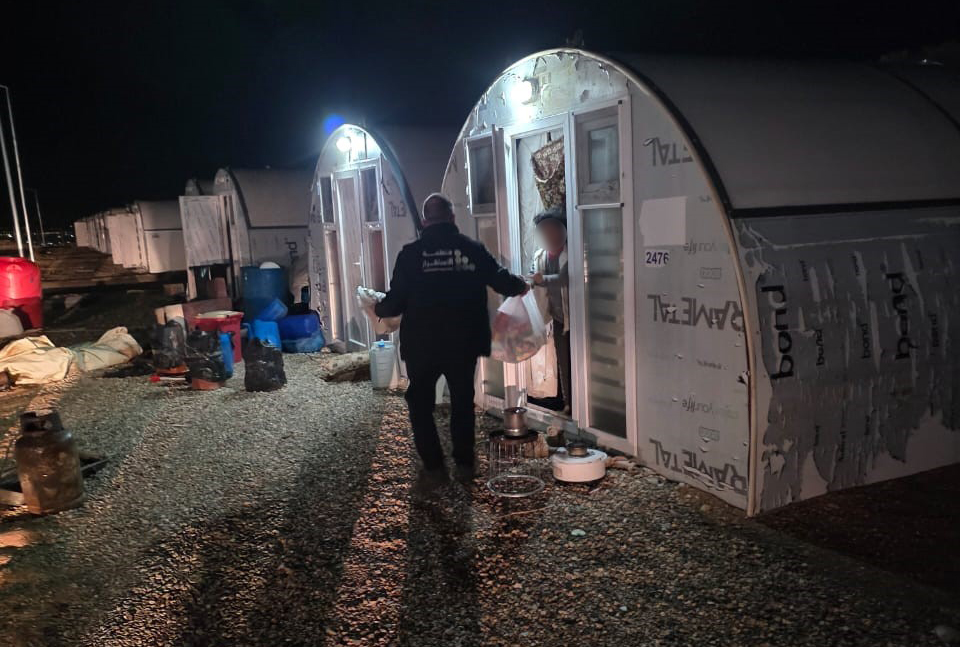
Stabilization Support for Families Arriving at Aq Burhan Camp
The Stabilization Support Unit (SSU), in cooperation with UNHCR, continues its emergency response efforts to support families who have departed from Al-Hol Camp and arrived at Aq Burhan Camp in Akhtarin, rural Aleppo.
SSU teams are working daily to ensure that families receive essential humanitarian assistance during their initial stabilization period.
- Daily food baskets for families
- Iftar and suhoor meals
- Provision of safe drinking water
These efforts aim to meet the families’ essential needs and alleviate humanitarian burdens, ensuring a smoother transition and improved living conditions upon arrival.
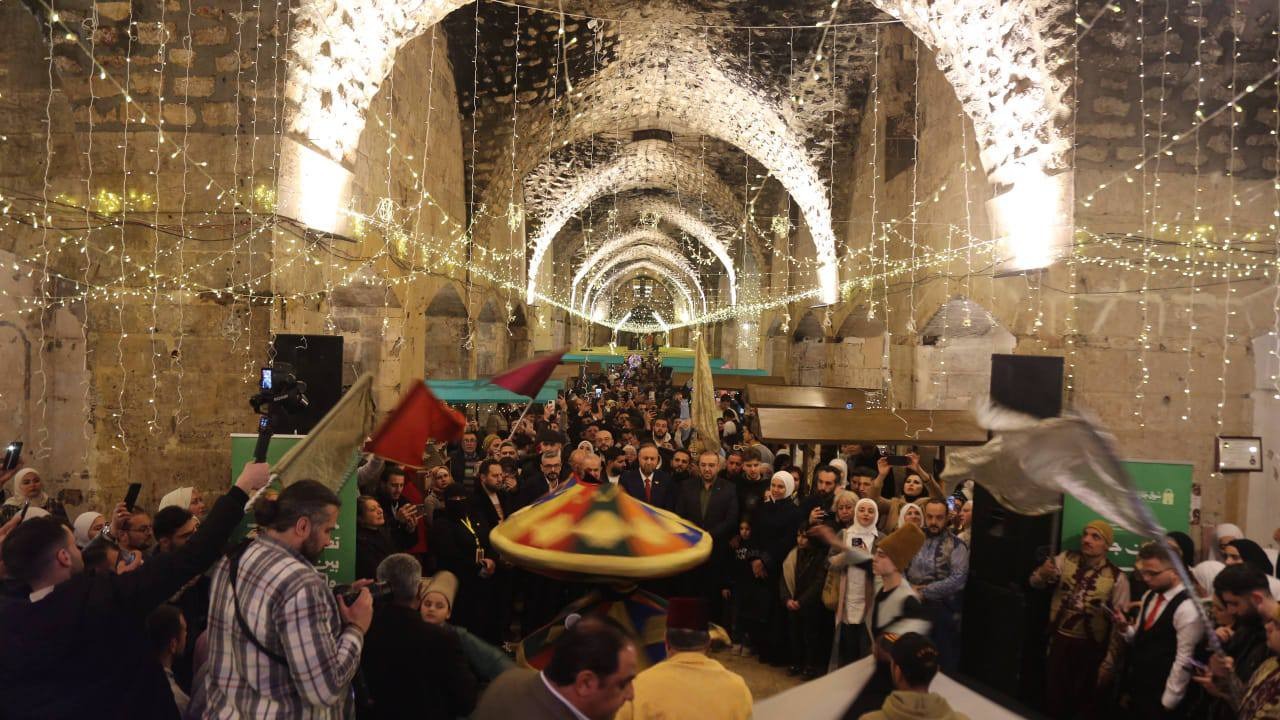
Opening of the Jarat Al-Qalaa Weekly Market in Khan Al-Shouna, Aleppo
The Governorate of Aleppo, in cooperation with the Stabilization Support Unit, opened the "Jarat Al-Qalaa Weekly Market" in Khan Al-Shouna in the old city, in support of small businesses and revitalizing trade and craftsmanship.
The market includes tables and carts dedicated to artisans and small traders, allowing them to display and sell their products directly to the local people and visitors, enhancing sources of income and contributing to stimulating the local economy.
This project is part of a plan to revive traditional markets and activate historical sites through hosting productive activities that preserve the authentic character of the region and support craftsmen within the "Homs is the mother of all" campaign projects.
The opening of the market represents a practical step to revitalize the old city and solidify the presence of traditional crafts as part of Aleppo's economic and cultural identity.
#Jarat_AlQalaa_Market #Homs_Mother_of_All #Stabilization_Support_Unit
Video of the Market Opening
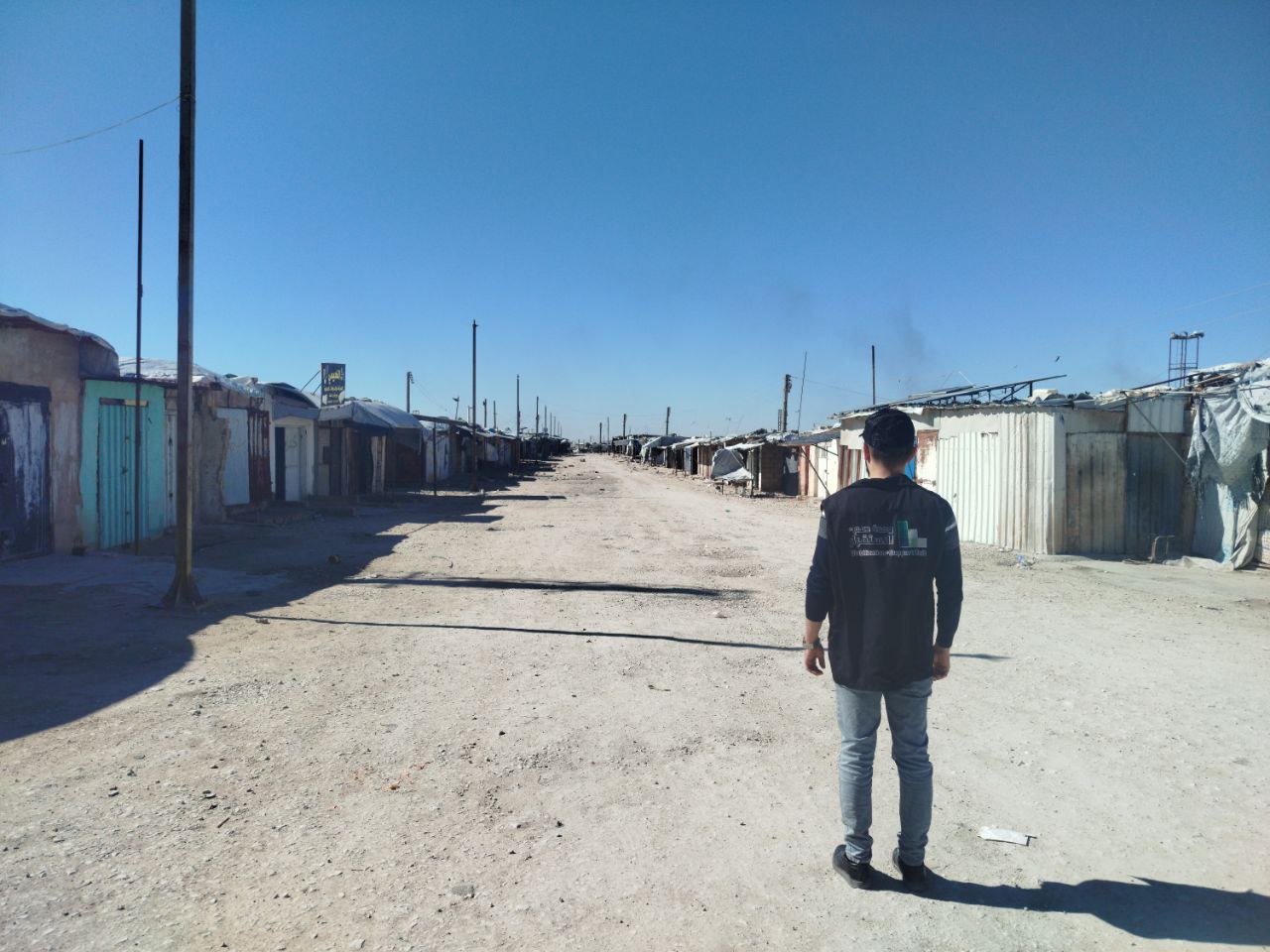
Final Days of #AlHol_Camp
Supported by the UNHCR, the Stabilization Support Unit (SSU) continues the transfer and return operations of families from Al-Hol Camp to their homes and areas of origin. These efforts are carried out in coordination with the camp administration.
On Saturday, 21 February, the final convoy departed from Al-Hol Camp, marking the official closure of the camp.
Convoy Details:
- 17 families, including women and children
- Approximately 66 individuals
- Some urgent medical cases
- Return to Aleppo, Damascus, and Deir ez-Zor governorates
Convoy Components:
- One bus designated for transporting families
- 15 trucks for luggage
- Two ambulances equipped with medical teams
This step comes as part of reintegration support efforts, providing health, livelihood, and legal assistance to enhance family stability and help them resume their lives in a safe and dignified manner.
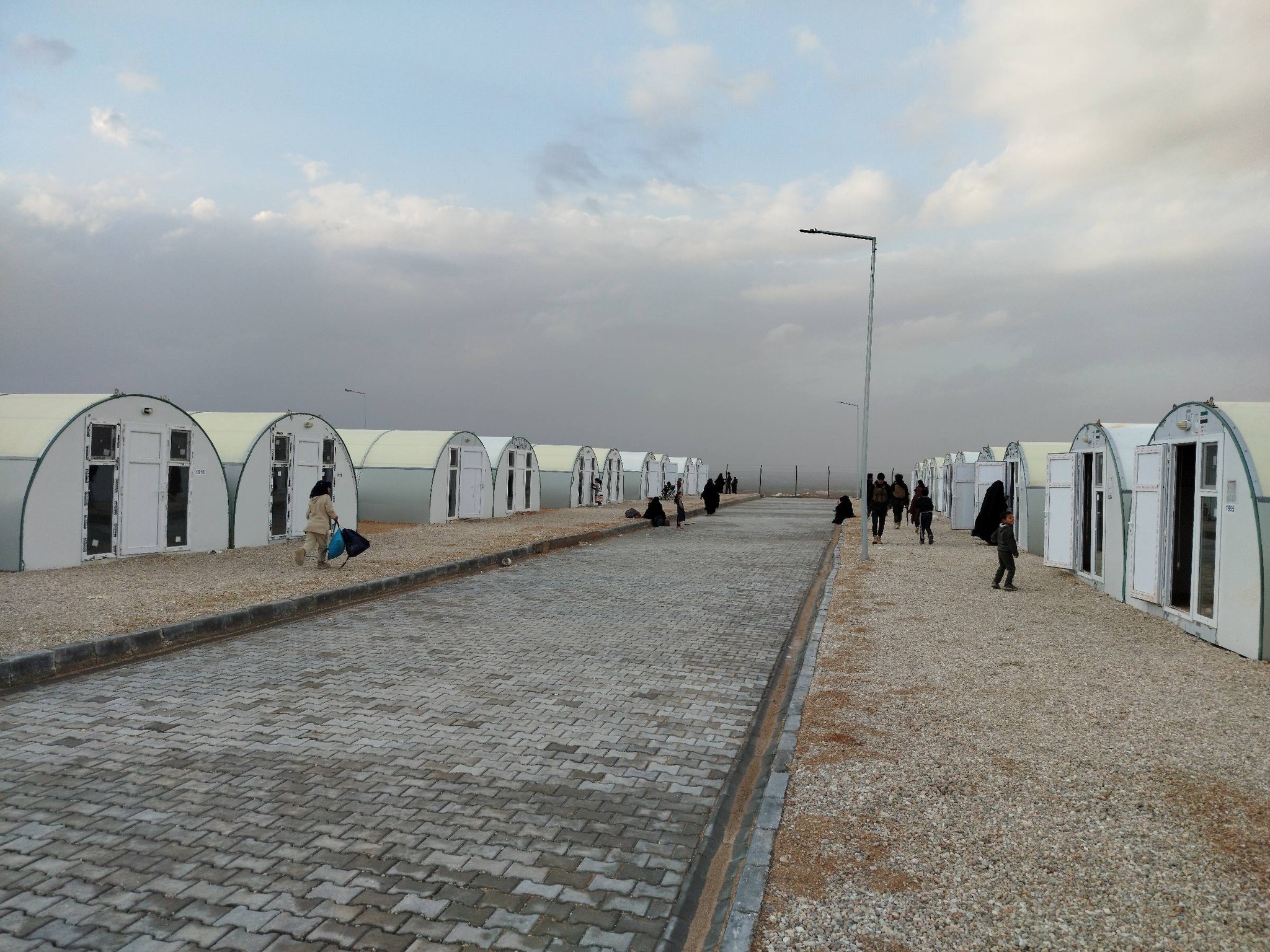
Reception of #AlHol_Camp Families at Aq Burhan Camp in Akhtarin Countryside
The Stability Support Unit contributed to receiving families from #AlHol_Camp who arrived at Aq Burhan Camp in the countryside of Akhtarin, in cooperation with the Directorate of Social Affairs and Labor in Aleppo and the United Nations High Commissioner for Refugees (UNHCR).
In an urgent response to the families’ primary needs, the Stability Support Unit distributed food baskets, bread, and drinking water. In addition, in cooperation with the Syrian Civil Defense, water tankers were filled to supply the camp’s main water reservoir.
Convoy Details:
- 84 families
- Approximately 320 individuals
- 6 buses
- 23 trucks designated for transporting belongings
Aq Burhan Camp is considered a well-equipped camp, featuring prefabricated housing units accommodating nearly 1,500 families, in addition to schools, a mosque, playgrounds for children, and a health clinic.
These efforts come within the broader framework of integrating families leaving Al-Hol Camp and supporting their stability in a safe and prepared environment.
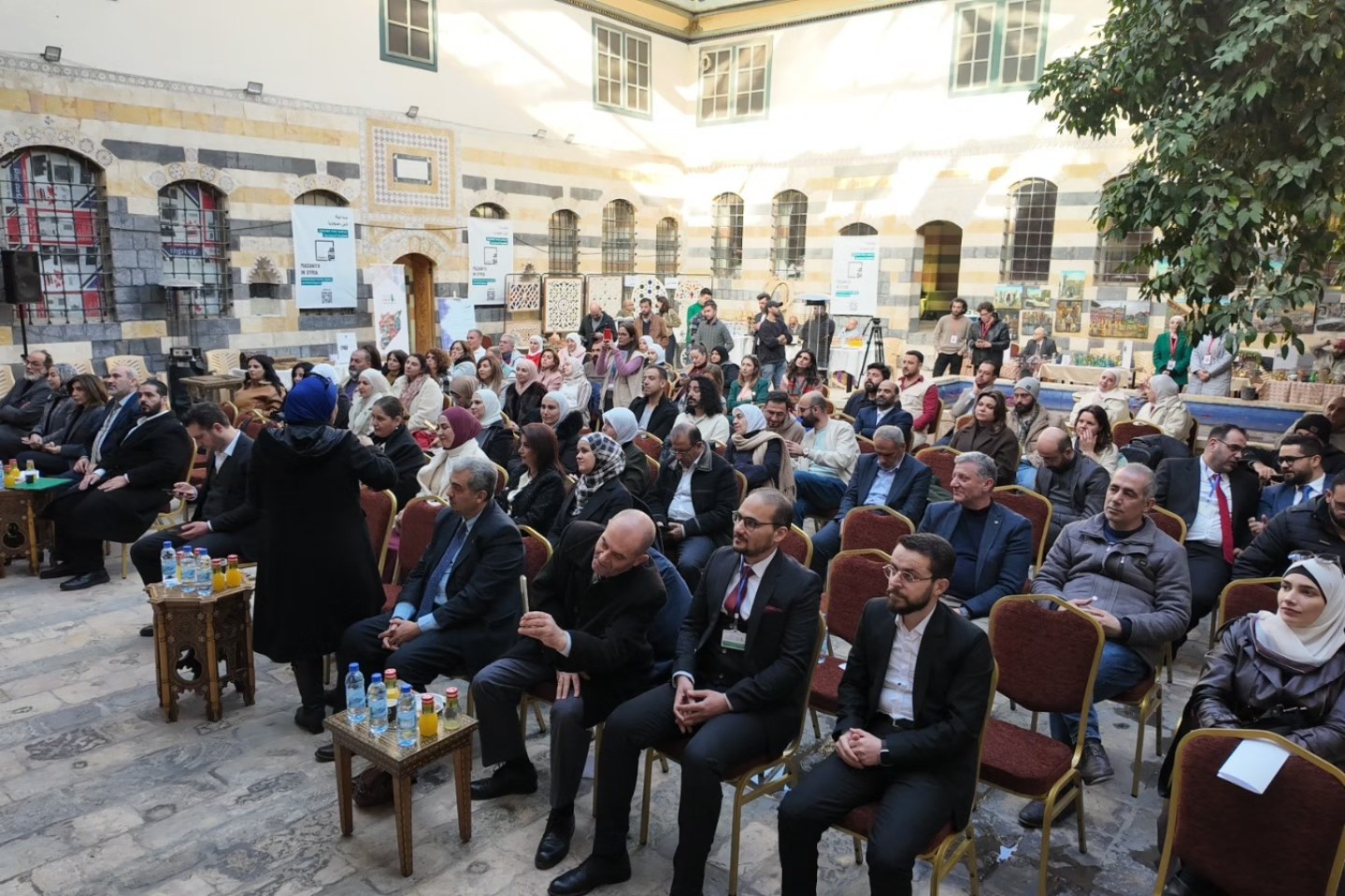
#Syrian_Corners Event in Damascus
The Stability Support Unit, in cooperation with Ta’atef Association for Development, Nonviolent Communication and Charity Work,
and in coordination with the Ministry of Social Affairs and Labor in Damascus, organized an event titled #Syrian_Corners.
Attendees included:
The Ministry of Social Affairs and Labor, the Directorate of Social Affairs in Damascus, the Ministry of Sports and Youth,
members of the Syrian Parliament, candidates from the electoral body, women active in the political field,
representatives from Damascus Governorate, and members of the Ismaili Council.
The first day of #Syrian_Corners presented the vision of the event and its role in highlighting the richness
and diversity of Syrian cultures. Several speakers emphasized the importance of creating inclusive spaces that reflect
the richness of Syrian society in all its components.
The opening day then transformed into a vibrant space filled with sounds, colors, and flavors.
A choir performed selections from Syrian musical heritage, traditional crafts were showcased,
reconnecting attendees with the roots of Syrian craftsmanship, and guests enjoyed dishes representing
flavors from various cities and villages.
The event also included a visual exhibition portraying Syria through its creators — artists, writers,
directors, and poets.
Numerous media outlets covered the event, documenting the activities and participation,
in a comprehensive scene celebrating diversity and bringing together all corners of Syria
into one national mosaic.
This event is part of the project “Enhancing National Participation and Building Trust – Bridges”,
funded by the European Union, Germany, and Denmark, within the framework of the Peace Initiative in Syria
implemented by the German Agency for International Cooperation (GIZ).
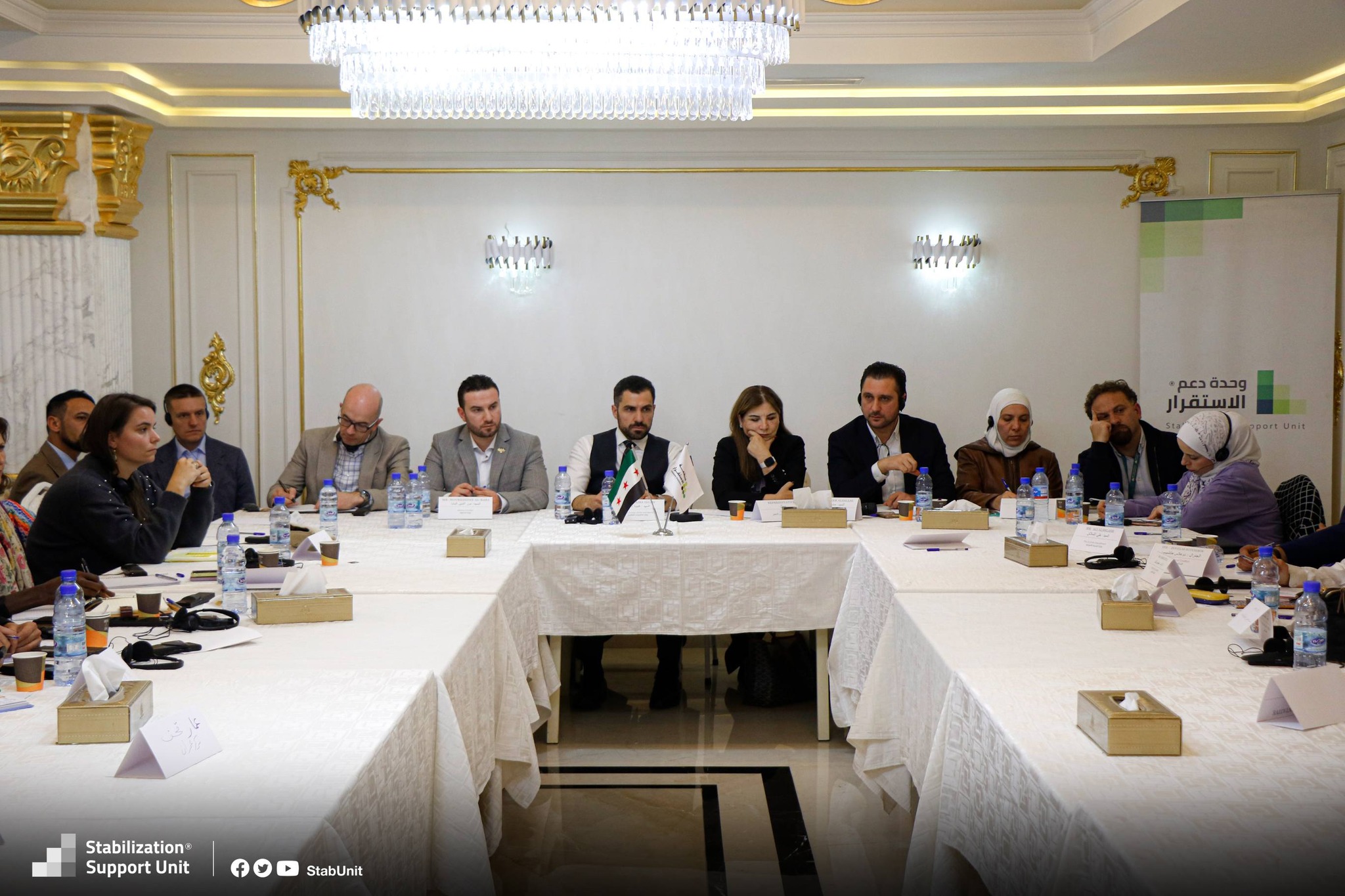
"Convoy of Hope" – A Roadmap Towards Sustainable Integration for Families Leaving Al-Hol Camp
In the presence of a representative from the Syrian Ministry of Foreign Affairs and the Director of the American Affairs Department, Mr. Qutayba Idlbi,
Mr. Nour Eddin Al-Baba, the spokesperson for the Syrian Ministry of the Interior, and Ms. May Brazi, the Advisor to the Minister of Social Affairs and Labor for displaced persons.
In addition to representatives from the international coalition and several UN agencies and Syrian organizations, the Stabilization Support Unit held a dialogue session in Damascus,
in partnership with the United Nations High Commissioner for Refugees (UNHCR), dedicated to discussing the future of the families leaving Al-Hol camp and the challenges related to their evacuation and reintegration into their local communities.
A detailed presentation was given during the session on the needs report for these families, including the main priorities:
- Urgent livelihood needs
- Psycho-social support
- Education follow-up for children
- Protection and empowerment plans for women
- Economic support programs to enhance community integration
The Executive Director of the Stabilization Support Unit, Munzer Sallah, spoke about the session, clarifying that its aim was to discuss the situation of Al-Hol camp and identify the basic needs of returning families,
emphasizing the importance of evacuating the remaining families, over 14,000 of whom are mostly women and children, and that the main goal of this dialogue is to define roles and strengthen coordination mechanisms among all partners to ensure the desired results.
On her part, the Deputy Head of the UNHCR Mission in Syria, Asir Al-Mudai'in, highlighted that UN organizations operating in Syria are supporting the Syrian authorities in the process of return and rehabilitation of families in preparation for their return.
Mr. Qutayba Idlbi, Director of the American Affairs Department in the Ministry of Foreign Affairs and Expatriates, confirmed that the Ministry's role in the refugee return process is based on coordination and integration with the relevant ministries and government agencies, particularly the Ministries of the Interior and Social Affairs and Labor, to provide all necessary services and logistics for the return of families to their original areas.
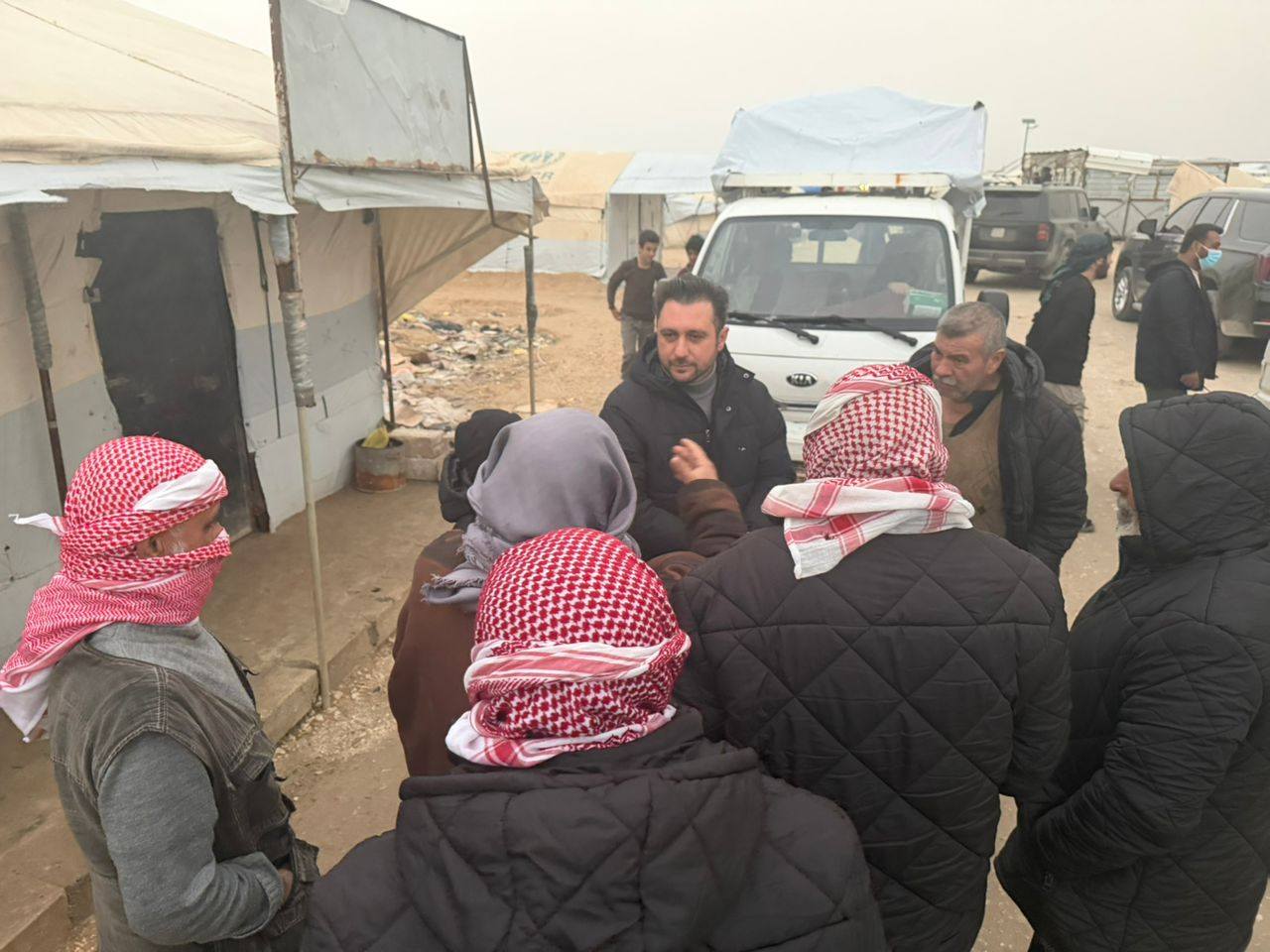
Visit of the Executive Director of the Stabilization Support Unit to Al-Hol Camp in the Rural Hasakah Governorate
At the invitation of RASED Jordan, the Executive Director of the Stabilization Support Unit visited Al-Hol Camp in the rural Hasakah Governorate.
The SSU delegation conducted a series of visits, including to the RASED Jordan office, the Independent Election Commission in Jordan,
and several organizations and international institutions concerned with supporting the Syrian people.
During the visit, the following was discussed:
- Mechanisms and the possibility of relocating families and returning them to their original homes, ensuring a safe, dignified, and sustainable return.
The Executive Director also met with several families from the camp and listened directly to their demands and the challenges they face.
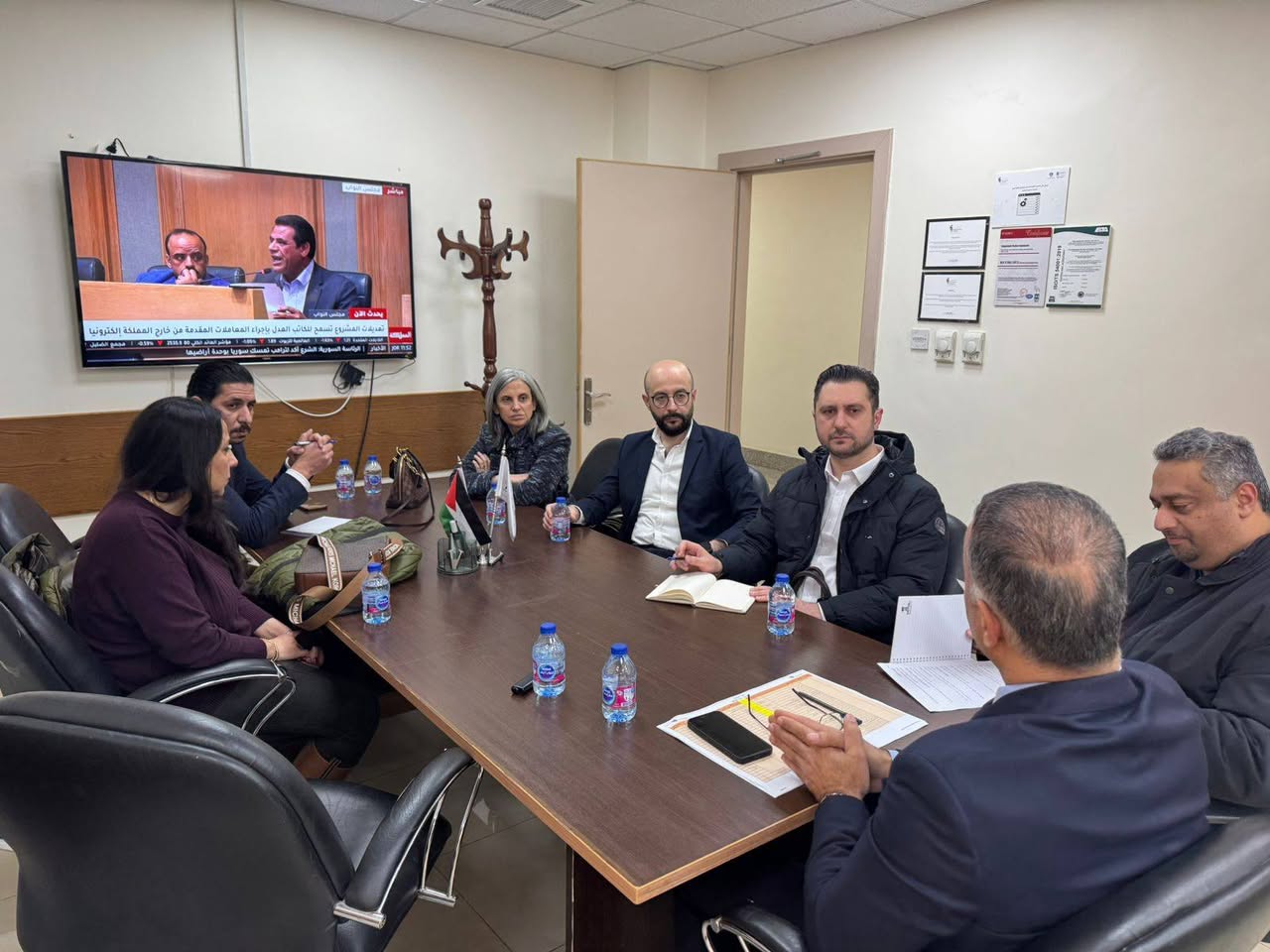
Visit of the Stabilization Support Unit – RASED Syria to the Hashemite Kingdom of Jordan
Invited by RASED Jordan, the Stabilization Support Unit – RASED Syria visited the Hashemite Kingdom of Jordan.
The SSU delegation conducted a series of visits, including the RASED Jordan office, the Independent Election Commission in Jordan,
and several organizations and international institutions concerned with supporting the Syrian people.
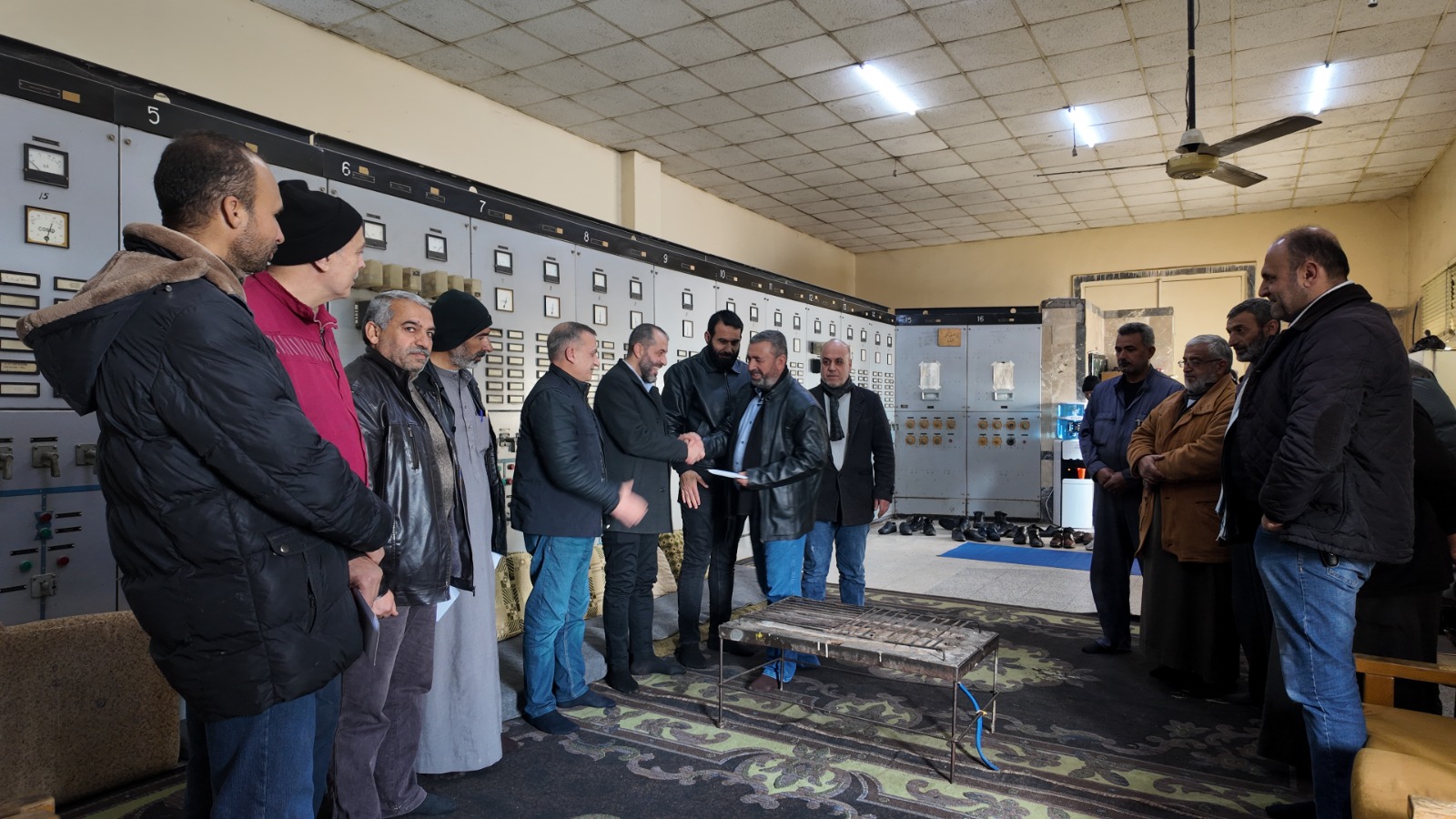
Field Tour of Water Stations in Aleppo Countryside
Under the direction of the Governor of Aleppo, Engineer Azam Al-Gharib, the Stabilization Support Unit, in cooperation with the Directorate of Water Resources,
conducted a field visit to water stations in the countryside of Aleppo, which supply the city of Aleppo with drinking water.
The tour included:
-
Providing financial incentive rewards to the workers in the following stations:
- Al-Babiri Station
- The Joint Station
- Japanese Station
- Tel Hassal Station
- In appreciation of their efforts and continuous work under exceptional and difficult conditions over the past period.
During the tour, the following was also done:
- Reviewing the current status of these stations and assessing their needs.
- Supporting the continuity of the stations' operations and improving the quality of drinking water services provided to the people of Aleppo.
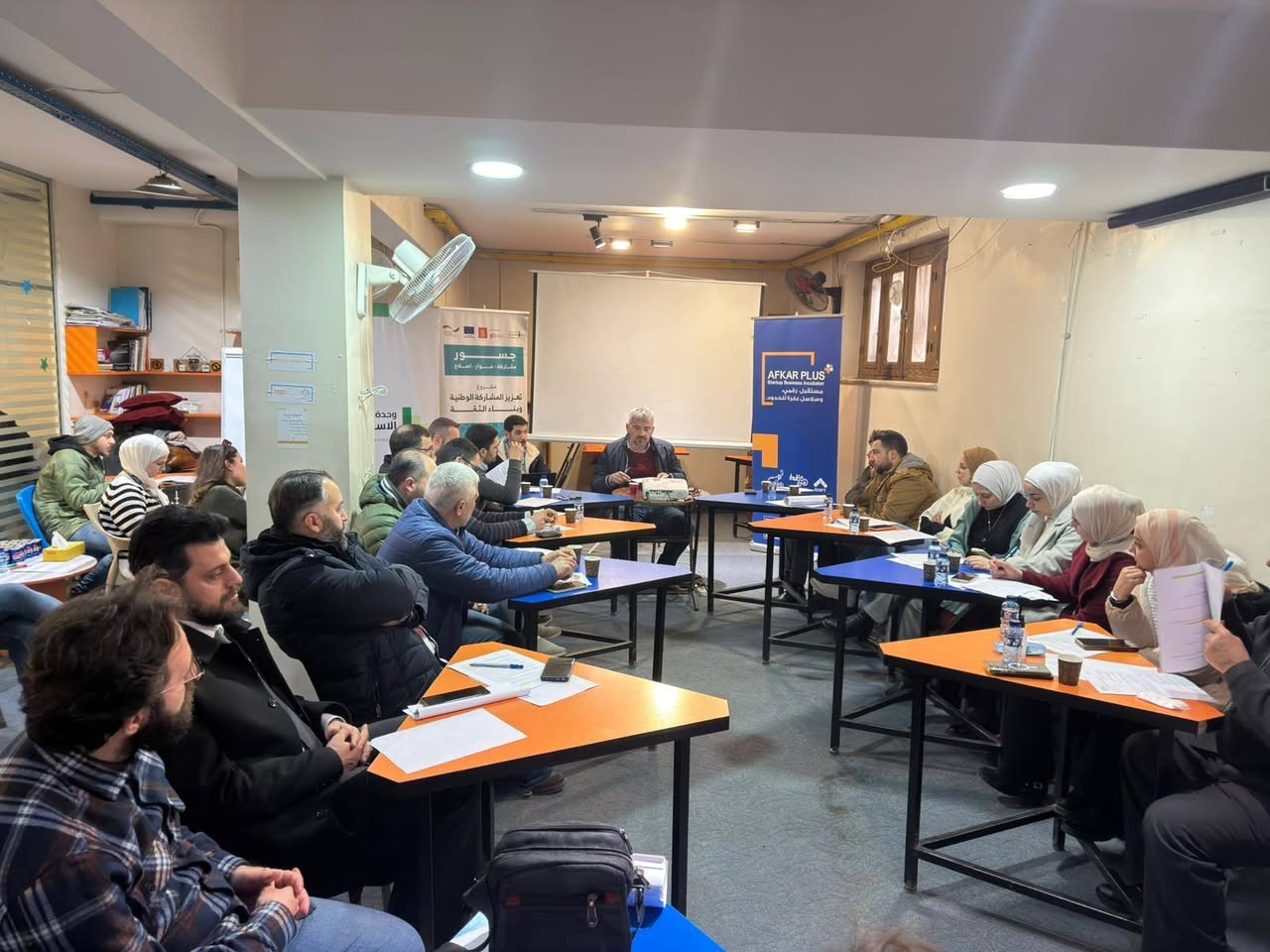
Within the project
“Enhancing National Participation and Building Trust – Bridges”
, funded by the European Union, Germany, and Denmark, as part of the Peace Initiative in Syria
implemented by the German Agency for International Cooperation (GIZ),
the Stabilization Support Unit (SSU) continues its dialogue sessions in Hama Governorate under the title
“The Social Contract”.
In cooperation with:
- Afkar Plus
- Amal Foundation – Amal Voluntary Team
The session was facilitated by lawyer Mr. Tarek Al-Kurdi.
The session addressed the following topics:
- Clarifying the concept of the social contract and its components
-
Discussing the political, economic, and social principles that form the foundation of the social contract
-
Examining the shared ethical values that should govern relationships among Syrians
The session was attended and actively participated in by a number of legal professionals,
civil society activists, representatives of local associations and unions, academics,
as well as representatives of local authorities.
These sessions represent a step toward building broad community dialogue spaces that include
various segments of society, with the aim of strengthening trust, enhancing national participation,
and shaping reform priorities in the current phase.
The “Bridges” project, through its various components, serves as an interactive platform that combines
training, consultation, and community participation, paving the way for a more transparent and inclusive
environment that contributes to strengthening good governance, accountability, and participation in
decision-making.
Together, we build bridges of trust and participation toward a better future for Syria.
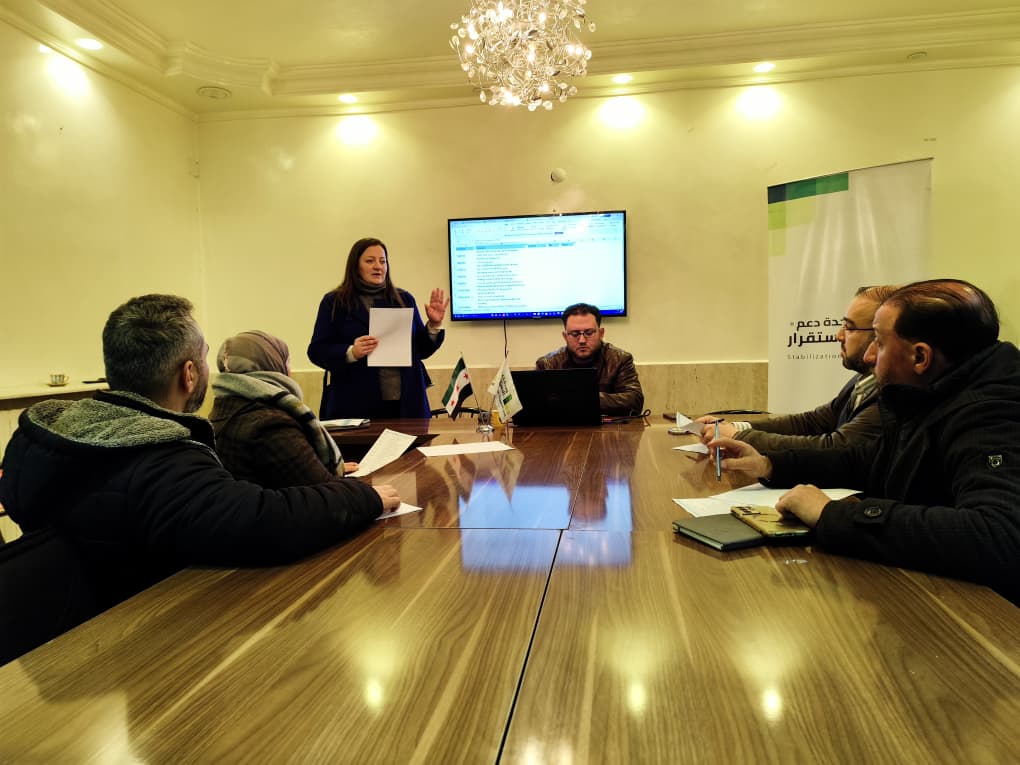
On Wednesday, 28th of January 2026, the meeting of the committee for screening the applications for Jarat Al-Qala'a Market was held.
The project is being implemented by the Stabilization Support Unit in Khan Al-Shouna, Aleppo, in cooperation with the Governorate of Aleppo,
the Directorate of Social Affairs and Labor, and the Directorate of Antiquities and Museums.
The committee is composed of:
- Mr. Yasser Moulawi, Head of the First Block, representing the Governorate of Aleppo
- Mr. Jaafar Kaheel, Administrator of the First Block
- Ms. Sherine Nabou, Representative of the Directorate of Antiquities and Museums in Aleppo
- Ms. Reem Masri, Project Manager for Jarat Al-Qala'a Market in the Stabilization Support Unit
The participants were selected based on the criteria established by the Unit in collaboration with the relevant authorities.
The selected projects will be contacted within two days.
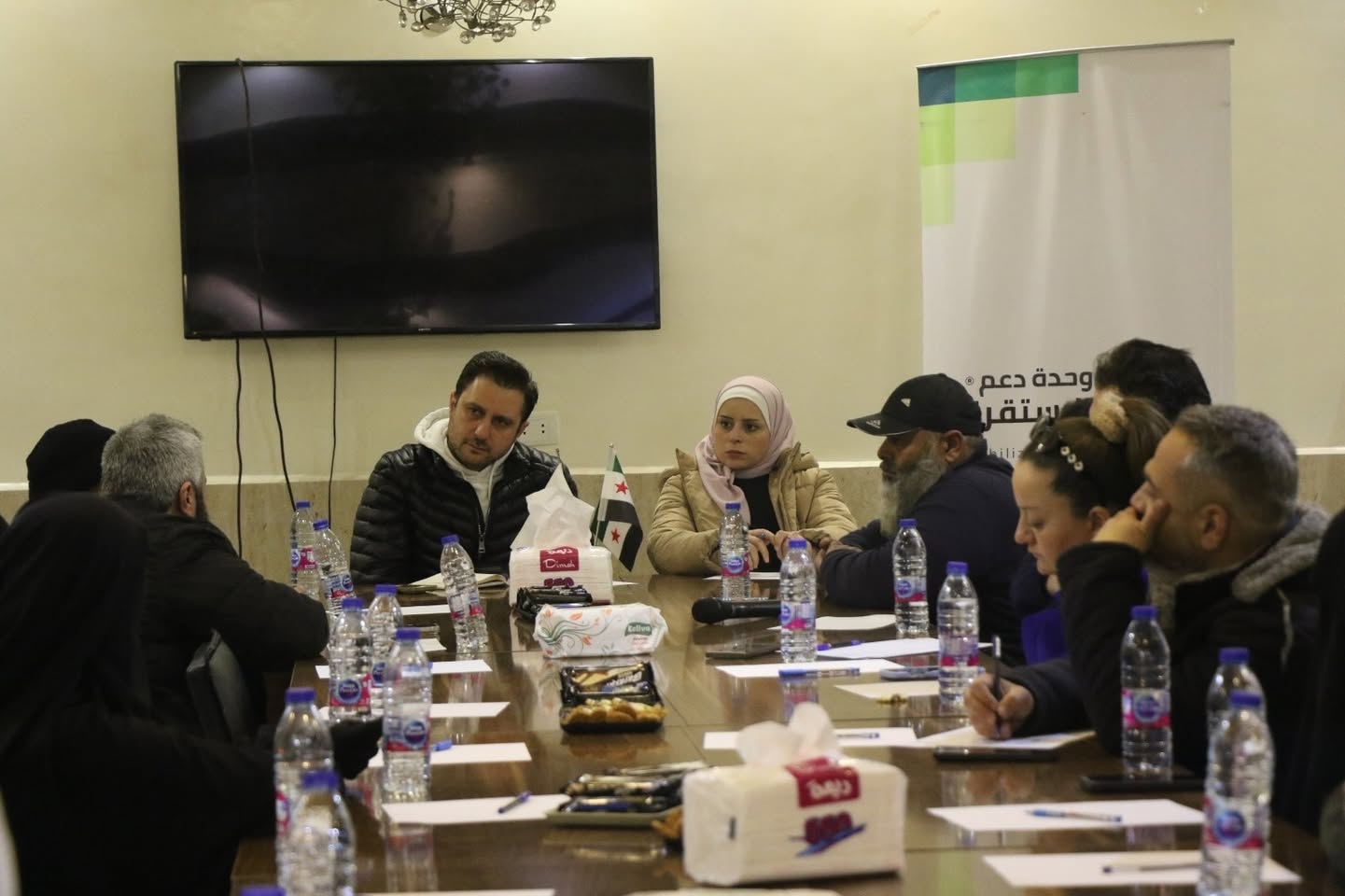
The Stabilization Support Unit organized a meeting with a number of families returning from Al-Hol Camp
to the governorates of Aleppo and Idlib, who recently arrived through the Caravans of Hope.
The meeting was held in the presence of the Directorate of Social Affairs and Labor in Aleppo.
The meeting aimed to:
-
Identify the families’ needs, as well as the challenges and difficulties they face after one year
since leaving the camp.
-
Listen to their views and suggestions, and discuss the role that civil society organizations and
government entities can play in supporting them and contributing to their stability and integration
into society.
The meeting also included a review of the projects to be implemented in support of these families:
-
▪️ Legal Project:
Aims to follow up on the families’ official documents and civil records, and to facilitate their
issuance and legal registration.
- Jarat Al-Qala’a Market Project:
Aims to provide sustainable weekly job opportunities based on the professions chosen by beneficiaries,
along with the necessary support to start working.
- Cash Assistance (Housing Allowance):
Provided to some of the most vulnerable families who are unable to work, with the aim of helping them
secure housing and achieve stability.
- Compensatory Education Project for Adolescents (11–18 years):
Implemented in partnership with Space Of Hope Association, and includes literacy and numeracy education,
as well as psychosocial support and recreational activities, with the aim of enhancing social integration
and reintegrating adolescents into the education system.
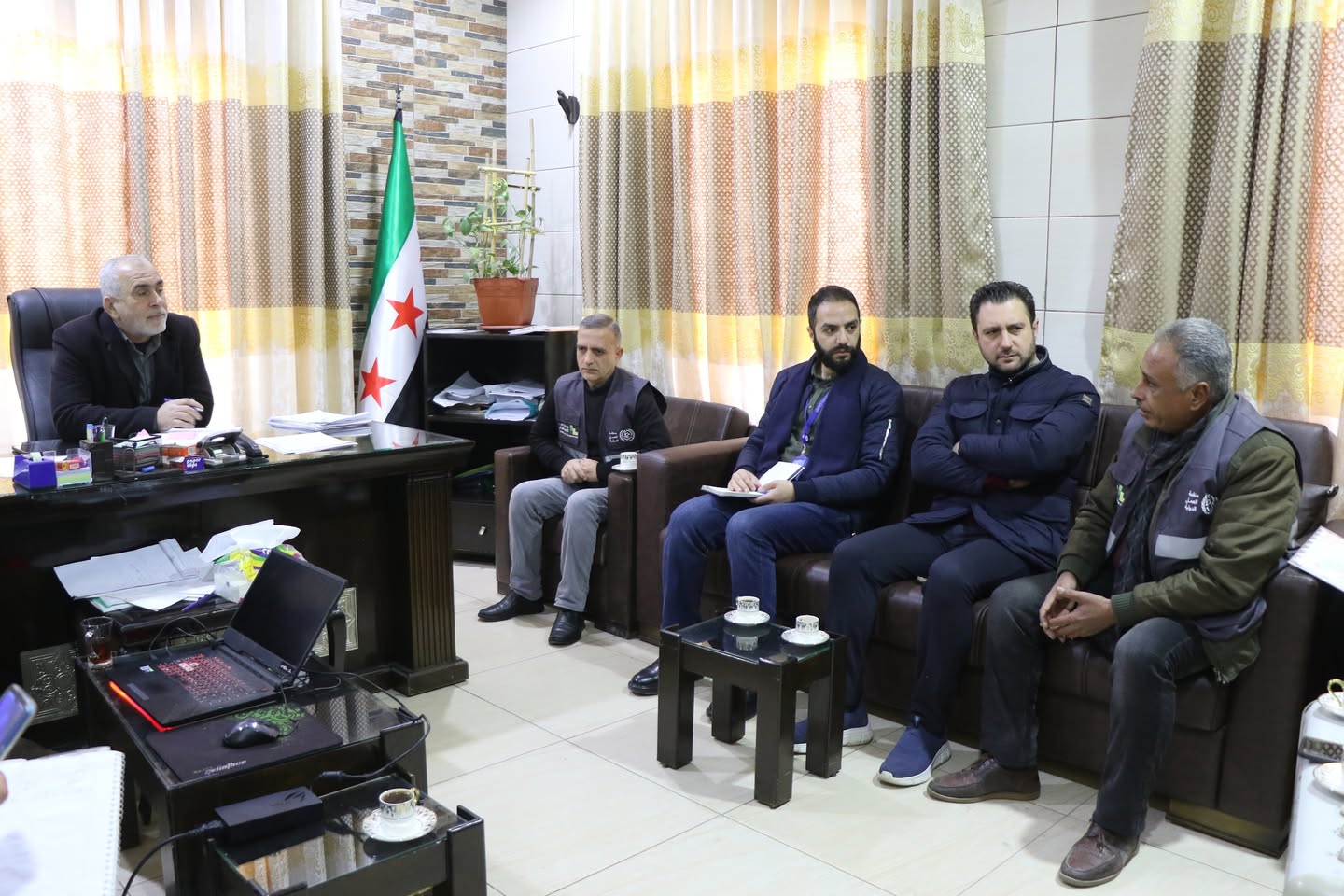
Following the completion of the Green Jobs Project, the Stability Support Unit (SSU) team, along with the Head of the ILO Office in Aleppo, Mr. Ahmad Haj Ali, conducted a visit to the General Company for Sewerage in the city of Aleppo.
During the visit, the team handed over the works implemented throughout the project period, in addition to the operational equipment.
The works included cleaning nearly 2,000 sewage points across 11 neighborhoods in the Qadi Askar sector in eastern Aleppo. The project contributed to
The Stabilization Support Unit (SSU), in cooperation with the Aleppo Governorate, announced the opening of registration for beneficiaries interested in showcasing their products at the Jaret Al-Qalaa Weekly Market. The market provides a dedicated space to support small businesses and help entrepreneurs reach a wider audience in a vibrant and safe environment.
The initiative aims to offer an opportunity for the people of Aleppo—especially women and youth—to display and sell a variety of products, including handicrafts, food items, and heritage-inspired goods, contributing to livelihood support and the revival of Aleppo’s local heritage.
How to Apply
Interested participants can apply through one of the following methods:
Fill out the online application form via:
https://ee.kobotoolbox.org/x/B3v1dPjW
Or contact via WhatsApp:
wa.me/963944267670
SSU encourages all small business owners and heritage product makers to take advantage of this opportunity and participate in the market, as a step that strengthens local products and supports the revitalization of Aleppo socially and economically.
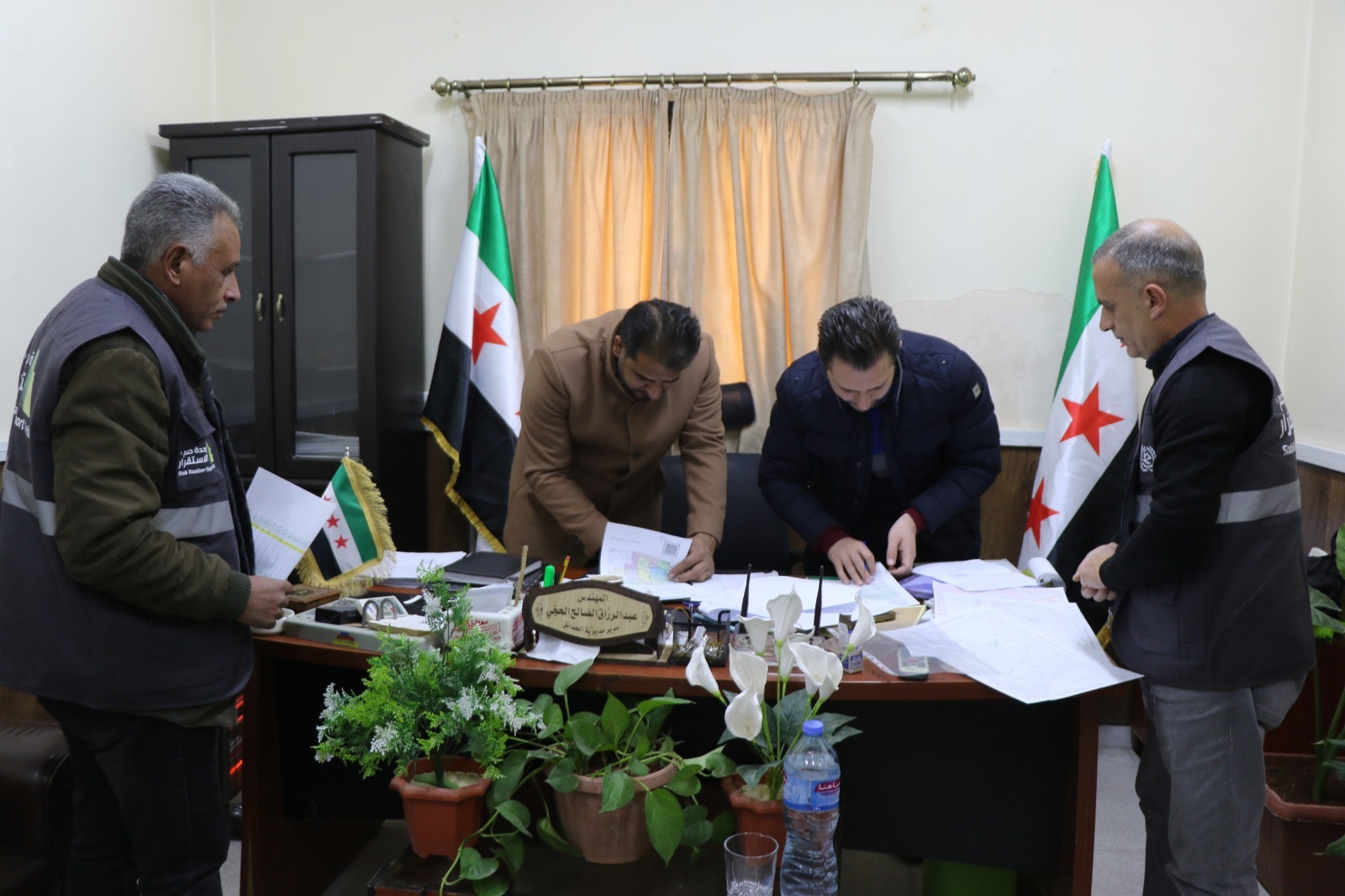
After the conclusion of the “Green Jobs Opportunities” project, implemented by the Stabilization Support Unit with support from the International Labour Organization (ILO), an official visit was conducted to the General Directorate of Parks in Aleppo Governorate.
During the visit, the completed works and operational equipment were formally handed over, as a step aimed at ensuring service continuity and strengthening the project’s long-term sustainable impact, as part of the activities of the “Aleppo, the Best of All” campaign.
The completed works included maintenance of children’s playground equipment in Al-Wahda Park, rehabilitation and tree planting in Al-Anis Park, tree planting in Al-Hawouz Park, as well as cleaning most of the parks within the Qadi Askar sector, and installing a number of waste bins—contributing to improved public cleanliness and enhancing the environmental landscape.
This project comes within the framework of supporting service infrastructure and expanding green spaces across the city of Aleppo, positively reflecting on quality of life and reinforcing the concepts of environmental sustainability and service to the local community.
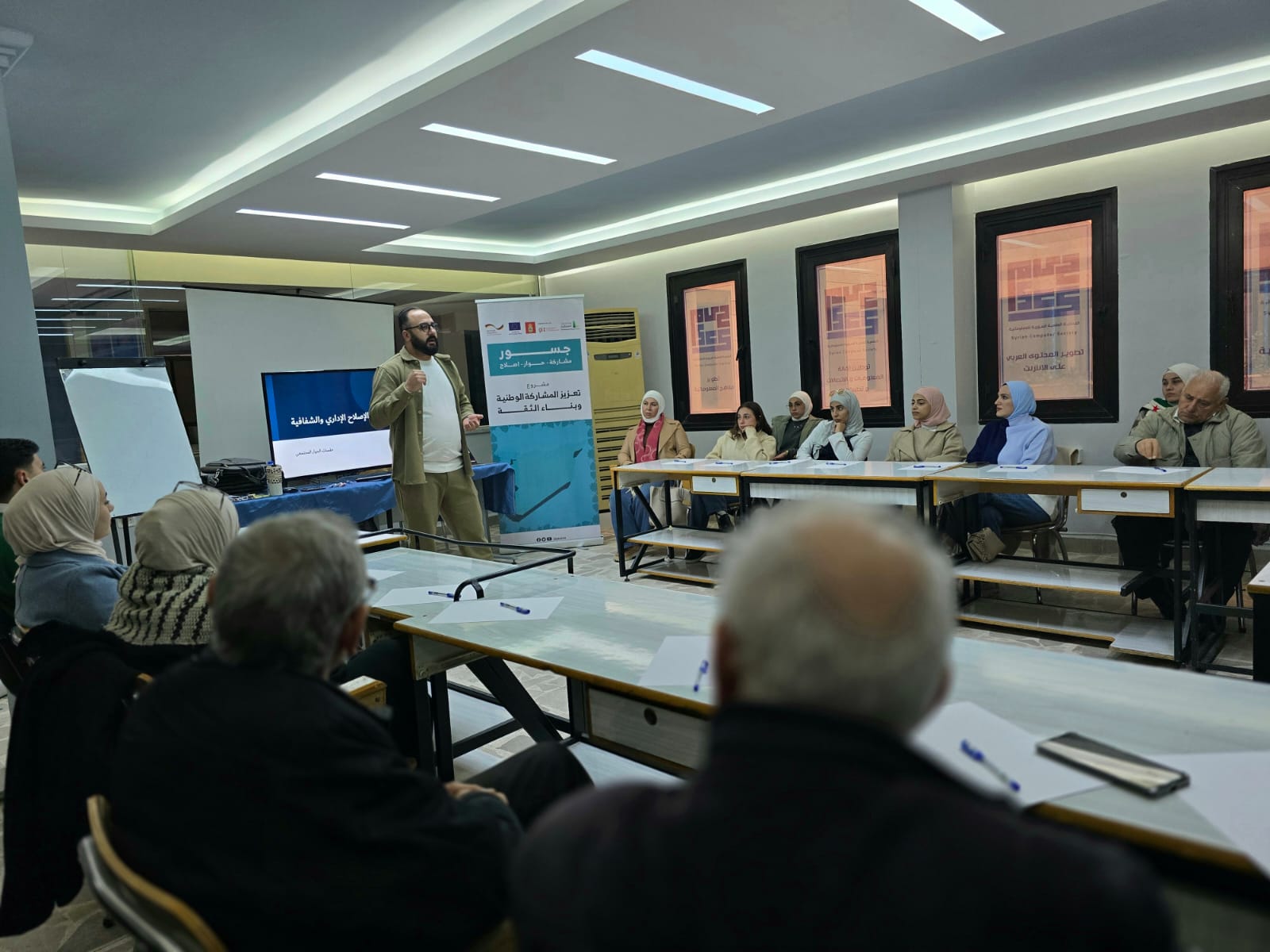
The "Enhancing National Participation and Building Trust – Bridges" project is funded by the European Union, Germany, and Denmark as part of the Peace Initiative in Syria, implemented by the German Agency for International Cooperation (GIZ). The Stability Support Unit (SSU) organized a community dialogue session in Homs governorate titled "Administrative Reform and Transparency." During this session, several key issues were discussed, including:
The components and contents of administrative reform.
The types of oversight and mechanisms for community participation to enhance government performance.
Practical proposals for development and reforms to strengthen transparency.
This session was organized in collaboration with:
Yalla Syria Association
Harmony Center
It saw wide participation from various local community members, as well as human rights activists, researchers, academics, and social activists who contributed their views, interventions, and suggestions regarding the pathways for administrative reform in Syria.
These sessions are a step towards creating wide community dialogue spaces that include various segments of society, with the aim of enhancing trust, national participation, and formulating reform priorities for the current phase. The "Bridges" project, with its various components, serves as an interactive platform that combines training, consultation, and community participation, paving the way for a more transparent and inclusive environment that contributes to promoting good governance, accountability, and participation in decision-making. Together, we build bridges of trust and participation for a better future for Syria.
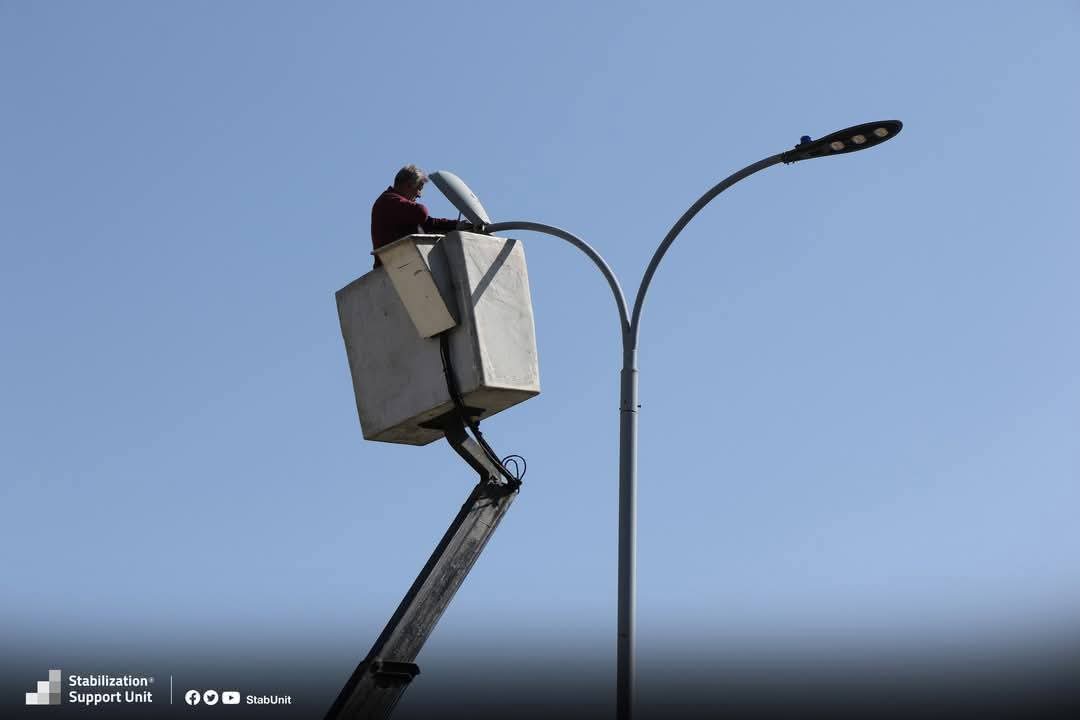
The Aleppo Governorate launched the "Monawara Ya Aleppo" initiative in collaboration with the Stabilization Support Unit and KAF (KAFAF) Association.
The initiative aims to light up the streets and vital areas of the city, enhance public safety, and provide a safer environment for residents. It also seeks to activate commercial and social activities during the nighttime hours.
Additionally, the initiative encourages civil and community organizations to participate in supporting the campaign to achieve its goals.
This initiative is being implemented through two main tracks:
1. Replacing old electric lighting bulbs with new energy-efficient ones.
2. Maintaining and rehabilitating solar-powered lighting units in the eastern neighborhoods and the old districts of Aleppo.
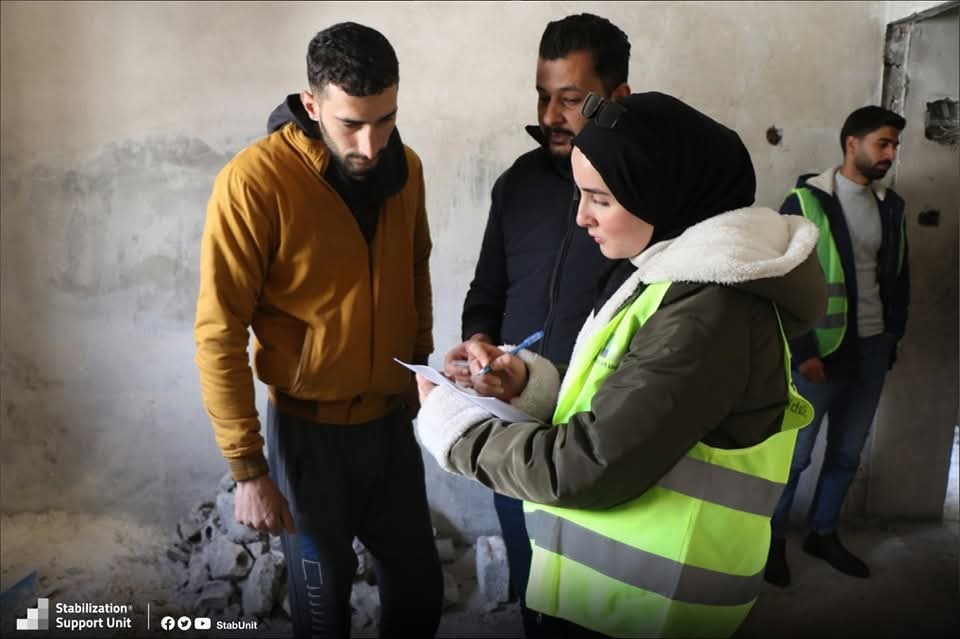
After the liberation of Syria, and as part of the coordinated efforts between the Stabilization Support Unit and the Aleppo Governorate to support and empower displaced families to return to their homes,
the Stabilization Support Unit teams launched today to conduct field assessments of the damaged homes in the neighborhoods of Aleppo to evaluate and identify the extent of the damage.
The #Returnees Campaign aims to provide the necessary support to cover transportation or renovation costs for the returning families' homes, alleviating their economic burdens.
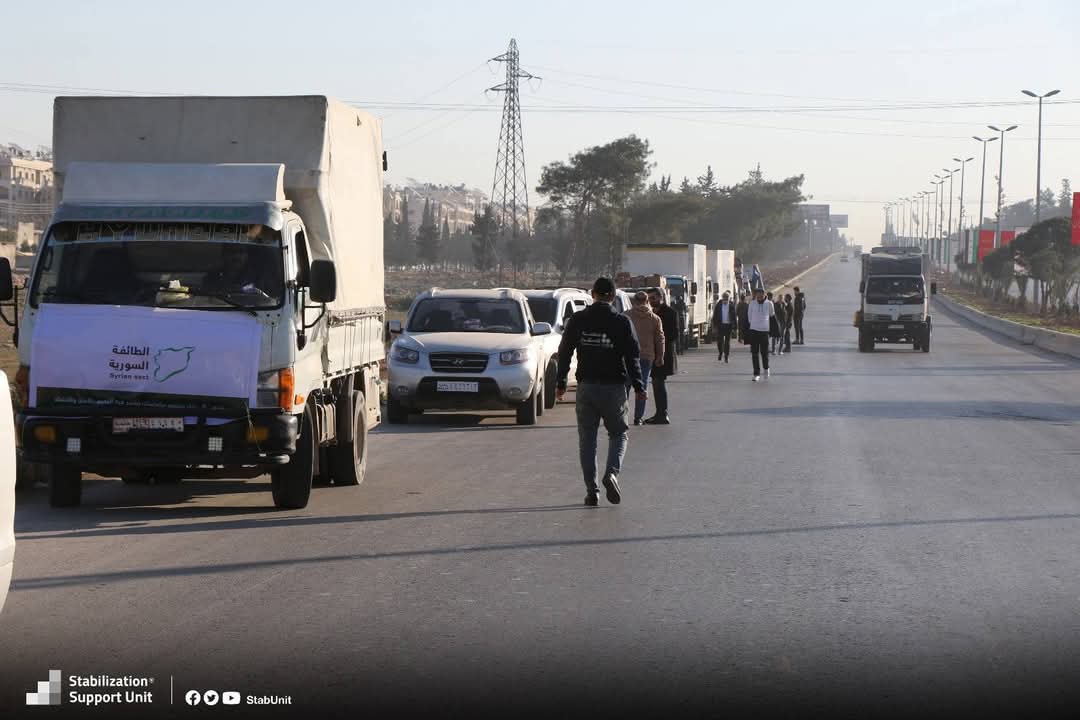
The First Day of the #Syrian_Sect Initiative Launched by the Stabilization Support Unit with the Participation of Several Organizations and Charitable Associations, Under the Patronage of the Aleppo Governorate
The campaign targeted rural Latakia, where visits were conducted to the families in the villages of (Mukhtaria, Brabishbo, Bahluliyah) to emphasize the importance of social cohesion and the need to avoid being drawn into sectarian strife, ensuring a more harmonious future for all segments of Syrian society. Additionally, essential food supplies were provided to the most needy families.
The initiative will continue for several days and aims to carry out field visits and provide assistance to affected civilian families in the Syrian coast and families of public security victims.
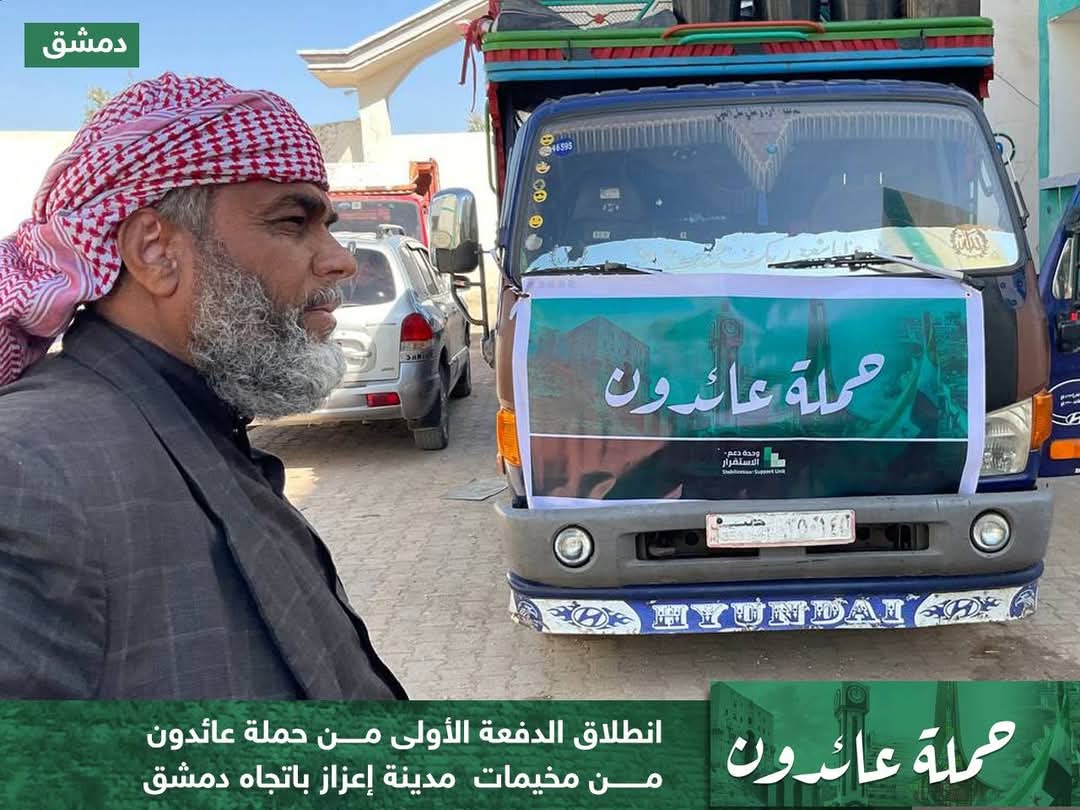
Returnees Damascus
As part of the #Returnees Campaign, the first batch of the campaign launched by the Stabilization Support Unit has departed from the camps in northern Syria towards Damascus.
The Returnees Campaign aims to provide necessary support to cover transportation costs, as well as to carry out simple and limited renovation work for the homes of returnees.
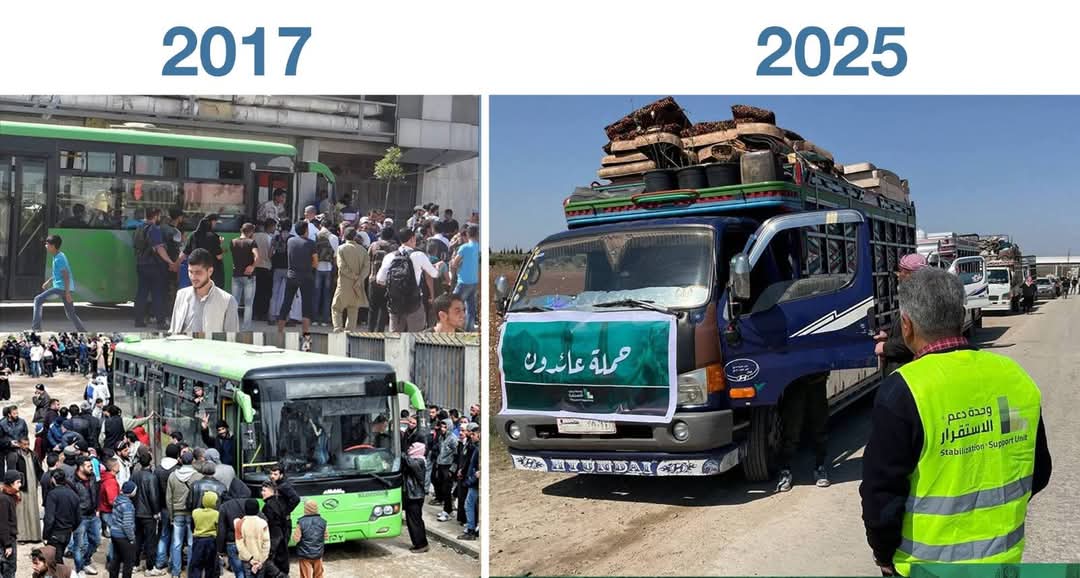
After years of forced displacement, the return convoys are making their way from the Zoghra camp towards Homs.
In these days of 2017, the displaced convoys were leaving **Al-Waer neighborhood** heading towards northern Syria, after its people were forced to leave their homes under the barrage of shelling and destruction.
But today, they are returning, not only with their bodies but with their dignity and free will, to write a new chapter titled victory and resilience.
The Stabilization Support Unit (SSU) launched the #Returnees Campaign targeting (Damascus, Aleppo, and Homs), enabling the people of these cities to return to their homeland with the determination of victors.
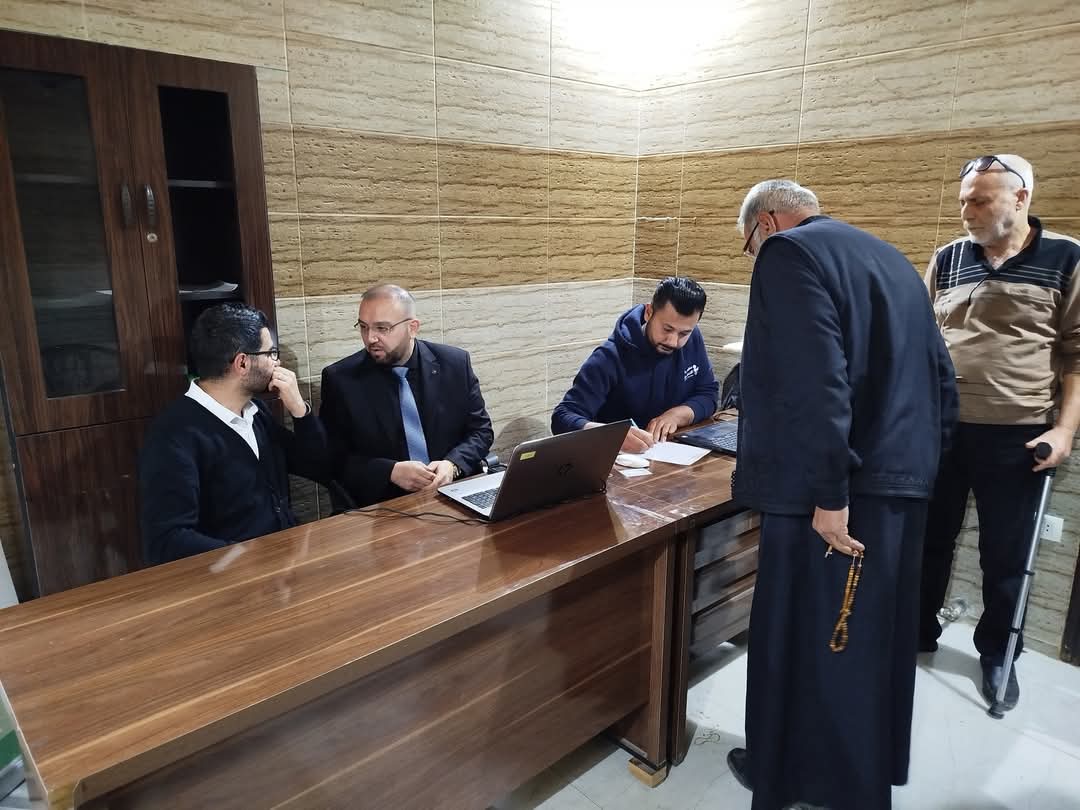
With the support of the Stabilization Support Unit and in coordination with the Aleppo Governorate, the #Returnees Campaign has been launched to provide financial grants to families returning to the city of Aleppo, with the aim of renovating their homes and restoring their lives with dignity.
This initiative helps alleviate the financial burdens on affected families and accelerates their return from camps and displacement areas towards stability.
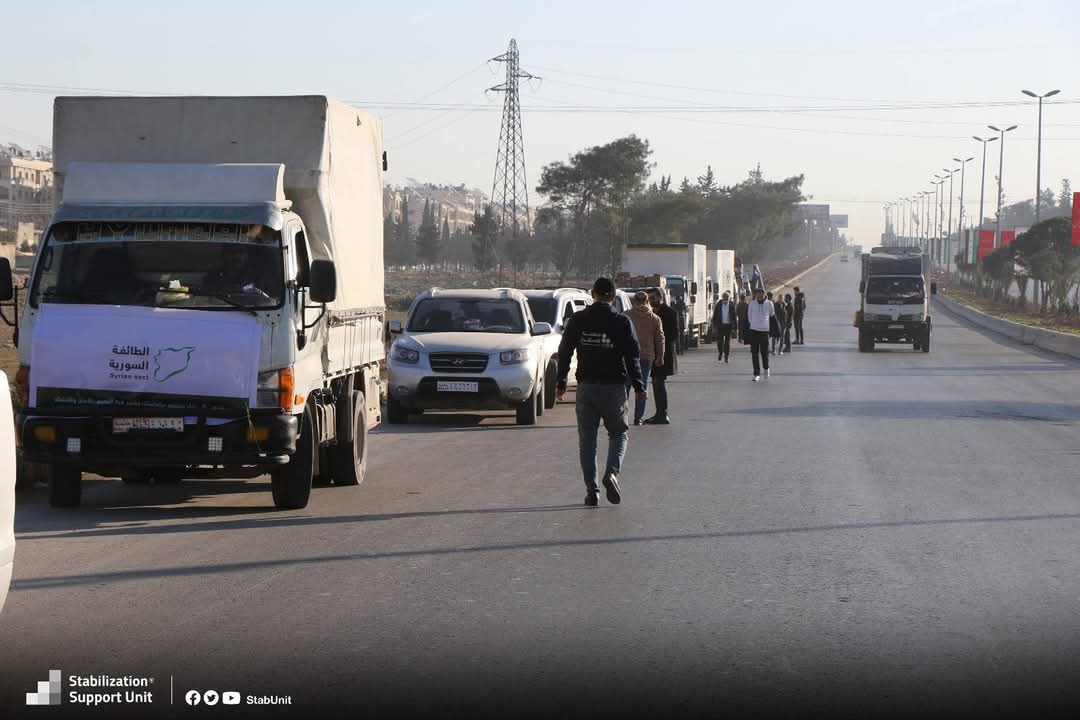
The second day of the “Syrian Sect” Initiative, which is a community initiative launched under the patronage of the Aleppo Governorate to support the families affected in the Syrian coast and the families of General Security martyrs.
The campaign aims to provide food aid and essential goods to the targeted people, in addition to enhancing social cohesion and unity among all Syrians.
The campaign also includes field visits to promote cooperation among different social groups, with a focus on the importance of cultural and religious diversity in building Syria.
Several relief organizations, associations, and civil society activists are participating in this initiative.
The villages visited today in the countryside of Lattakia and Jableh include (Sanowbar, Kalmakho, Ain Arus, and Kharbat Khasrouf).
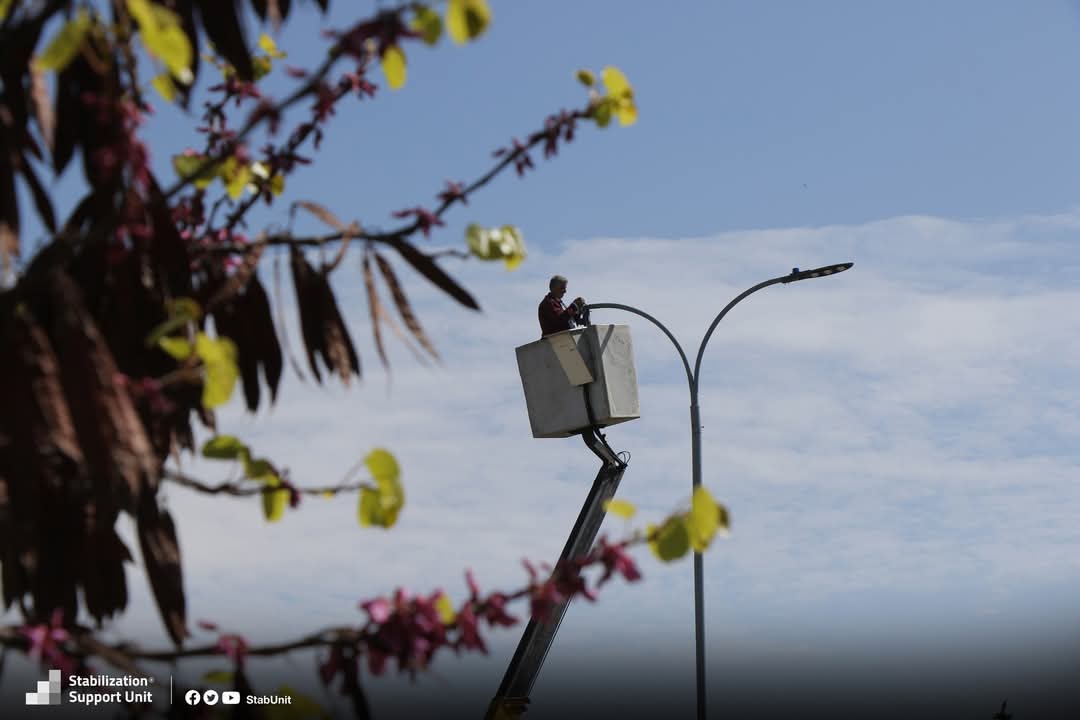
The StabilizationSupport Unit launched the “Brightened Aleppo” initiative in collaboration with Kafaf Charity Association and in coordination with the Aleppo Governorate.
The initiative aims to:
– Light up the streets and vital areas of #Aleppo City.
– Enhance public safety and security.
– Provide a safer environment for residents.
– Activate commercial and social activities during nighttime.
– Encourage the active civil and community bodies to participate in supporting the initiative and achieving its goals.
This initiative is being implemented through two main tracks:
1. Replacing old electric streetlights with new energy-efficient ones.
2. Maintaining and rehabilitating solar-powered lighting units spread across the eastern neighborhoods and the old districts of Aleppo.
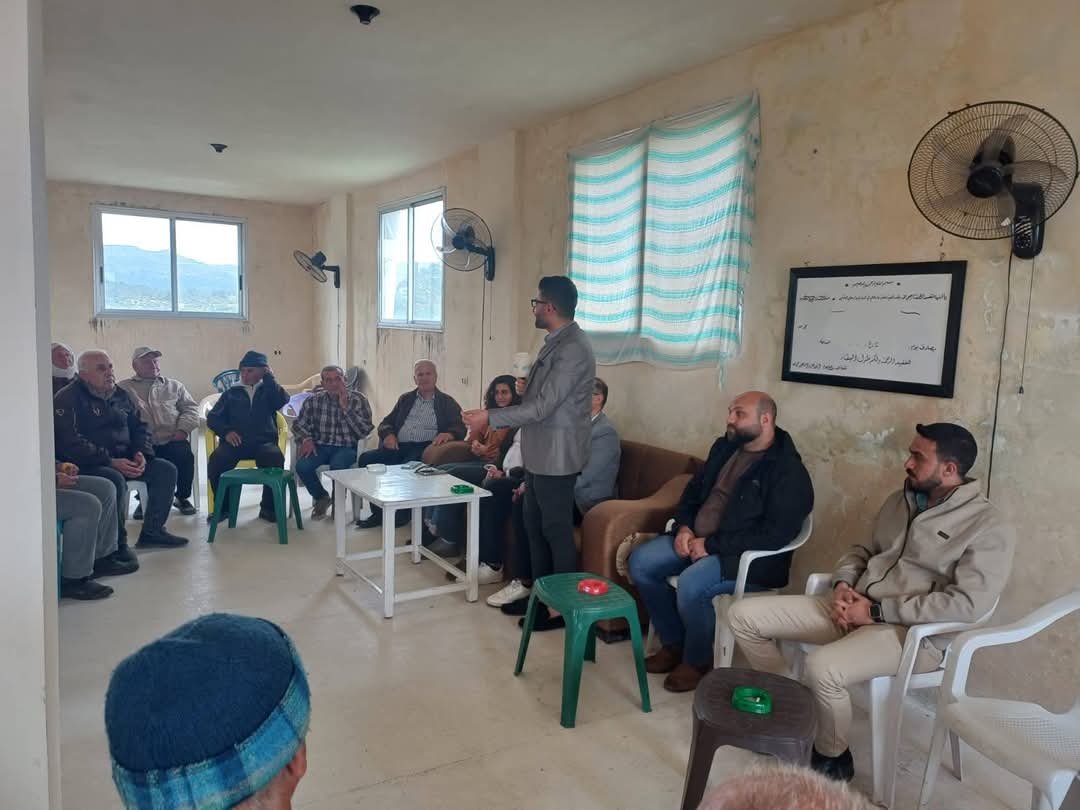
On the Occasion of Eid al-Fitr, the Second Phase of the Syrian Sect Initiative Begins
To celebrate Eid al-Fitr, the second phase of the initiative was launched, including greetings to families in the regions of (Syrian Coast, Homs, Idlib, and Aleppo), along with distributing special Eid gifts to children, aiming to spread joy and put smiles on their faces.
The initiative is held under the patronage of the Aleppo Governorate, with active participation from civil society organizations, associations, and activists:
- Stabilization Support Unit (SSU)
- KAF (KAFAF) Association
- Alresala Foundation
- Civil Center
- Syrian Women’s Association
- CSE Unit
- Bond Network for Community Development
- Syriaty Youth Team
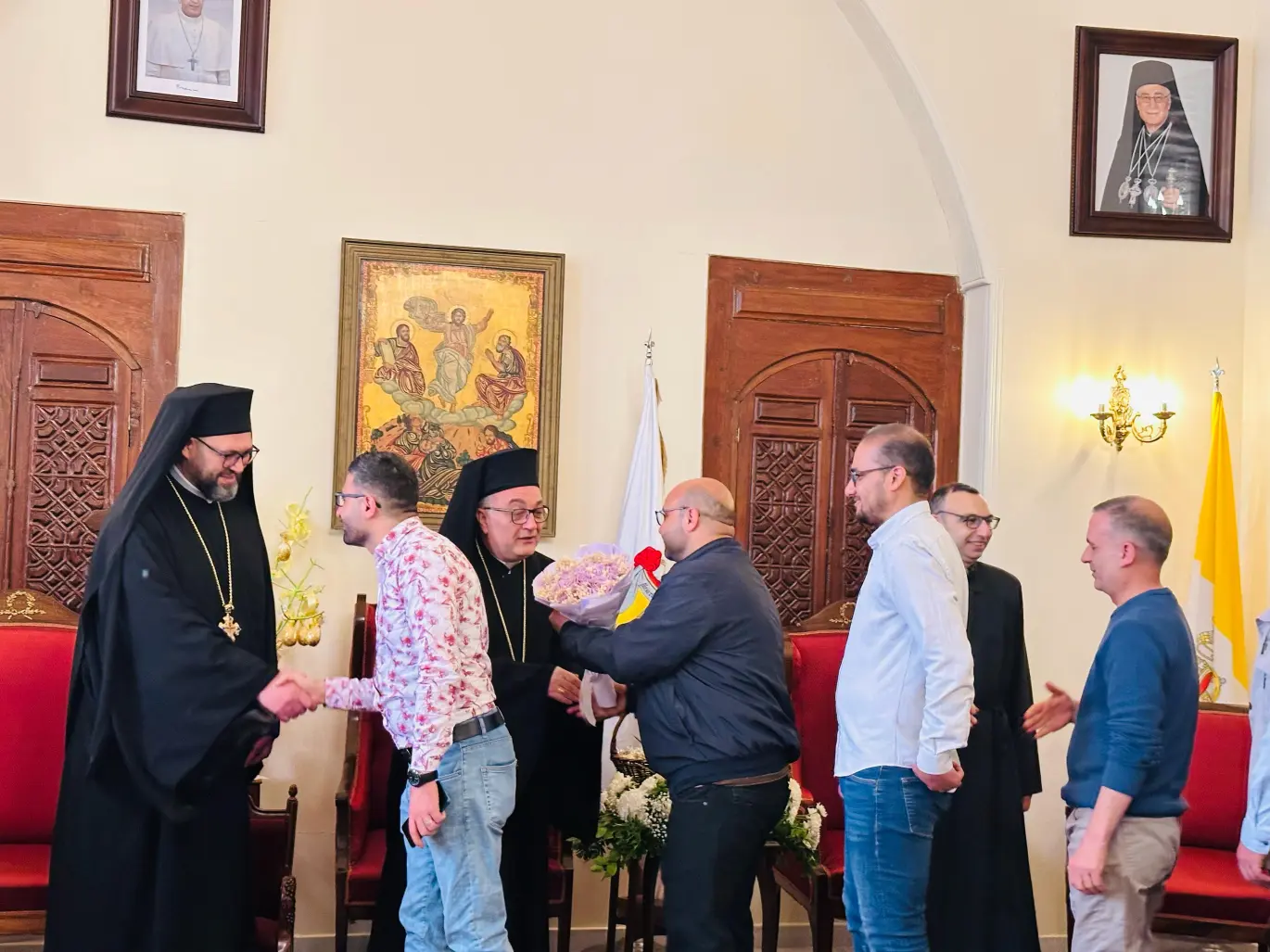
As part of the activities of the Syrian Sect, a visit was organized to the Christian brothers and sisters in the city of Aleppo to extend congratulations on the occasion of the Holy Easter.
The visit included churches such as the Latin, Chaldean, Maronite, and Greek Catholic churches, and was filled with an atmosphere of love and fraternity, emphasizing the spirit of coexistence and national unity.
During the visit, discussions were held about the Syrian Sect, its activities, and its goals, as well as the importance of shared living, which should be a priority for civil society in Syria.
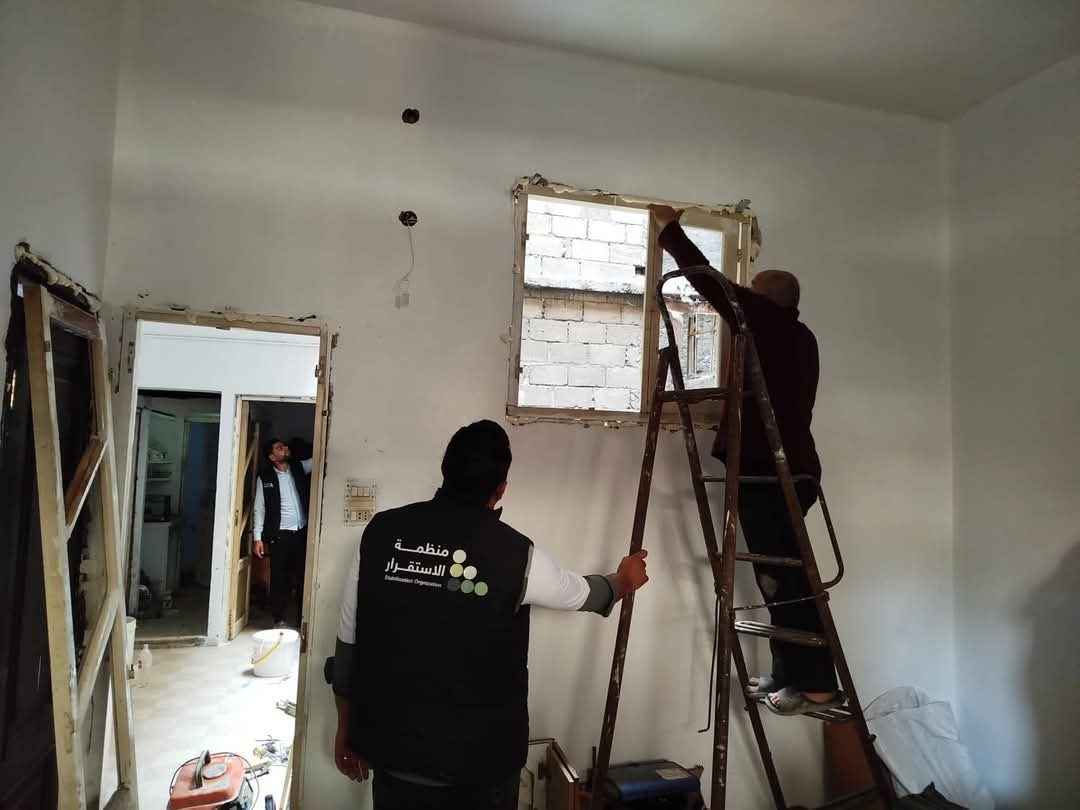
"Returnees": A Campaign Launched by the Stability Organization to Revive the Spirit of Syrian Homes
In the city of Aleppo, where it all began, the Stability Organization carried out intensive field efforts as part of the "Returnees" campaign, targeting families wishing to return to their homes. A total of 220 damaged homes were assessed, with 176 approved after a thorough evaluation that applied humanitarian criteria, including economic status, the presence of individuals with special needs, and families of martyrs and detainees.
There, amid the old alleys, families began dusting off doors, repairing windows, and breathing life back into the walls that had witnessed years of absence. Together, they proclaimed: "We never left your hearts."
Building upon these efforts, the Stability Organization facilitated the relocation of 20 families to Damascus and 38 families to Homs, in organized convoys that began from the camps in Azaz, Afrin, and Al-Bab. These families were returned to their original homes after years of forced displacement.
"Returnees" was not just a humanitarian campaign; it was a practical step toward real stability, restoring a sense of dignity to the people and giving them the ability to start anew in their homes, within walls that carry their memories and identity.
This campaign confirmed that returning is not a distant dream but a right worth fighting for, and that the voice of life, when truly supported, is stronger than all the absence.
"Returnees" was just the beginning... Hope is what these families are building, brick by brick, with patience and determination.
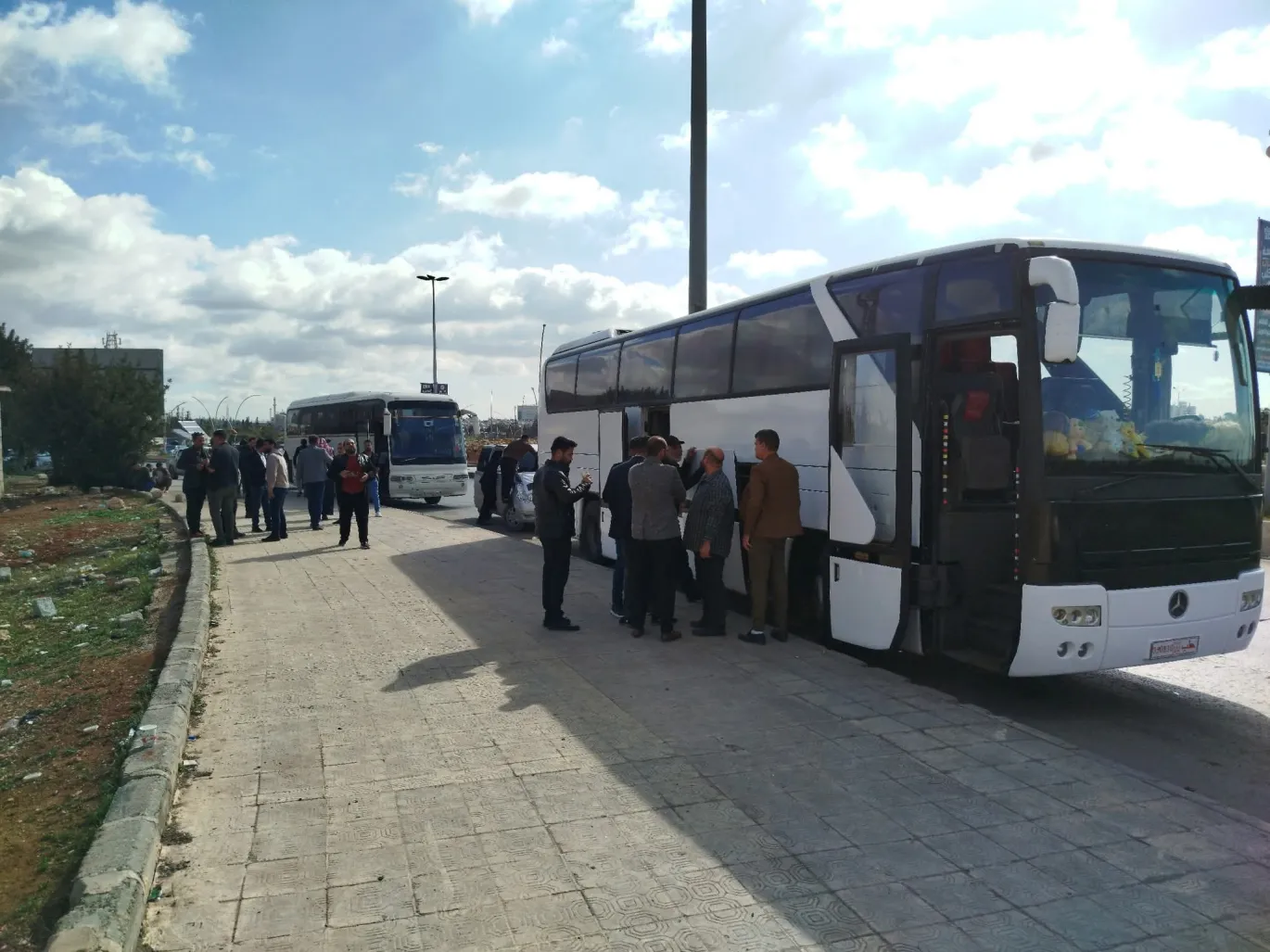
The Syrian Sect: A Civil Initiative Confronting Division
In early 2025, with escalating security tensions in the Syrian coast, particularly in the rural areas of Latakia, the urgent need for a humanitarian and community response to address the complexities of the local situation became apparent. Rising violence, near-total interruption of essential services, and growing social divisions created a dangerous environment threatening the remaining civil cohesion.
In this context, the “Syrian Sect Network” emerged as a comprehensive civil initiative, bringing together several Syrian civil society organizations under one goal: to enhance social cohesion and respond to the humanitarian crisis without discrimination.
From Emergency Response to Community Action
The initiative began as a direct response to the bloody events in the region in March 2025, which included attacks by pro-regime militia groups (known as remnants of the regime) on Syrian security forces, violent clashes, waves of displacement, and infrastructure collapse. The Stabilization Support Unit (SSU), alongside partners such as Kafa Organization, Al-Risala Foundation, The Women’s Association, The Civil Center, The Women’s Empowerment and Support Unit, Catholic National Socialization Committee, and Point Organization, led swift efforts to assist the affected residents in areas starting from the villages of rural Latakia, moving through Tartous, and reaching Aleppo and Daraa.
The response included:
- Distribution of over 1,000 food baskets, 15,000 loaves of bread, and 2,500 ready meals.
- Health assistance, including hygiene supplies, diapers, towels, and cleaning materials.
- Direct cash support for 300 needy families.
The campaign did not only focus on aid distribution. Alongside the relief efforts, community dialogue sessions were organized, involving dignitaries, local residents, and activists from various regions, aiming to break stereotypes and enhance communication. Field interviews and “confession” meetings with the families of victims were conducted to provide a safe space for expression and reconciliation.
These activities contributed to:
- Engaging the local community in analyzing their situation and proposing their initiatives.
- Opening communication lines between communities that had been living in isolation.
- Raising awareness of the importance of social unity in the post-war context.
Challenges Faced:
The campaign teams faced severe logistical difficulties due to rough roads, limited funding, and significant time pressure. Most activities were carried out within six days, requiring rapid action with limited resources. There was also a noticeable need for a deeper understanding of the local and cultural contexts in some targeted villages.
Despite these challenges, the aid reached nearly 30,000 beneficiaries, with over 350 volunteers from the communities involved in the campaign’s execution. This helped build trust between the residents and the organizations, and several participants expressed their readiness to take part in future community initiatives.
Key Outcomes of the Campaign:
- The UN fact-finding committee communicated with the coordination team to learn about the operational mechanisms.
- A voluntary initiative by youth from the Syrian coast to visit areas in the north, which marked an important turning point in breaking social barriers.
The Syrian Sect Network represents a practical model of how civil action can intervene effectively amidst crises by combining emergency relief with community-building. It is a practical step toward comprehensive community recovery, not only providing aid but also rebuilding trust among Syrians themselves.
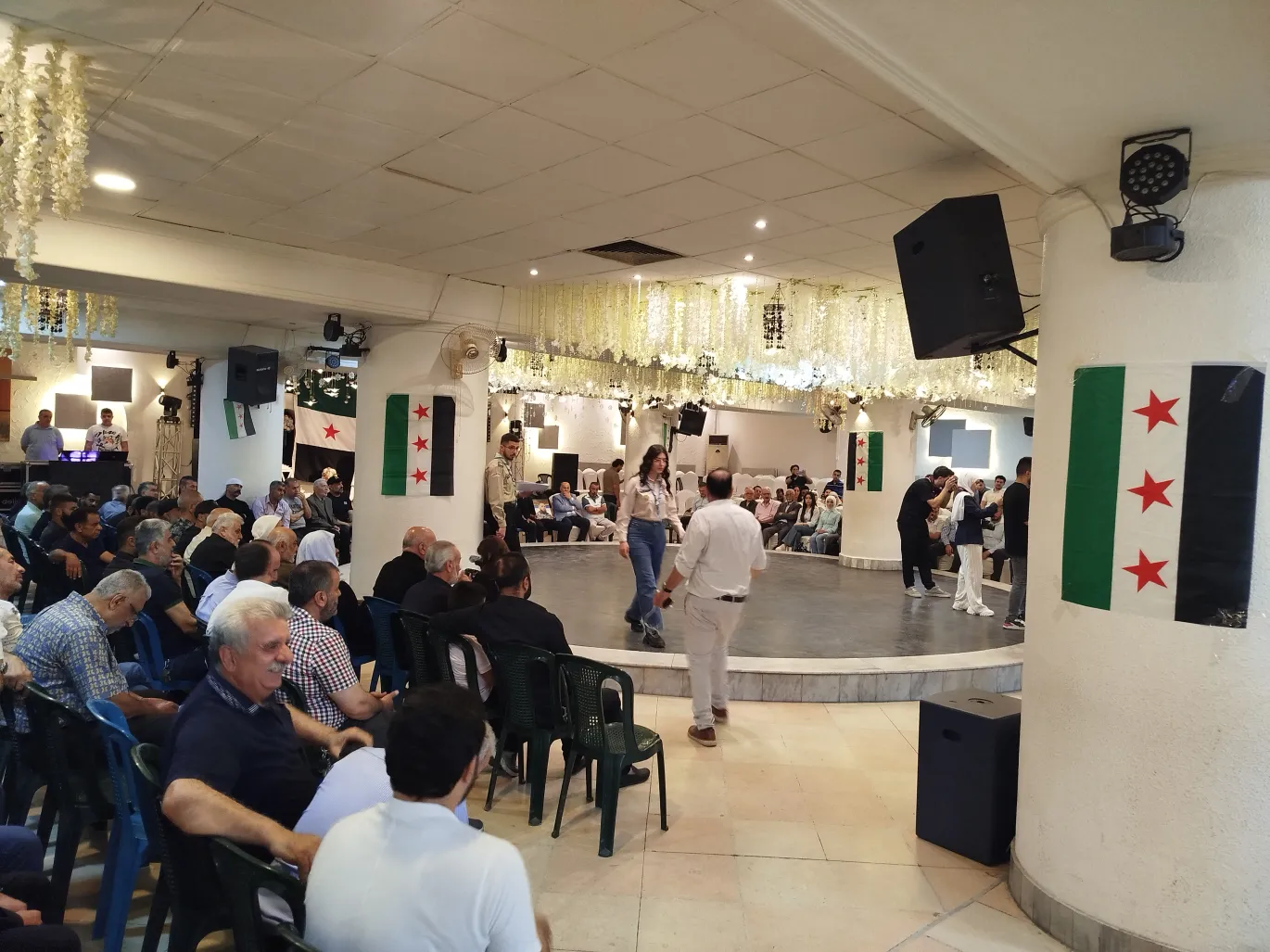
The Syrian Sect: A National Initiative to Promote Civil Peace and Social Cohesion
As part of civil society organizations' efforts to support stability, a group of national organizations launched the "Syrian Sect" convoy from the city of Aleppo to several regions in Syria, notably Jaramana and Saqba in Eastern Ghouta, with the aim of promoting civil peace and national unity.
The initiative involved dignitaries and activists from various governorates (Aleppo, Homs, Salmiyah, Damascus), where open community meetings were held, focusing on the importance of social cohesion, the need to confront hate speech, and the right of all to equal citizenship.
The visit culminated in the signing of the *Community Principles Charter* in Jaramana, which consists of 14 articles emphasizing Syria's unity, both in land and people. The charter upholds the principles of justice, respect for diversity, and support for state institutions to achieve stability.
Participants stressed the importance of students returning to their universities and standing by returnees in their regions to support recovery and reintegration efforts.
The initiative is implemented by:
Stabilization Support Unit (SSU), Civil Center, Women's Empowerment and Support Unit, Al-Risala Foundation, Kafa, Bond Network, Al-Istiqama Organization, Souriaty, Ather, and the Syrian Women's Association.
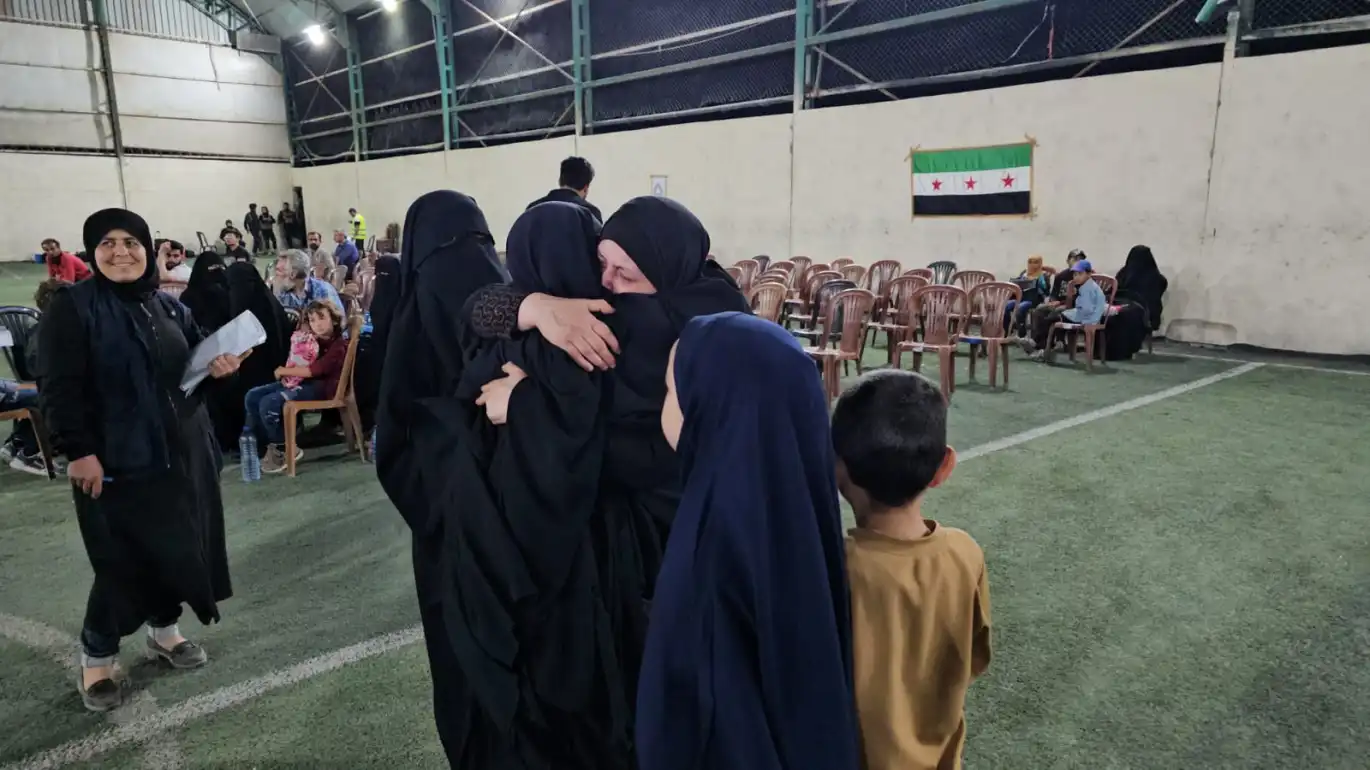
A landmark humanitarian operation marks the first step toward reintegration and healing for Syria’s most vulnerable
In a historic first, and in cooperation with the United Nations High Commissioner for Refugees (UNHCR) — which facilitated an agreement between the Syrian Government and the Syrian Democratic Forces in Northeast Syria — the Stabilization Support Unit (SSU), in partnership with the Syrian Center for Studies and Dialog, launched a humanitarian initiative aimed at evacuating 42 families from Al-Hol Camp.
This operation marks the beginning of a broader strategy to relocate 99 of the most vulnerable families—many facing severe health challenges—and offers hope for thousands who have endured years of displacement, deprivation, and isolation
A Humanitarian Turning Point
As part of an unprecedented agreement, UNHCR and the Syrian Government committed to assisting 99 families in Al-Hol Camp suffering from chronic and life-threatening medical conditions. The initiative also includes the first-ever humanitarian convoy to cross from northeast to northwest Syria—representing both a logistical breakthrough and a symbolic shift toward reintegration
Al-Hol: A Landscape of Loss
Al-Hol Camp has become home to more than 15,800 families—half from Aleppo—who have spent years under harsh, isolated conditions. Children born into the camp have never experienced life outside its fences, while women, elderly individuals, and people with disabilities bear the brunt of deteriorating conditions
The Convoy of Hope: More Than a Journey
Led by SSU and the Syrian Center for Studies and Dialogue, and supported logistically by Aleppo Governorate, the initial phase relocated 42 families over 2.5 days.
Key operational highlights included
22 trucks transporting belongings
4 buses for families
5 fully equipped ambulances with medical teams
The convoy’s 12-hour journey from Al-Hasakah to Aleppo adhered to strict safety protocols. Some children, unused to travel, experienced nausea, prompting a stop for medical attention—successfully managed by the onboard team.
A Structured Reception in Aleppo
At the Aleppo reception center, the Directorate of Health provided medical screenings, vaccinations, and documentation for each family member. Specialized units also offered psychosocial support to address trauma stemming from a decade of separation and camp life. Document verification and needs assessments were conducted before families shared a modest dinner and were transferred to temporary shelters.
Organized Relocation with Dignity
Families were relocated based on destination zones
Code A: Aleppo City – 17 families
Code B: Homs (2), Al-Sfera (7), Deir Hafer (3)
Code C: Al-Bab (10), Azaz (3)
Transfers were tailored to family needs, ensuring careful coordination with receiving communities
A Warm Reception and a Broader Vision
The initiative drew support from both the Syrian Government and the Autonomous Administration in northeast Syria. Families expressed a strong desire to reunite with loved ones still in the camp. SSU confirmed that this was only the beginning of a phased plan to relocate all families in need
Beyond Evacuation: A Call for Reintegration
Initial assessments reveal urgent and complex needs:
Psychological trauma and mental health challenges
Chronic illnesses needing continuous care
Children with disabilities requiring tailored support
Elderly and widowed women without caregivers
Families with no income in need of vocational training and financial aid
Host families now stretched thin accommodating returning relatives
Meaningful reintegration requires long-term, multi-sectoral support—from psychosocial care to economic recovery and community rebuilding.
A Pledge for the Future
The Convoy of Hope is more than a transport mission; it is a declaration of commitment to recovery, dignity, and the right to a life beyond survival. As further phases unfold, the challenge remains: not just to move families, but to restore their futures.
Job Opportunity: Project Manager – Peace Ambassadors Project 🚨
The Stabilization Support Unit (SSU) announces the need for an experienced Project Manager to lead the implementation of the Peace Ambassadors Project, which aims to empower Syrian women as leaders in reconciliation and peacebuilding efforts.
📍 Location: Aleppo, with travel to Lattakia, Tartous, Damascus, and Sweida as needed
📅 Contract Duration: From July 20, 2025, to January 20, 2026
🗓 Application Deadline: July 15, 2025
We are looking for a leadership-oriented individual with strong project management experience and a passion for inclusive peacebuilding in Syria.
📎 Please refer to the attached announcement for full details and the application process.
We encourage you to share this opportunity with others or apply directly if you believe you are qualified!
How to Apply:
To apply, please send your CV and a cover letter explaining your suitability for the position to the following email address: [hr@stabcom.org](mailto:hr@stabcom.org)
The deadline for applications is July 15, 2025.
Applications will be reviewed continuously, and shortlisted candidates will be contacted for interviews.
Note:
The Stabilization Support Unit is an equal opportunity employer. We are committed to diversity and inclusion, and encourage all qualified applicants from diverse backgrounds, including women and people with disabilities, to apply.

Call for Community Organizations to Participate in the "Enhancing National Engagement and Trust-Building in the Post-Conflict Phase" Project
This project is funded by the European Union, Germany, and Denmark, as part of the Peace Initiative in Syria, implemented by the German Agency for International Cooperation (GIZ).
About the Project:
The Stabilization Support Unit (SSU) invites community organizations from the six governorates (Damascus, Aleppo, Tartous, Lattakia, Homs, Hama) to participate as local partners in the “Enhancing National Engagement and Trust-Building in the Post-Conflict Phase” project.
Role of Participating Organizations:
- Facilitate organized dialogue sessions (30 sessions across 6 governorates).
- Support the organization of cultural activities related to reform topics.
- Contribute to community mobilization and communication activities.
- Participate in verification and validation workshops at the governorate level.
Nature of Participation:
Participation will be without financial compensation – the goal is to build the capacities of local organizations and raise their vision in the areas of dialogue and governance.
Commitment Duration: 7 months
Selection Criteria:
- Previous experience in community outreach, civil participation, or peacebuilding activities.
- Commitment to inclusive practices, particularly involving women, youth, and marginalized groups.
- Availability of at least two members to work as ongoing facilitators.
- Operational presence in the relevant governorate, with basic logistical capabilities.
- Good familiarity with the local community environment and components in the targeted governorates.
- Willingness to participate voluntarily under the guidance of the Stabilization Support Unit.
Application Process:
To apply, please complete the following link:
[https://ee.kobotoolbox.org/x/FHFoSlTU](https://ee.kobotoolbox.org/x/FHFoSlTU)
Or scan the attached barcode in the announcement.
Application Period: 7 calendar days
Evaluation Period: 5 working days
Number of Required Organizations: 12 organizations (2 organizations per governorate)
Key Dates:
- Application Start Date: 09/03/2025
- Final Application Deadline: 09/09/2025
- Announcement of Results: 21/09/2025
We look forward to your partnership in building a more inclusive and participatory Syria.
Stabilization Support Unit (SSU)
Announcement of Extension for the Application Deadline for Participation in the National Engagement and Trust-Building Project in the Post-Conflict Phase
Call for Community Organizations to Participate in the Project “Enhancing National Engagement and Trust-Building in the Post-Conflict Phase”
This project is funded by the European Union, Germany, and Denmark, as part of the Peace Initiative in Syria, implemented by the German Agency for International Cooperation (GIZ).
About the Project:
The Stabilization Support Unit (SSU) invites community organizations from the six governorates (Damascus, Aleppo, Tartous, Lattakia, Homs, Hama) to participate as local partners in the “Enhancing National Engagement and Trust-Building in the Post-Conflict Phase” project.
Role of Participating Organizations:
- Facilitate organized dialogue sessions (30 sessions across 6 governorates).
- Support the organization of cultural activities related to reform topics.
- Contribute to community mobilization and communication activities.
- Participate in verification and validation workshops at the governorate level.
Nature of Participation:
Participation will be without financial compensation – the goal is to build the capacities of local organizations and raise their vision in the areas of dialogue and governance.
Commitment Duration: 7 months
Selection Criteria:
- Previous experience in community outreach, civil participation, or peacebuilding activities.
- Commitment to inclusive practices, particularly involving women, youth, and marginalized groups.
- Availability of at least two members to work as ongoing facilitators.
- Operational presence in the relevant governorate, with basic logistical capabilities.
- Good familiarity with the local community environment and components in the targeted governorates.
- Willingness to participate voluntarily under the guidance of the Stabilization Support Unit.
Application Process:
To apply, please complete the following link:
[https://ee.kobotoolbox.org/x/FHFoSlTU](https://ee.kobotoolbox.org/x/FHFoSlTU)
Or scan the attached barcode in the announcement.
Application Period: 7 calendar days
Evaluation Period: 5 working days
Number of Required Organizations: 12 organizations (2 organizations per governorate)
Key Dates:
- Application Start Date: 03/09/2025
- Final Application Deadline: 15/09/2025
- Announcement of Results: 21/09/2025
We look forward to your partnership in building a more inclusive and participatory Syria.
Stabilization Support Unit (SSU)
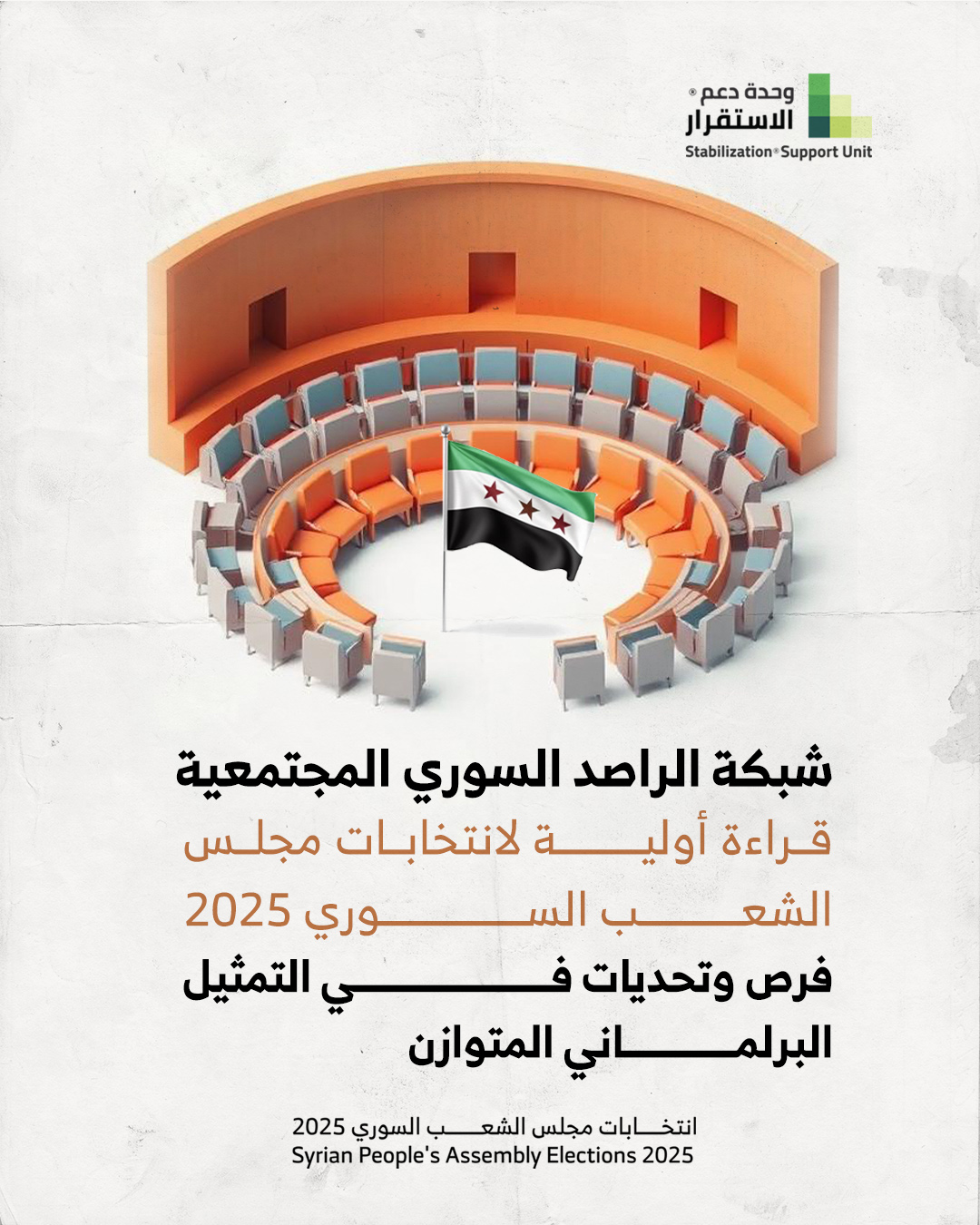
Preliminary Reading of the 2025 Syrian People’s Assembly Elections Reveals Opportunities and Challenges in Parliamentary Representation
Syrian Rased Community Network: The 18–40 age group secures only 18.6% of seats in the new People’s Assembly
Syrian Rased Community Network: Women hold 5% of seats, reflecting representation levels below regional and international standards
Damascus – October 6, 2025:
On October 5, 2025, the High Elections Committee announced the preliminary results of the Syrian People’s Assembly elections. A total of 119 parliamentarians were elected across 49 electoral districts covering all Syrian governorates.
The results indicate that women’s representation stands at 5.04%, with six seats won out of 119. Although this figure remains low compared to regional and international averages, the presence of women in the assembly represents a significant step forward. It reflects the determination of several women leaders to compete despite challenging and complex circumstances. These results underscore the importance of developing a more supportive legislative and procedural environment to enhance women’s participation and strengthen their role in decision-making positions.
Age Group Representation:
In terms of age group representation, the results show that the majority of winners belong to the middle-aged category (41–60 years), accounting for 71% of the seats. The 18–40 age group secured 18.6%, while the elderly group (61 years and above) accounted for 10%. The average age of elected members is 48.2 years, a figure aligned with international norms and reflecting a blend of accumulated experience and youthful energy, though with varying degrees of representation among age groups.
Age Group Analysis by Governorate:
A detailed analysis of age groups by governorate reveals significant disparities in the average age of elected candidates across different regions. Quneitra recorded the lowest average age among elected members at (44 years), followed by Tartous (44.8 years) and Damascus (46.6 years). In contrast, Latakia recorded the highest average age at (53.9 years), followed by Daraa (52 years) and Deir ez-Zor (50.6 years).
At the individual level, the youngest elected member is Mohammad Fawwaz Al-Mahalli from Aleppo Governorate, who is just 26 years old. The oldest is Osama Mohammad Saleh Al-Assaf from Deir ez-Zor, aged 72. Notably, Hama Governorate includes the youngest elected female member, Mu’mina Abdul Ghani Arabo, aged 33. Meanwhile, the governorates of Damascus, Tartous, and Quneitra had no elected members from the senior age group (over 60 years old).
The Rased Syrian Community Network views these results as a significant milestone for understanding the current state of political representation in Syria, with its accompanying opportunities and challenges. The Network emphasizes that achieving gender balance and enhancing youth representation are key factors in ensuring a more inclusive and representative People’s Assembly—one that reflects the diversity of Syrian society and contributes to strengthening political participation and advancing the electoral process in the future.
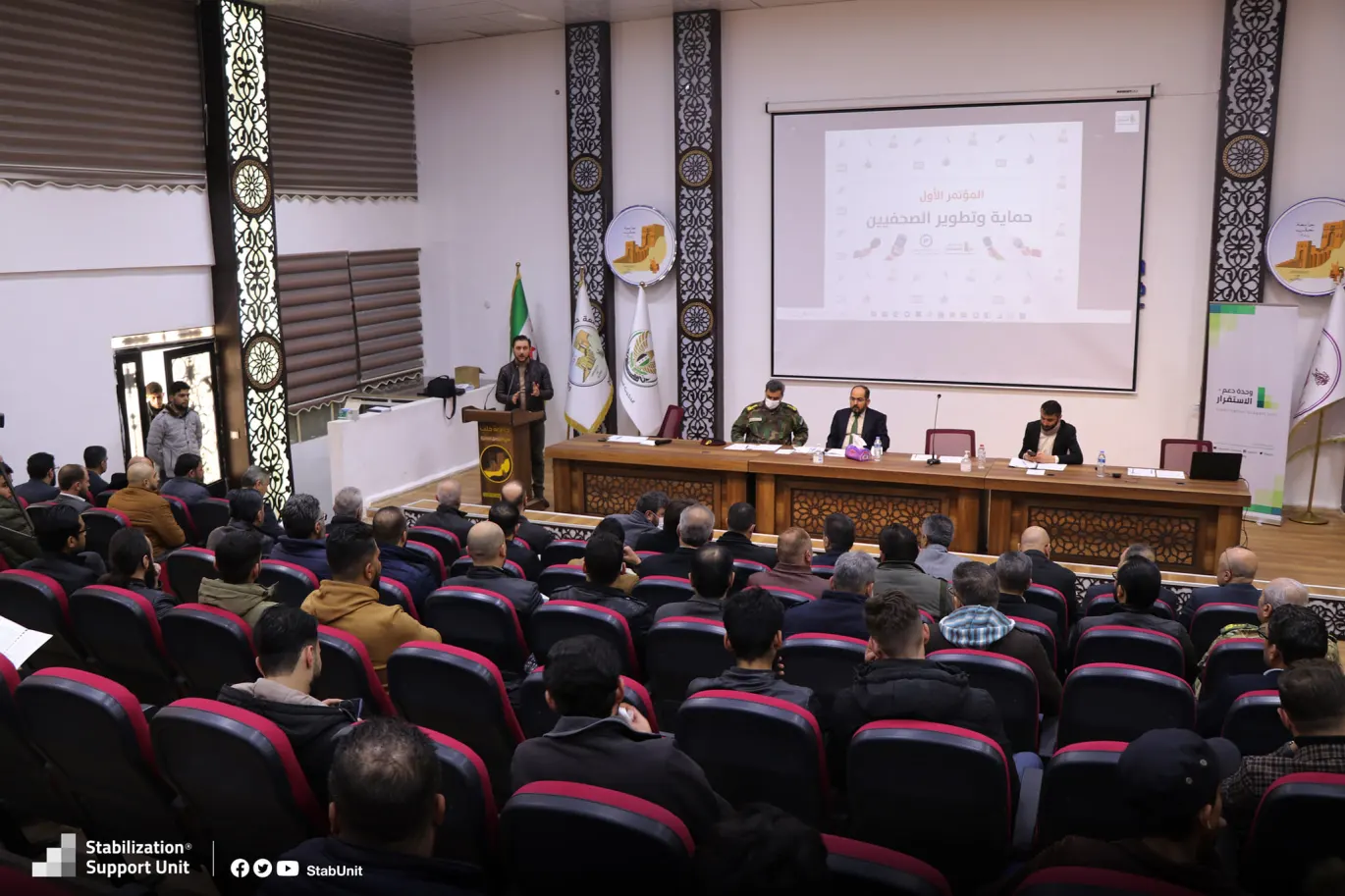
The International Media Support (IMS) organization issued a report titled "Syria: Journalist Safety Mechanisms Start with Trust," focusing on its work in supporting media and journalist safety in Syria in collaboration with the Stabilization Support Unit.
The report states that IMS is making efforts concerning journalist safety and the issue of impunity within the framework of the United Nations plan.
The organization stated that after more than a decade of war, the media landscape in Syria remains fragmented and disorganized, especially with independent journalists fleeing into exile, being displaced internally, or being killed by the regime.
IMS further explained that it has been working with the Stabilization Support Unit since 2020 "to achieve cooperation and alignment between active media entities in opposition-controlled areas in the northern part of the country." Additionally, the Stabilization Support Unit, with IMS support, organized a series of workshops to encourage dialogue among stakeholders from independent media outlets, local governing authorities, local military forces, and civil society to ensure journalist safety.
IMS emphasized the importance of these meetings as they "gathered key local experts to discuss challenges and needs related to media safety, contributing to building a platform for dialogue and trust among various actors."
Mr. Munther Al-Sallal, Executive Director of the Stabilization Support Unit, stated that this project is "important at a time when many international entities have stopped supporting Syrian media, despite the deteriorating situation, dire living conditions, violations, and instability."
Mr. Al-Sallal continued, "Inviting actors to dialogue and build trust among them is an achievement in itself in the current Syrian environment. We believe it will increase the safety of journalists and enhance their professionalism on the ground."
According to IMS, the "Media Code of Ethics" issued in February of this year is considered "one of the most important outcomes of this project." It represents a significant step towards creating a more professional and cooperative media sector, focusing on explaining media laws, increasing protection for journalists, and educating them about their rights and responsibilities, according to the organization's report.
The Stabilization Support Unit, with IMS support, will further focus on governance to enhance and develop internal structures and safety policies for media groups. This also includes establishing a robust regional emergency plan, locally directed, aimed at preparing emerging local media institutions for repositioning in the future if conflict escalates in their areas.
Mr. Munther Al-Sallal reaffirmed, "The workshops and the Media Code of Ethics are the first steps towards a regional emergency plan, through which we will work to improve media safety mechanisms so that journalists can continue covering and sharing important stories with the Syrian people and the world during crises."
The essence of the partnership between IMS and the Stabilization Support Unit is that such an emergency plan must be developed by local Syrian entities within Syria to ensure the sustainability of the project. This is especially important given that the war in Syria has proven to Syrians that when disasters strike, the international community may not be willing to provide assistance. For this reason, IMS continues its supportive and guiding role for the Stabilization Support Unit to achieve this.
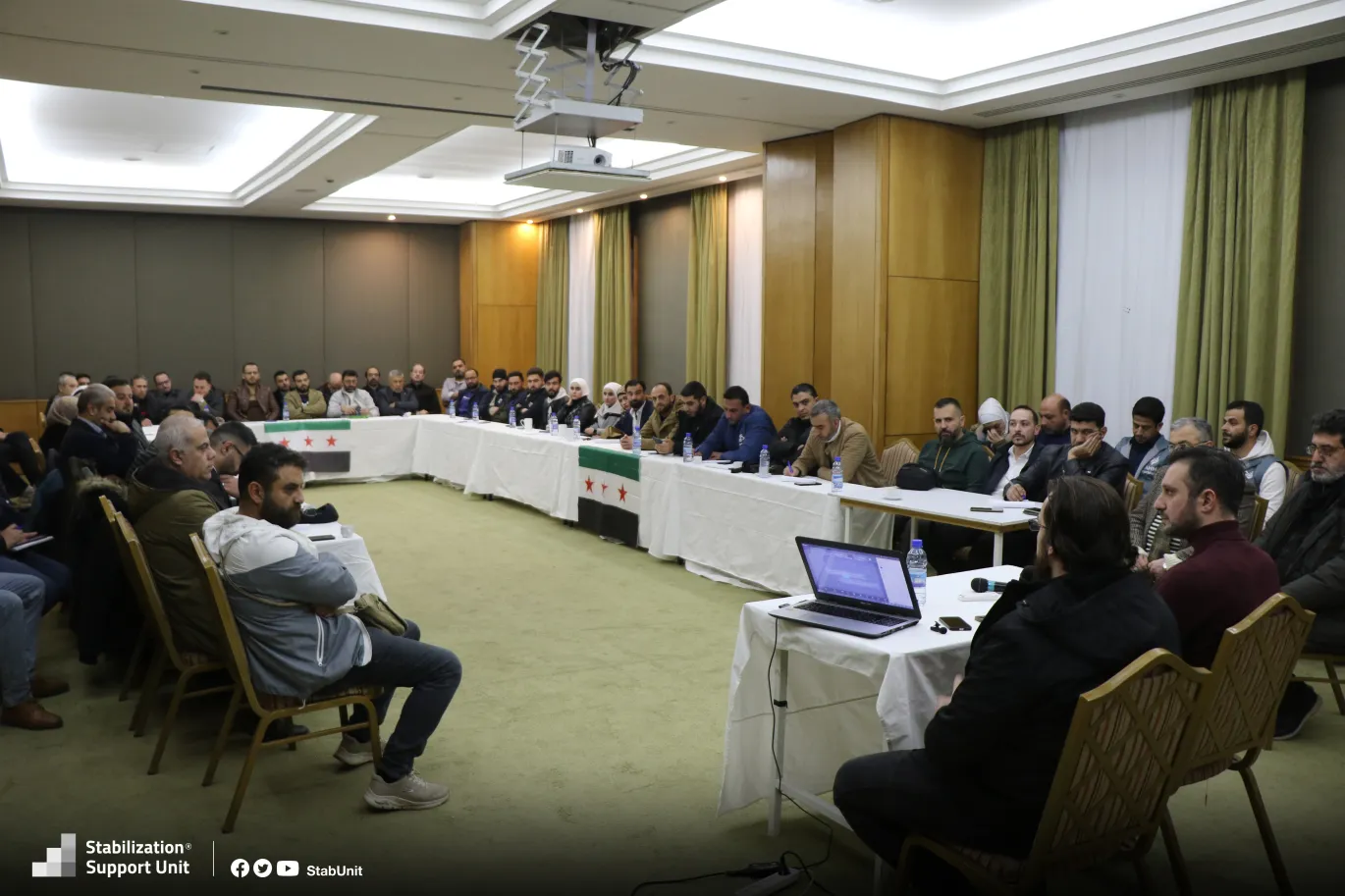
The Stabilization Support Unit organized an extensive meeting at the Sheraton Hotel hall in Aleppo, attended by representatives of civil society organizations, local events, and civil activists from all segments of the city.
During the meeting, the current situation in the city and its impact on the work of civil society and active entities were discussed.
The meeting also highlighted the importance of supporting initiatives led by local activists, especially in areas such as addressing service needs and improving living conditions.
An open discussion was held to outline a shared vision for civil society in Aleppo during the upcoming phase, aimed at enhancing collective efforts to face challenges.
Recommendations were made to strengthen coordination among all active entities in the city, with an emphasis on the importance of joint efforts to advance essential services and improve the standard of living.
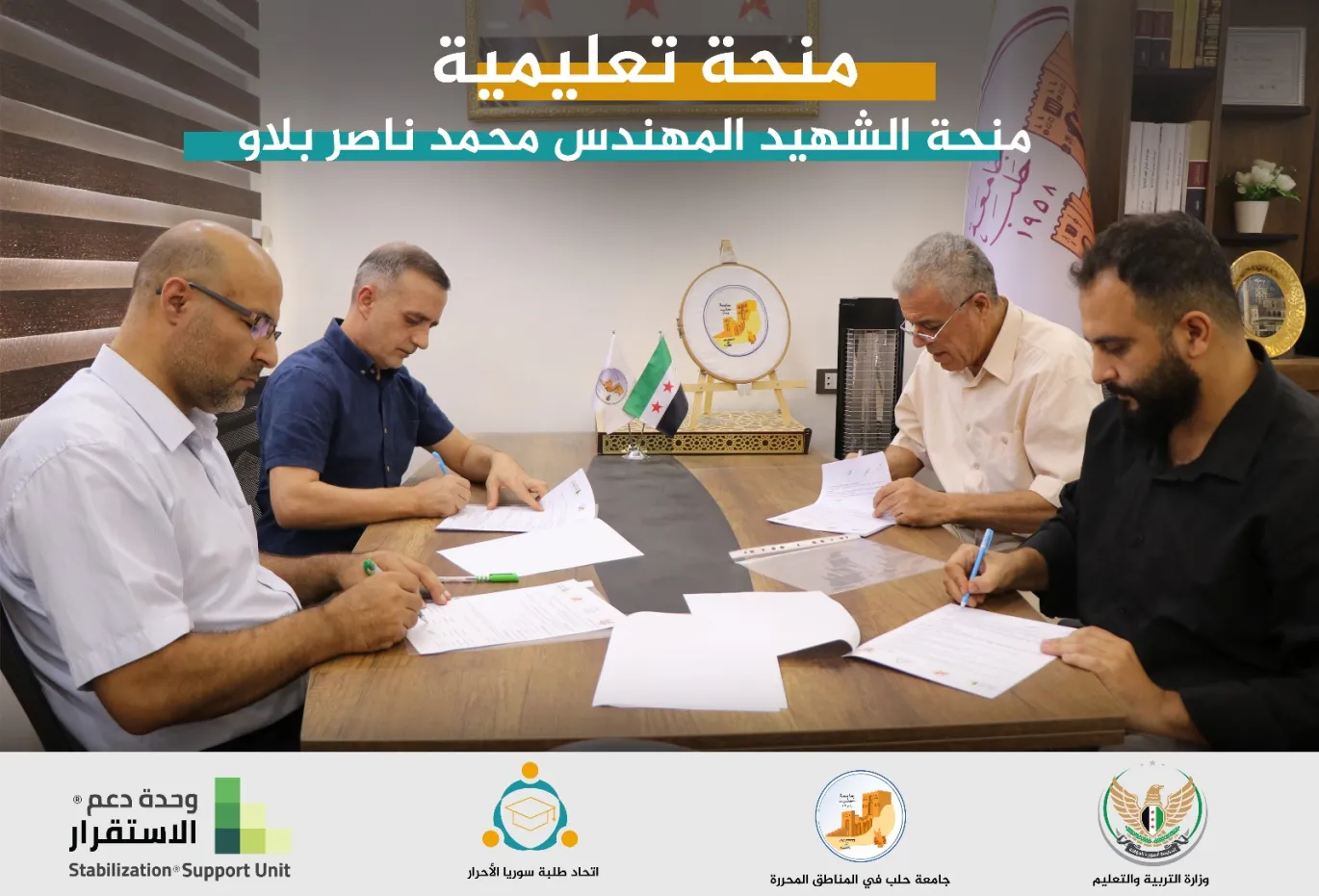
The Stabilization Support Unit signed a Memorandum of Understanding with: - The Ministry of Education in the Syrian Interim Government - The University of Aleppo in the liberated areas - The Union of Free Syrian Students To provide an educational financial grant for university students at the University of Aleppo in the liberated areas. The grant targets students who are not supported by other entities and includes the following categories: - Sons and daughters of Syrian revolution martyrs - Sons and daughters of detainees of the Syrian revolution - People with disabilities The aim of this grant is to support these youth groups in continuing their university education without interruption, enhance their community involvement, and develop their leadership skills to enable them to actively contribute to improving the conditions of their community.

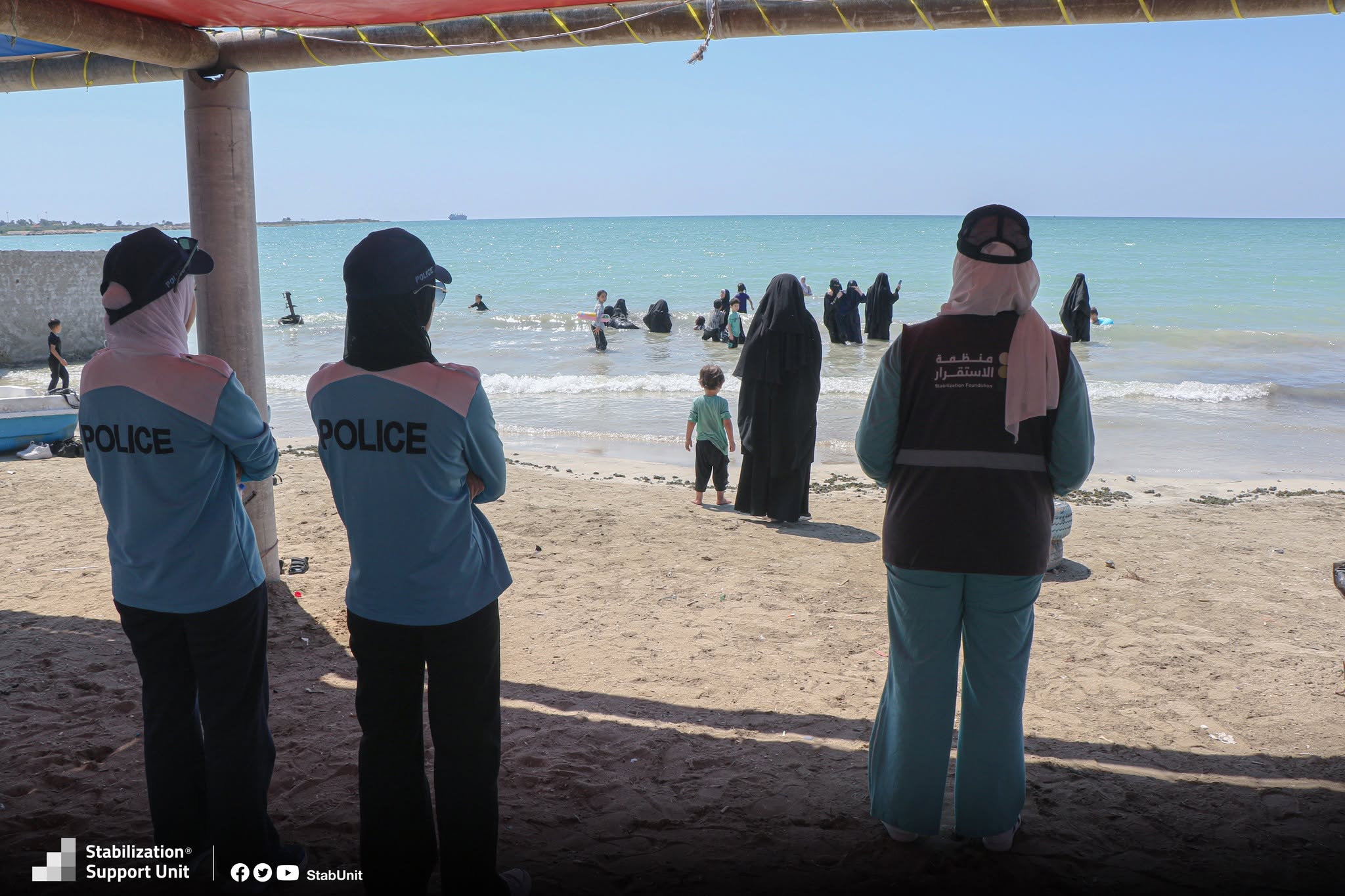
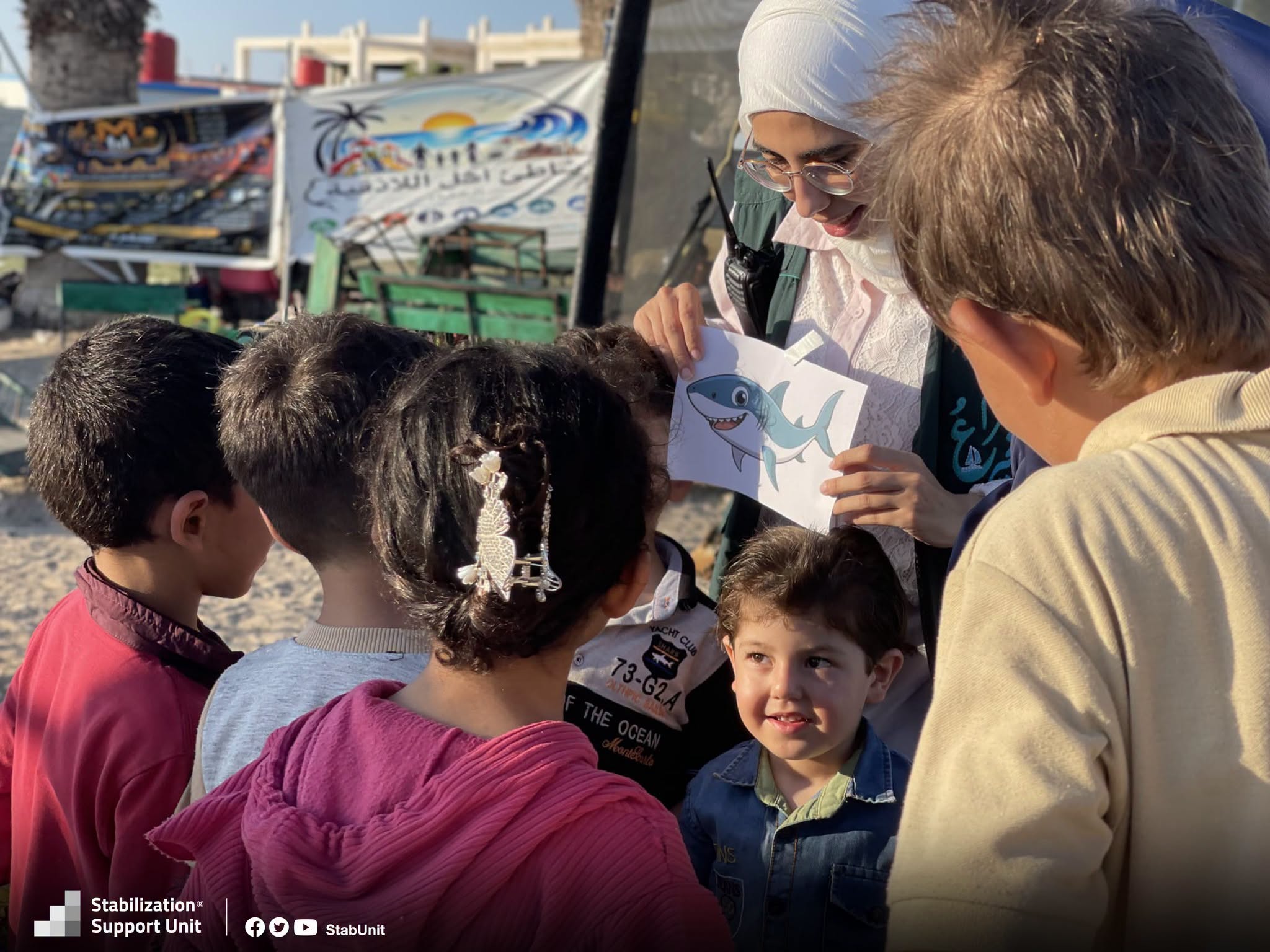
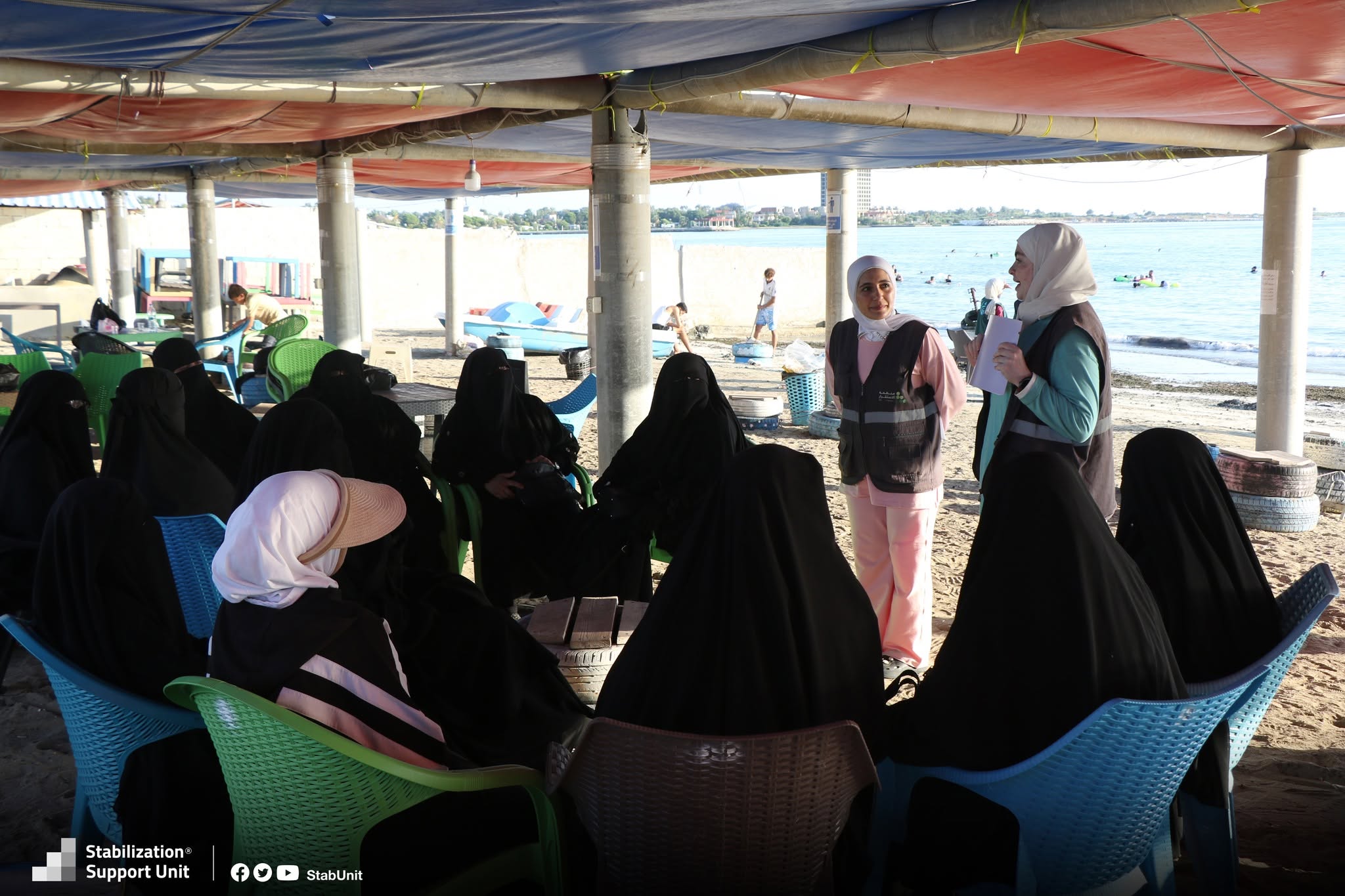
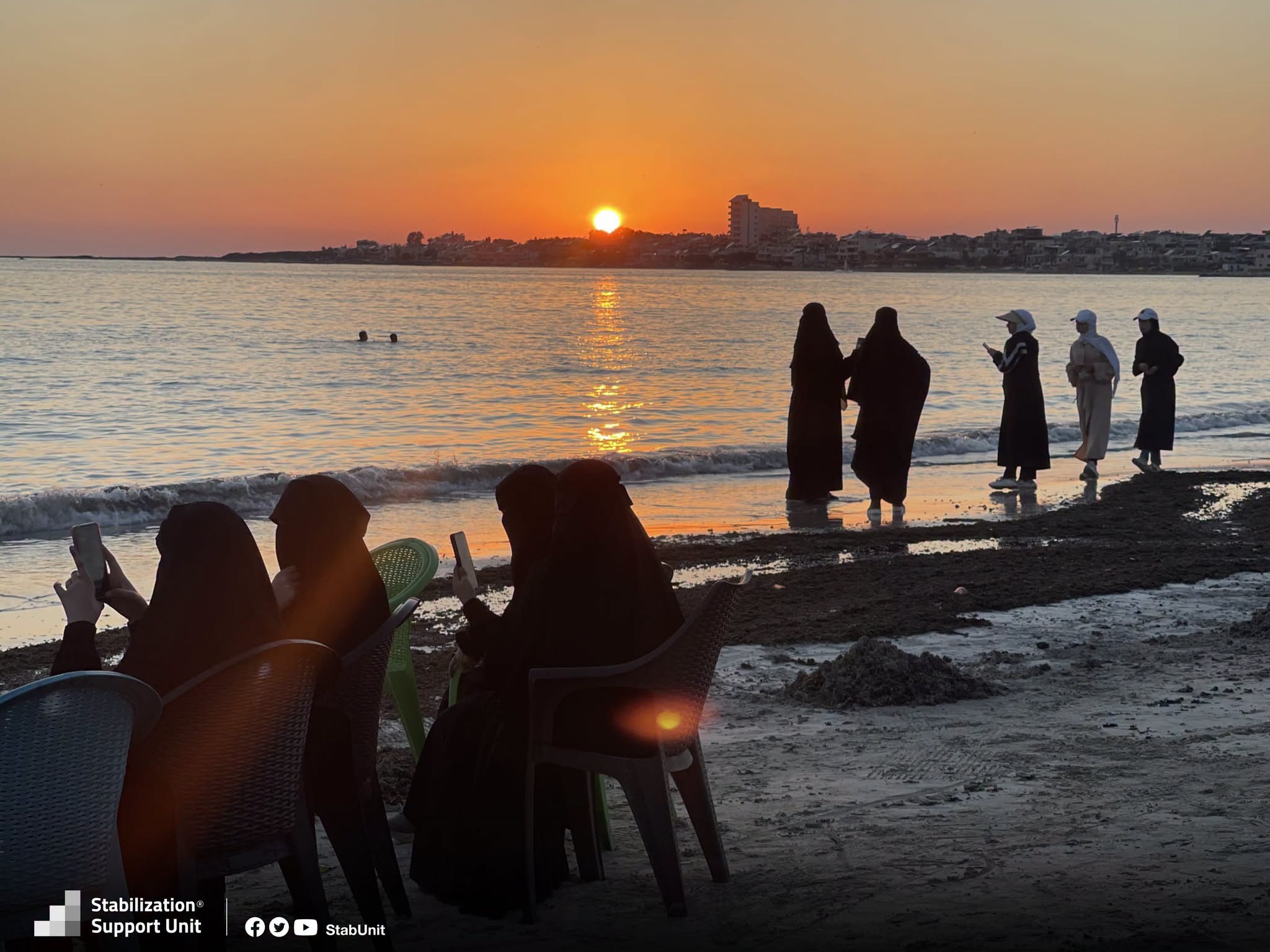
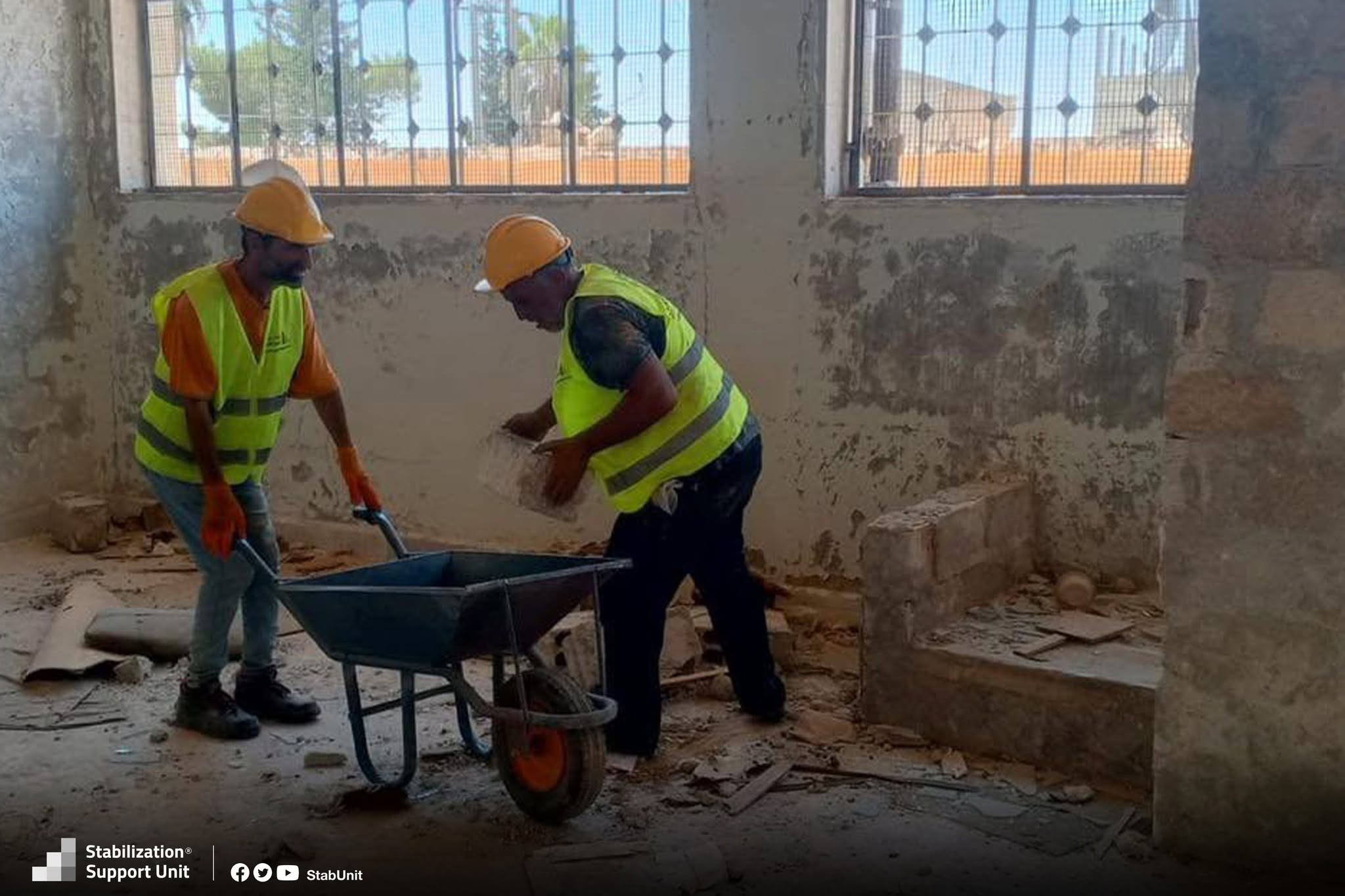
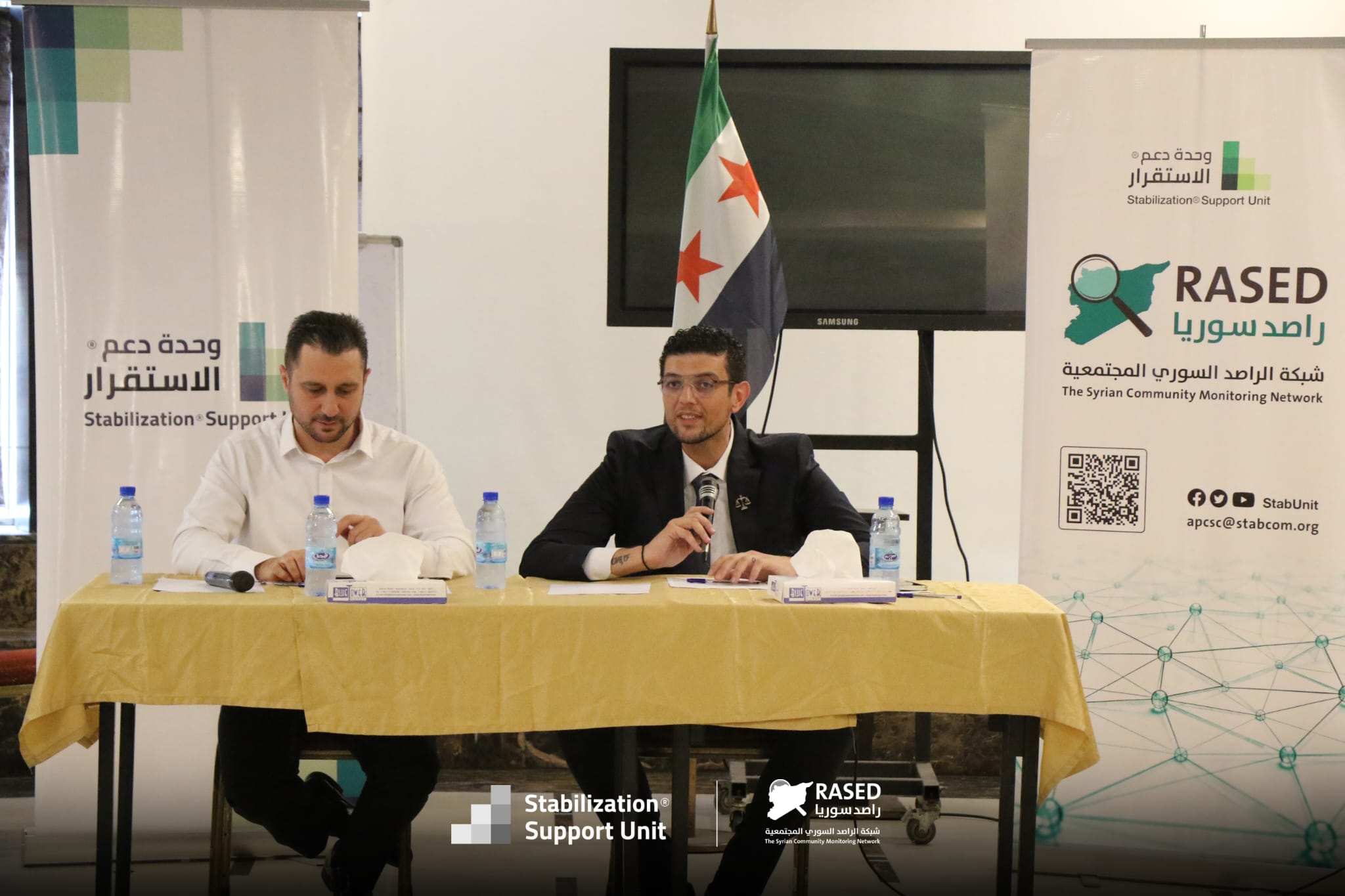
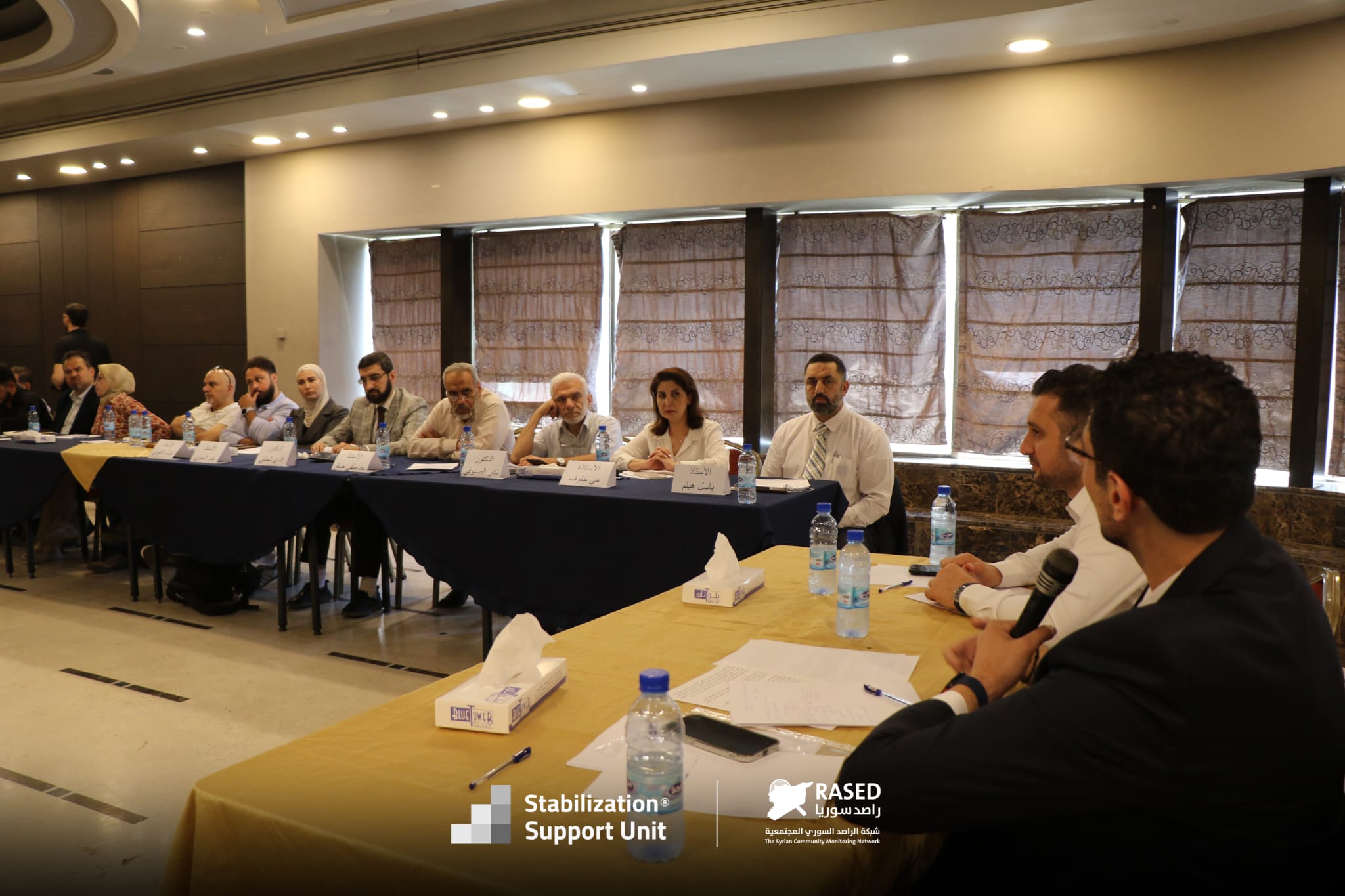
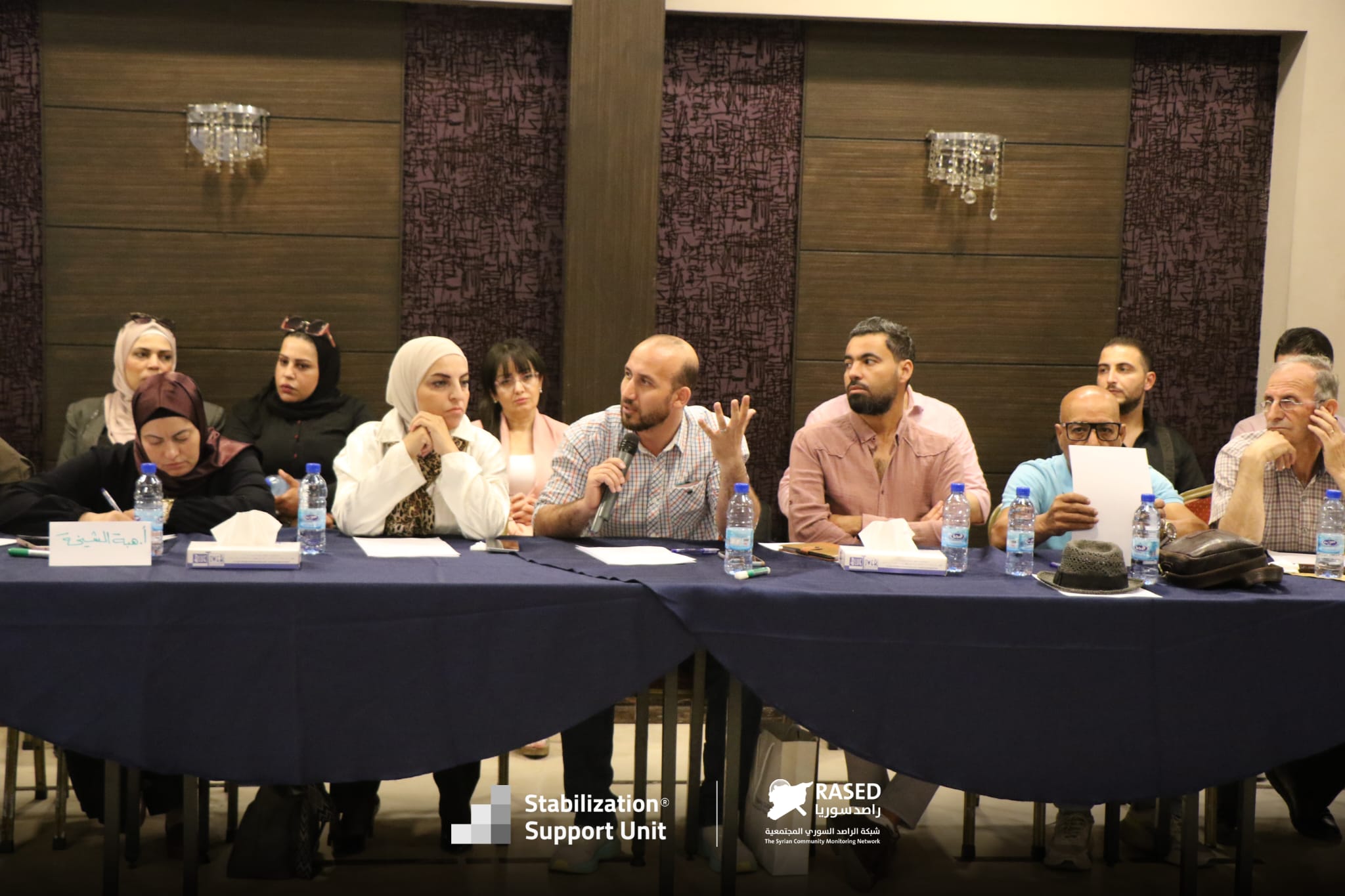
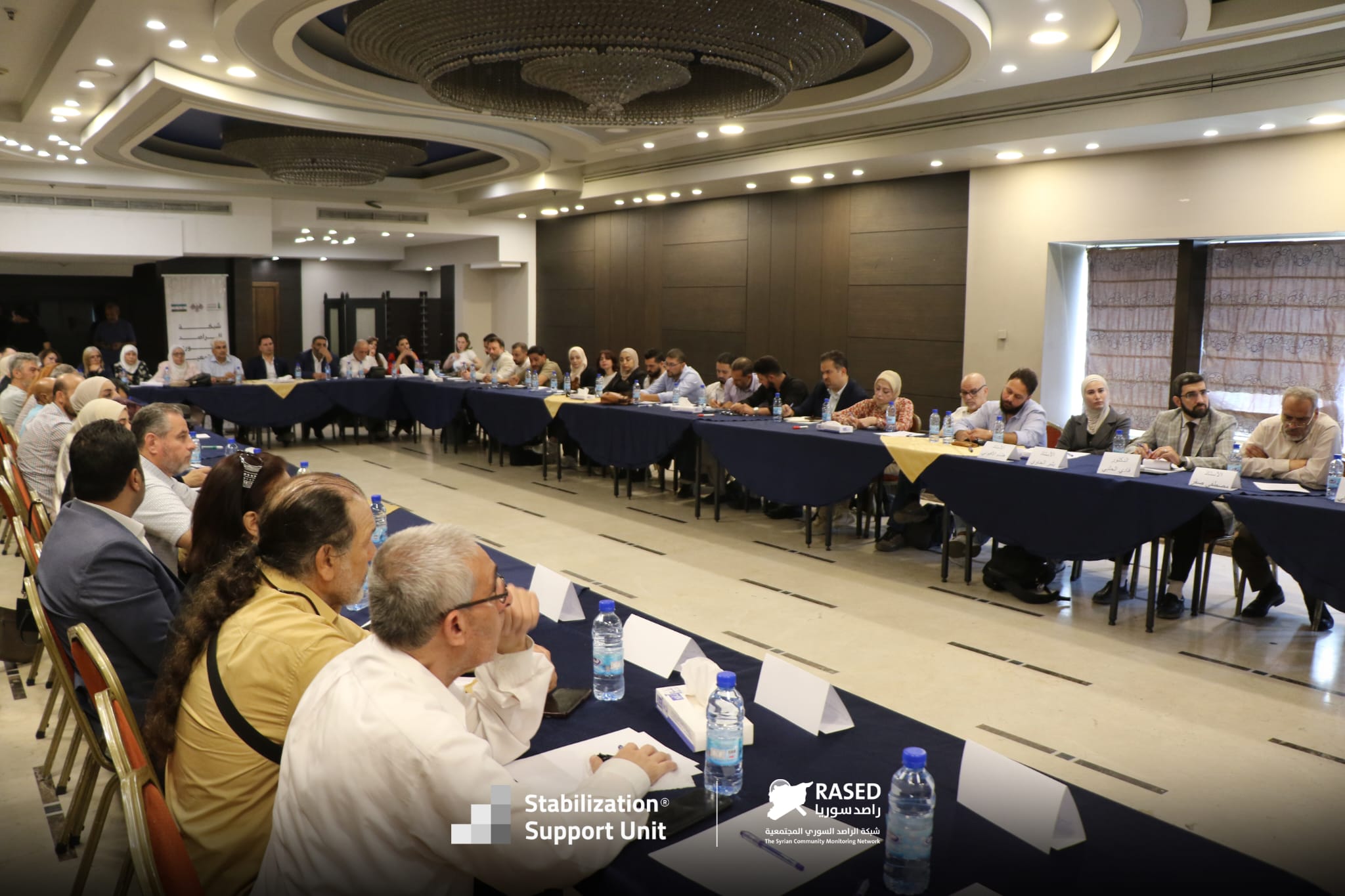
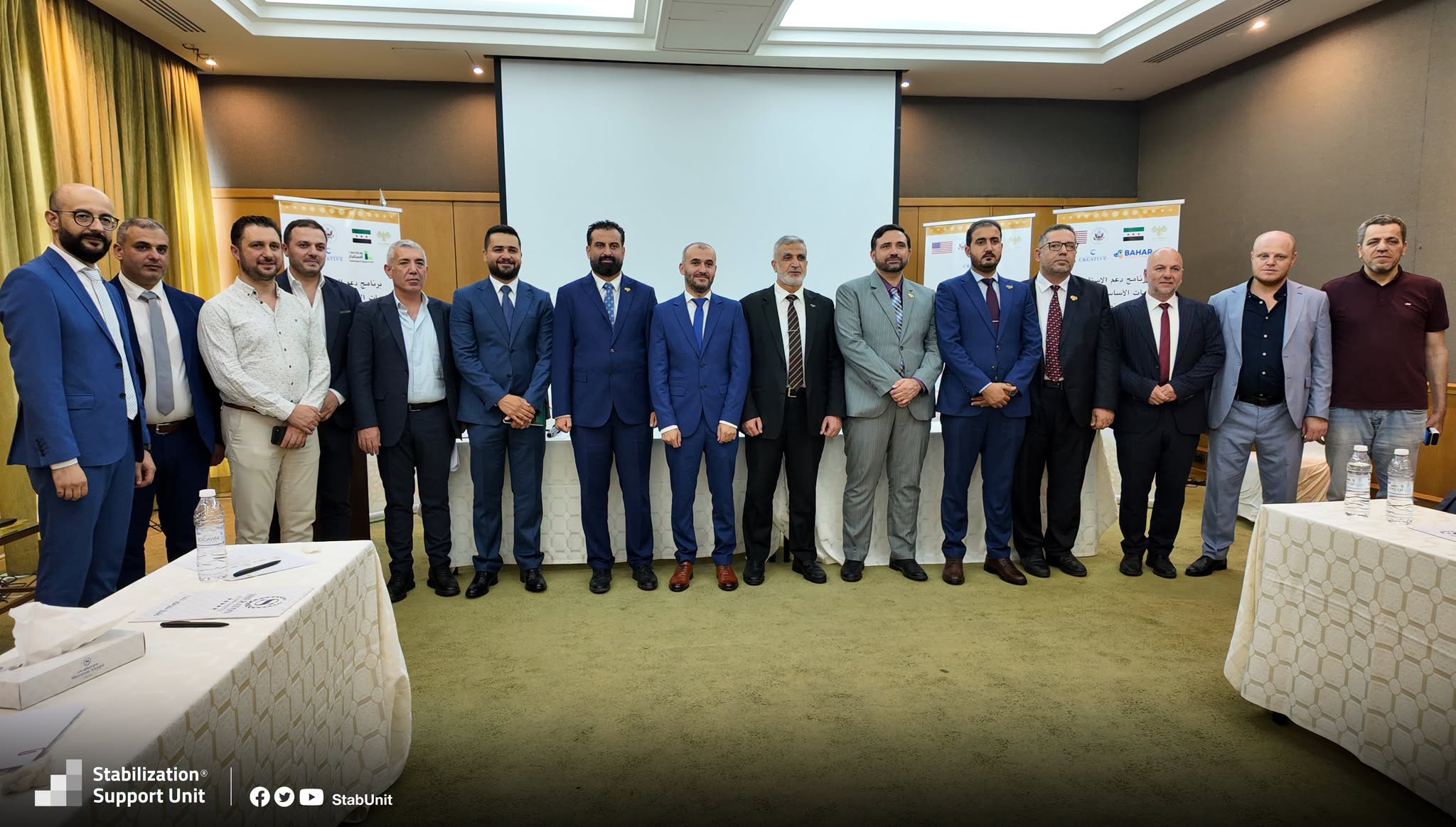
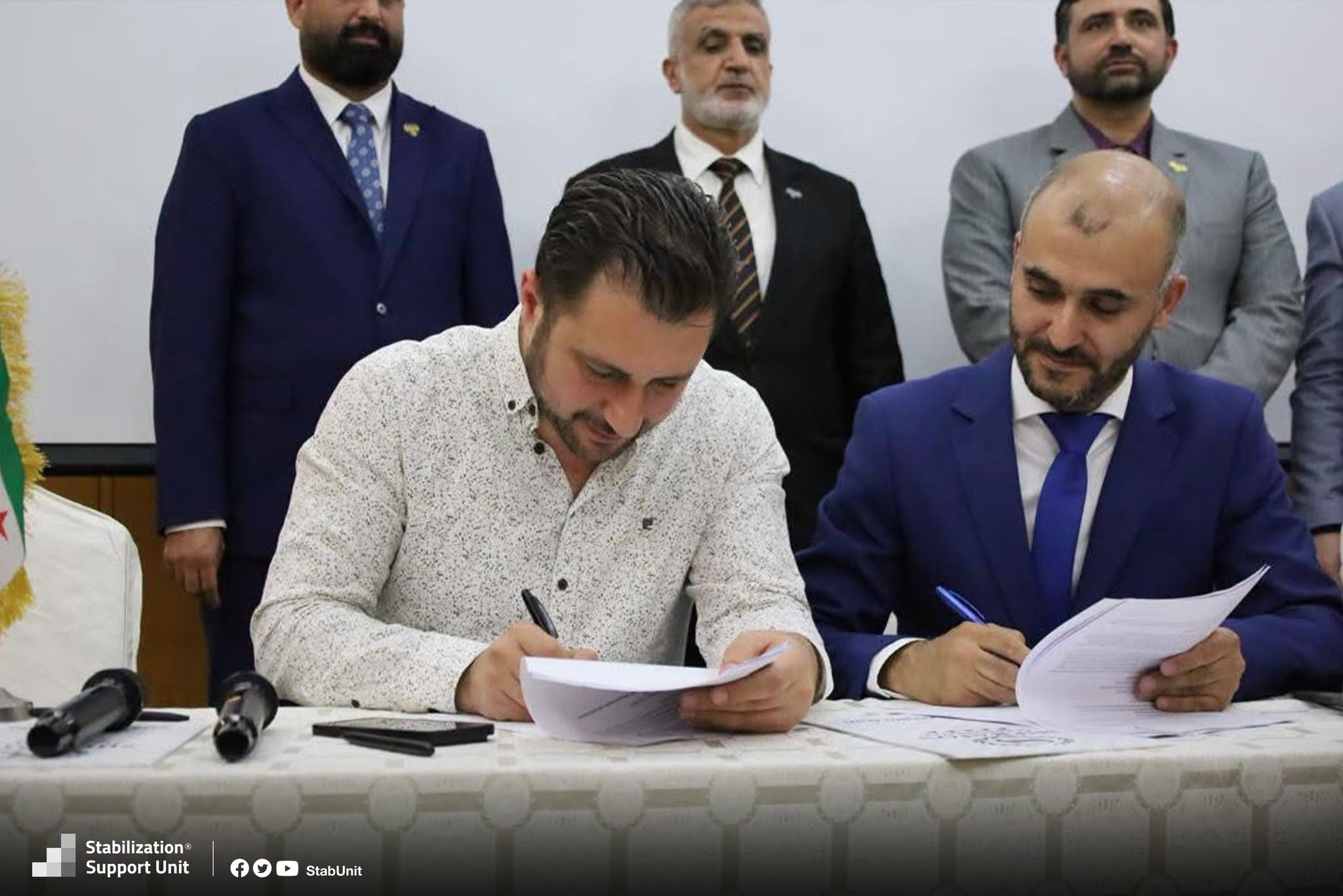
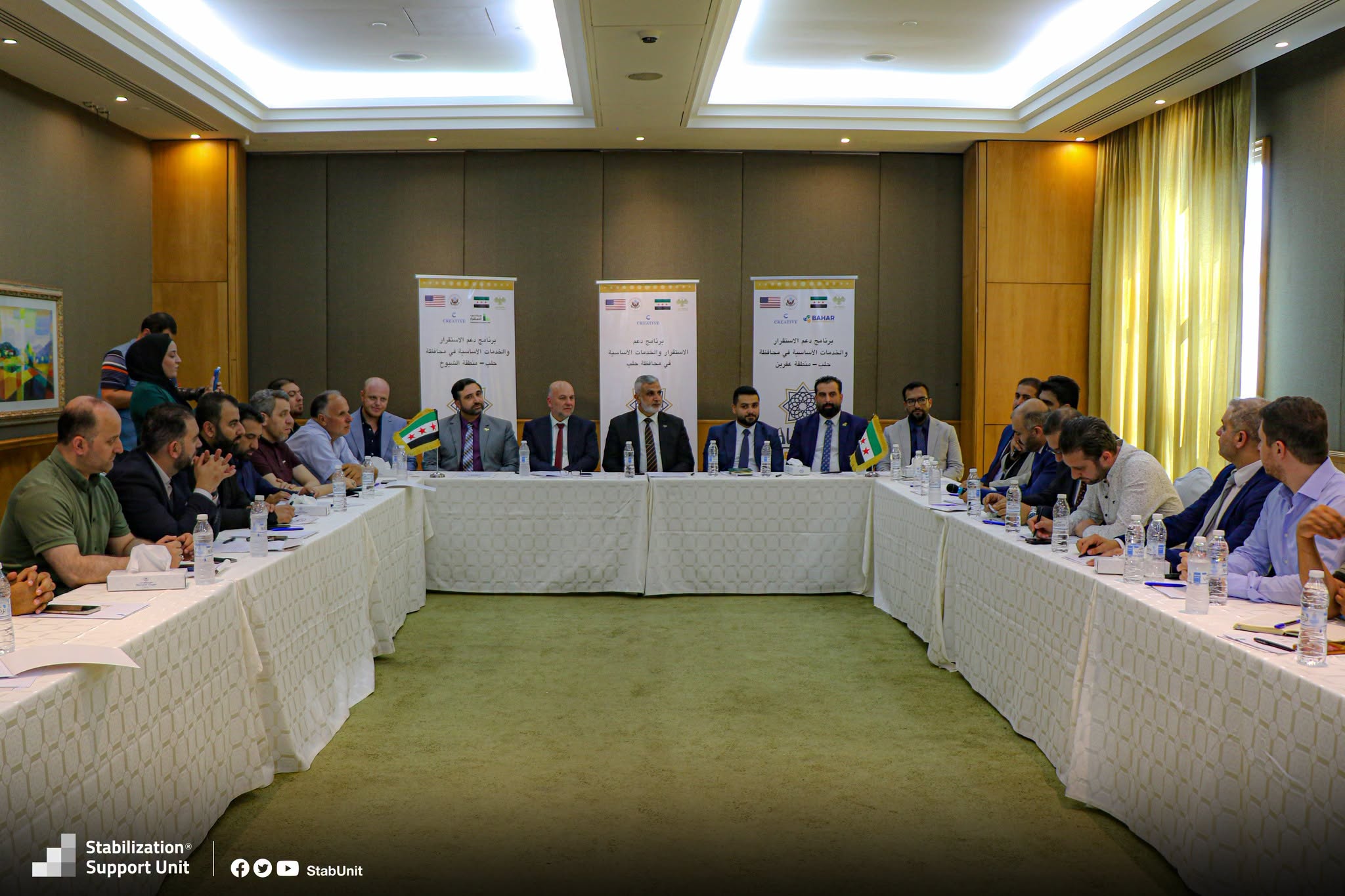
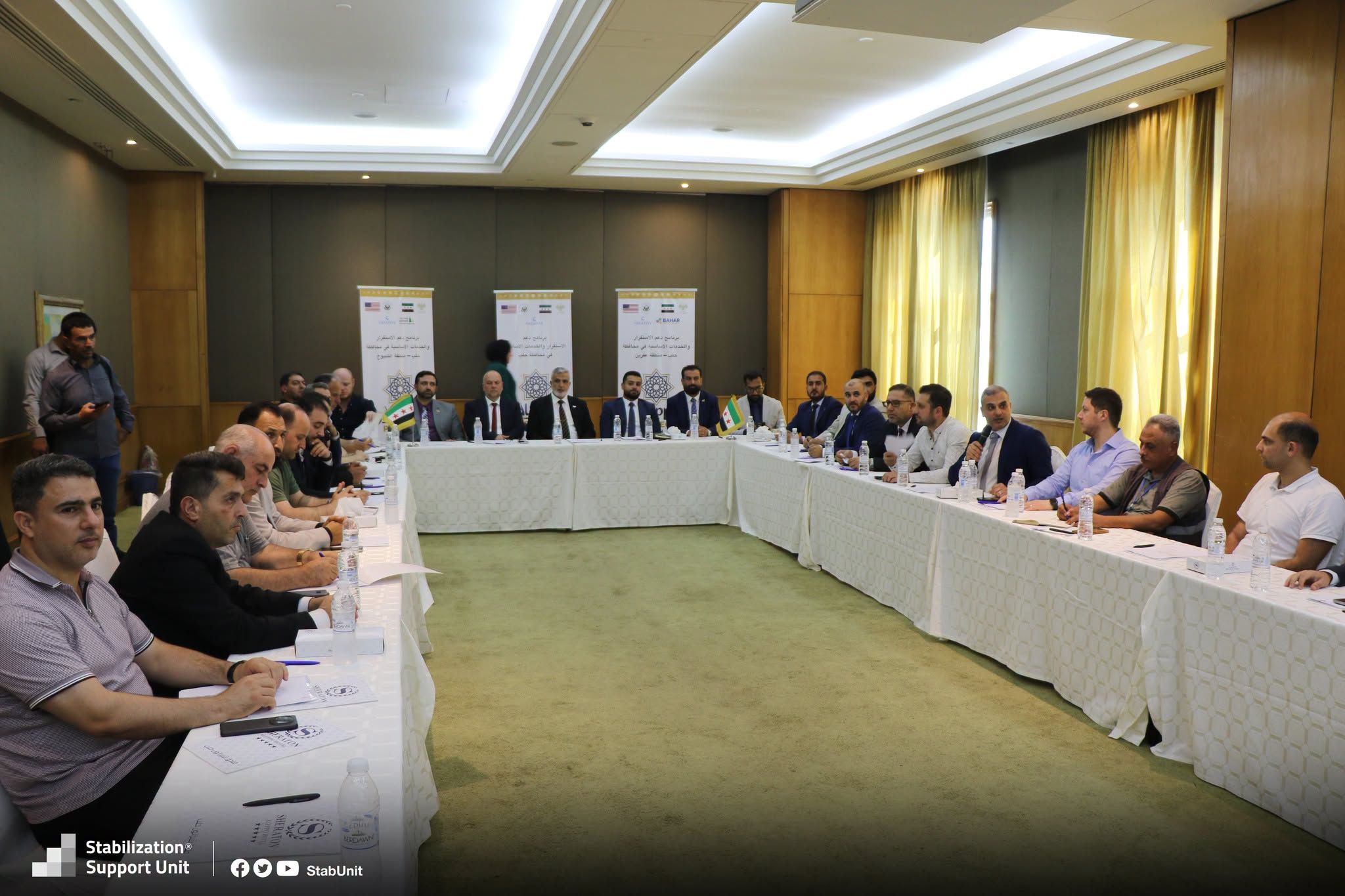
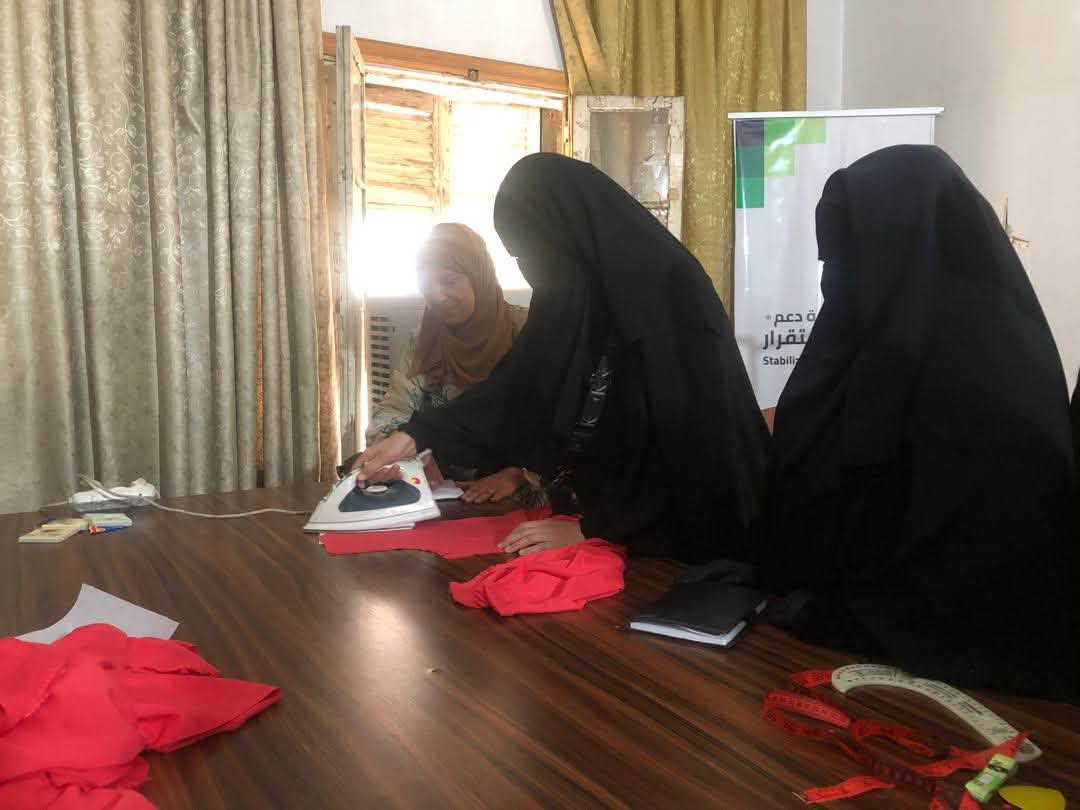
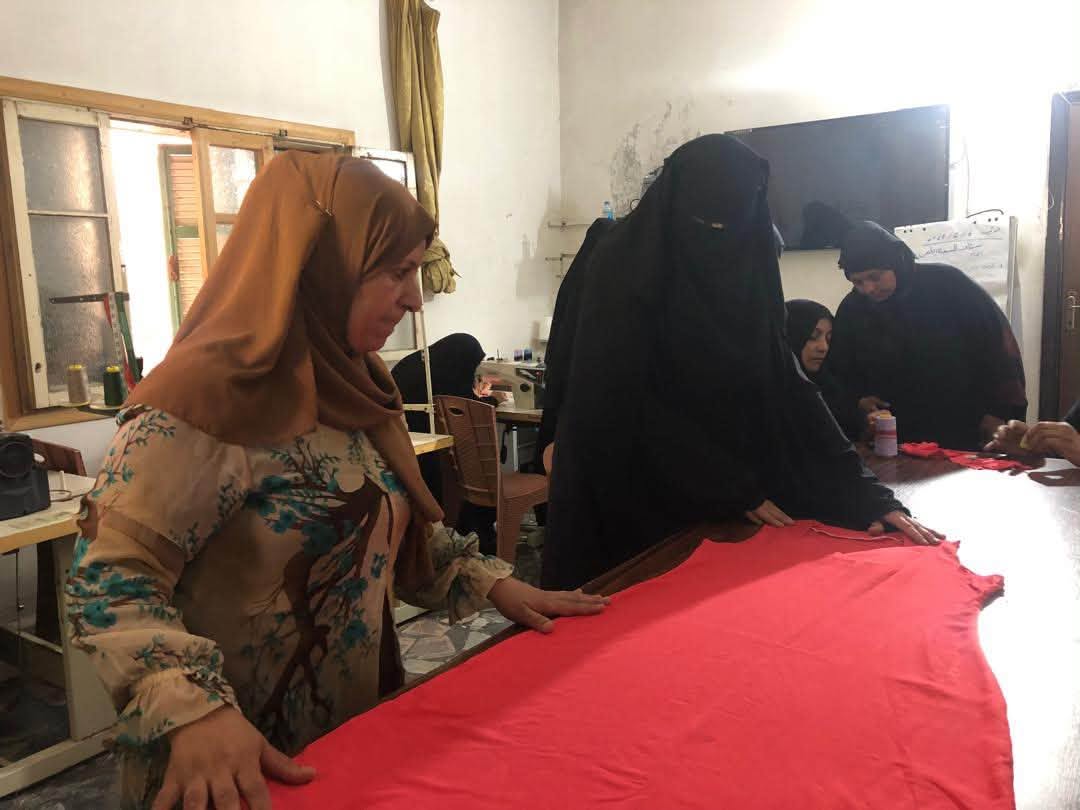
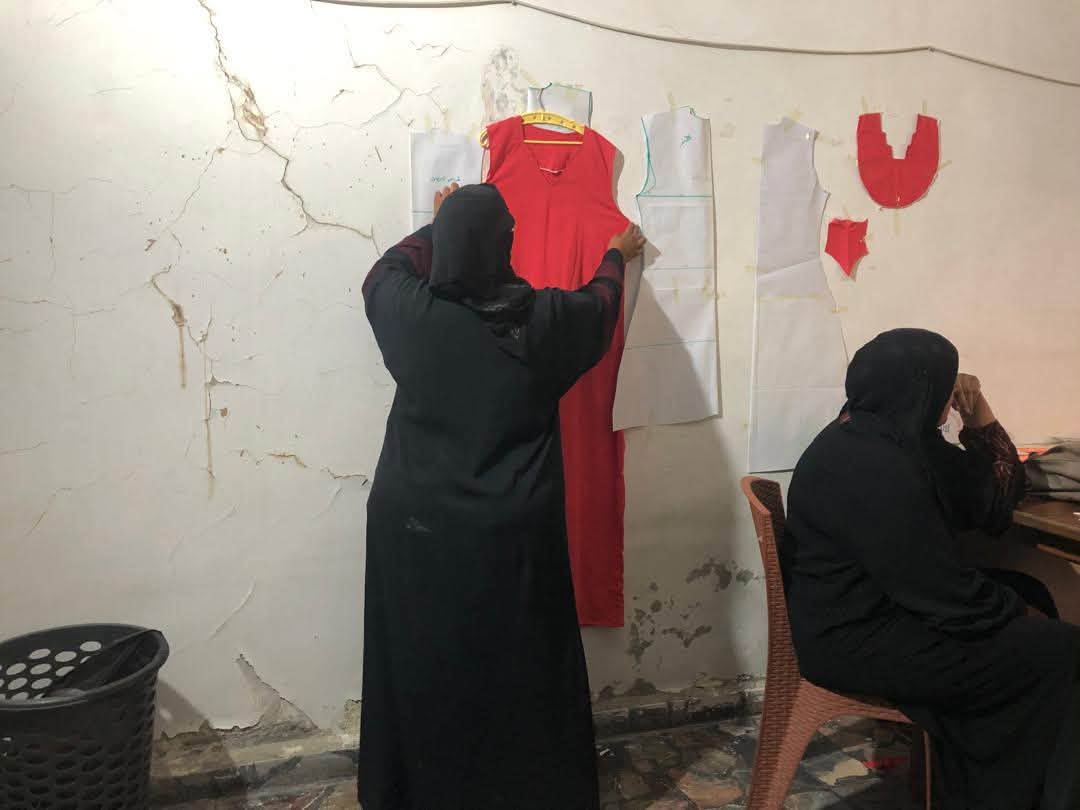
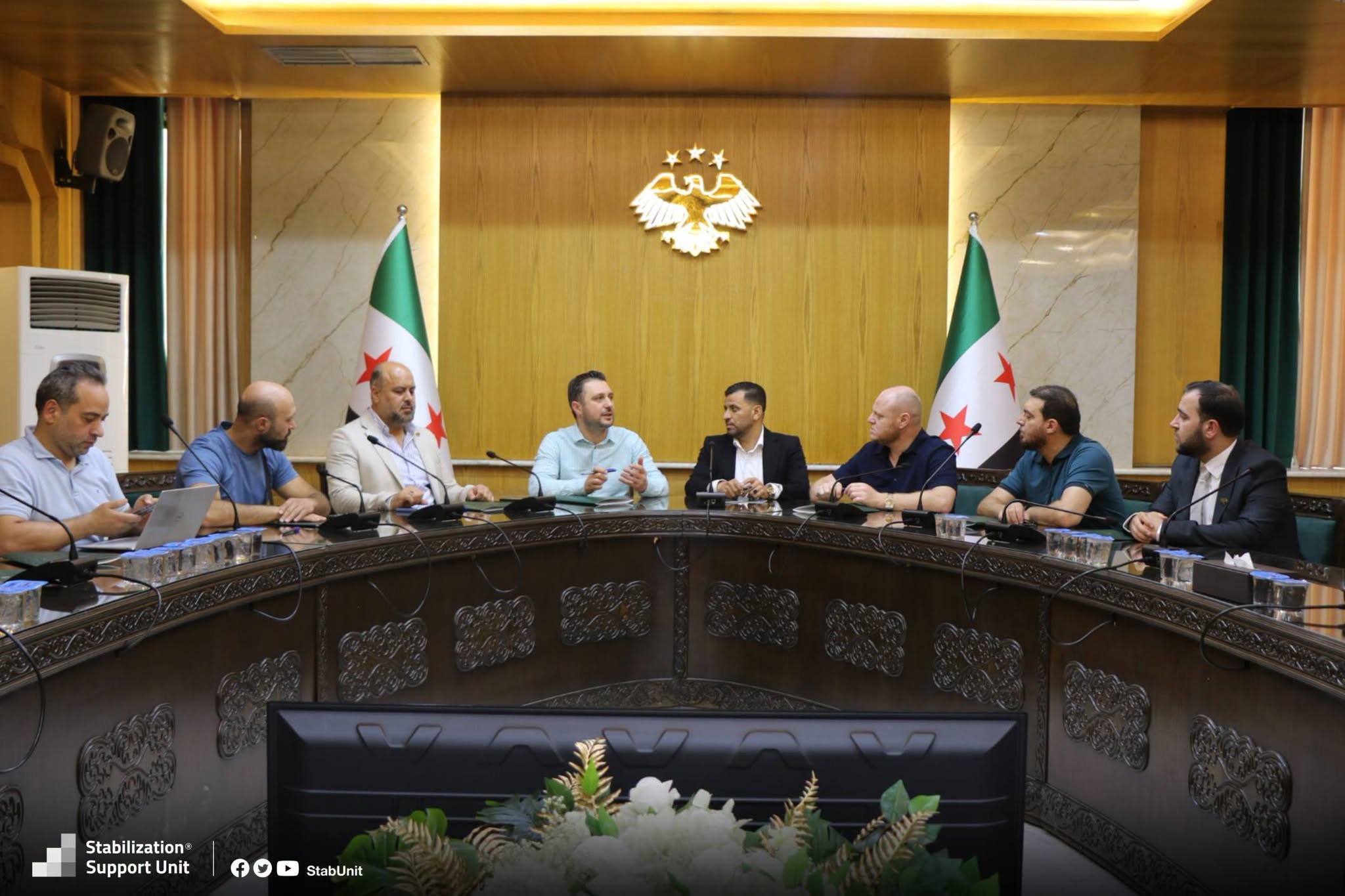
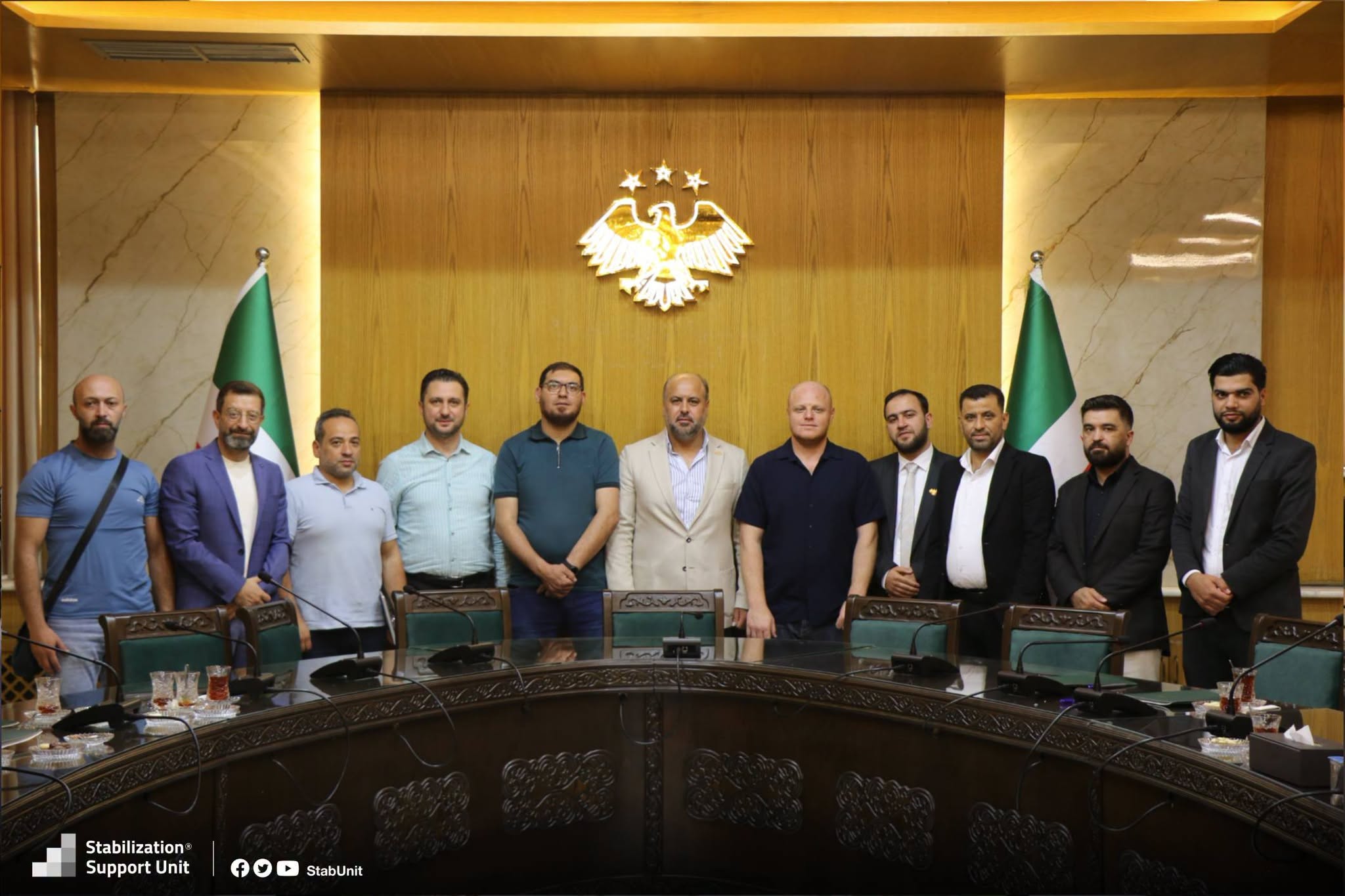
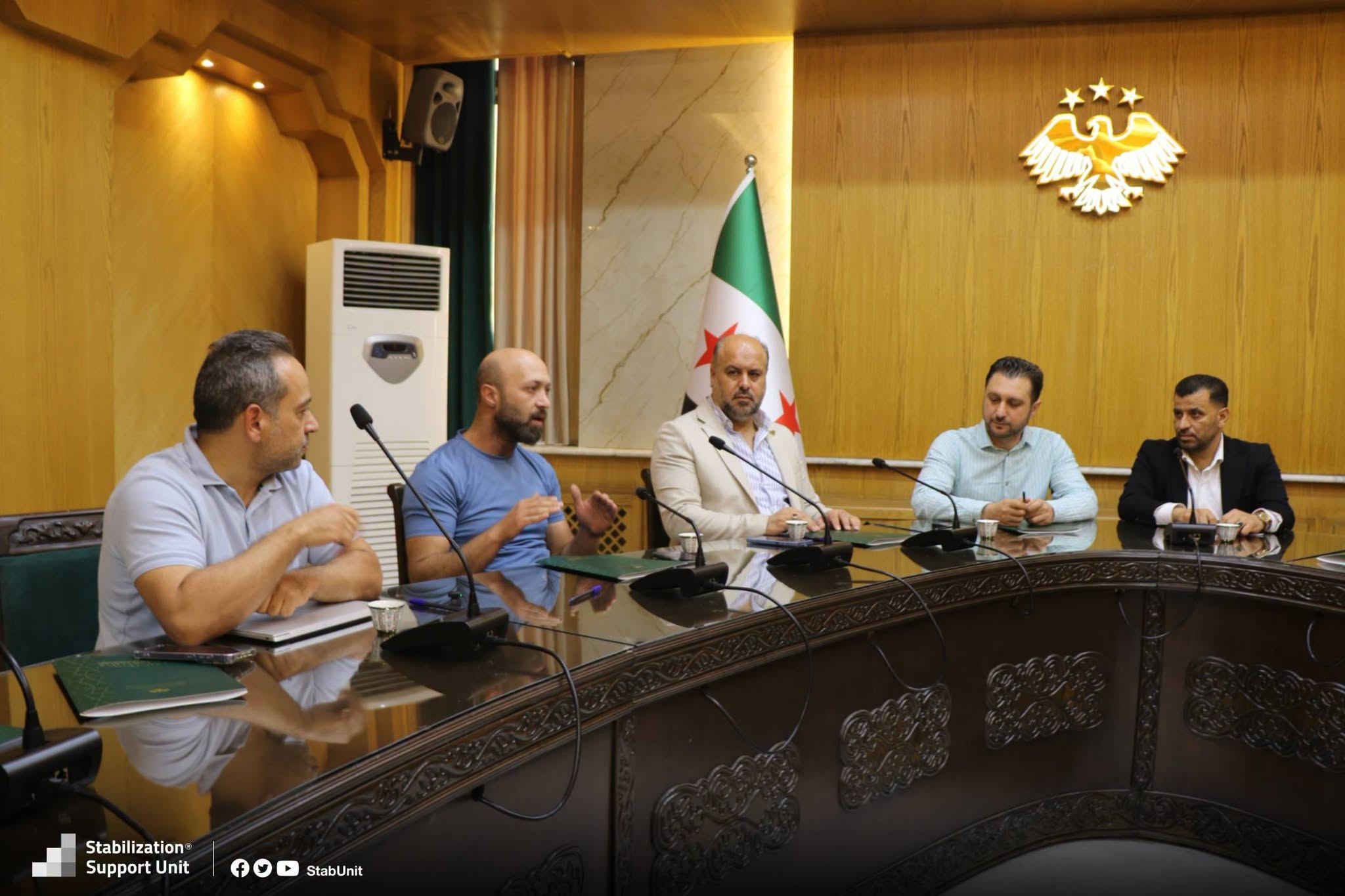
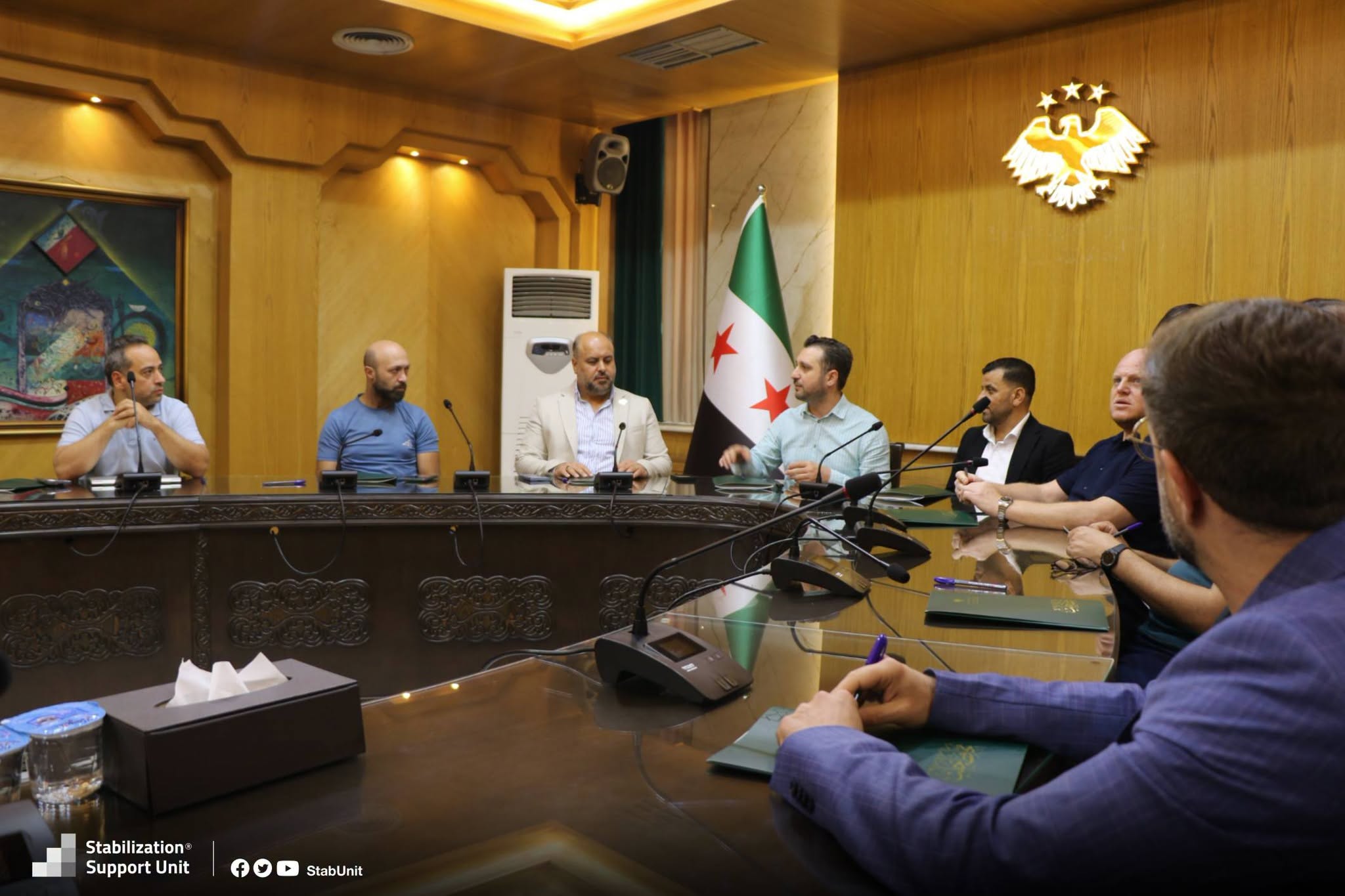
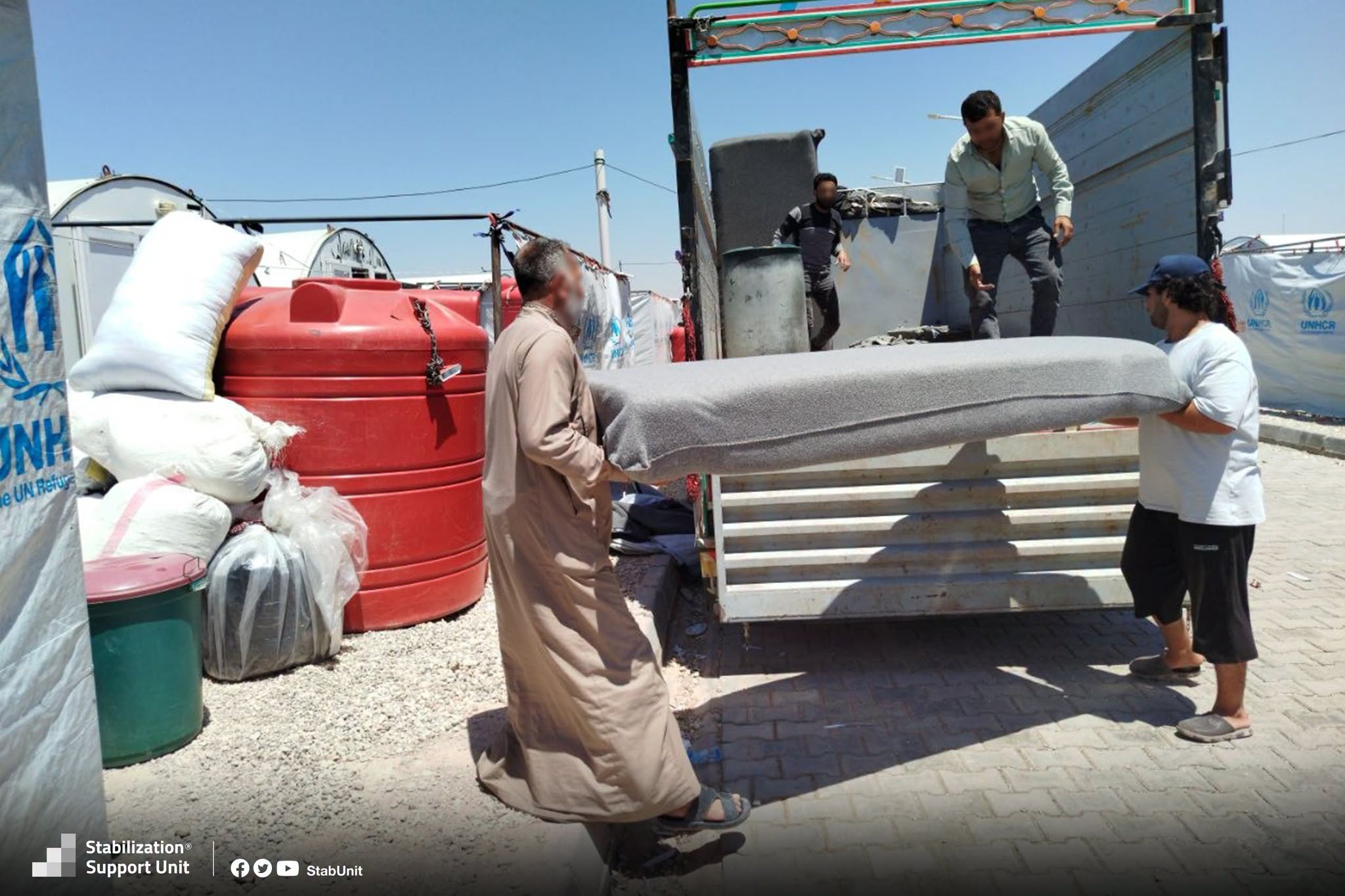
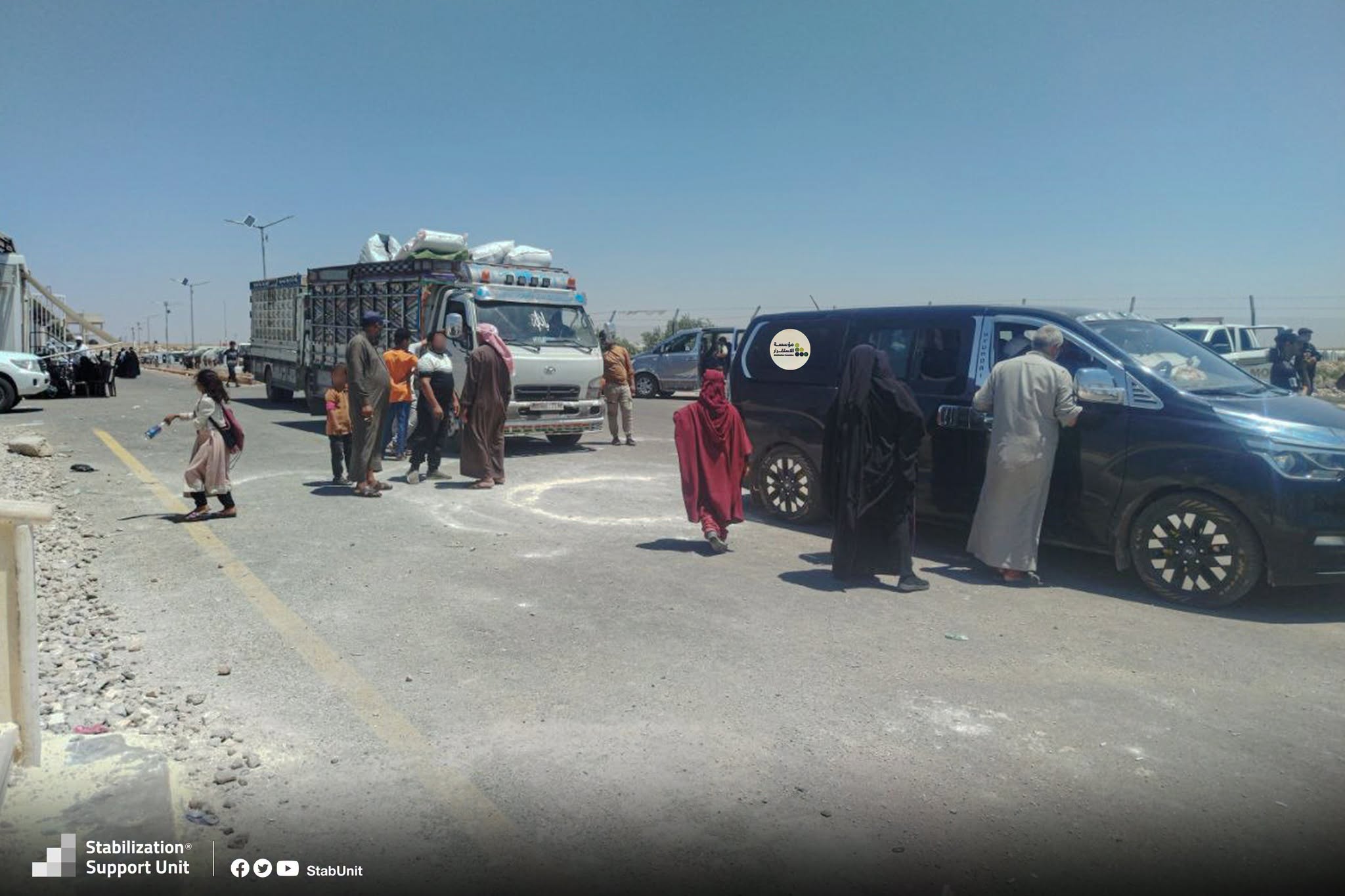
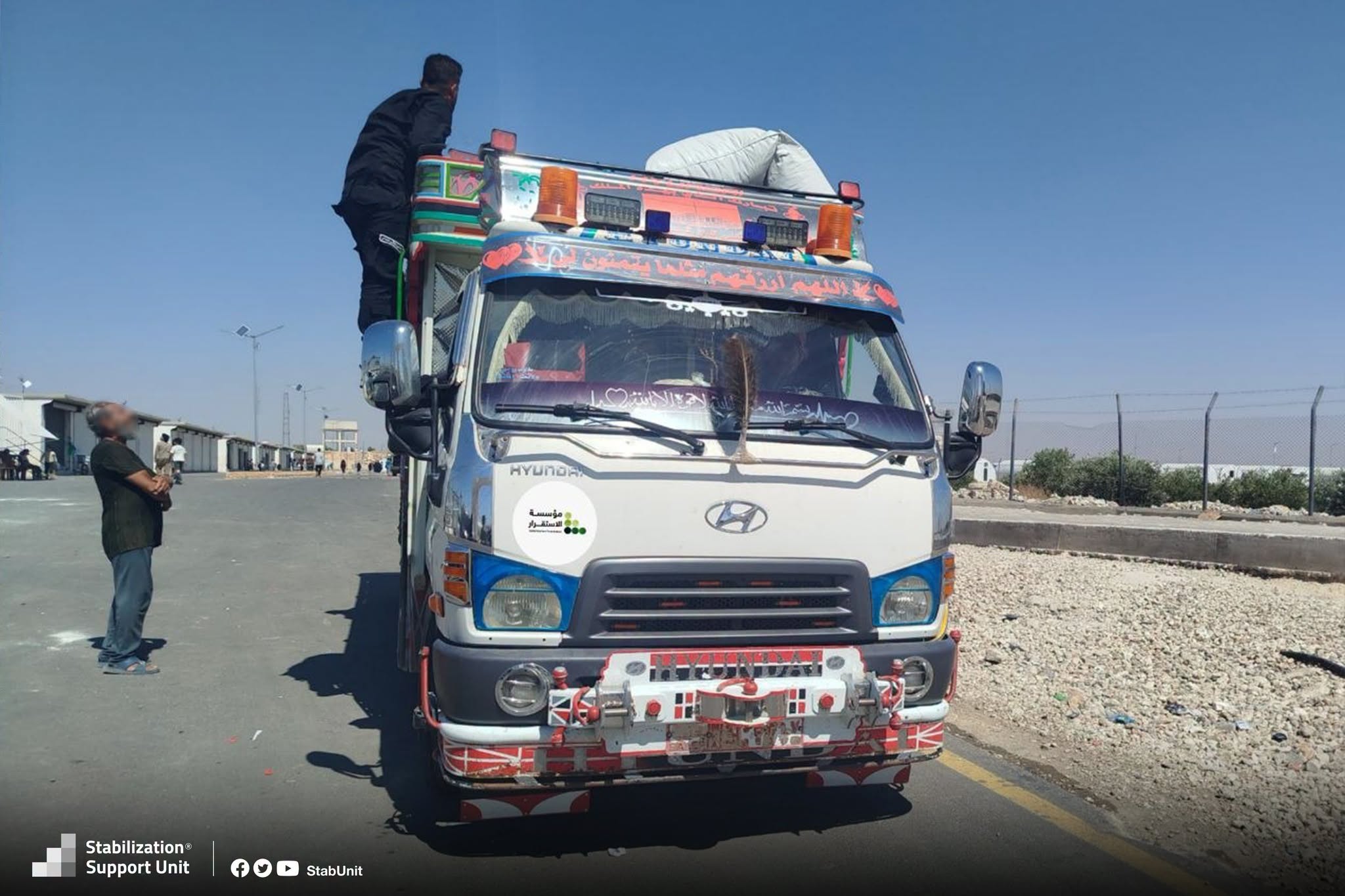
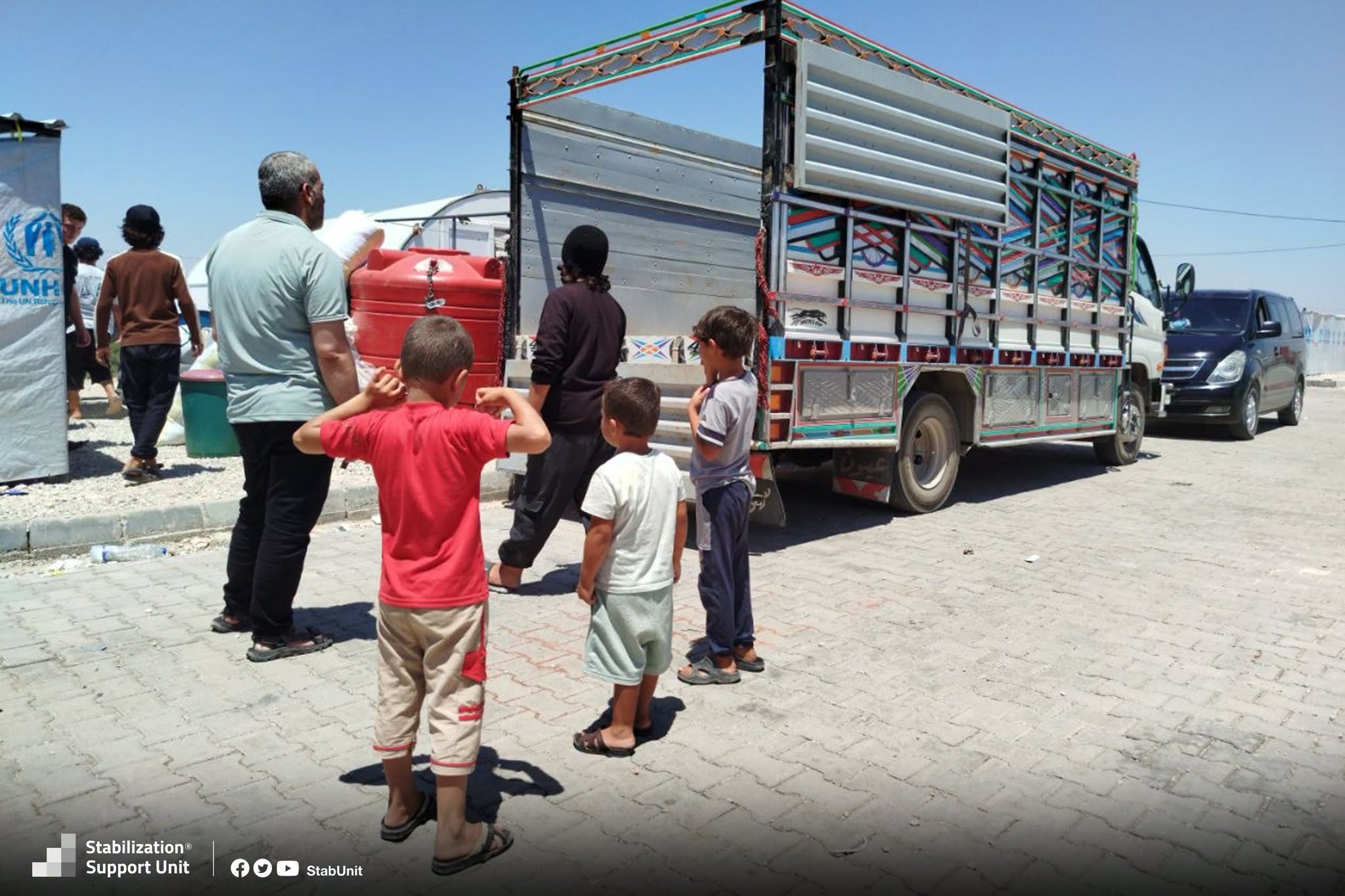
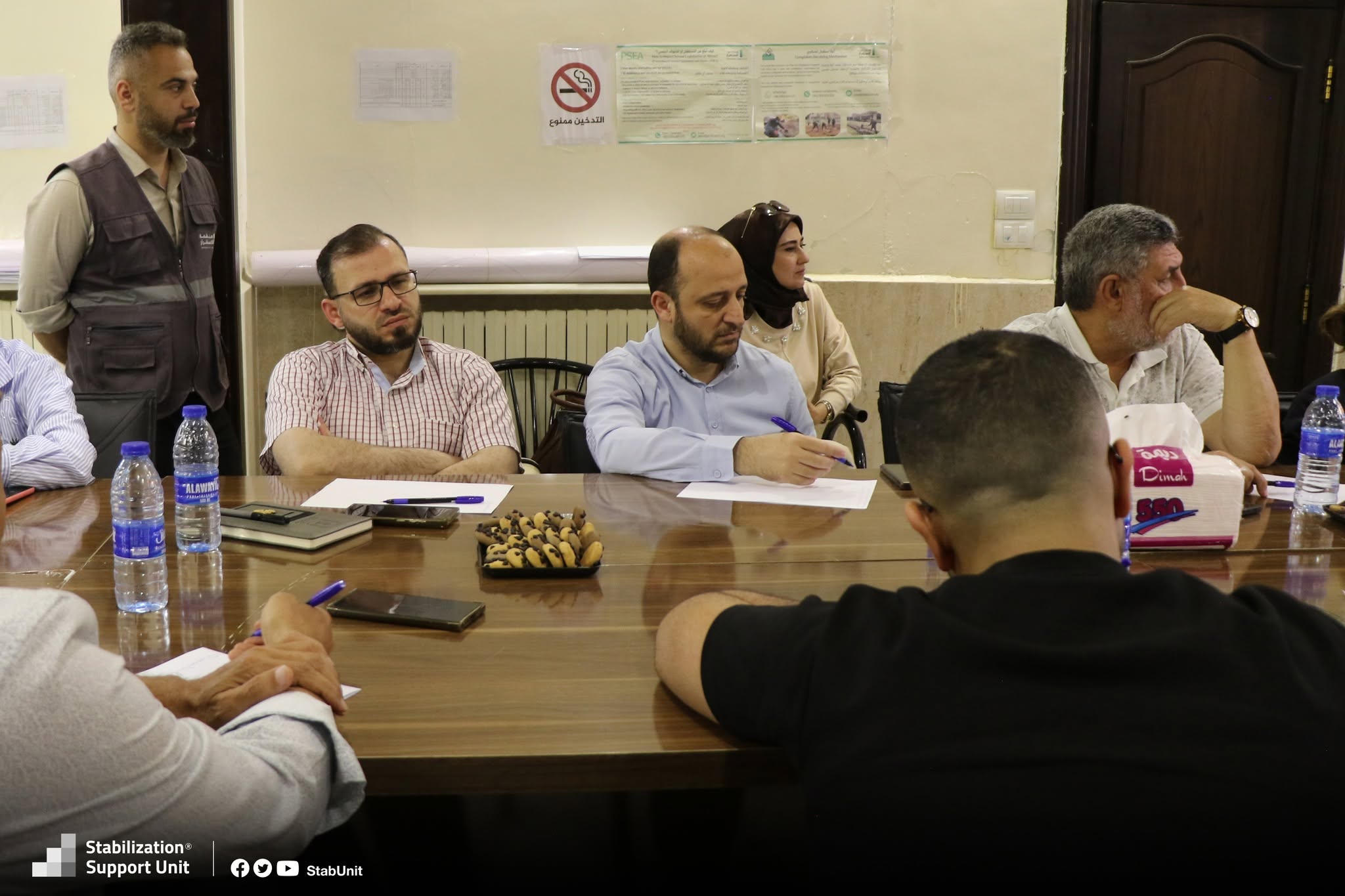
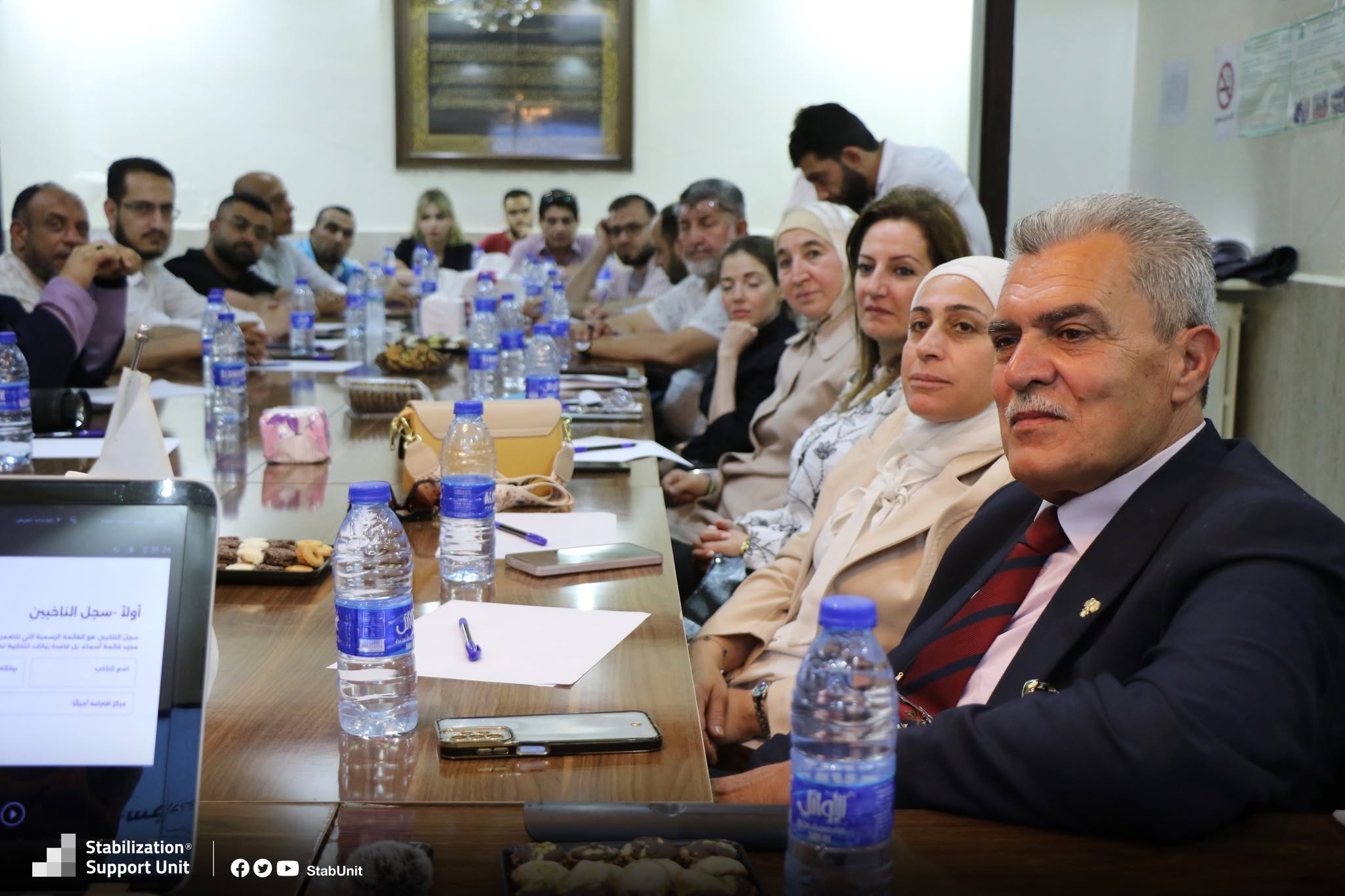
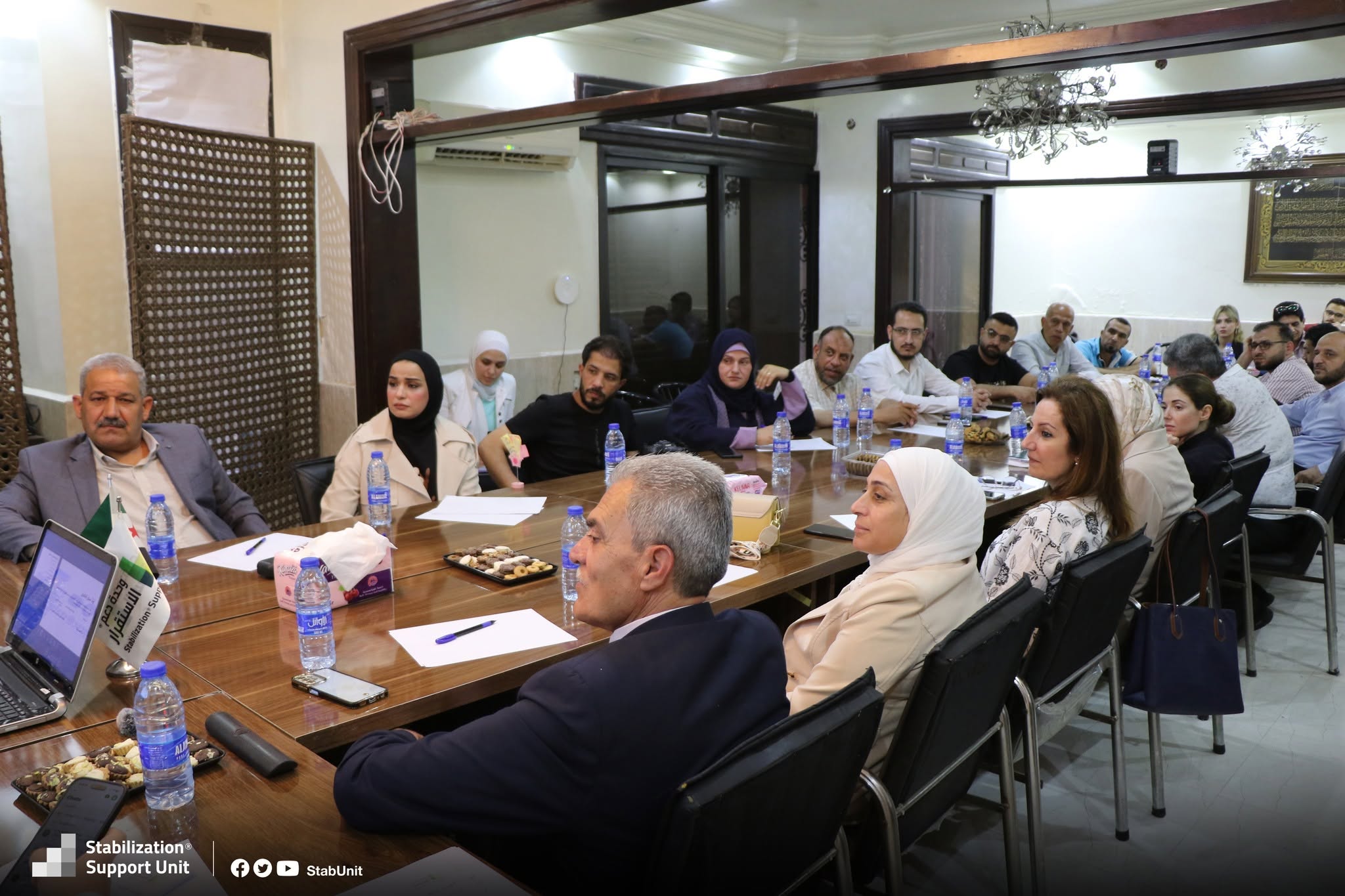
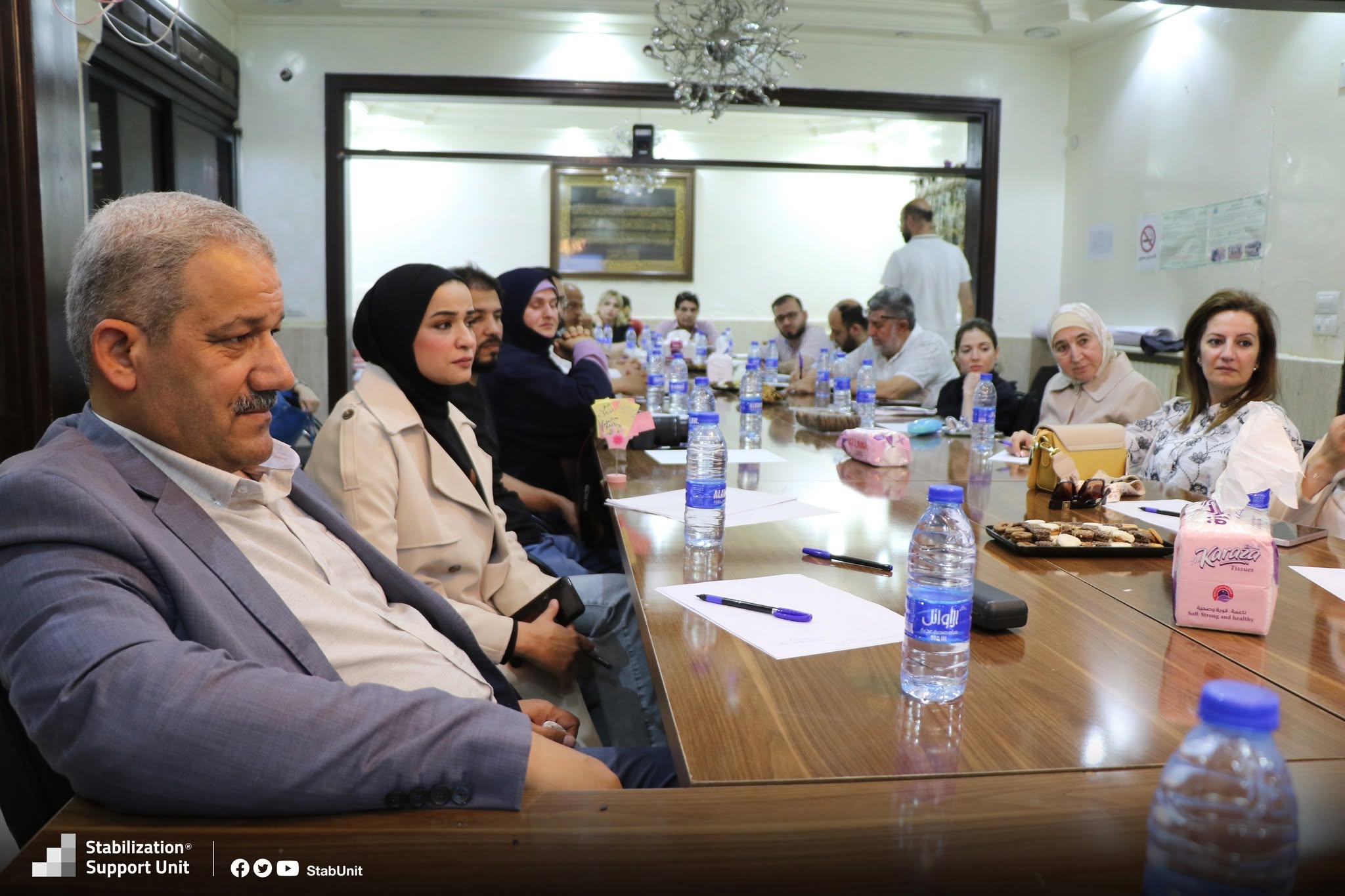
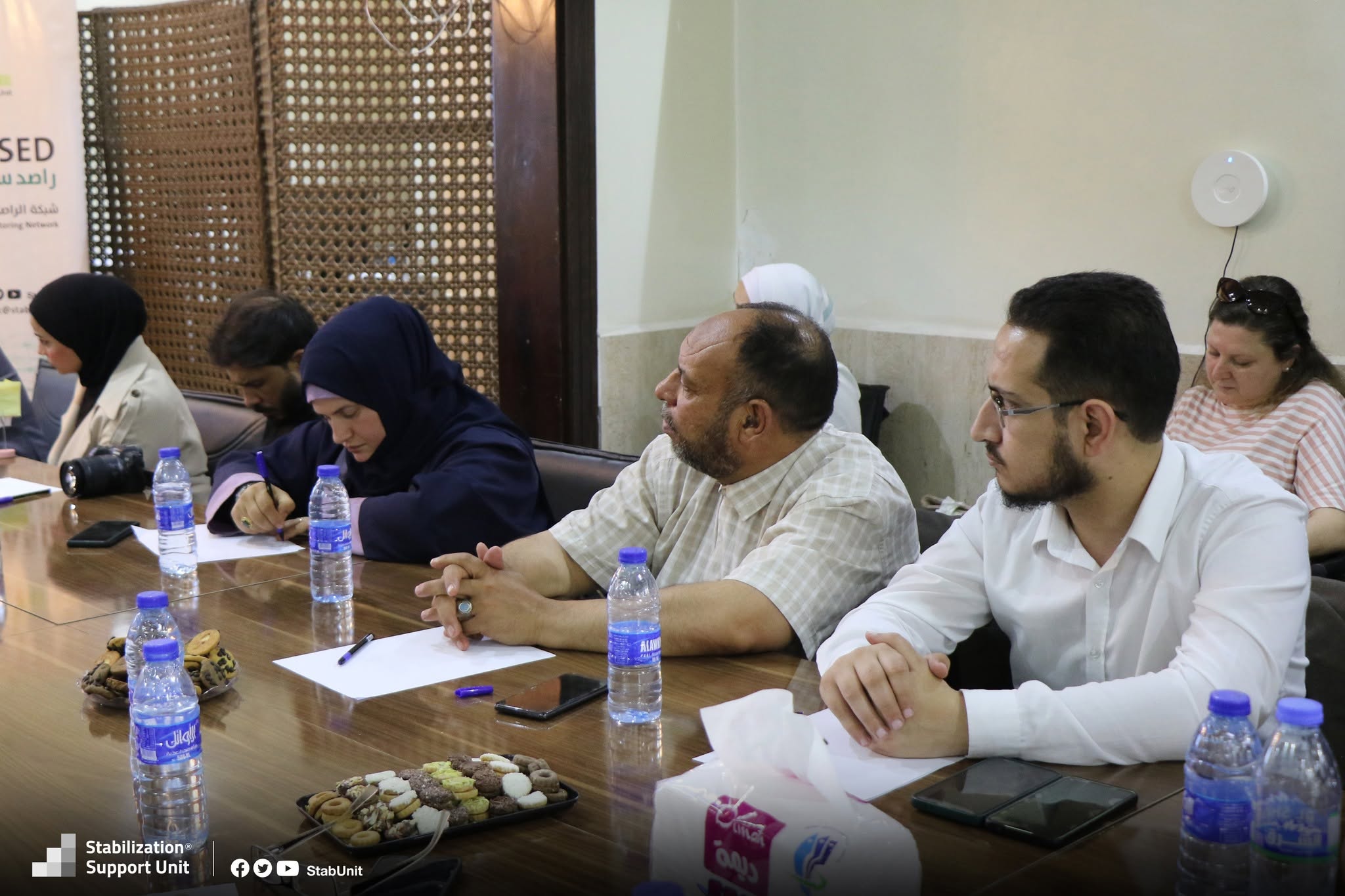
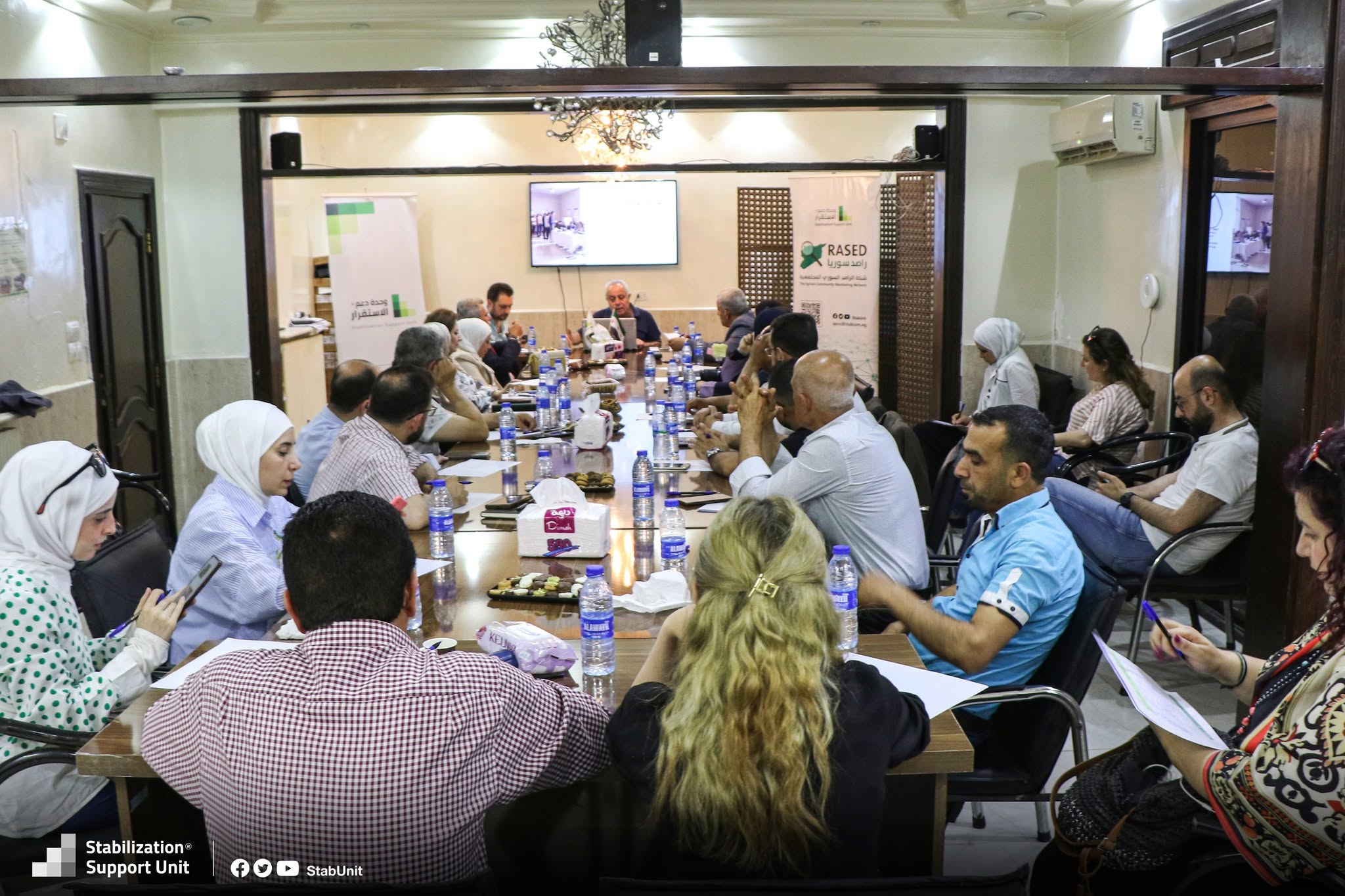
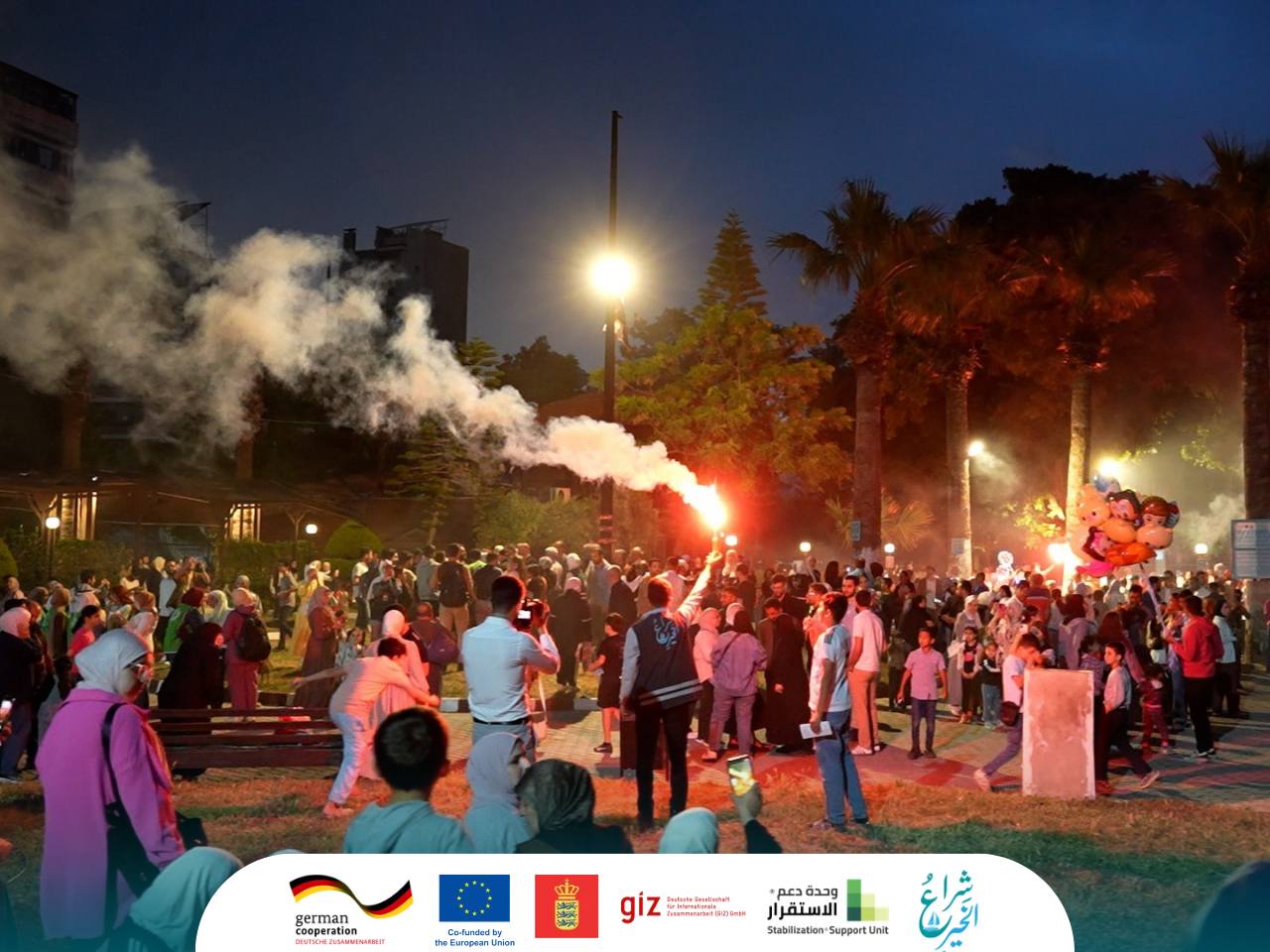
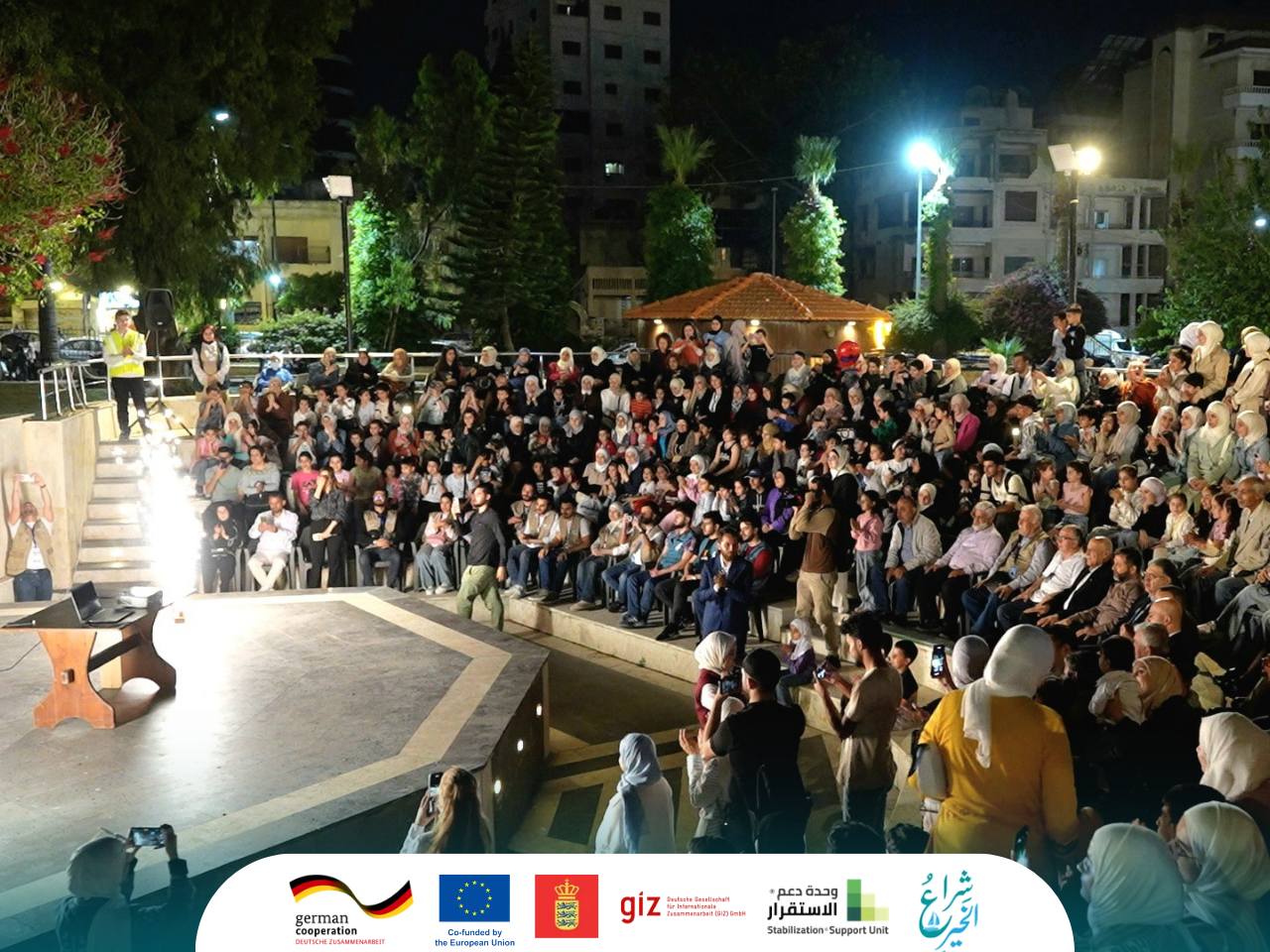
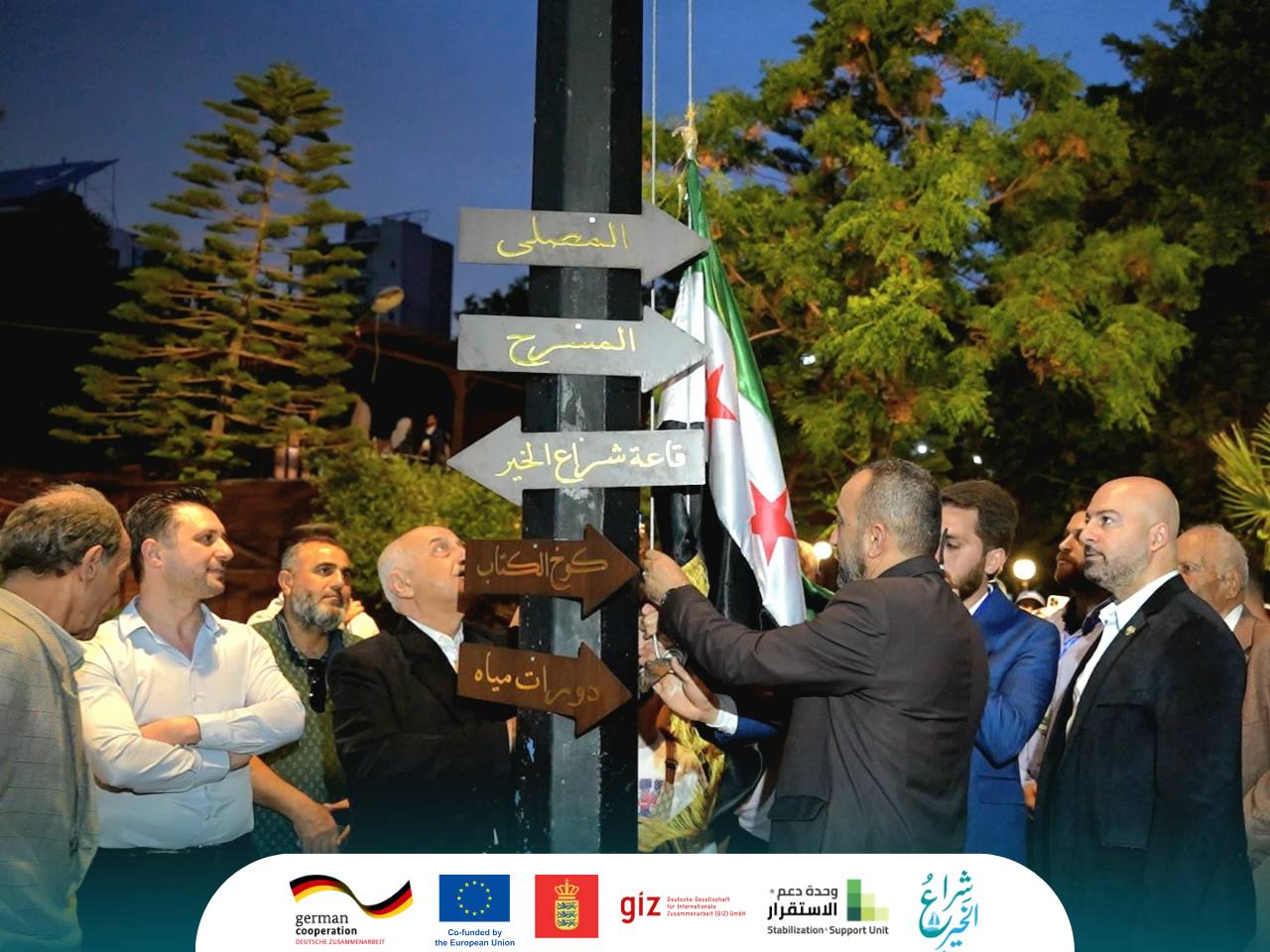
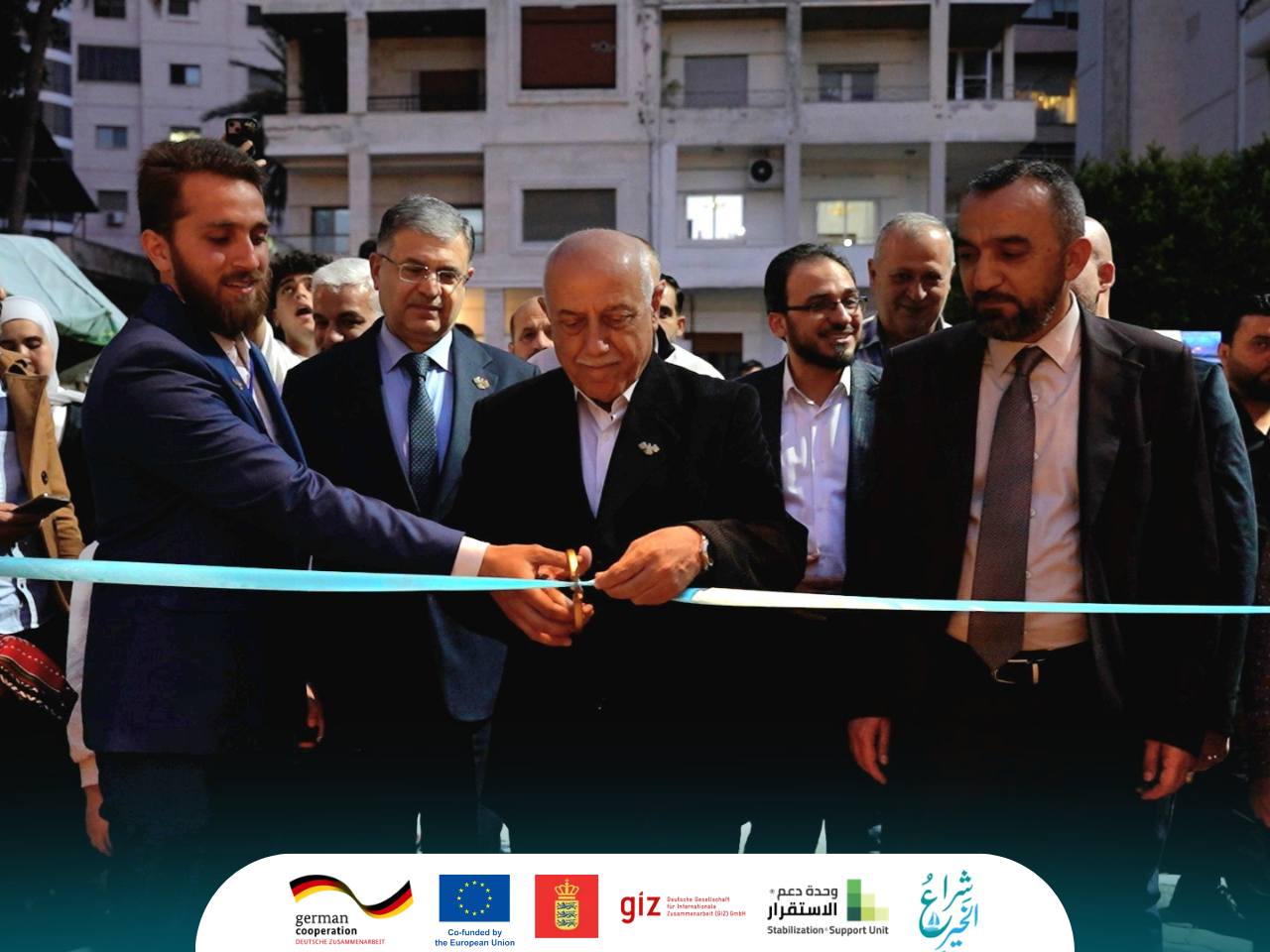
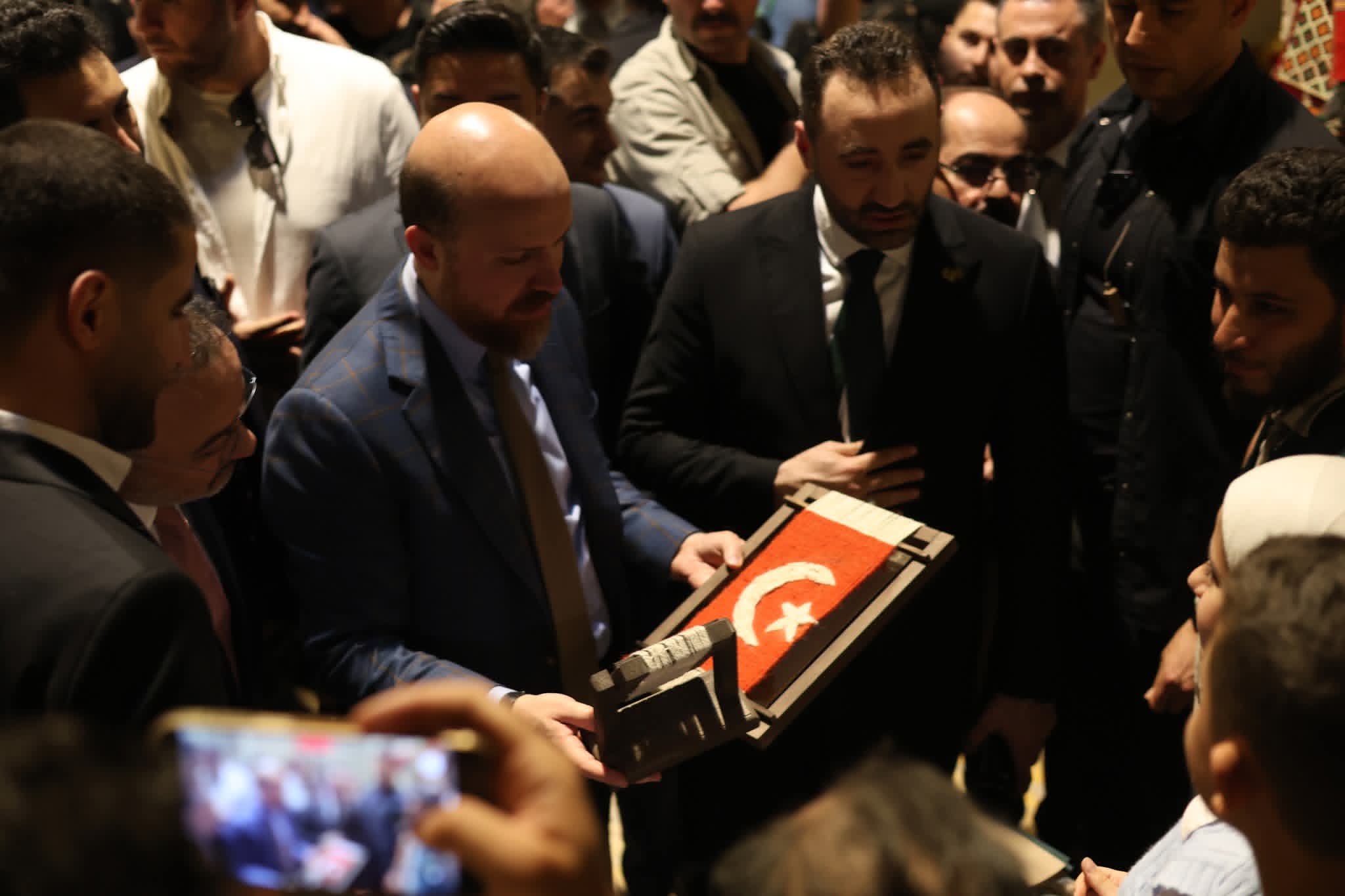
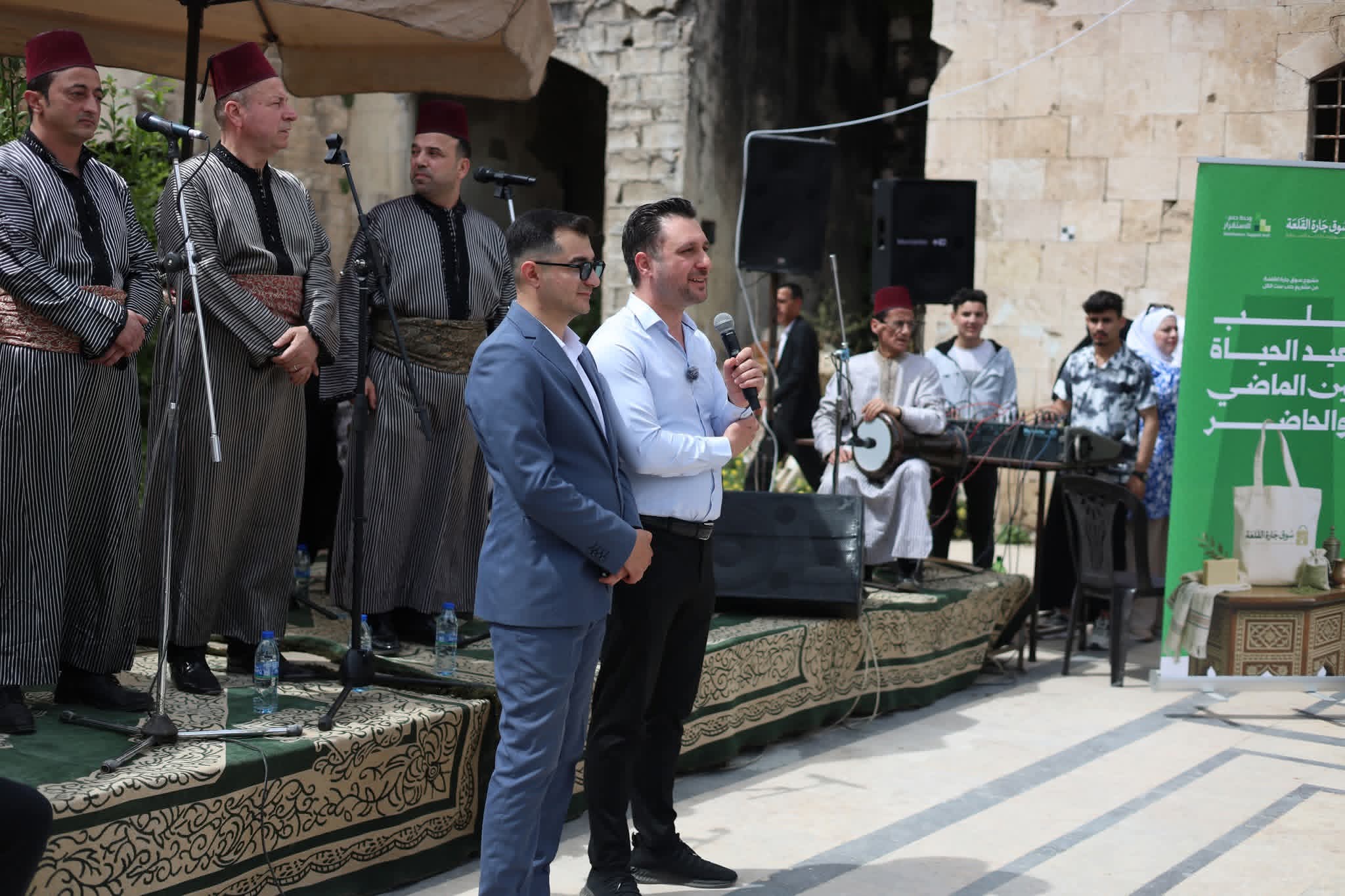
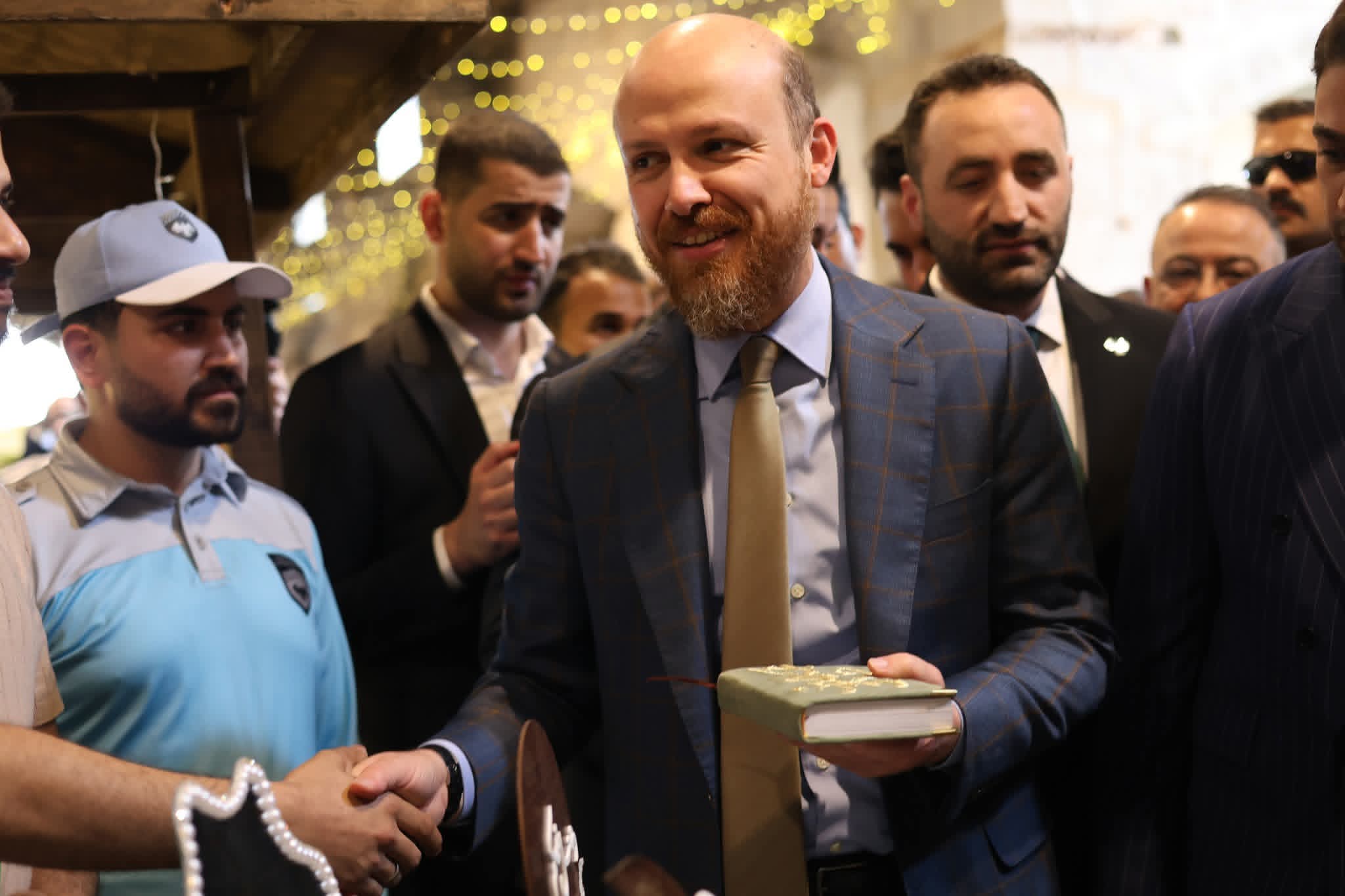
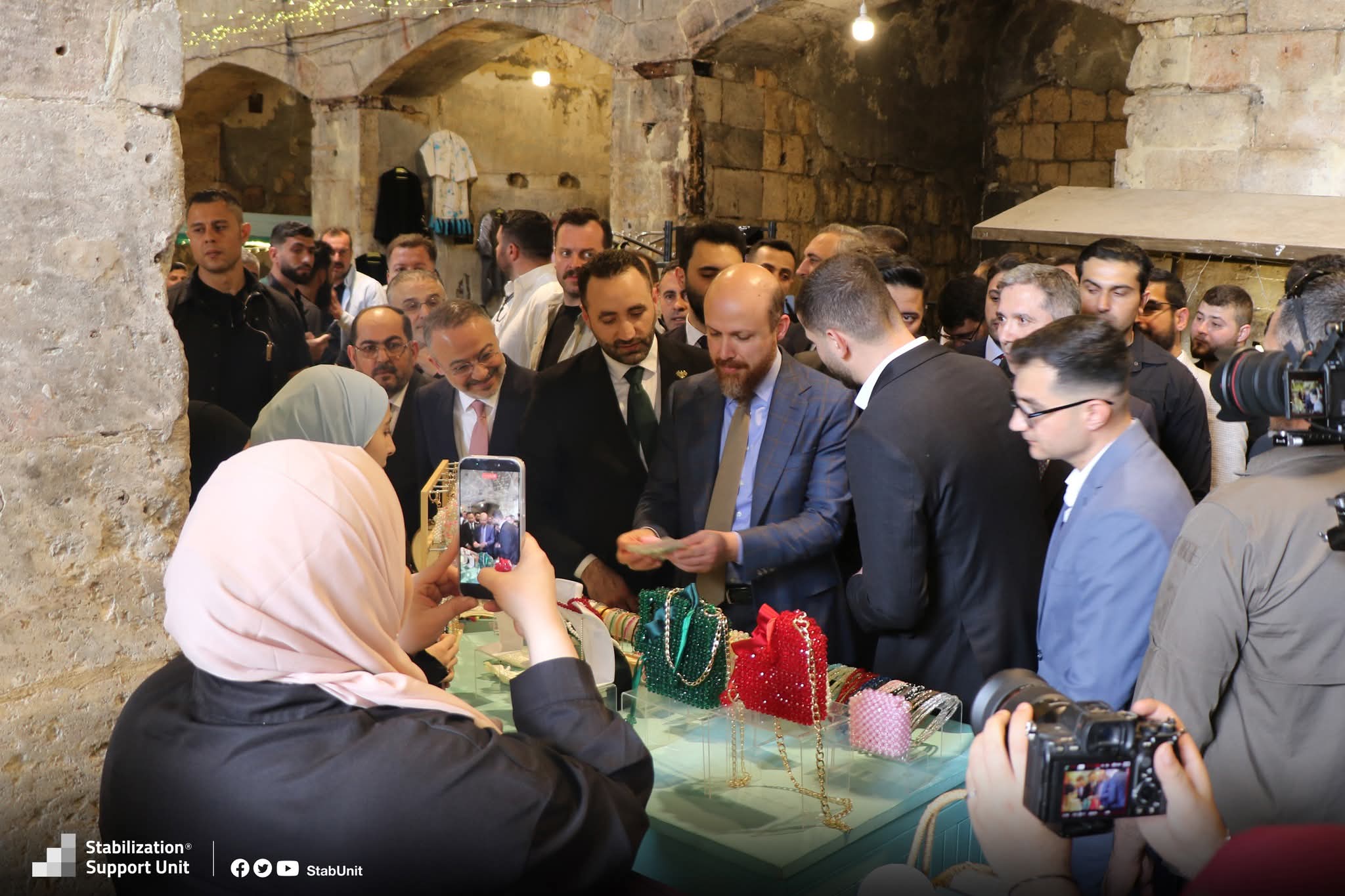
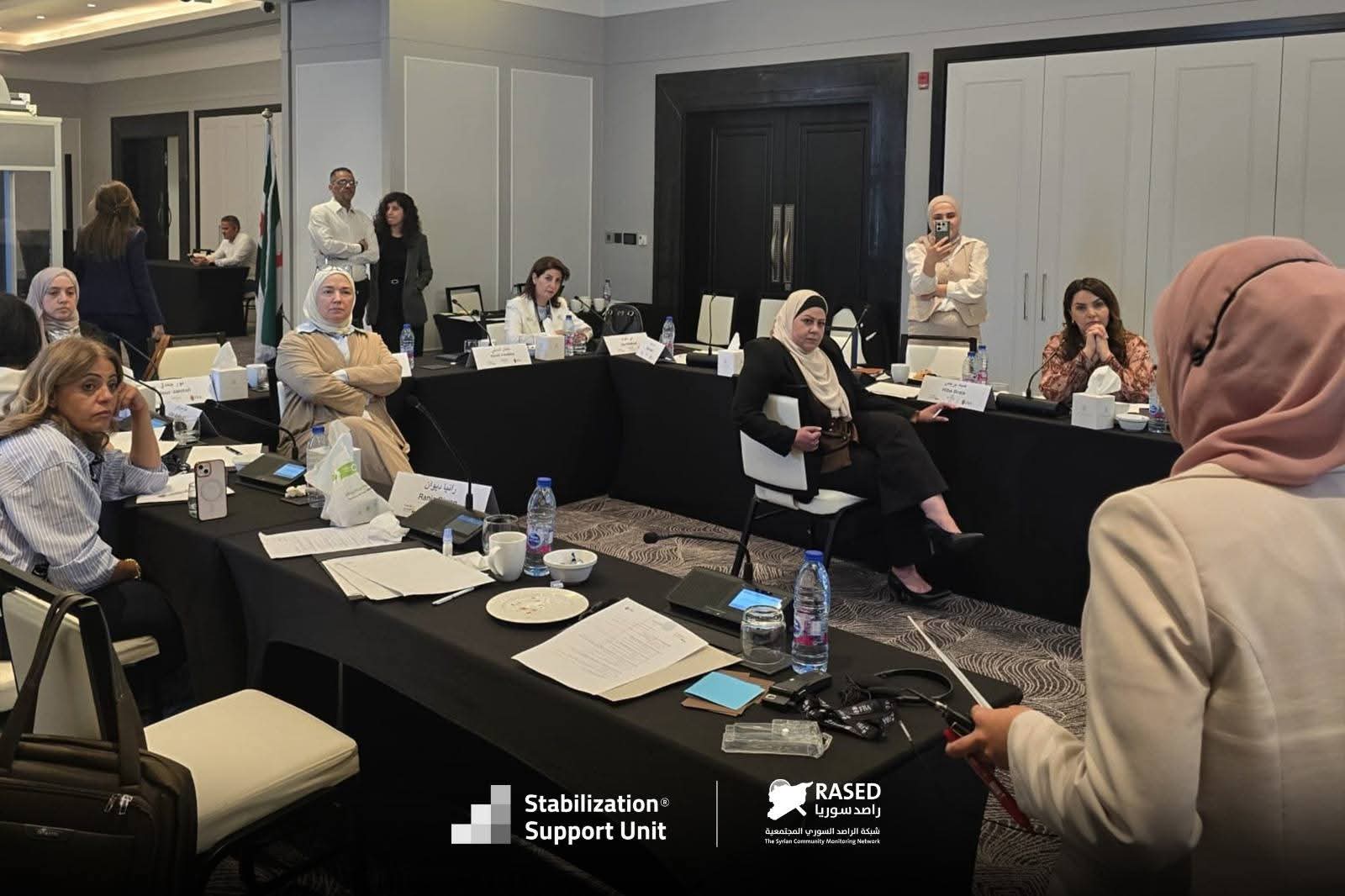
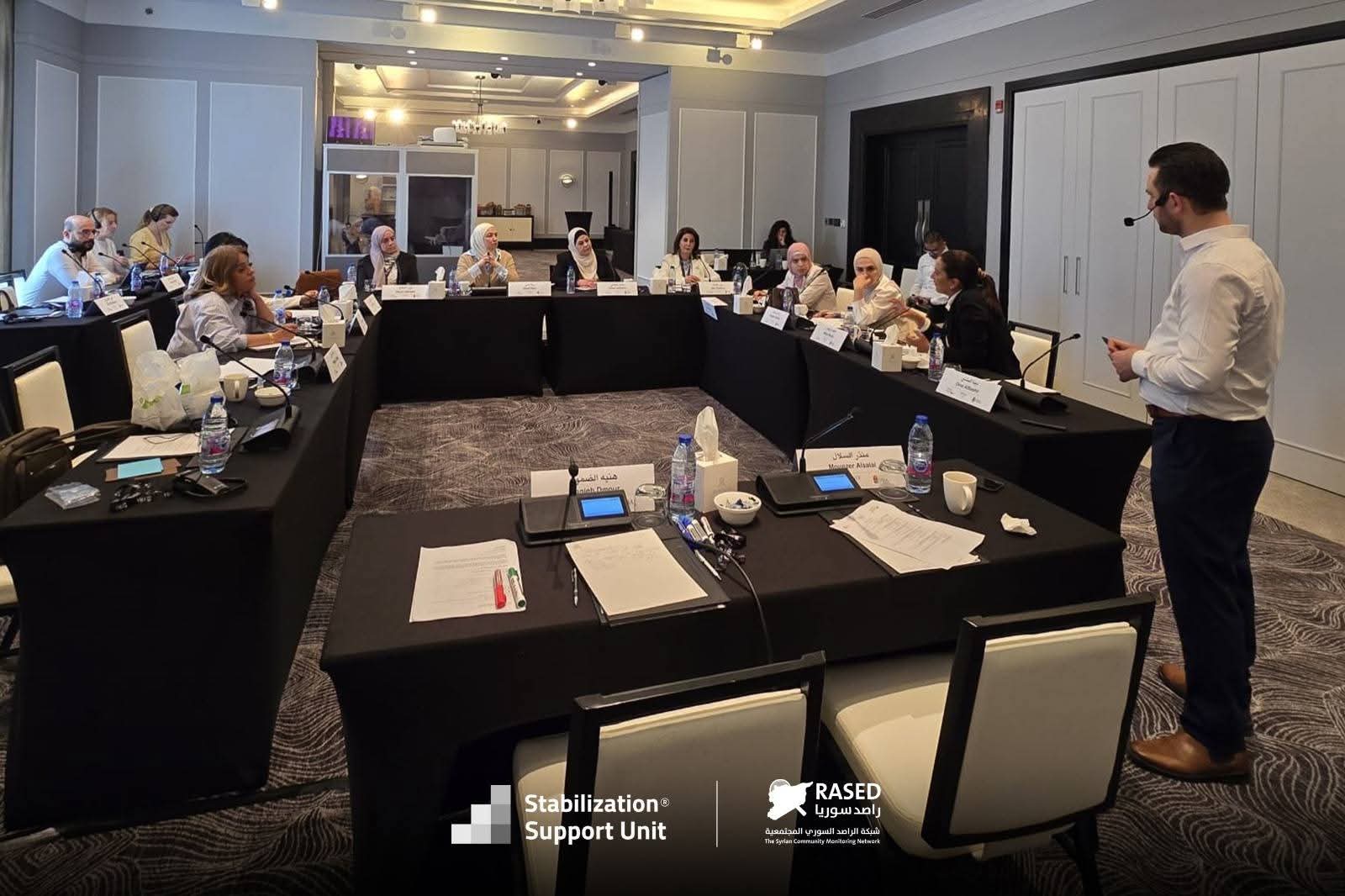
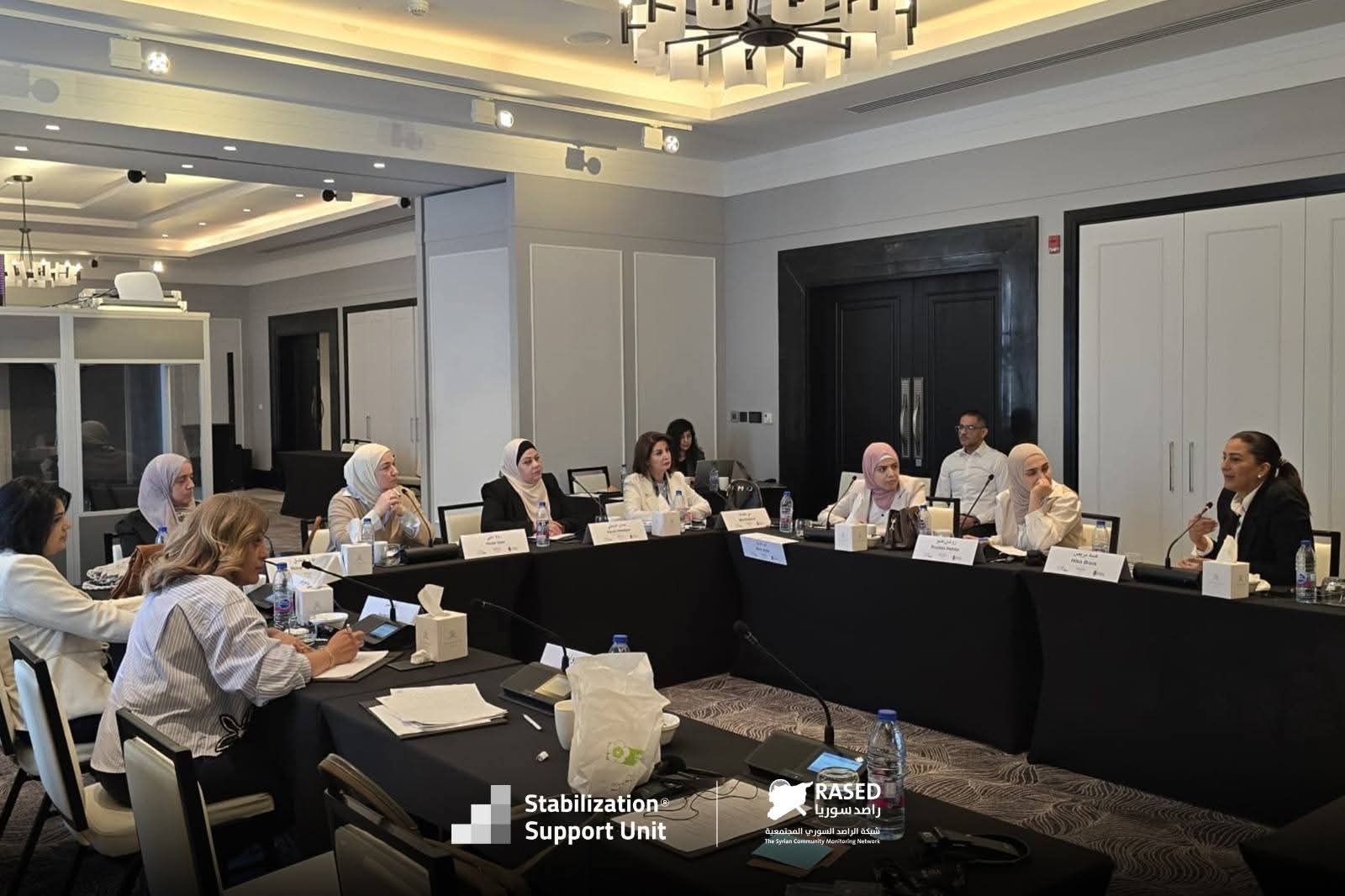
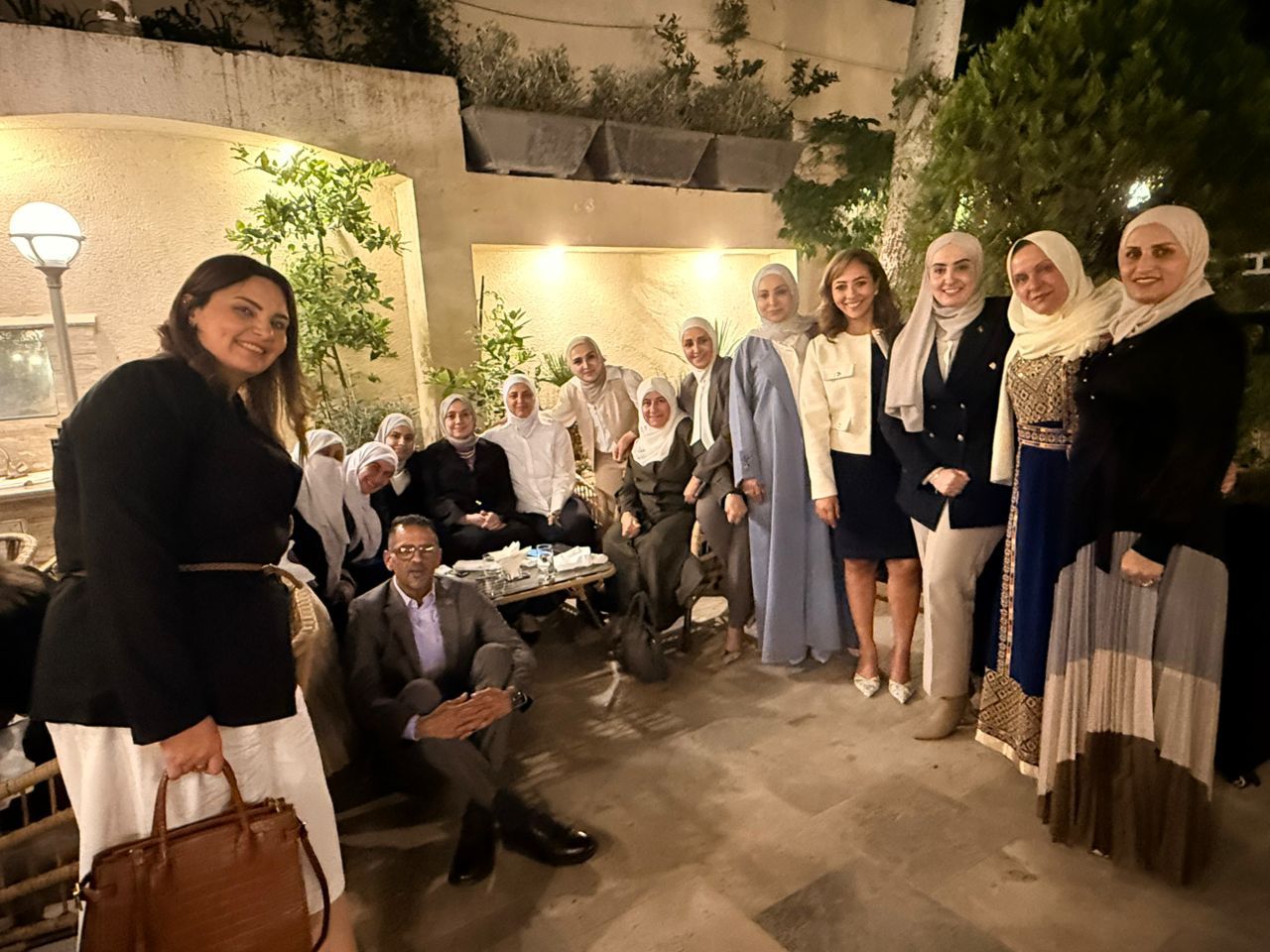
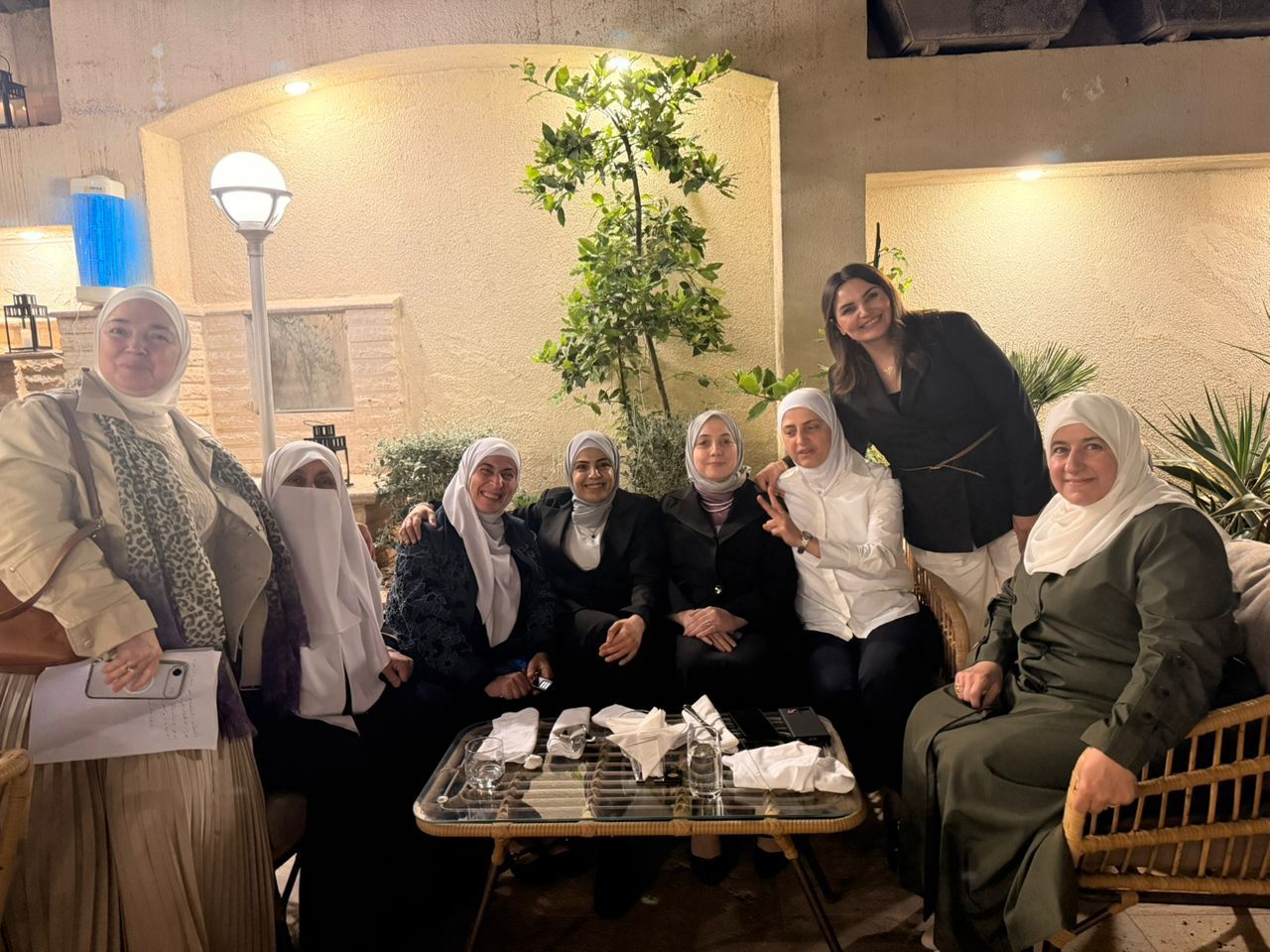
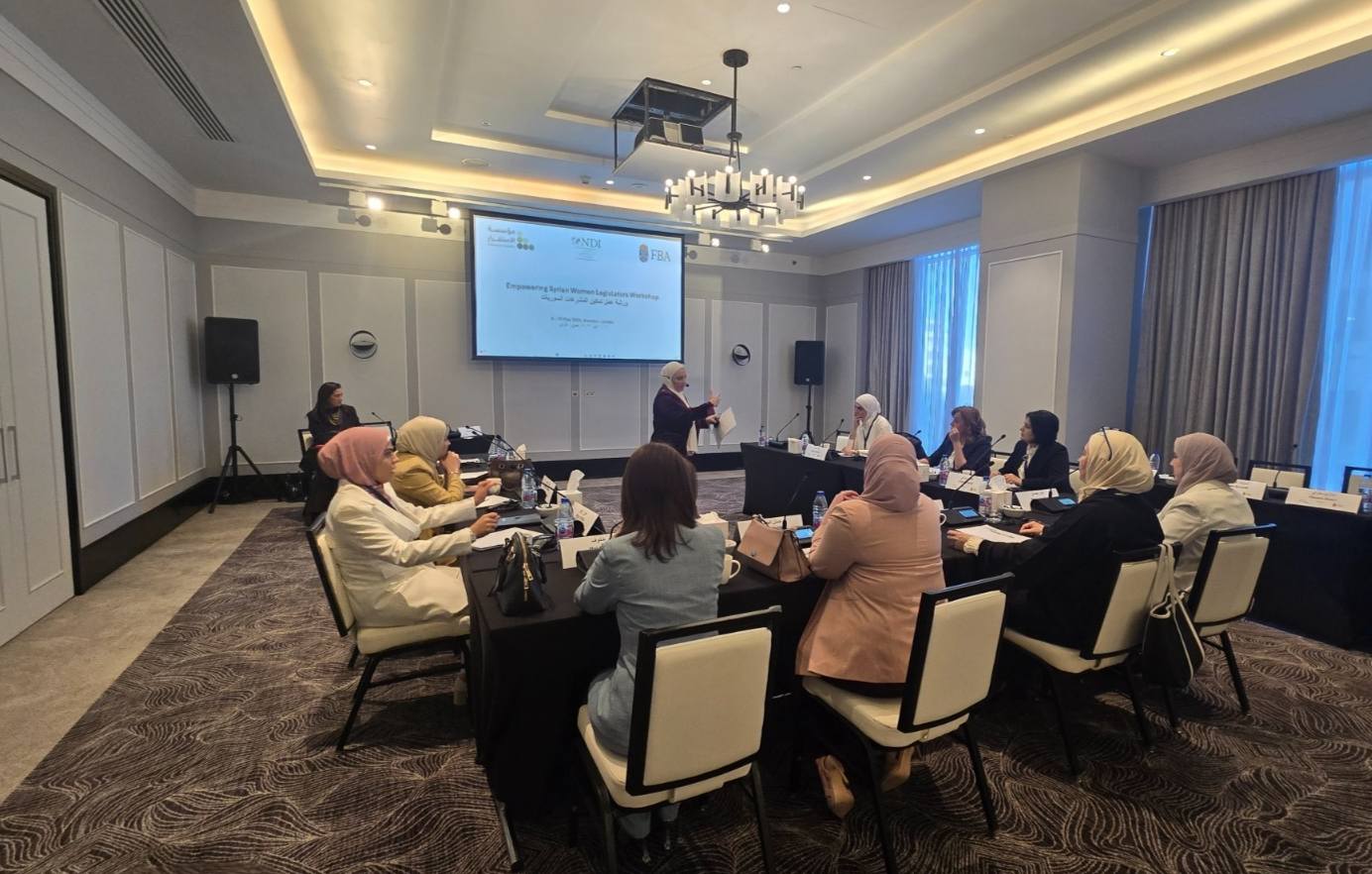
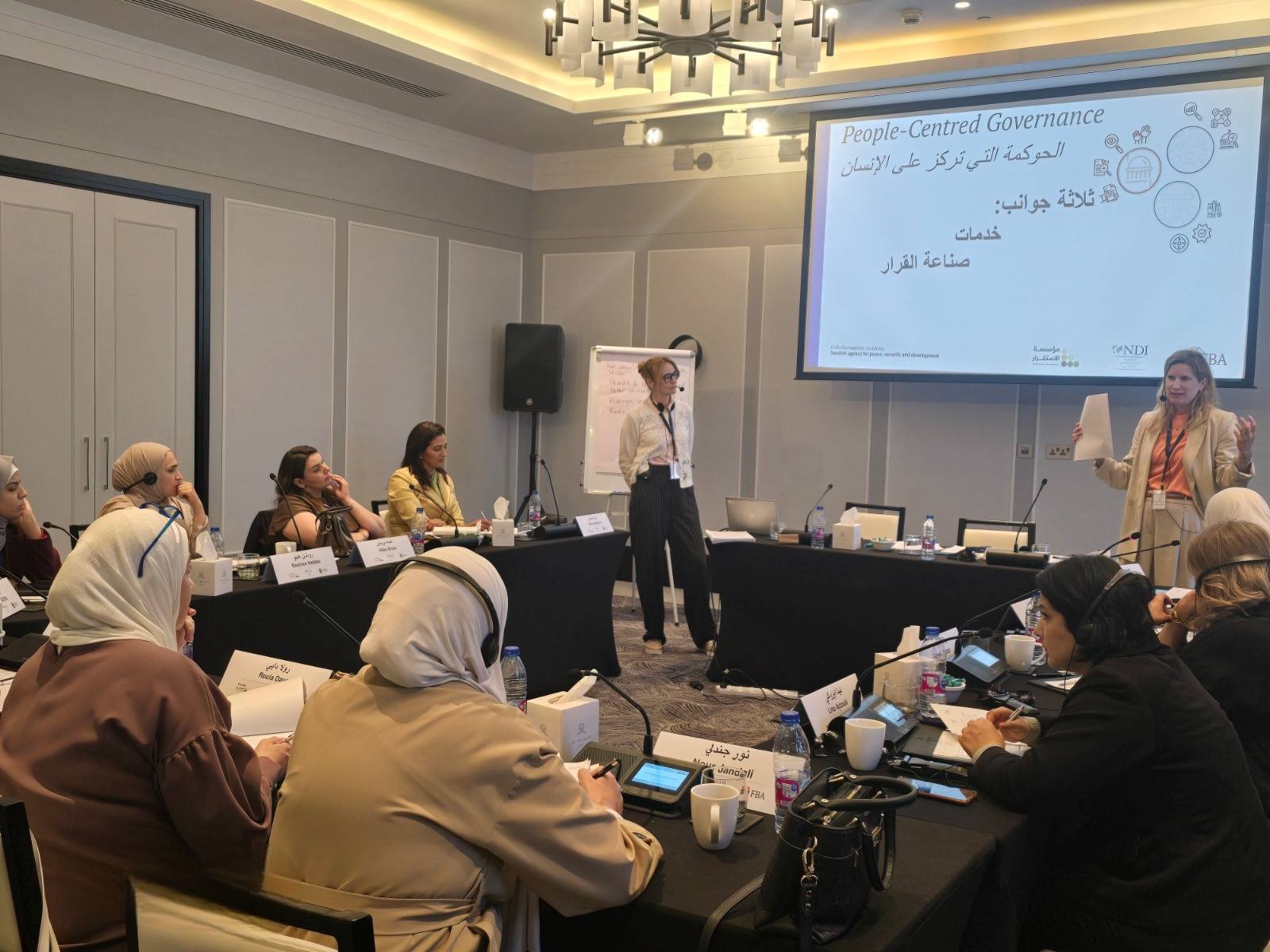
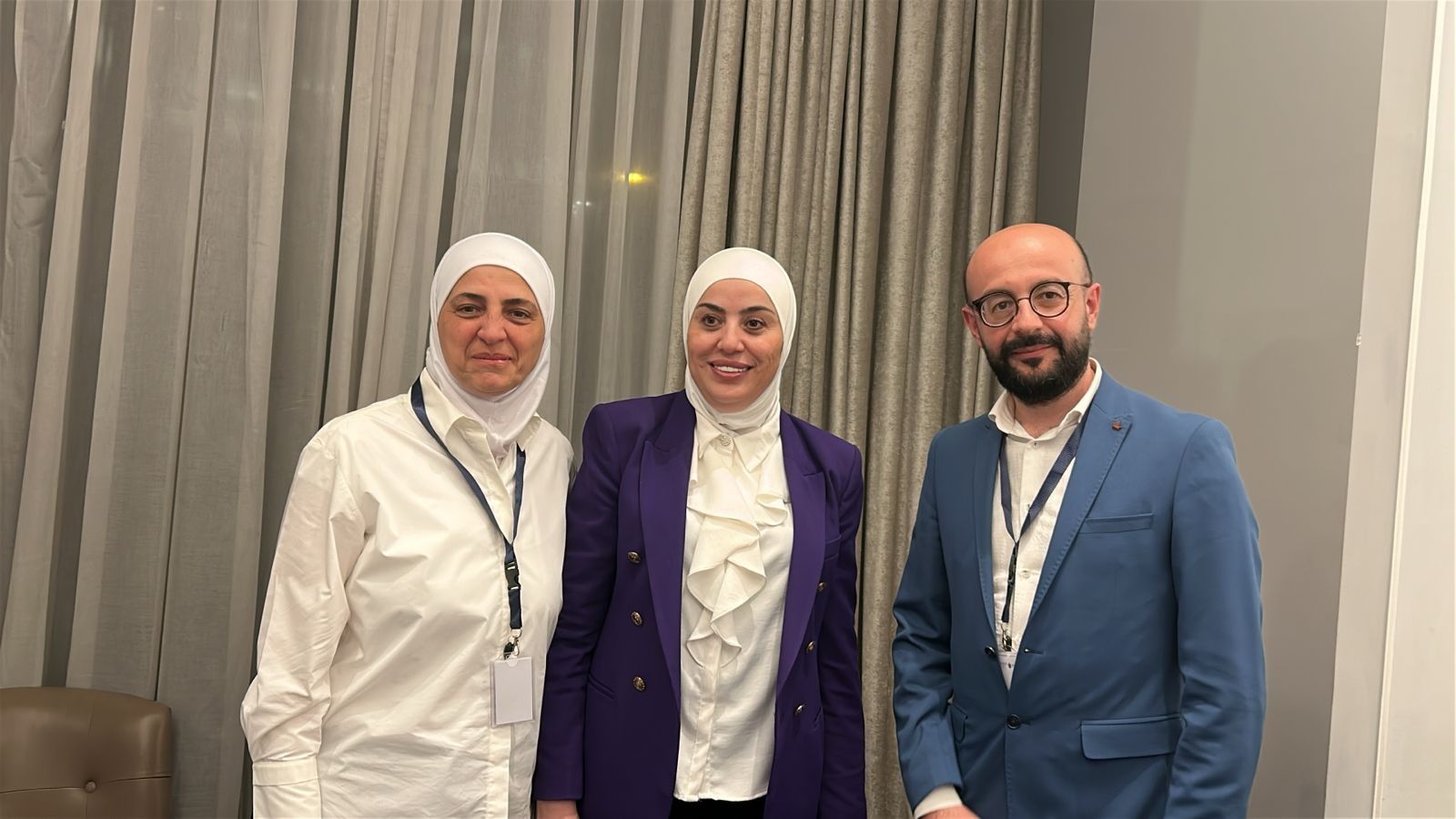
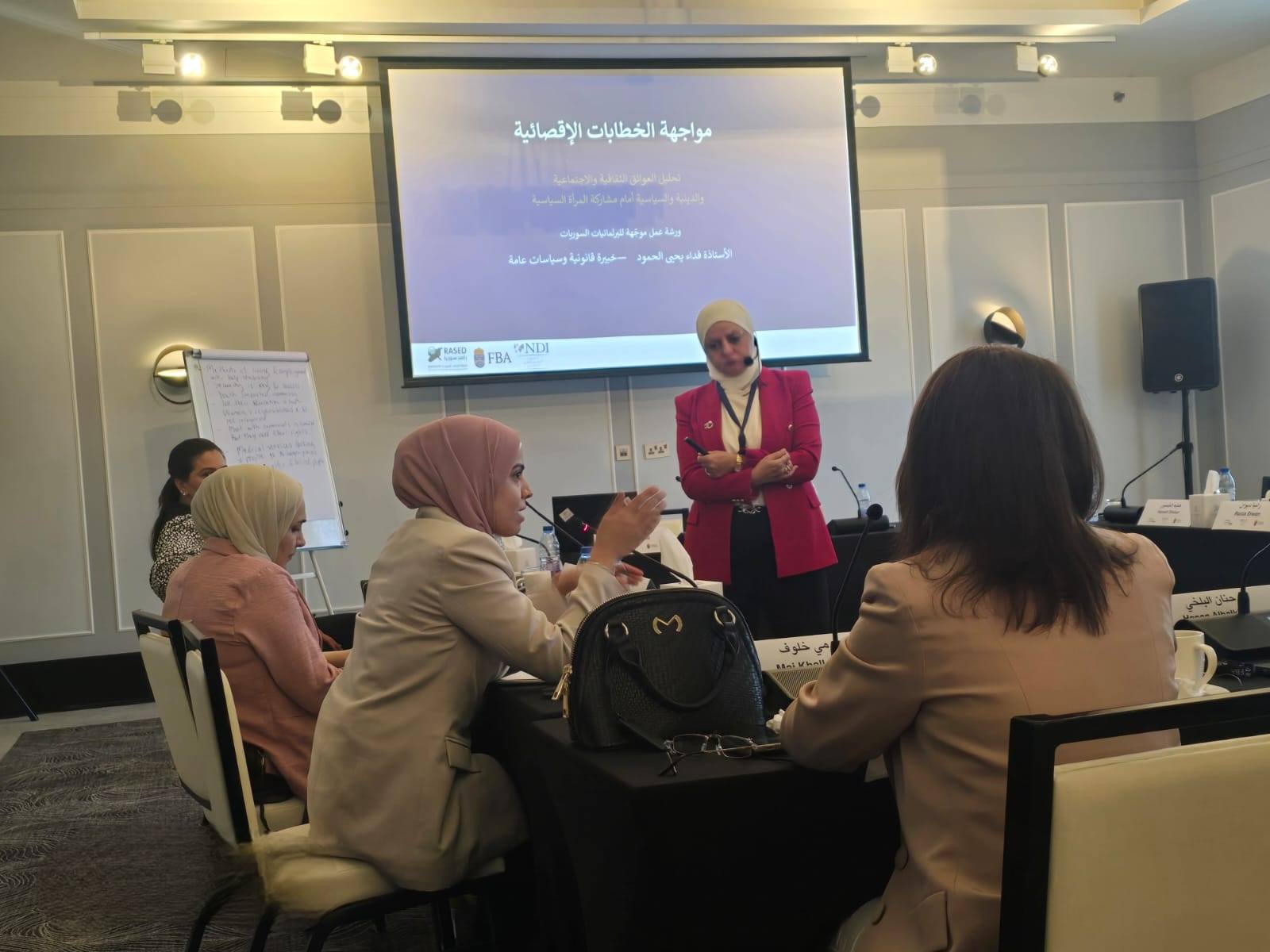
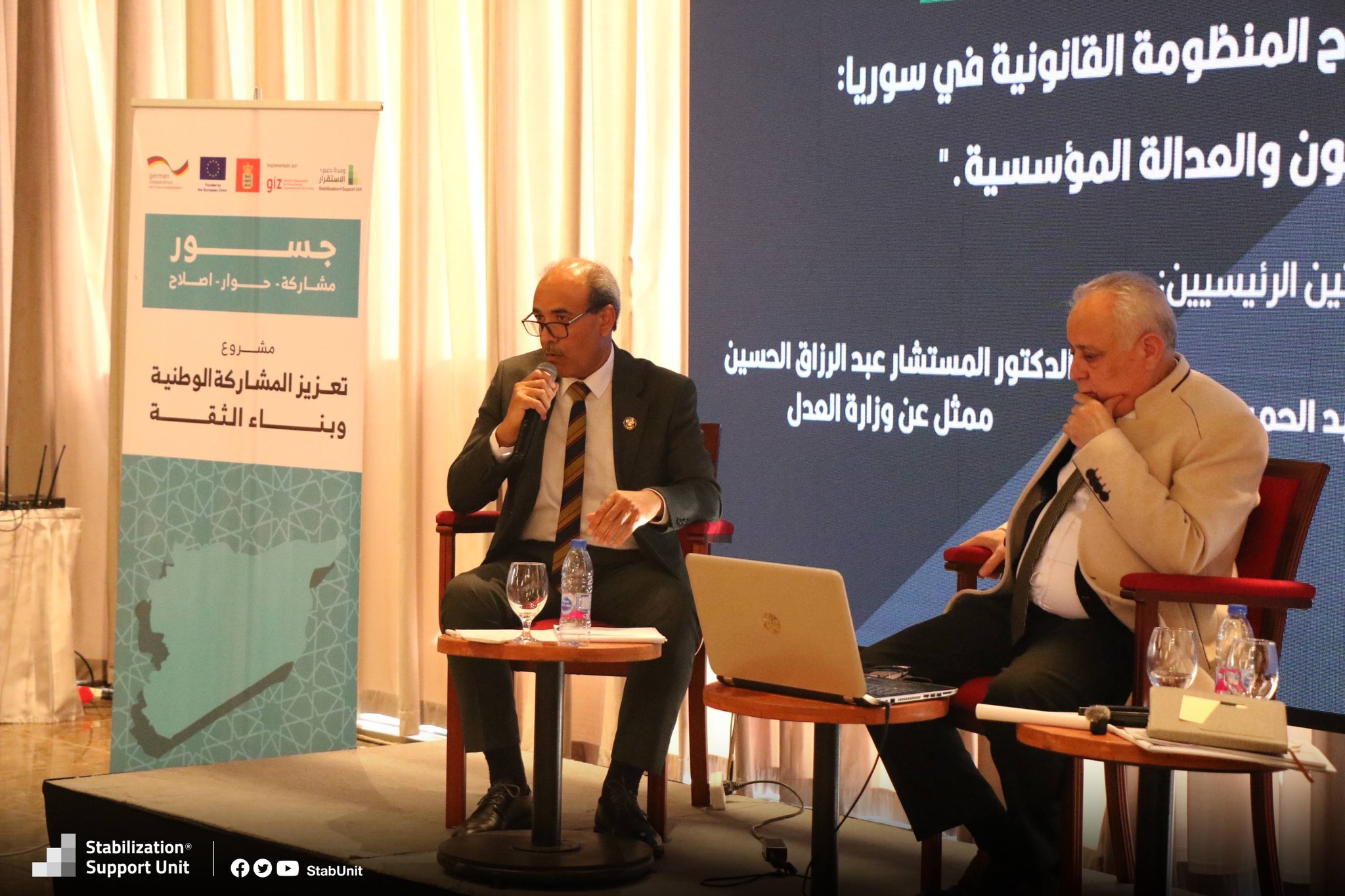
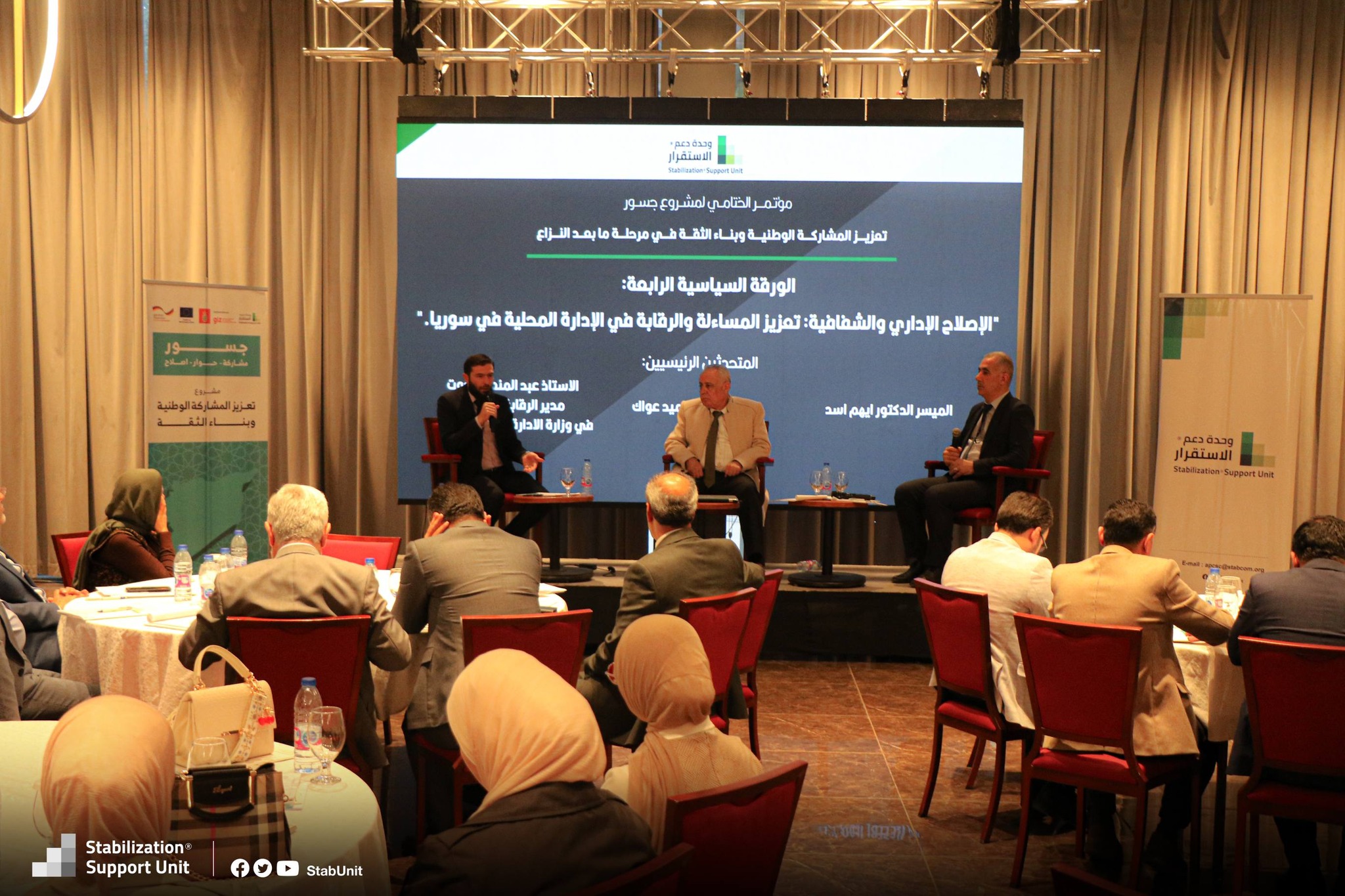
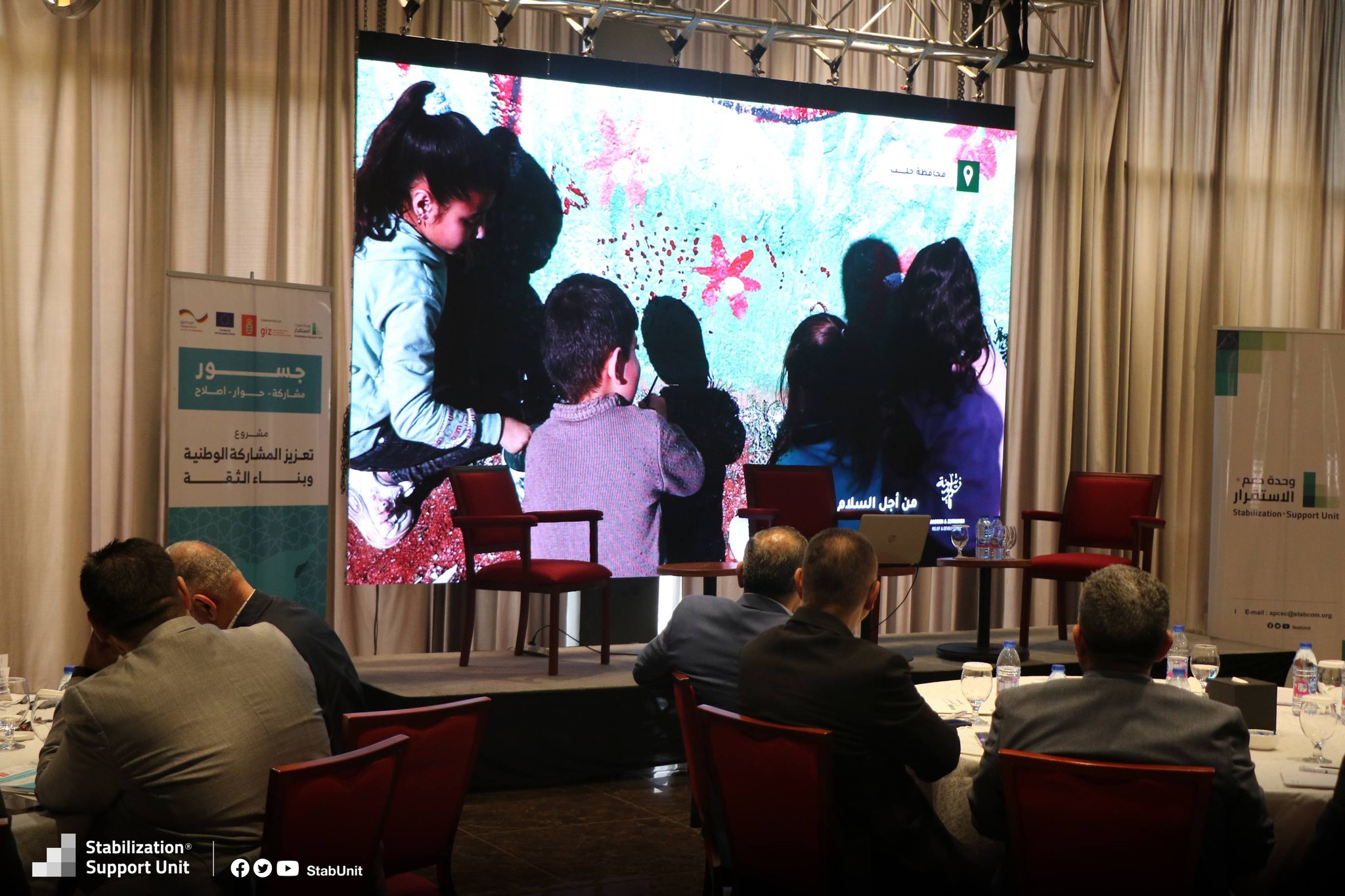
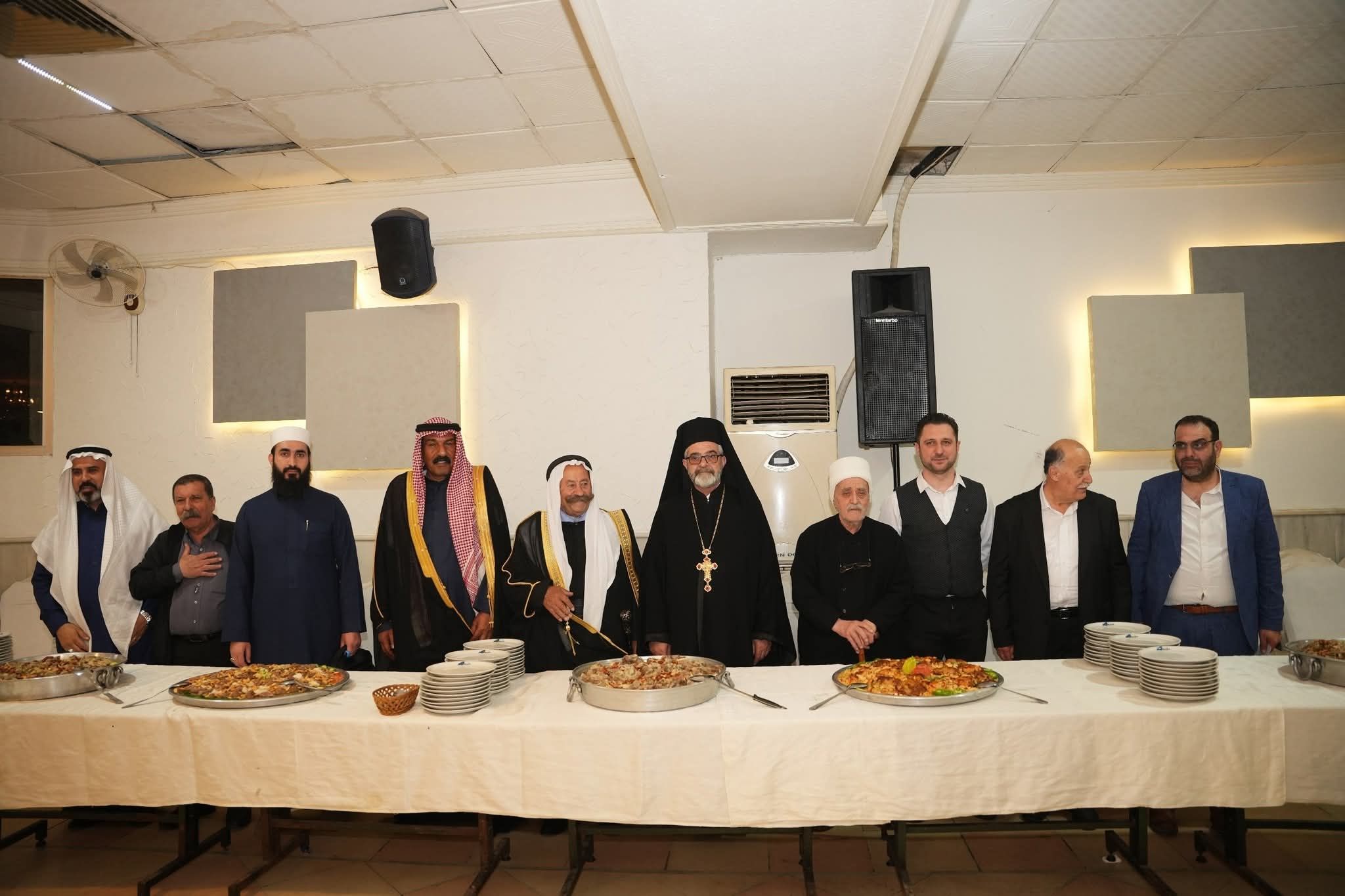
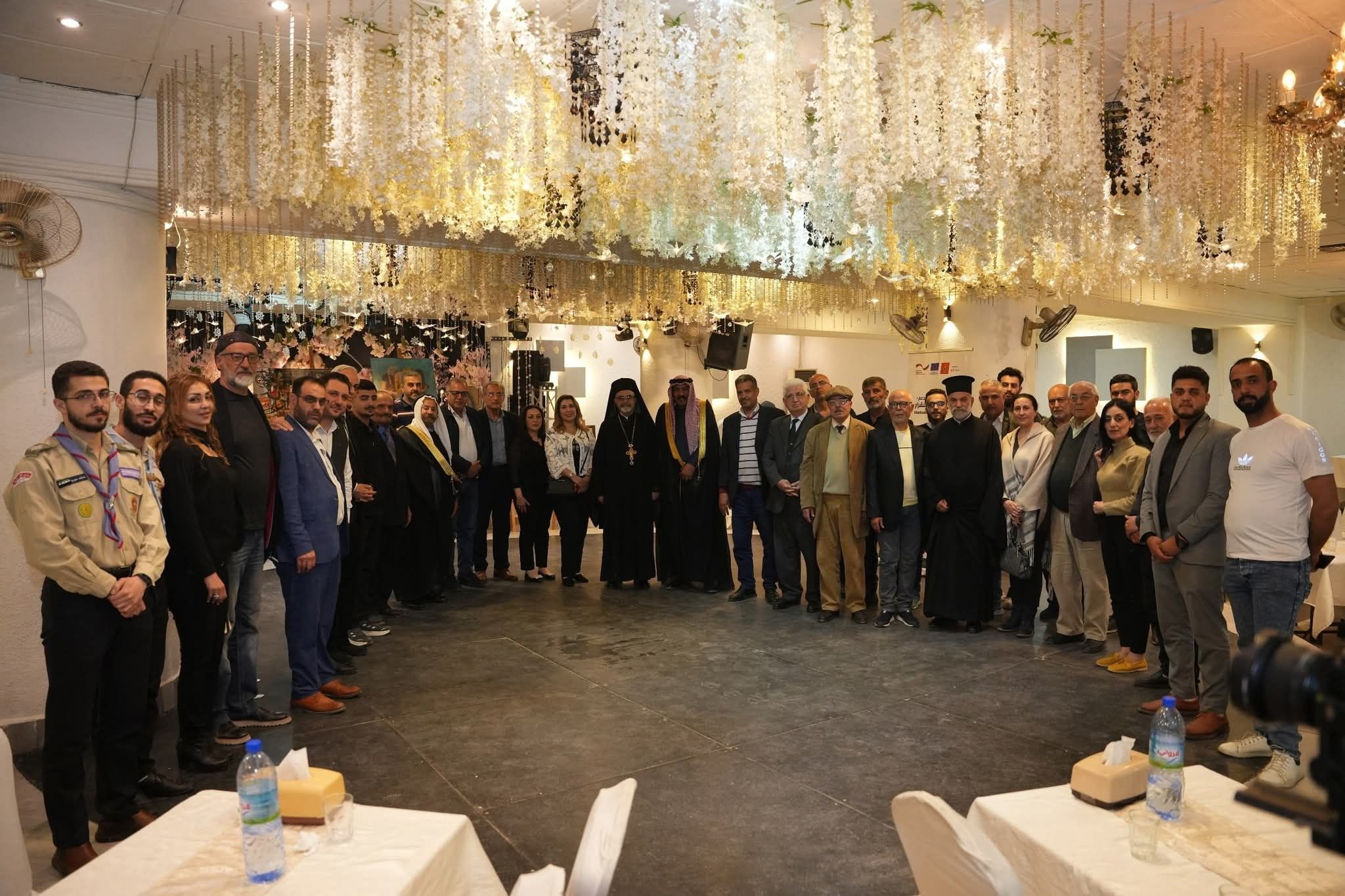
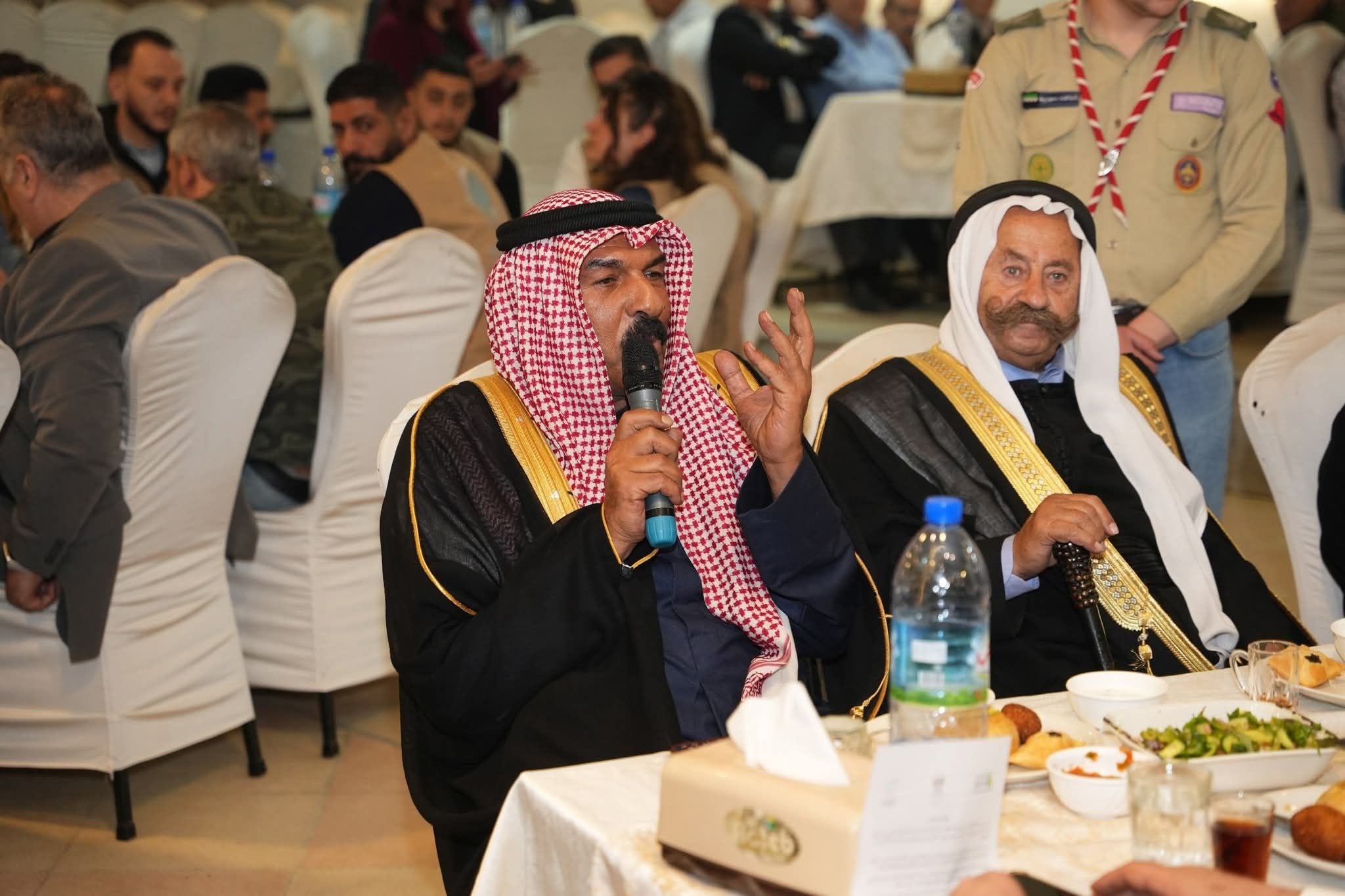
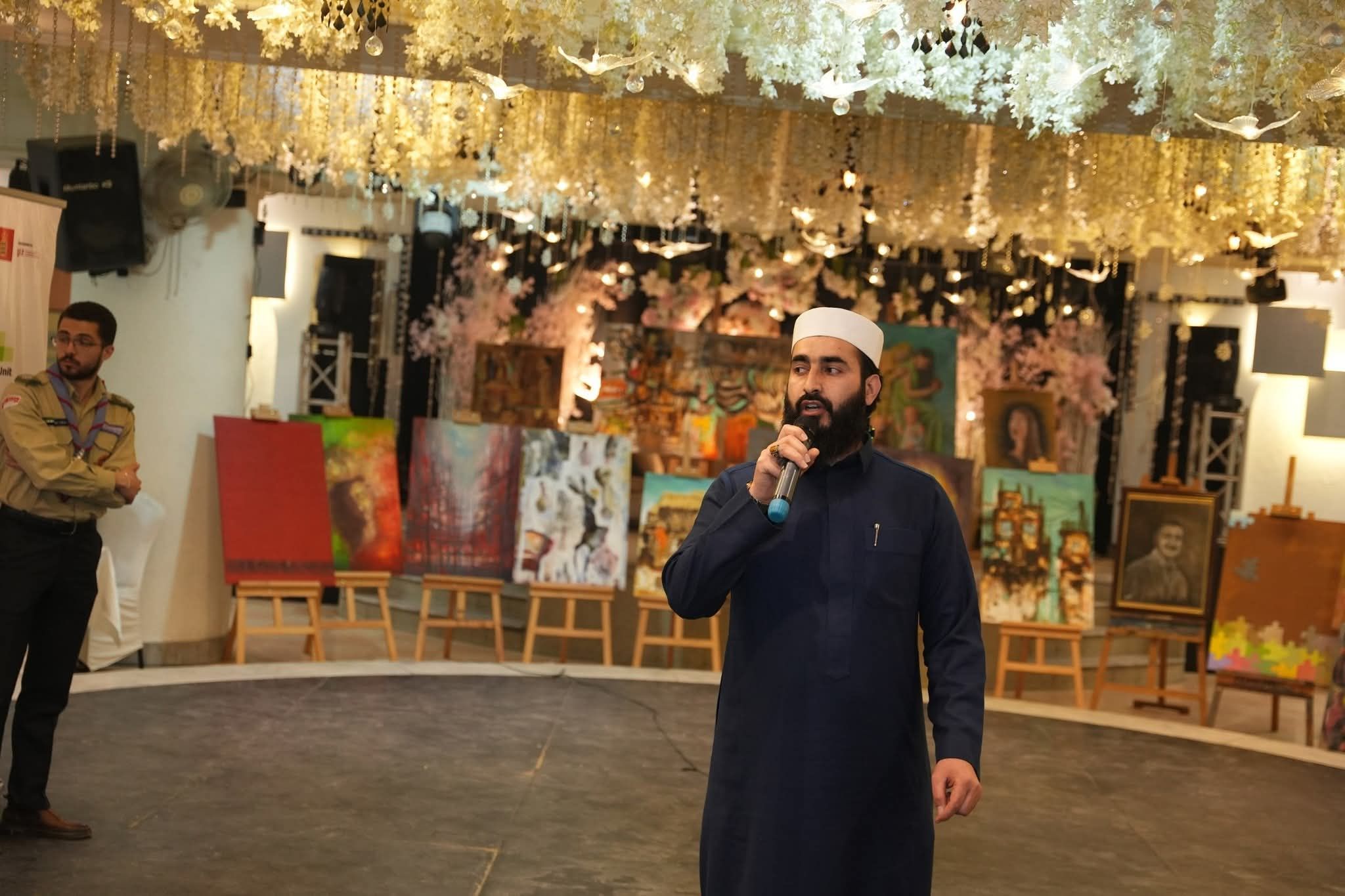
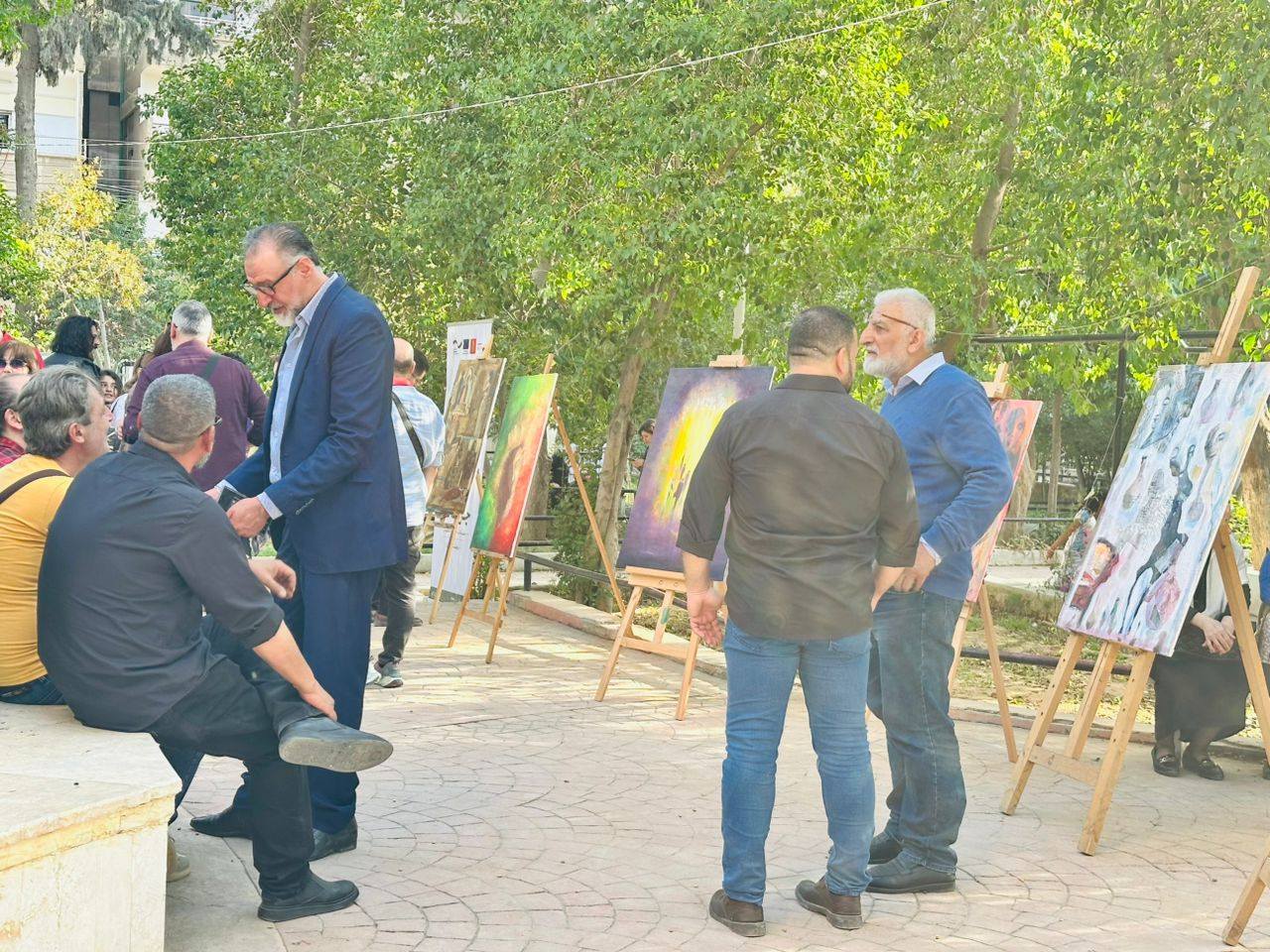
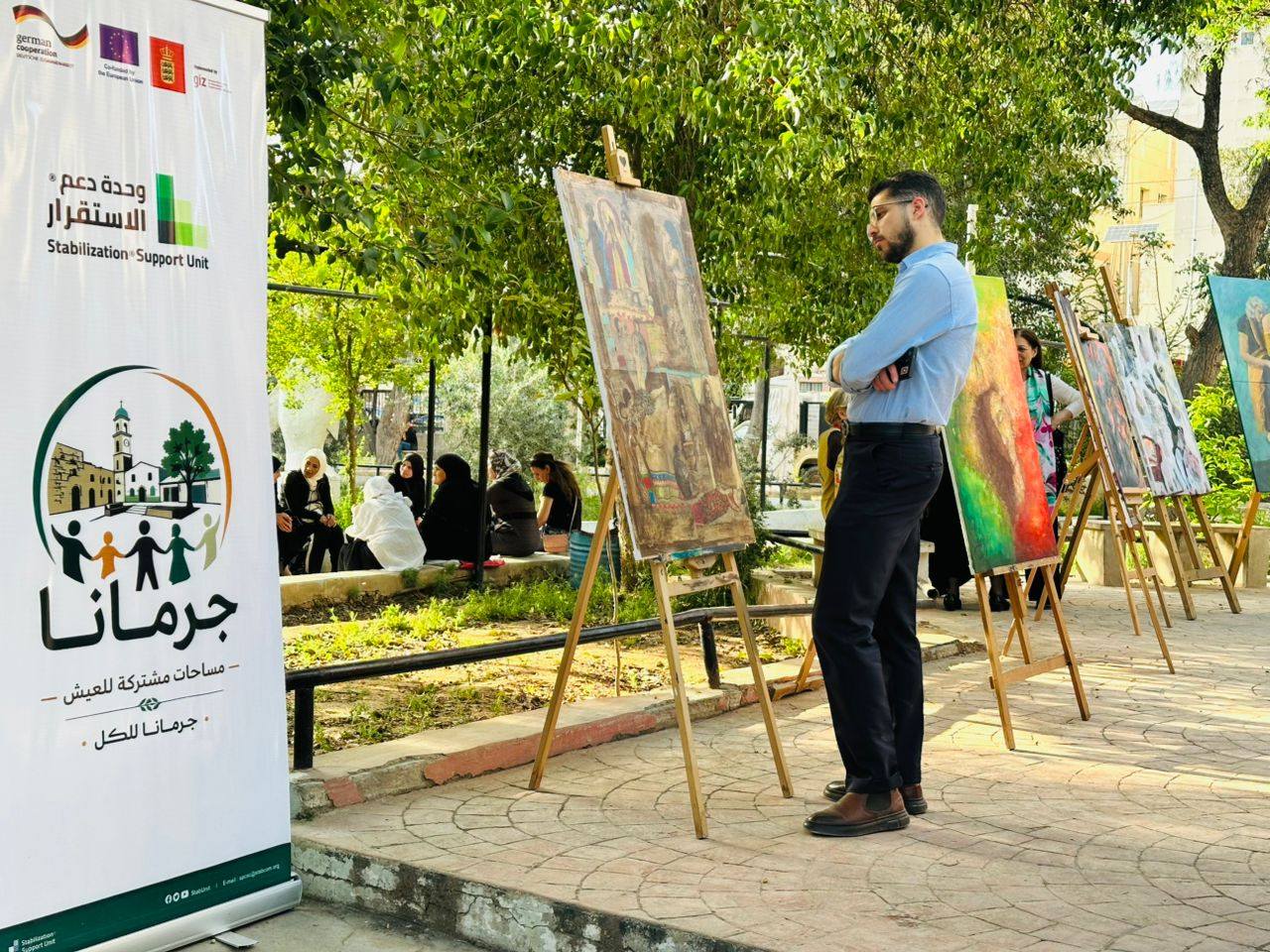
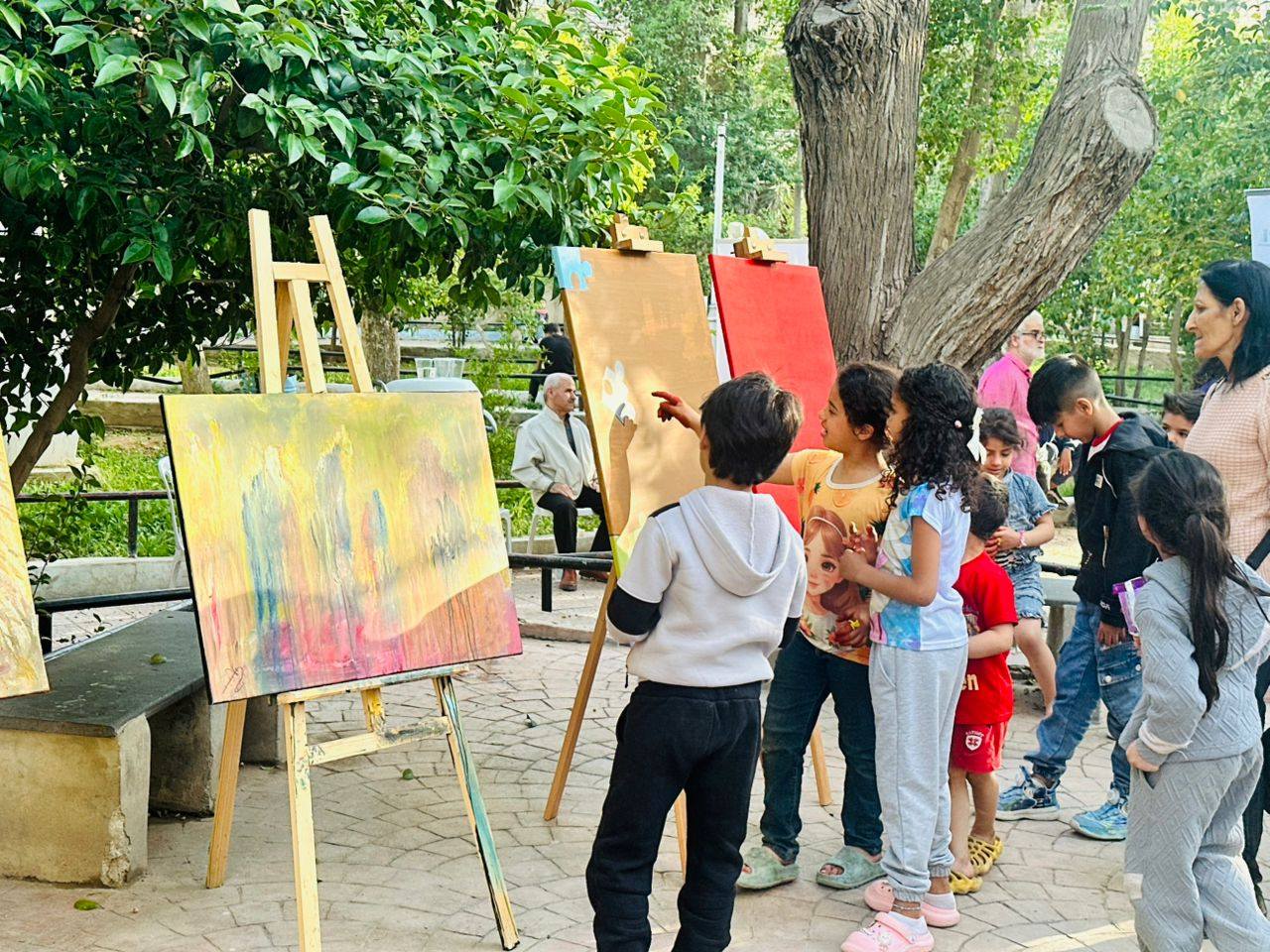
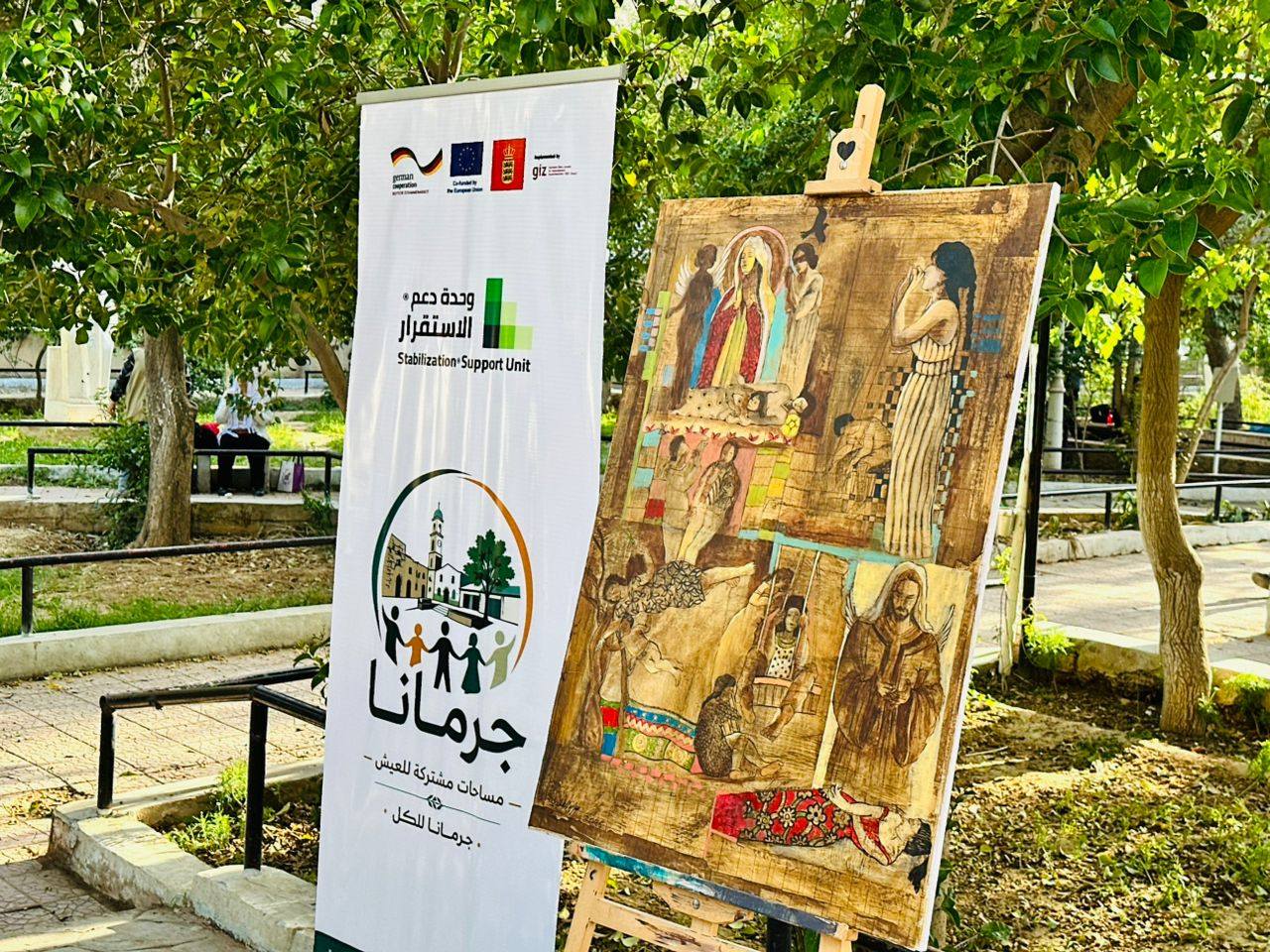
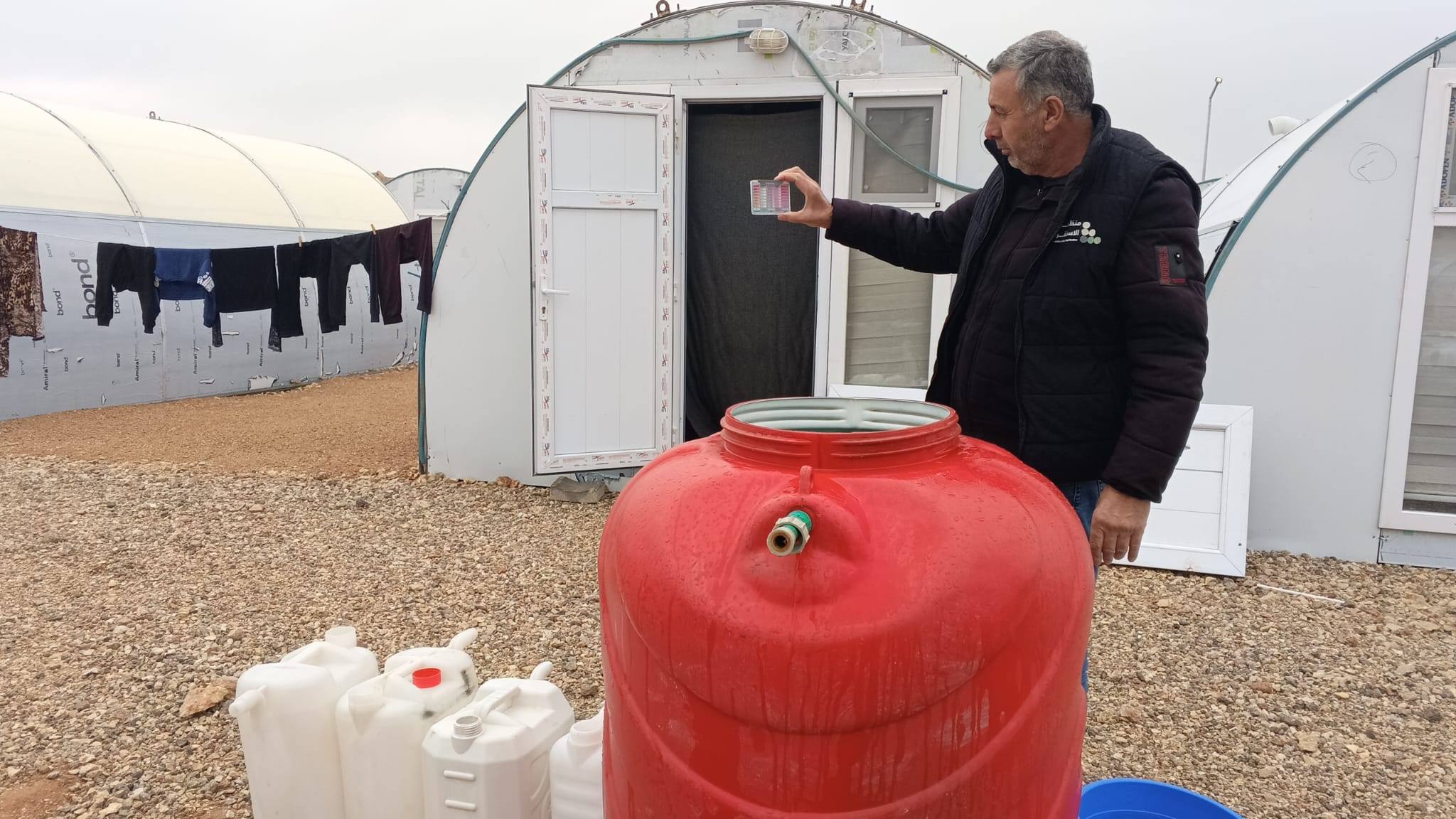
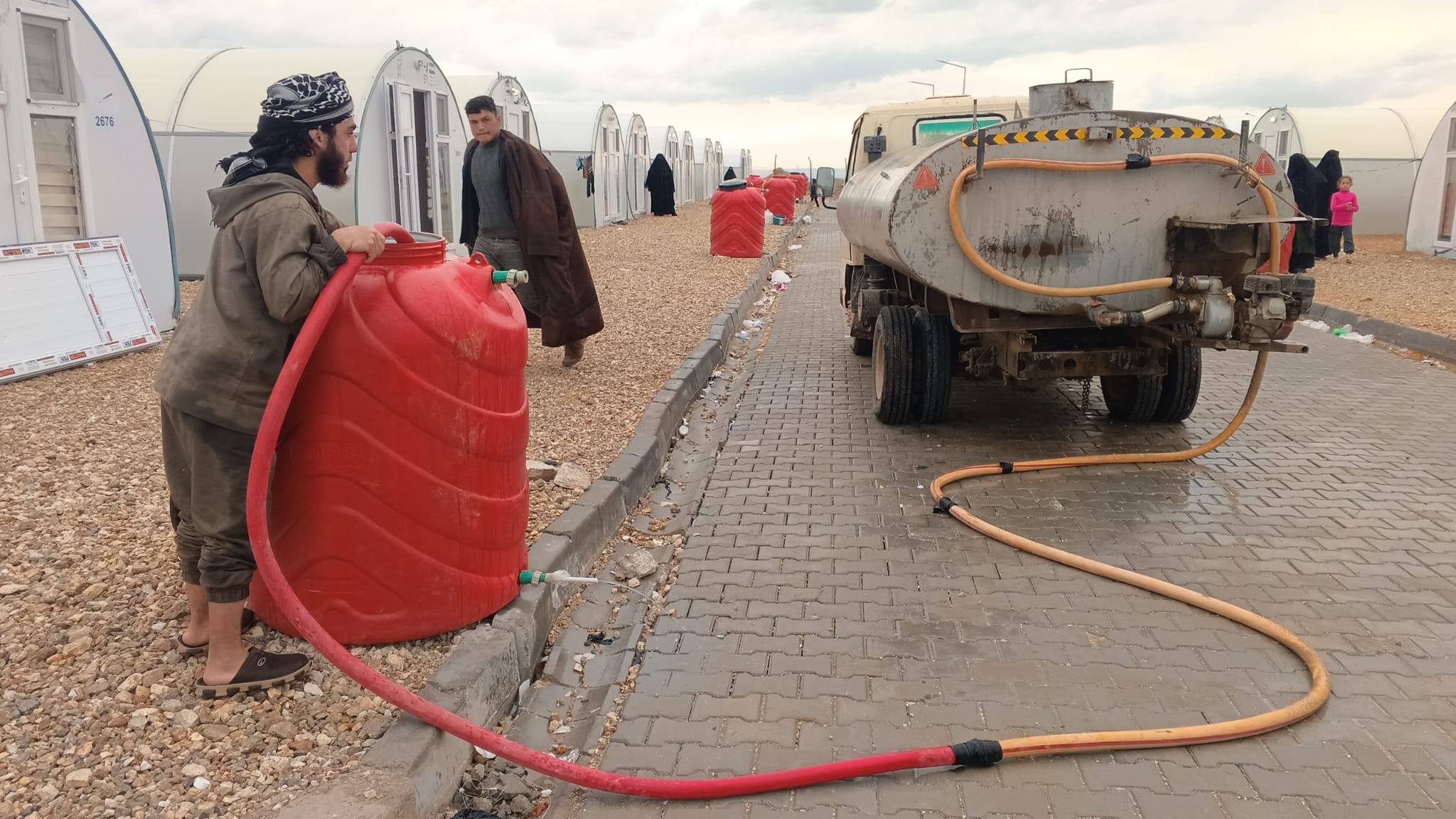
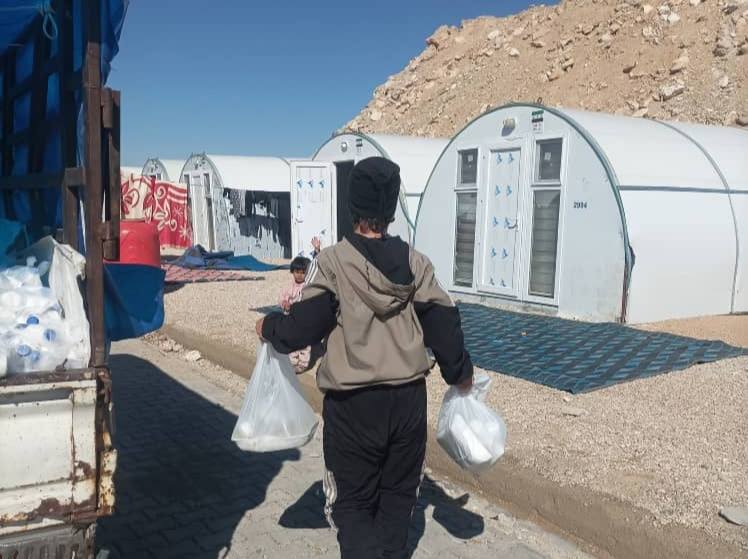
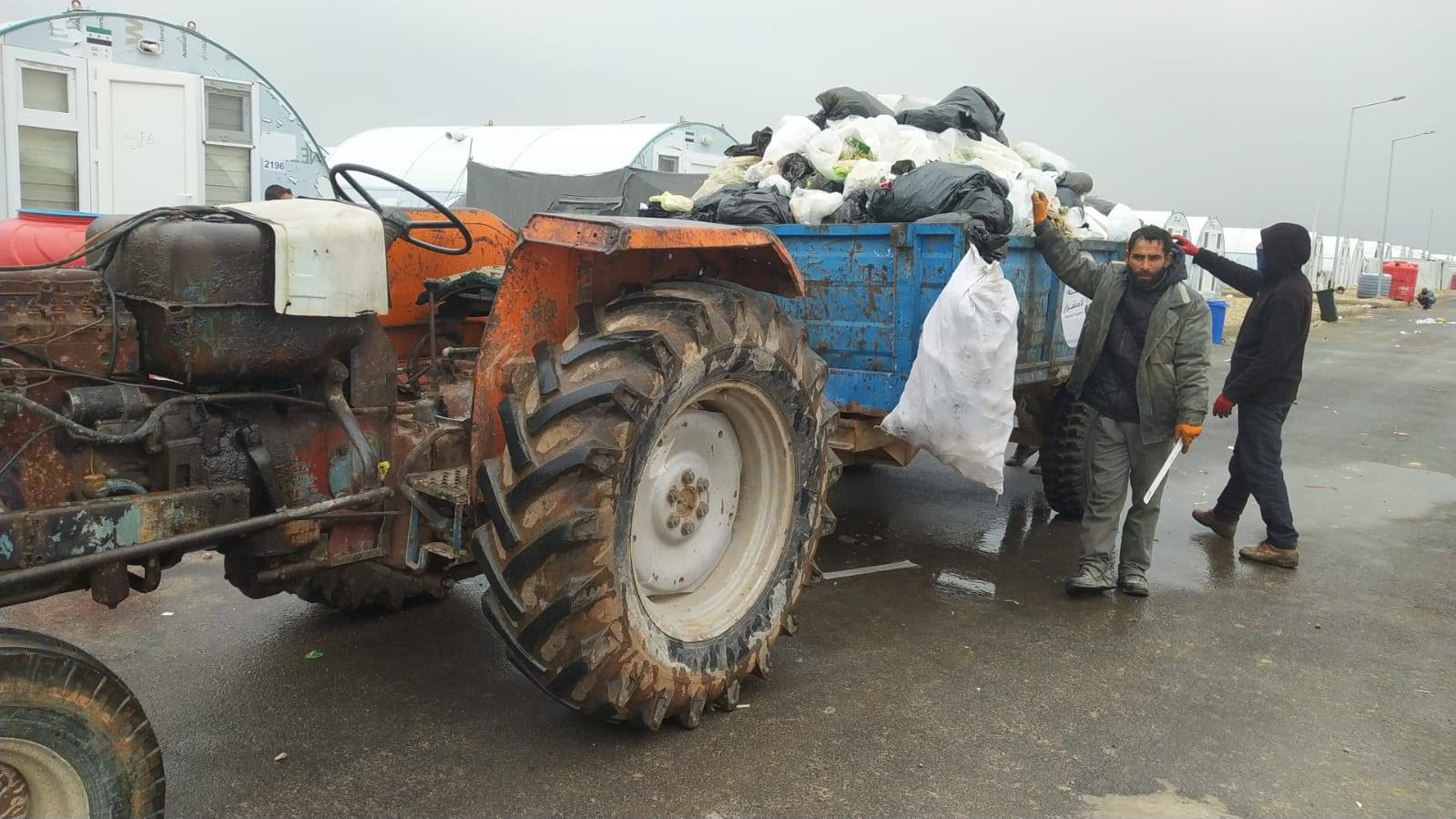
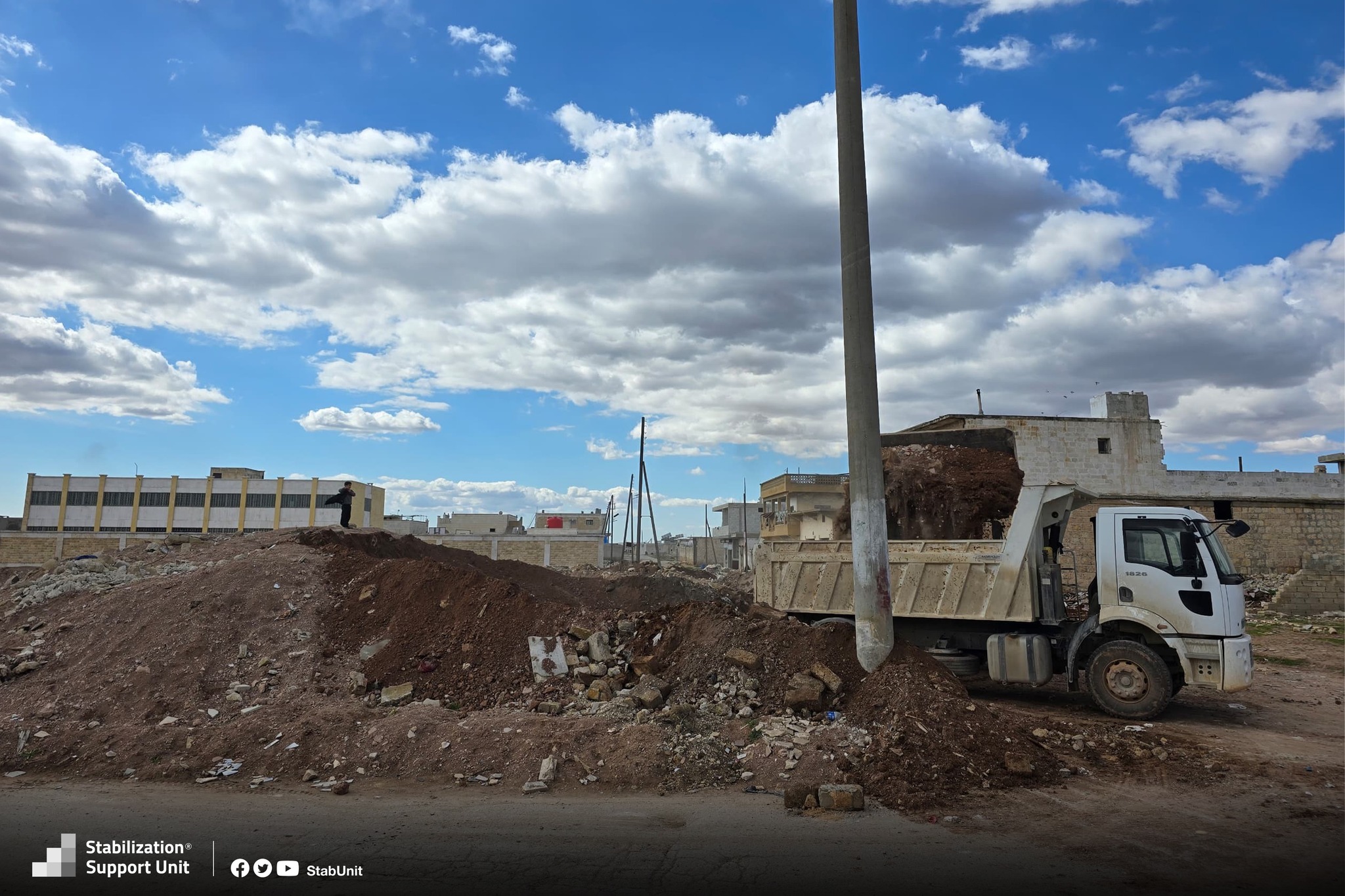
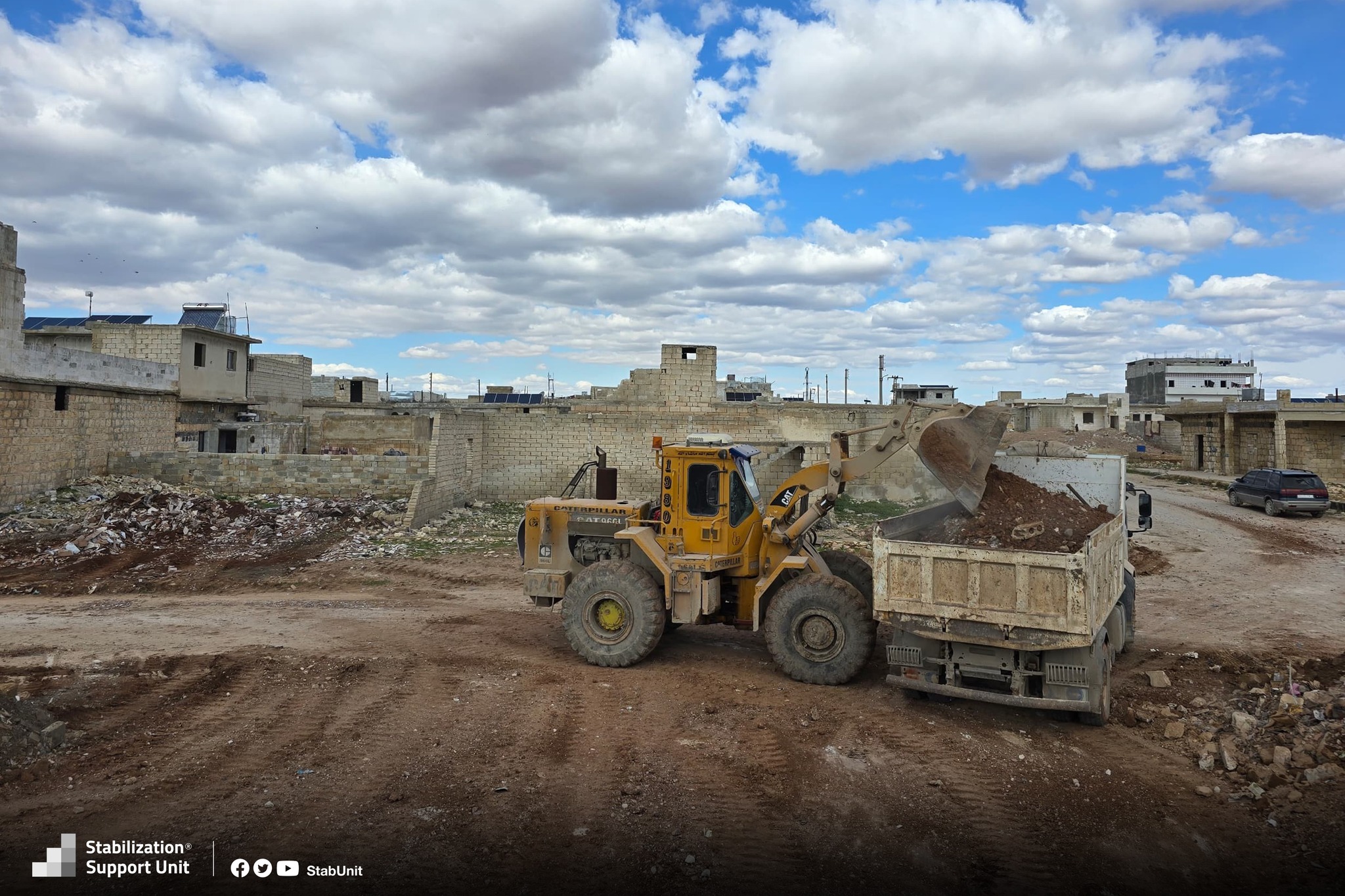
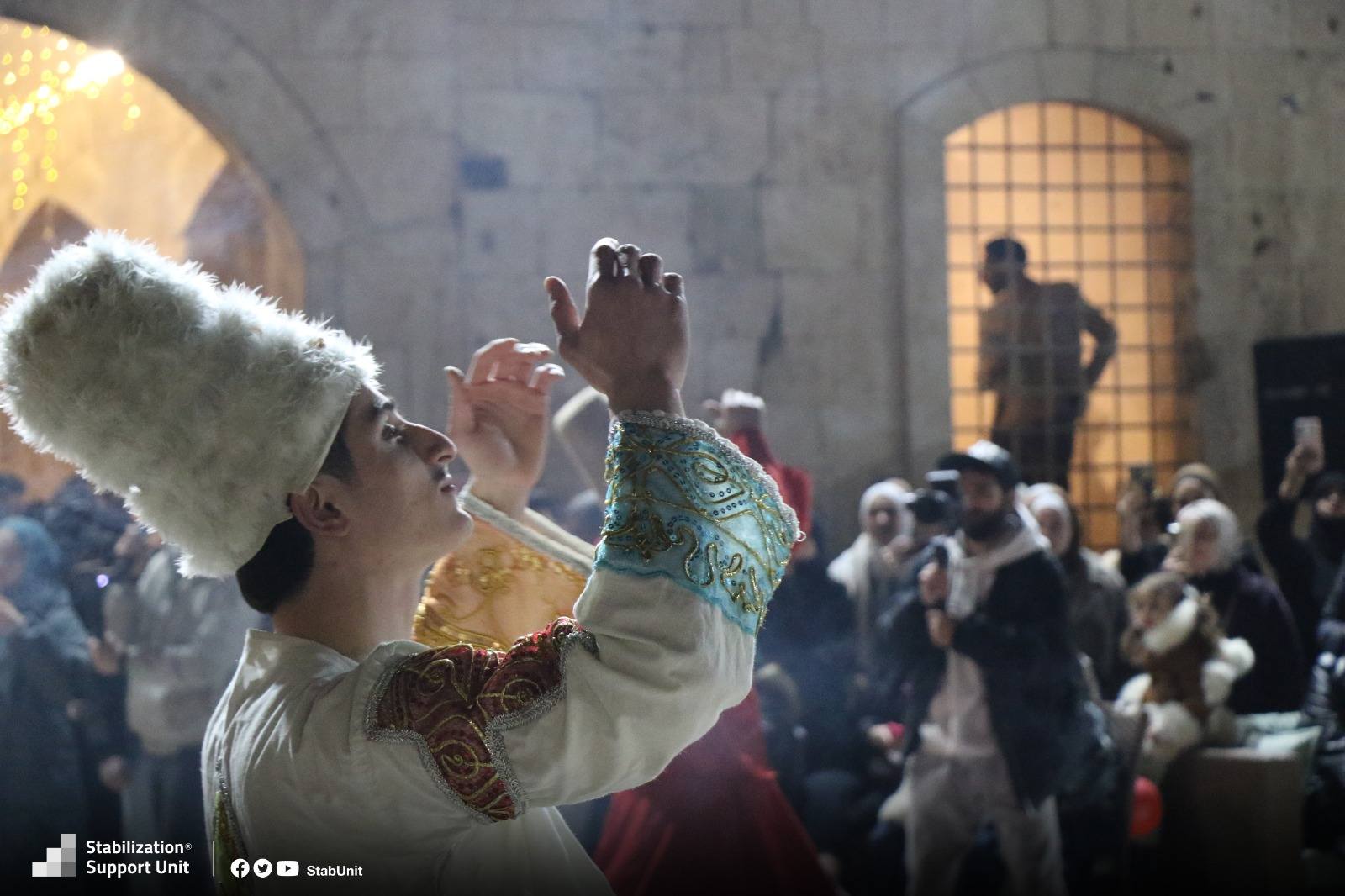
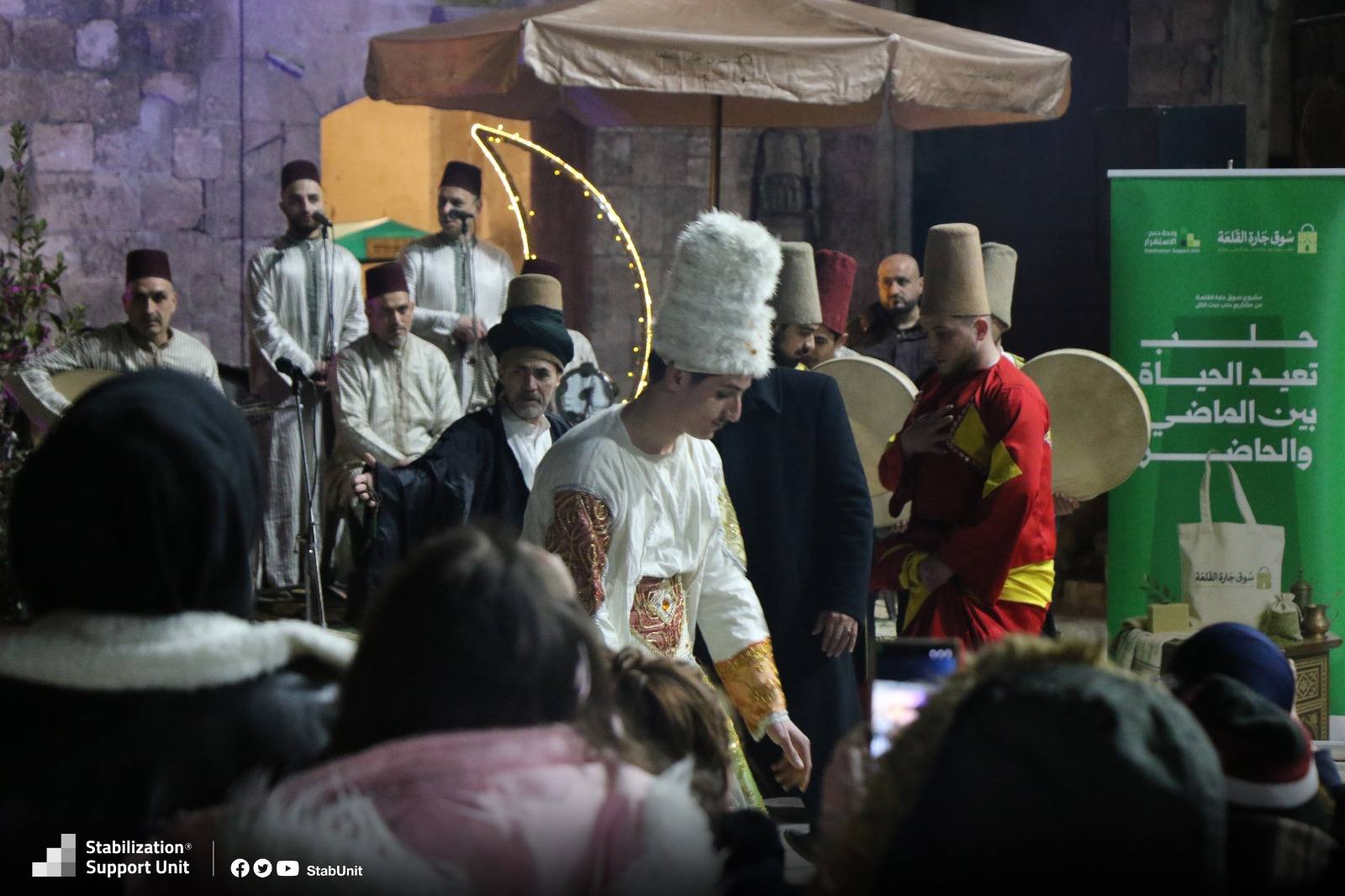
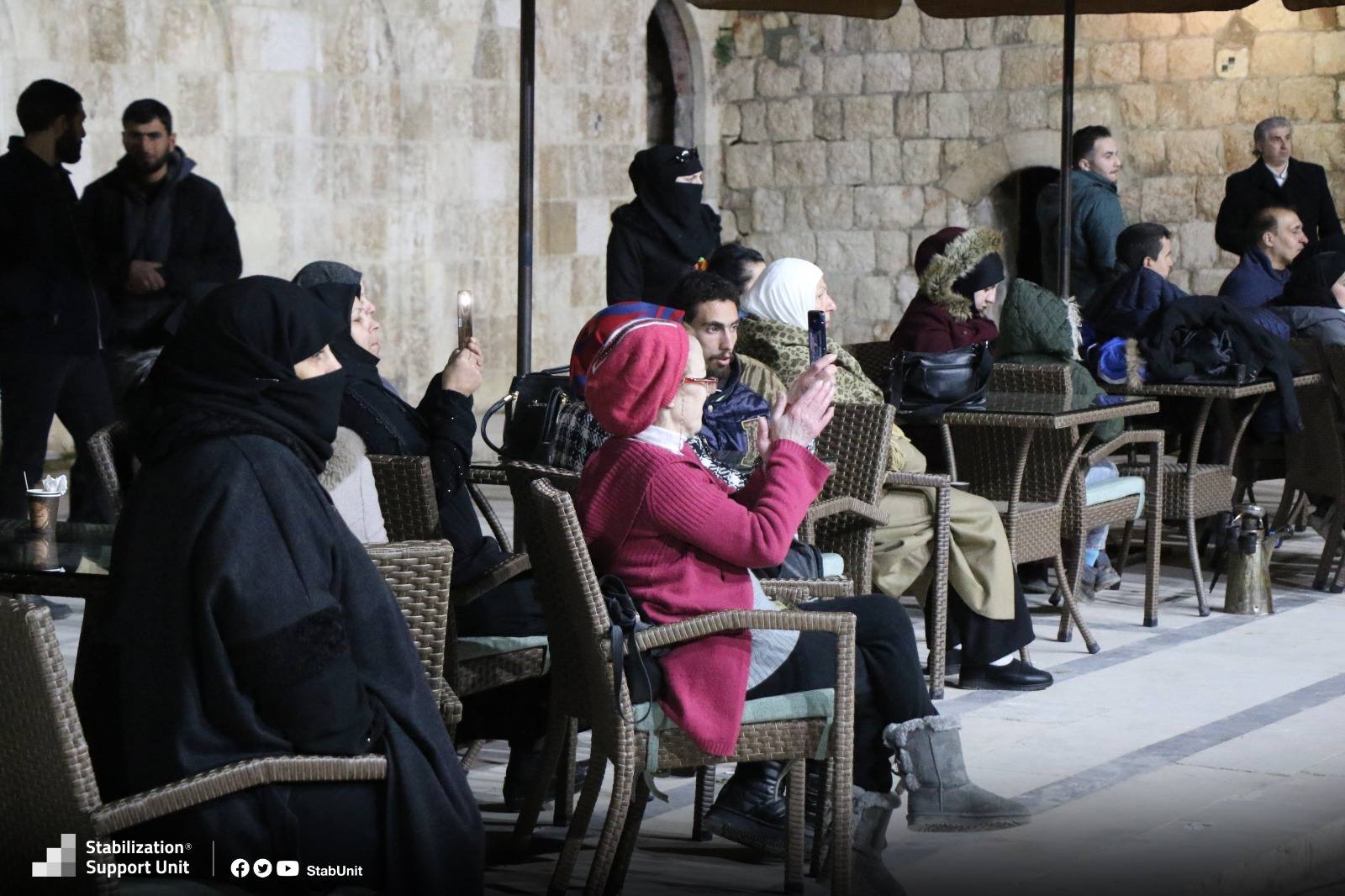
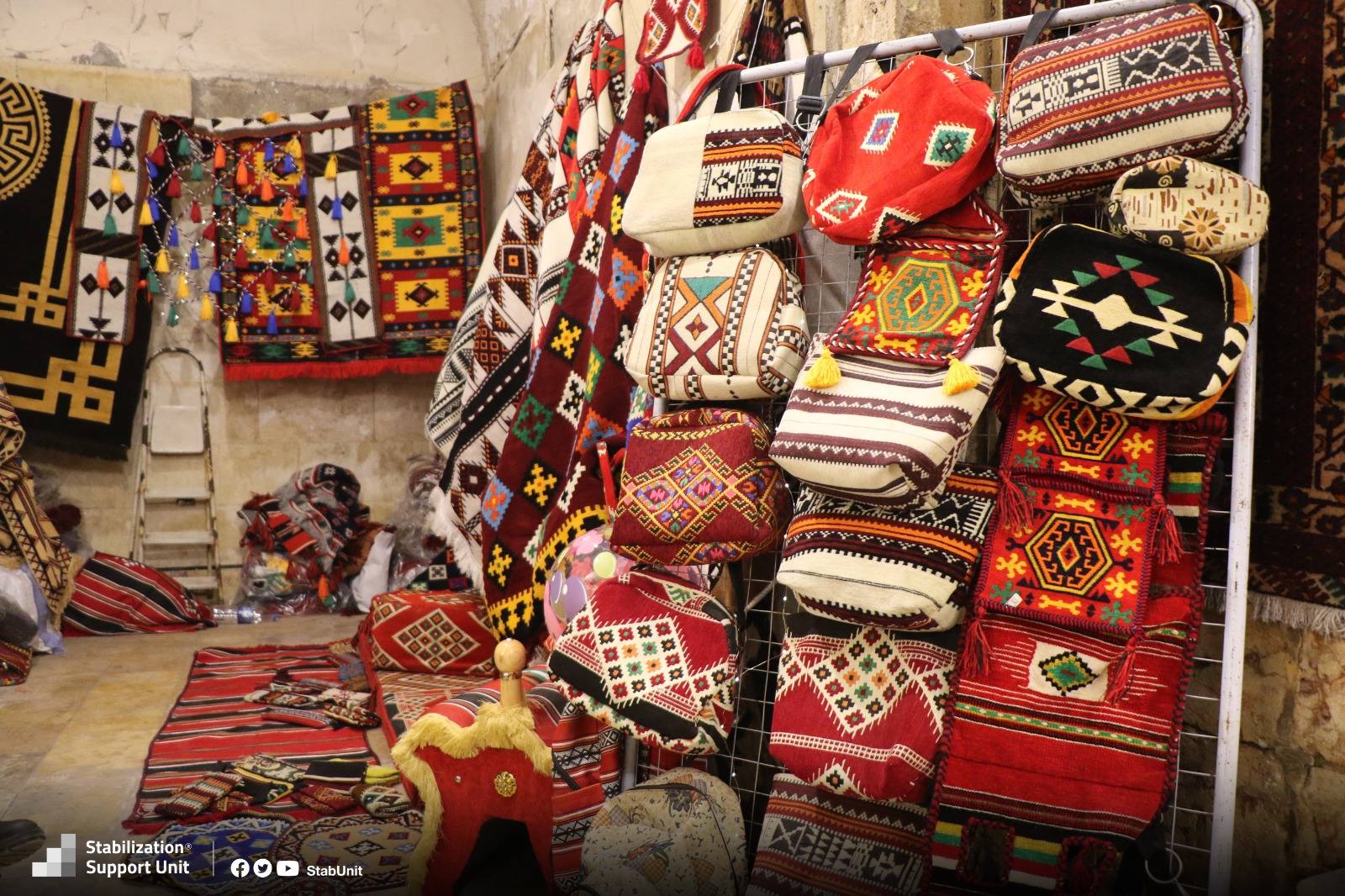
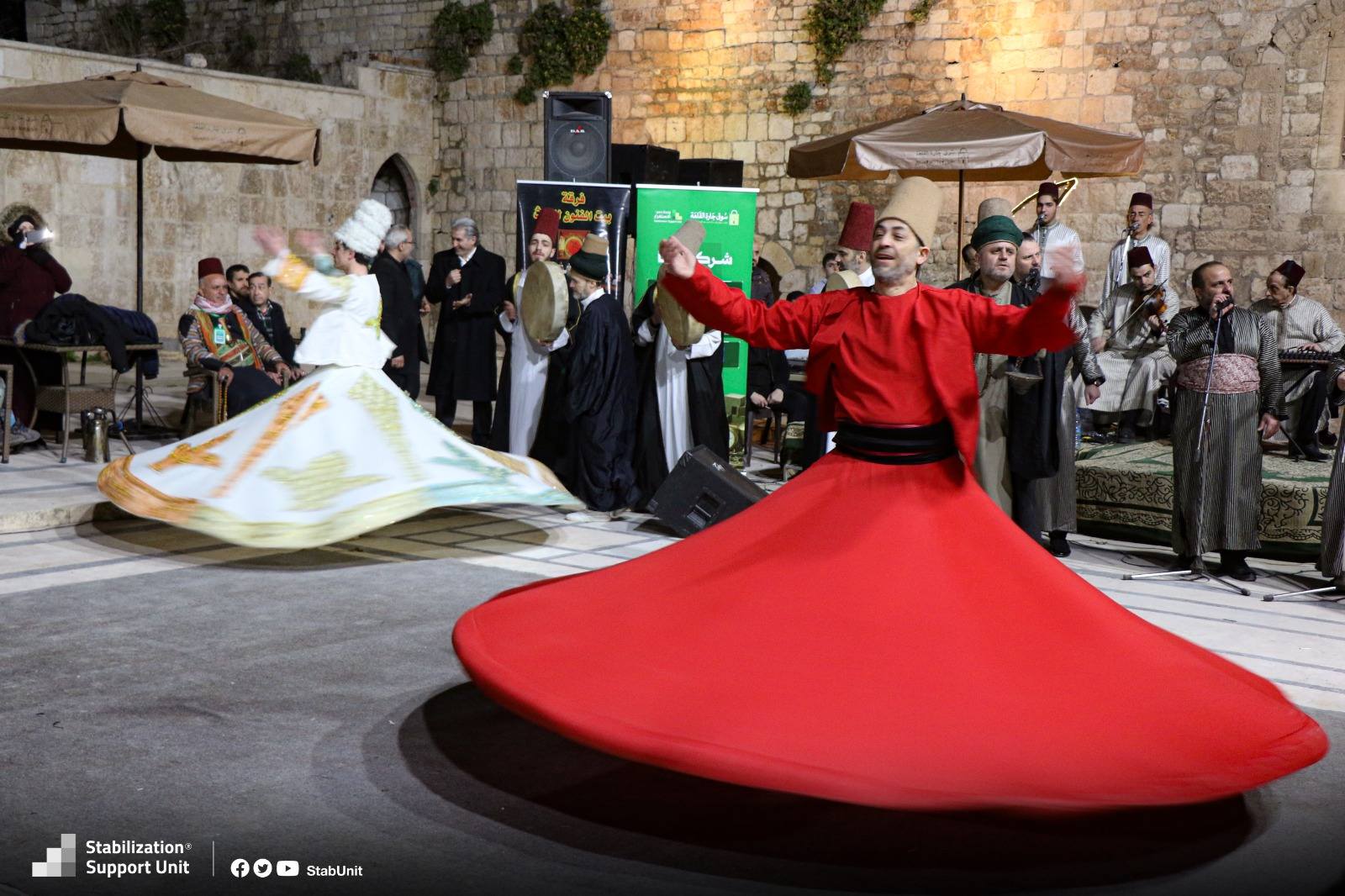
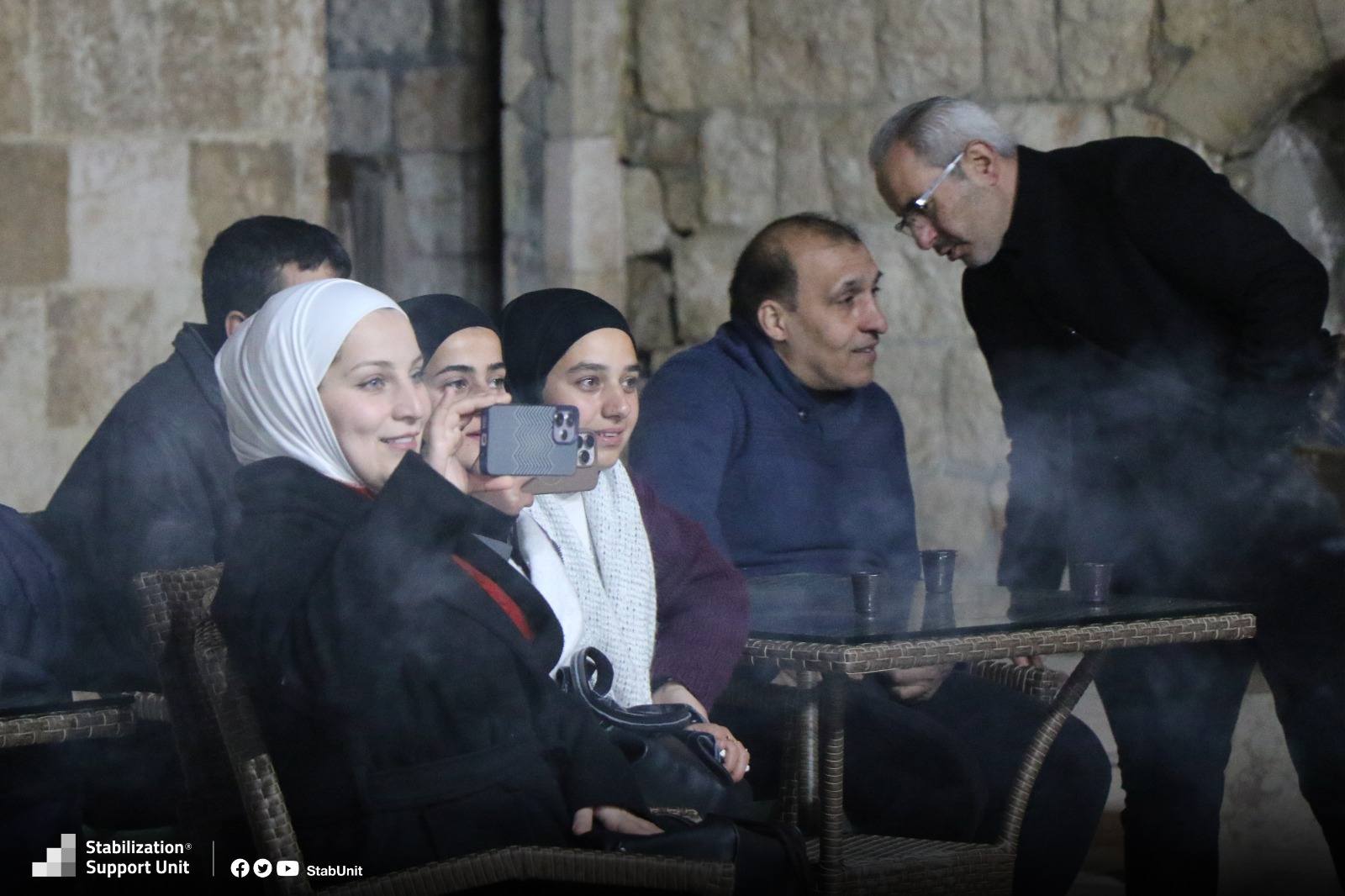
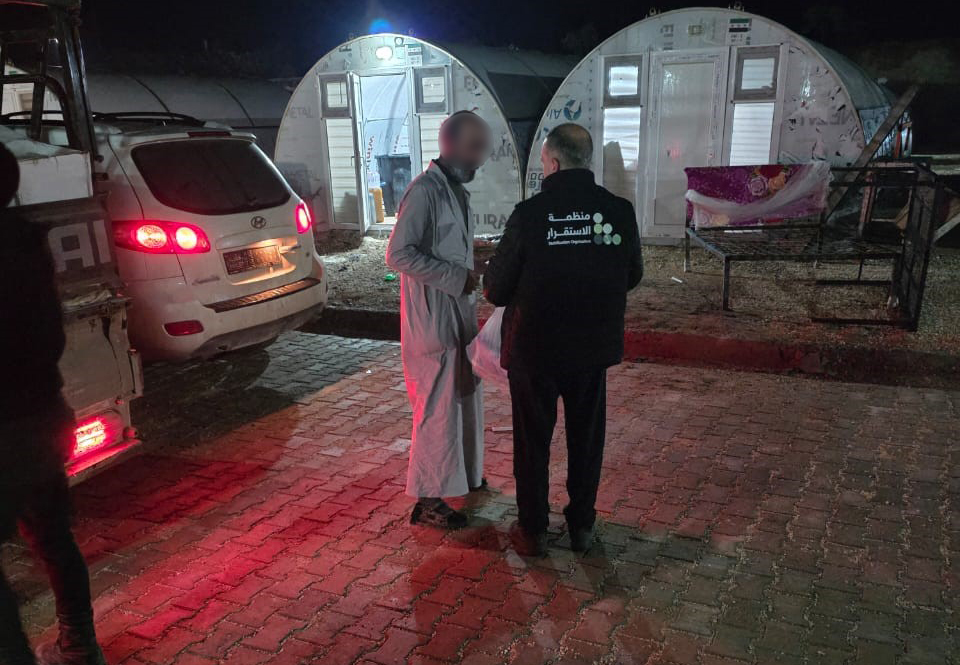
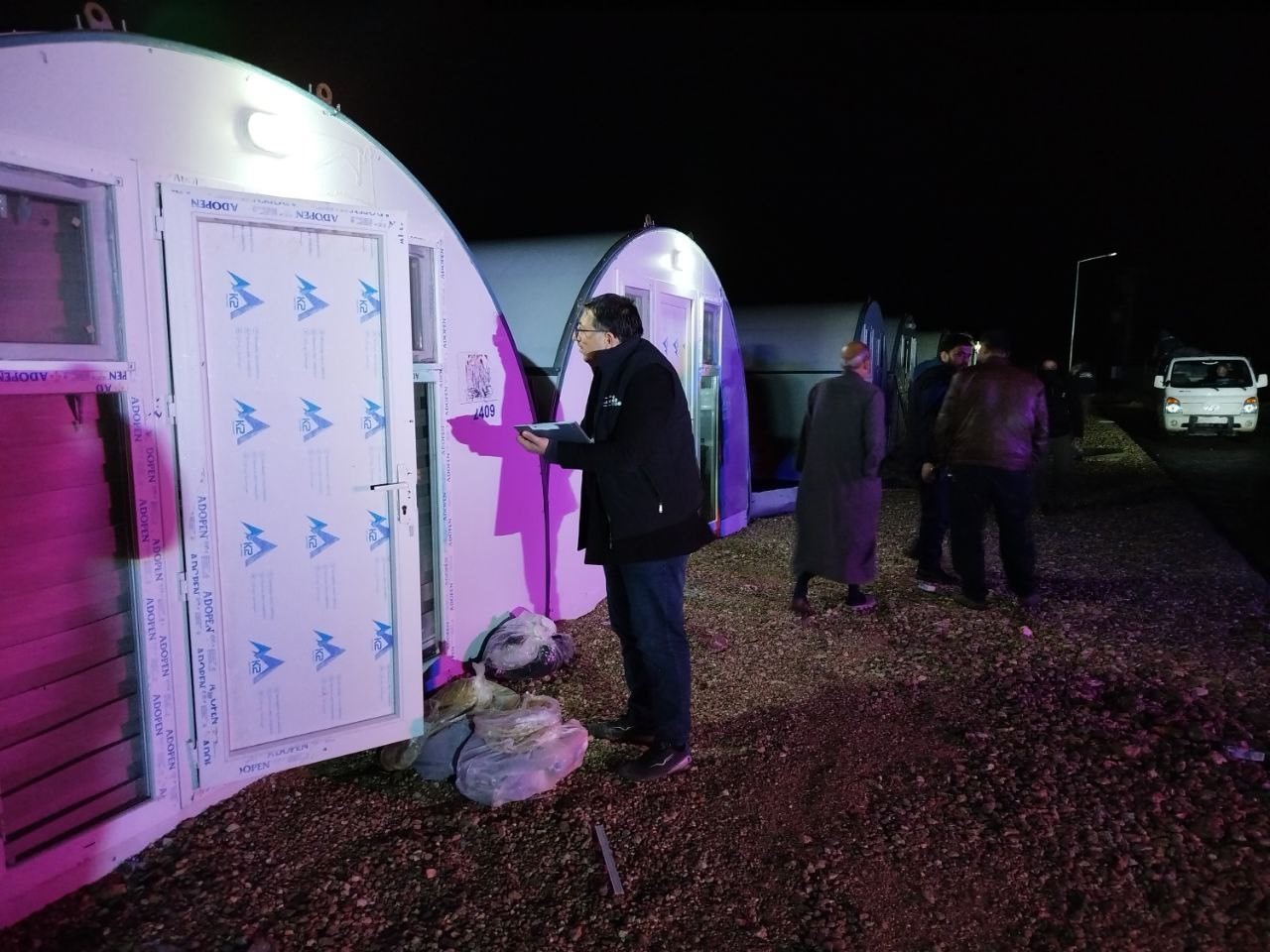
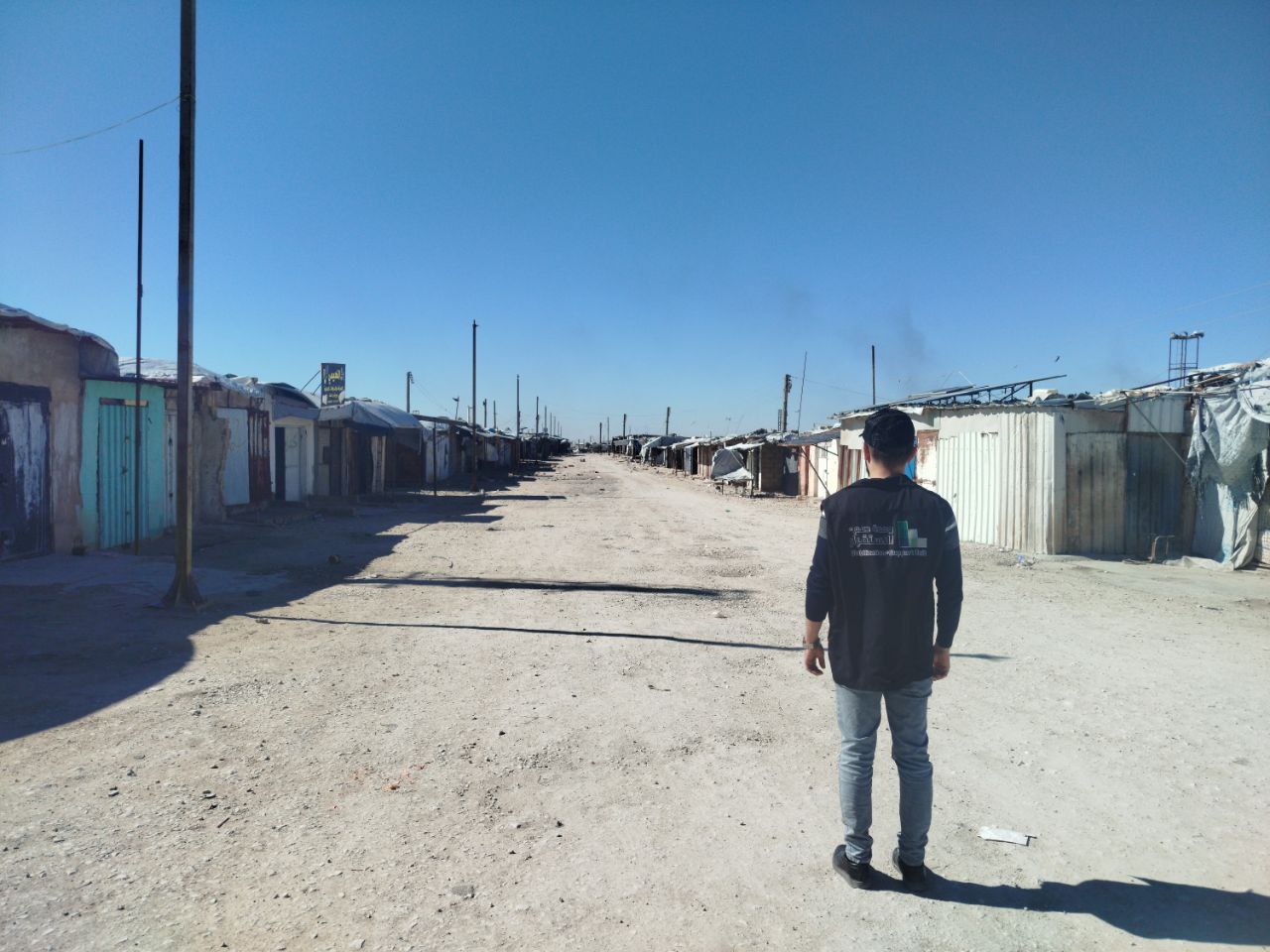
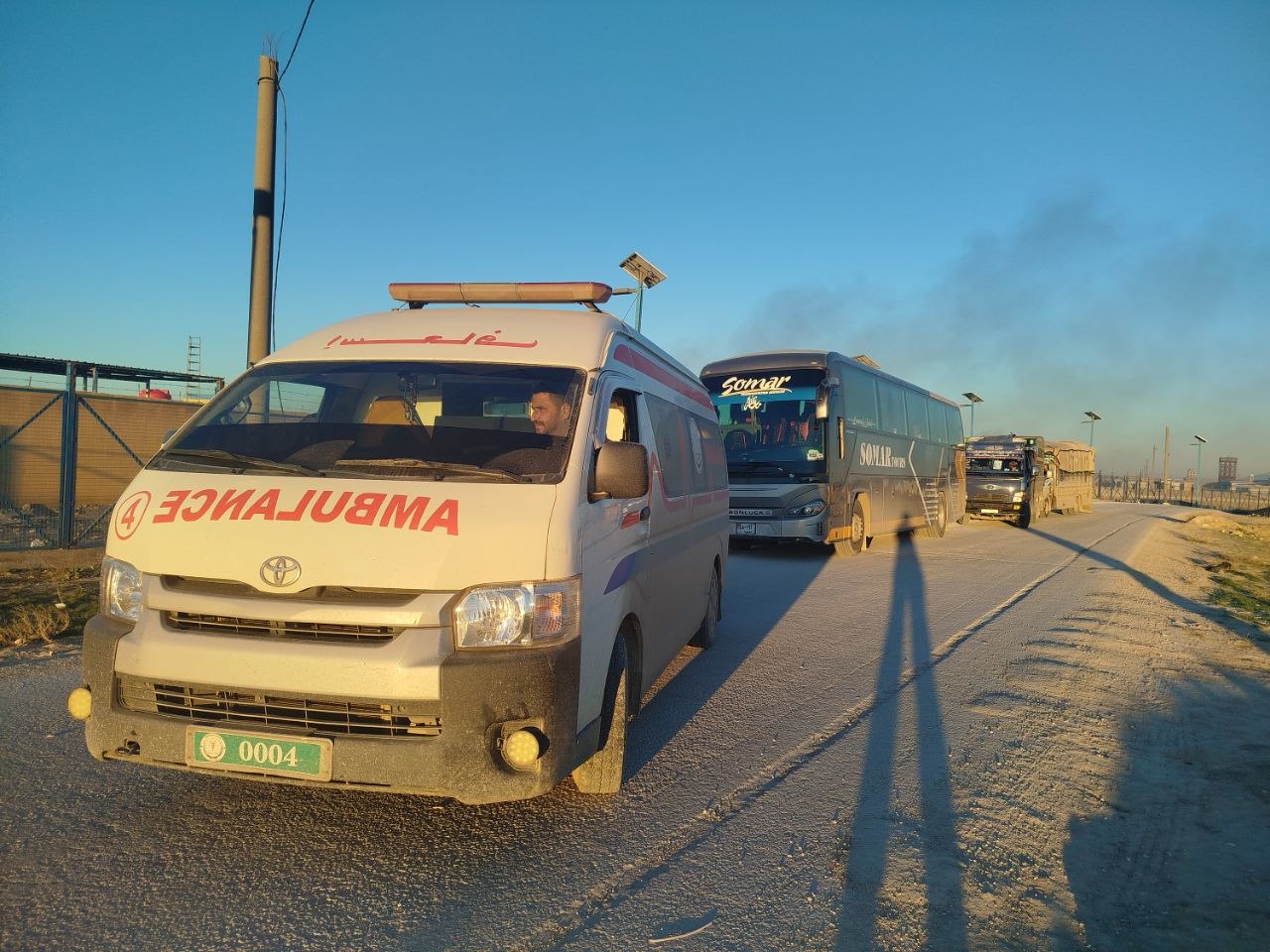
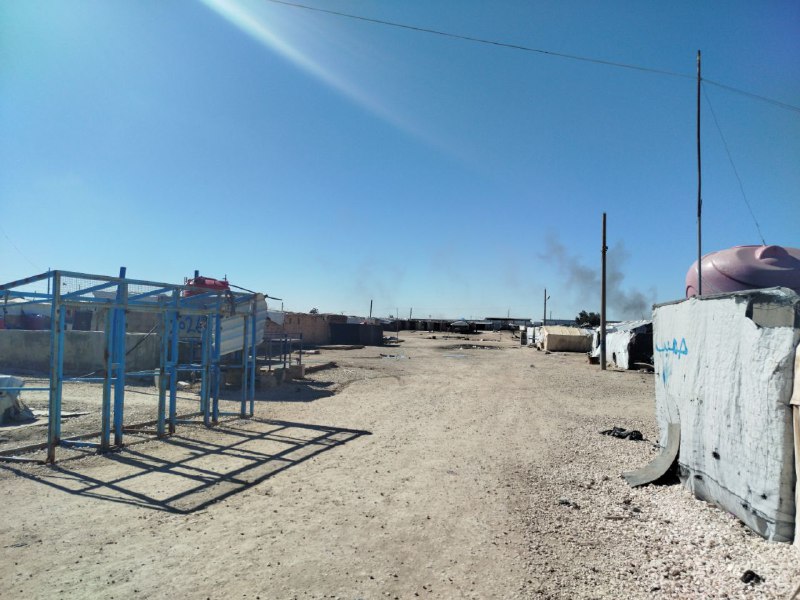
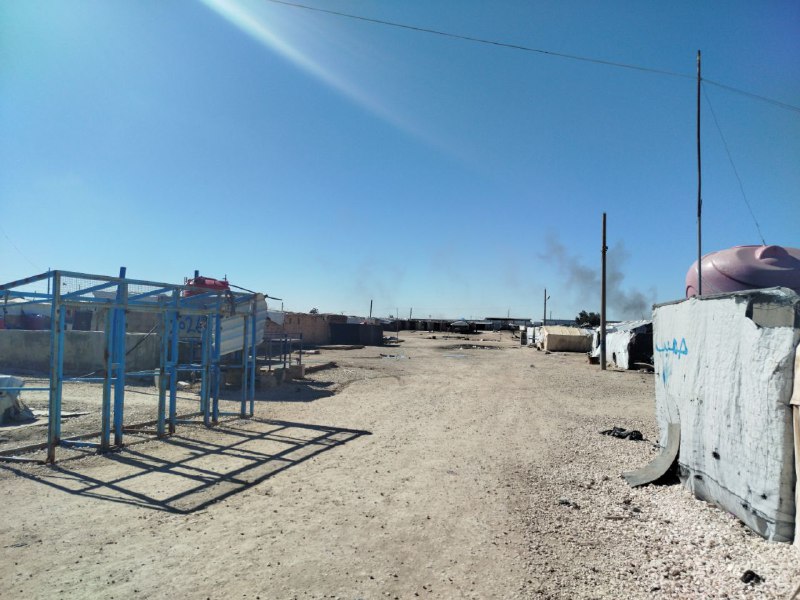
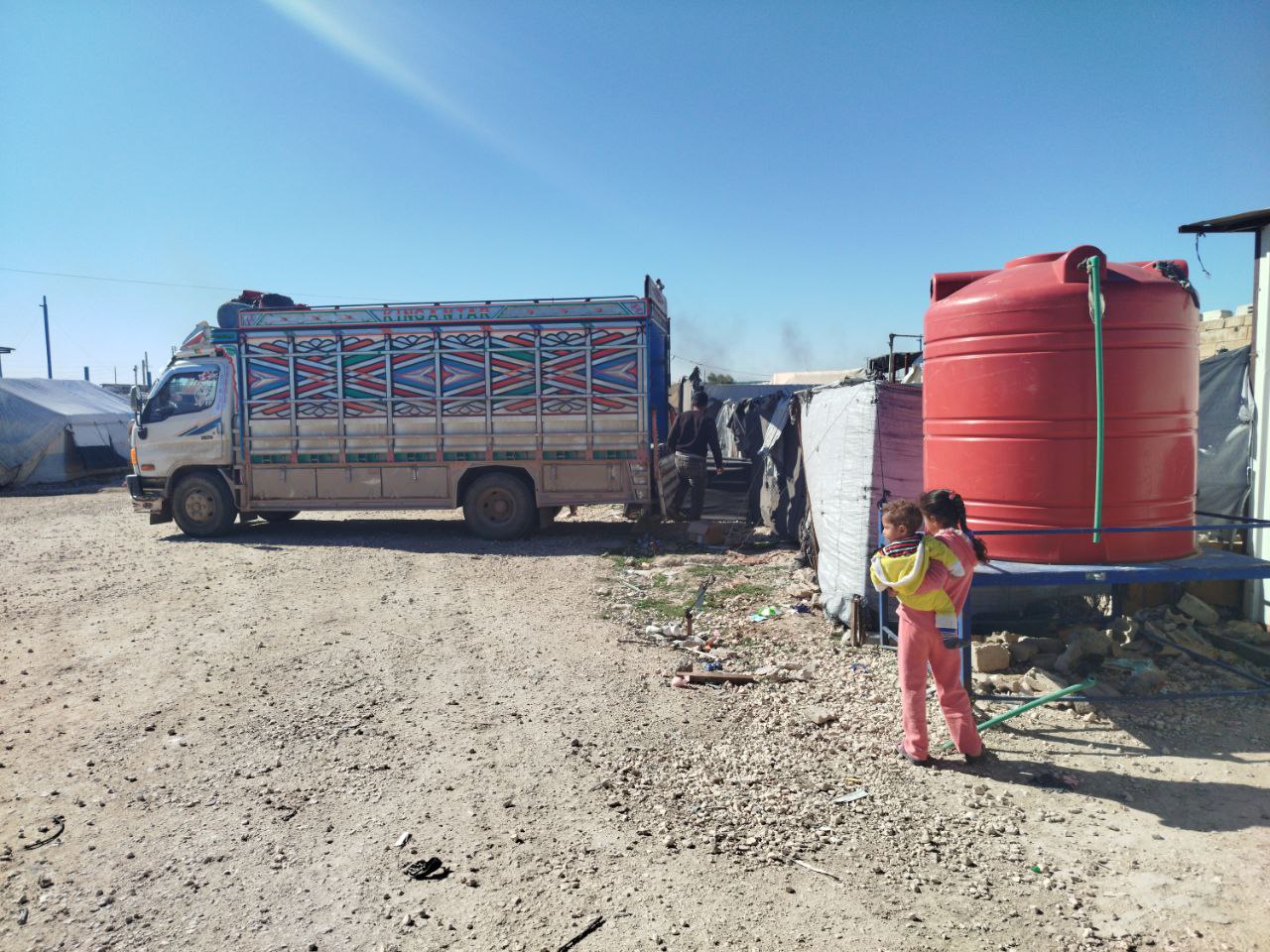
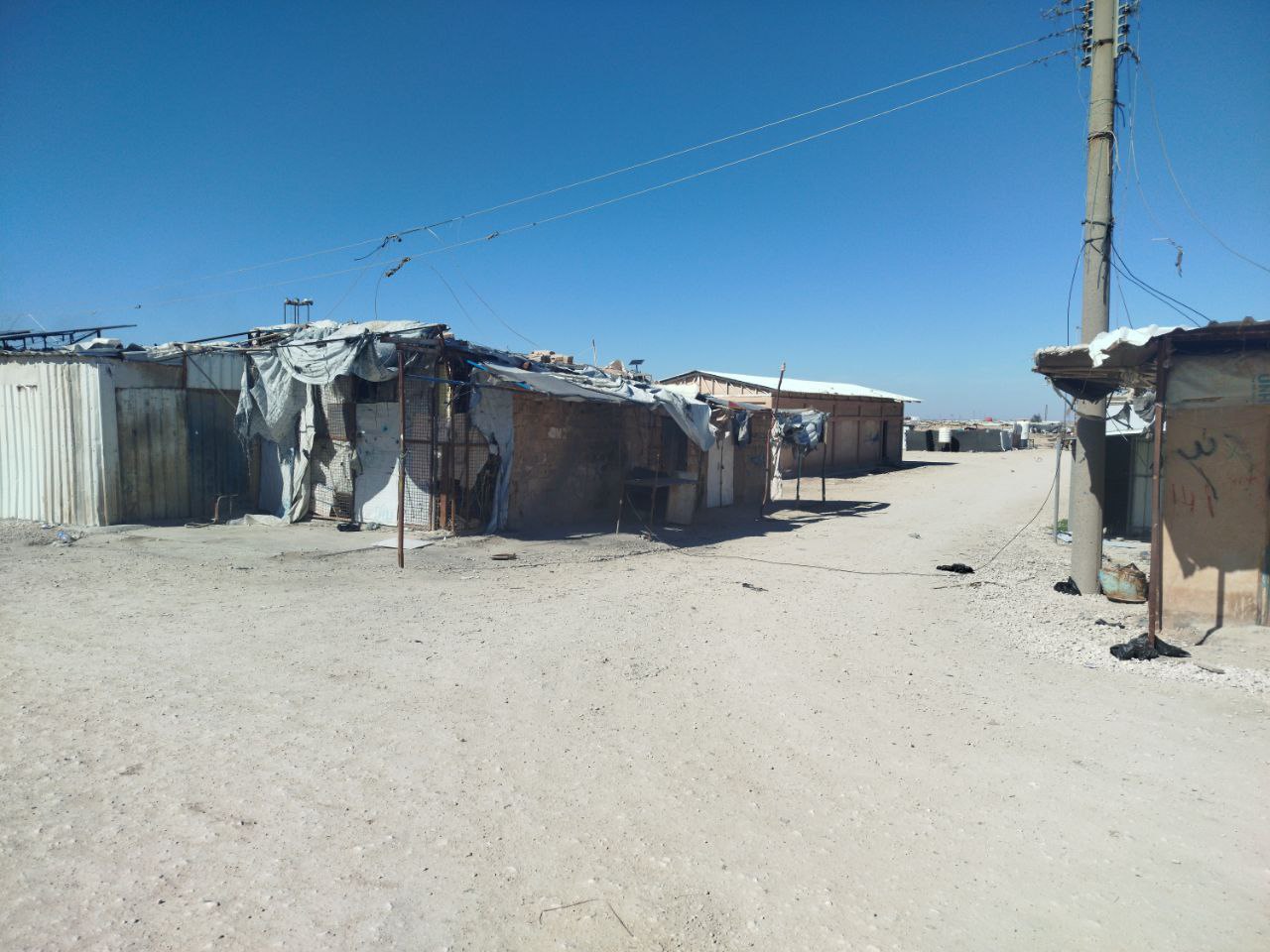
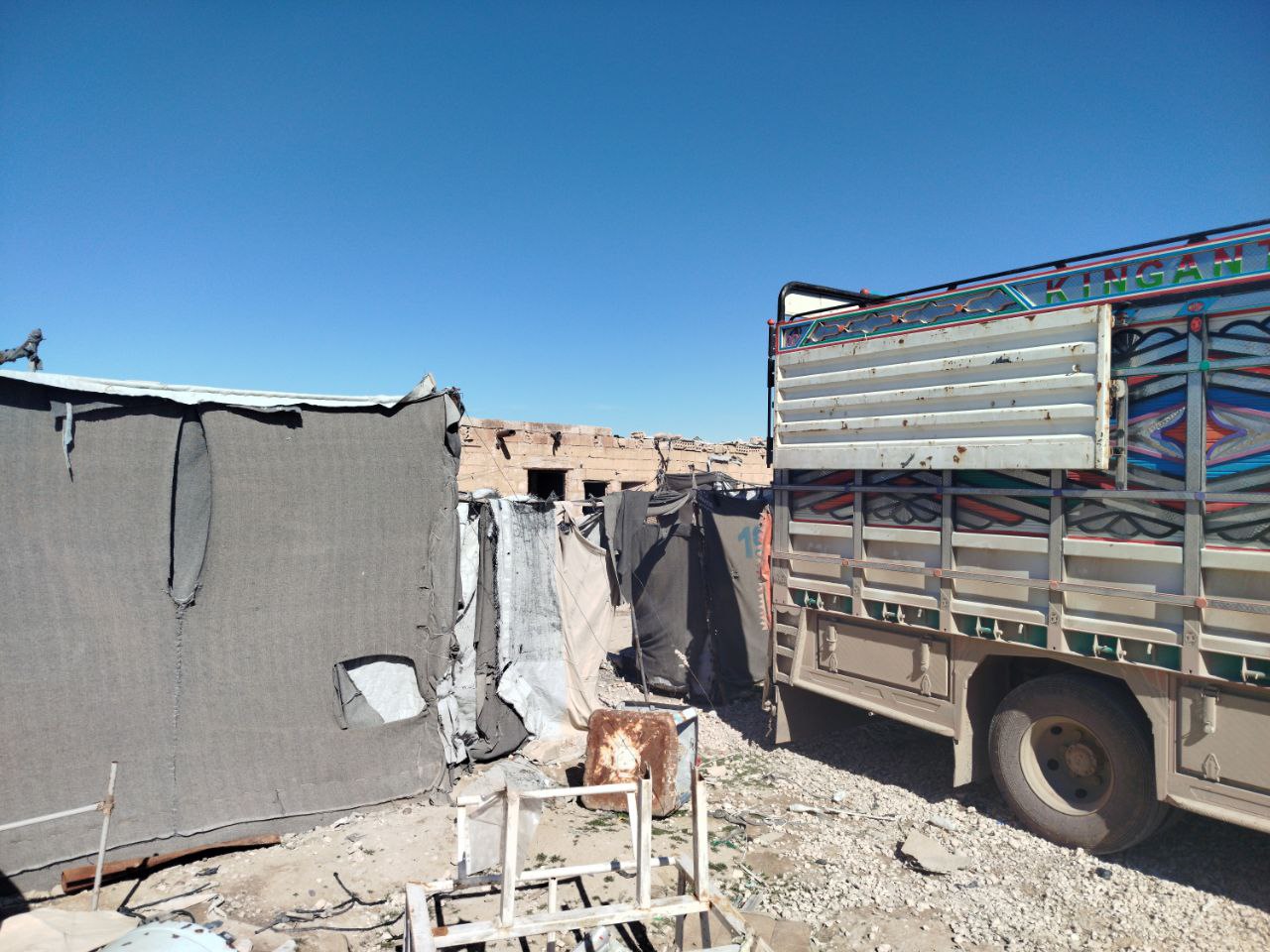
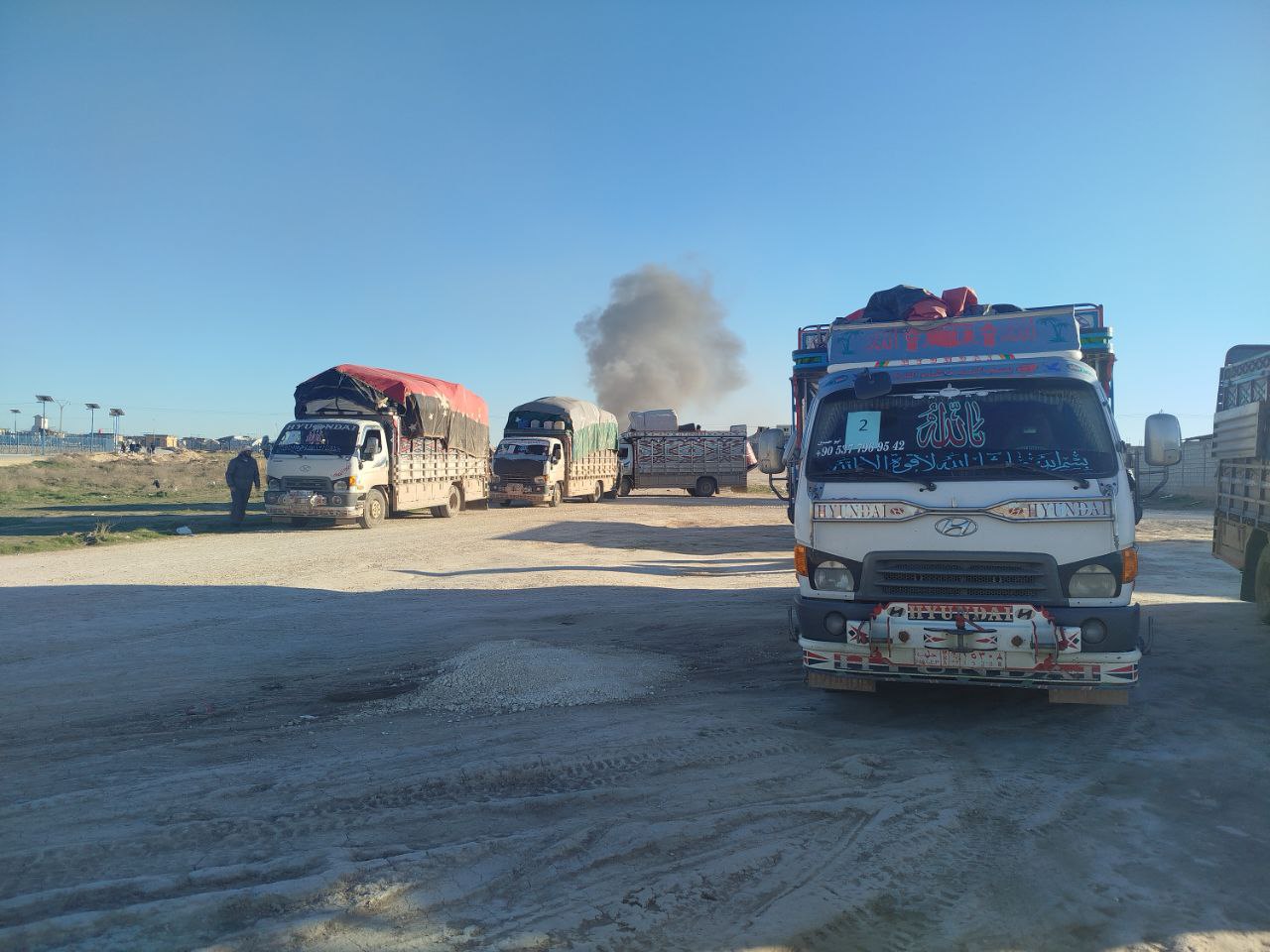
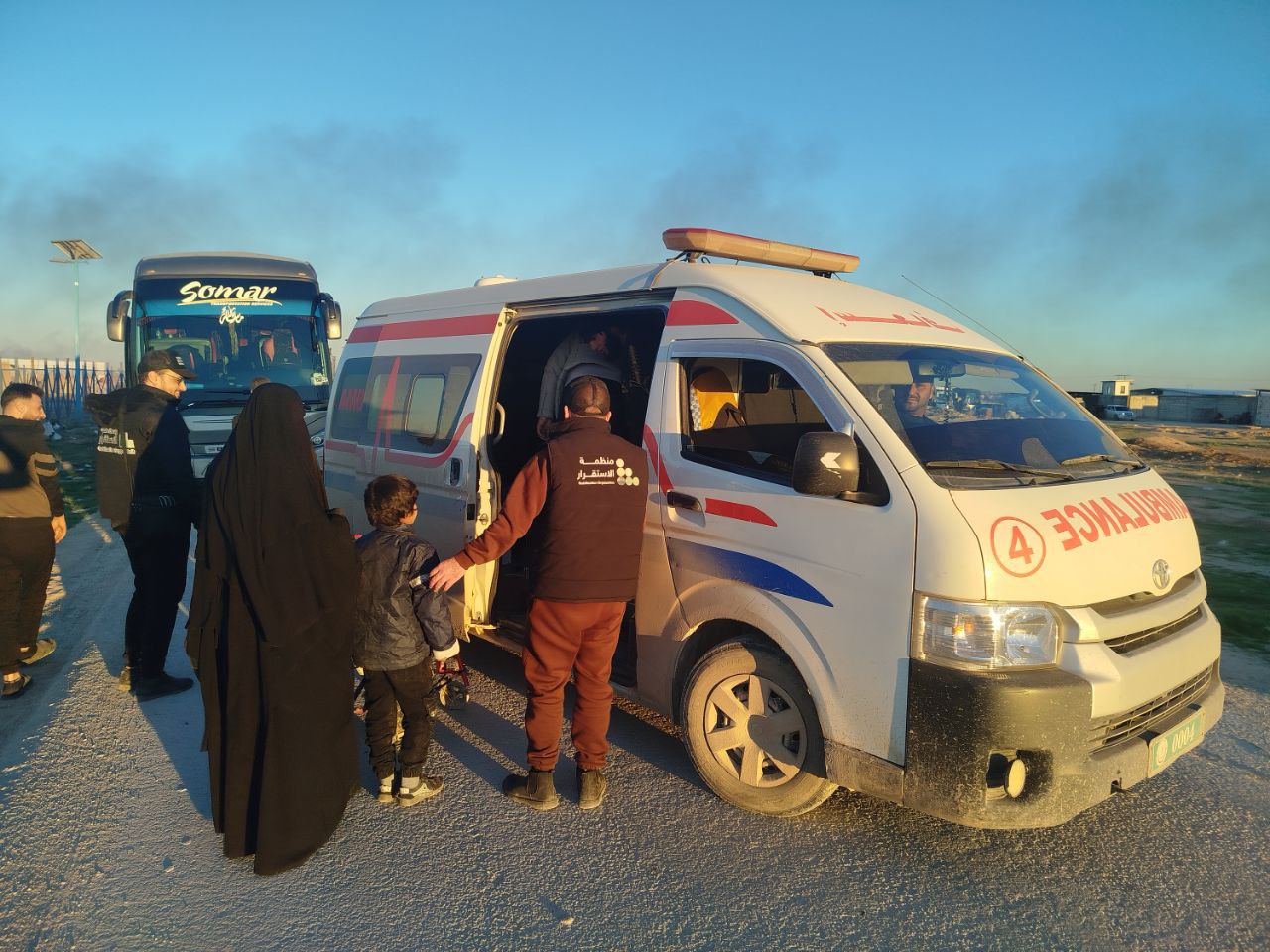
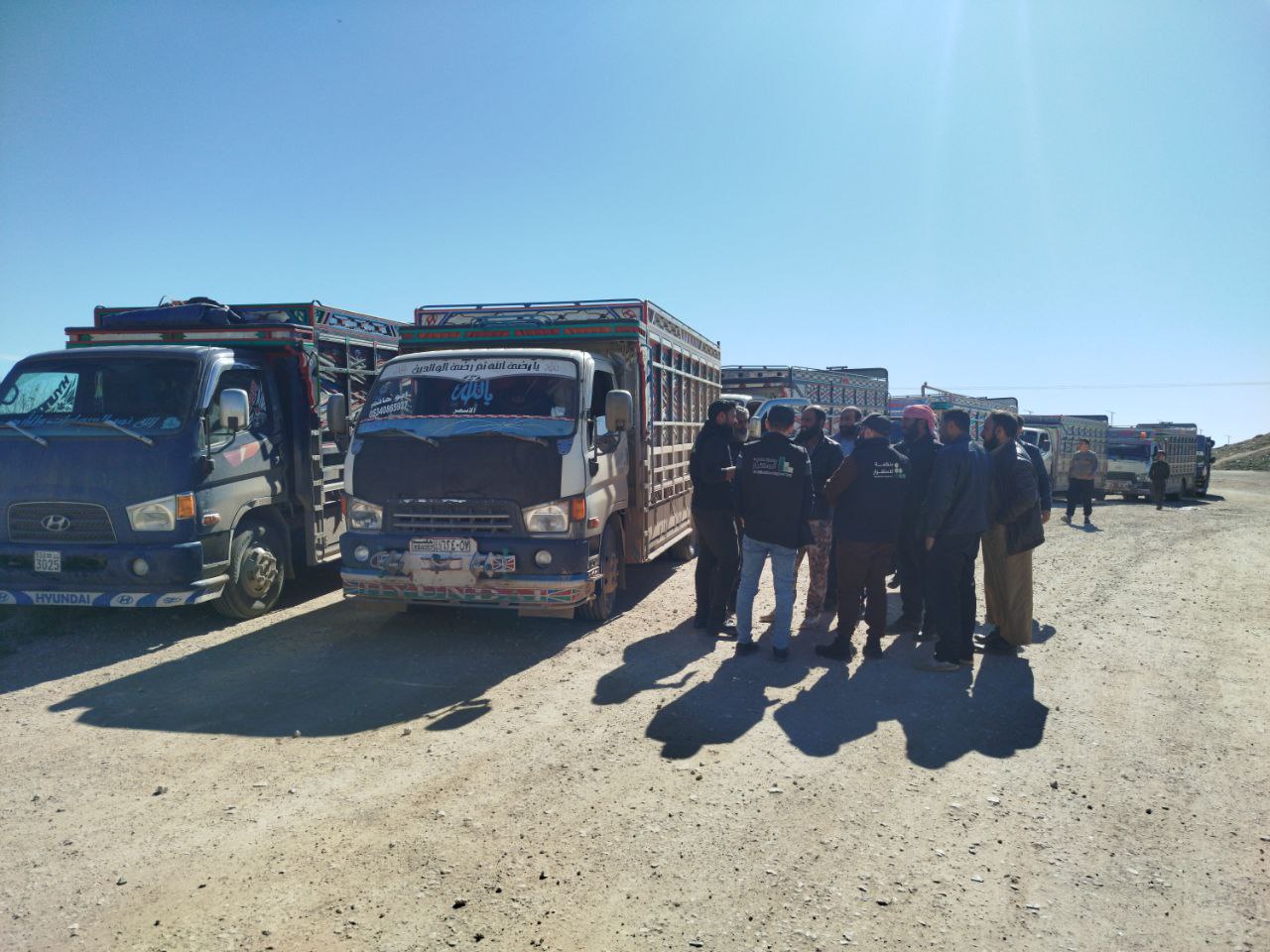
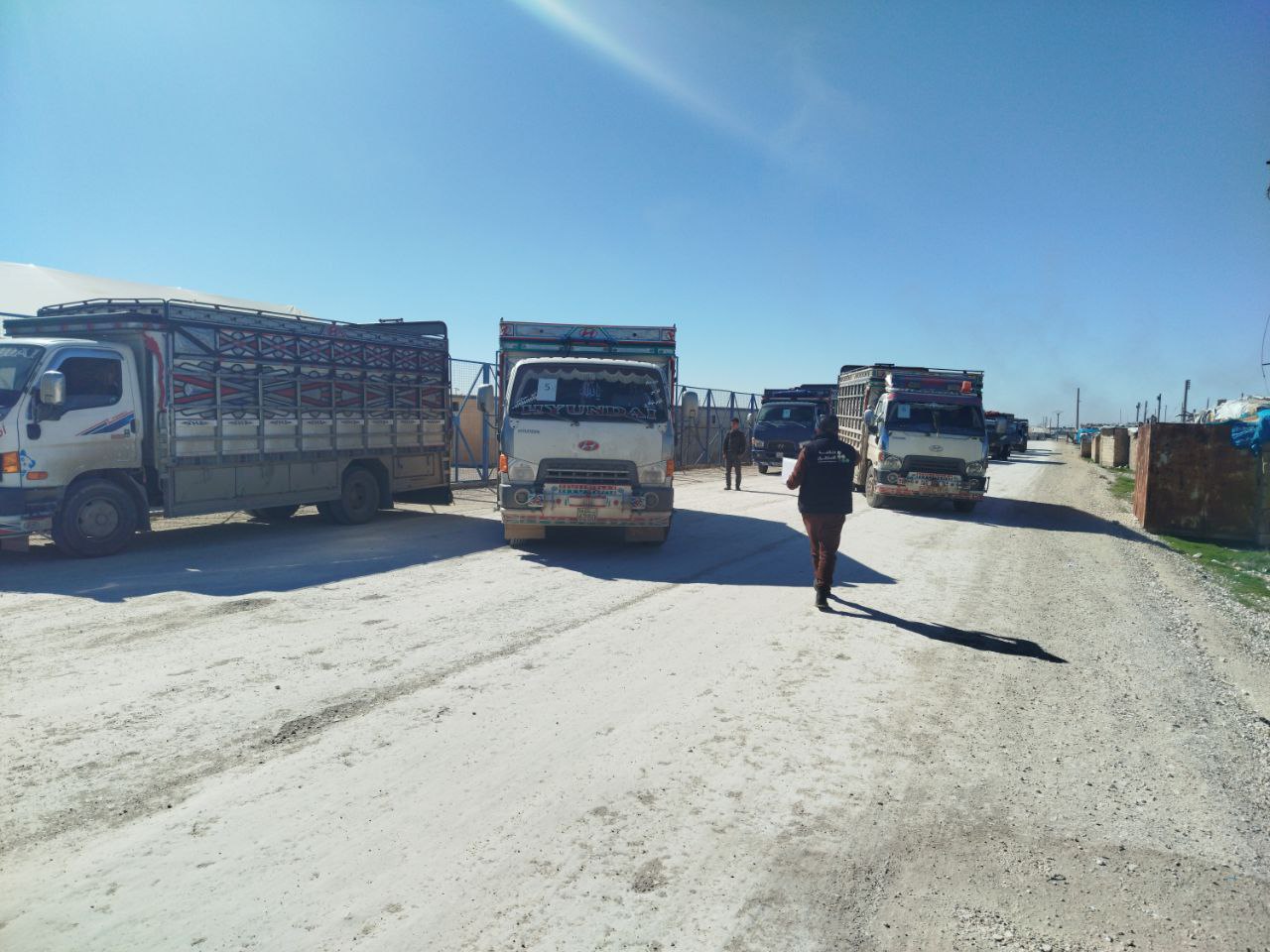
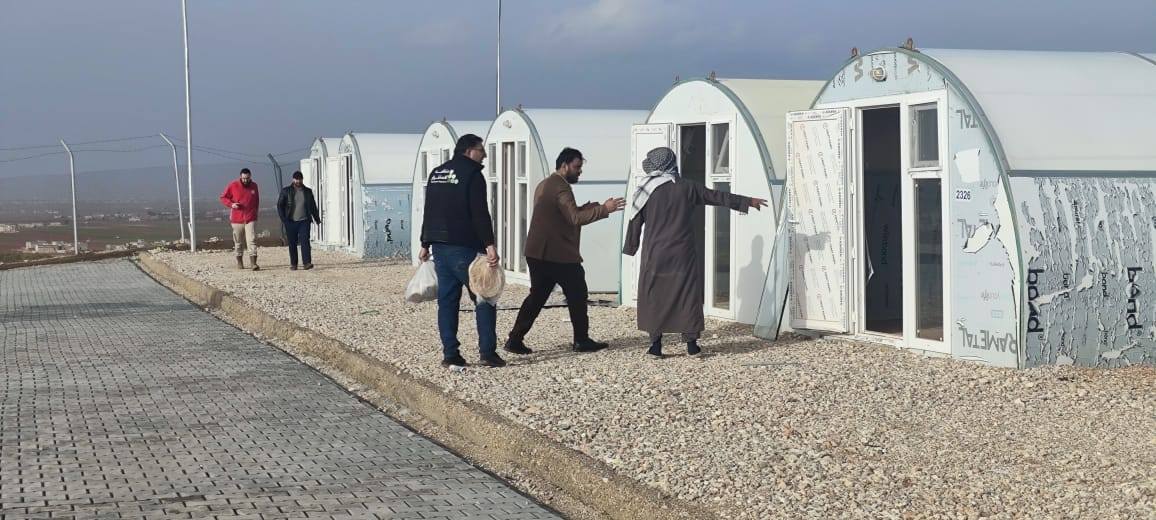
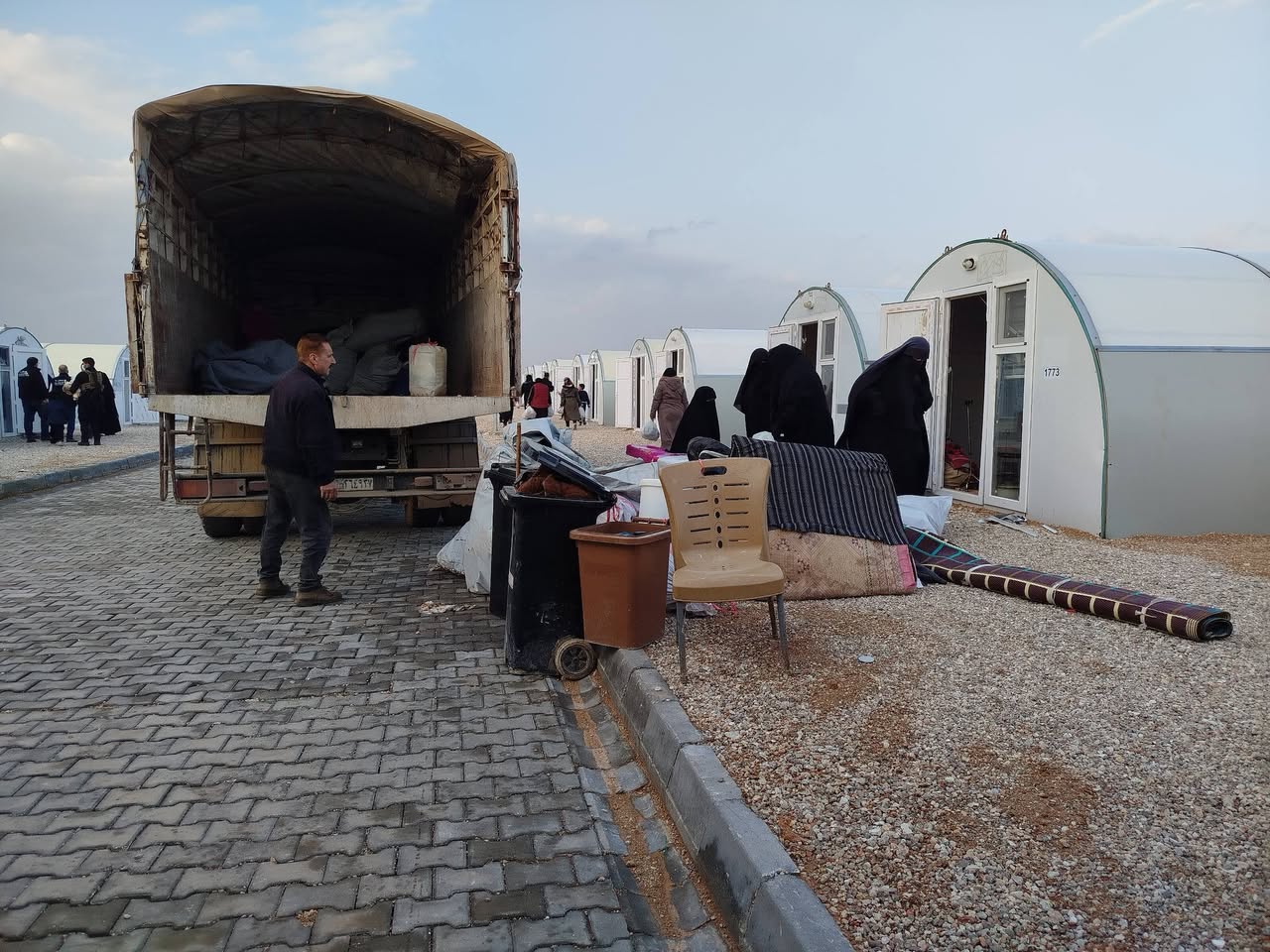
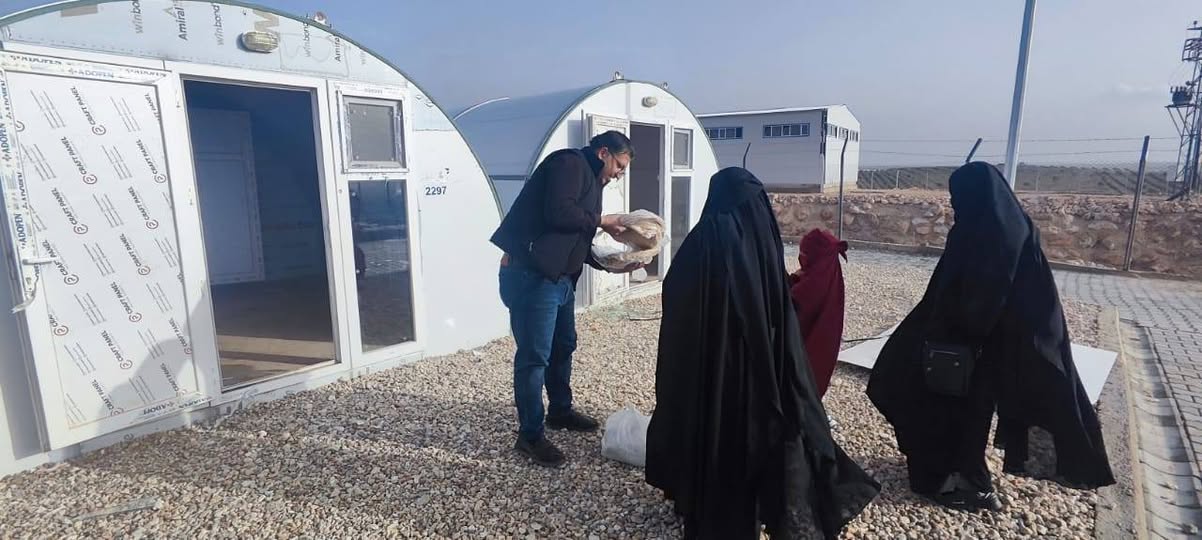
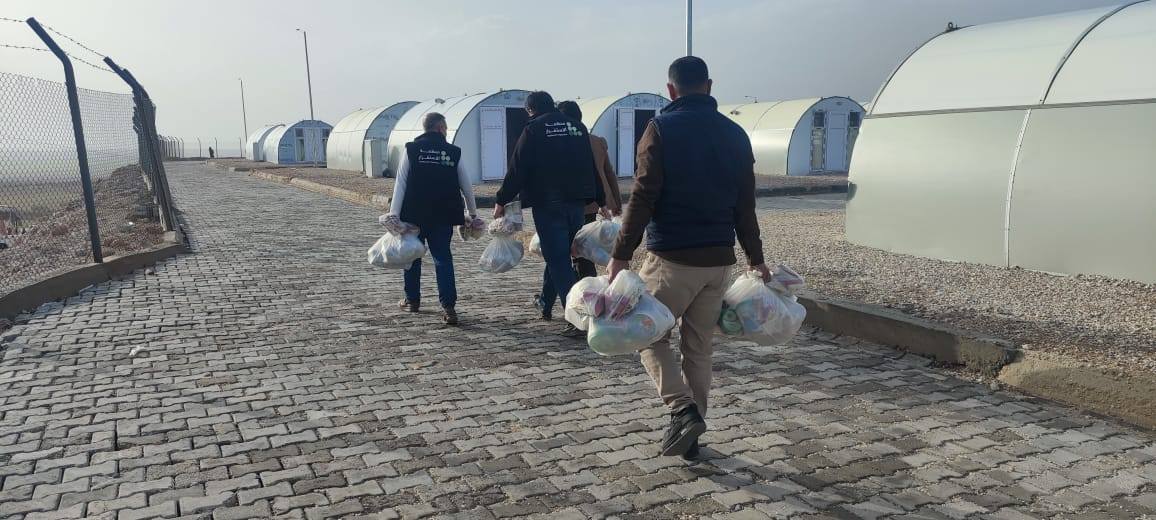
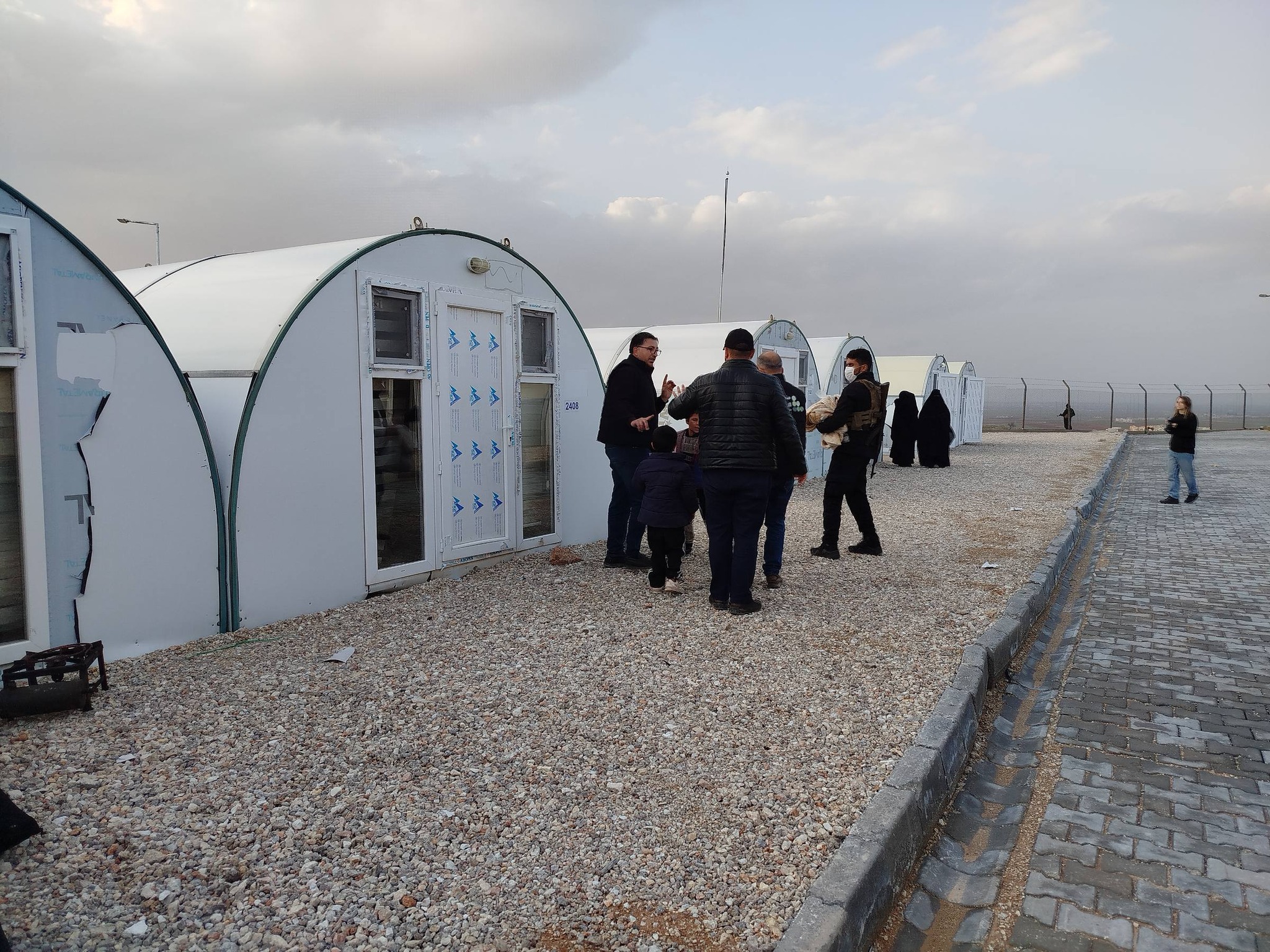
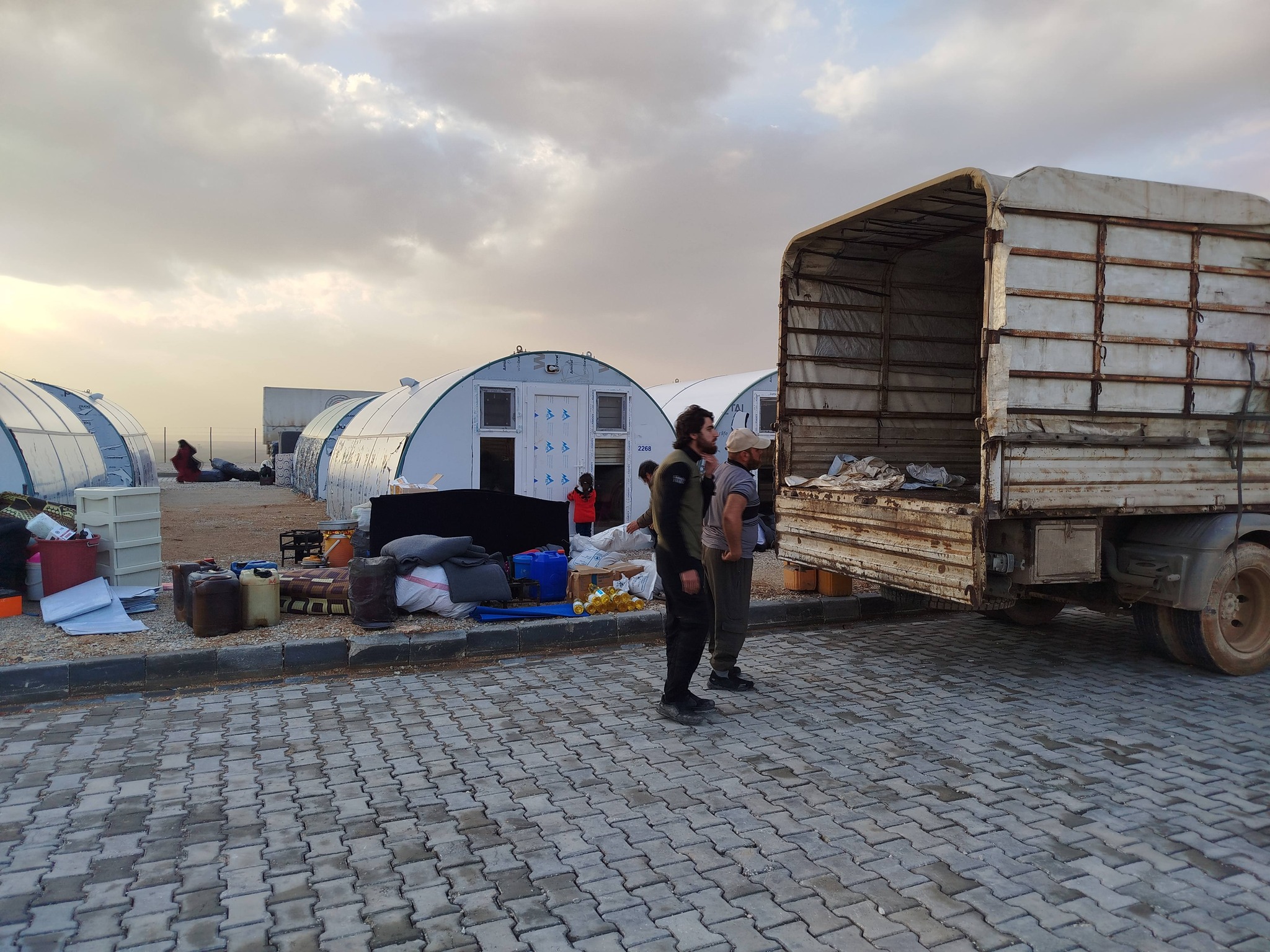
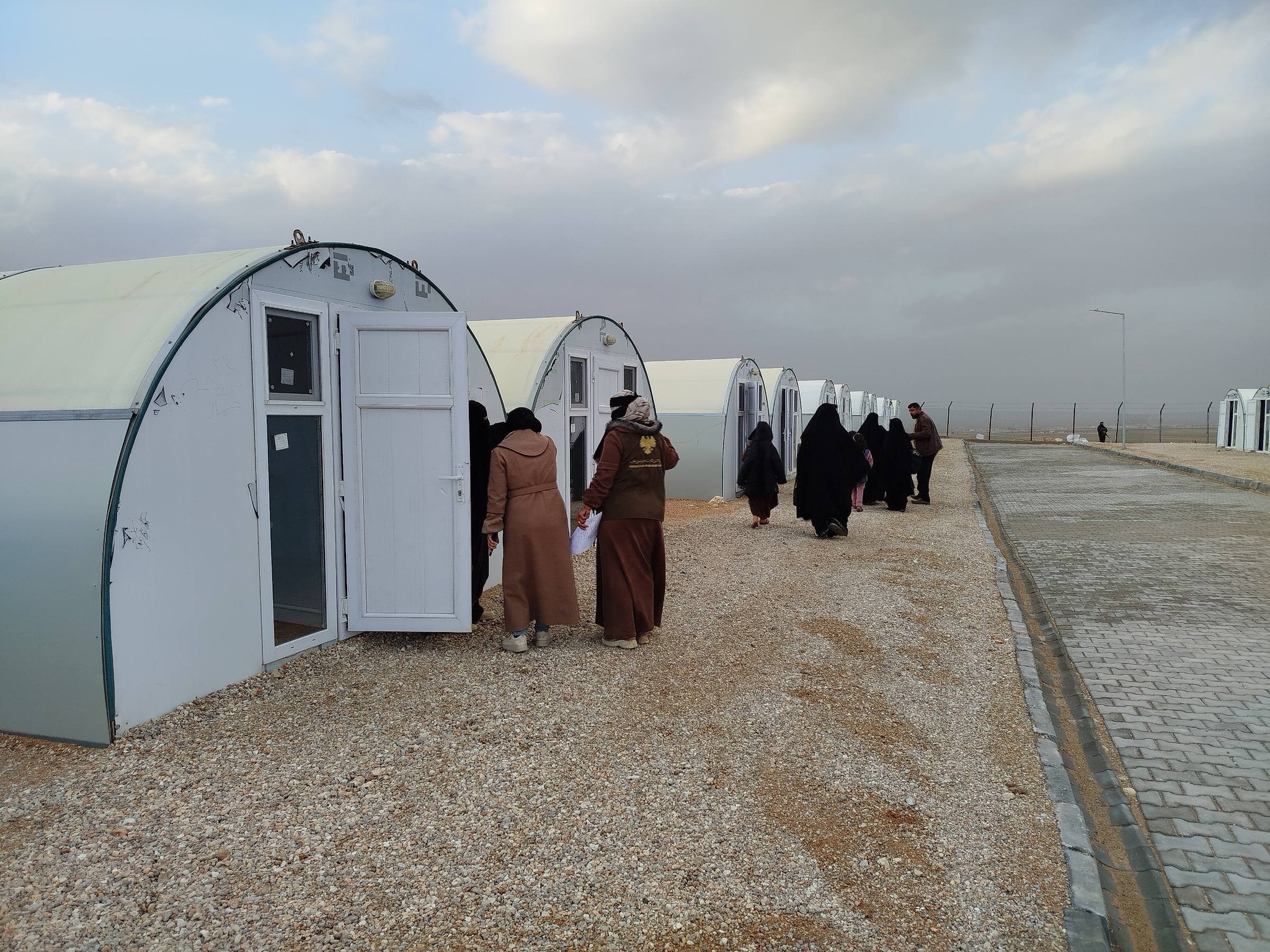
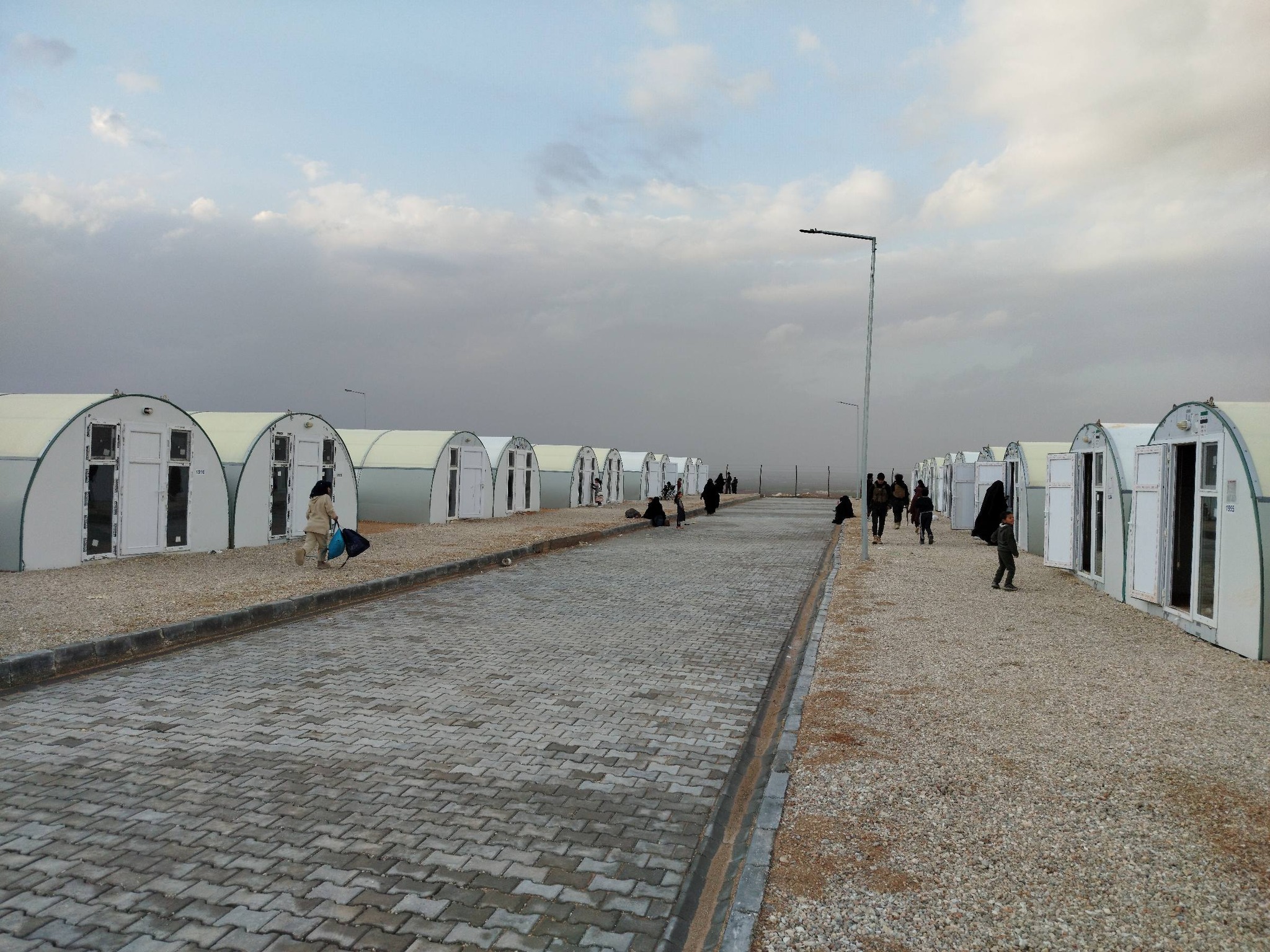
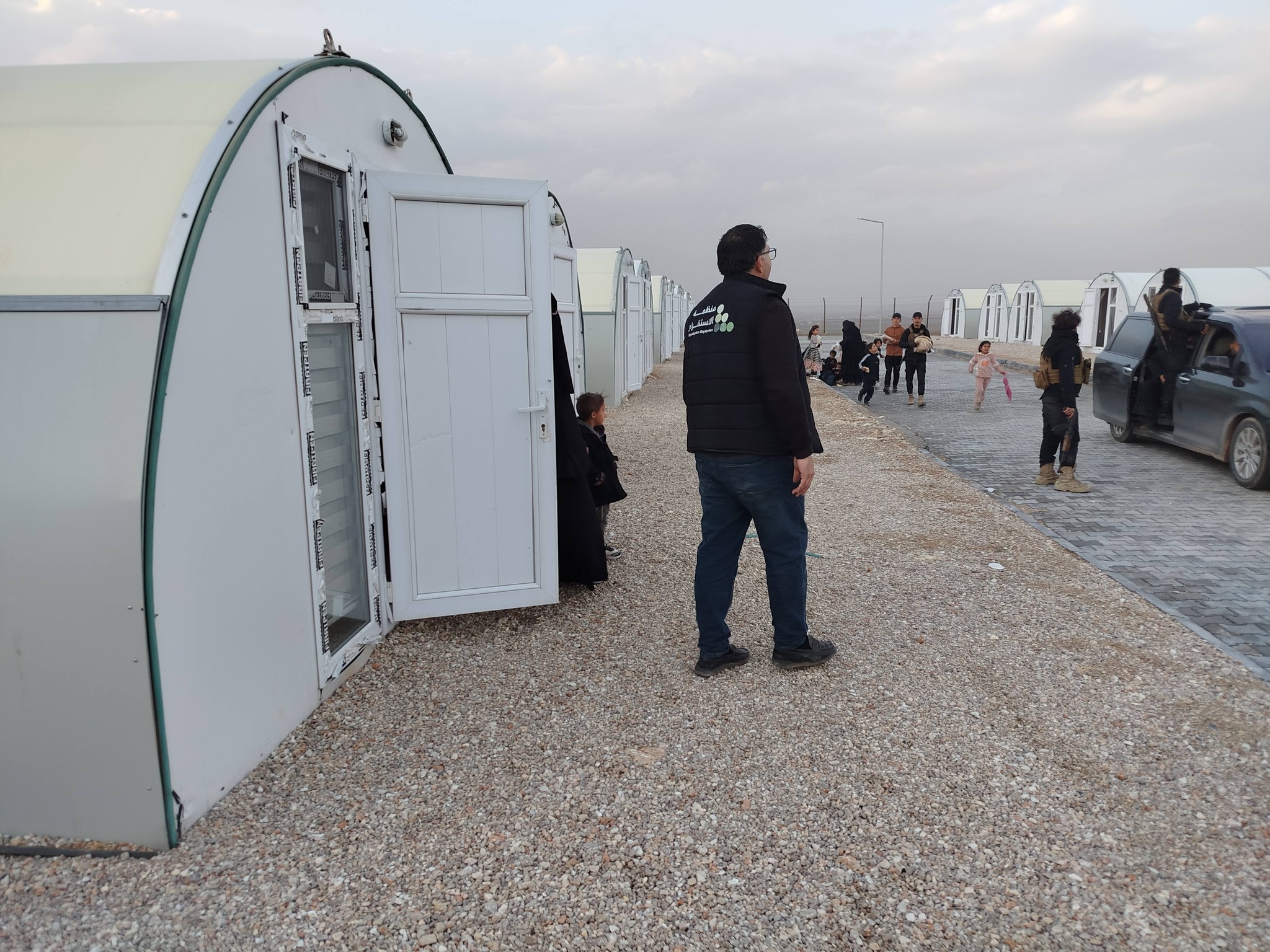
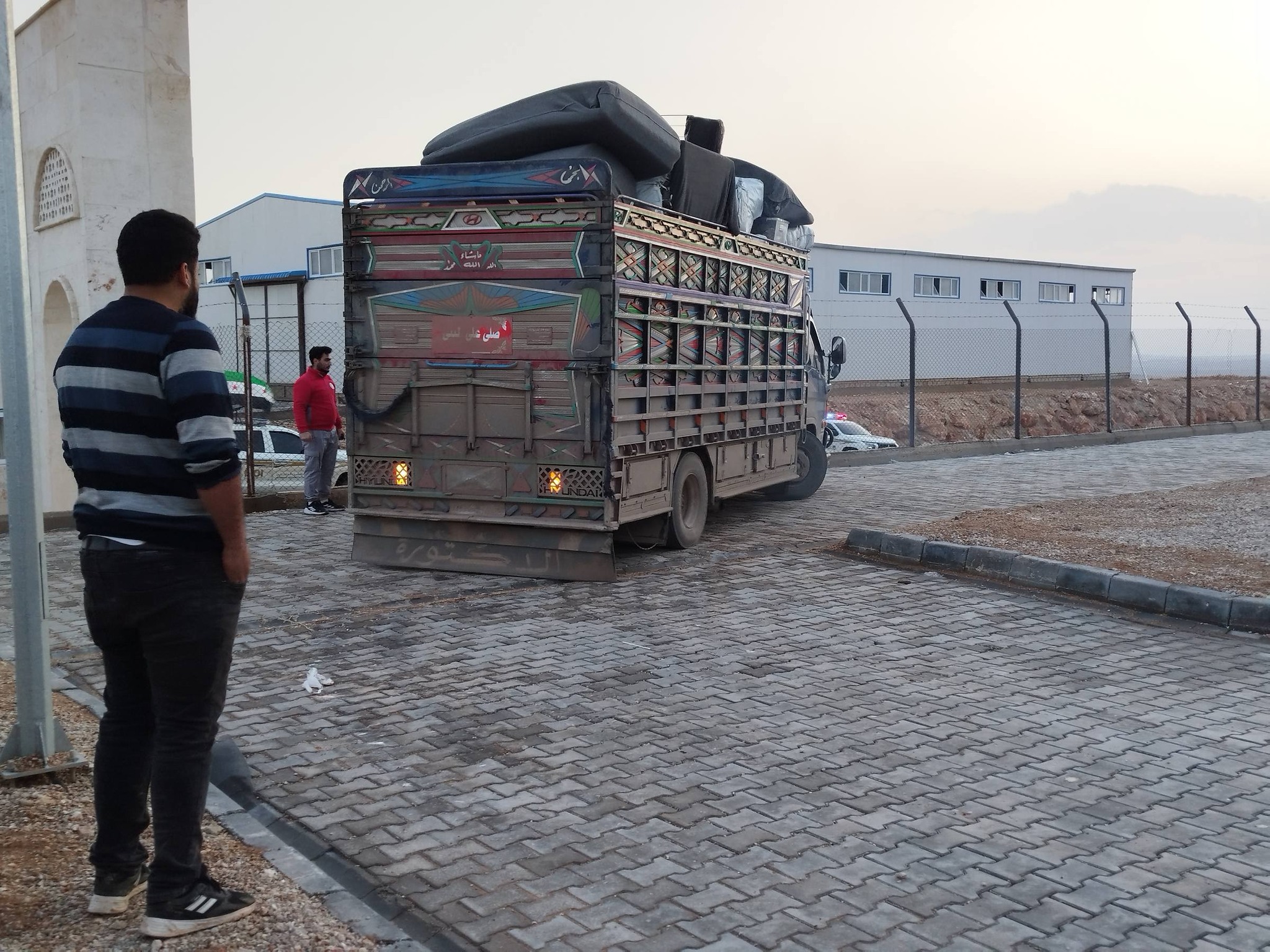
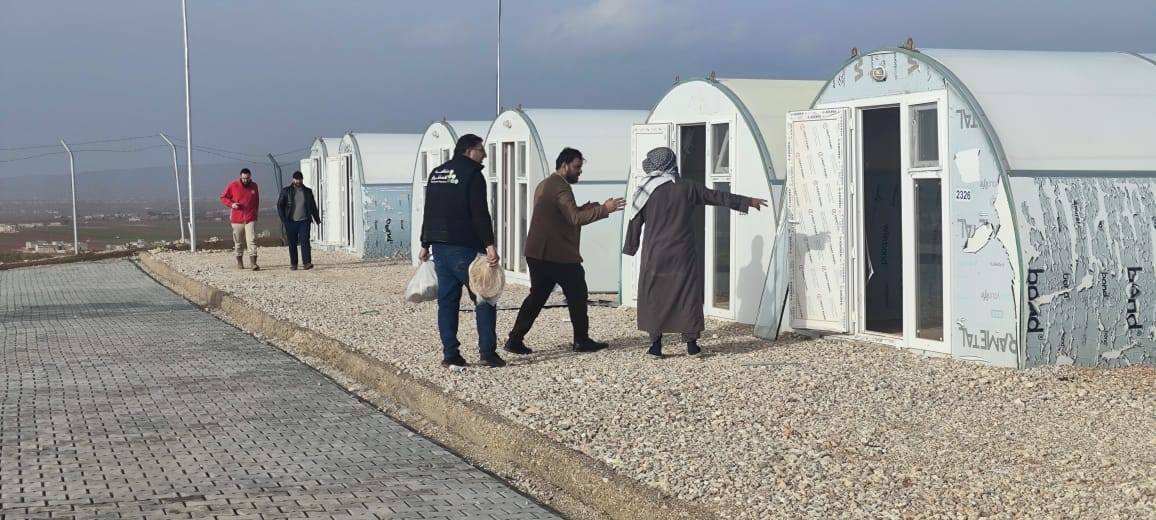
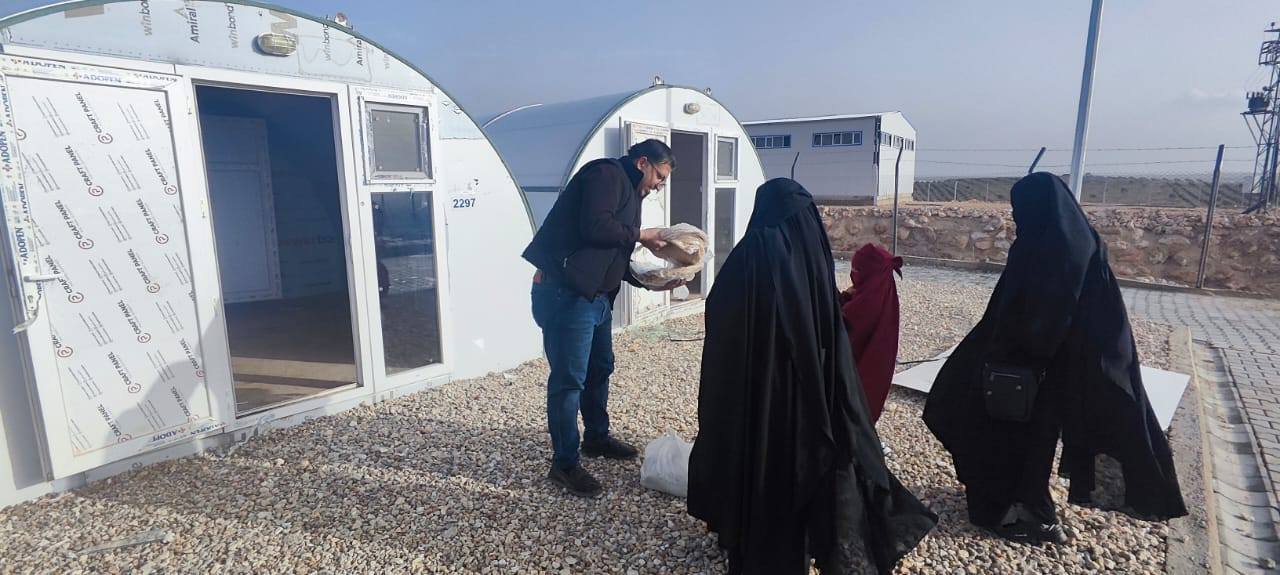
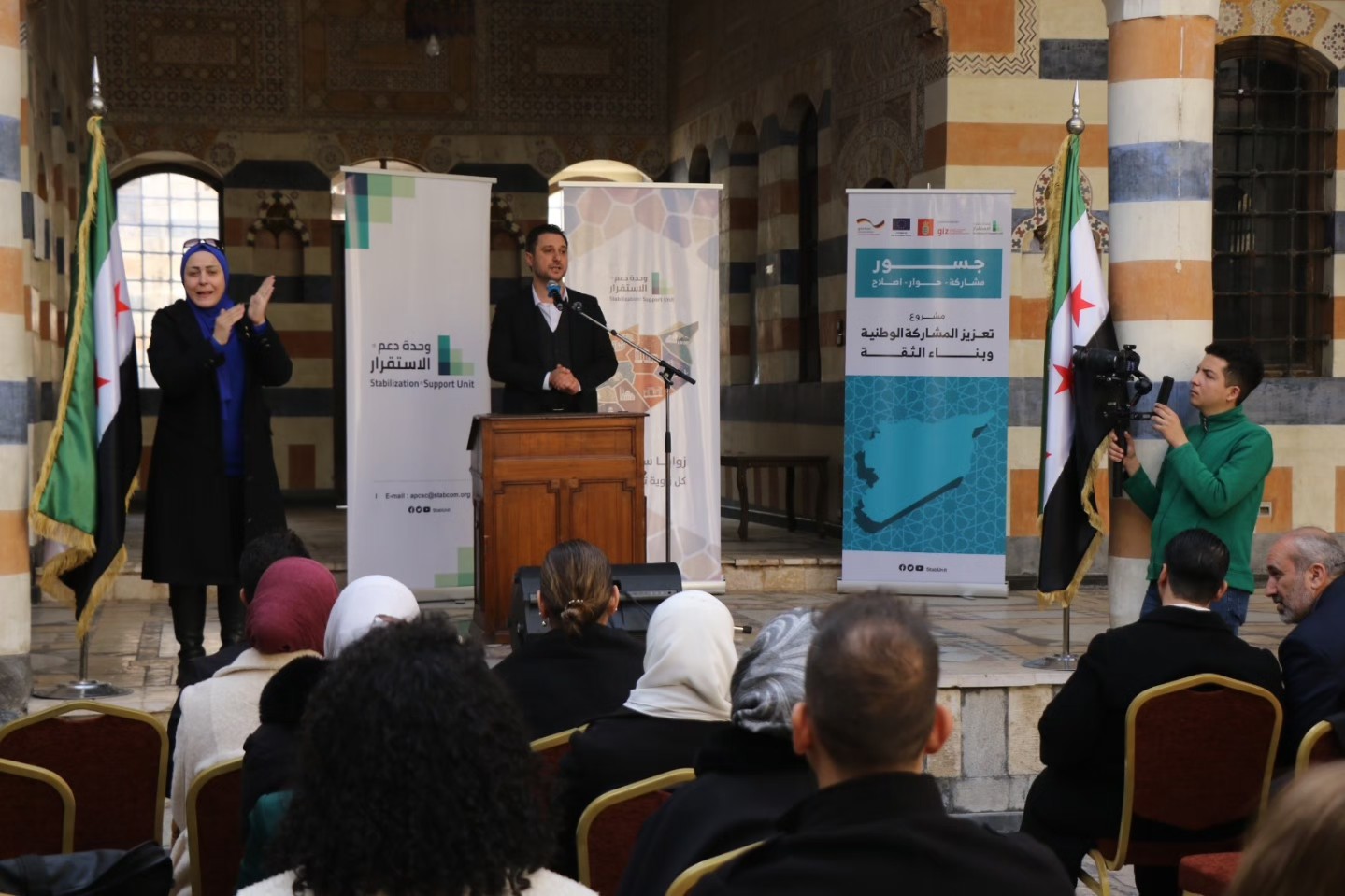
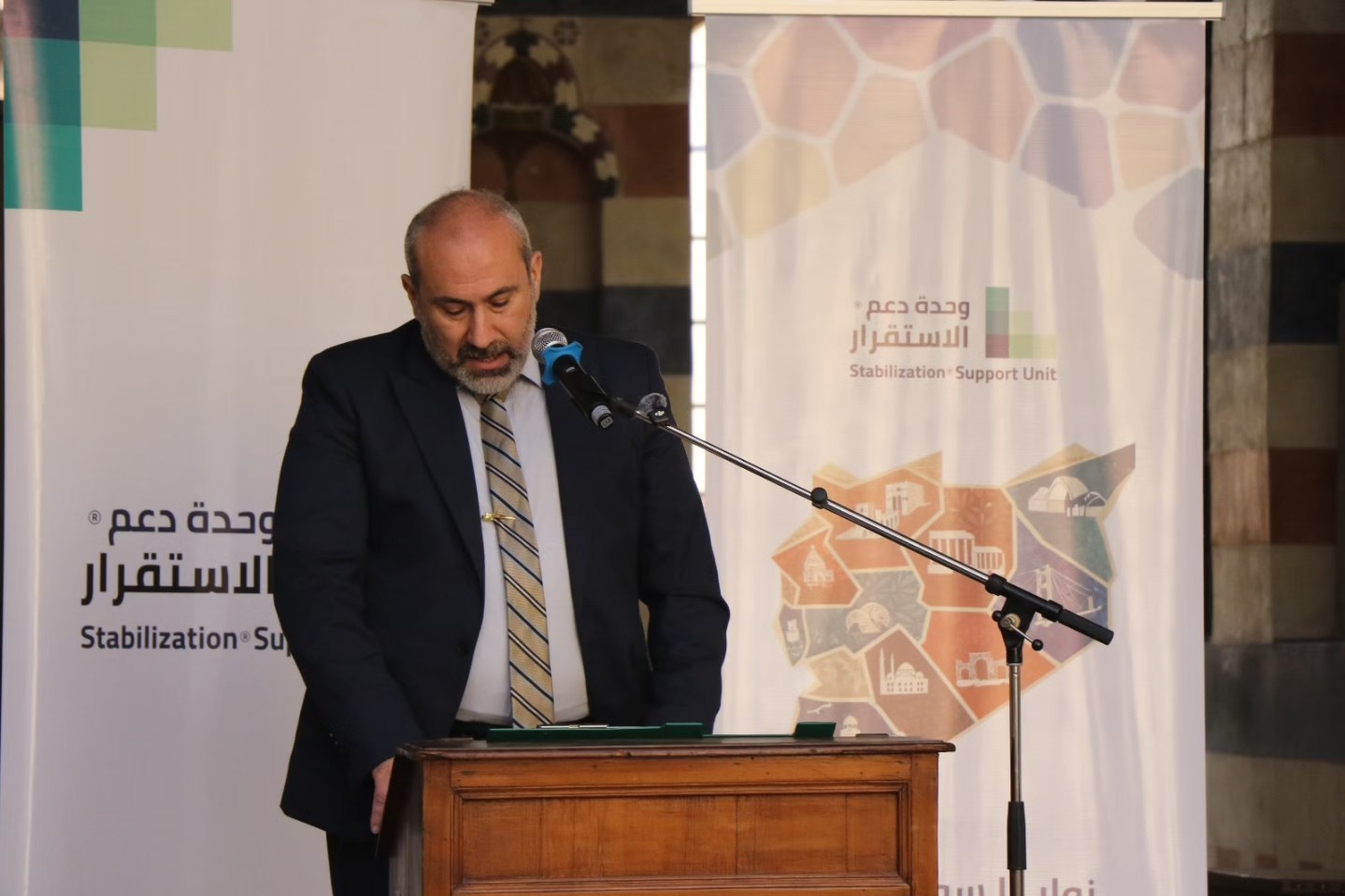
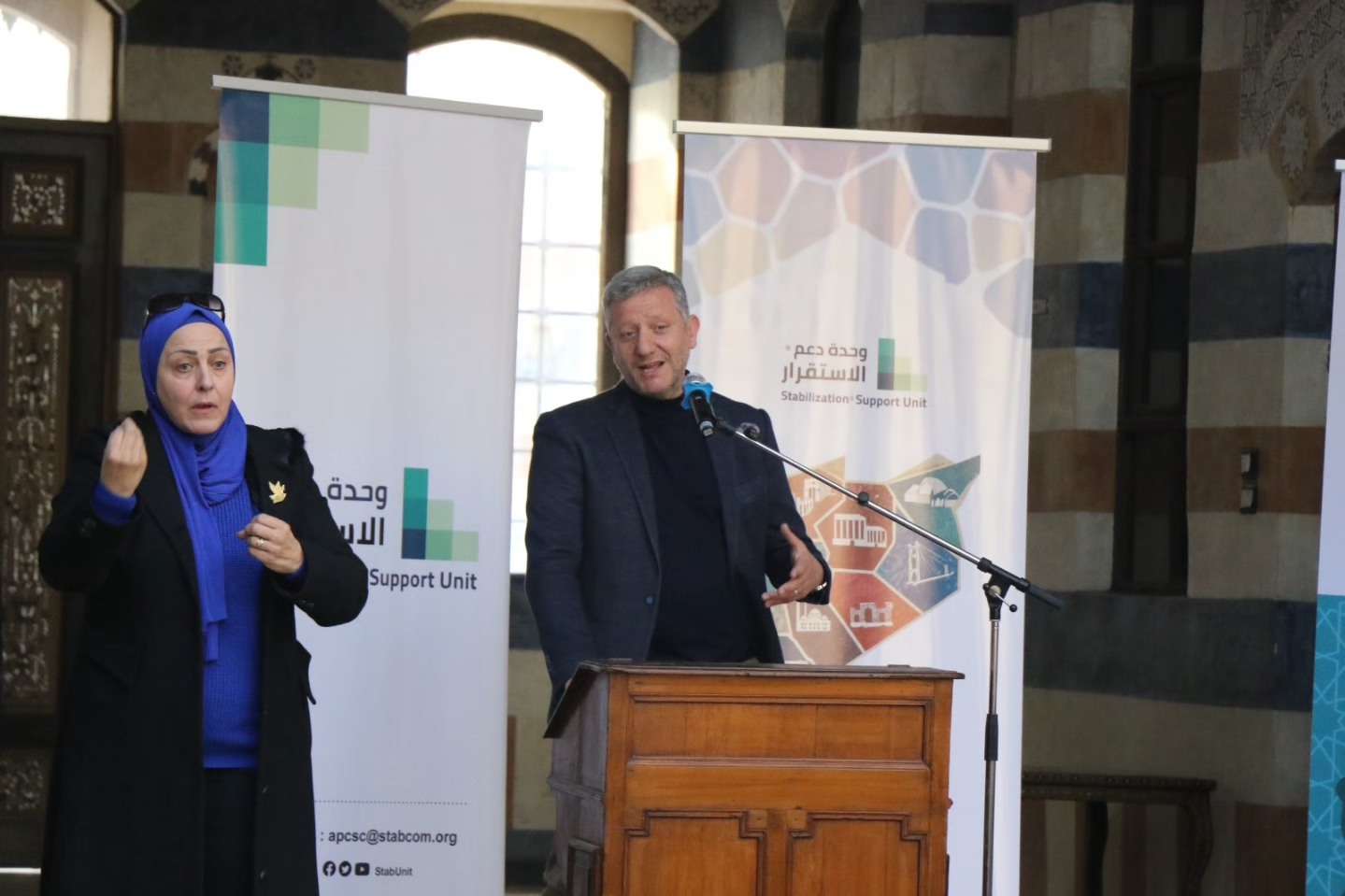
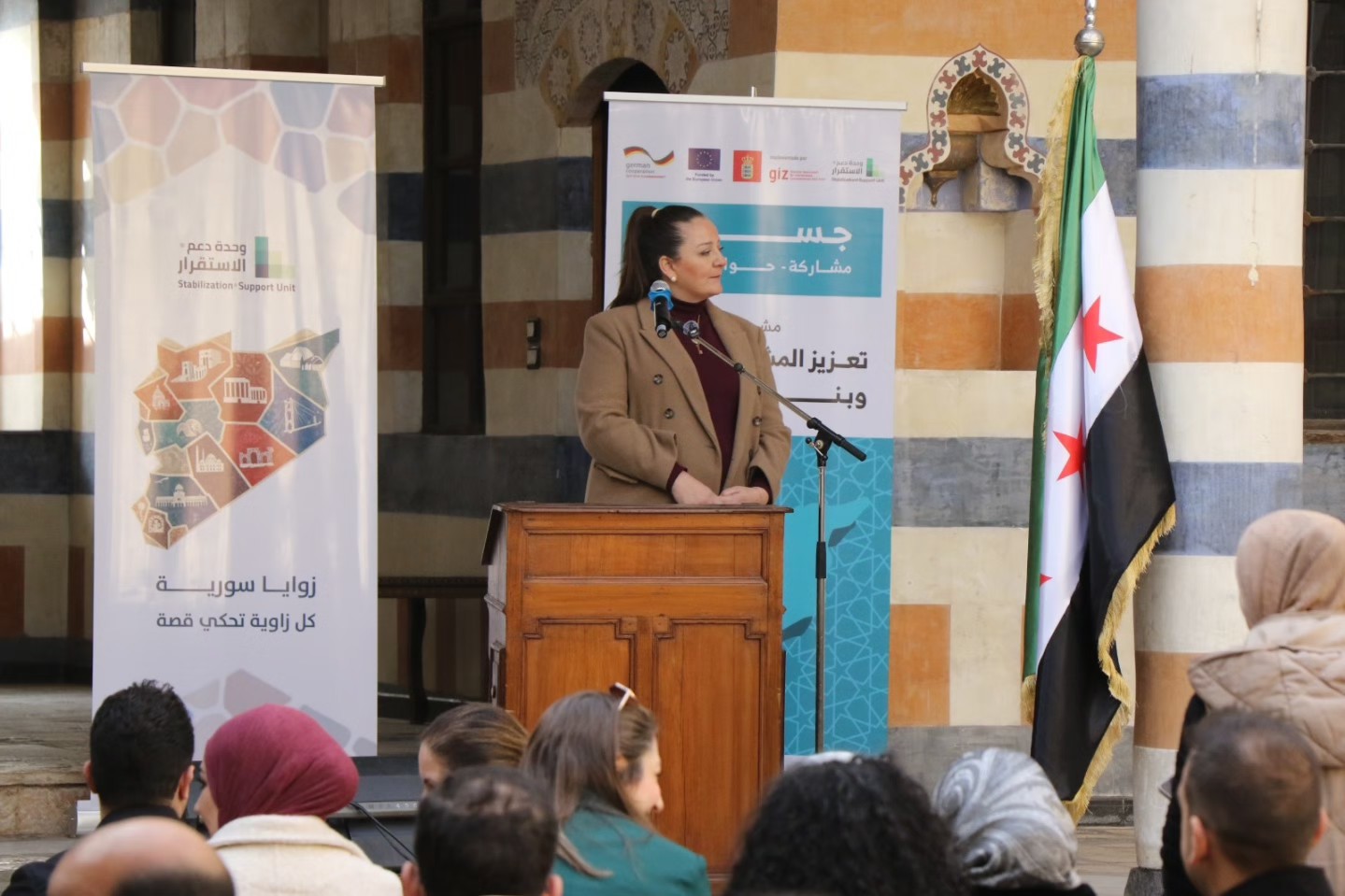
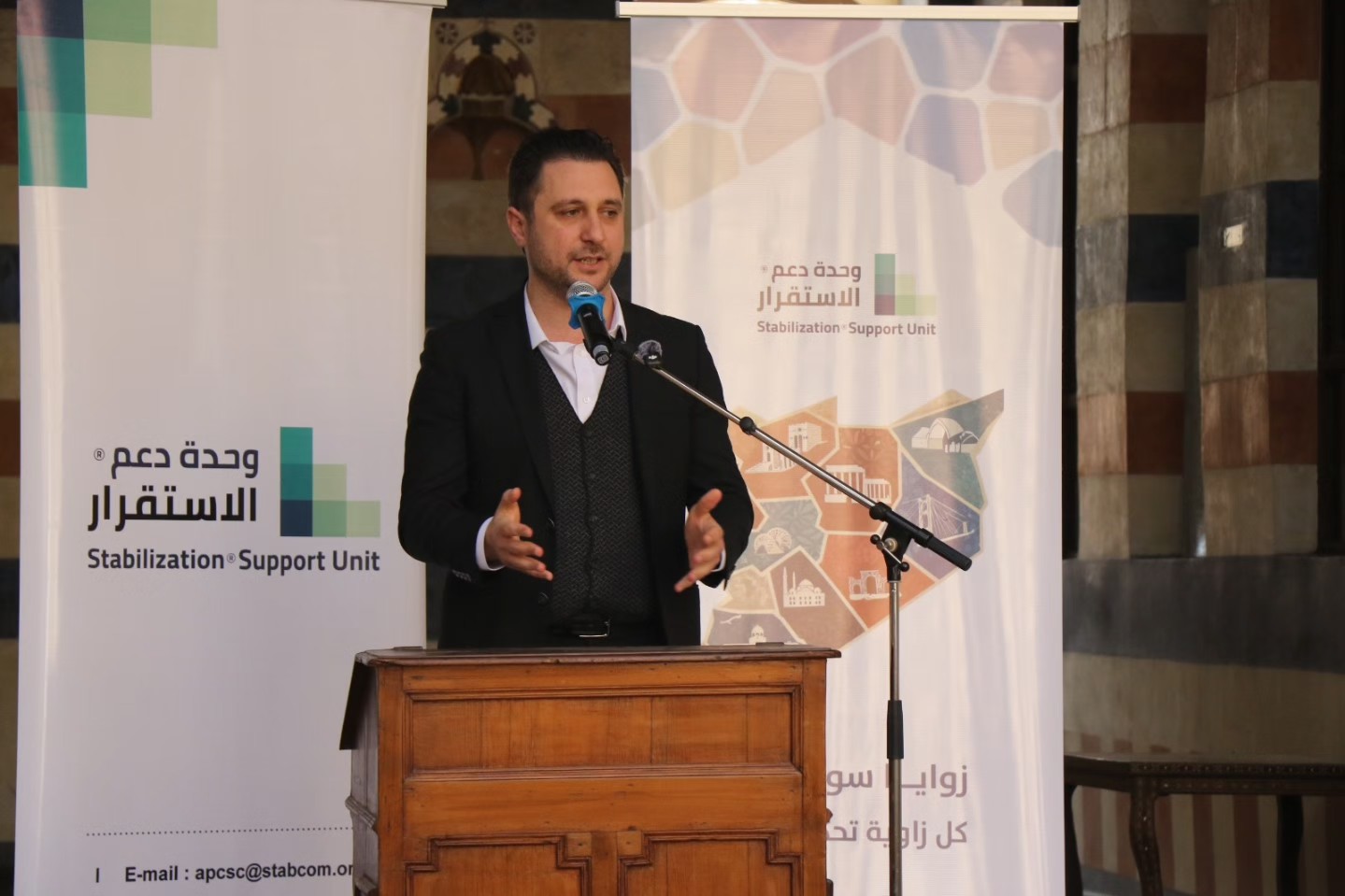
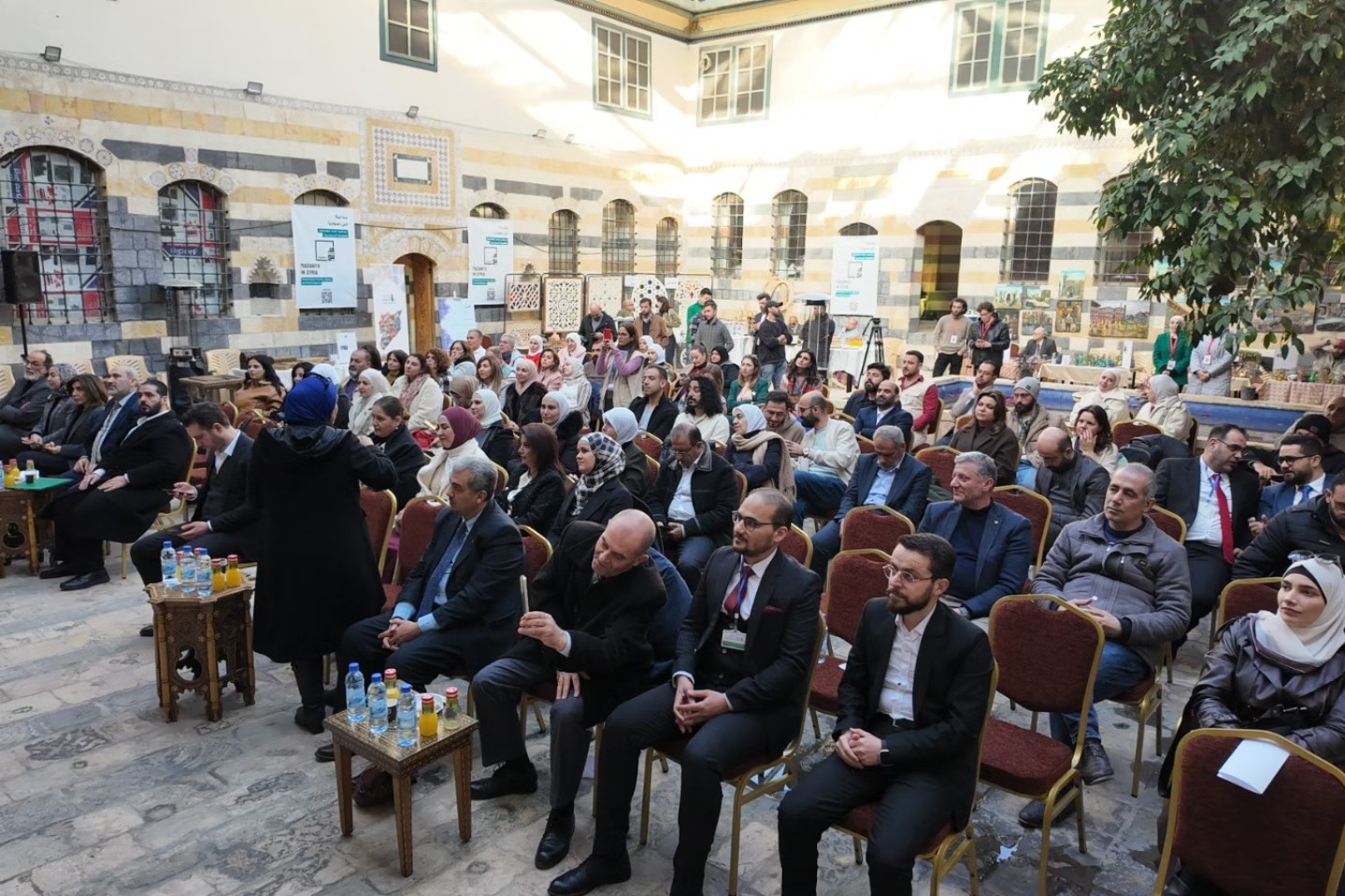
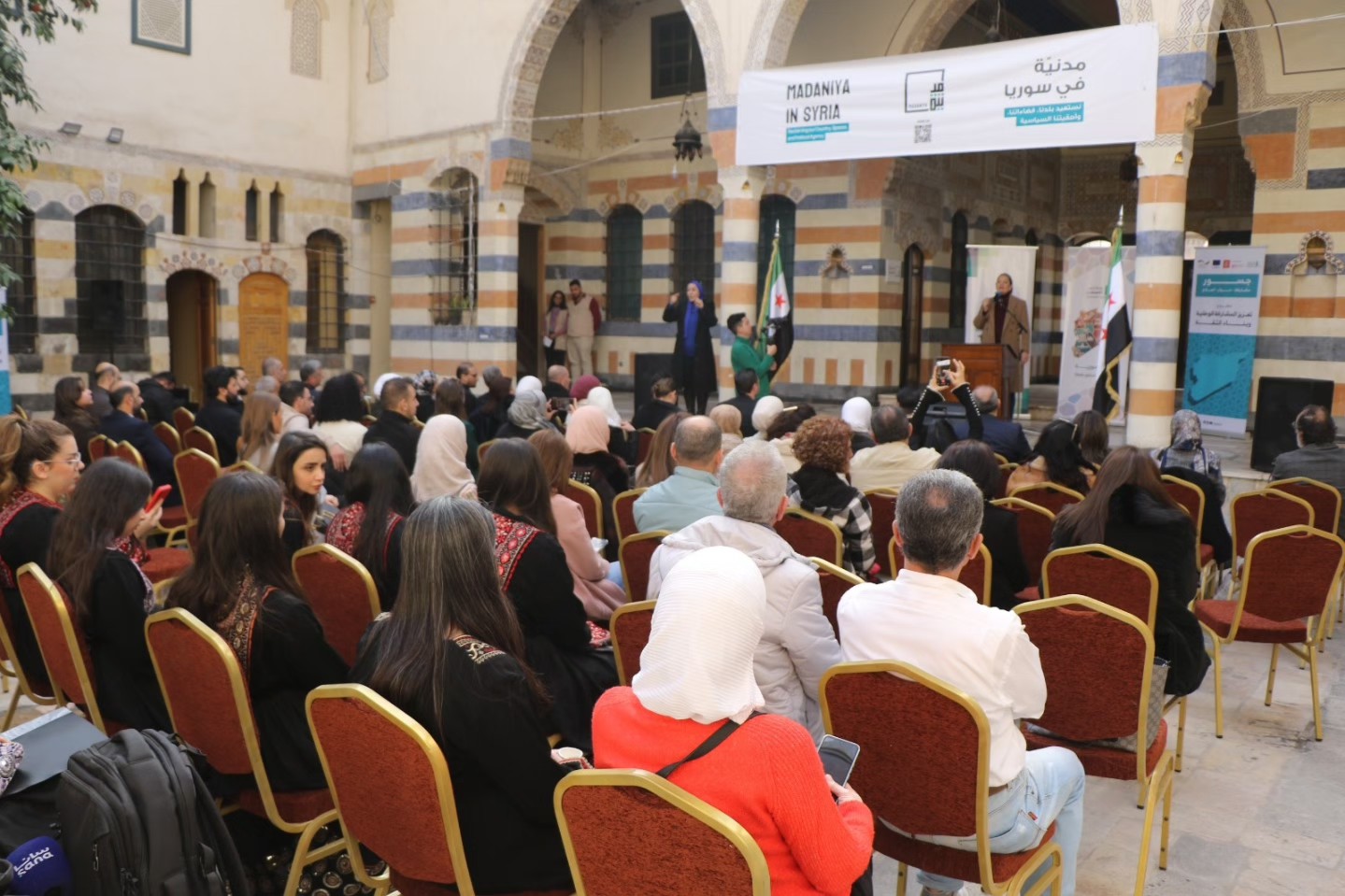
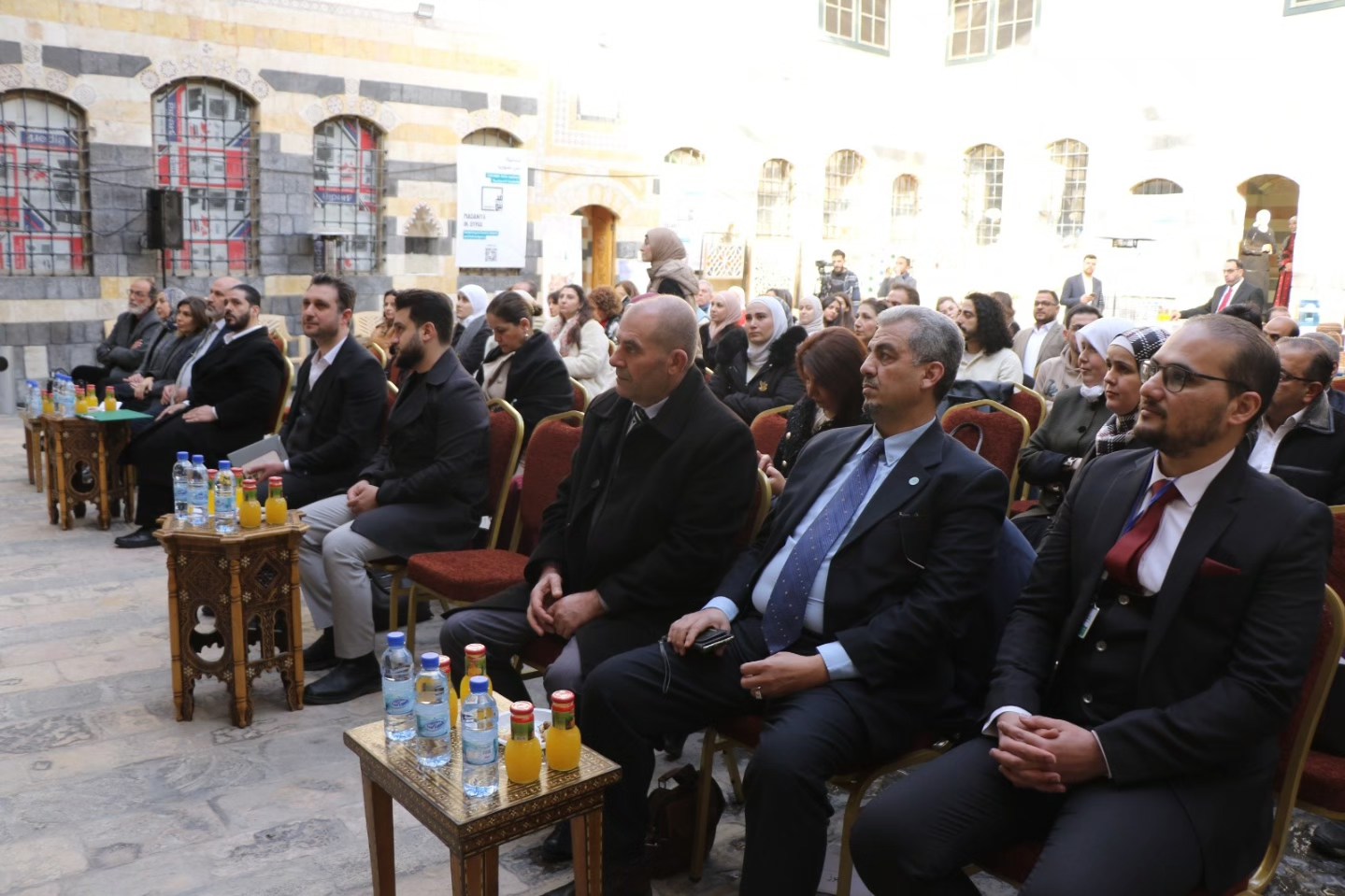
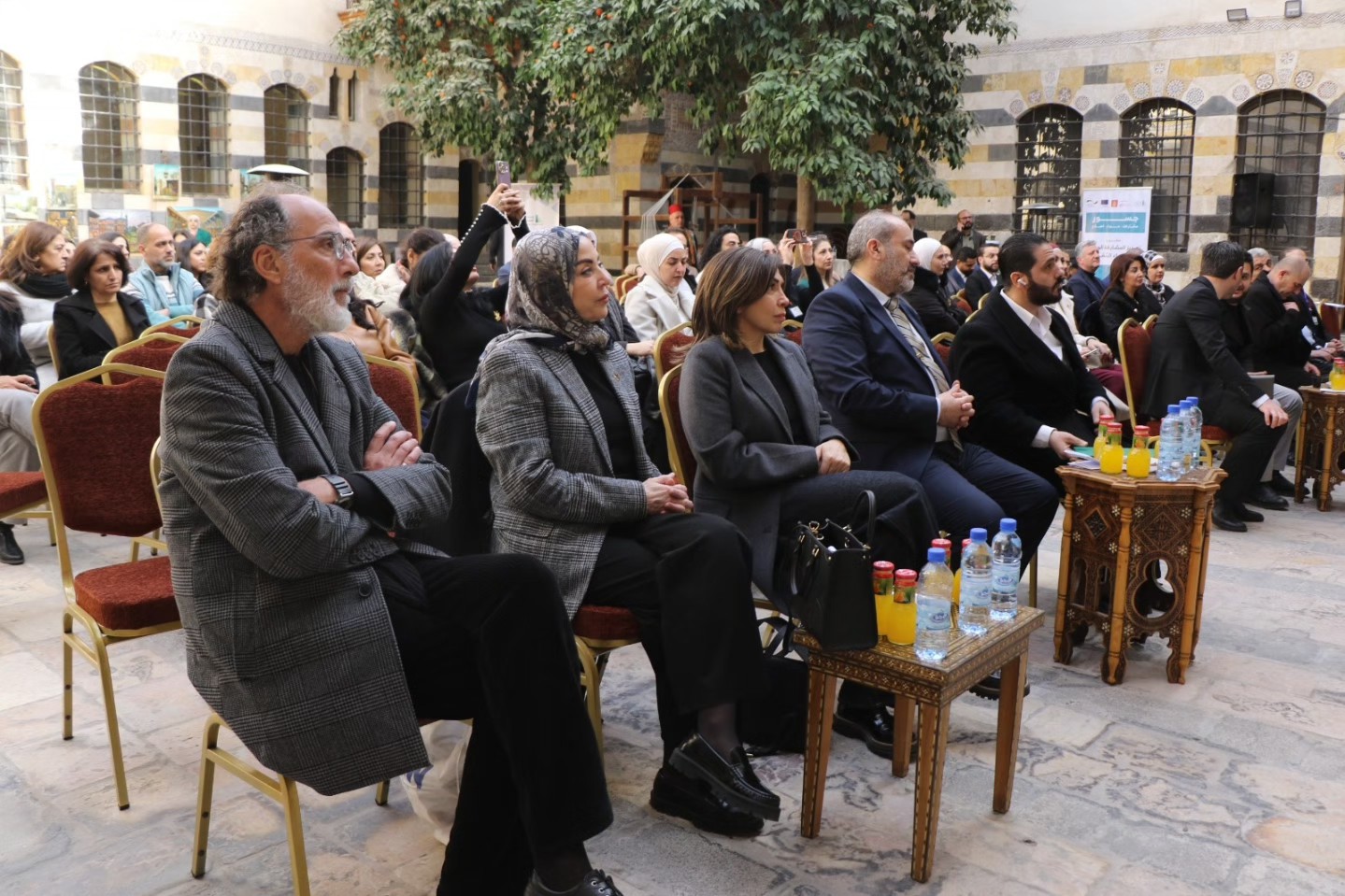
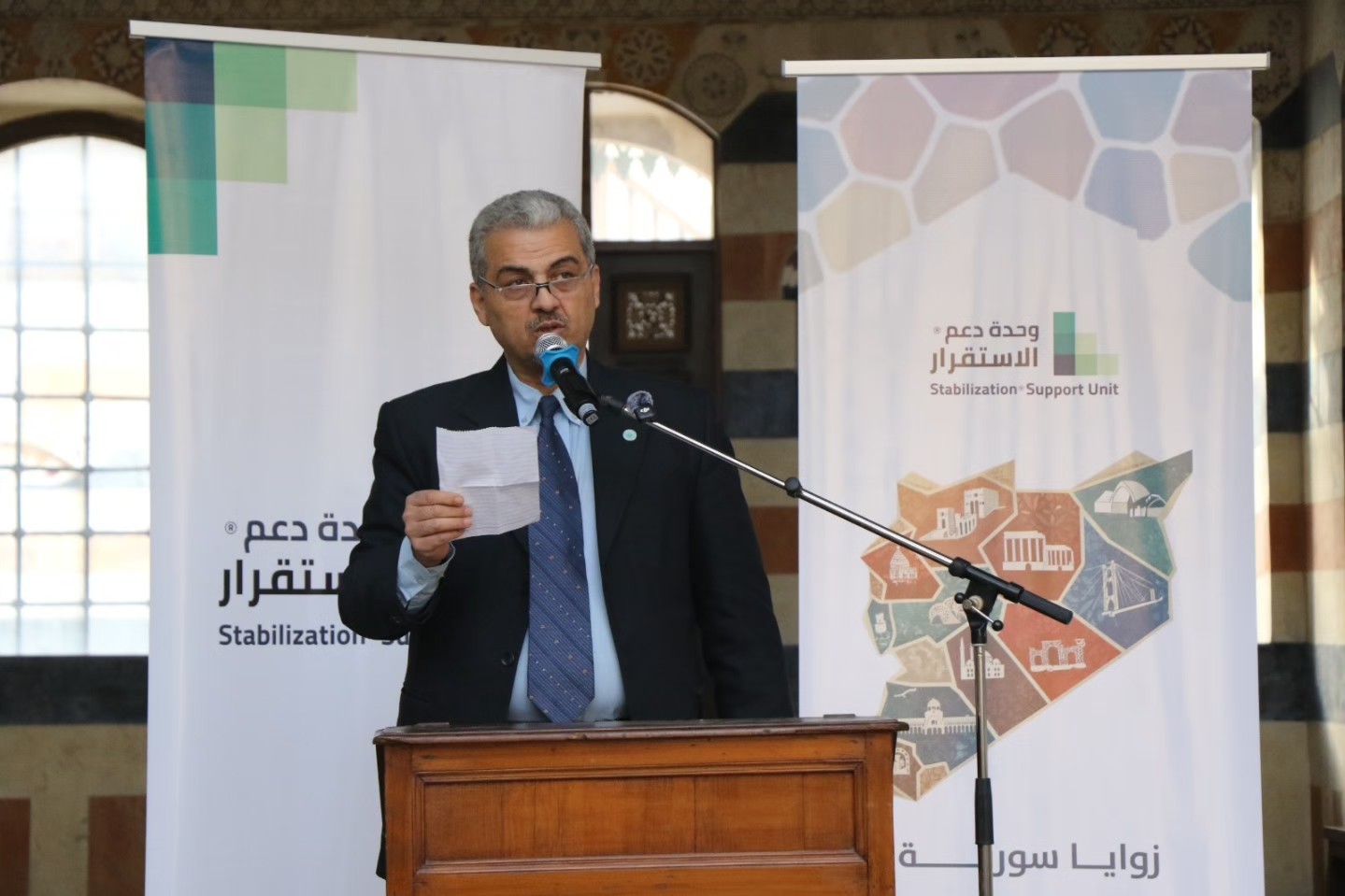
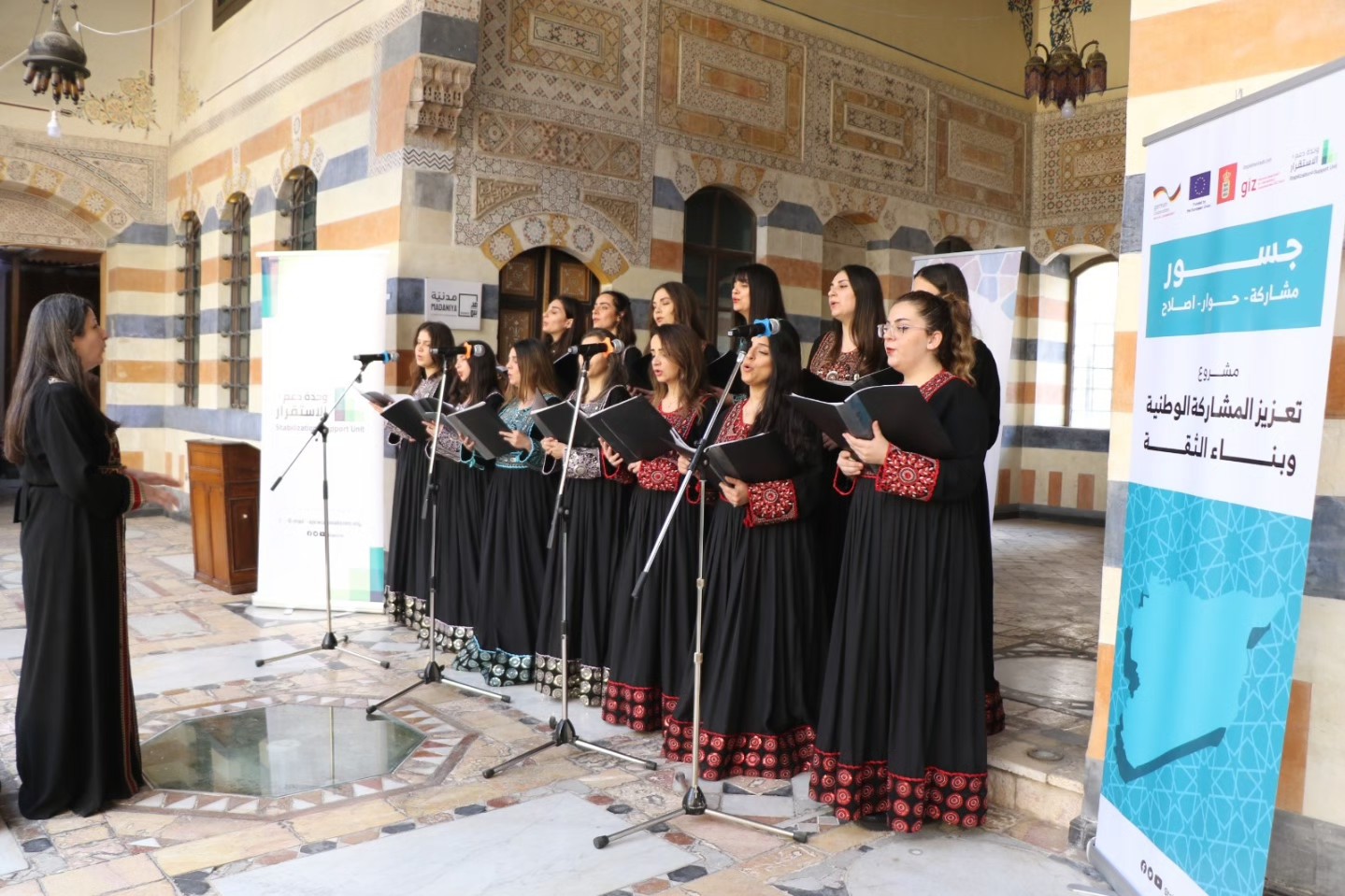
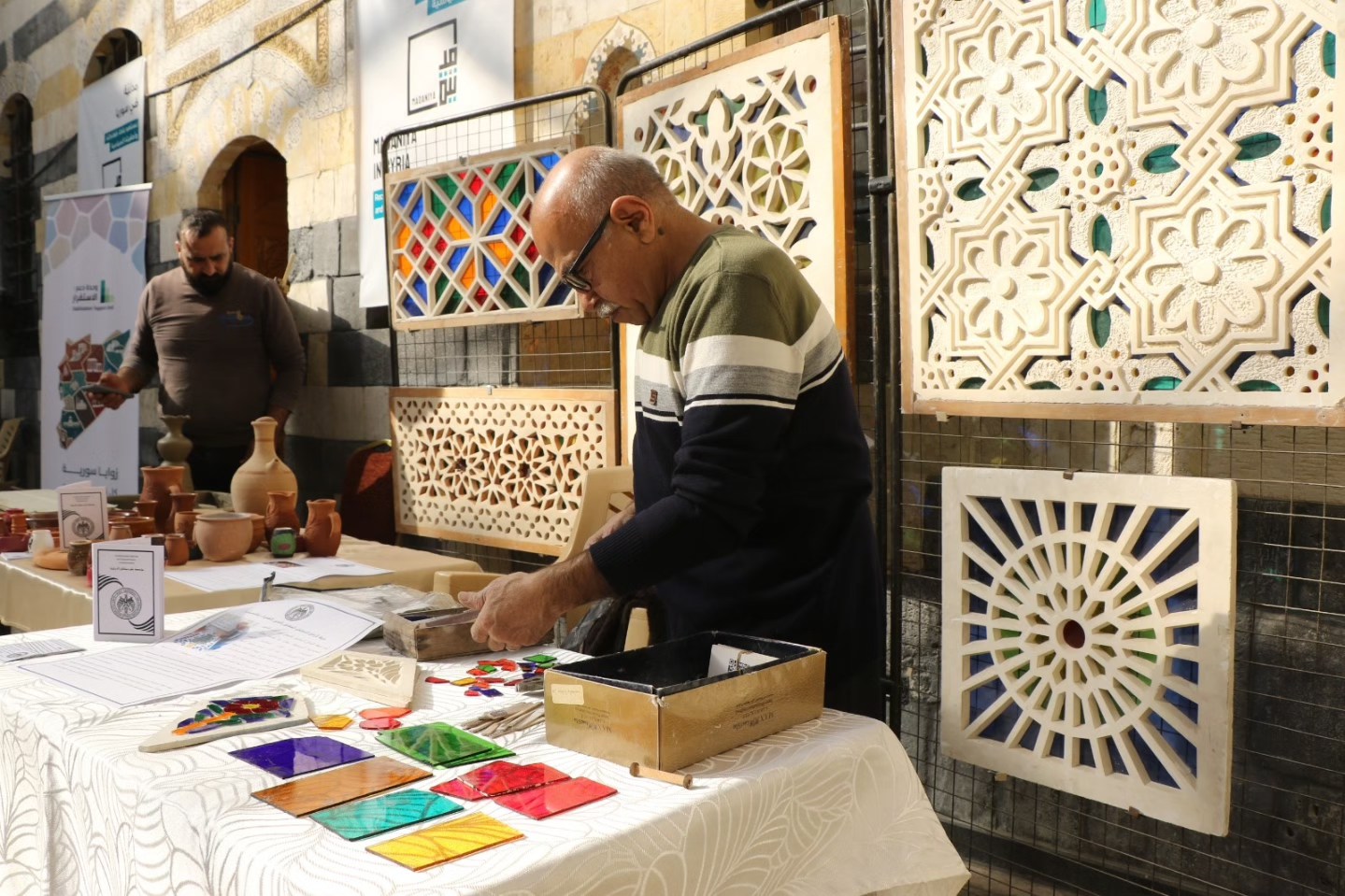
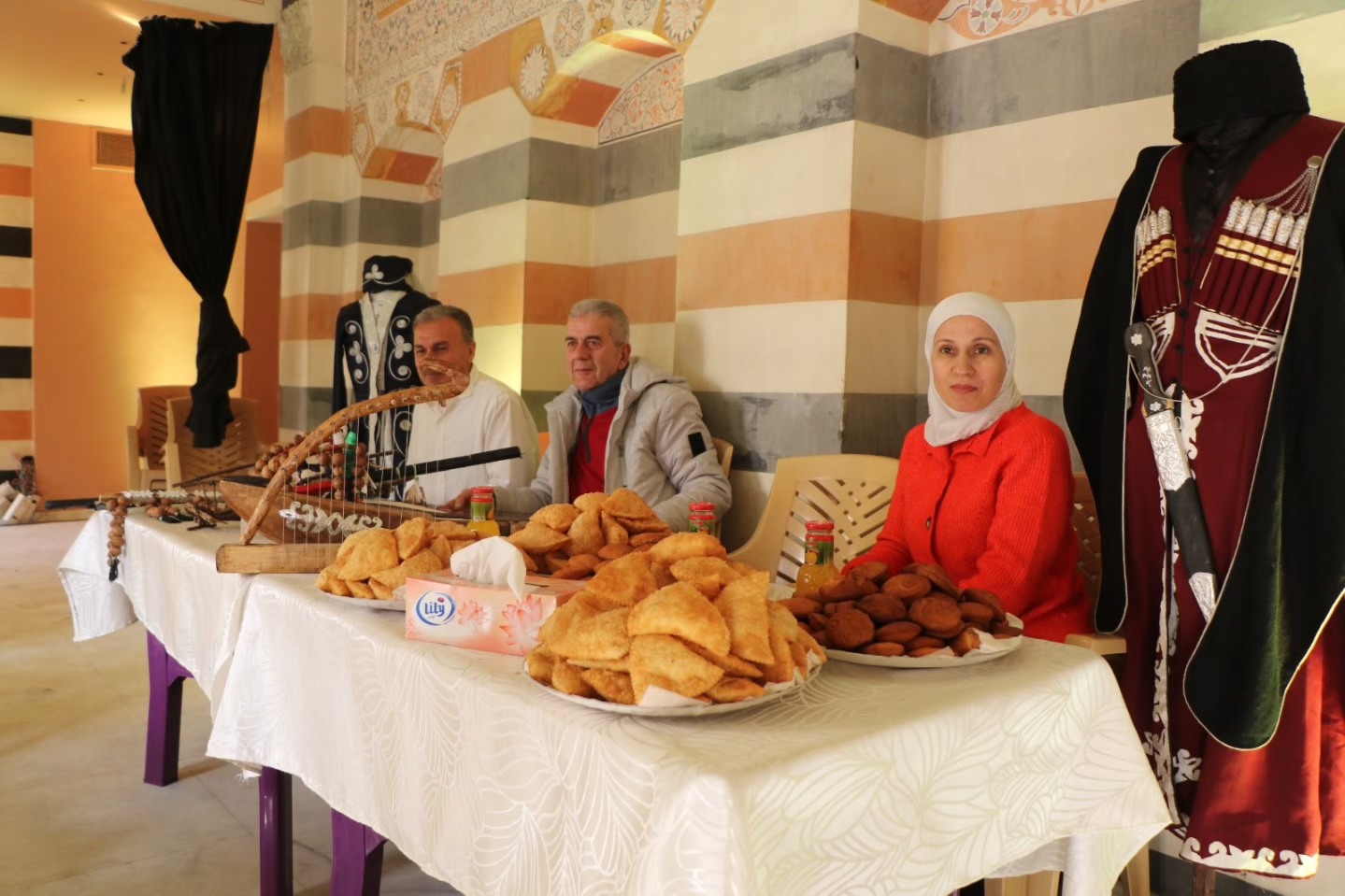
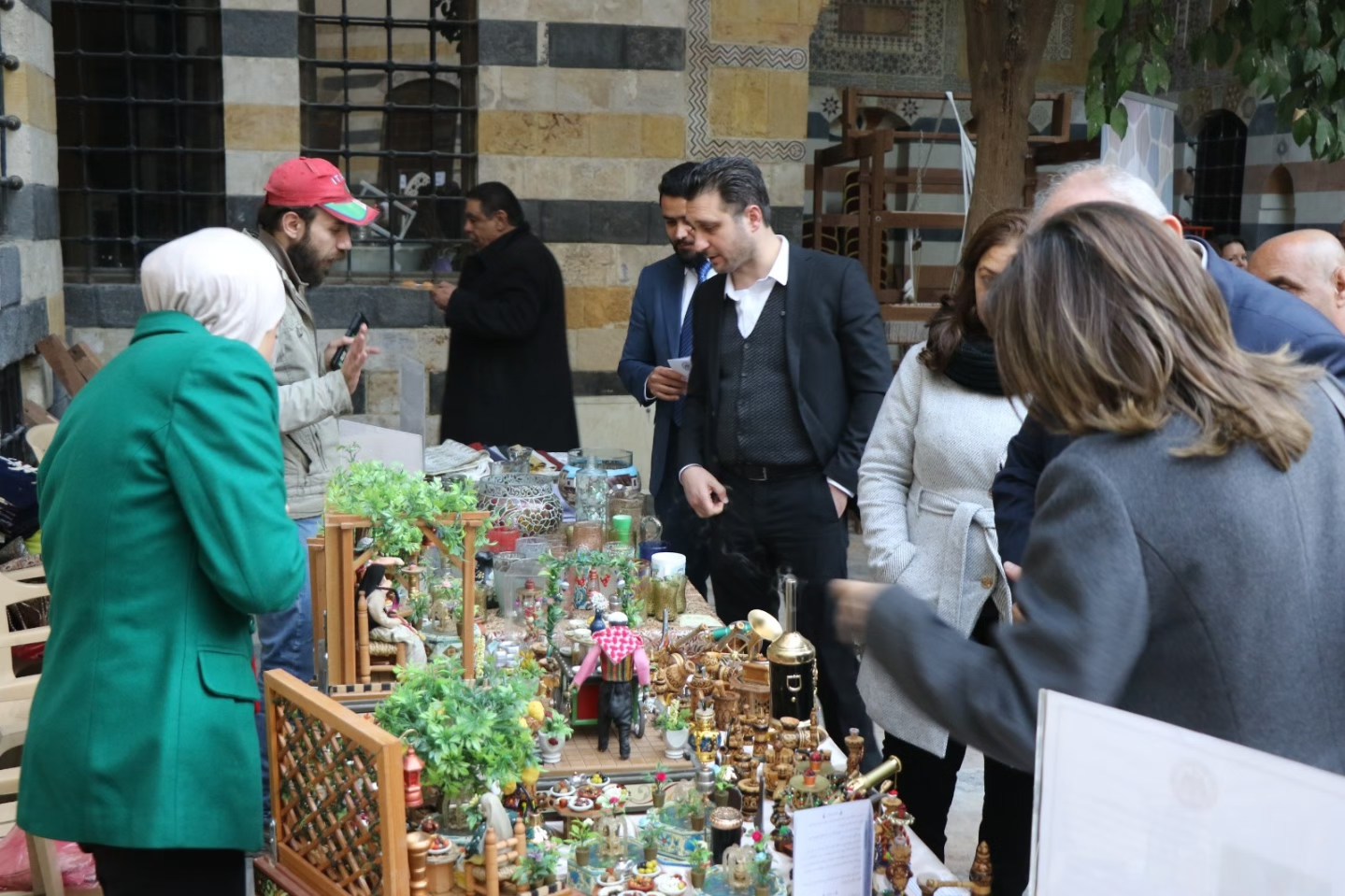
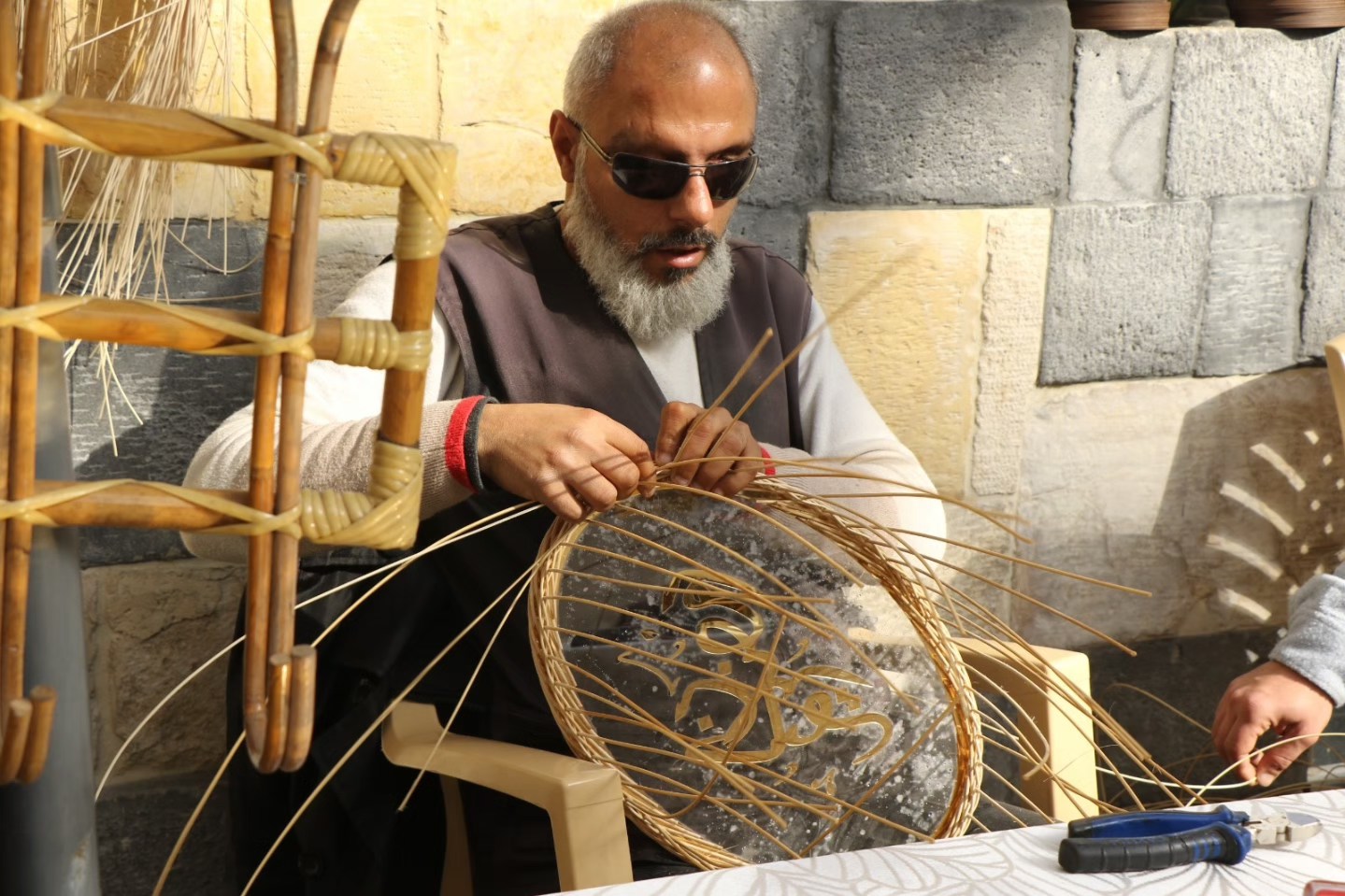
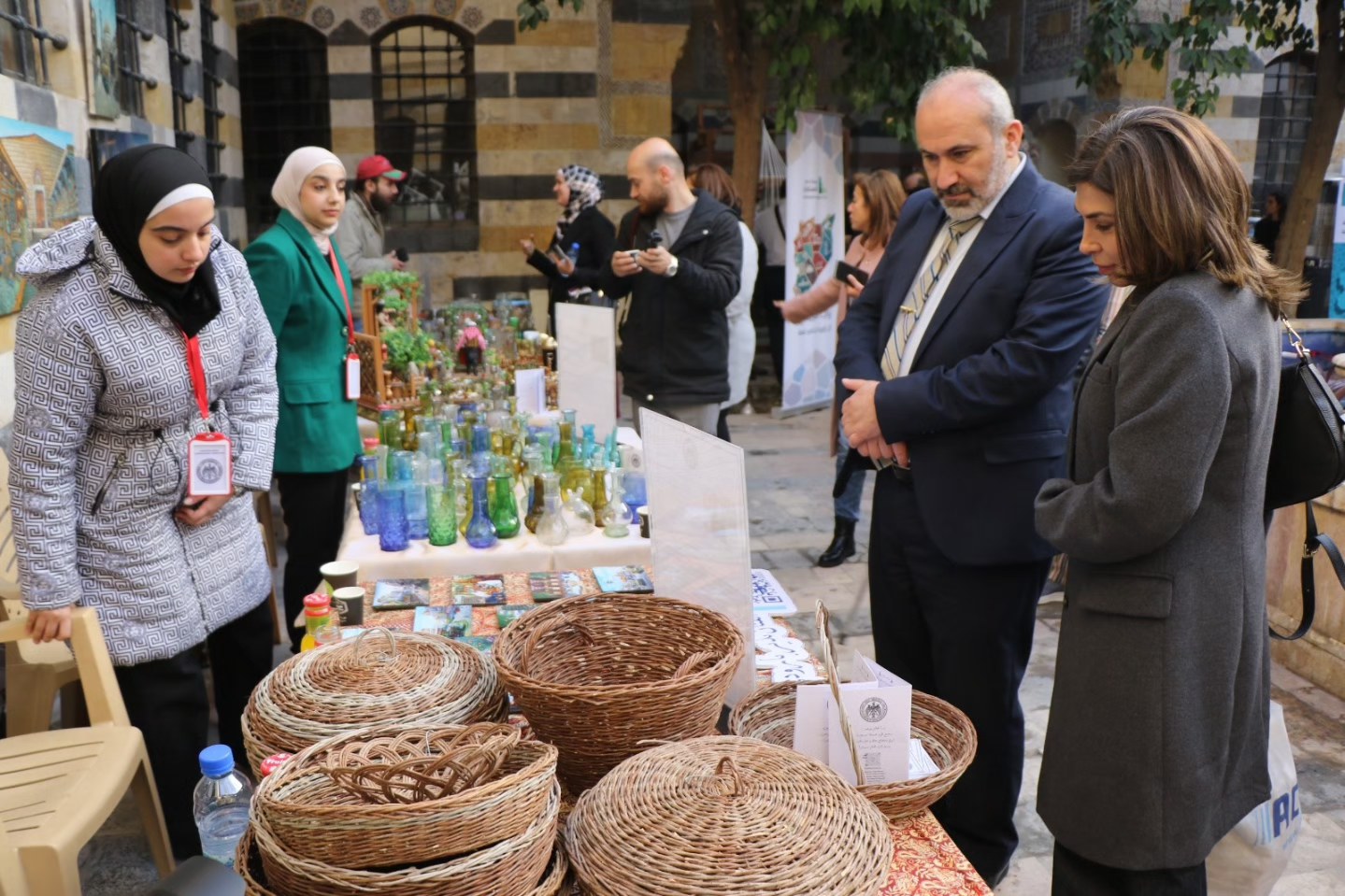
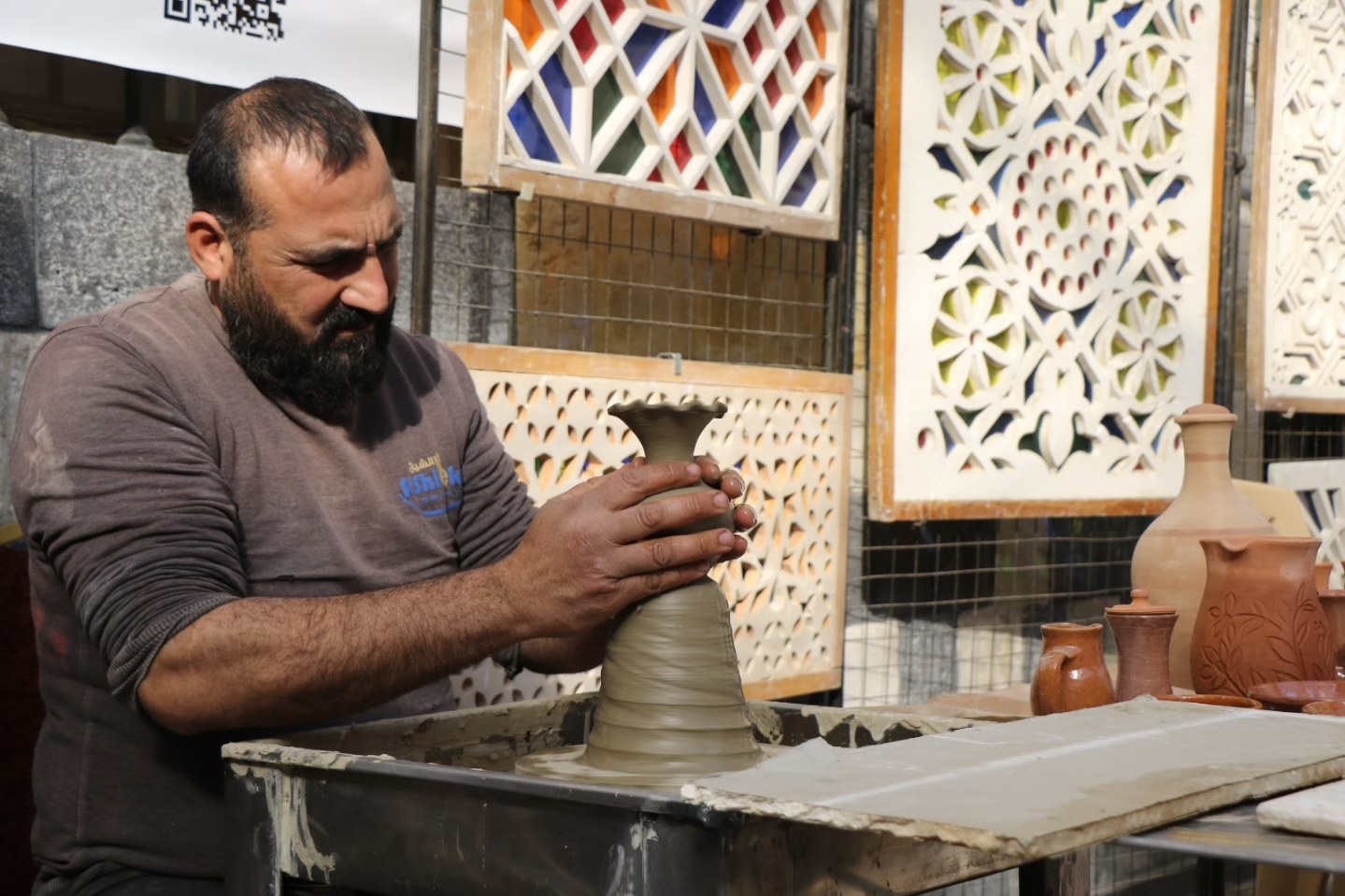
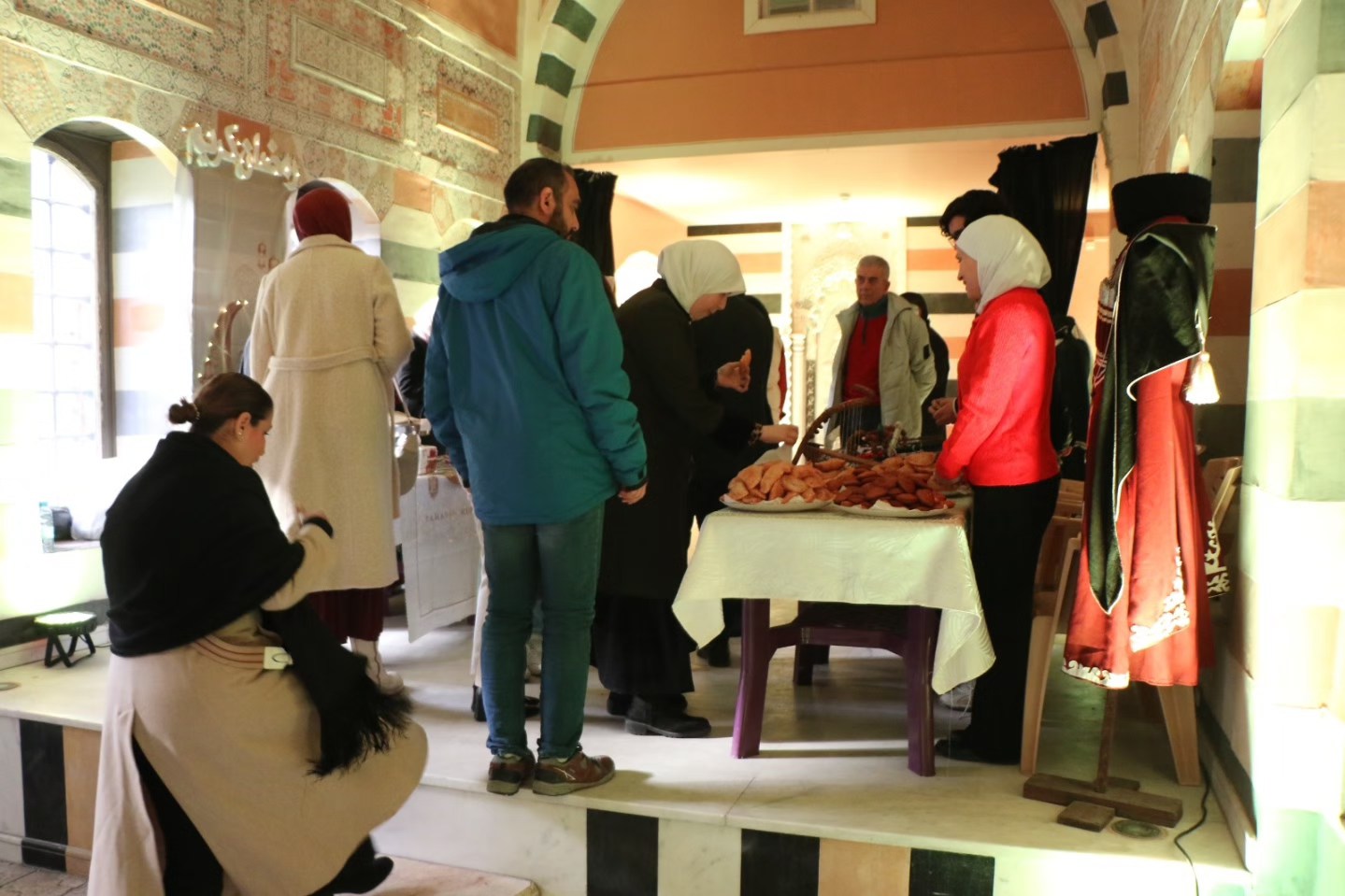
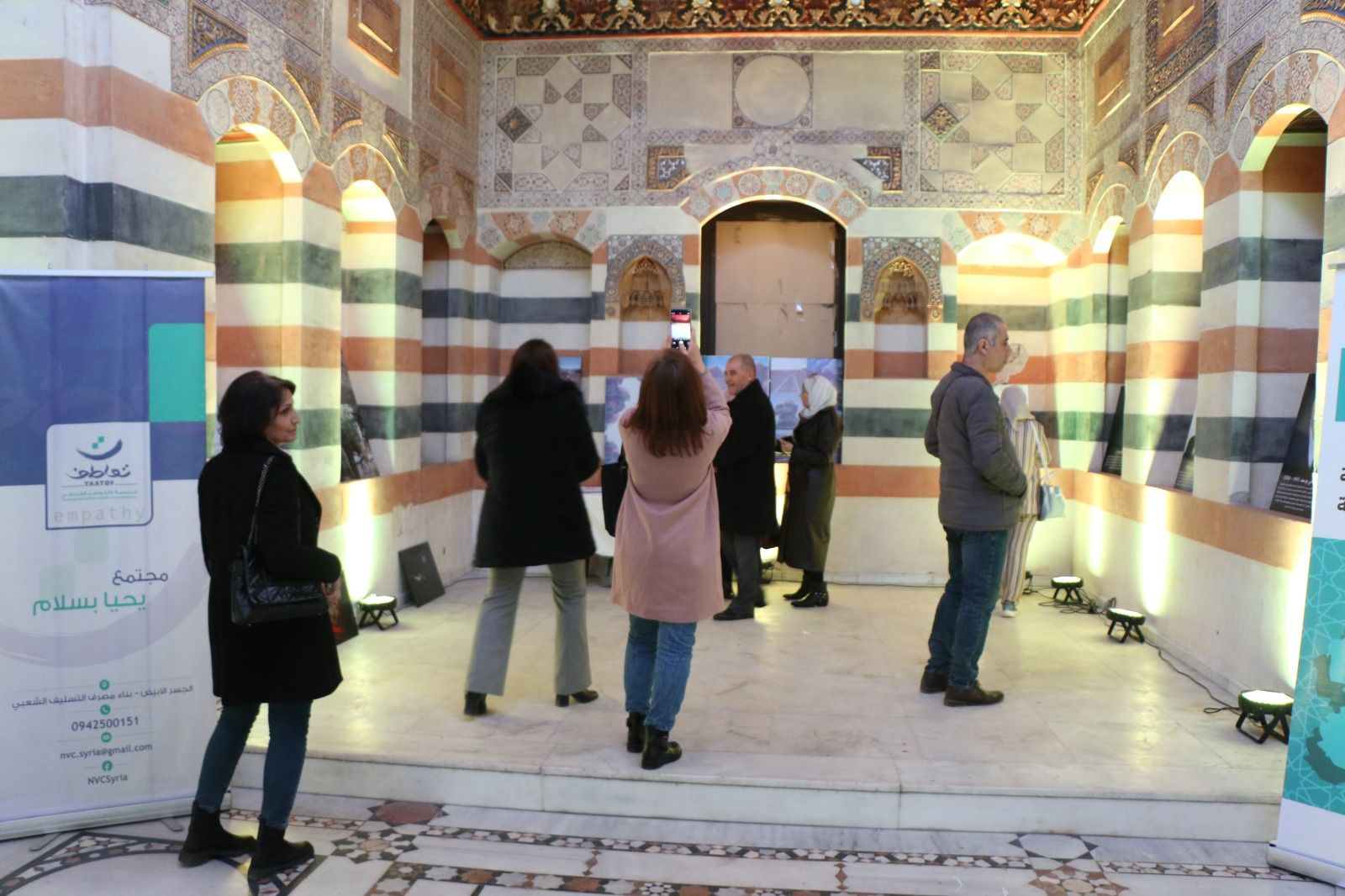
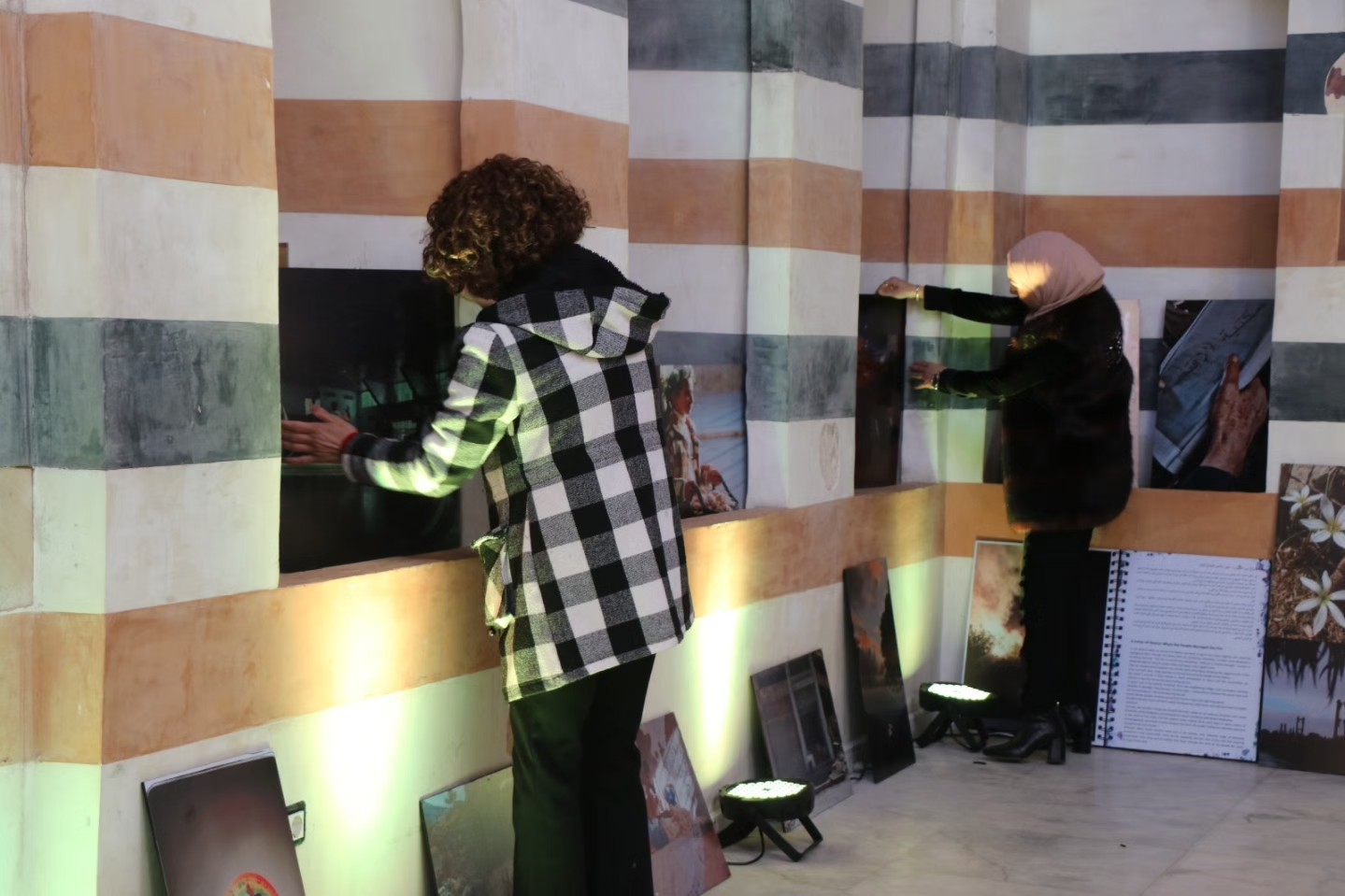
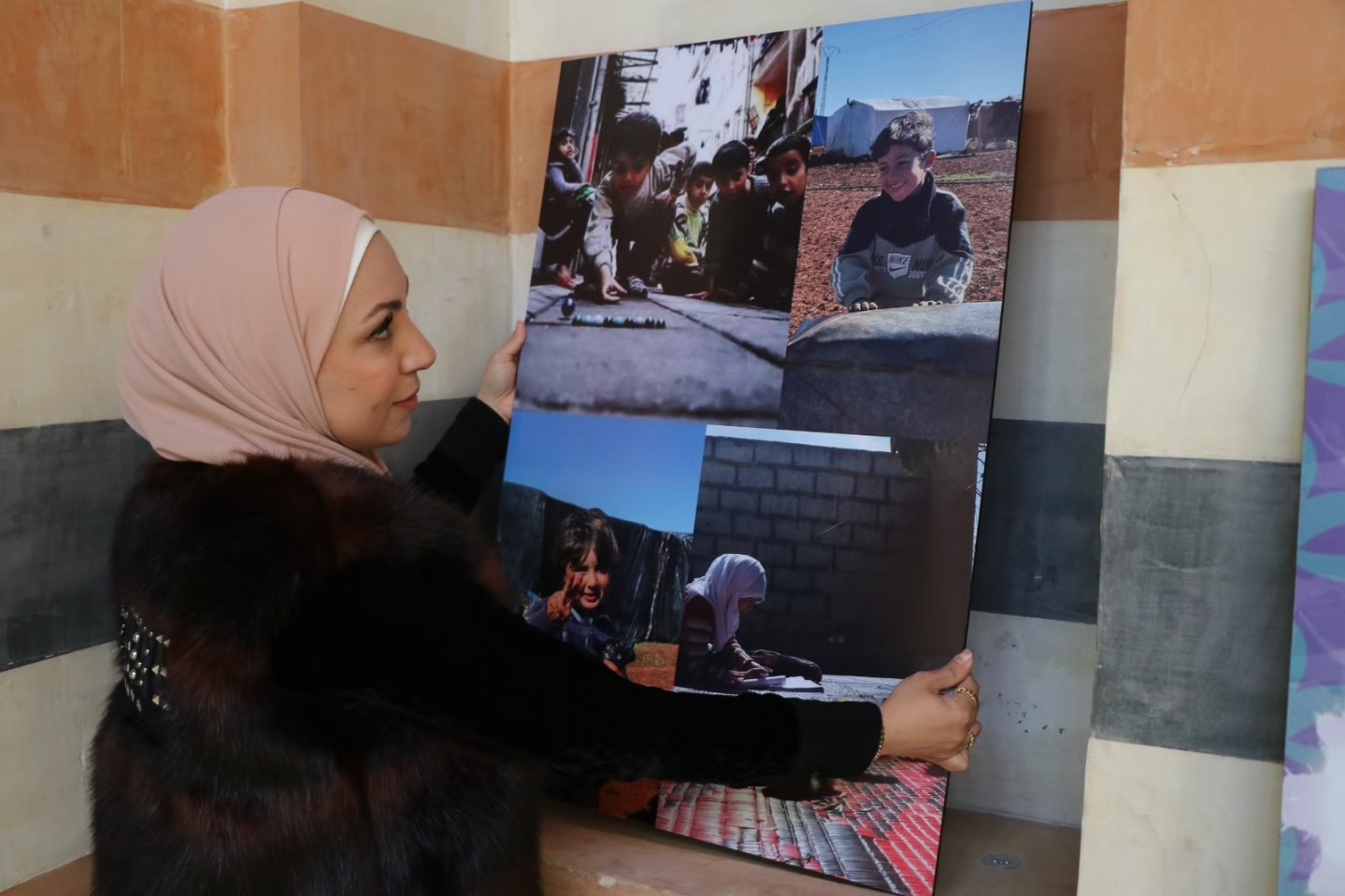
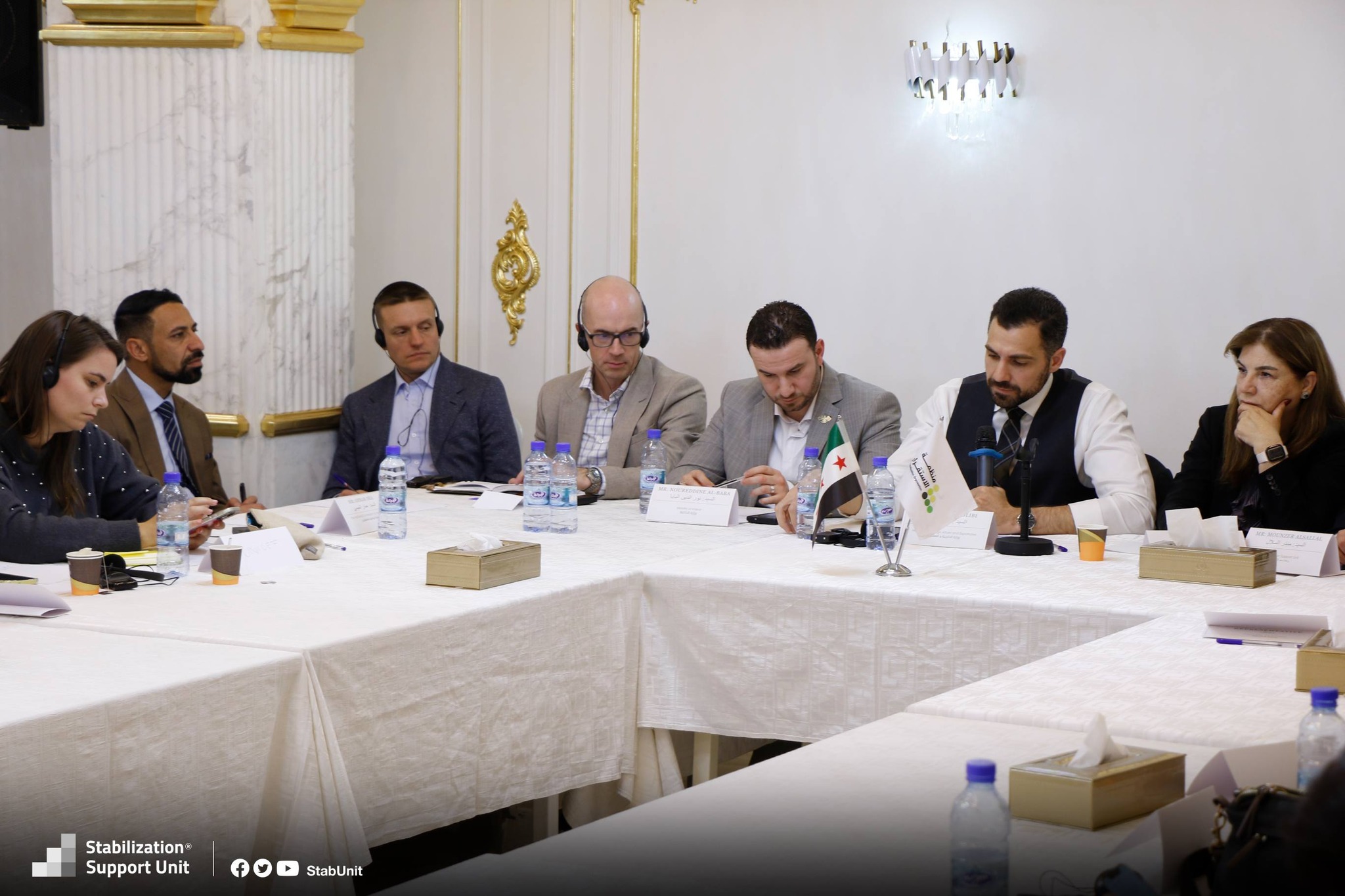
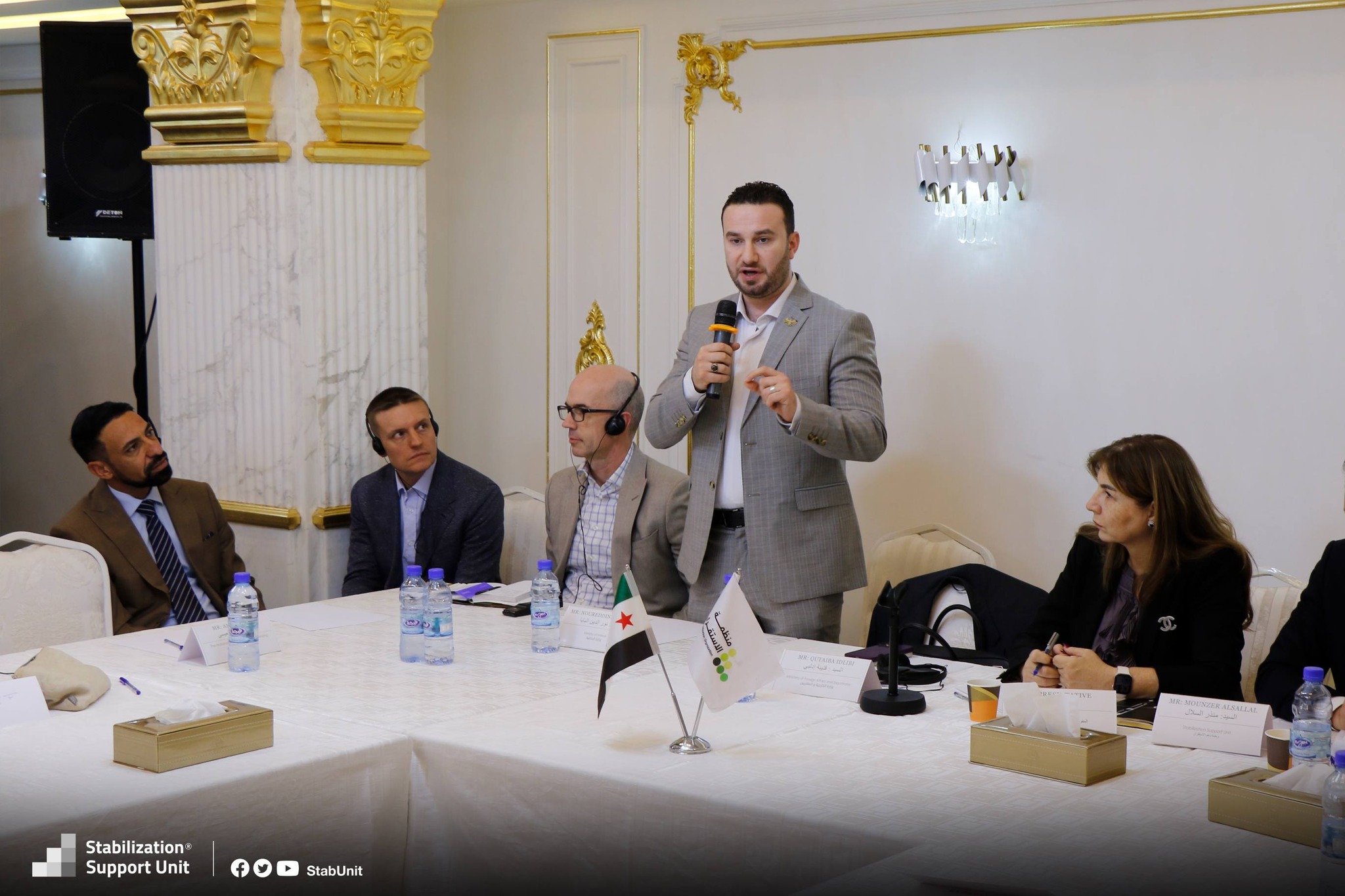
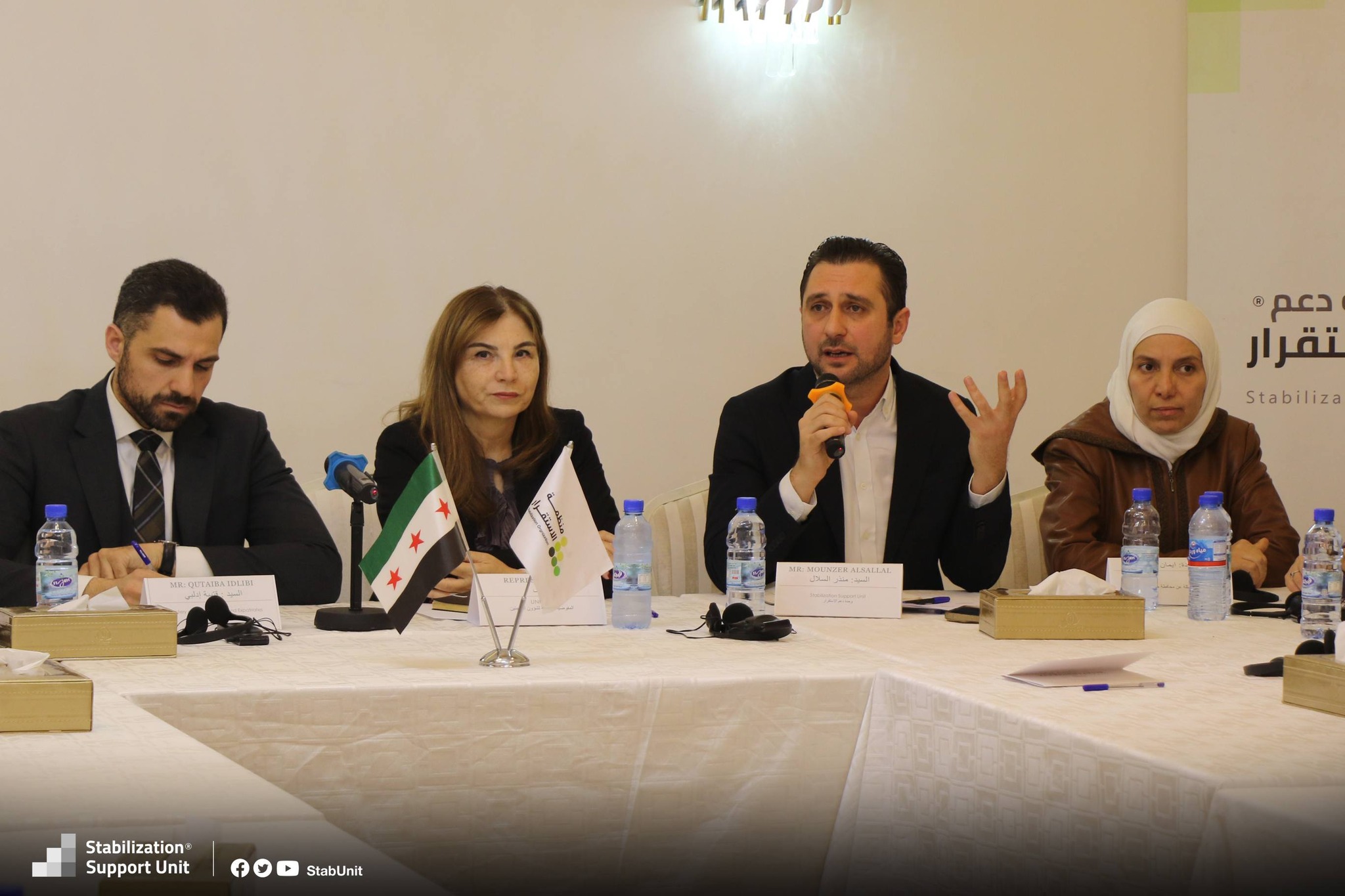
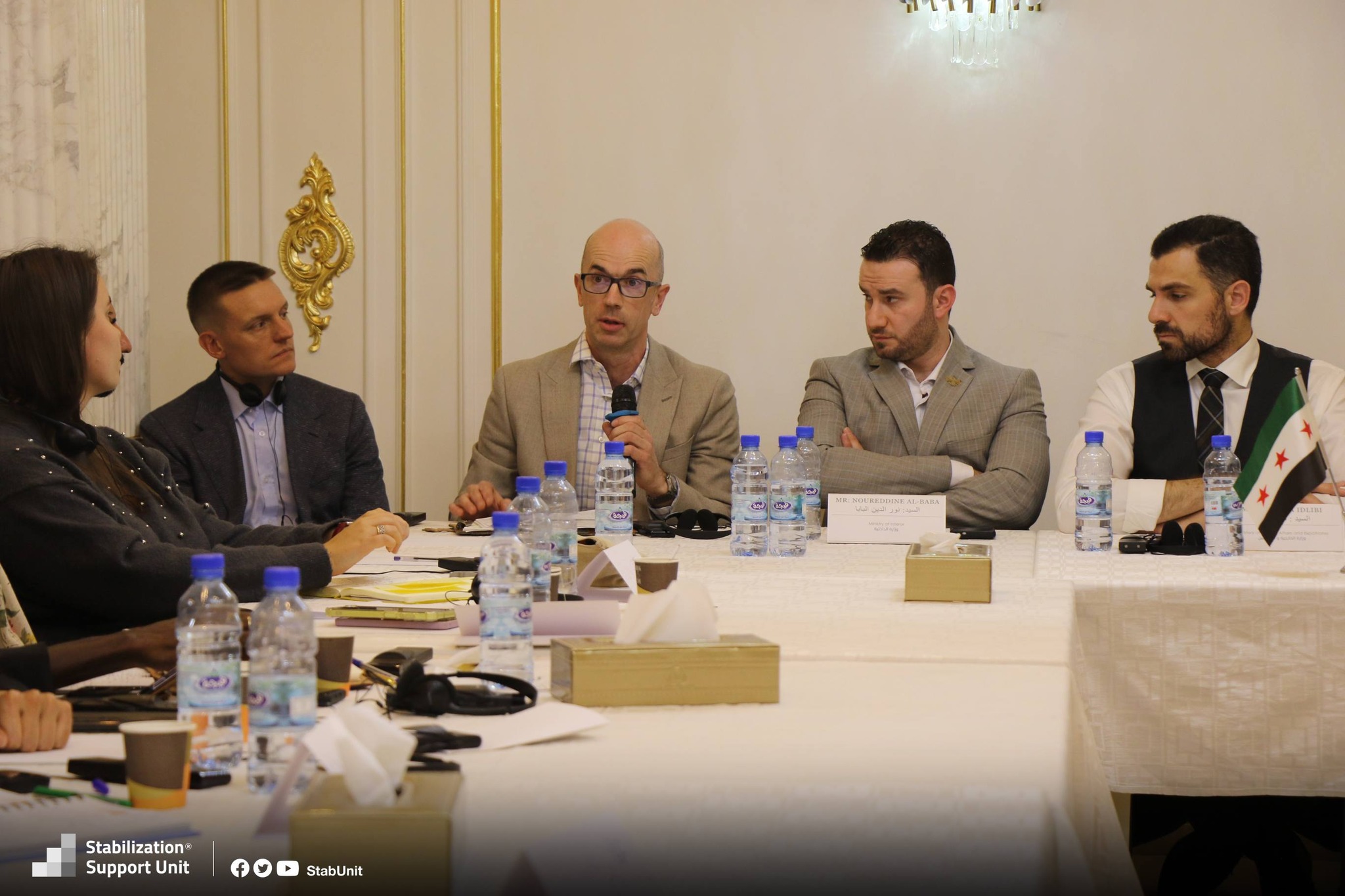
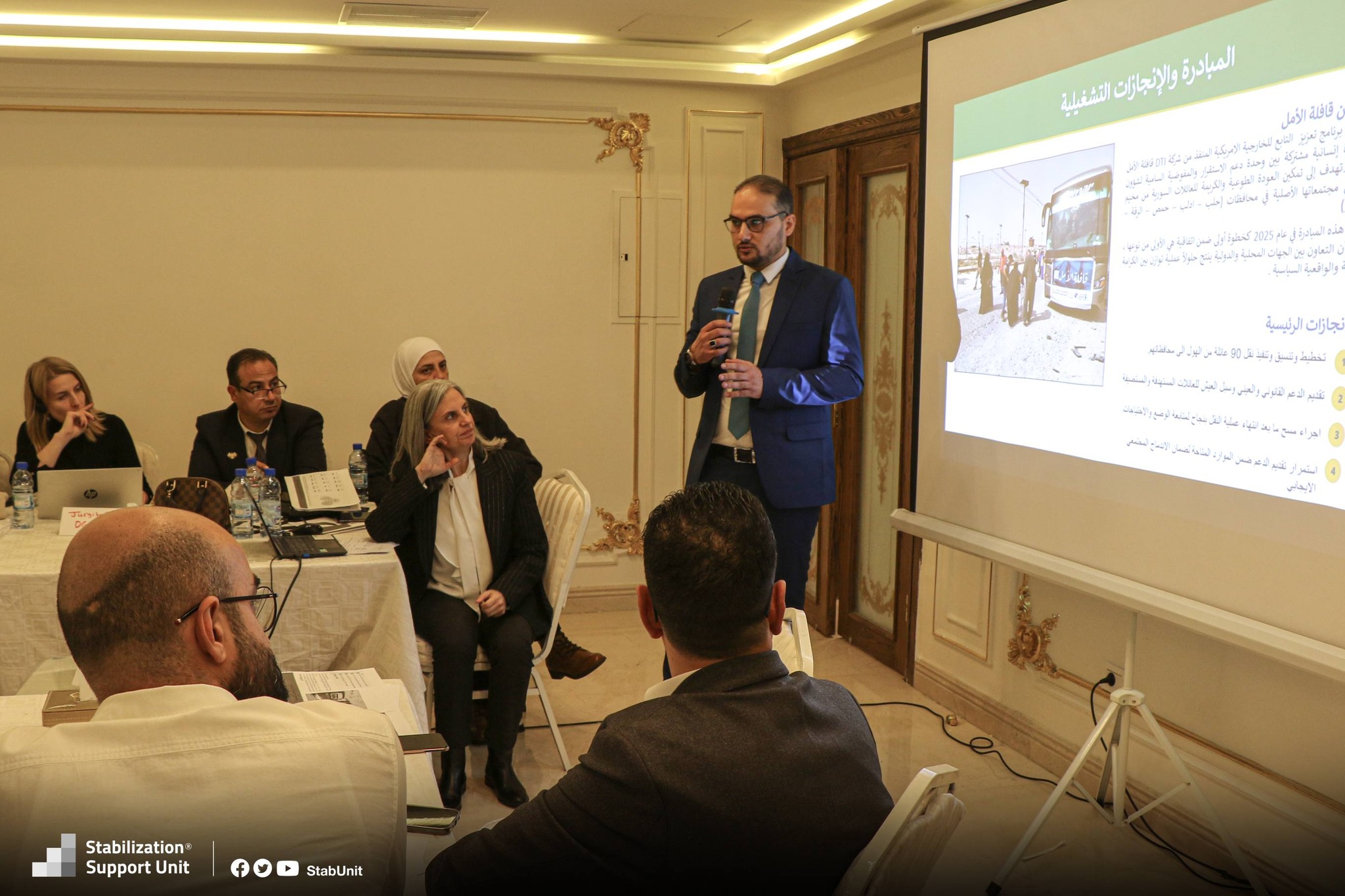
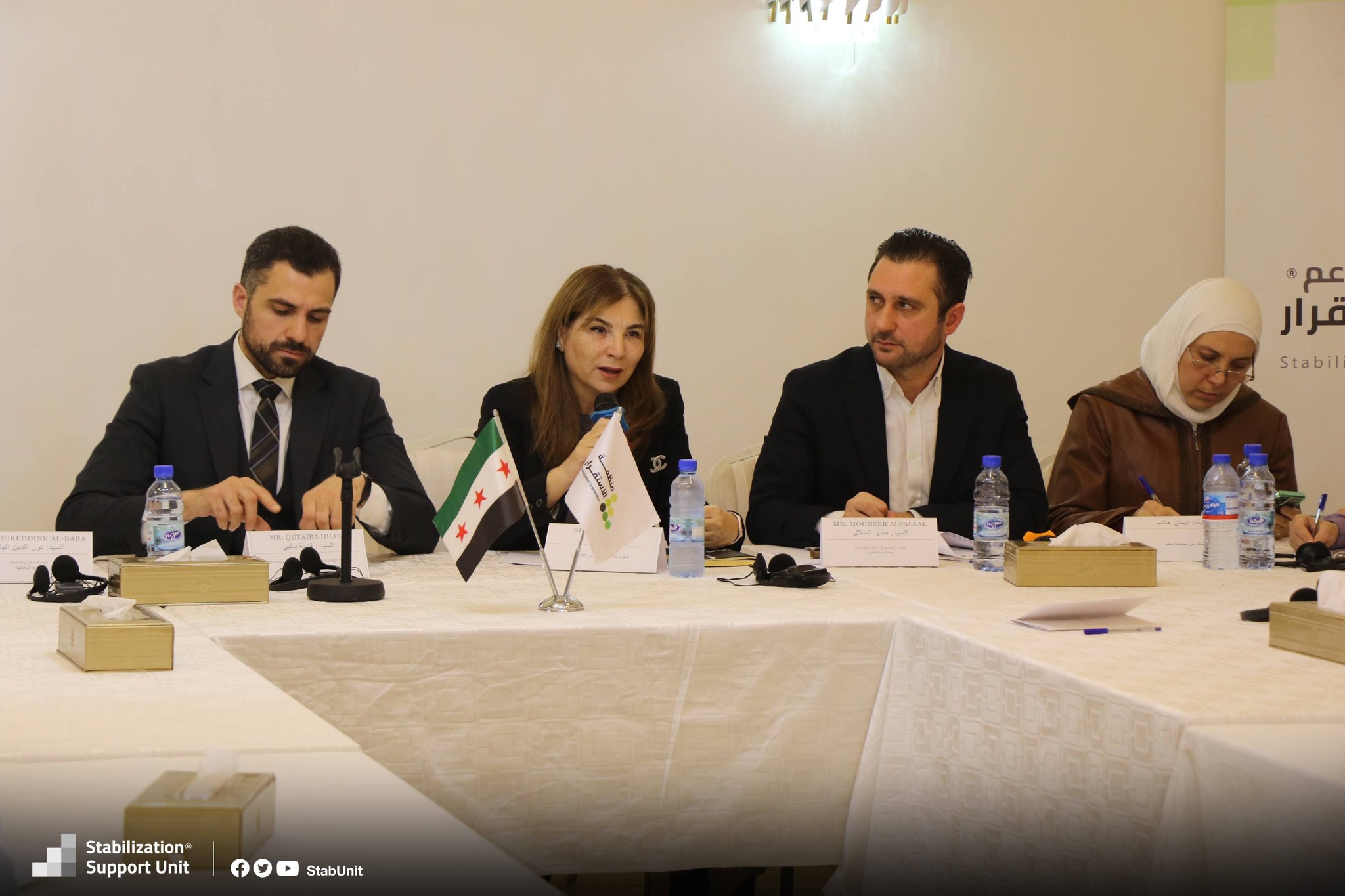
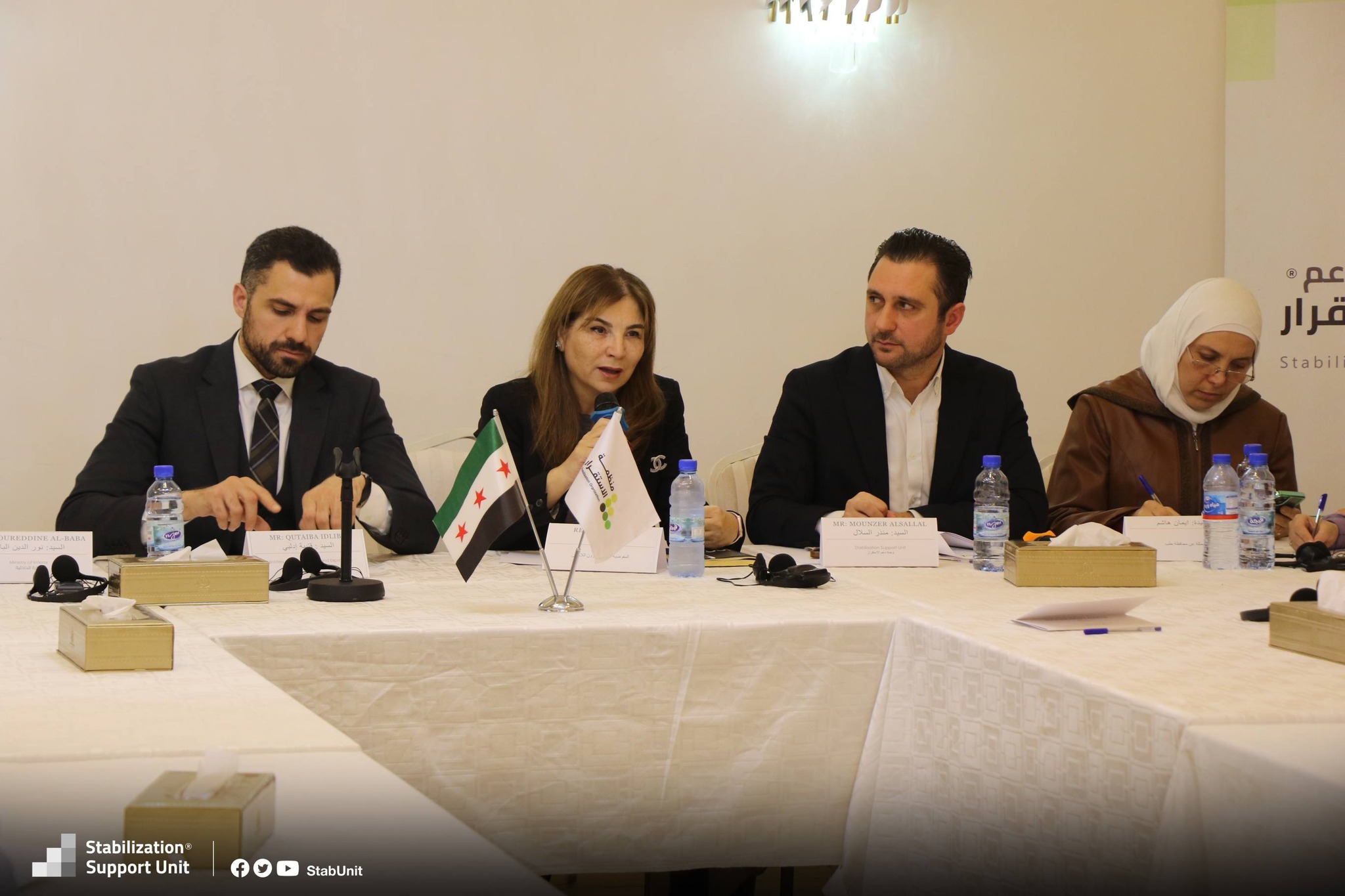
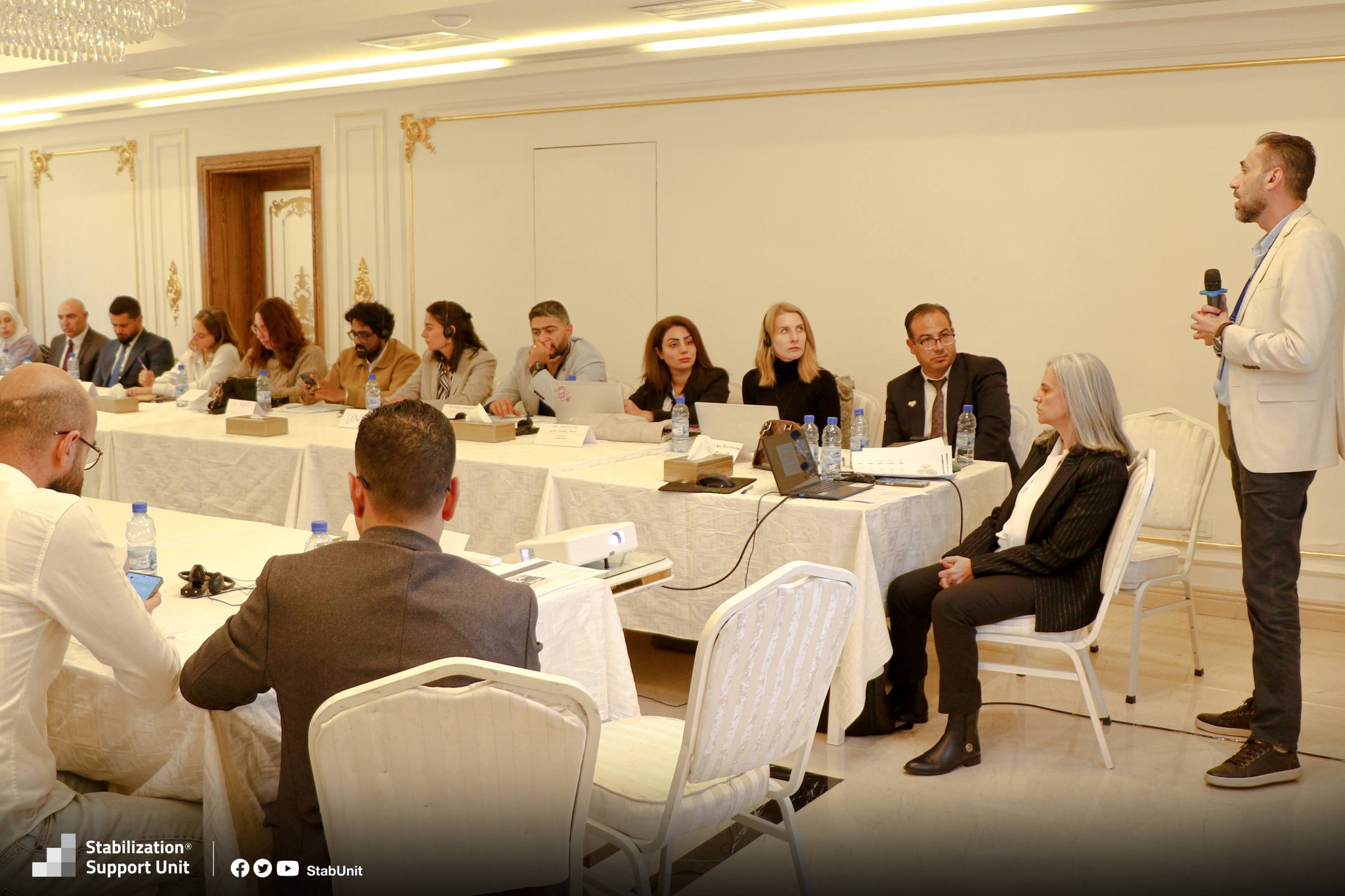
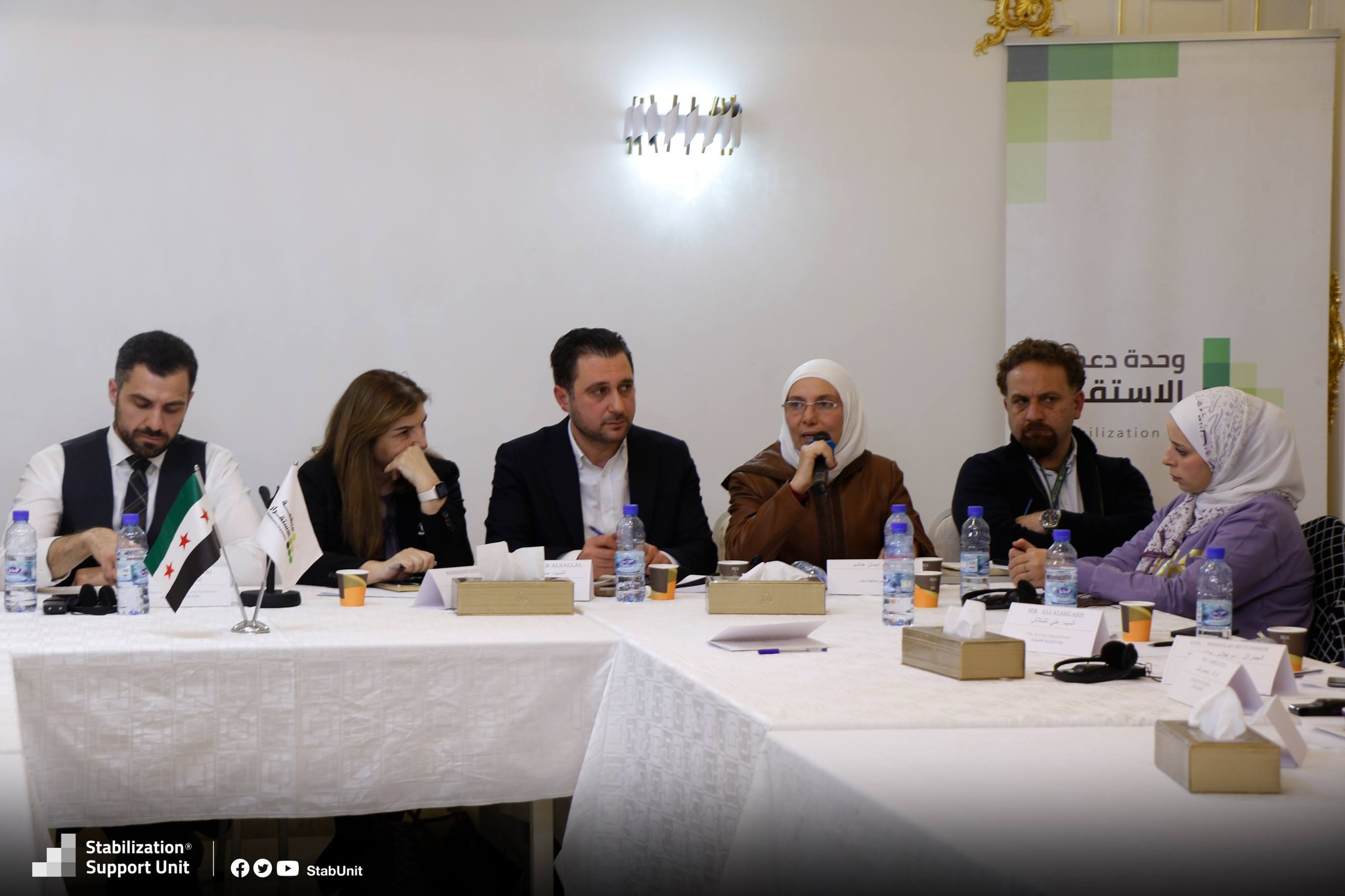
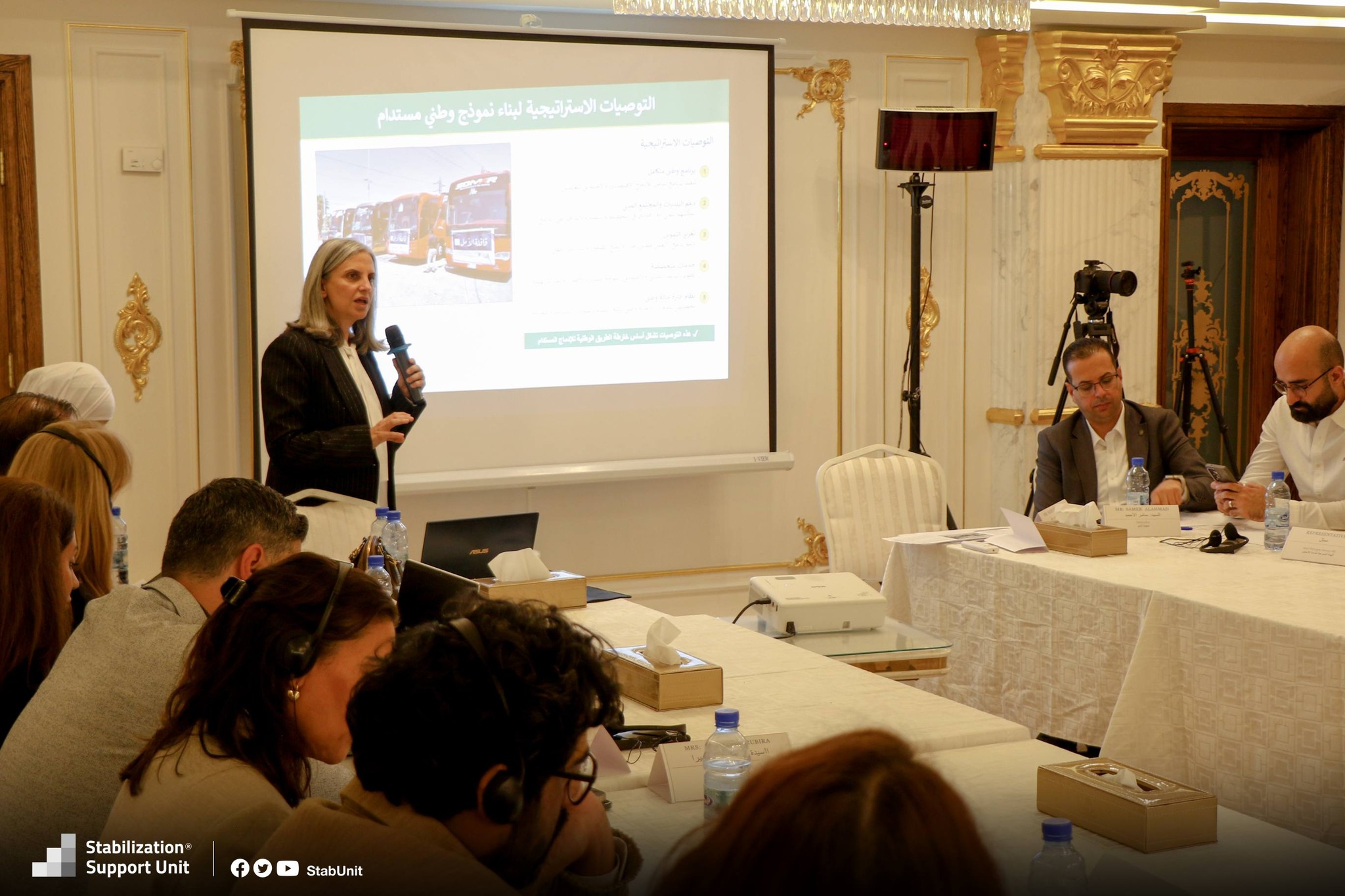
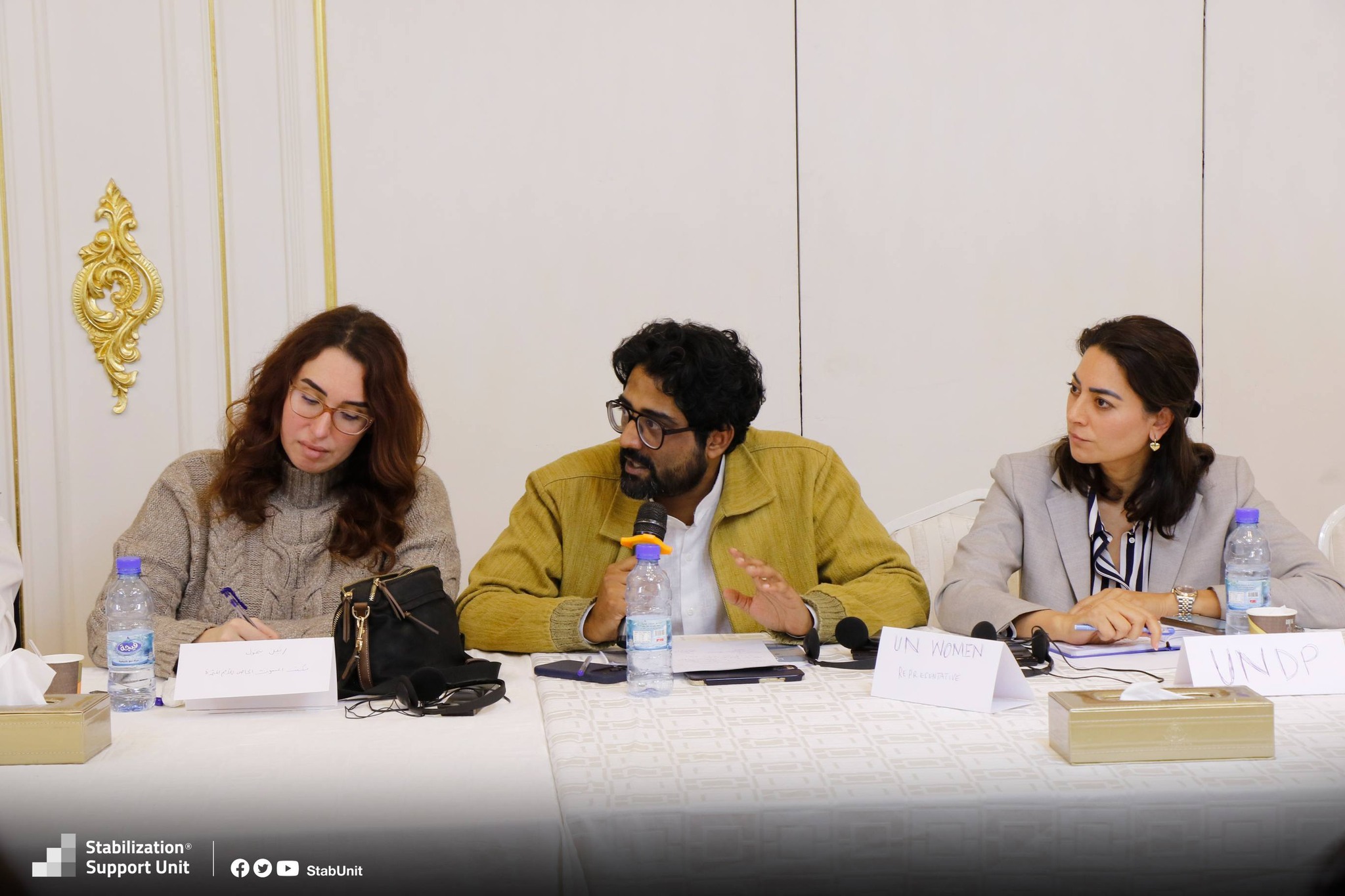
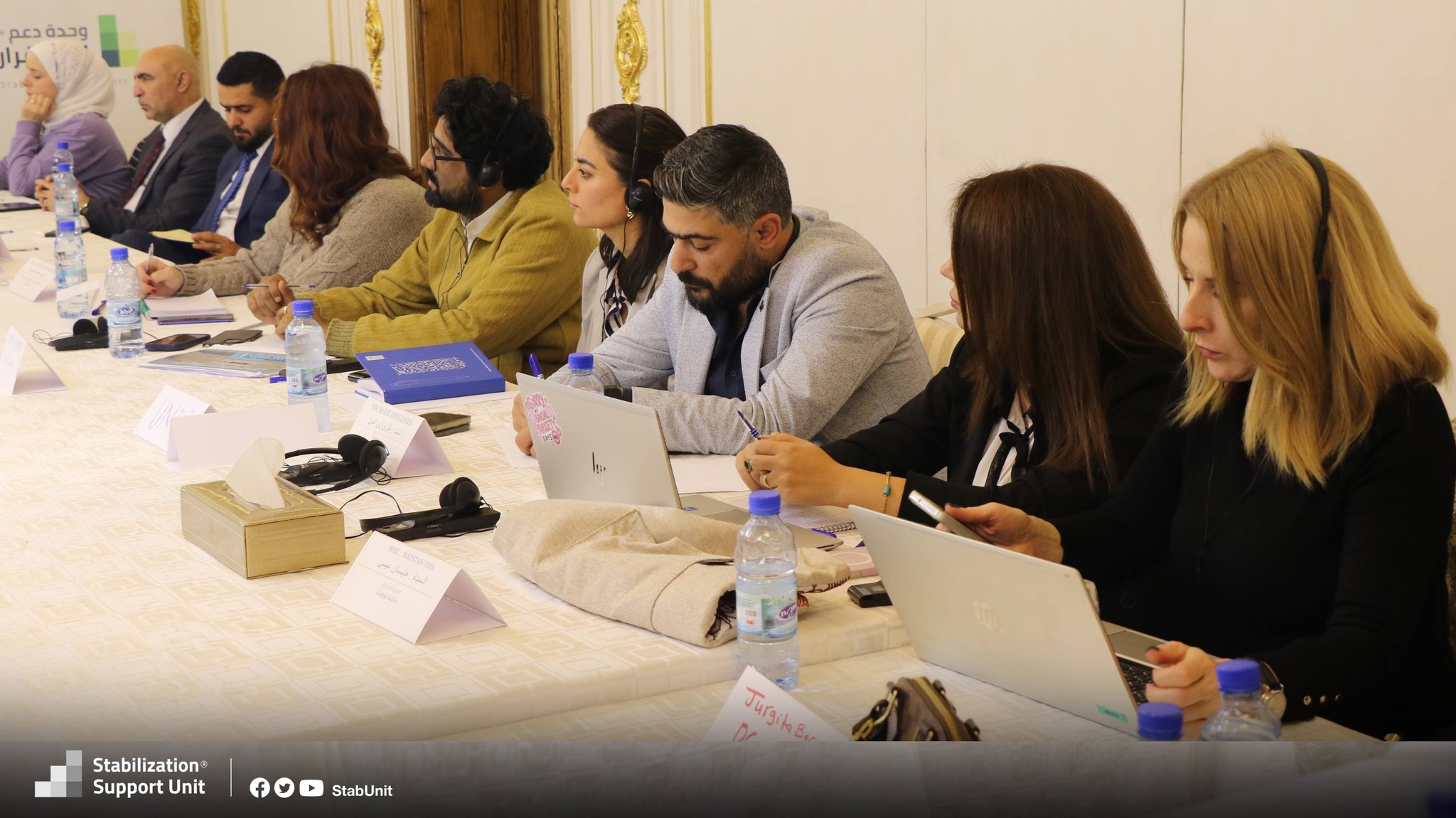
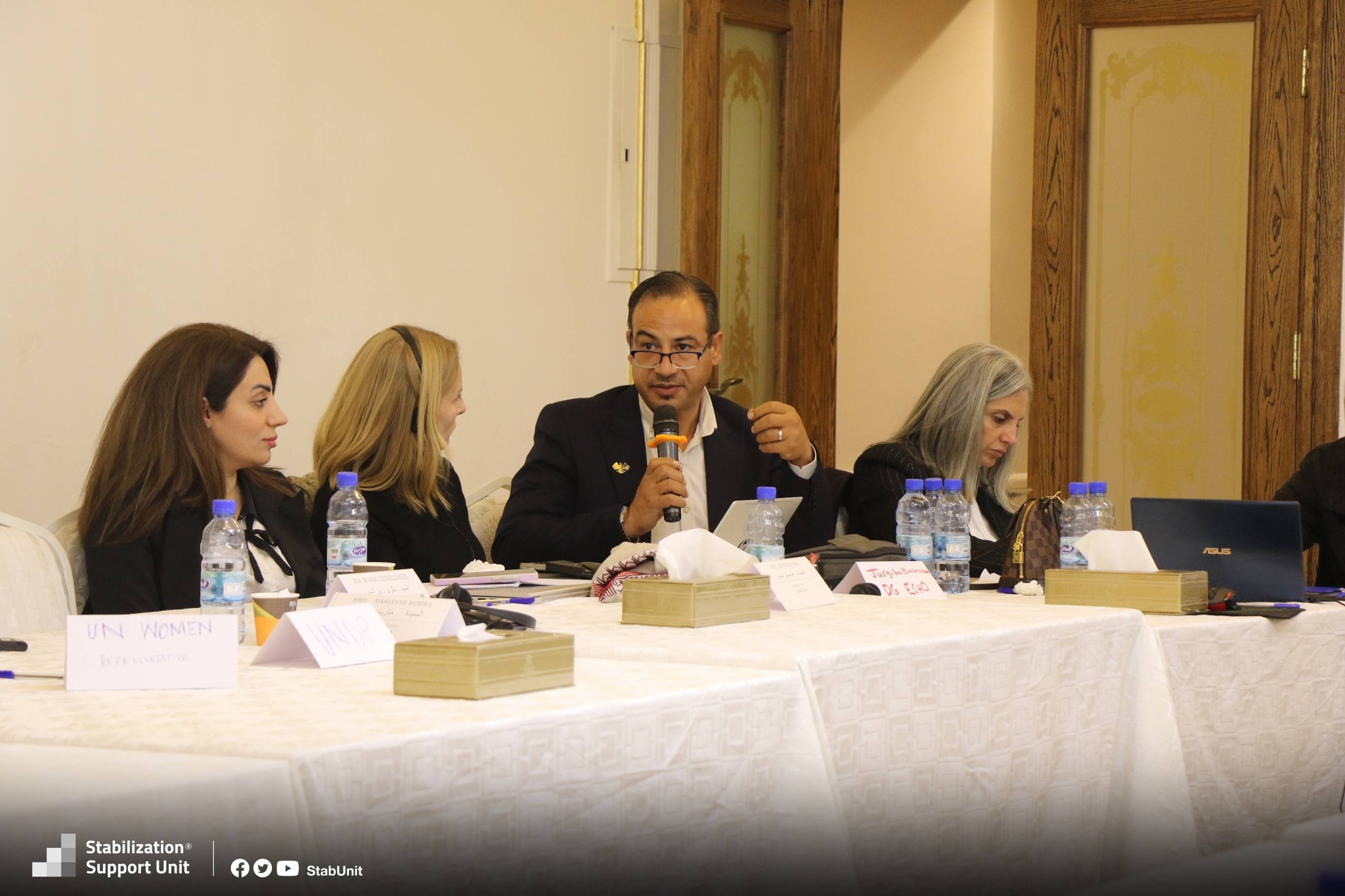
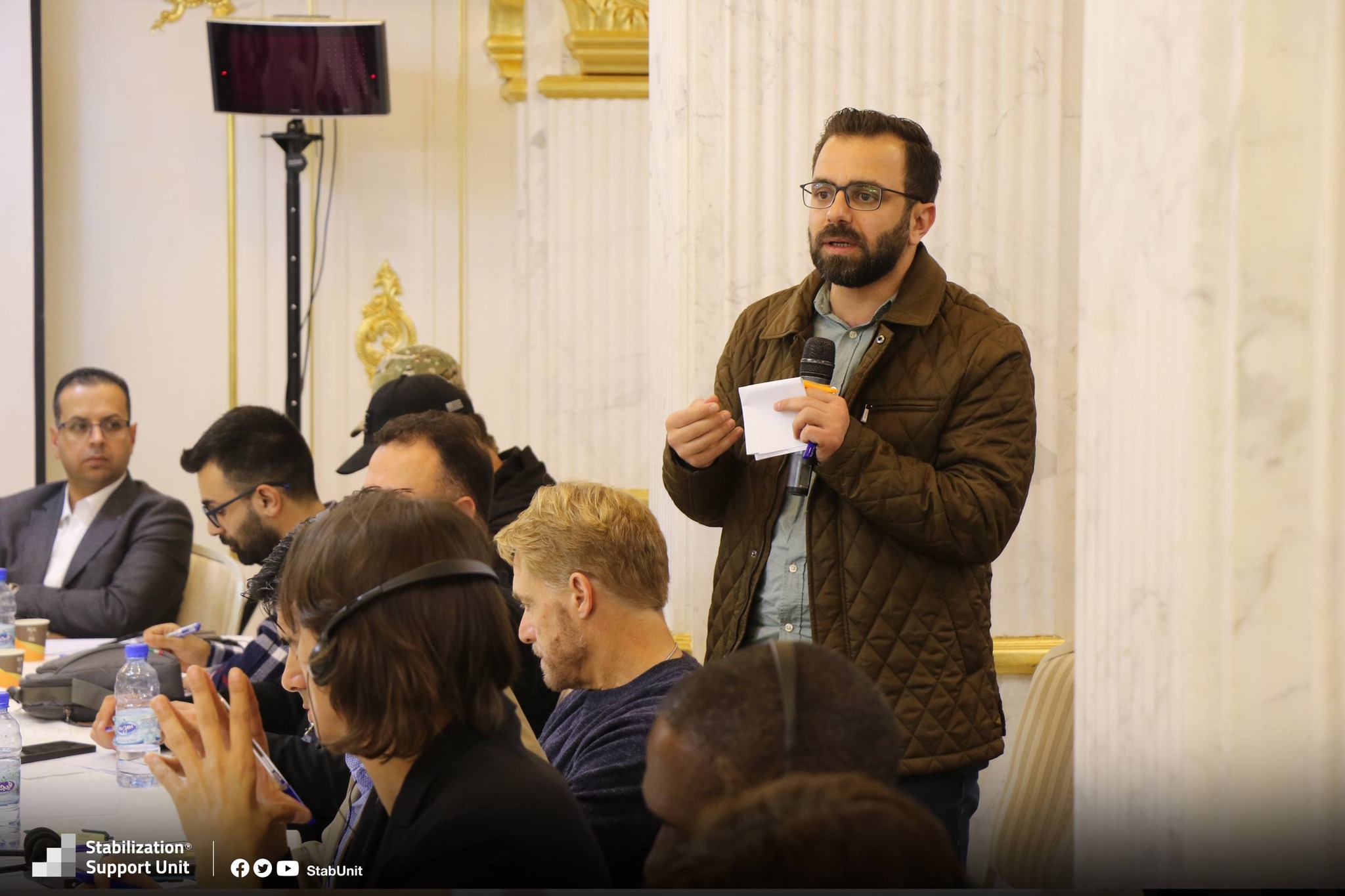
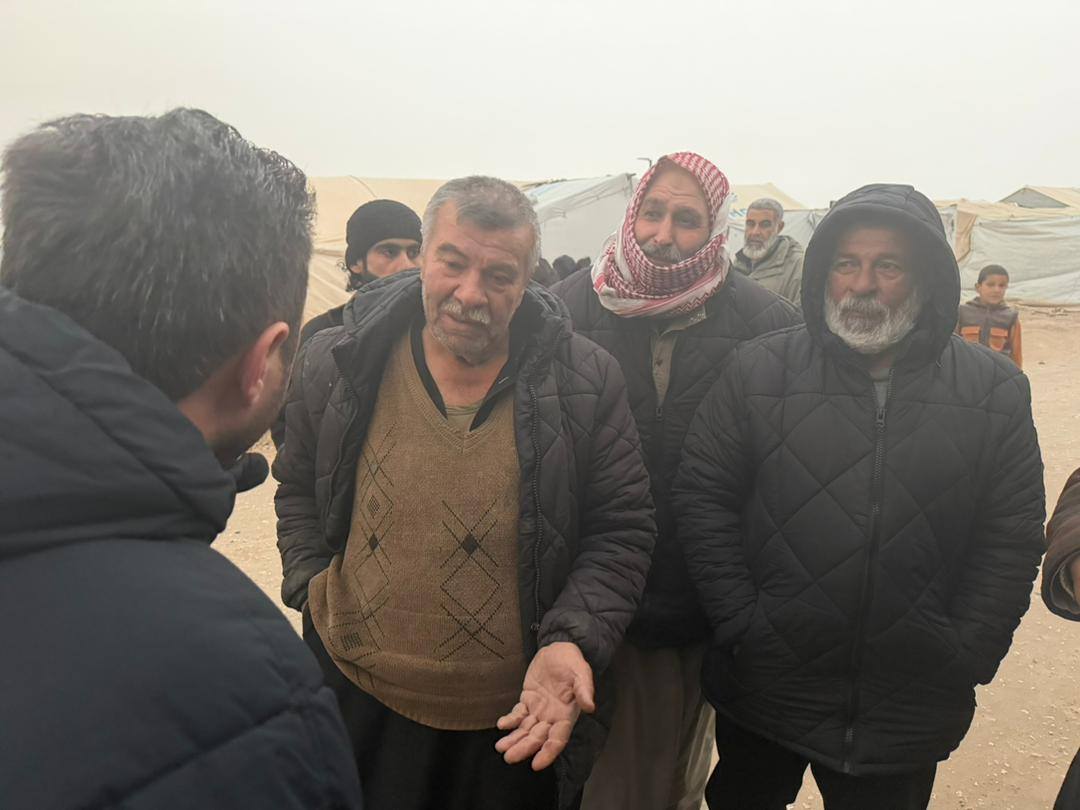
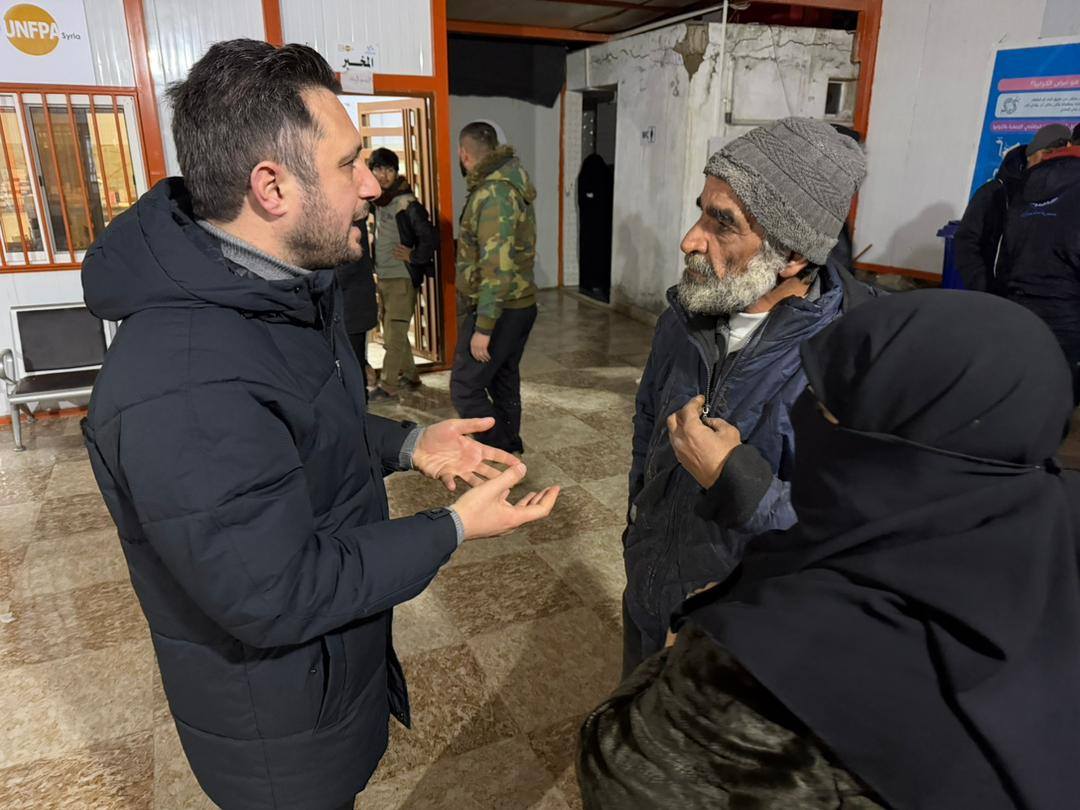
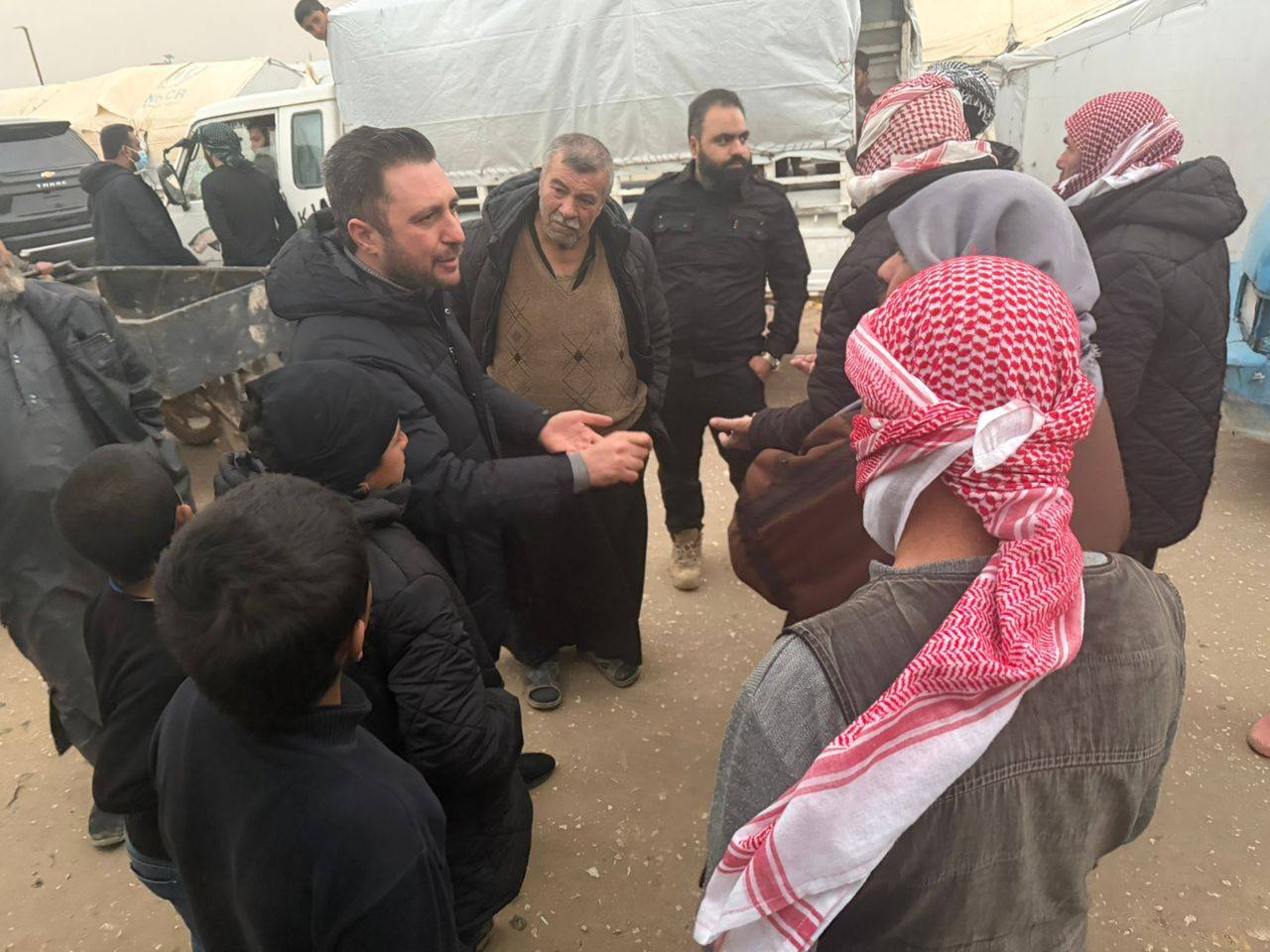
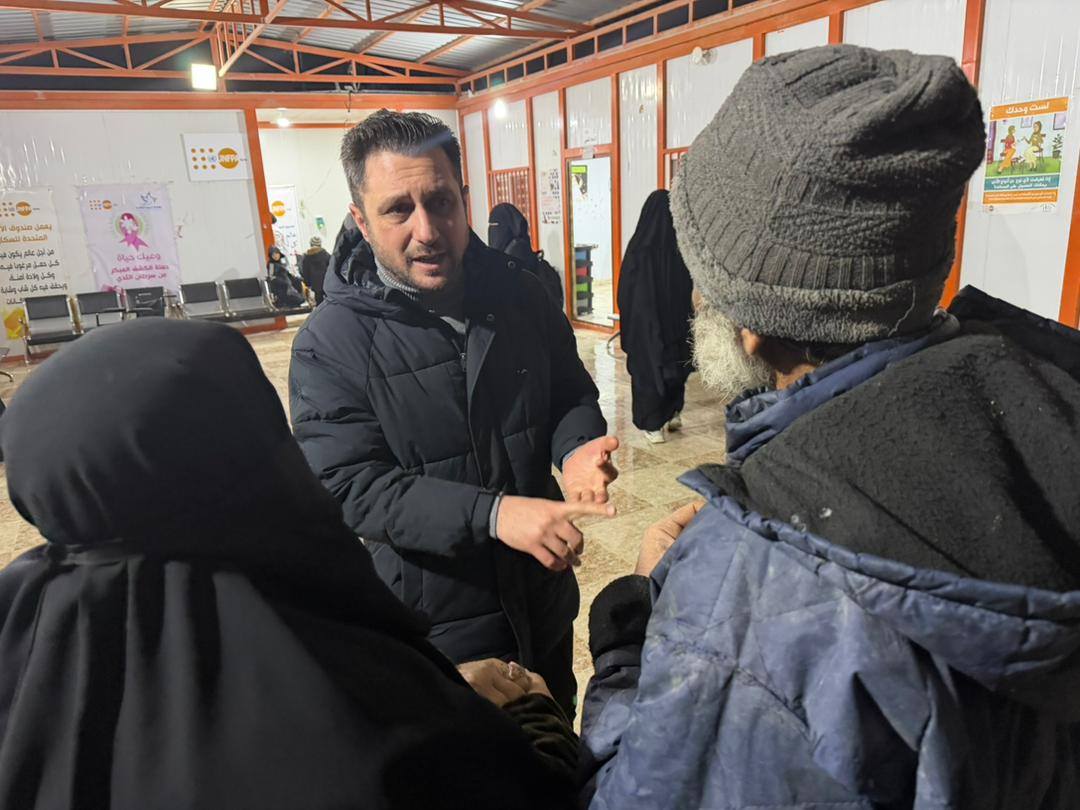
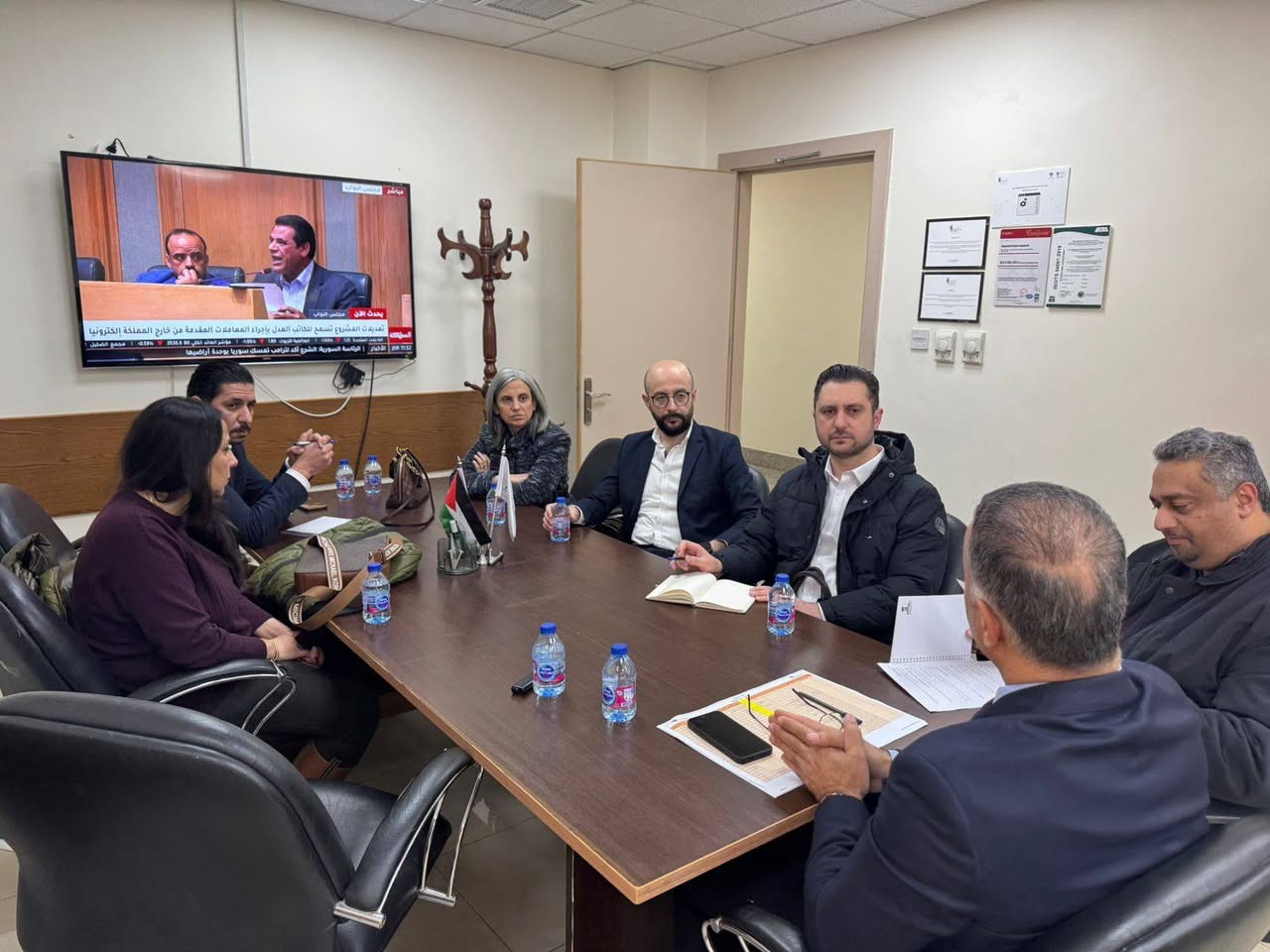
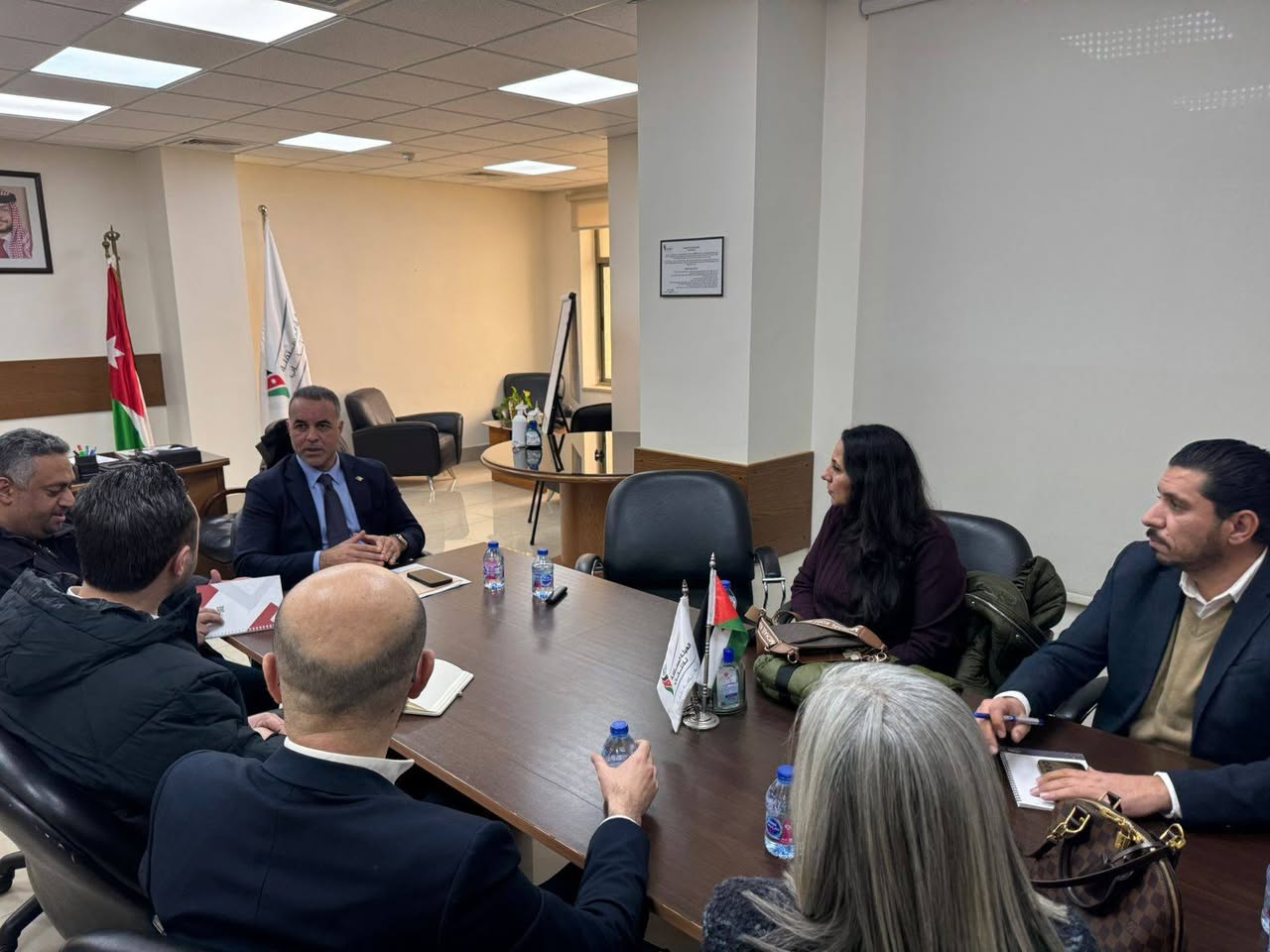
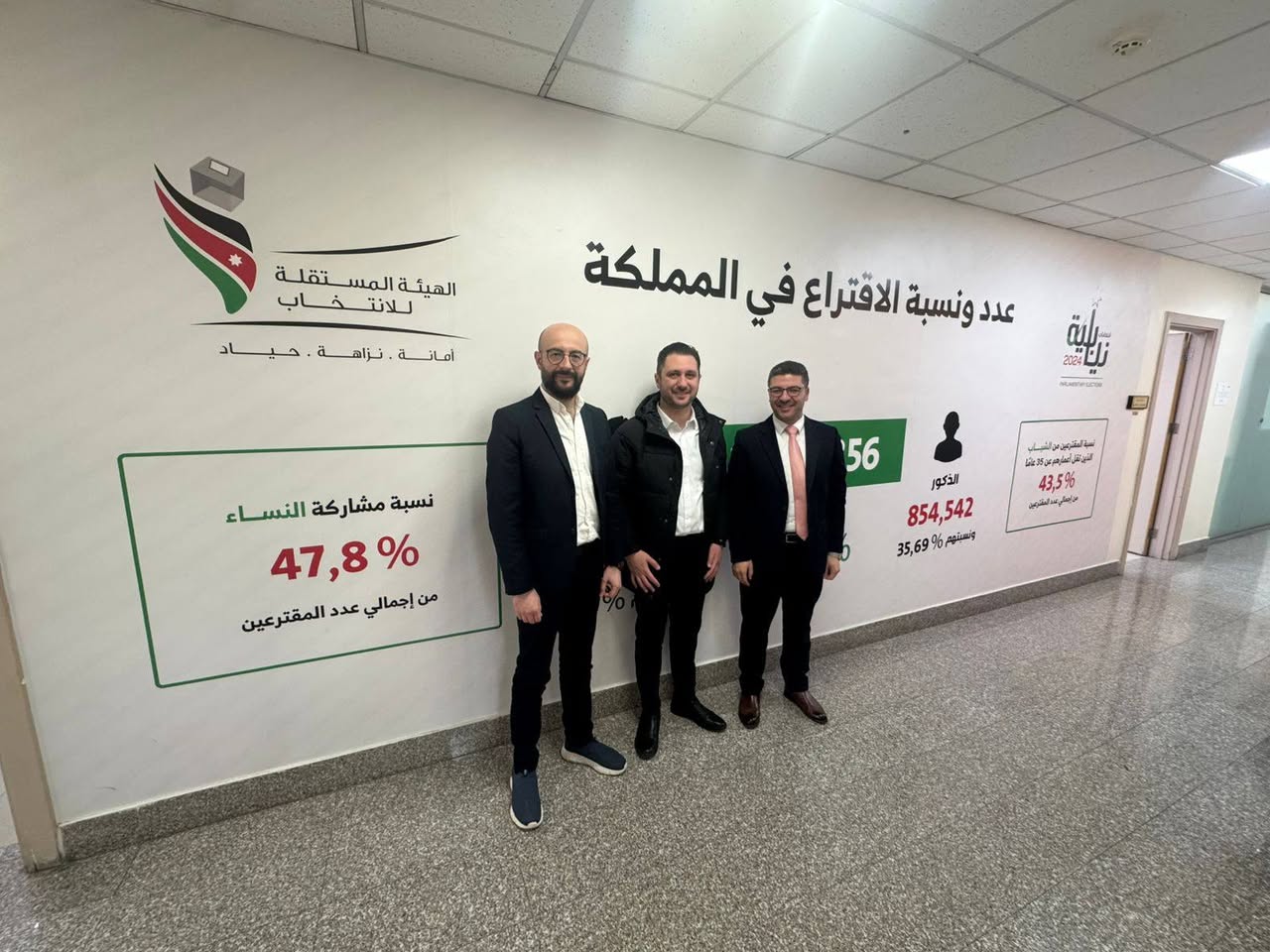
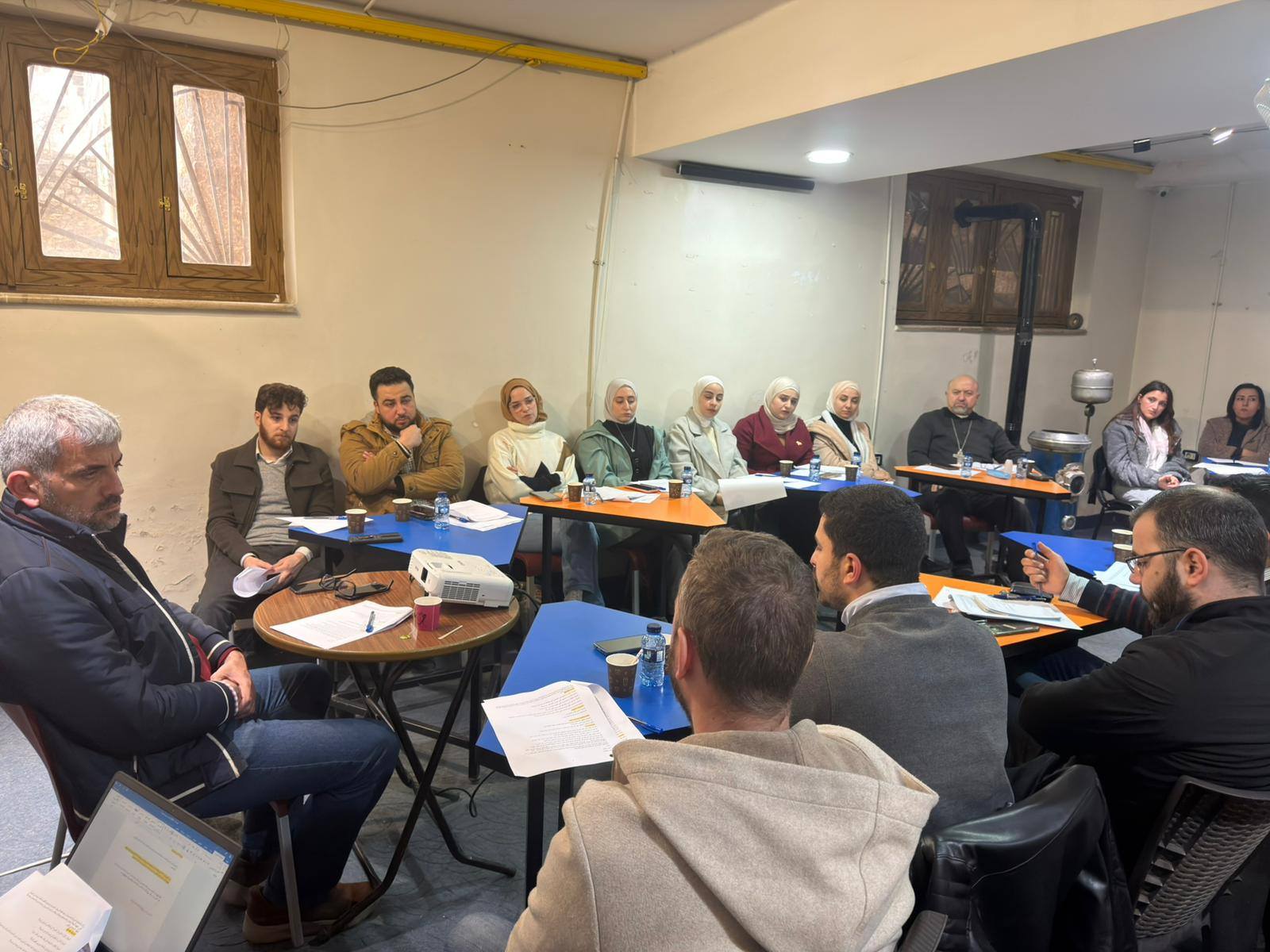
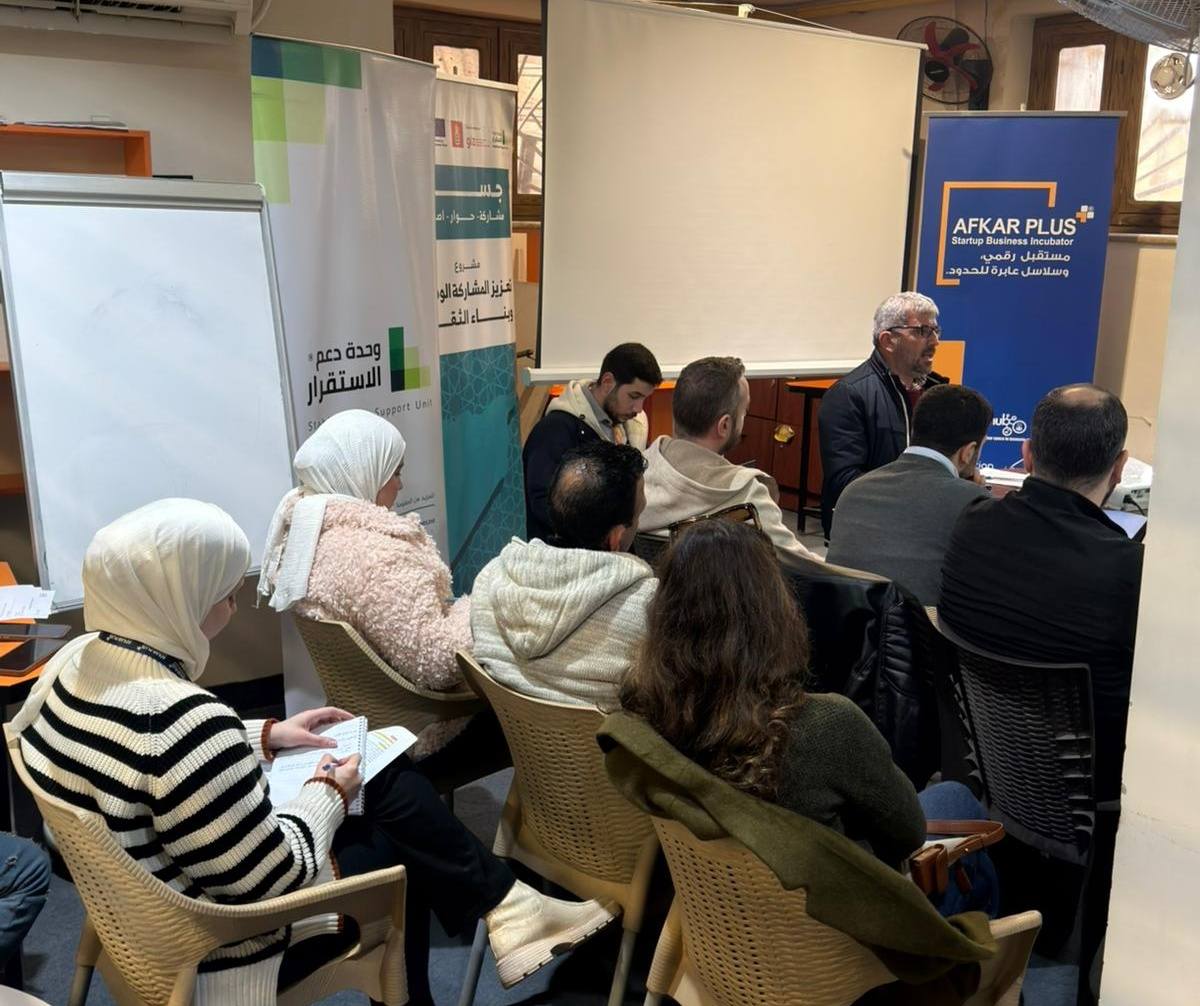
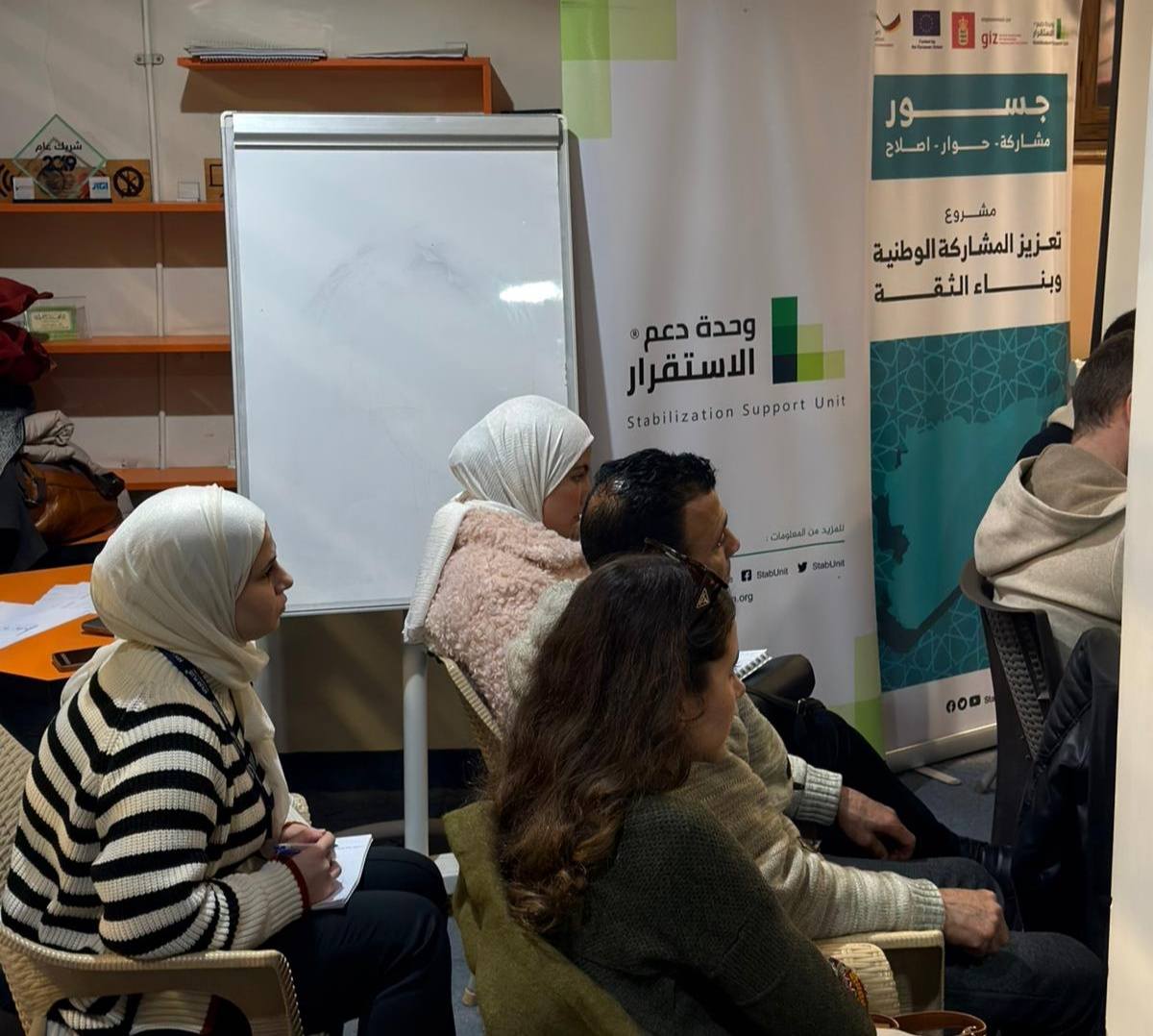
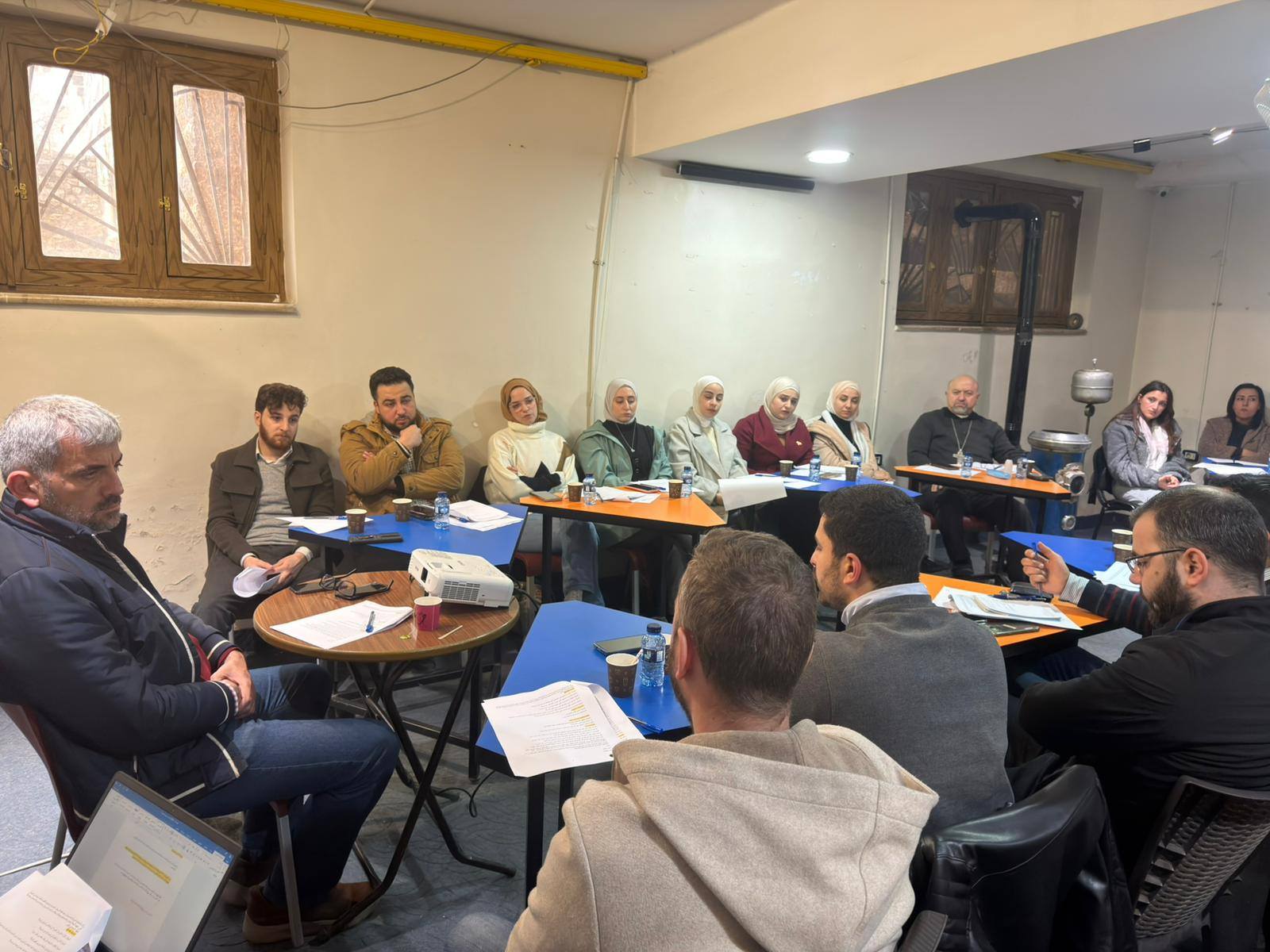
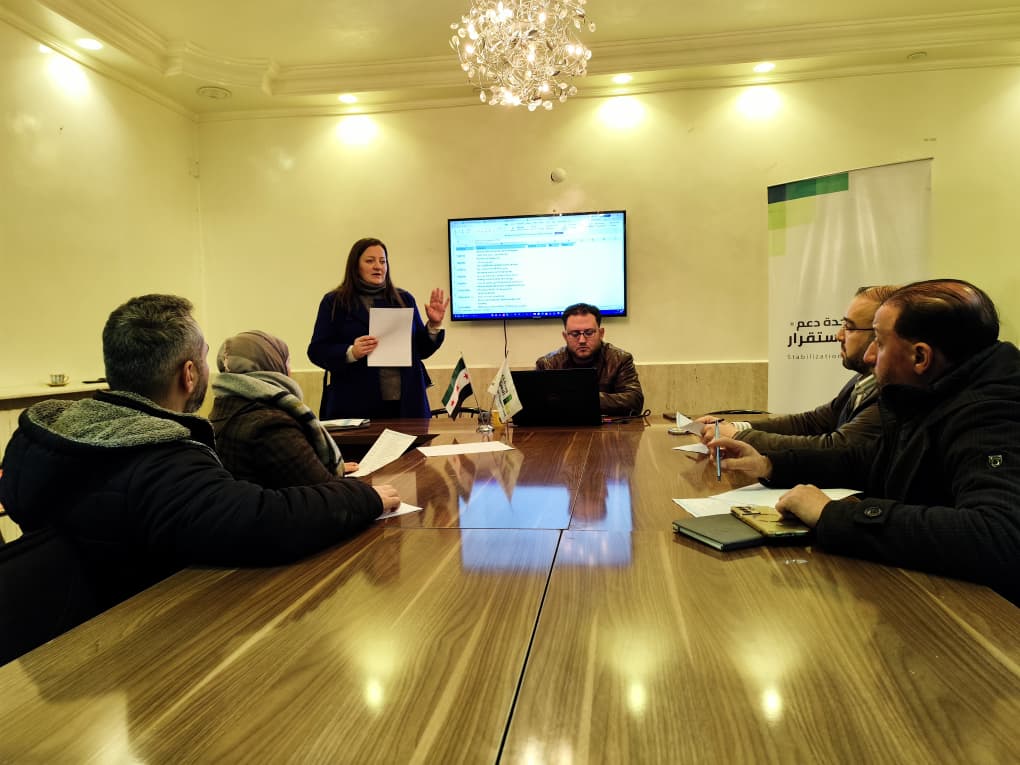
.jpeg)