Programs & Projects

Explore our current and completed initiatives. Use the filters to navigate by status, area of intervention, and more.

Showing 12 of 12 results
Results: 12
Peace Ambassadors Project – Empowering Women for National Reconciliation
Current Syria

Peace Ambassadors Project – Empowering Women for National Reconciliation

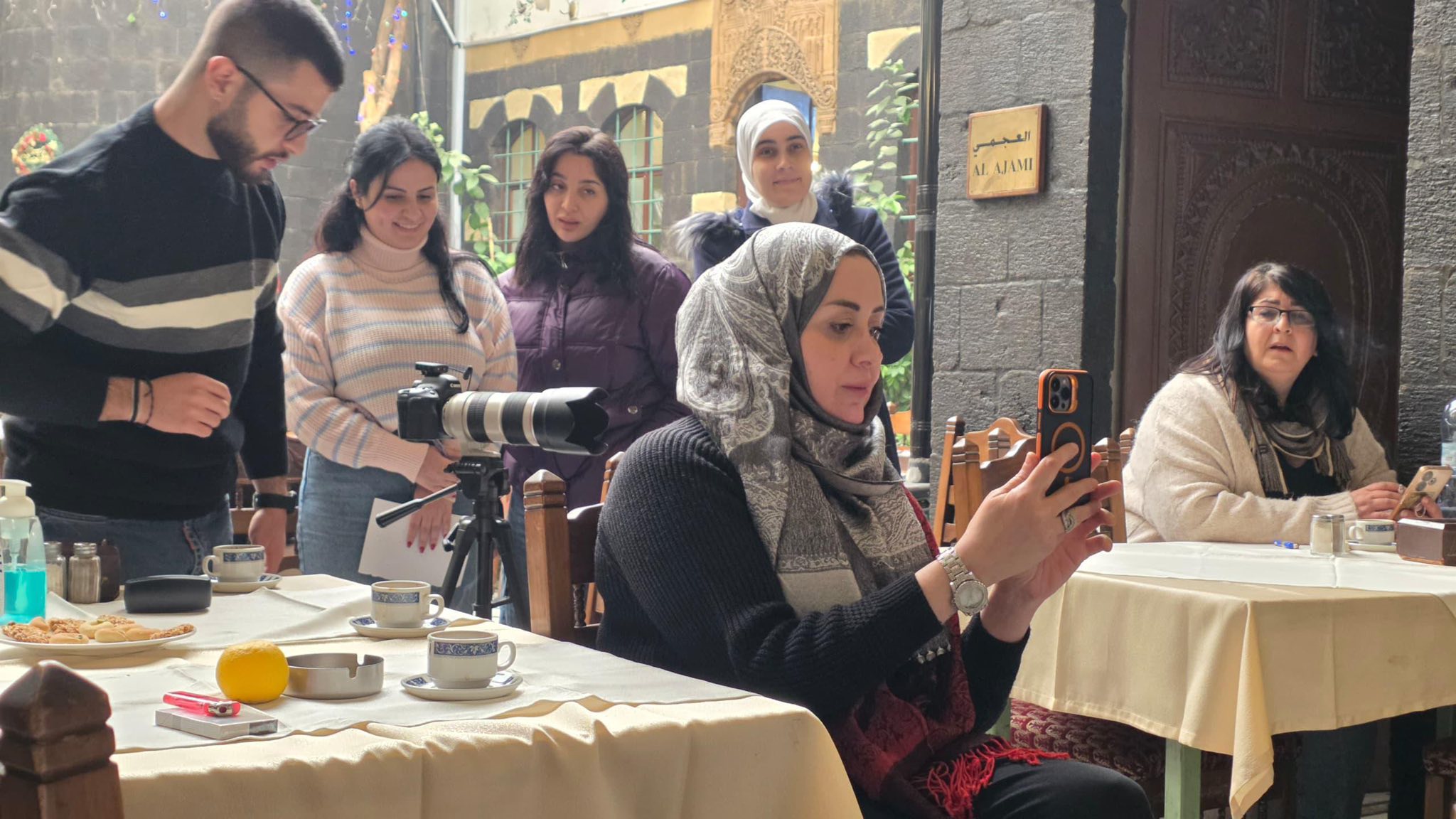
Overview The Peace Ambassadors Project is a flagship women-led initiative advancing reconciliation and social cohesion in post-conflict Syria. It empowers women as key actors in peacebuilding by equipping them with the skills, platforms, and networks needed to lead dialogue, mediation, and community initiatives that foster unity and mutual trust. Approach Implemented across Northern, Coastal, and Southern Syria, the project engages women through structured dialogue sessions, intensive training in conflict resolution and negotiation, and community-based reconciliation initiatives. Trained Peace Ambassadors facilitate local “Roundtable Dialogues,” bridging divides between diverse communities and promoting inclusive participation in shaping Syria’s future. A national reference document on women’s role in reconciliation and peacebuilding is being developed to guide future policy and practice. Impact The initiative contributes to rebuilding Syria’s social fabric by amplifying women’s voices and leadership in peace processes. By combining capacity-building, dialogue, and local action, Peace Ambassadors creates lasting pathways for inclusion, reconciliation, and community resilience — positioning women at the center of Syria’s national recovery and peacebuilding journey.
Strengthening the role of women in society
Green Works Aleppo – Creating Decent Jobs through Urban Recovery
Current Aleppo

Green Works Aleppo – Creating Decent Jobs through Urban Recovery

Green Works – Aleppo

An employment-intensive initiative combining urban rehabilitation with immediate job creation for vulnerable communities in Aleppo.


Overview

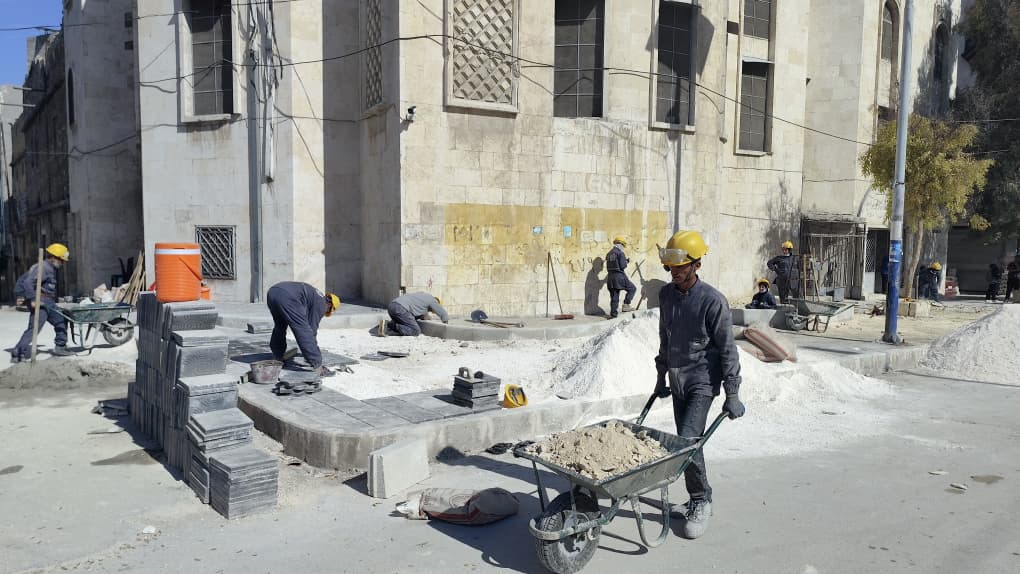
Green Works Aleppo is an employment-intensive initiative that combines urban rehabilitation with immediate job creation for vulnerable communities in Aleppo. Implemented in partnership with the International Labour Organization (ILO), the project contributes to the city’s economic and social recovery by restoring essential infrastructure while providing short-term employment, vocational training, and livelihood opportunities for returnees, youth, and women.

Approach

The project applies the ILO’s Employment-Intensive Investment Programme (EIIP) model, using local labor and environmentally sustainable techniques to rehabilitate streets, drainage, and public spaces in the Qadi Askar neighborhood.

  • Use of local labor and environmentally responsible construction methods
  • Capacity building for municipal teams and local contractors
  • On-the-job training in construction, waste management, and green practices

Impact

Green Works Aleppo delivers dual benefits by improving living conditions while generating dignified livelihoods. The initiative contributes to a broader vision of green recovery for decent work across post-crisis Syrian cities.


Project Video

Training, community engagement,consultation
Jarat Al-Qala’ Market – Reviving Livelihoods and Local Resilience
Current Syria

Jarat Al-Qala’ Market – Reviving Livelihoods and Local Resilience

Overview Located in the heart of Aleppo’s Old City near the historic Citadel, the Jarat Al-Qala’ Market brings life back to one of Syria’s most symbolic spaces. The initiative provides a dignified platform for earthquake-affected families, women, youth, and small producers to showcase and sell their products while restoring the city’s commercial and cultural vitality. Approach The project established a vibrant weekly market equipped with restored infrastructure, accessible facilities, and training support for participating vendors. Activities include business coaching, marketing skills development, and cooperation with local authorities to ensure cleanliness, safety, and sustainability. The market also serves as a social hub, hosting family-friendly cultural events that celebrate Aleppo’s heritage and resilience. Impact Jarat Al-Qala’ demonstrates how livelihood restoration and cultural revival can go hand in hand. It supports inclusive economic recovery, strengthens local governance collaboration, and empowers vulnerable groups to participate in rebuilding Aleppo’s economic and social fabric.
Bakeries, Water, Waste Management
Jousor Project – Building Trust and National Participation
Current Syria

Jousor Project – Building Trust and National Participation

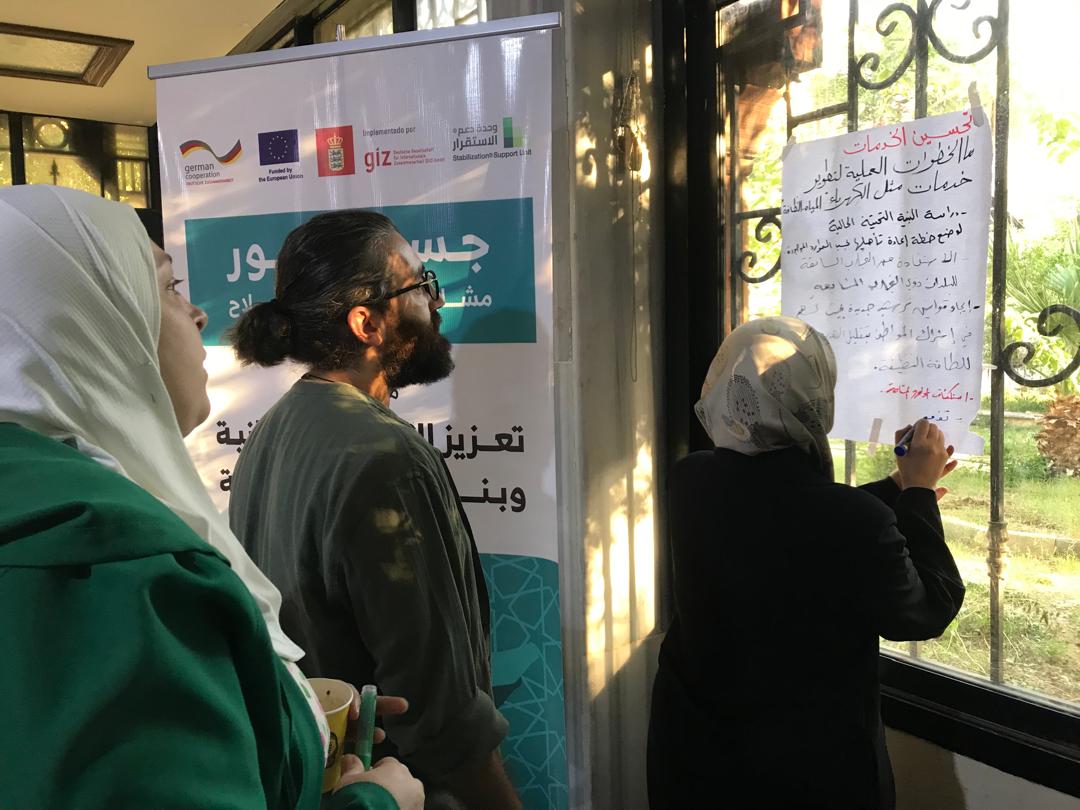
Overview The Jousor Project (“Bridges”) is a nationwide initiative that fosters inclusive dialogue and civic engagement across Syria’s transition phase. It strengthens the connection between citizens, communities, and emerging institutions by creating structured dialogue platforms that promote trust, cooperation, and reform. Through these dialogues, Syrians from diverse backgrounds women, youth, returnees, and community leaders work together to identify shared priorities and shape local governance, administrative reform, and social cohesion. Approach The project establishes dialogue spaces in multiple governorates, combining community consultations, participatory cultural events, and policy discussions. It also supports local reconciliation processes in areas affected by division or misinformation, ensuring that all communities are represented and heard. The outcomes inform locally grounded reform proposals and a participatory “Social Contract” that reflects Syria’s collective aspirations for accountability, justice, and stability. Impact By bridging divides and amplifying citizen voices, Jousor contributes to rebuilding civic trust and creating a more responsive, transparent, and inclusive governance culture. It positions civil society as a constructive partner in Syria’s recovery translating community perspectives into credible, national reform pathways.
Training, community engagement,consultation Jousor Project
HEALTHCARE SECTOR
Current Bza’a, Jarabulus, norther and eastern countryside of Aleppo.

HEALTHCARE SECTOR

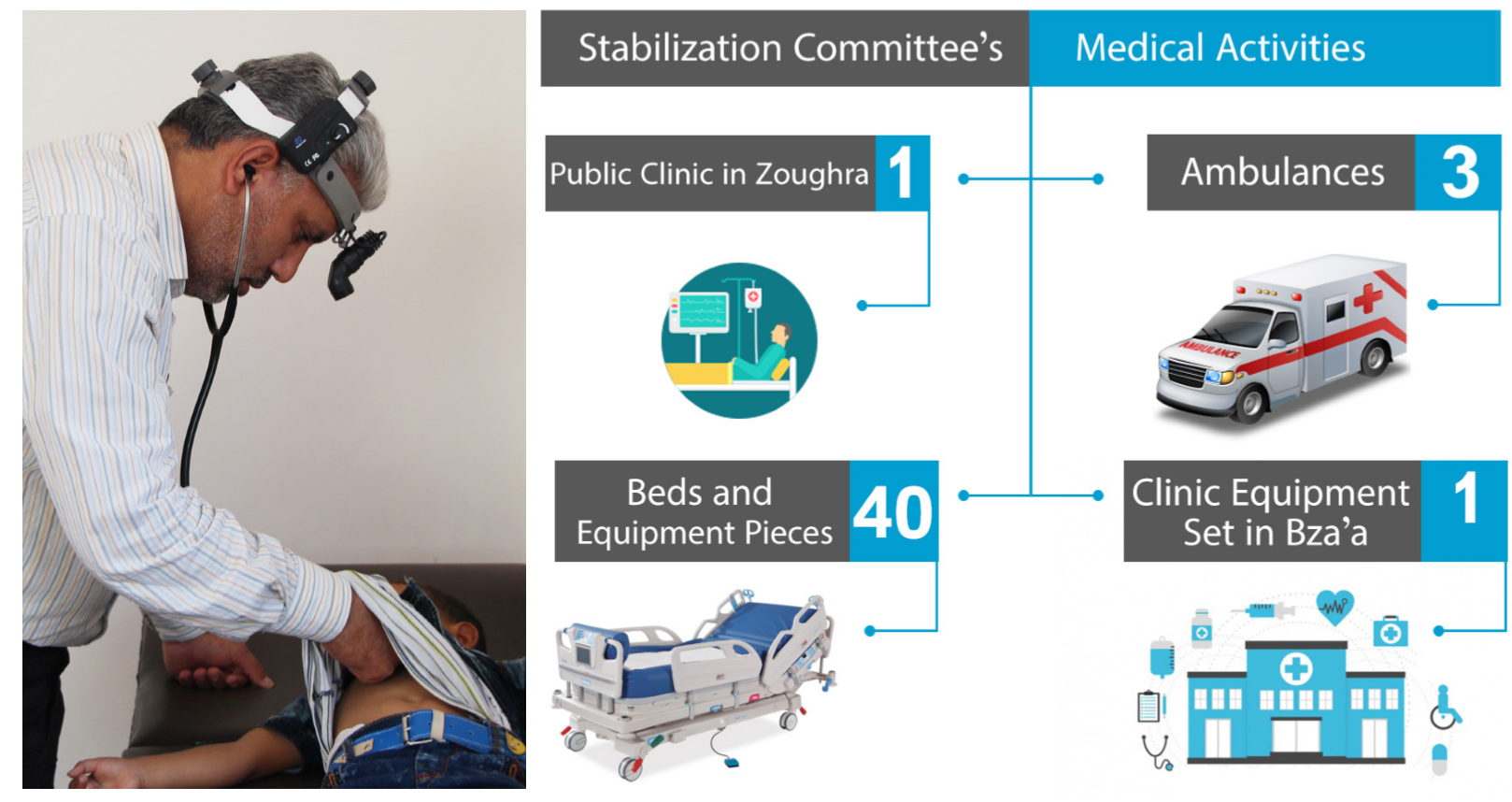
The Stabilization Committee provided equipment to support the healthcare sector and medical facilities of the newly liberated areas. The Committee has provided three ambulances, established medical center in Zougra camp in Jarabulus and equipped it, established medical center in Bza’a and equipped it, provided Um Adase Health center with some medical equipment alongside to providing the medical centers in the norther and eastern countryside of Aleppo with 40 medical beds and different kinds of medical equipment.
Healthcare Sector
The General Women Conference:
Current Azaz

The General Women Conference:

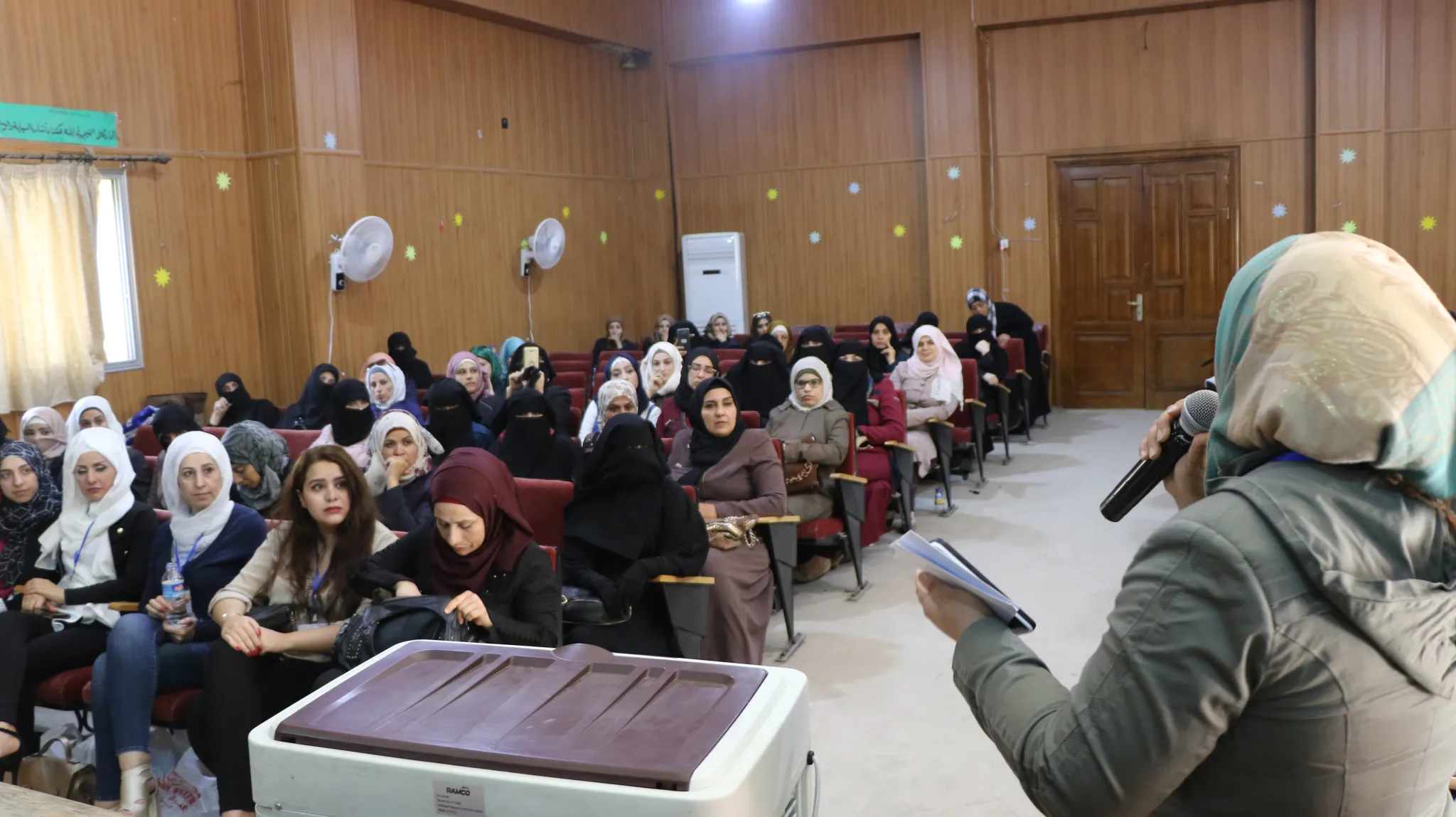
The conference was the outcome of the project of Strengthening the role of women in society and held in Azaz – Northern Aleppo – on 25 July 2018 and attended by representatives of NGOs, CSOs, governmental (official) parties and 150 women from different areas of the northern and eastern countryside of Aleppo Project for Involving Women in Conflicts Management: The project aims to enhance the women’s role in conflicts management and targeted 45 women in the following communities: Azaz, Marea and Al-bab.
Strengthening the role of women in society
STRENGTHENING THE ROLE OF WOMEN IN SOCIETY:
Current Azaz, Al-bab, Jarablus, Afrin, Marea, Qabbasin, Bza’a, Sawran, Akhtarin, Dabeq, Ahtemlat and Alra’i

STRENGTHENING THE ROLE OF WOMEN IN SOCIETY:

Projects held by The Stabilization Committee’s Women Office Strengthening the role of women in society: The Stabilization Committee’s Women Office has held a Project for Strengthening the role of women in society which target 600 women in 12 communities (Azaz, Al-bab, Jarablus, Afrin, Marea, Qabbasin, Bza’a, Sawran, Akhtarin, Dabeq, Ahtemlat and Alra’i). Within the scope of this project the Women Office has held 22 meeting in participation of the women and local council; the meetings focused on the needs, difficulties and problems faced by women and ways and mechanisms to solve these problems
Strengthening the role of women in society
Training projects, community engagement and consultation sessions for Local Councils:
Current Sawran, Dabeq, Al-bab, Al-Ra’i, Qabbasin, Jarablus, Azaz, Afrin, Marea

Training projects, community engagement and consultation sessions for Local Councils:

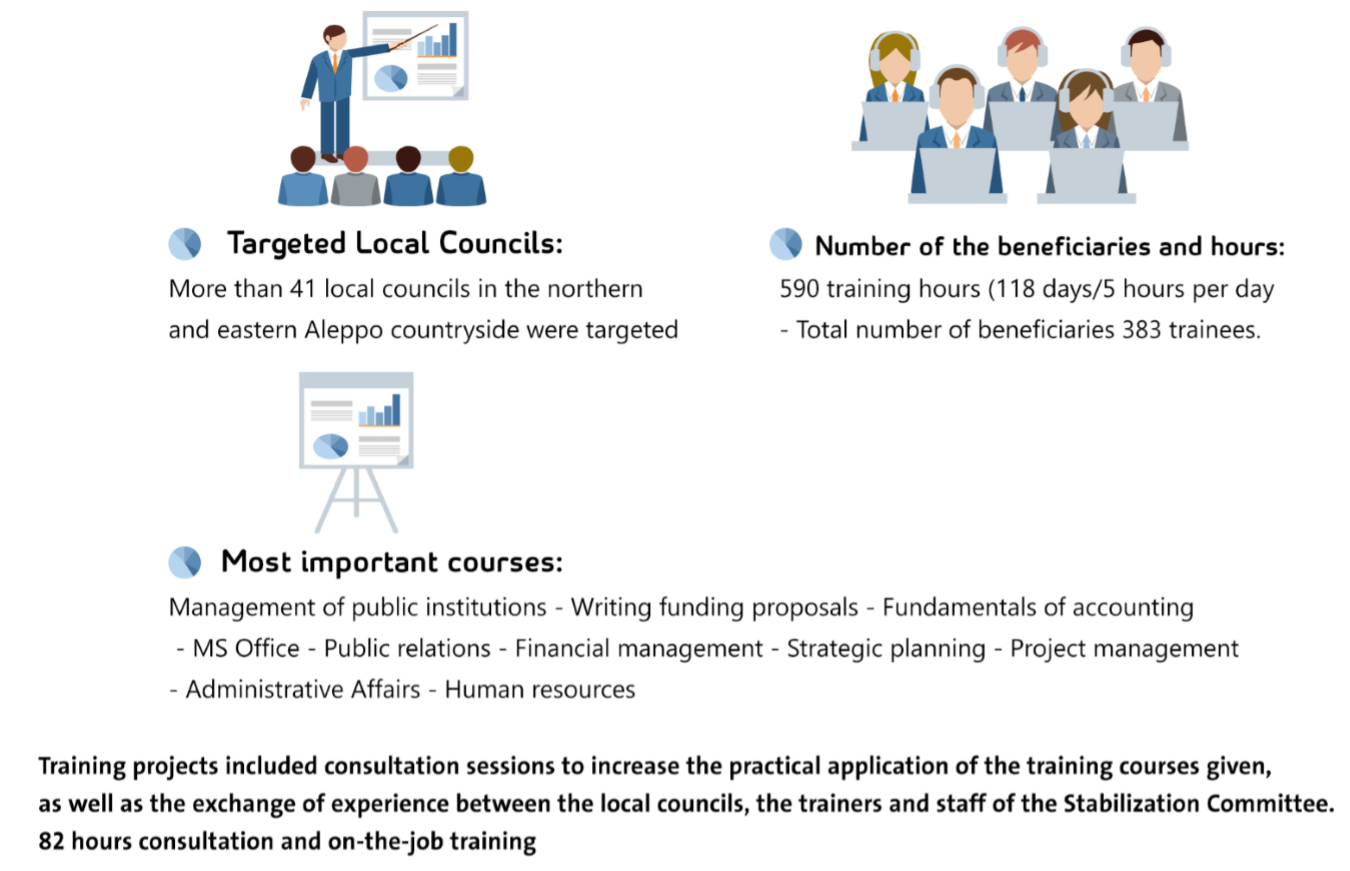
Community engagement Projects : The targeted local councils: Sawran, Dabeq, Al-bab, Al-Ra’i, Qabbasin, Jarablus, Azaz, Afrin, Marea, Ahtimlat and Akhtarin. Number of the Community engagement meetings: 42 meetings – Number of the attendees 1367 EDUCATION AND DEVELOPMENT: The Stabilization Committee played a big role in stabilizing the education process in the northern and eastern countryside of Aleppo as it provided 104 schools with teachers’ salaries and bags along with furniture, heaters, and heating fuel. Additionally, the Stabilization Committee implemented two education projects in Sawran and Akhtarin along with their countryside. The total budget of education projects reached at $563,000. The total of beneficiaries is 228,970 including students, teachers and administration staff. The teachers and administration staff who received monthly salaries were 639
Supporting Local Councils and Governance
BAKERIES, WATER and WASTE MANAGEMENT:
Current Al Bab, Bza’a, Akhtarin and Jarabulus

BAKERIES, WATER and WASTE MANAGEMENT:

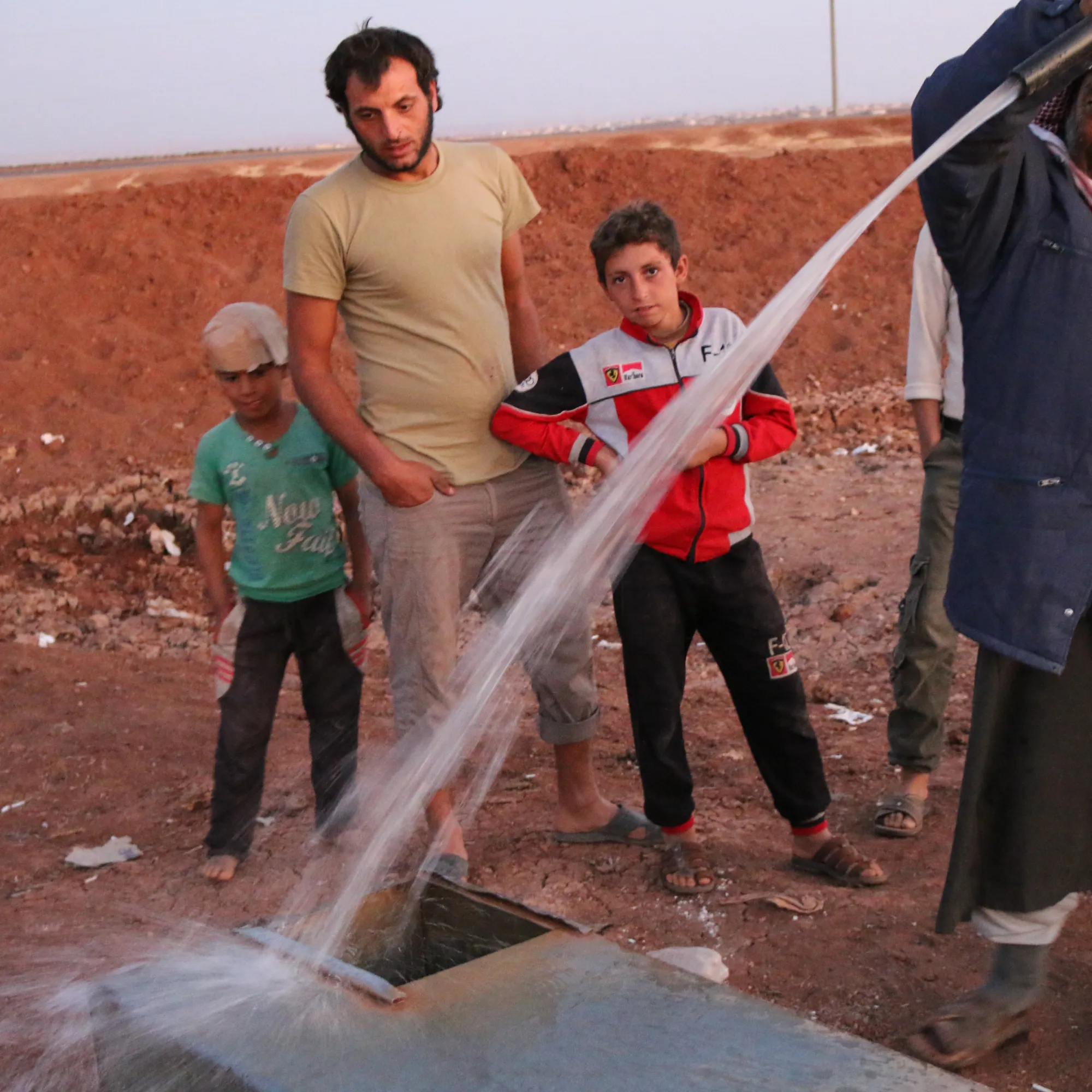
The Committee provided four automated bakeries to Al Bab, Bza’a, Akhtarin and Jarabulus, bearing in mind that Albab bakery consists of two production lines. These projects are implemented in scope of the efforts of achieving food security and countering terrorism and extremism through enabling local councils to provide bread at a lower price than it was during ISIS rule, and to empower the local councils to manage the bakeries following the end of the projects. The Water The Stabilization Committee provided different kinds of equipment such as water tankers, water filtration plants, generator sets, water pipes, and water pipe welding machines as follows: The Stabilization Committee’s projects in the sector of water: -Providing equipment and operational support to Ghrour pumping station to provide Akhtarin and its rural with water, Sawran pumping station and conducting network maintenance and Providing operational support to the water tanker that provided water distribution service in the newly liberated areas. -The general water pumping project that included rehabilitation and reparation of 37 water pumping station alongside to providing equipment and operational support for them. – Rehabilitation of 3 pumping centers. – Providing and installing 1500 water meters in Al-ra’i Waste Management, Rubble and ISIS Slogans Removal The Stabilization Committee implemented 39 projects in the sector of Waste Management in different areas. The stabilization committee provided 37 equipment and 625 waste containers to 39 local councils to remove rubble and carry out waste management activity along with removing ISIS logos and slogans. (22 tractors and trailers, 7 refuse trucks, 1 frontend loader, 7 skid loaders, 625 bins) The Projects of Removing ISIS Slogans: On the track of countering all types of extremist ideologies left behind ISIS, the Stabilization Committee implemented 12 projects in sector of waste management and removing ISIS slogans and logos. These projects also included removing the rubble, adorning streets, and collecting waste on daily basis. The total budget of the projects is $913,078 that includes the salaries of 506 employees. The total number of the beneficiaries is 572,322 individuals. Rubble Removal: Removing the rubble and debris from 15 residential areas. 11 areas within the tractors project along with Al Bab, Bza’a and Qabbassin.
Bakeries, Water, Waste Management
CONFERENCES AND SEMINARS:
Current Syrian and Turkey

CONFERENCES AND SEMINARS:

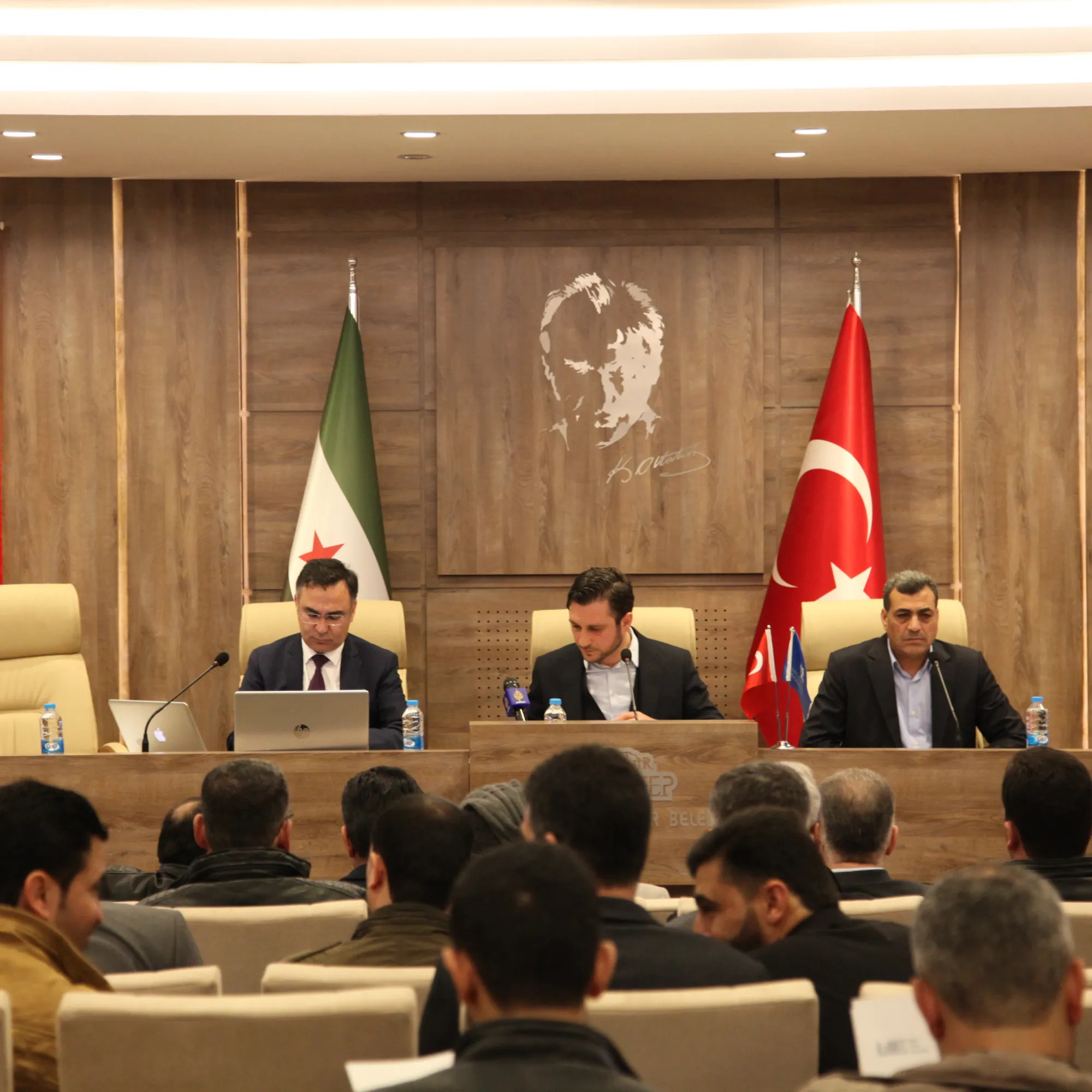
The Stabilization Committee has prepared action plans for areas where the political transition is likely to take place. It has prepared a Stabilization plan for Tal Rif’at region. The Stabilization Committee also held several workshops and conferences inside the Syrian and in Turkey in the light of Manbij Roadmap agreement of Turkey and US, including: ‘’Manbij for its People’’ conference in Jarablus – Syria” ‘’Manbij Towards Stabilization’’ conference in Gaziantep – Turkey” ‘’Manbij – the Quest for Stability’’ panel in Ankara – Turkey” These workshops and panels aimed at spotting the light on the people forcibly displaced from Manbij and to present their visions and aspirations regarding the future on Manbij within what is possible in the scope of Manbij roadmap. In these workshops and panels, the Stabilization Committee has presented Manbij Stabilization Plan that the committee has prepared based on the visions and aspirations of Manbij people that the Stabilization Committee Collected in previous workshops and via surveys filled by the people of Manbij both inside Manbij and outside of it. Manbij Stabilization Plan has been developed to help the process of implementation of the Manbij roadmap by reflecting the visions and aspirations of the people of Manbij regarding the future of Manbij to the parties of the agreement
Conferences and seminars
Sustainability and social justice through water meter projects:
Current مدينة الراعي

Sustainability and social justice through water meter projects:

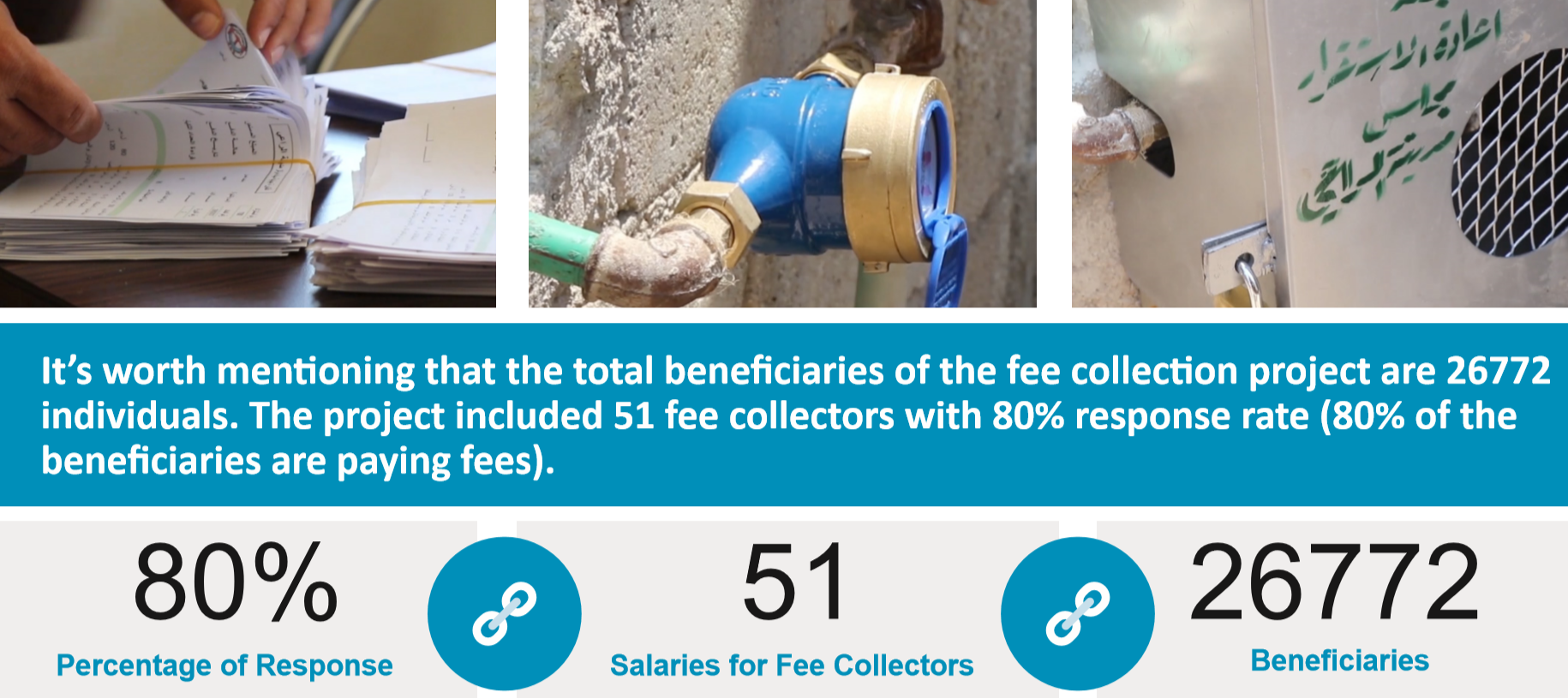
1500 water meters have been installed in the city of Al-Ra’i and some of the surrounding villages, the thing that will help to count the amount of consumption by each beneficiary of water pumping service in the city, which achieves:

– Kind of social justice and sustainability of service in addition to the impact of the project on activating the role of the local Council as a responsible government institution>

– Decreasing the financial burden on local councils by reduction of the number of pumping hours due to reduction water consumption.

Increasing the financial resources of the local council as a result of encouraging beneficiaries to pay the fees.

Bakeries, Water, Waste Management
SUPPORTING LOCAL COUNCILS AND GOVERNANCE
Current Syria

SUPPORTING LOCAL COUNCILS AND GOVERNANCE

Project development and achieving sustainability: The main objective of the Stabilization committee is to build the legitimacy of the local councils, strengthen the trust between them and their communities and to raise their capabilities through the projects that we implement in partnership with them. All the works and projects that we implement are being implemented in cooperation with the local councils to raise their capabilities regarding management of their areas; through providing the basic services for their communities, building their capacities and providing them with specialized and effective training in key areas of work Activation of Fee collection: The Stabilization Committee has implemented a fee collection project to use the revenues of the services provided in the local communities by local councils so they could operate their projects independently and achieve legitimacy and self-fund. The Stabilization Committee extended the funding period of most of the implemented projects in the sectors of water and waste management along with activating the fee collection during the last two months of the grant period. In order to conduct the fee collection process optimally, many actions were taken to encourage the citizens to be involved in the process and pay the fees
Supporting Local Councils and Governance

Partner With Us

Explore collaboration opportunities to scale impact across our programs.