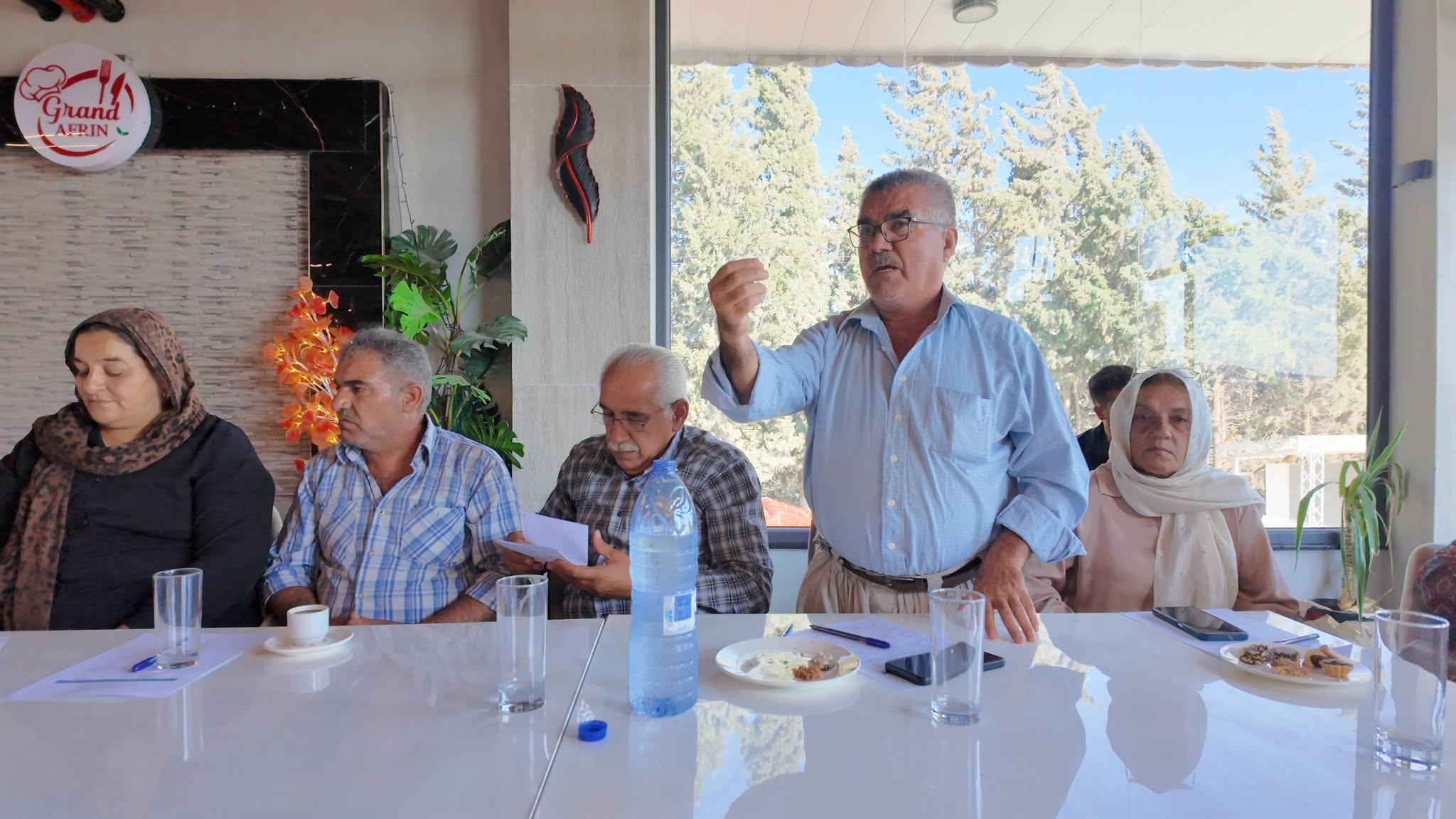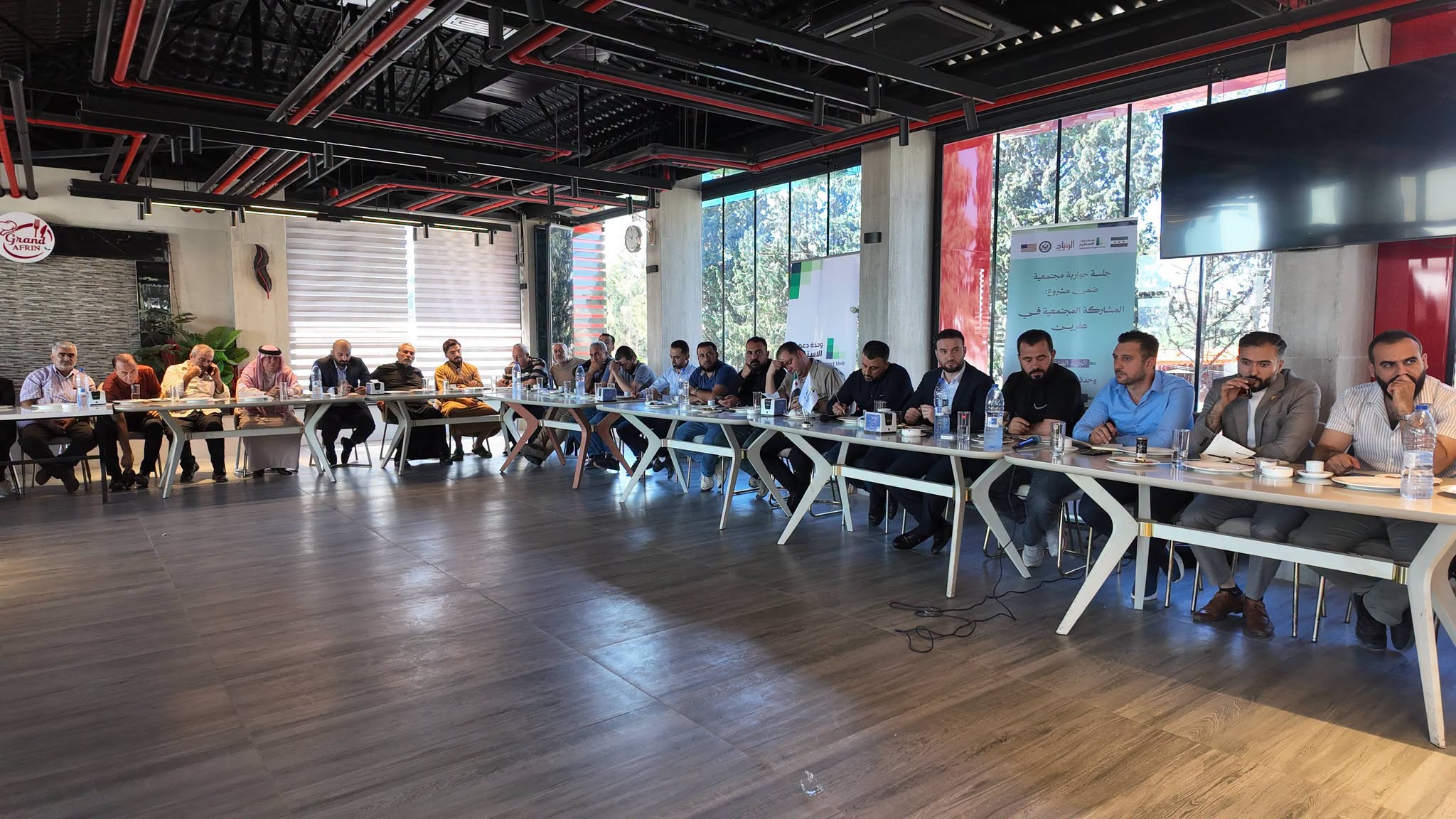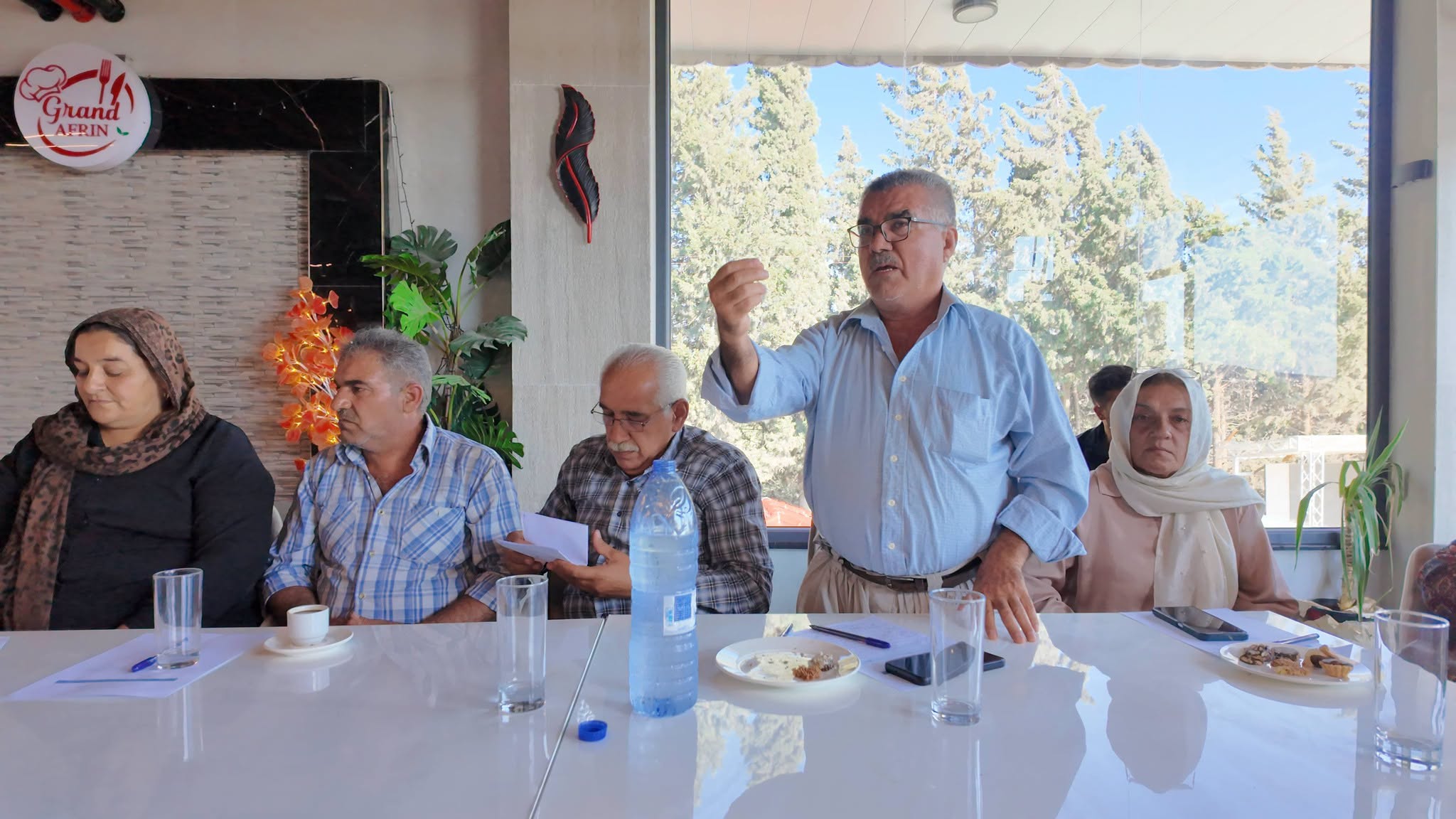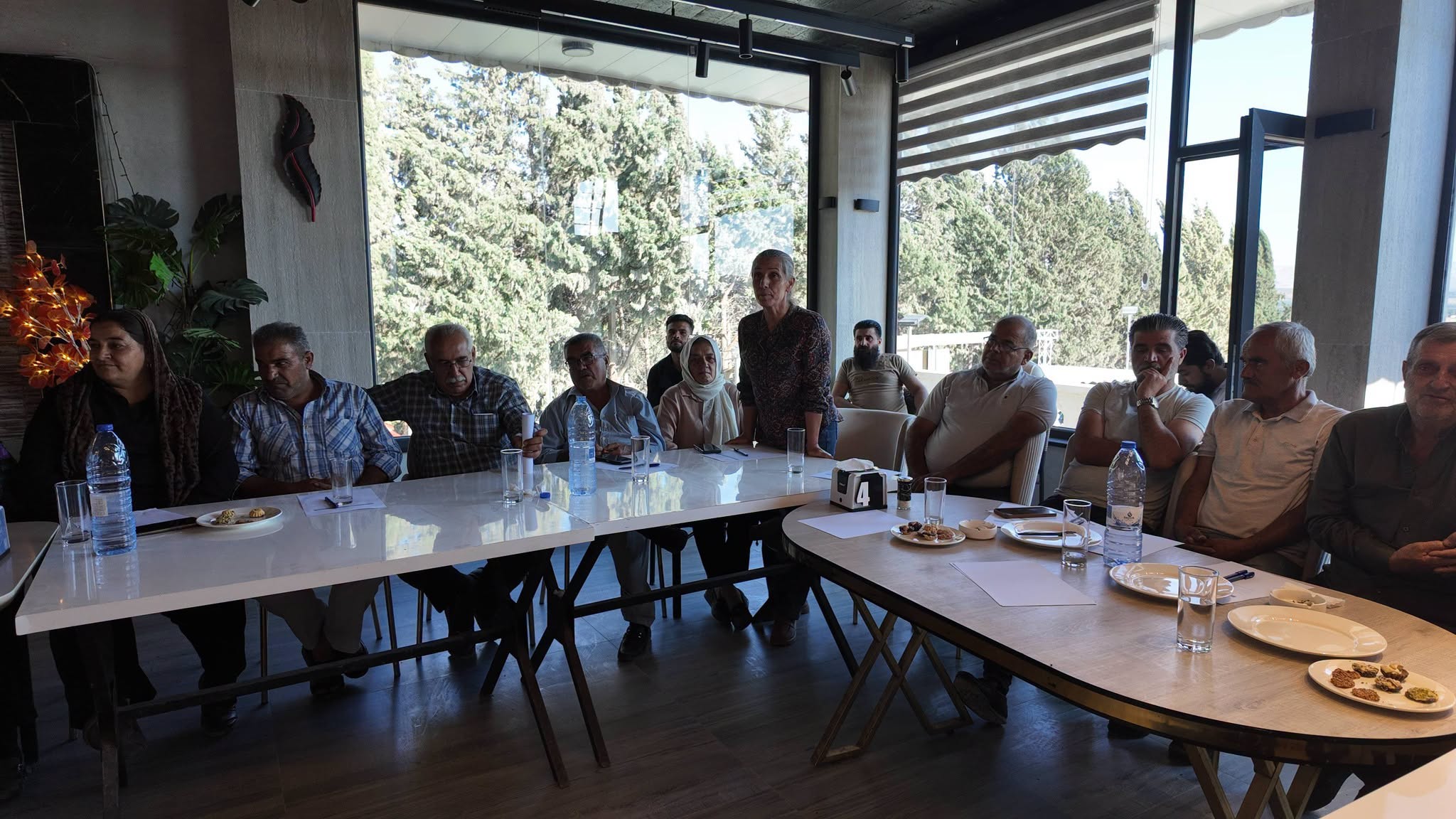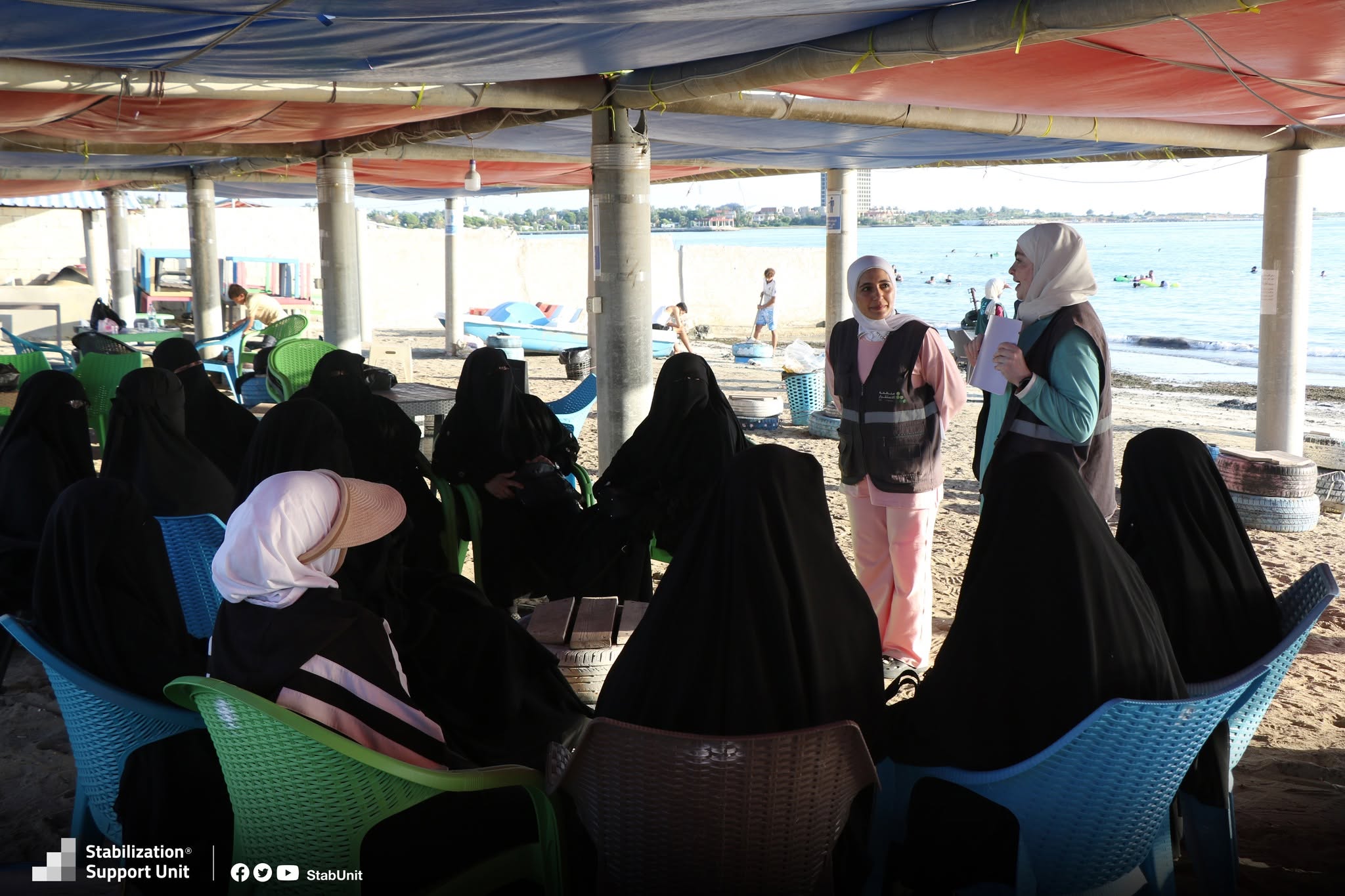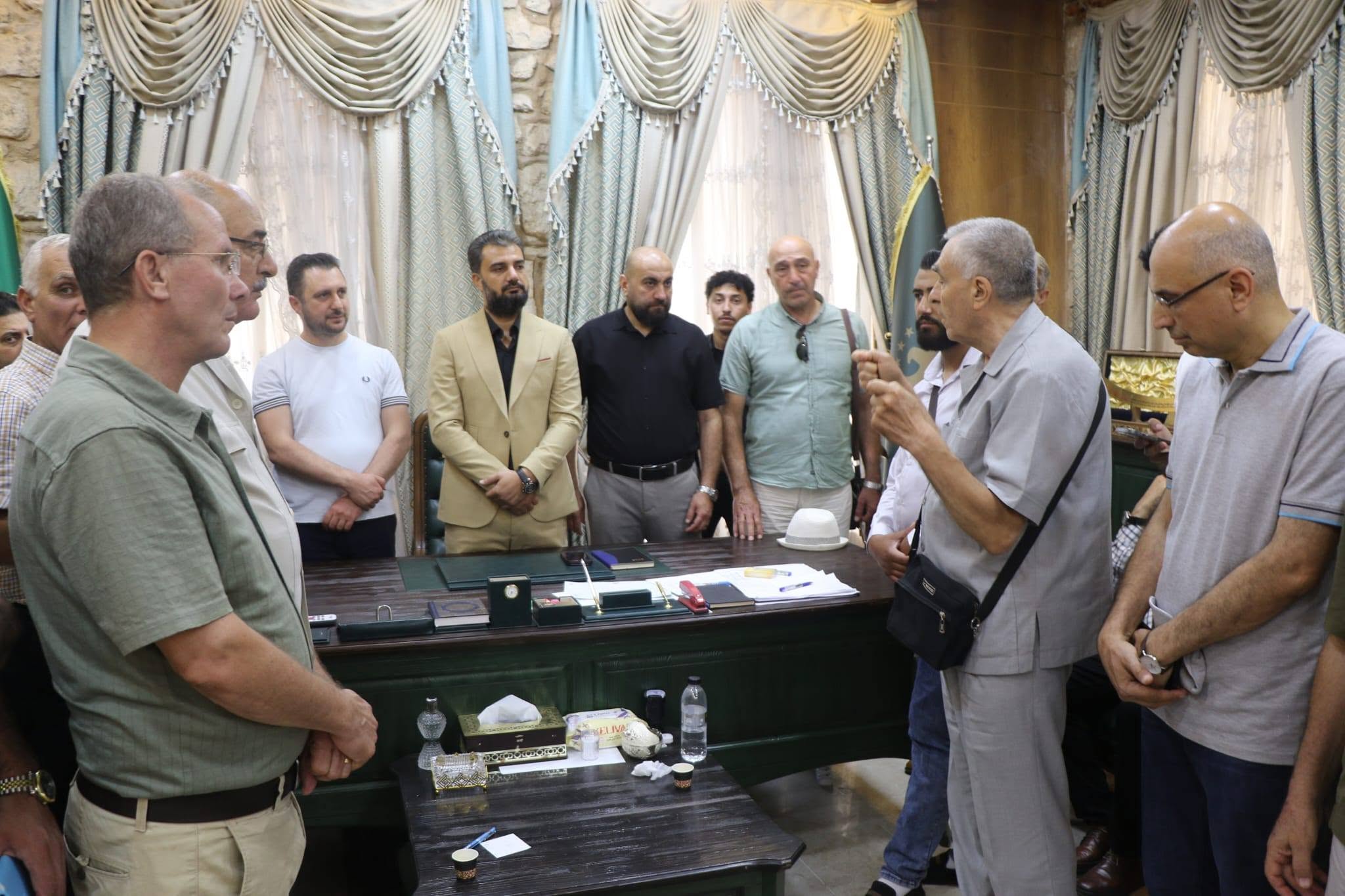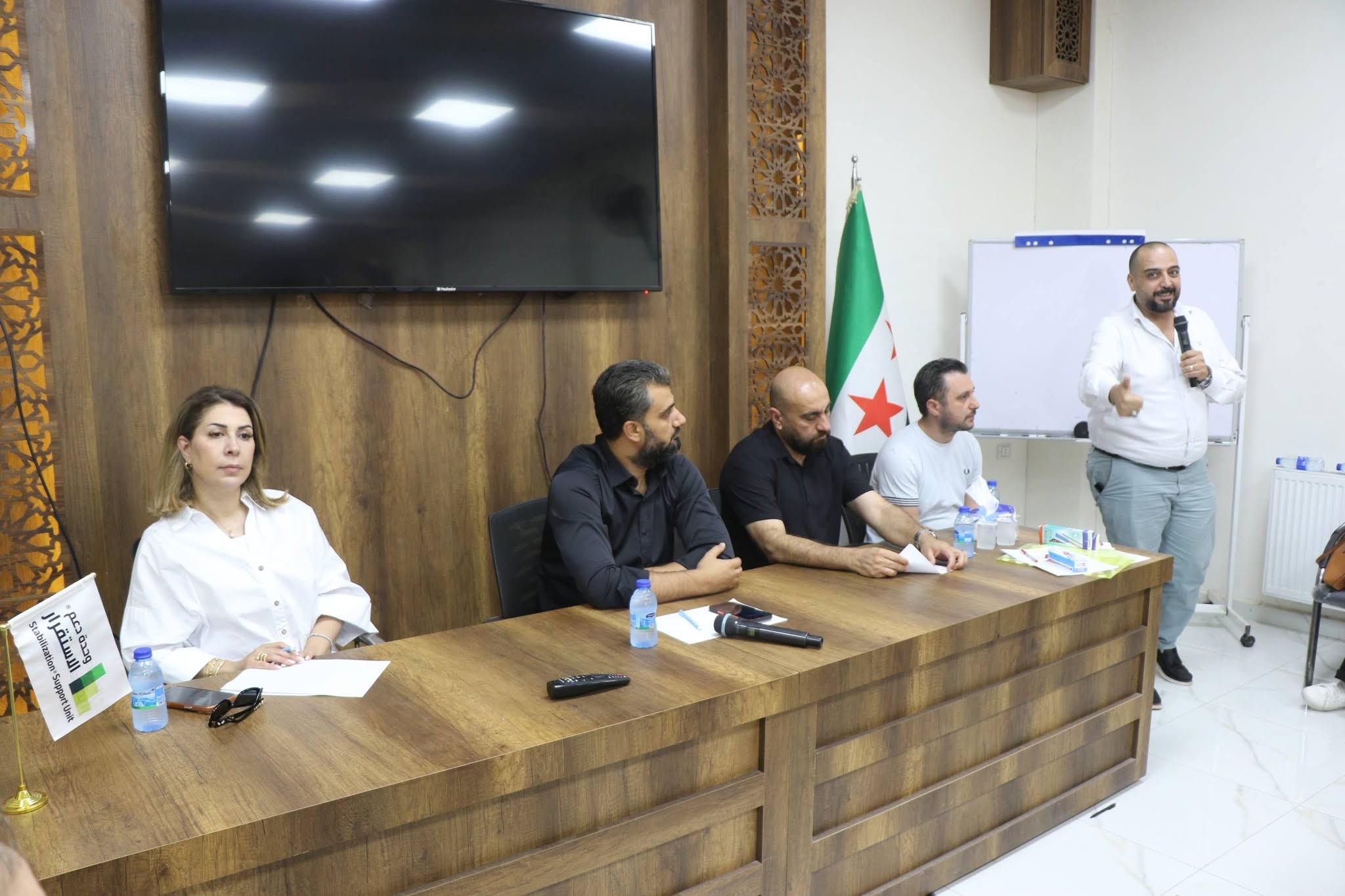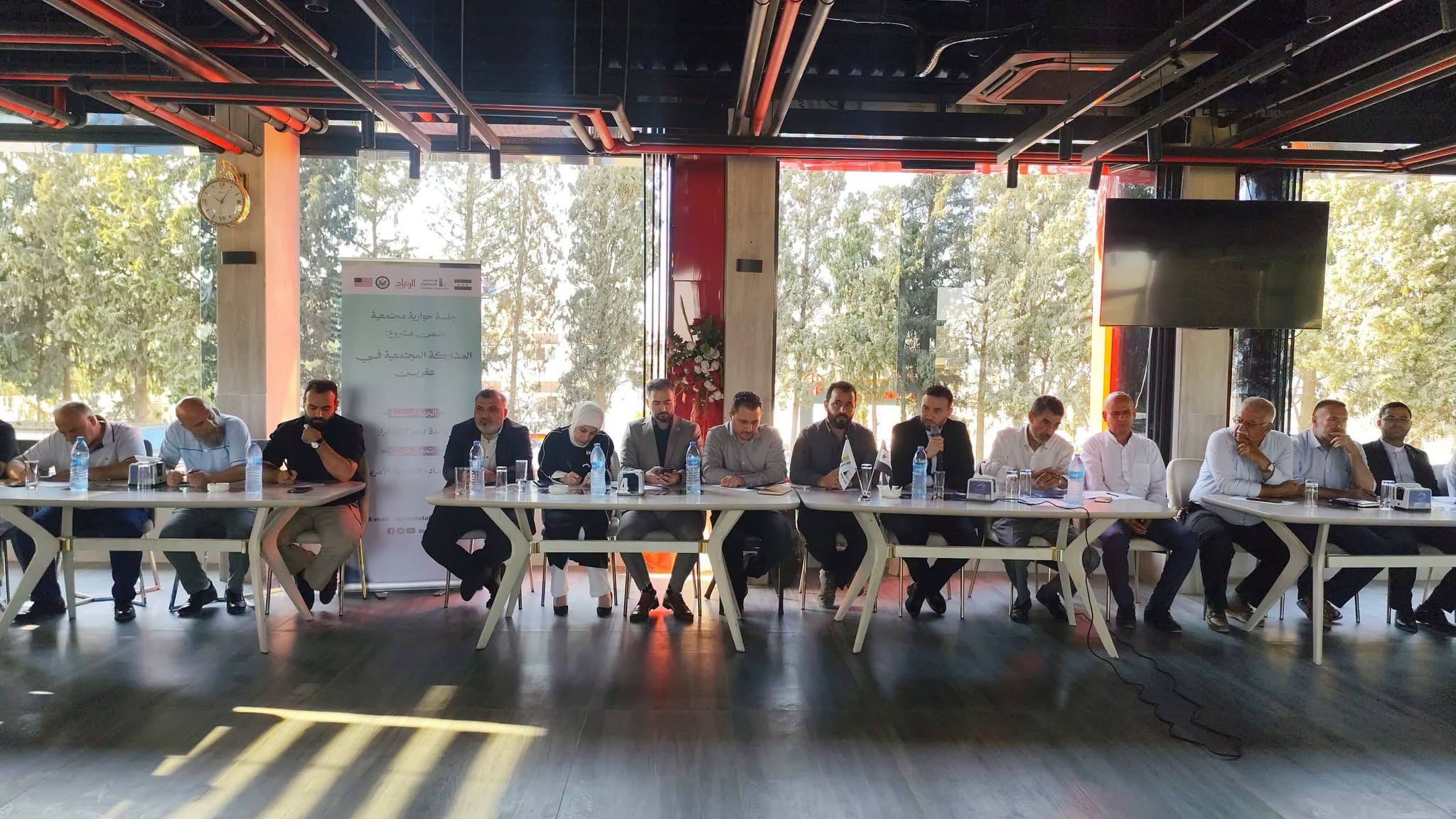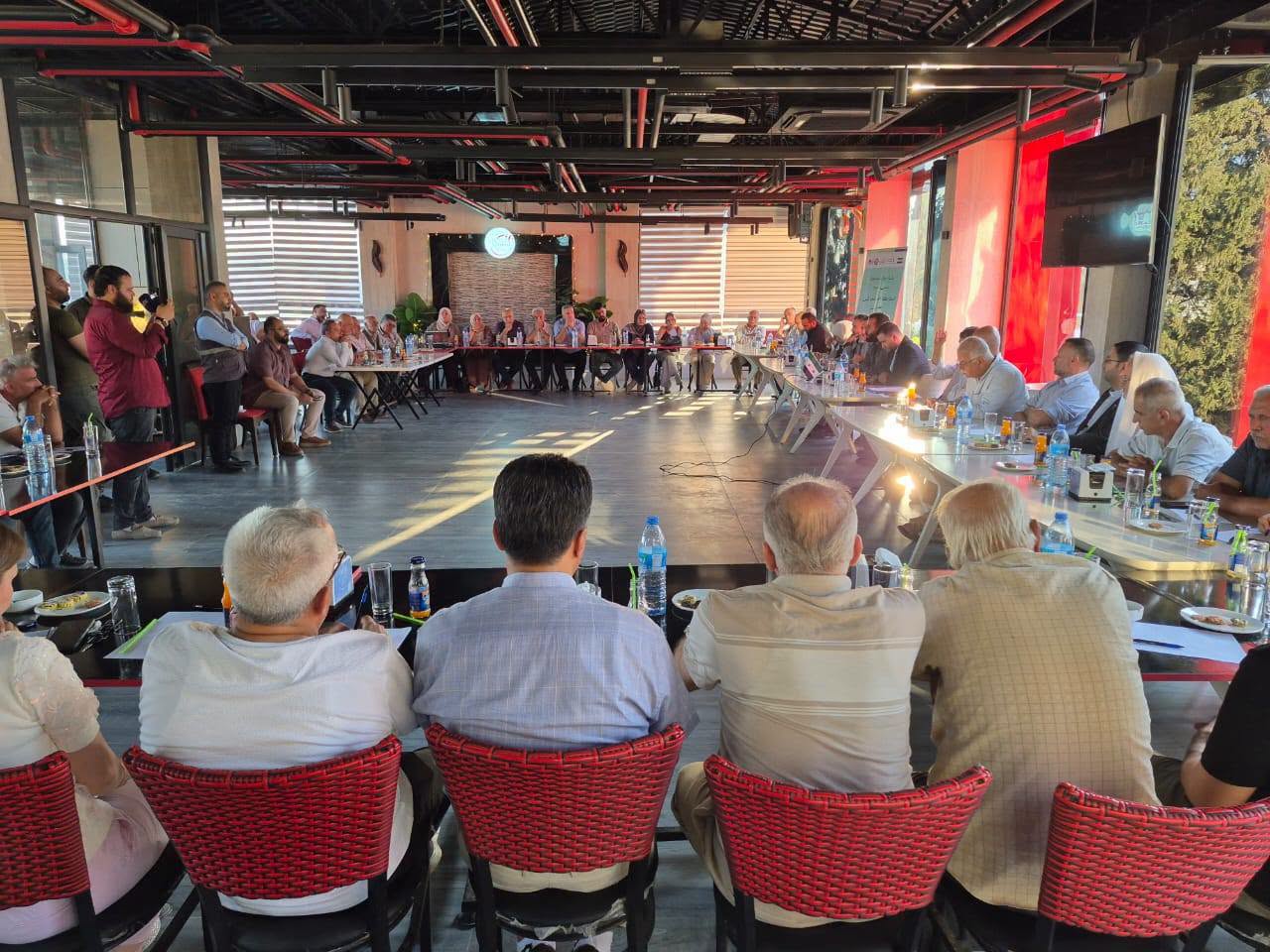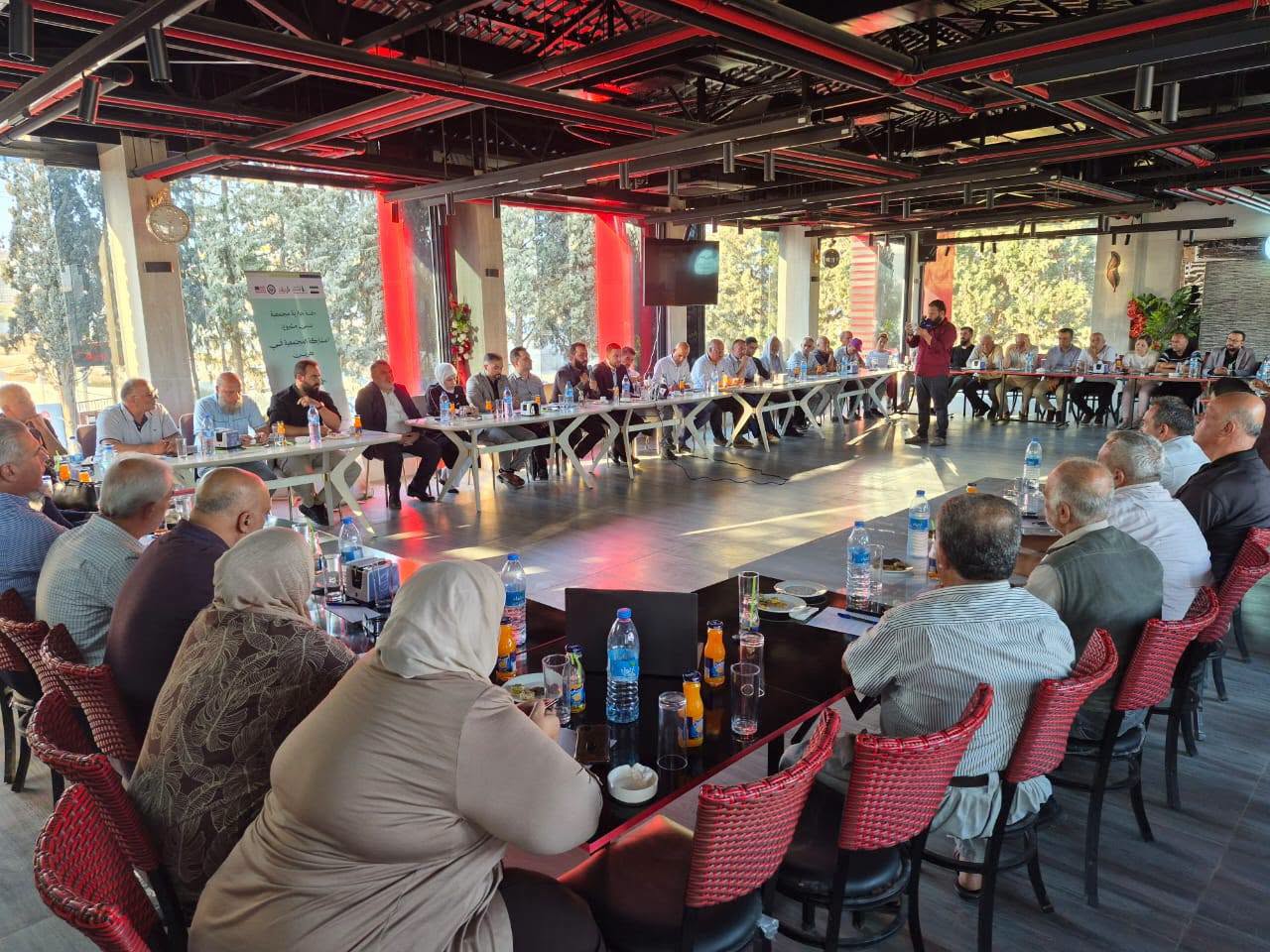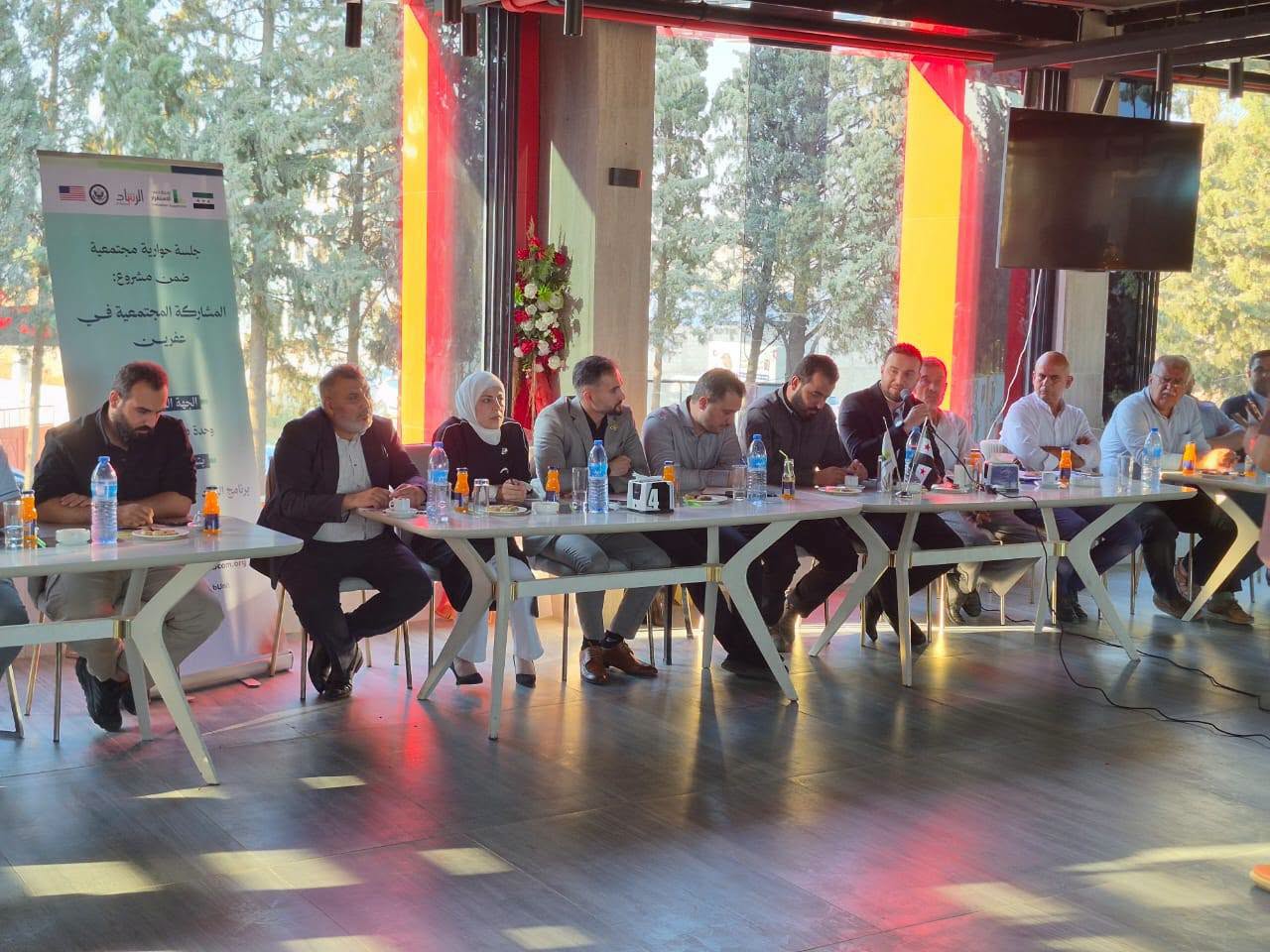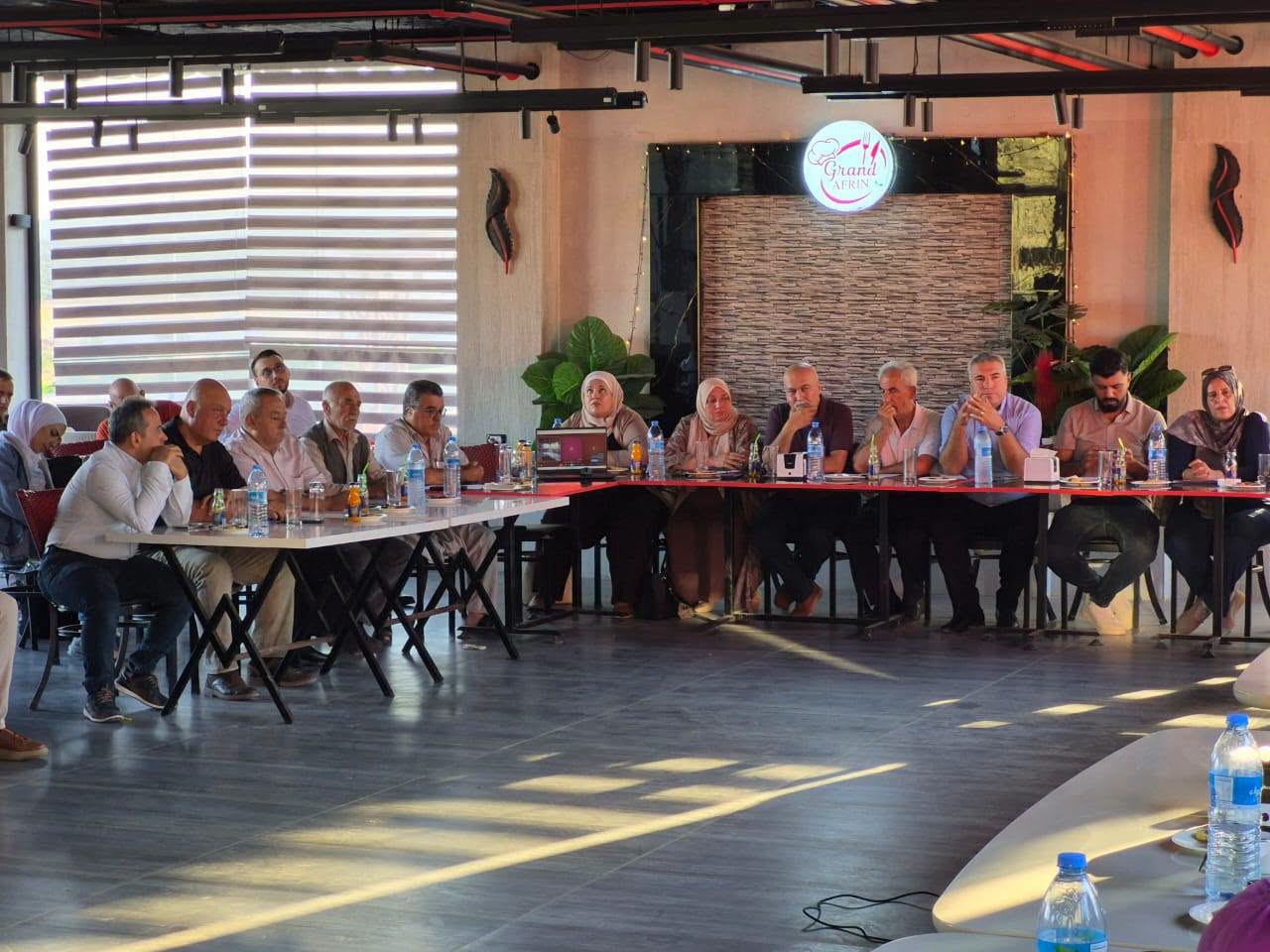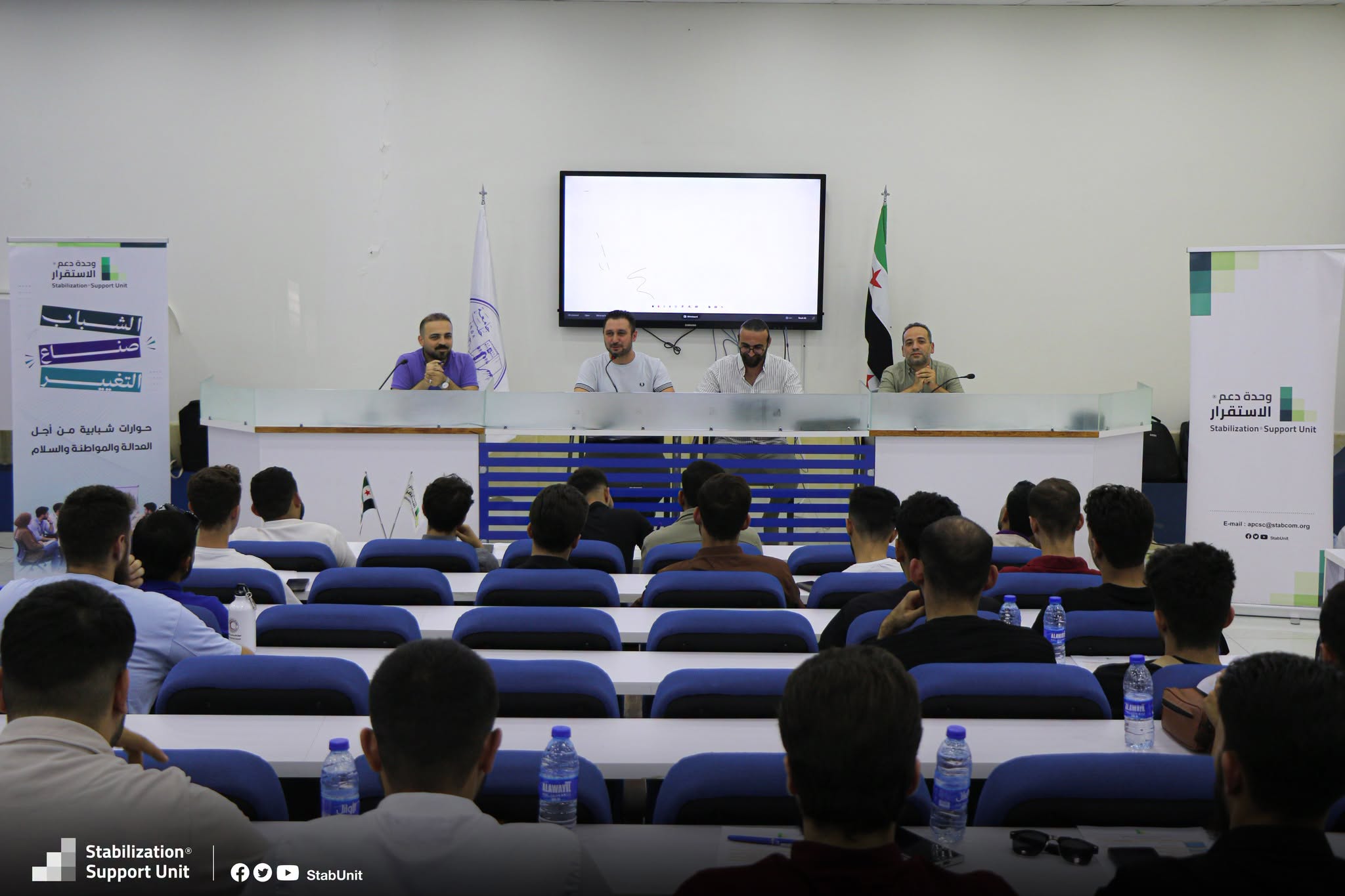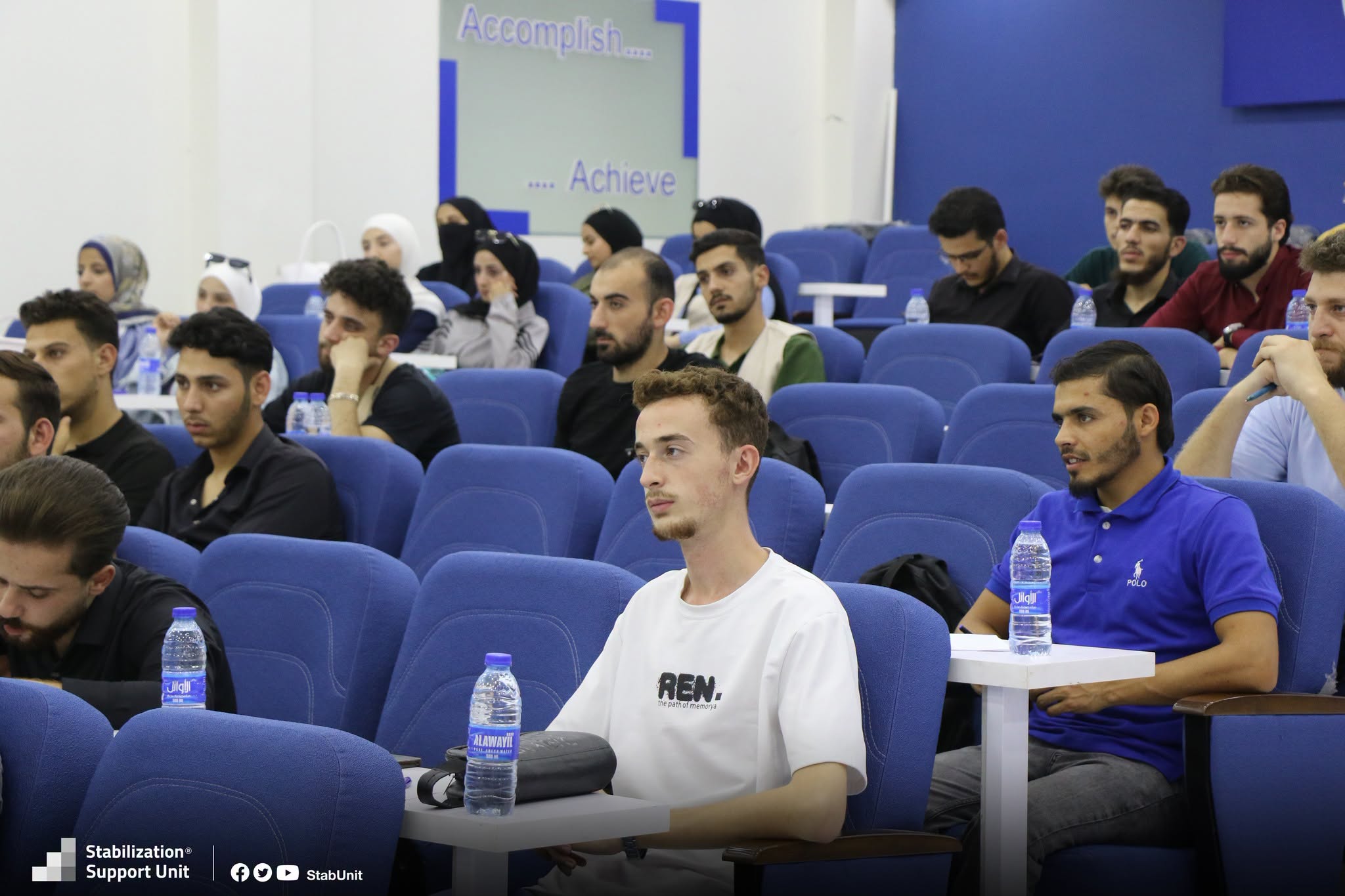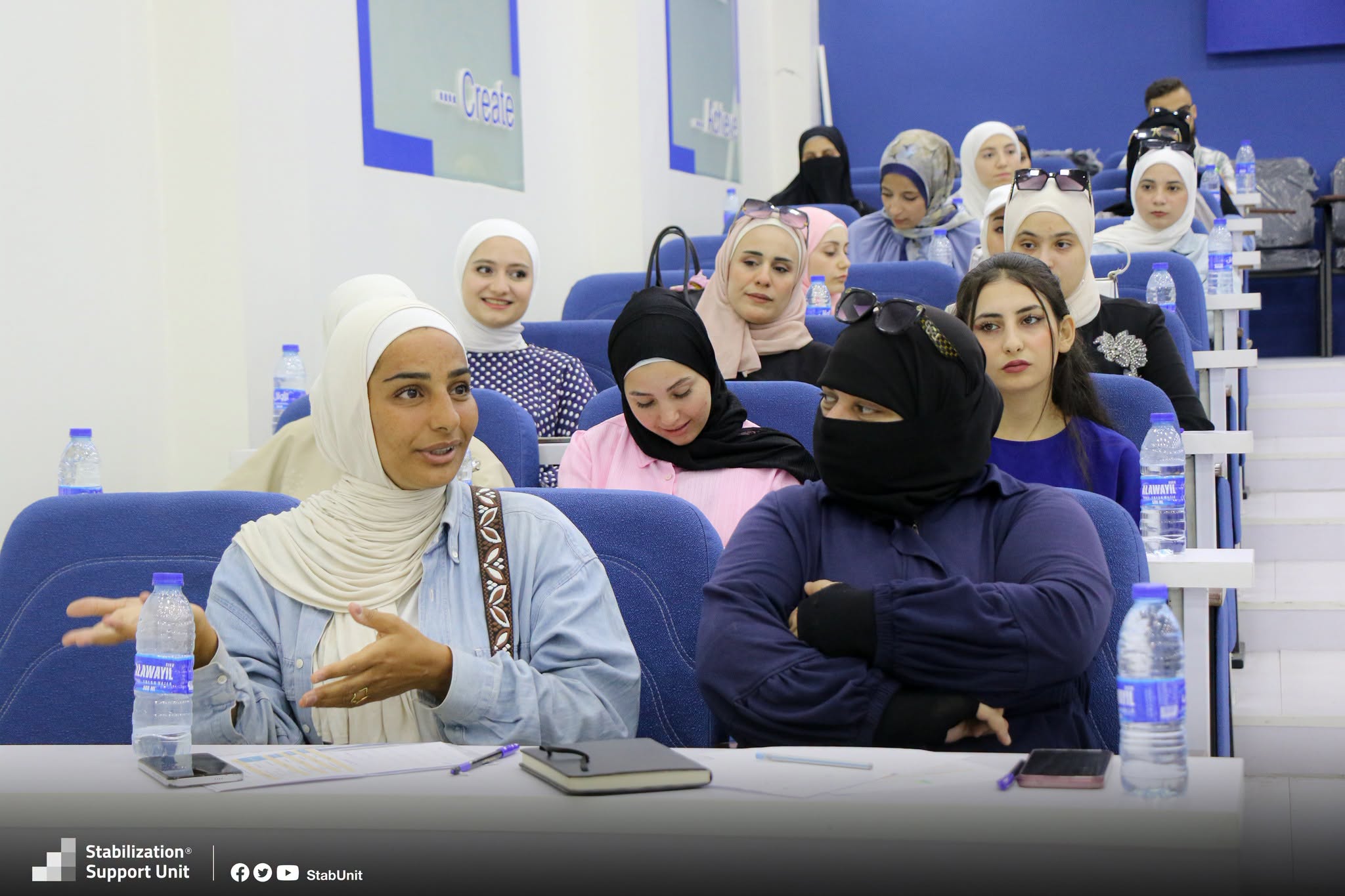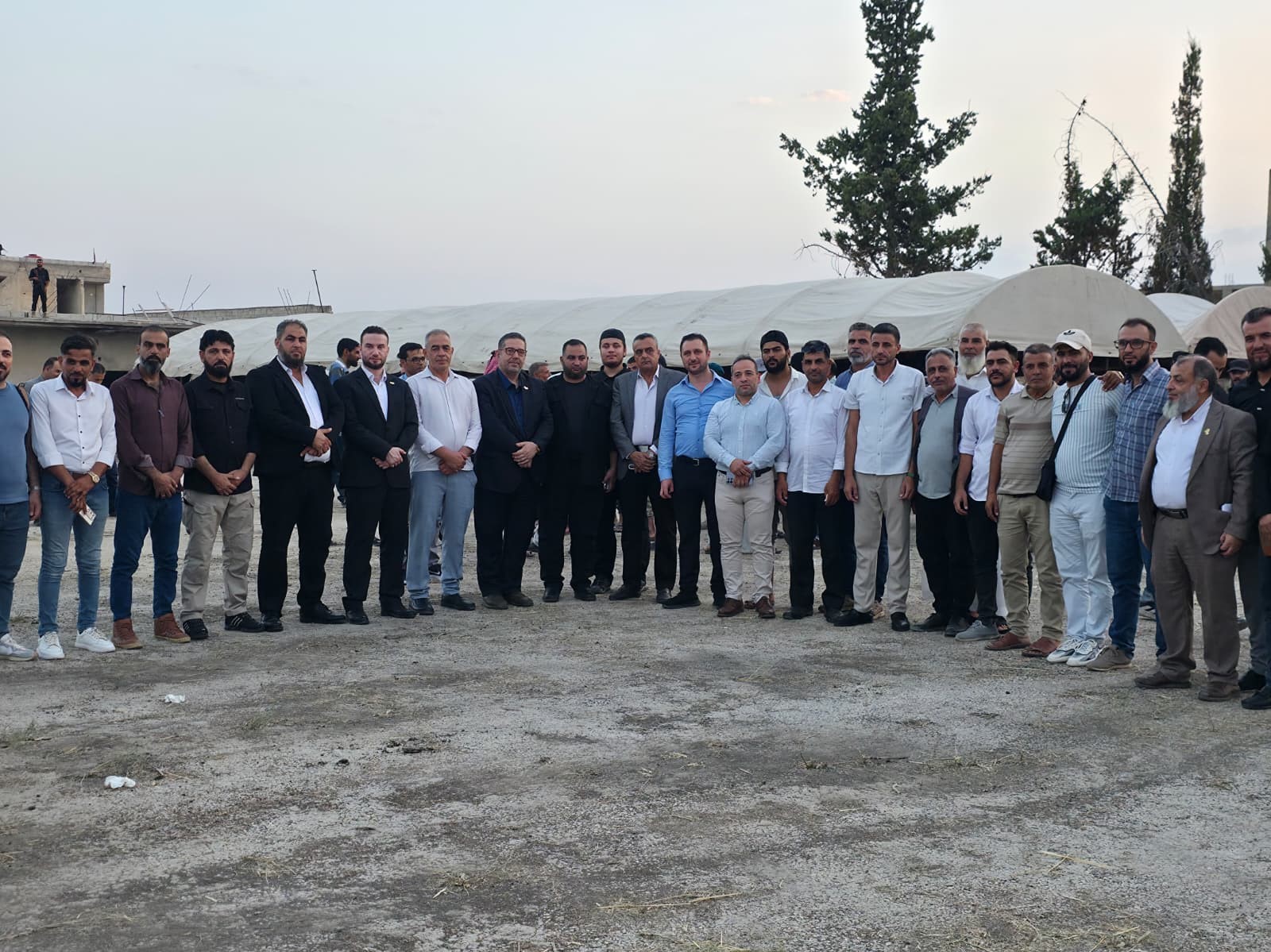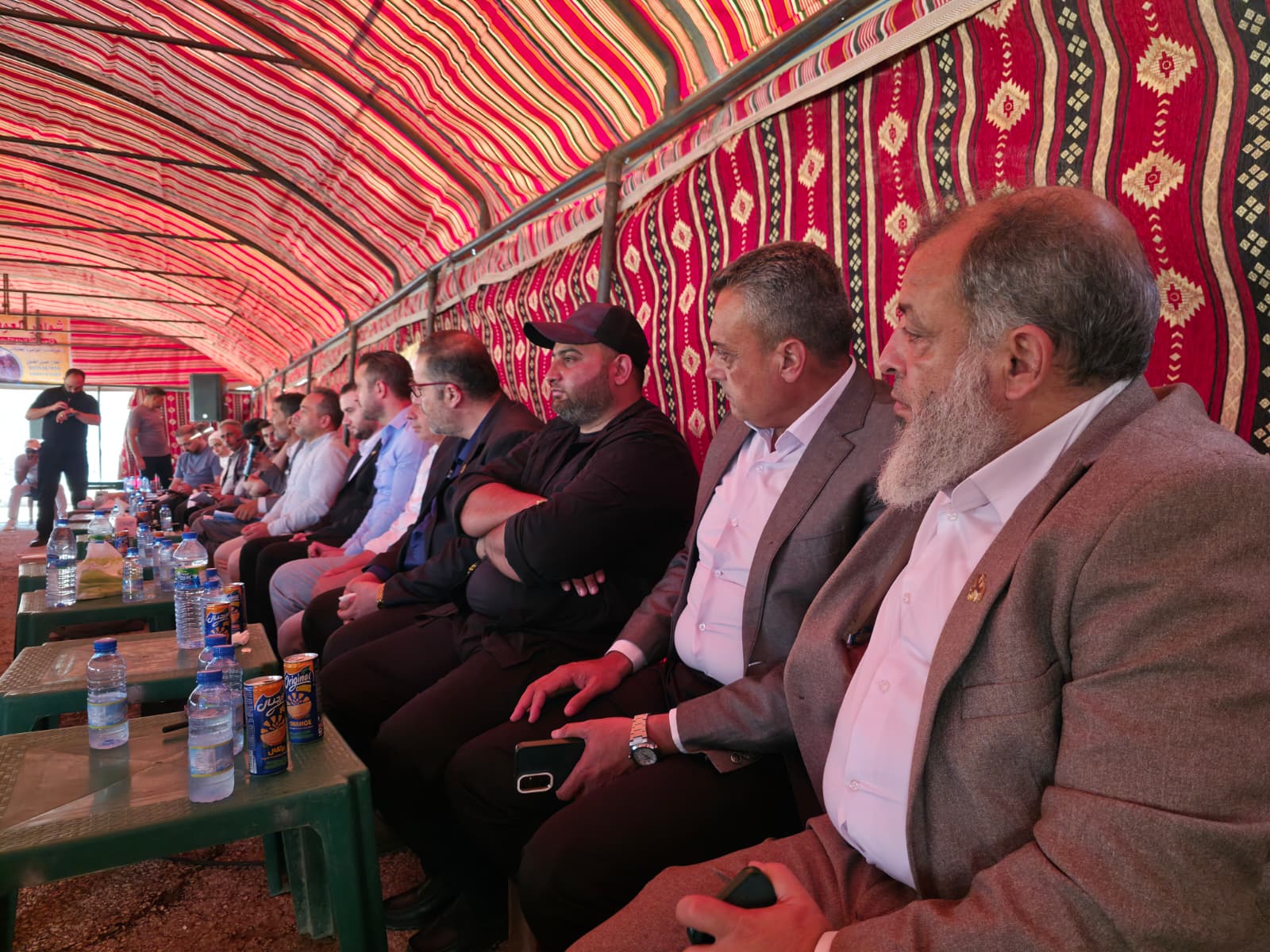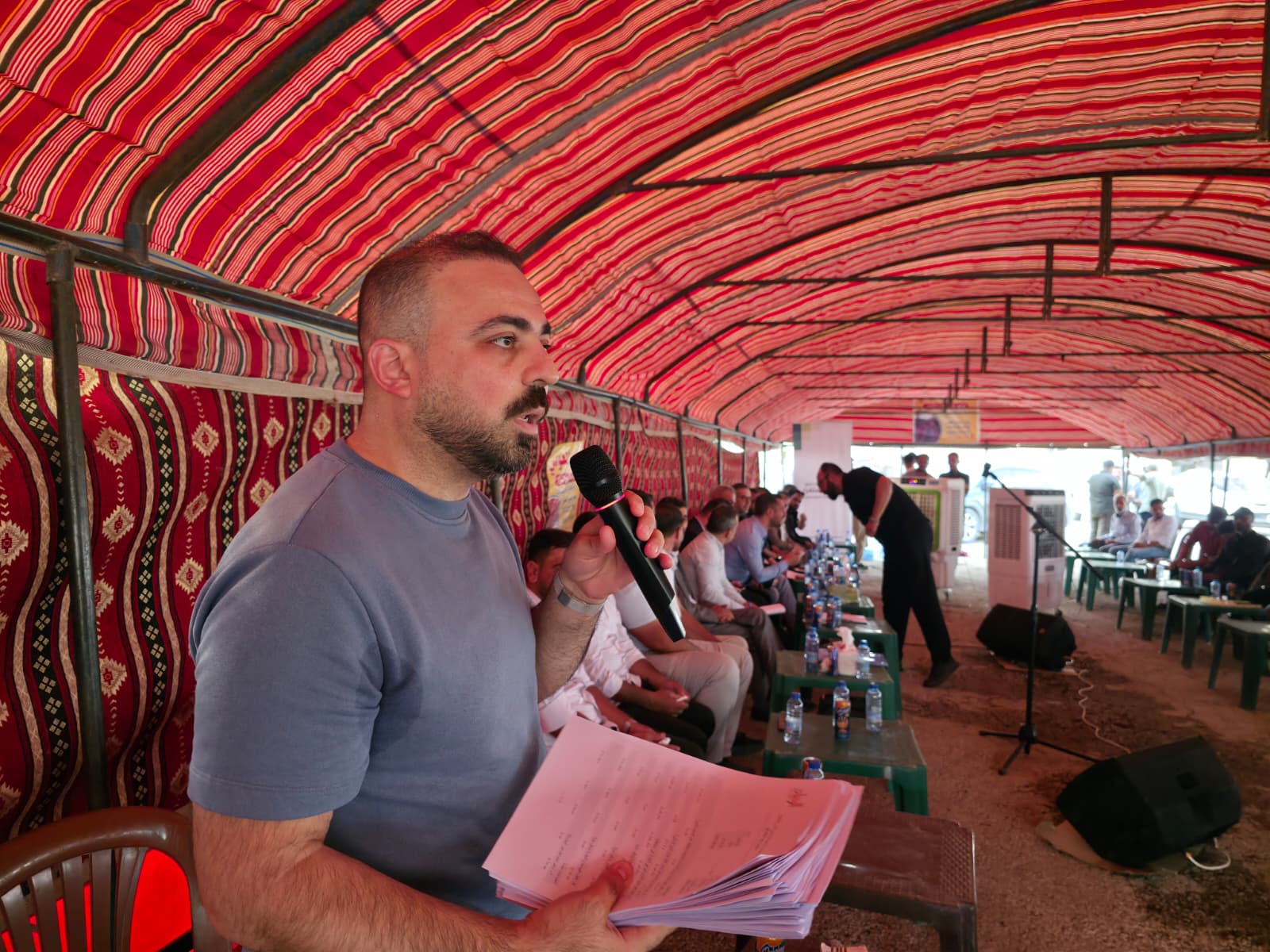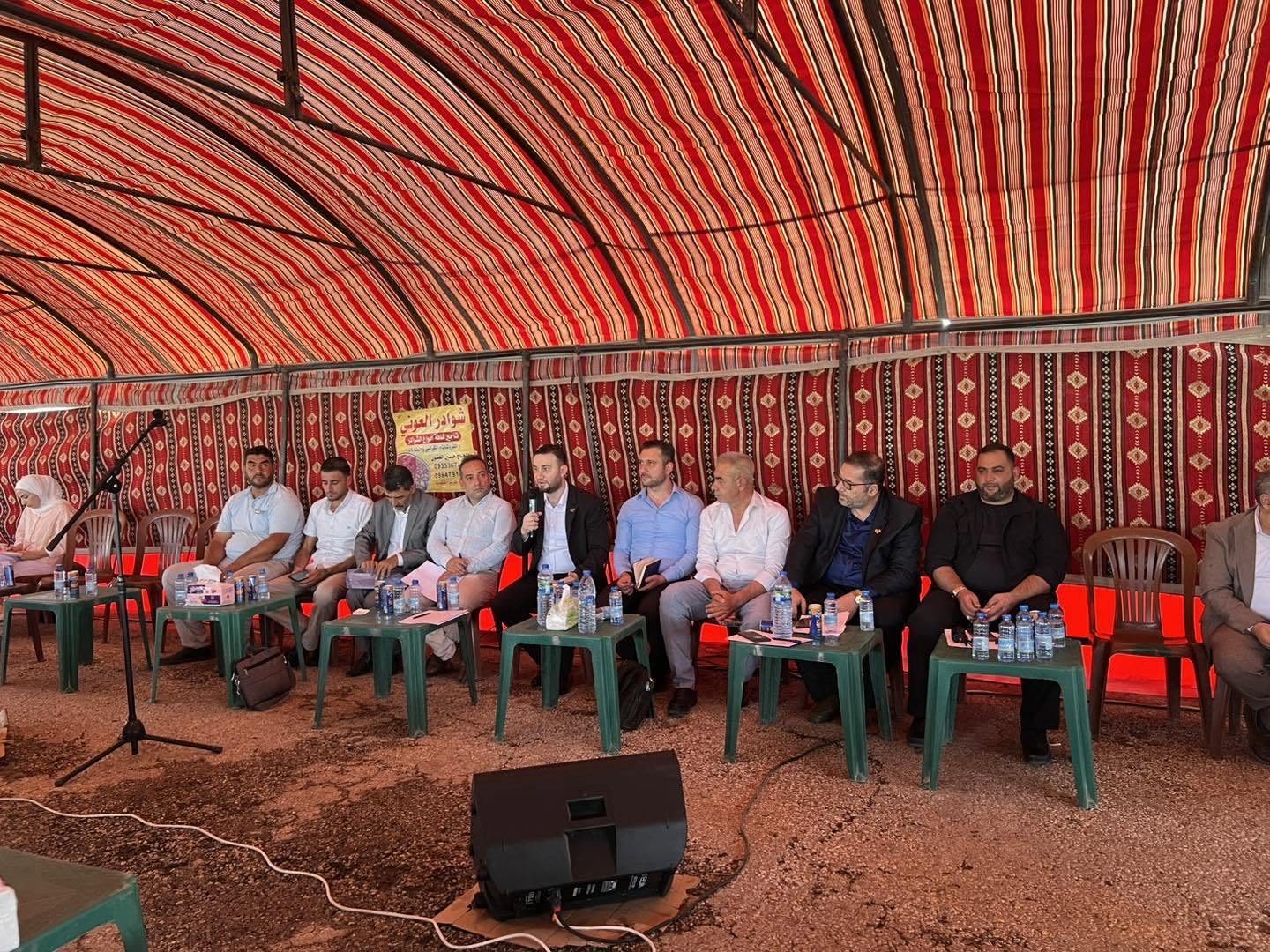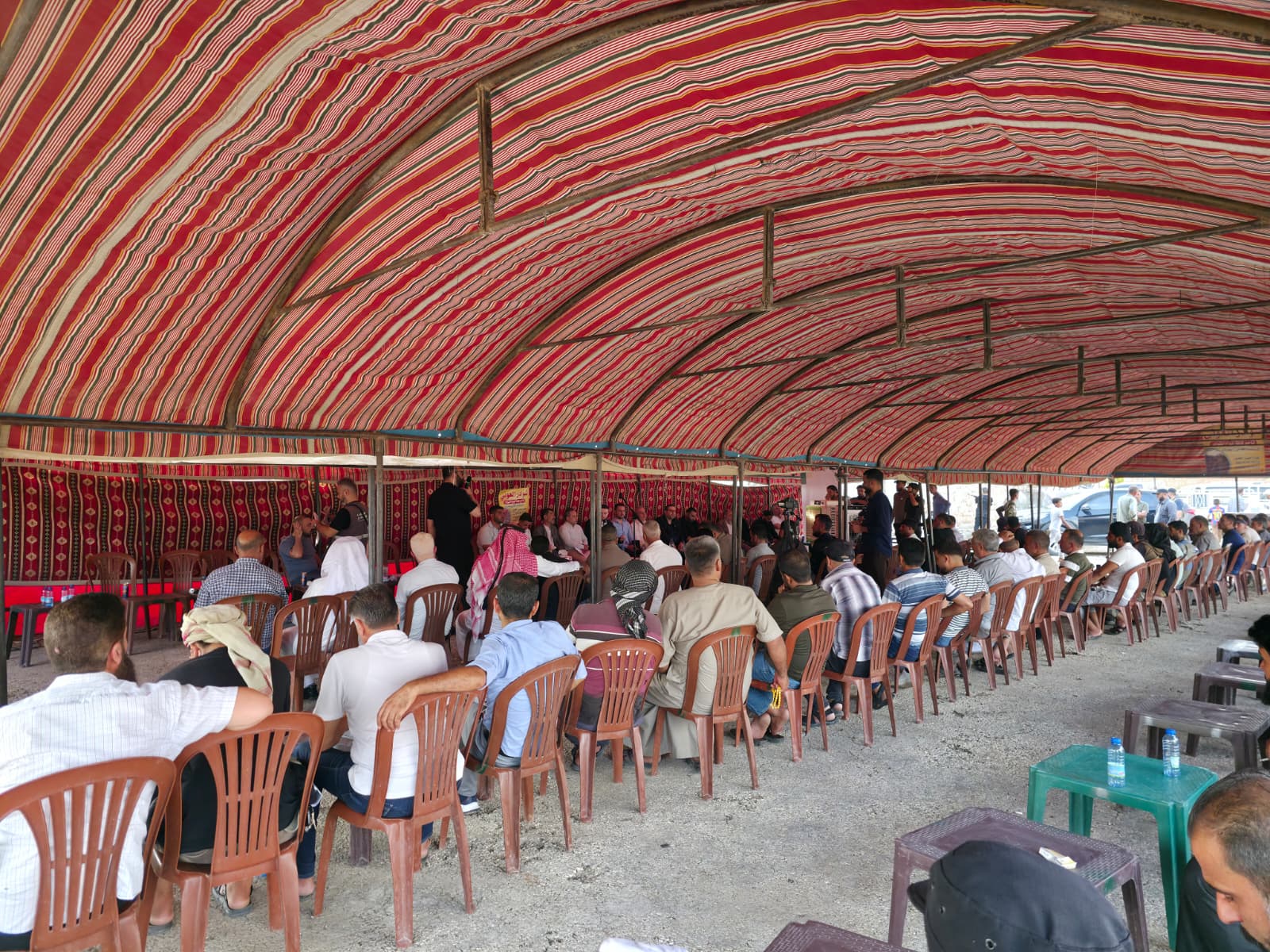
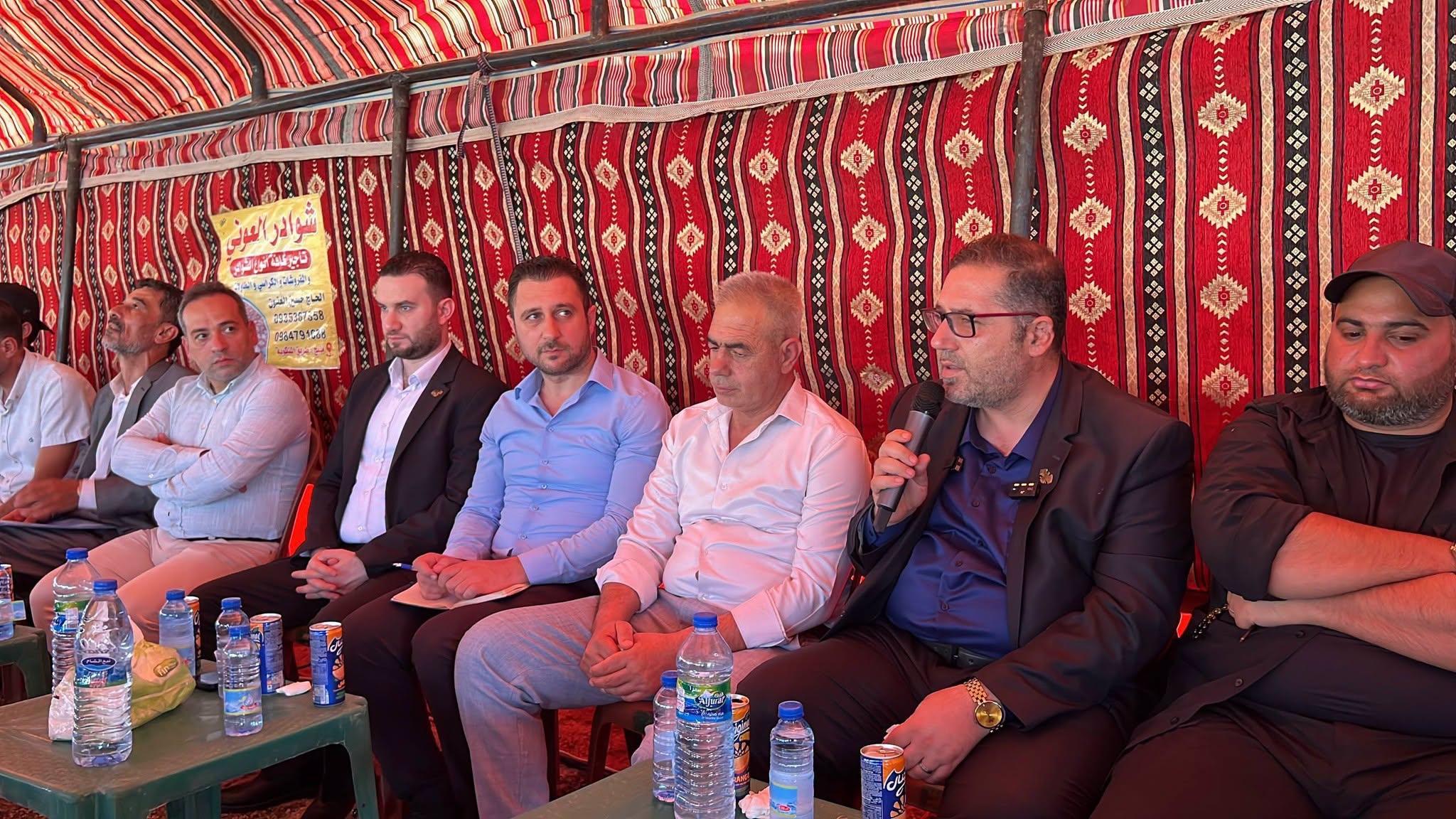
The Administration of the Afrin Region and the Stabilization Support Unit (SSU) organized the third community dialogue session in the Afrin region as part of the Community Participation Project, supported by the Rishad Program and funded by the U.S. Department of State. The session brought together representatives of security and administrative institutions, as well as local community leaders and civil society representatives.
The session was attended by Nour Al-Din Al-Baba, Spokesperson for the Ministry of Interior; the Security Director of the Afrin Region; representatives of the Public Relations Office of the Security Directorate in Aleppo Governorate; directors of the subdistricts of the Afrin Region; as well as community leaders, local representatives, civil society actors, and a number of returnees to the Afrin region from areas in northeastern Syria.
Participants discussed key local issues and needs, particularly strengthening security and social peace, improving local services, addressing challenges facing residents, and listening to their demands and proposals.
The discussion also addressed the importance of increasing security patrols as the olive harvesting season approaches, organizing harvesting operations, and strengthening efforts to combat drugs. Participants also proposed holding a dedicated dialogue session for women with the region’s administrators, as well as another session with the National Authority for Missing Persons to discuss the issue of missing persons and listen to residents’ demands.
These sessions contribute to strengthening communication channels between the local community and institutions, providing a direct space for raising and discussing local issues and needs, supporting community participation, fostering trust and cooperation, and contributing to strengthening security and social peace.


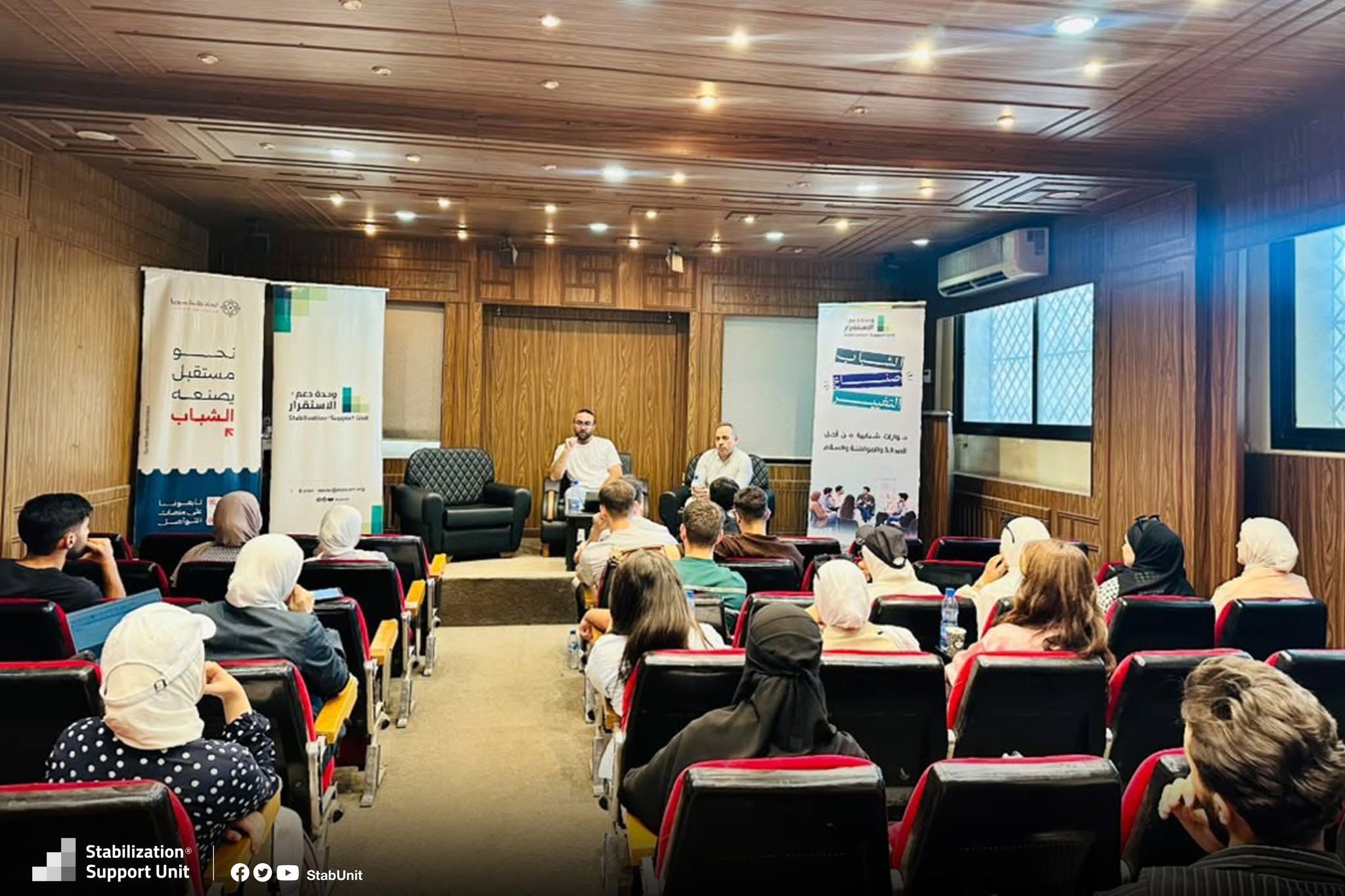
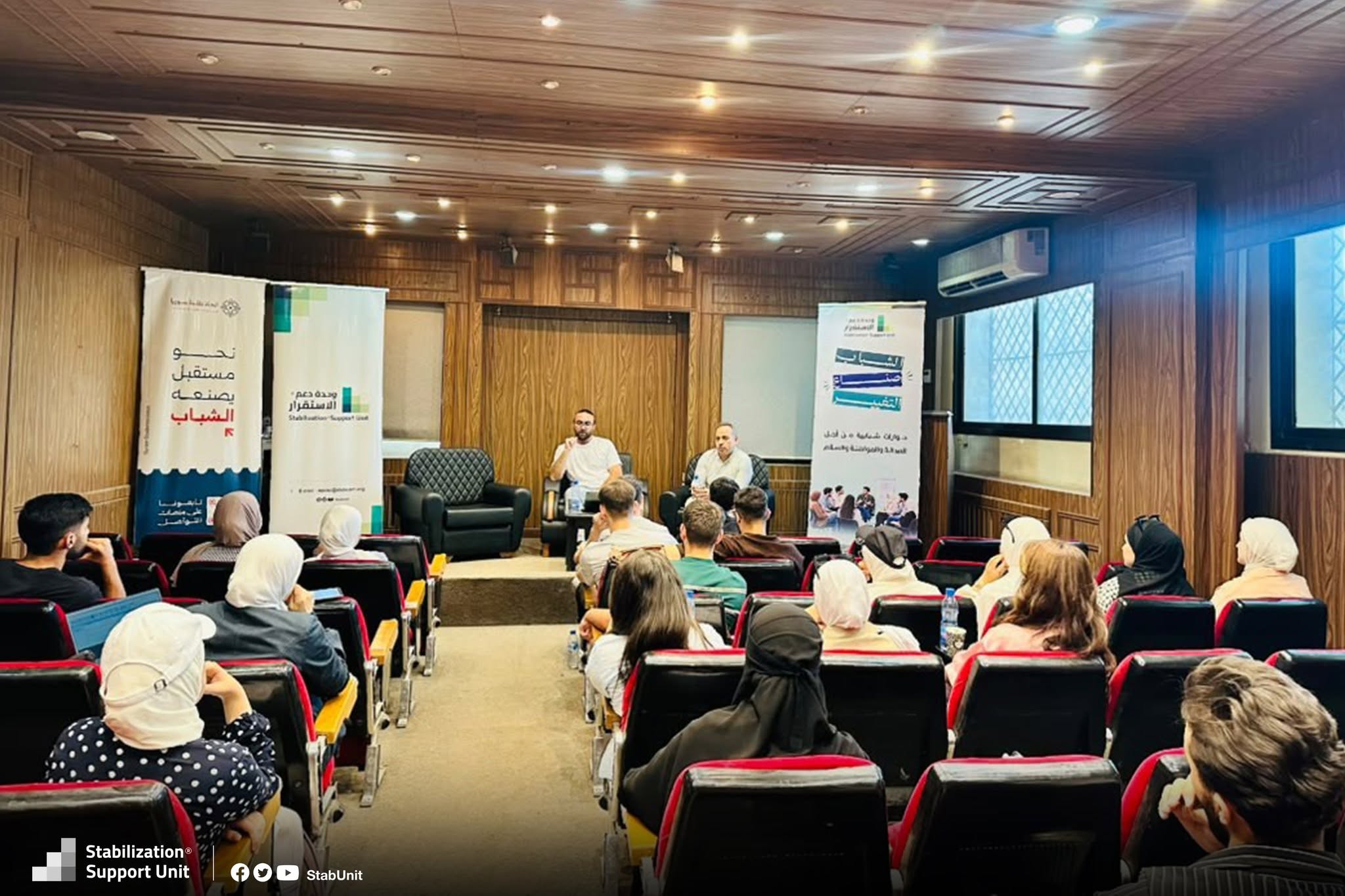
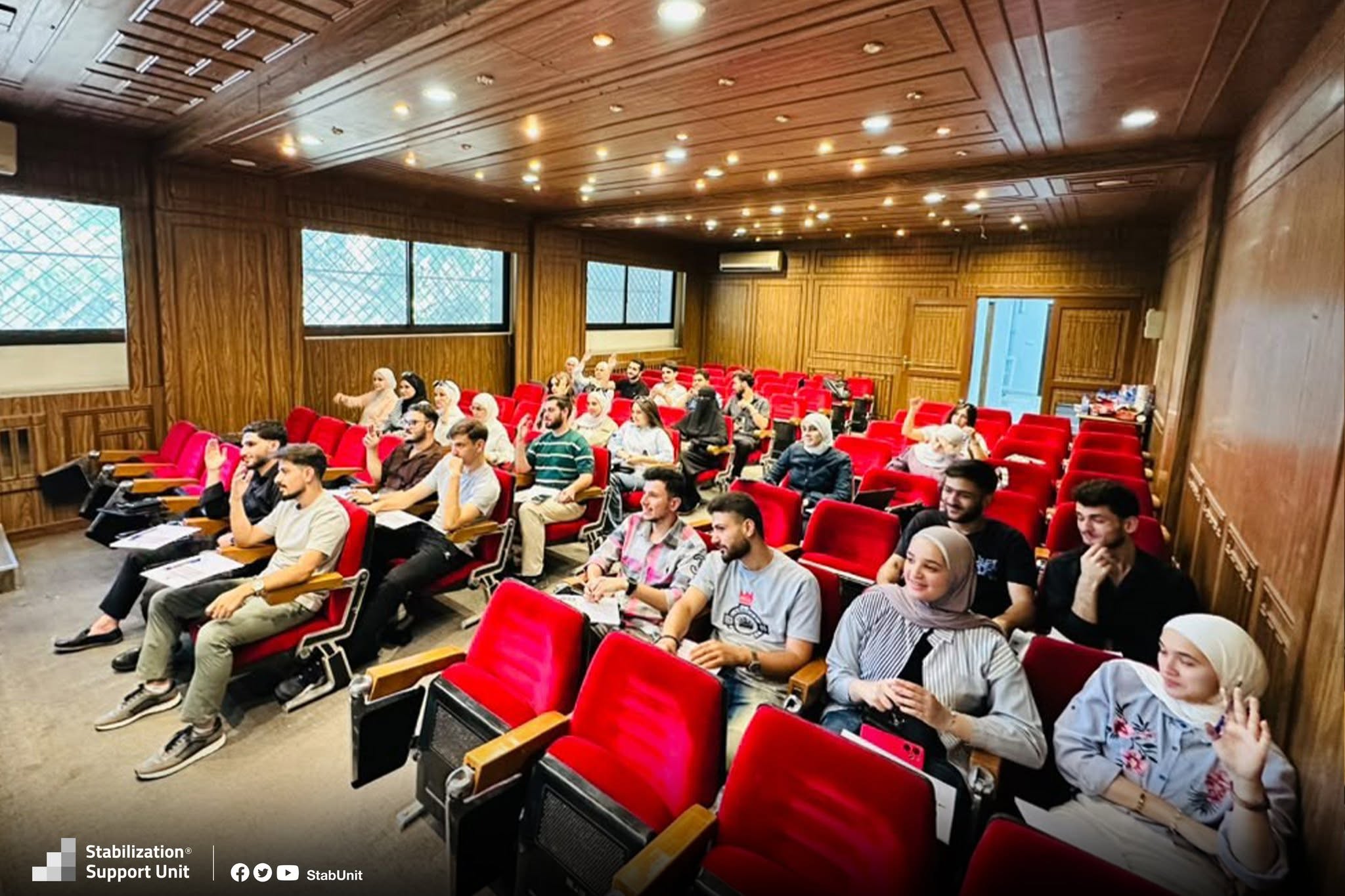
The Stabilization Support Unit (SSU), in partnership with the Syrian Students Union, held the second session of the “Change Makers” program at Damascus University, with the participation of a group of university students.
The session explored the concept of diversity and the importance of managing differences, with a focus on the impact of polarization on how people respond to differing opinions and positions, and how differences can be transformed from a source of division into an opportunity for dialogue and mutual understanding.
The session also discussed the importance of strengthening dialogue, listening, and acceptance of diverse perspectives, helping young people approach differences in a more positive and responsible manner and contribute to building a more cooperative and cohesive university and community environment.
This session is part of the “Change Makers” program, which aims to empower Syrian youth, strengthen their participation in dialogue and community engagement, and build bridges of communication among students from different regions and backgrounds.


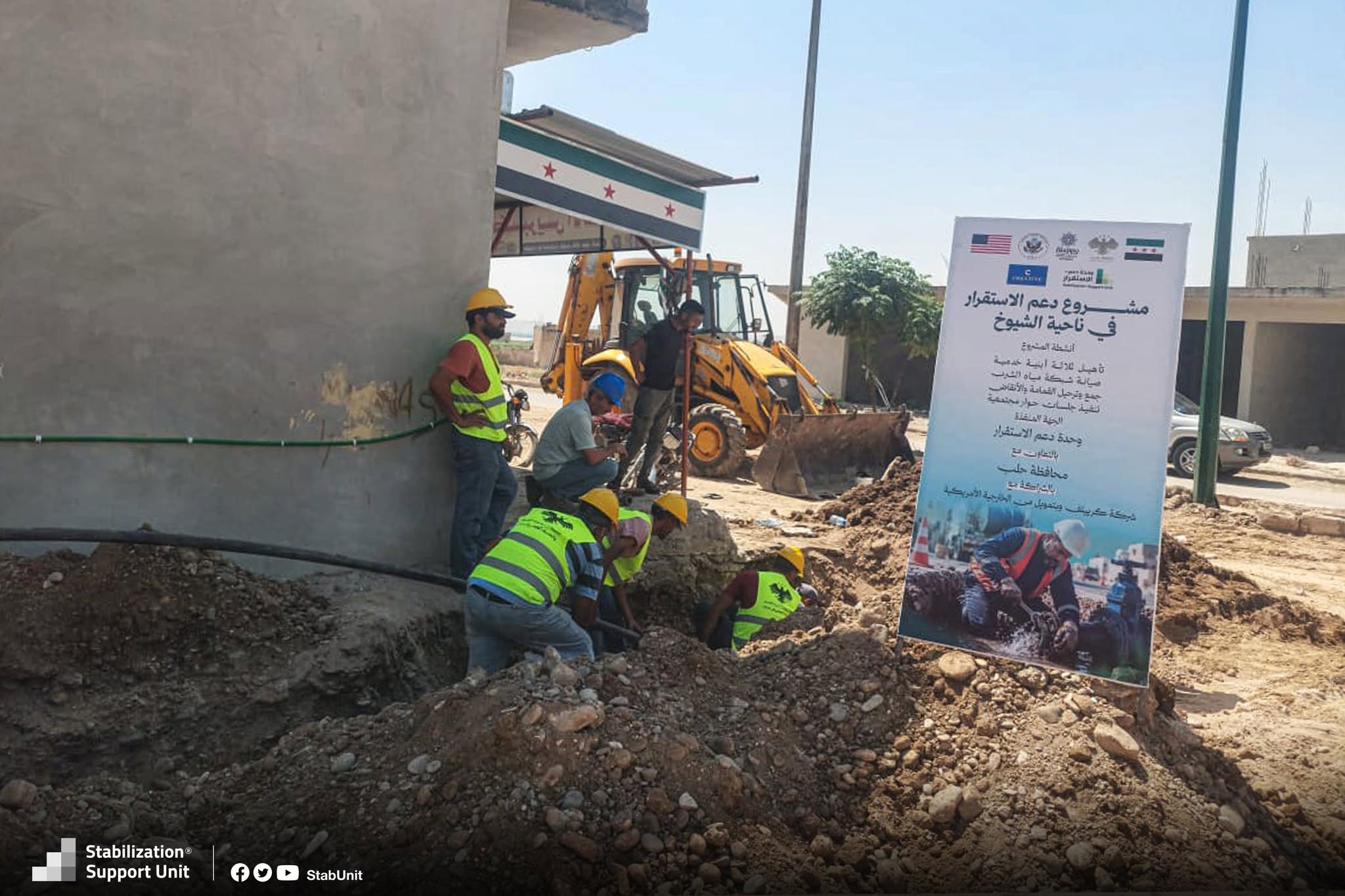
As part of efforts to support recovery, strengthen stability, and create conditions conducive to the return of residents, the Stabilization Support Unit (SSU) is implementing the “Stabilization Support in Al-Shuyukh Subdistrict” project, in coordination with the Administration of Ain Al-Arab District, in partnership with Furat 3 Program – Creative Associates International, and funded by the U.S. Department of State.

The project’s core activities focus on implementing a number of essential service interventions, including:

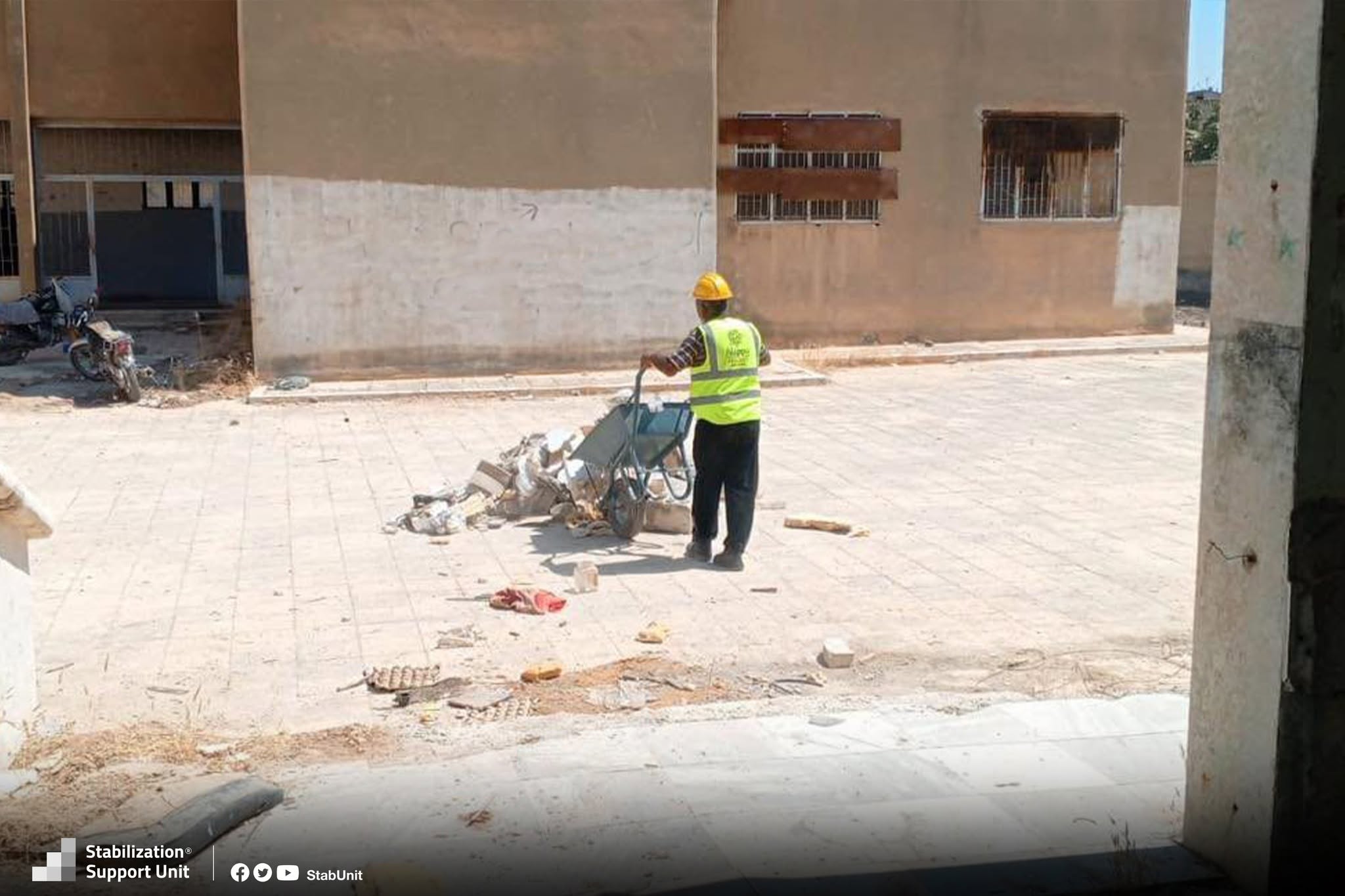
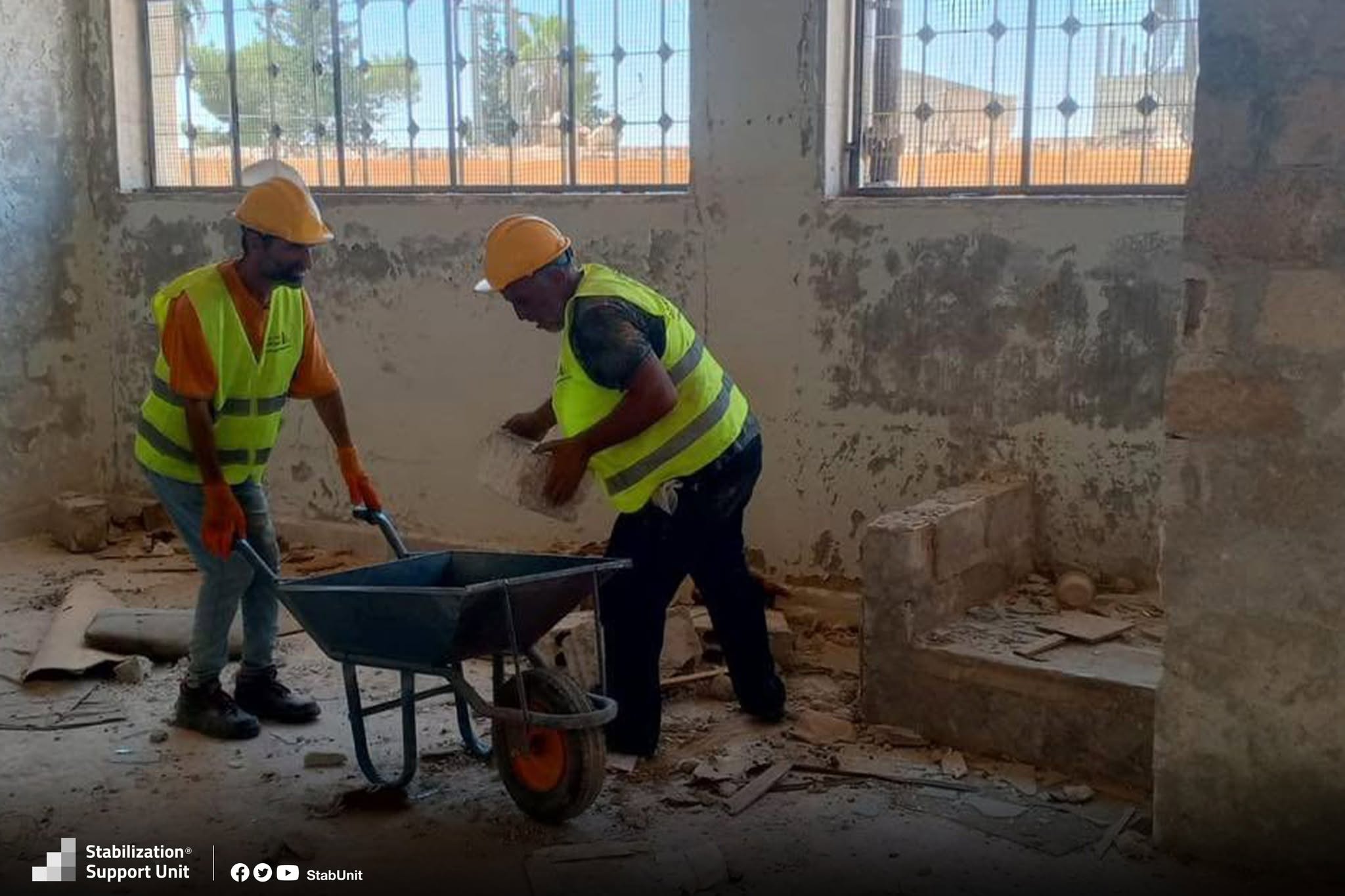
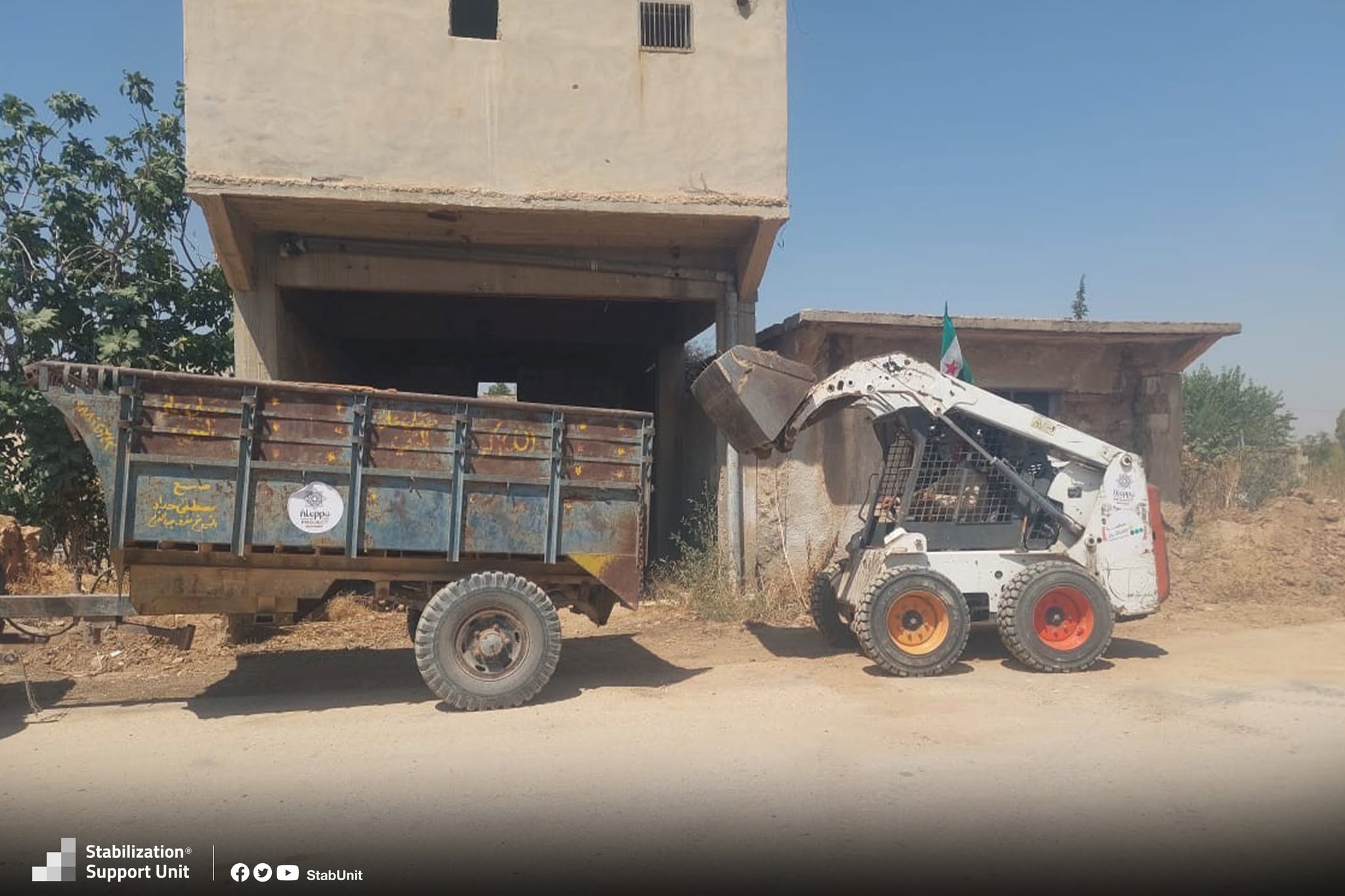
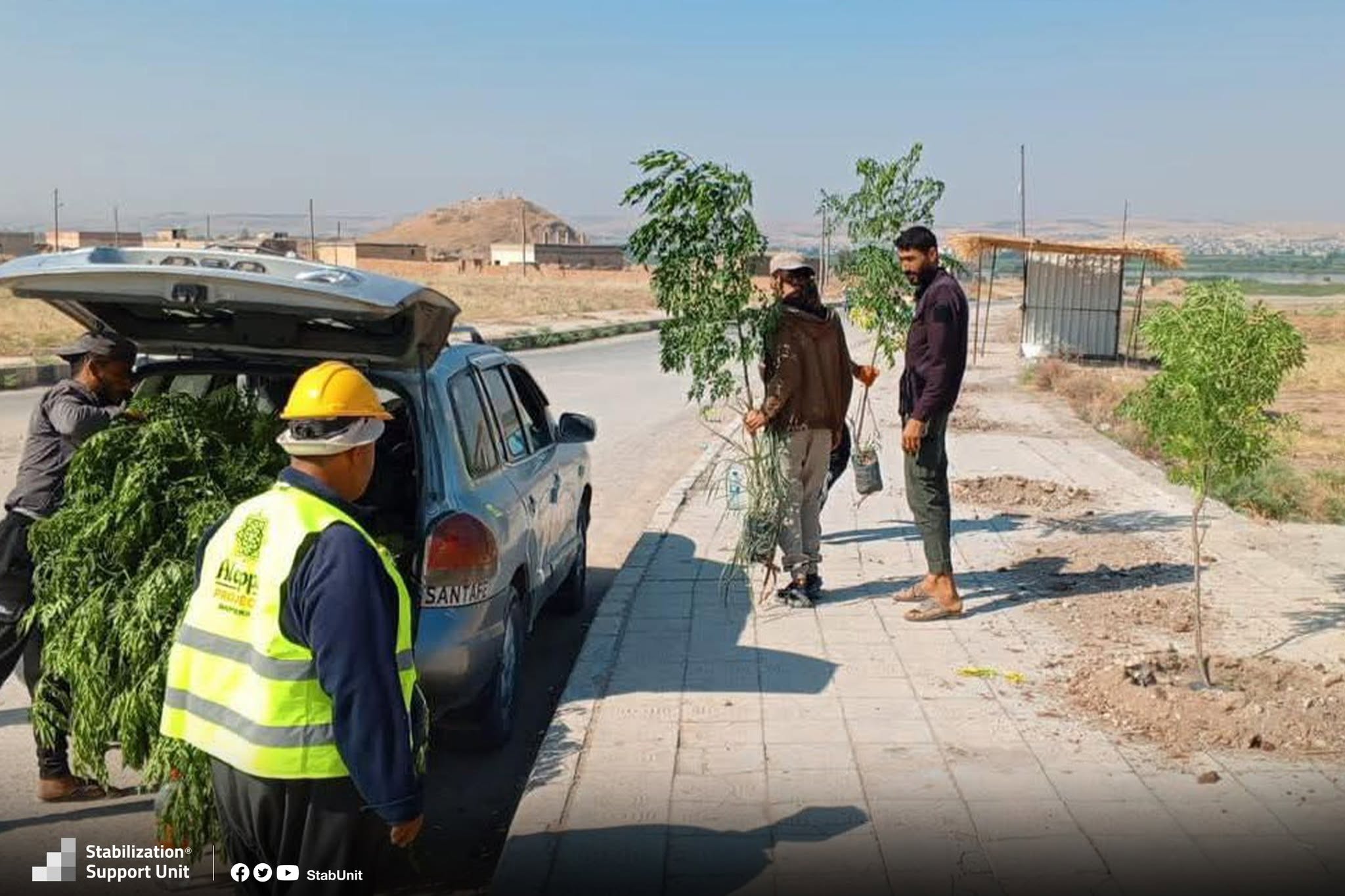
Alongside the implementation of the project activities and the start of the new school year, a campaign was launched in cooperation with local residents and authorities to clean schools and educational facilities, in addition to a tree-planting campaign along sidewalks and main streets in Al-Shuyukh Subdistrict. These efforts aim to improve the school environment and the overall appearance of the area, while expanding green spaces across the community.

These activities are part of broader efforts to support the service and environmental conditions in the subdistrict and strengthen local community participation in recovery efforts, contributing to a better environment for residents and helping create the conditions necessary for the return of families to the area.

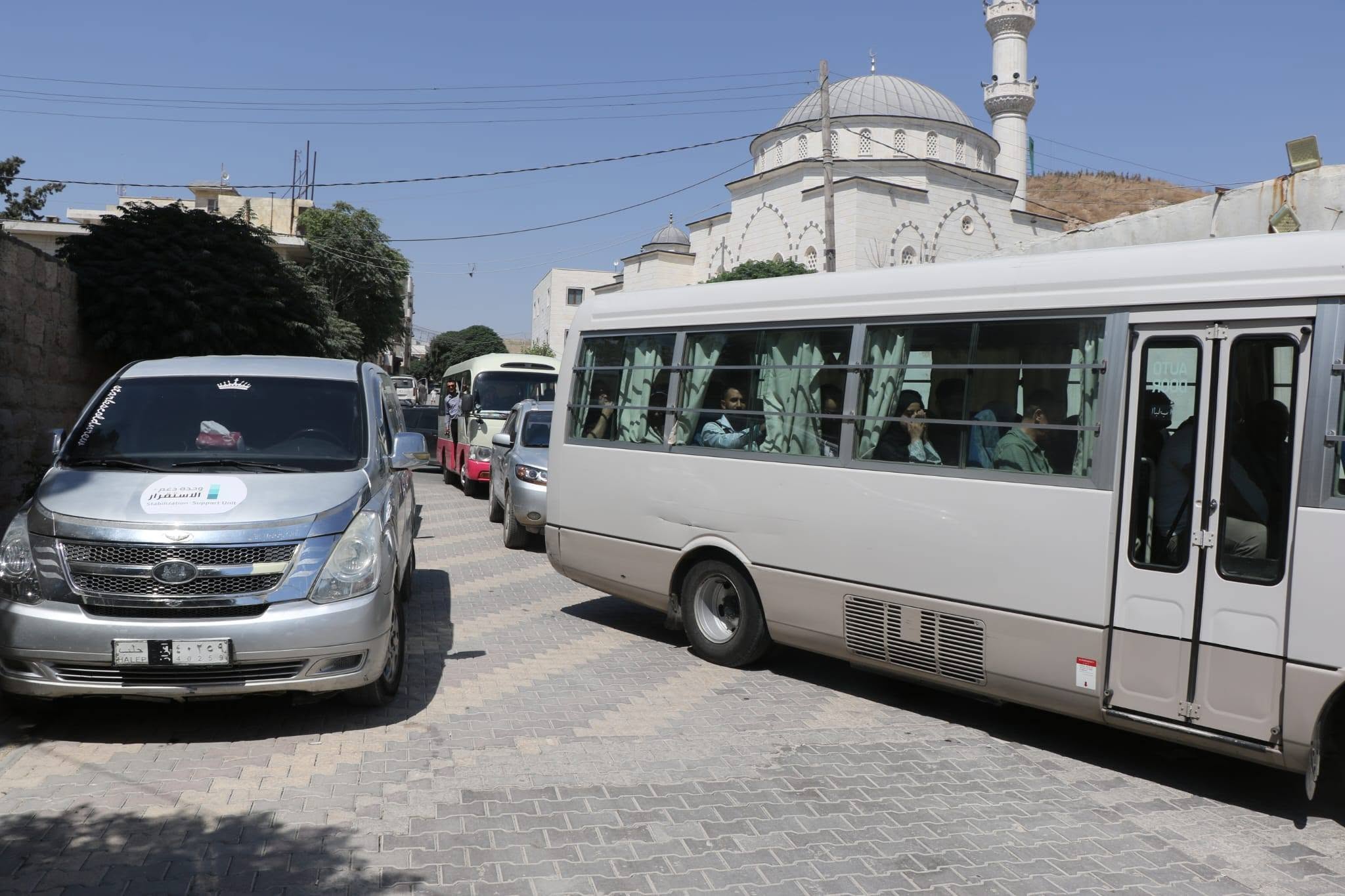
As part of the “Syrian Bridges” initiative, and in partnership with the Syrian Recovery Initiative (SRI), the Syrian Family Caravan set out with a delegation bringing together representatives from various Syrian communities and regions. The journey aimed to foster mutual understanding, exchange experiences, and explore the diversity of local narratives.
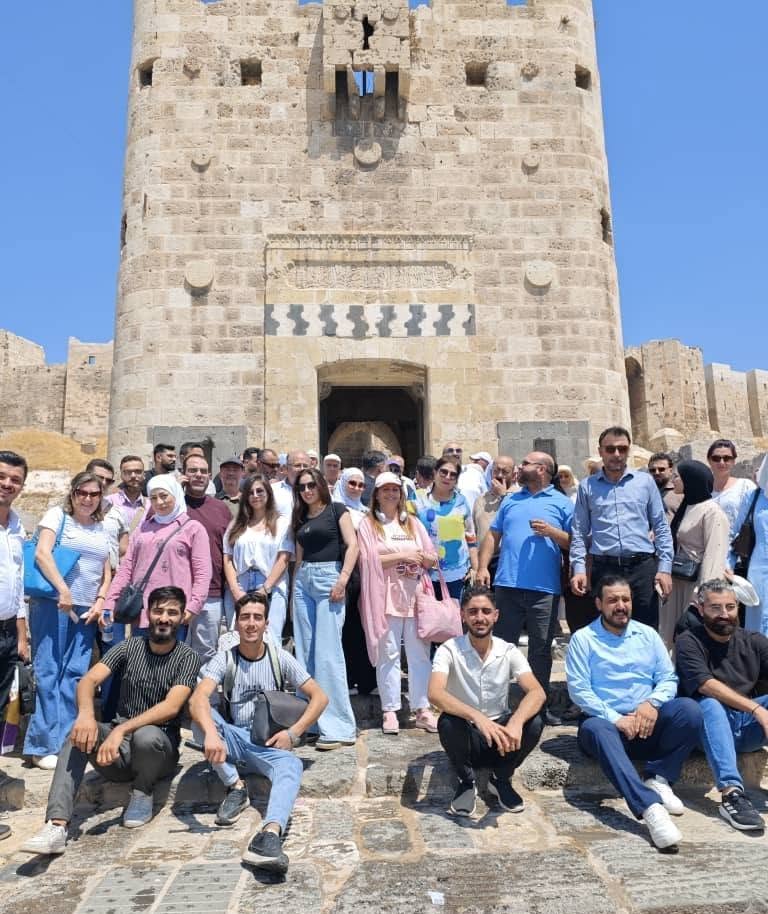
The caravan began its first stop in Aleppo with a visit to the Chaldean Church, followed by a tour of the Aleppo Citadel and the neighborhoods and alleyways of the Old City. The delegation then headed to Azaz, where the area’s administration hosted the caravan, represented by Mr. Khaled Yassin, Director of the Azaz District.
In Azaz, a dialogue session titled “Syrian Narratives” was held, during which activists from the city spoke about Azaz and its narrative throughout the years of the revolution, as well as the experiences and memories of that period that have become part of the local collective memory.
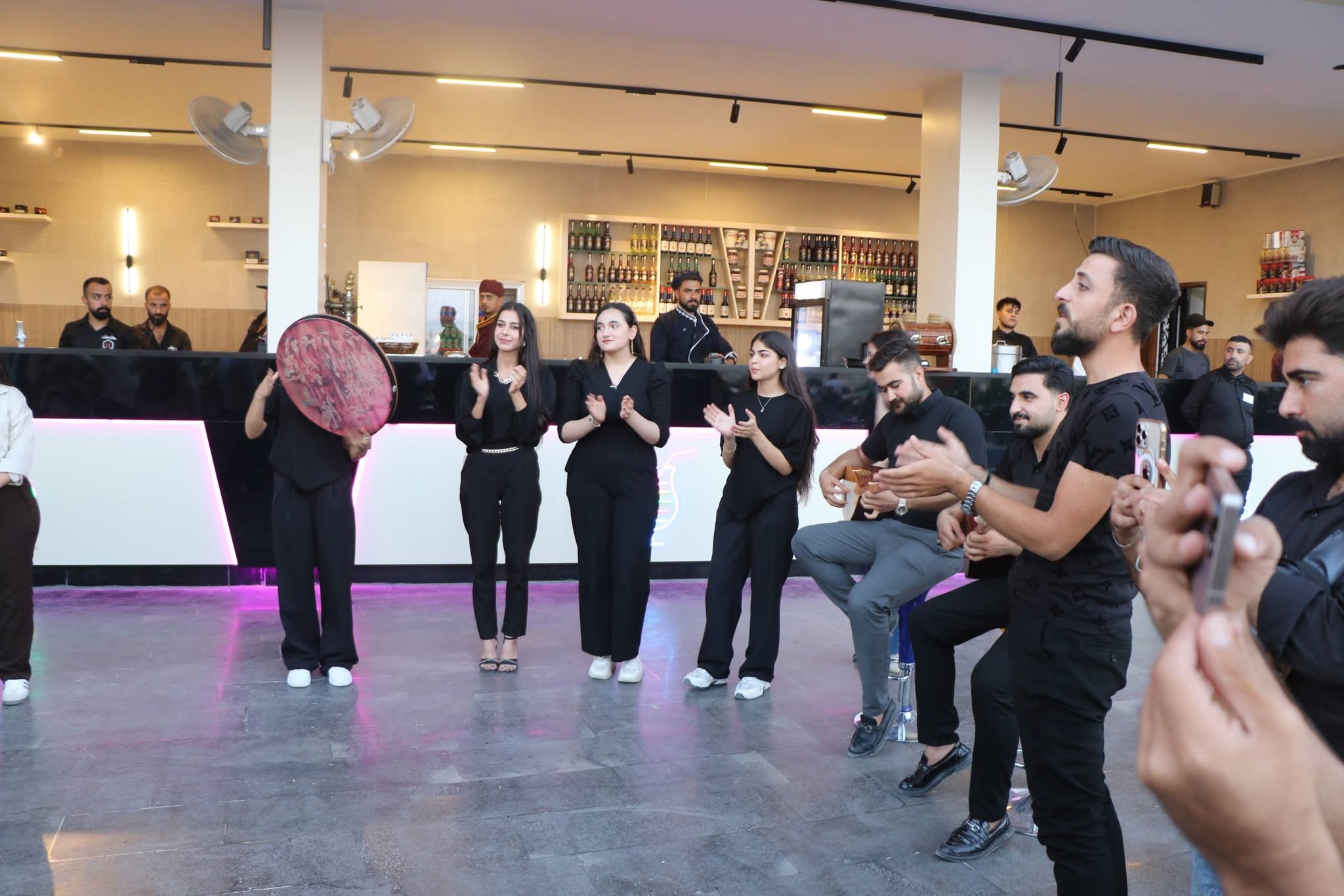
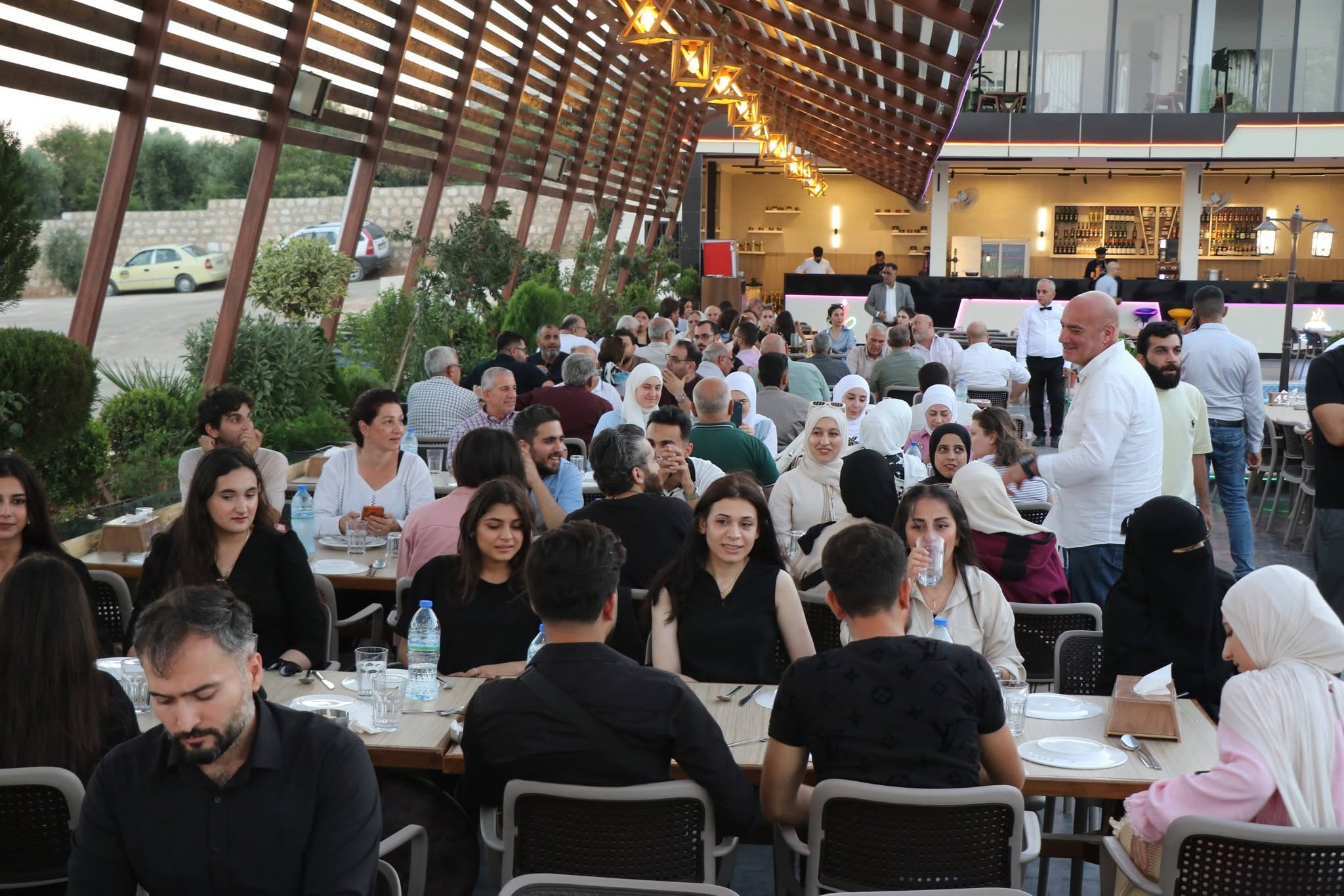
The visit concluded with a trip to Afrin, where a luncheon was held in the presence of Mr. Khairo Al-Dawoud, Director of the Afrin District, and members of the People’s Assembly representing the area. The gathering featured musical and singing performances by a local ensemble, showcasing aspects of Afrin’s rich cultural and artistic heritage.
A journey that brought Syrians from different regions and communities together, creating a space for mutual understanding and listening to one another’s stories—helping strengthen dialogue, communication, and the building of new bridges among the people of Syria.


The Stabilization Support Unit (SSU) organized the first community dialogue session in #Afrin, as part of the Community Participation Project, supported by the Al-Rashad Program and funded by the U.S. Department of State.
The session was attended by the official spokesperson of the Ministry of Interior, Nour al-Din al-Baba, the Security Officer for the Afrin area, representatives from the Public Relations Office of the Security Directorate in Aleppo Governorate, local dignitaries, as well as representatives of the local community and civil society actors.
Participants discussed key local issues and needs, foremost among them strengthening security and social peace, improving public services, addressing the challenges facing residents, and listening to their demands and proposals. These efforts aim to enhance community participation and strengthen trust and cooperation between residents and institutions.
The session is part of a series of community dialogue workshops implemented by the Stabilization Support Unit in Sheikh Maqsoud, Al-Ashrafiyah, Al-Shuyukh, and Afrin, with the aim of engaging local communities in identifying their priorities and strengthening community partnerships.


Youth as Changemakers – University of Aleppo
The Stabilization Support Unit, in partnership with the Syrian Students’ Union, launched the “Changemakers” program, bringing together students from the Universities of Aleppo and Damascus, as part of a vision aimed at strengthening the role of university youth in building a more cohesive and open future for Syria.
The program includes a series of workshops and training sessions, alongside support for a number of student-led initiatives, enabling students to develop their skills and turn their ideas into initiatives that create a positive impact in their communities.
This initiative stems from the Stabilization Support Unit’s belief that Syrian youth are among the most important drivers of change, and that universities, which bring together students from diverse regions and backgrounds, provide an important space for communication, knowledge exchange, and building bridges of understanding among the different components of Syrian society.
Through “Changemakers,” we seek to empower young people to become ambassadors of positive messages and active partners in promoting dialogue, cooperation, and social cohesion, while contributing to leading change towards a better future across Syria.
The program represents a first step in a partnership that we hope will continue and expand, creating more opportunities for Syrian youth to participate in shaping change and building a more cohesive society.


The Stabilization Unit (SSU) organized the first community dialogue session in Al-Shuyukh District, in cooperation with the administration of the Ayn al-Arab Region, as part of the Community Participation Project, supported by Al Rashad Program and funded by the U.S. Department of State.
The session was attended by Nour al-Din Al-Baba, Official Spokesperson for the Ministry of Interior; Ibrahim Muslim, Head of the Ayn al-Arab Region; Shawak Assaf, Member of the People’s Assembly; as well as representatives of the Internal Security and Public Security forces, local dignitaries, community representatives, and civil society actors.
Participants discussed key local issues and needs, particularly strengthening security and social peace, improving public services, addressing challenges facing local residents, and listening to their demands and proposals. The discussions aimed to enhance community participation, improve service delivery, and strengthen trust and cooperation between residents and local institutions.
The session is part of a series of community dialogue workshops implemented by the Stabilization Unit in Sheikh Maqsoud, Al-Ashrafieh, Al-Shuyukh, and Afrin, with the aim of engaging local communities in identifying their priorities and strengthening community partnerships.


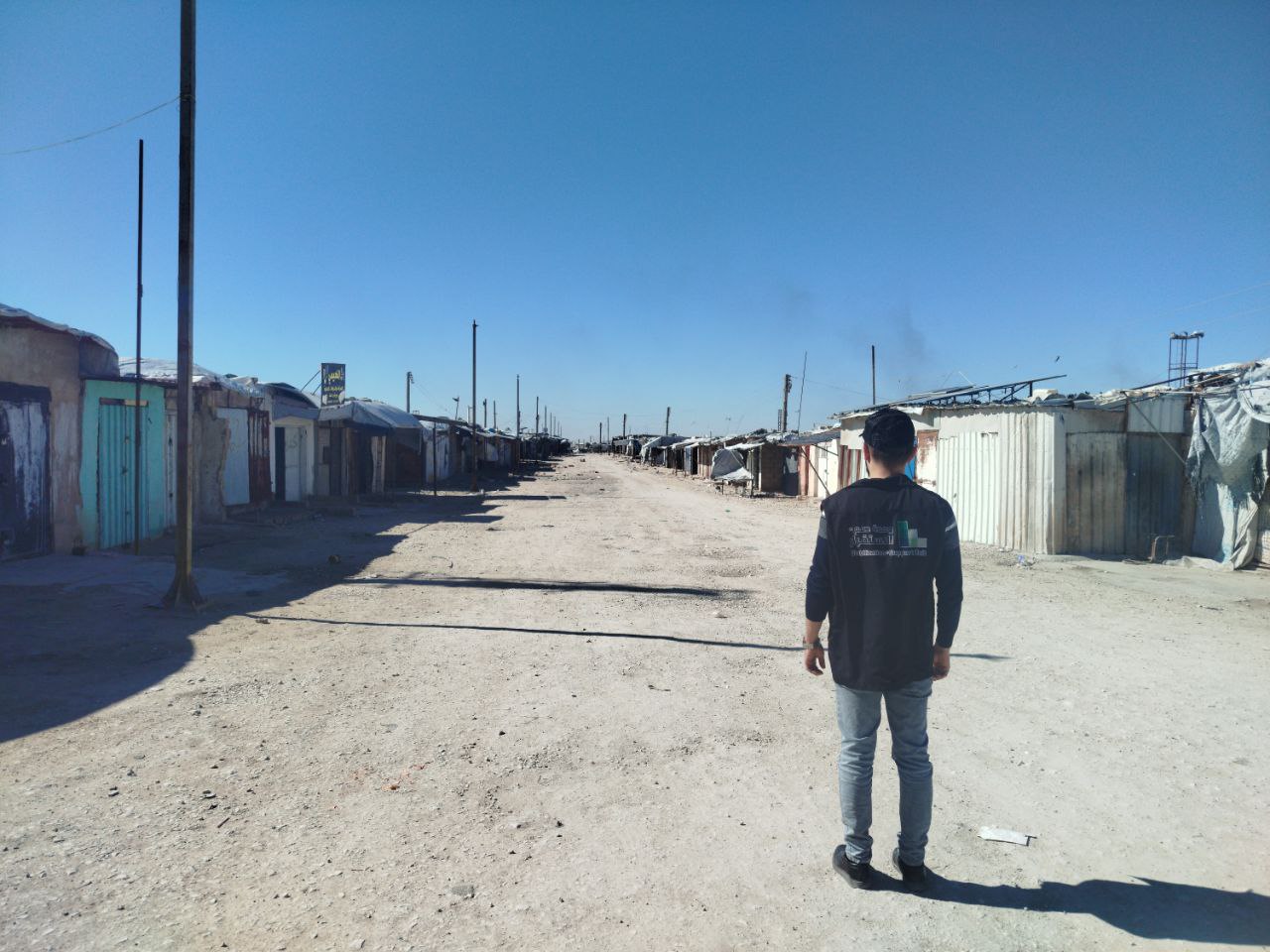
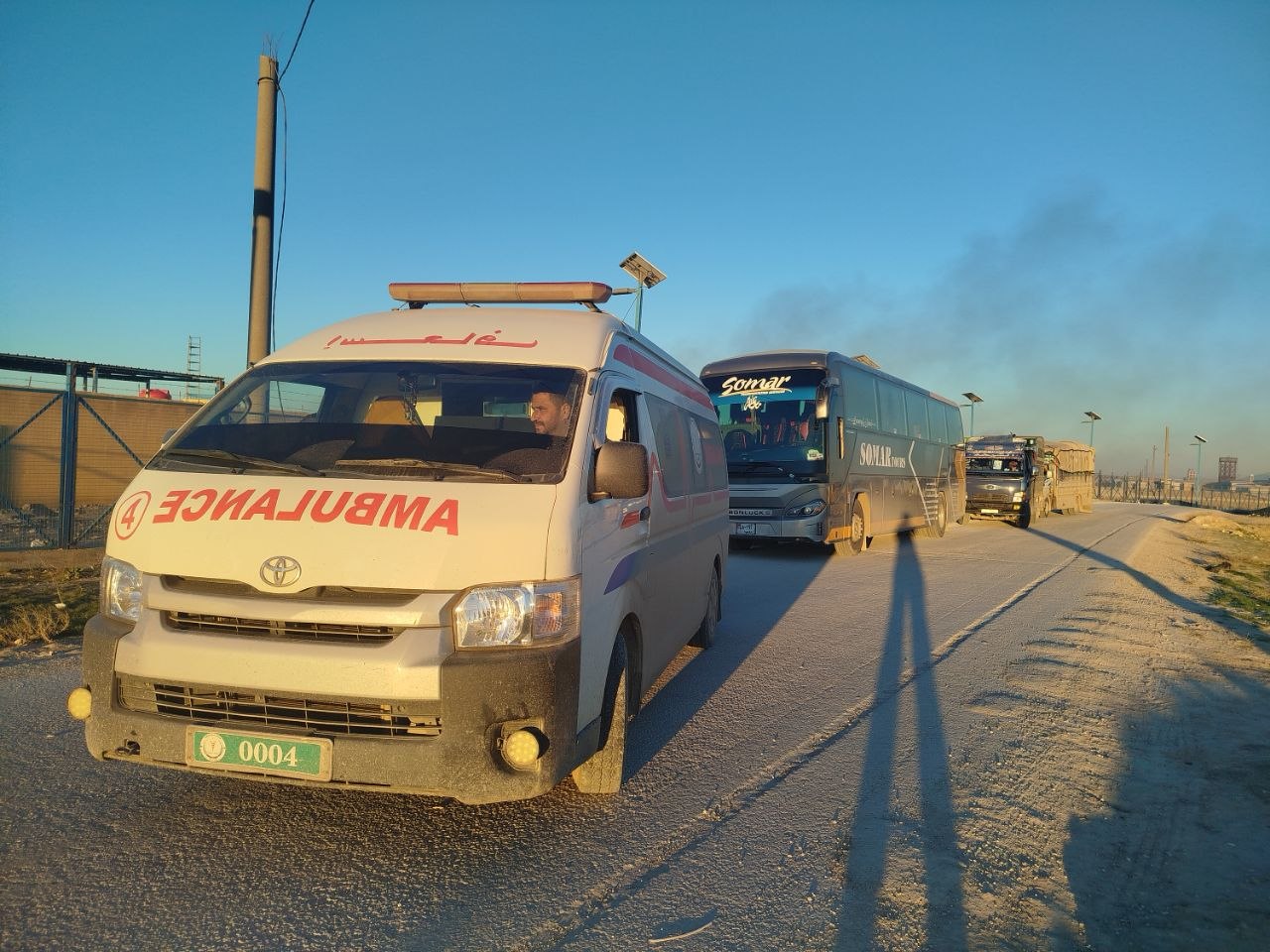
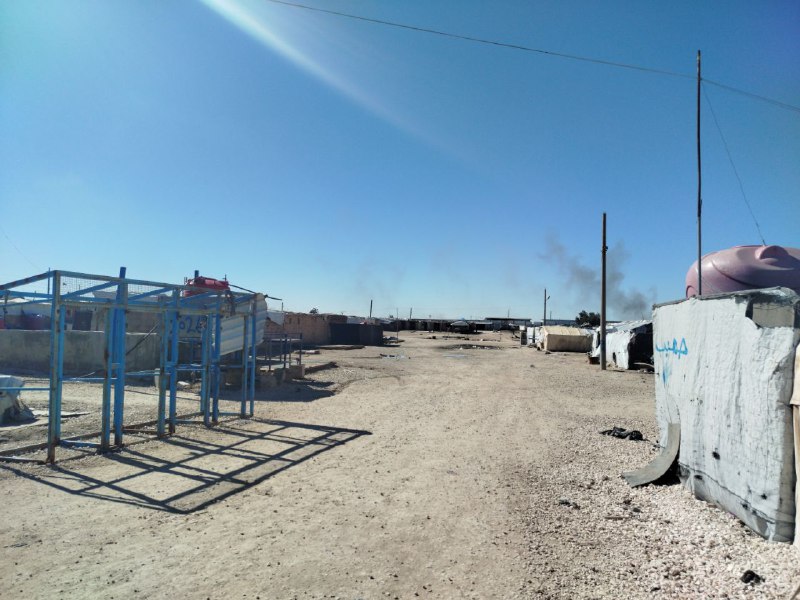
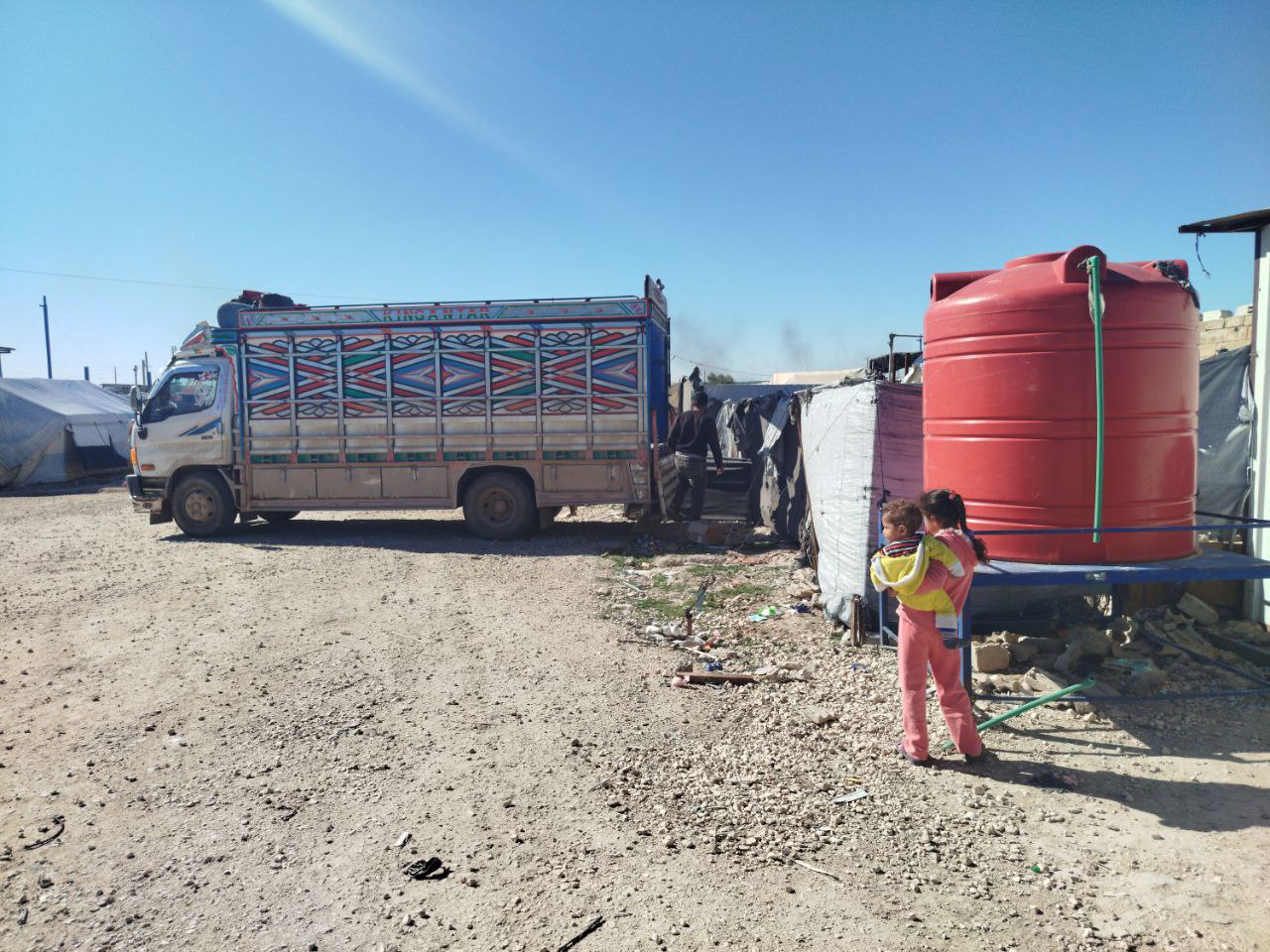
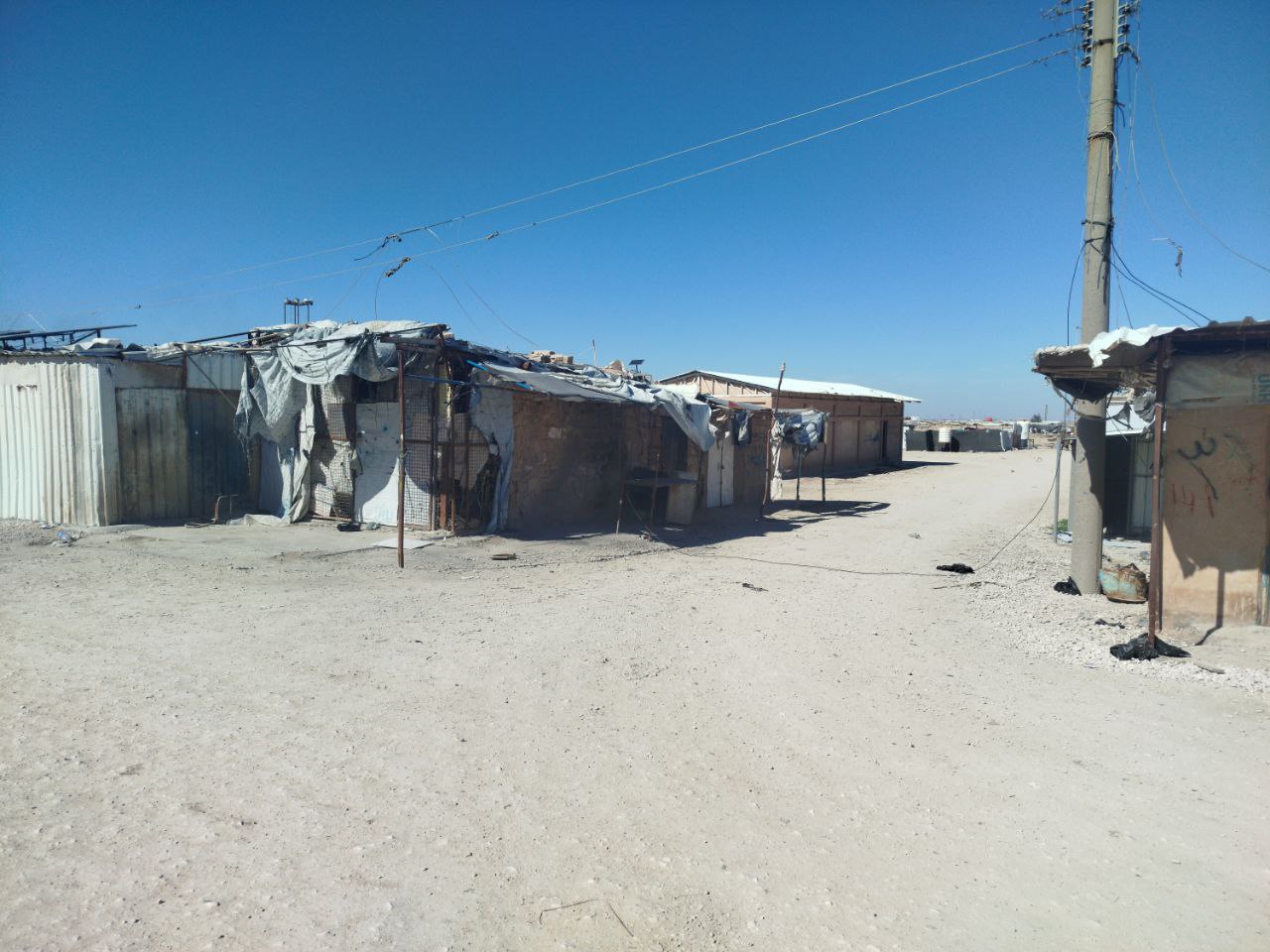
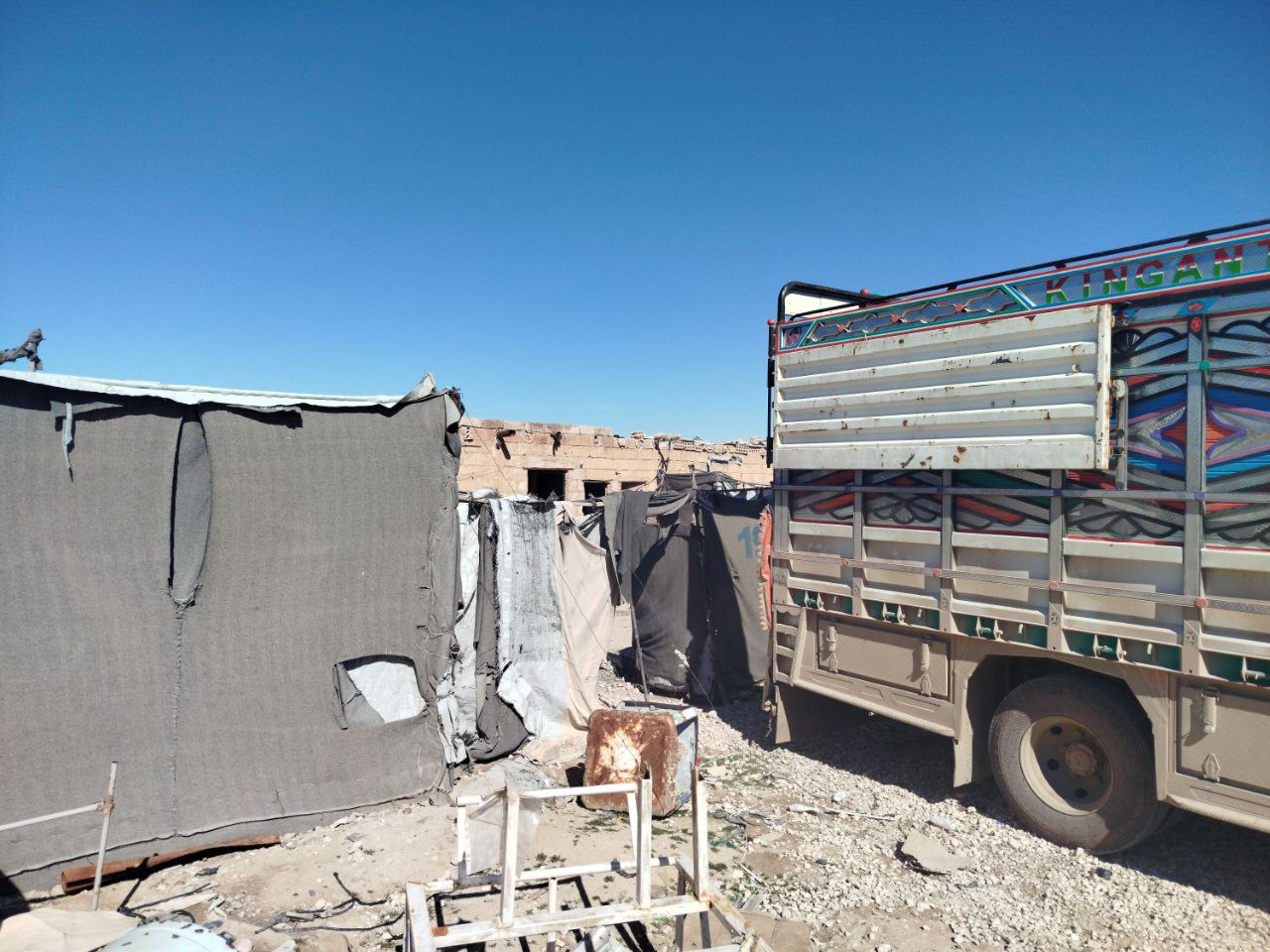
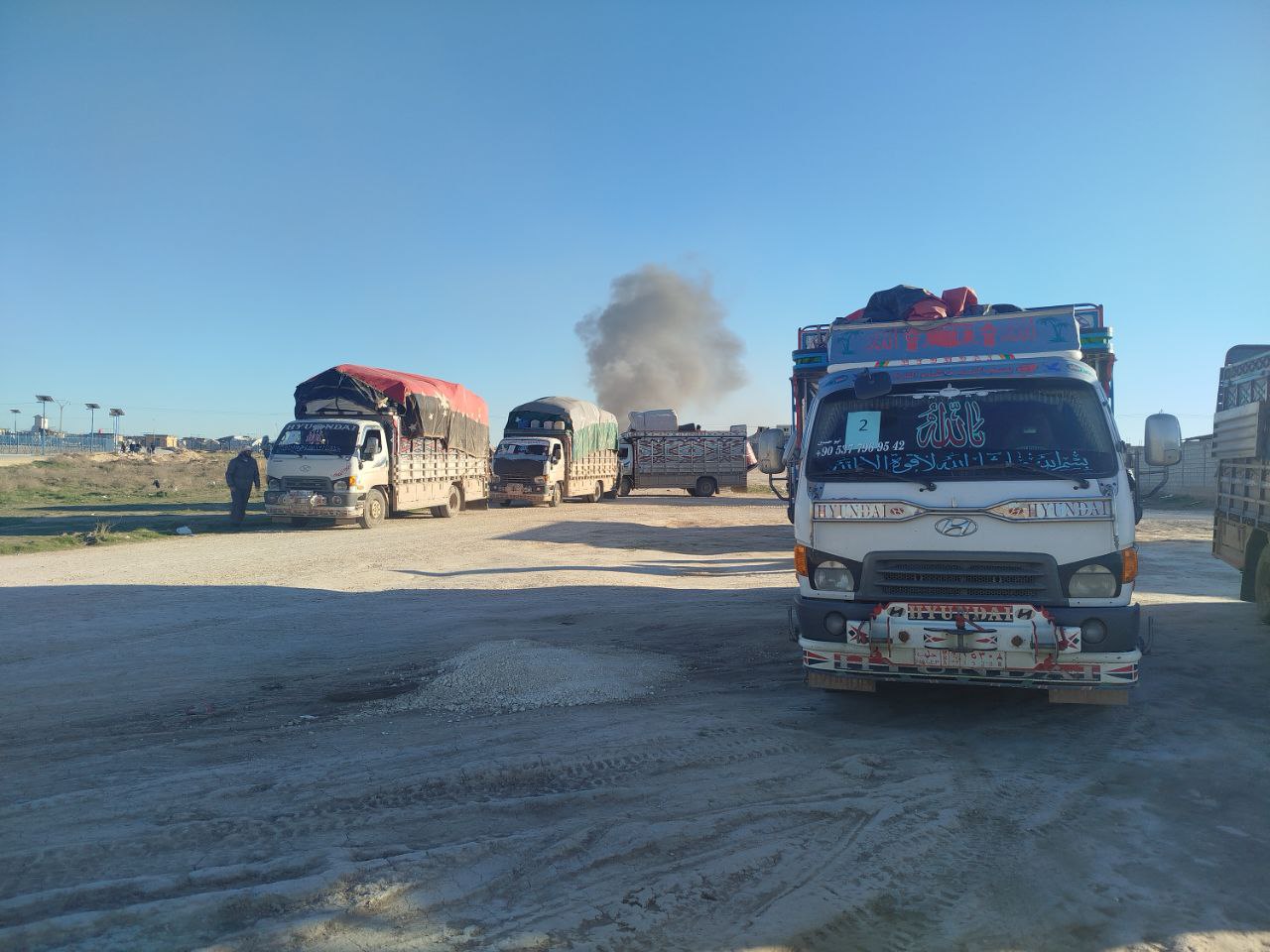
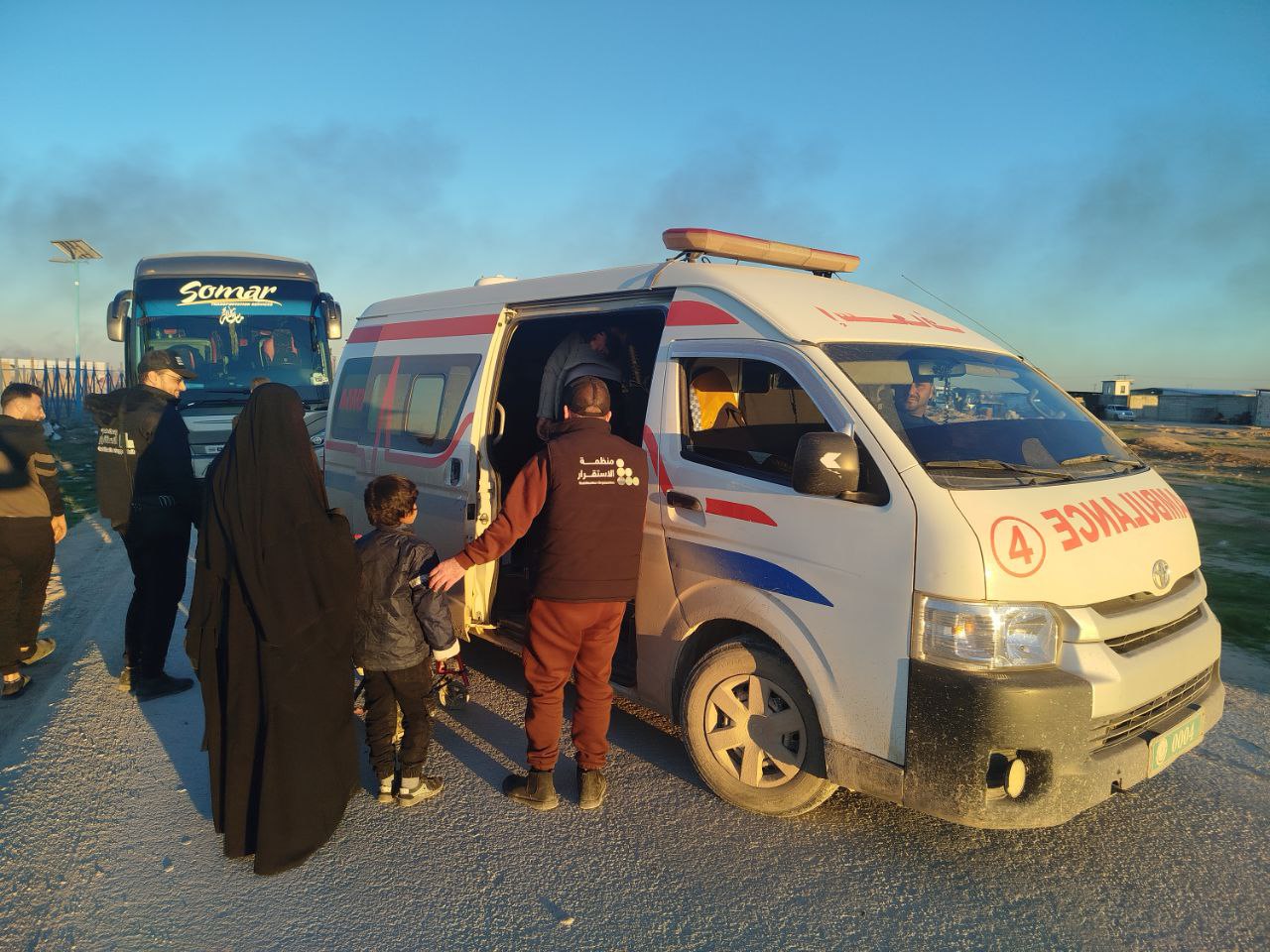
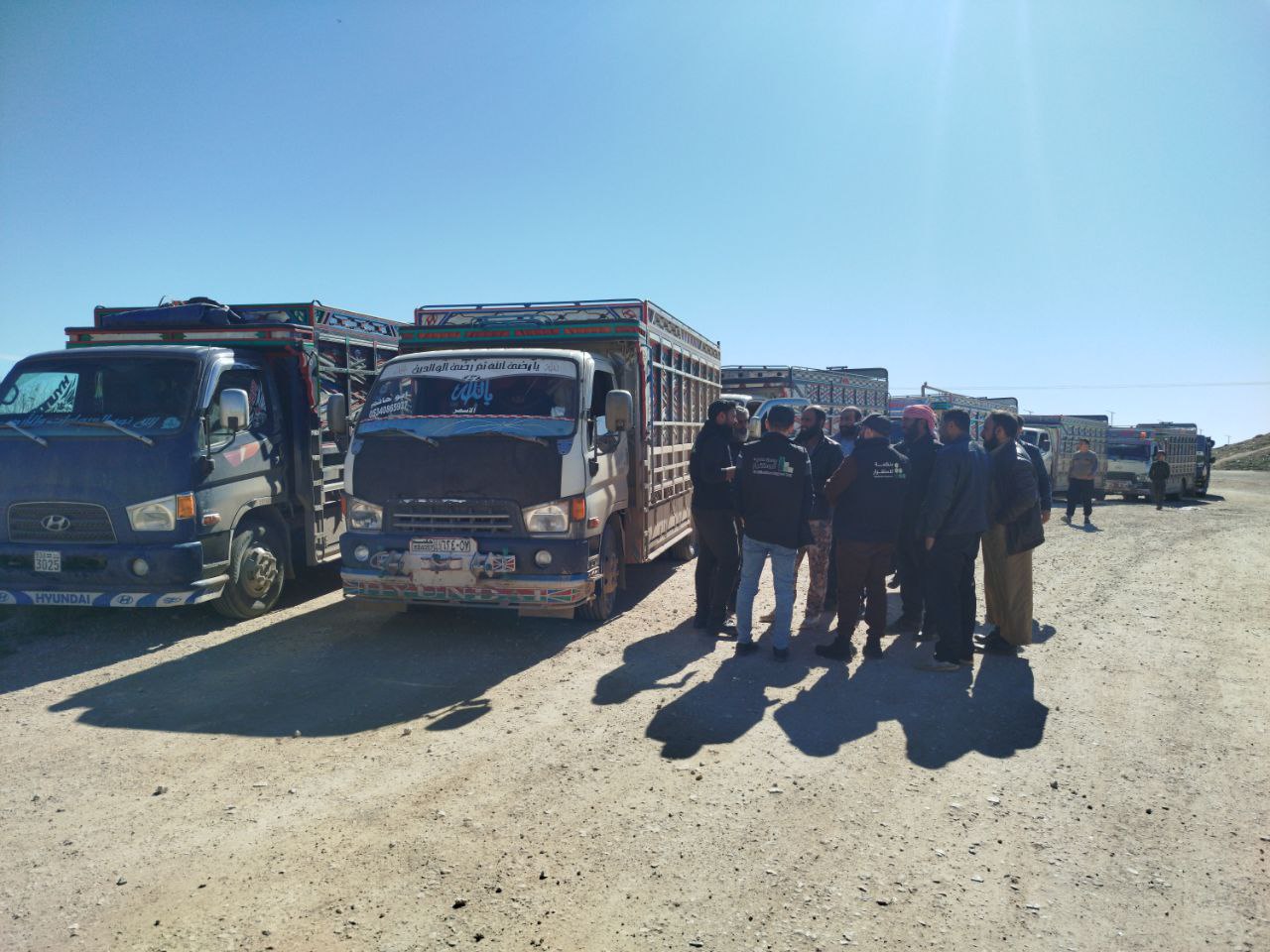
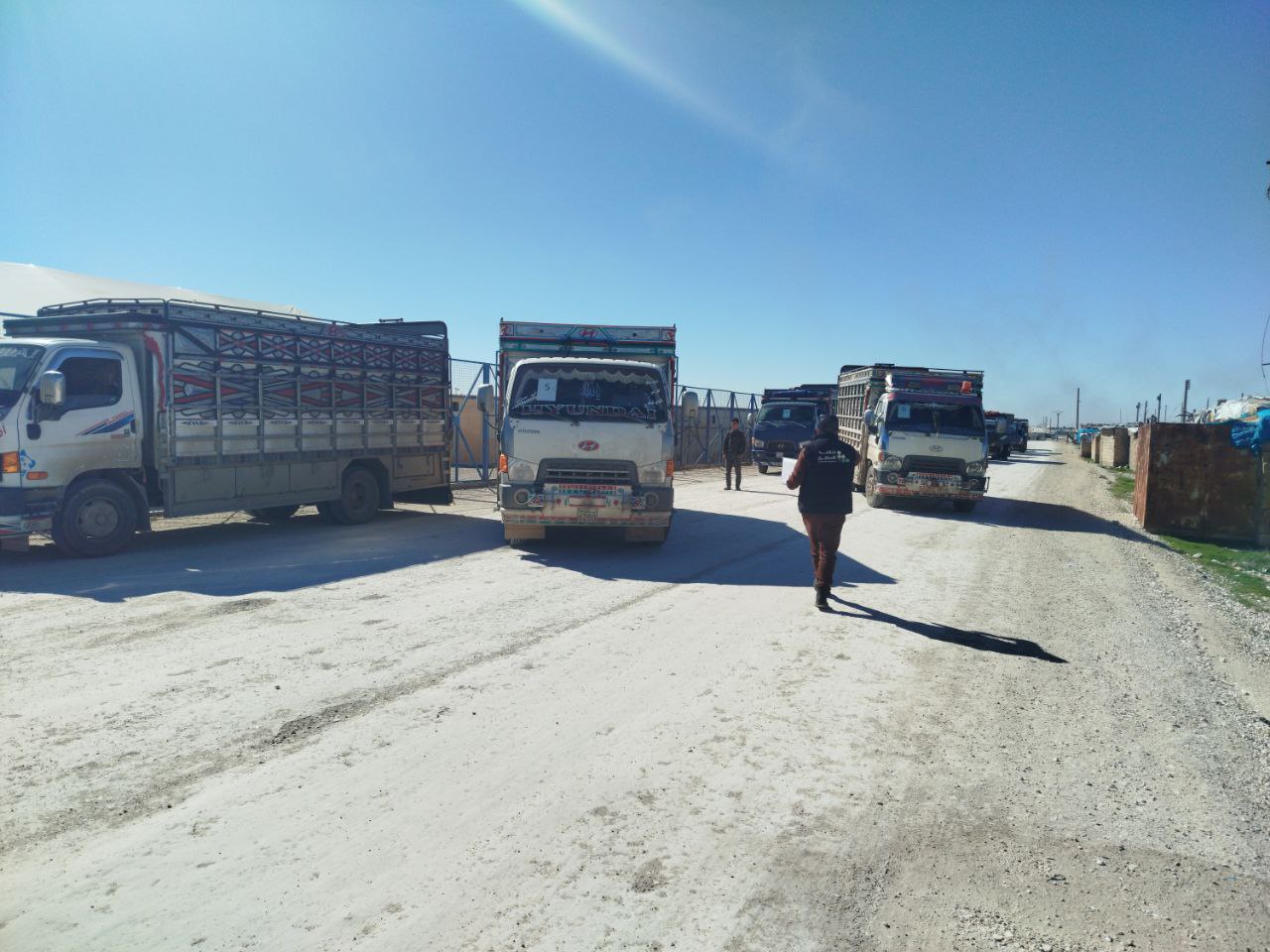
Supported by the UNHCR, the Stabilization Support Unit (SSU) continues the transfer and return operations of families from Al-Hol Camp to their homes and areas of origin. These efforts are carried out in coordination with the camp administration.
On Saturday, 21 February, the final convoy departed from Al-Hol Camp, marking the official closure of the camp.
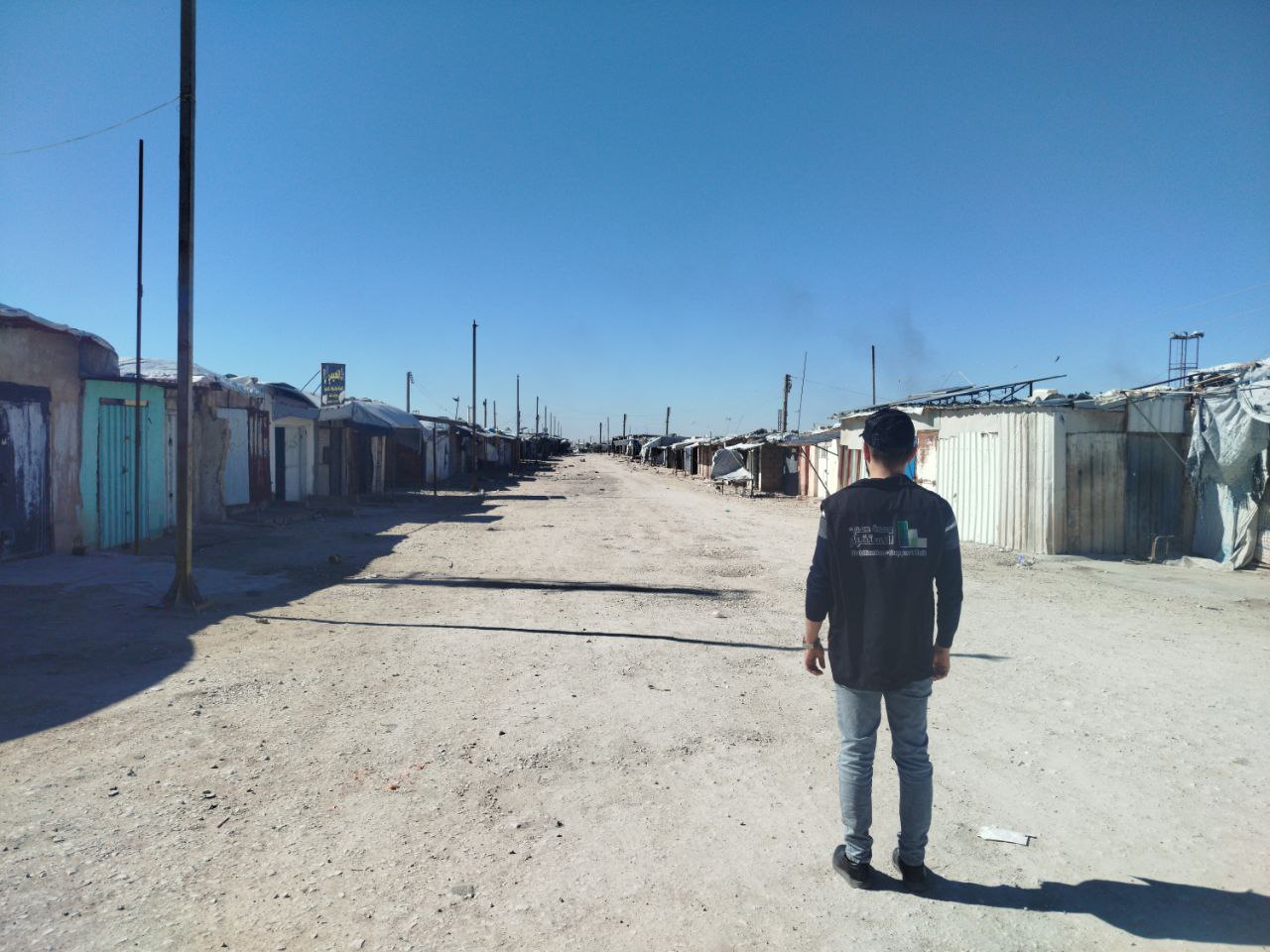
This step comes as part of reintegration support efforts, providing health, livelihood, and legal assistance to enhance family stability and help them resume their lives in a safe and dignified manner.