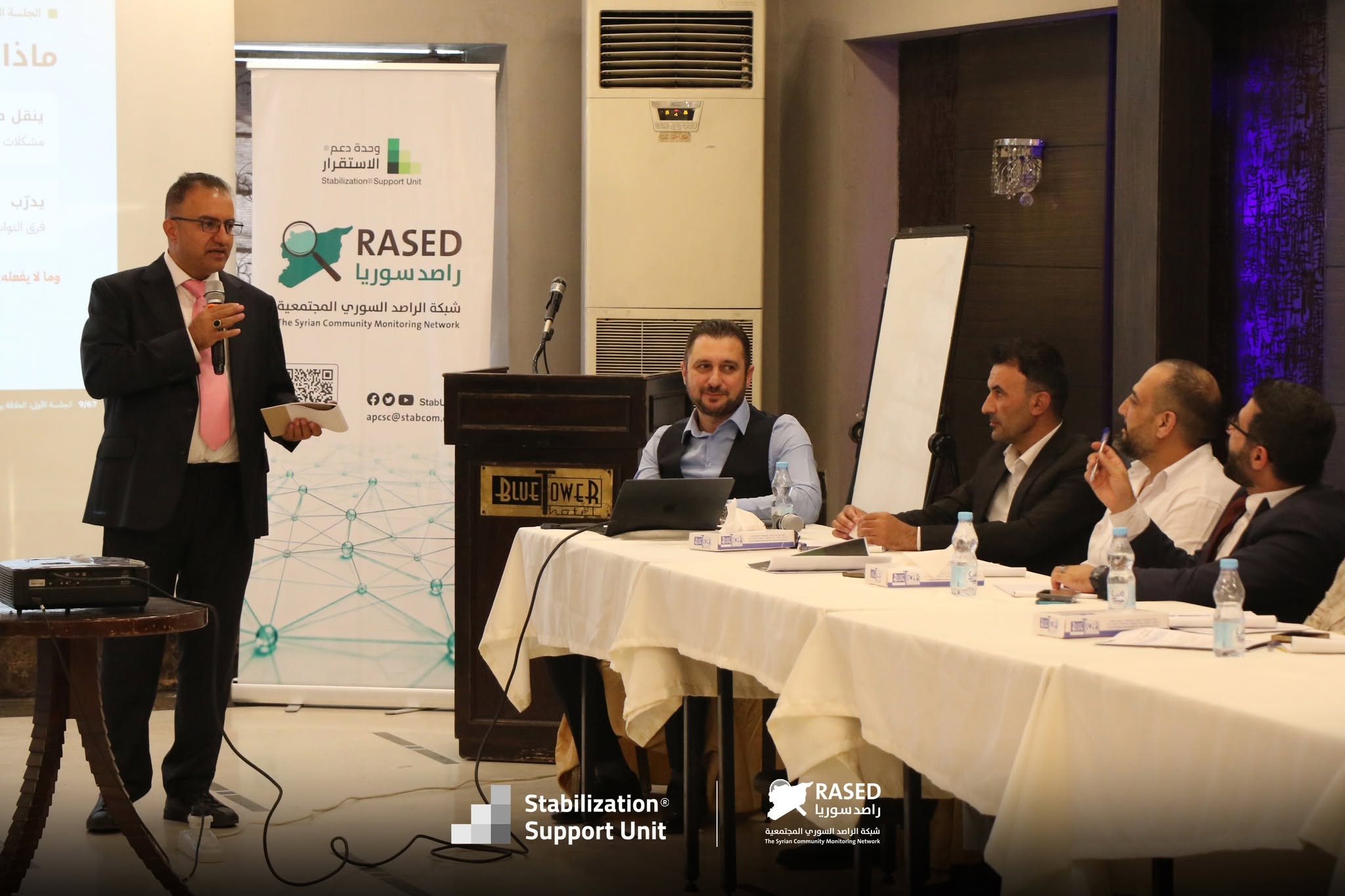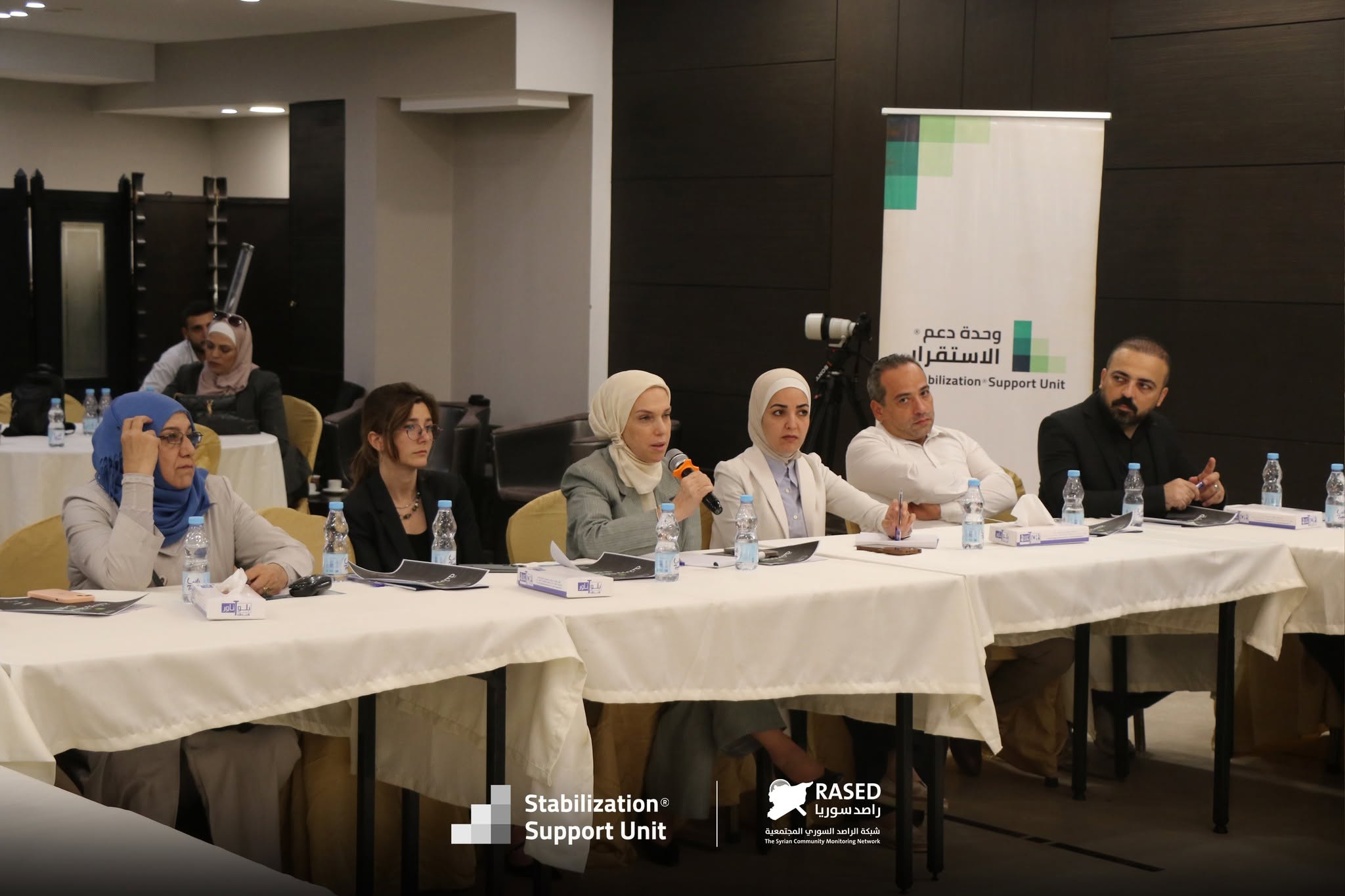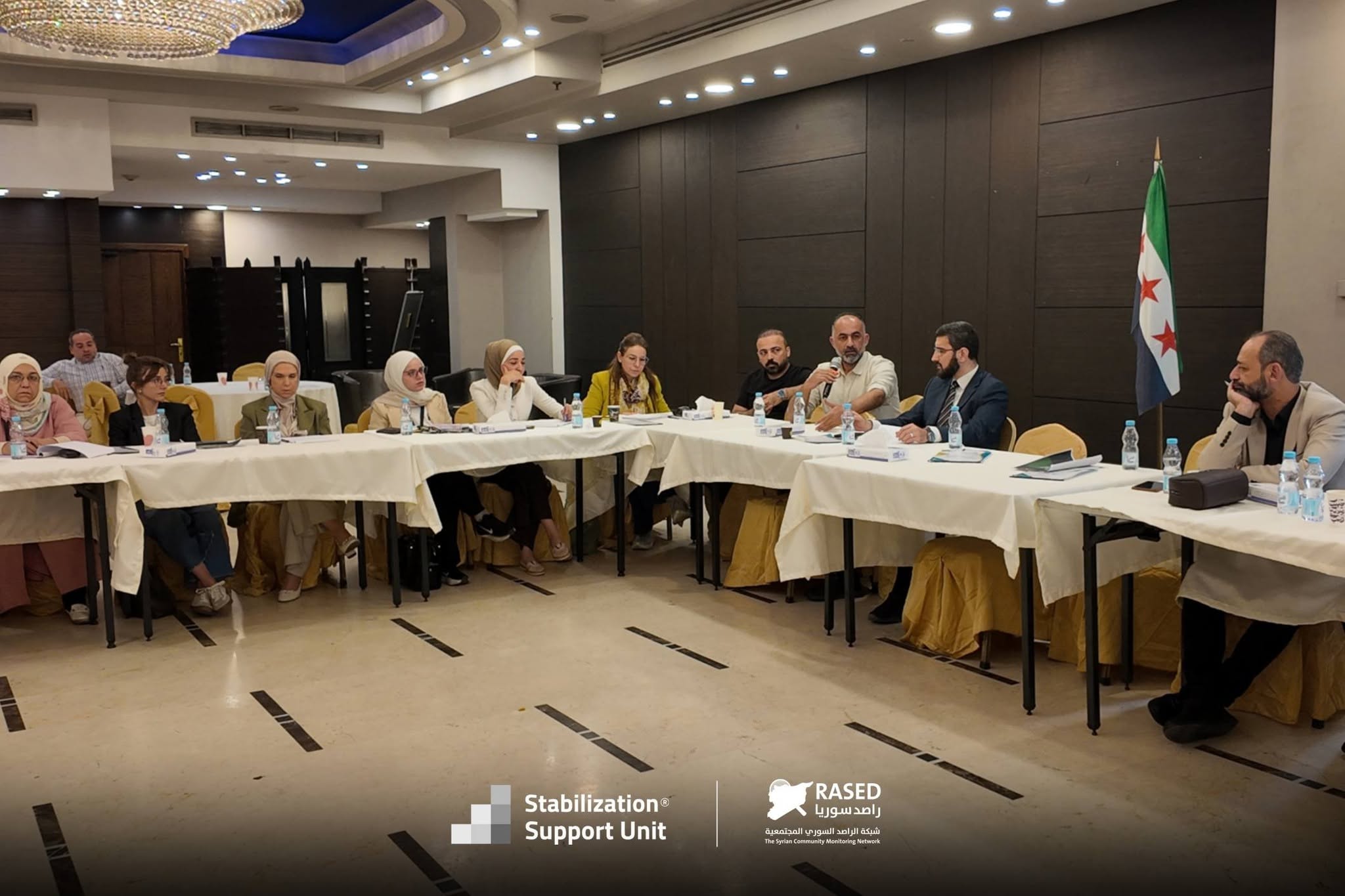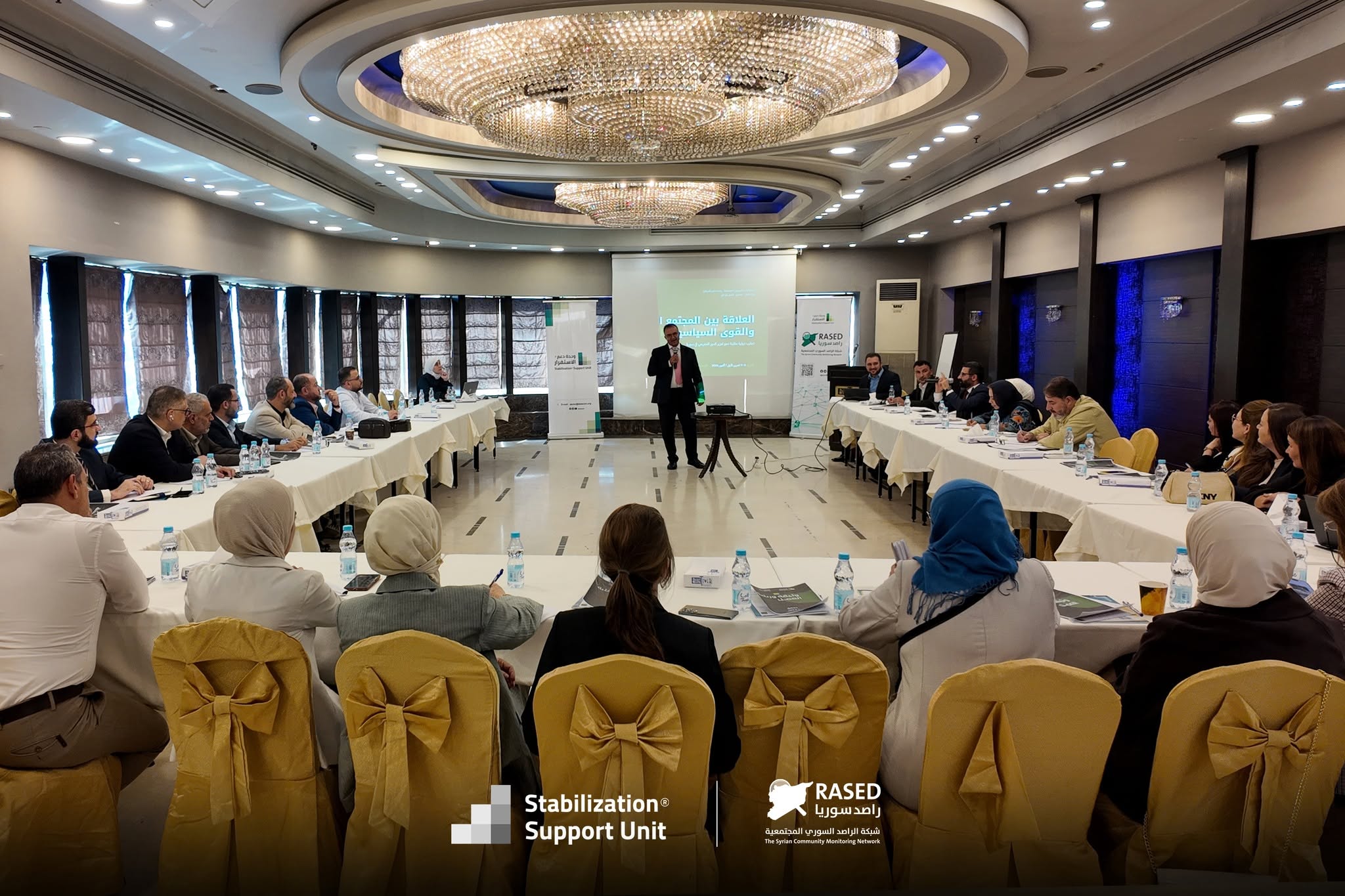
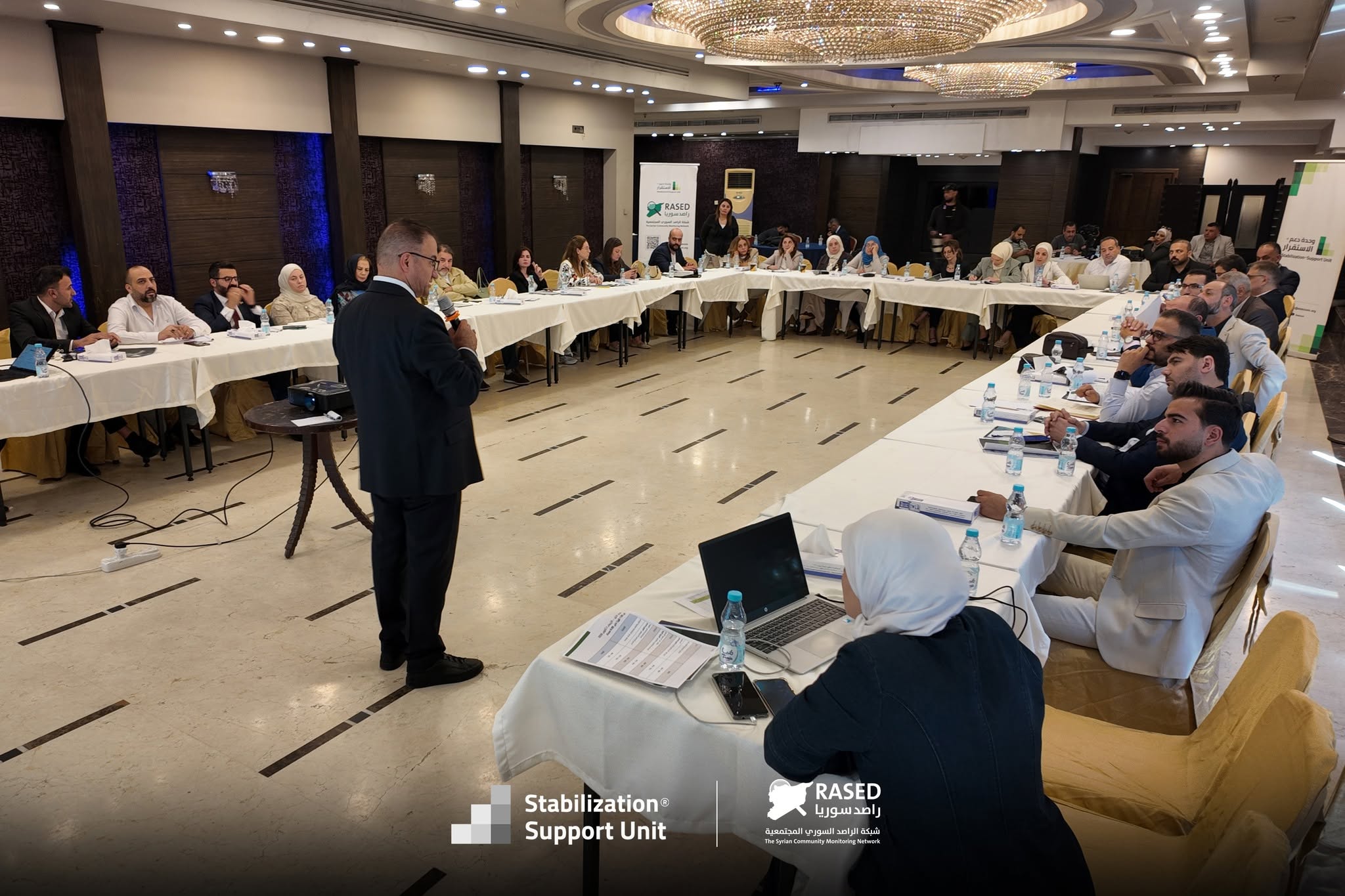
Damascus, 8 October 2026 — The workshop titled “The Relationship Between Civil Society, Political Forces, and Parliament: Comparative International Experiences to Strengthen the Legislative Role in Syria” concluded in Damascus. The two-day event, held on 7–8 October at the Blue Tower Hotel, was organized by the Syrian Community Monitoring Network (Raased Syria) within the Stabilization Support Unit (SSU), in partnership with Al-Hayat Center – RASED Jordan and the National Democratic Institute (NDI).
The workshop brought together members of the Syrian People’s Assembly, representatives of civil society organizations, activists from various Syrian regions, and experts. Its objective was to strengthen understanding of the mechanisms through which civil society, parliament, and political forces interact, while drawing on international experiences to develop legislative work and improve the quality of legislation.
The programme combined knowledge-sharing sessions, interactive discussions, and practical workshops, linking comparative experiences with local priorities and creating space for exchanging perspectives on how to build a more effective relationship between civil society and legislative institutions.
The first day addressed the nature of the relationship between civil society, political forces, and parliament, examining their respective roles in discussing public issues and developing legislation. An interactive discussion was also dedicated to identifying the legislative priorities of local communities and civil society in Syria, connecting the dialogue to citizens’ needs and the issues affecting their communities.
The programme also featured a presentation on Jordan’s experience in strengthening the legislative role, followed by an open discussion to draw lessons and explore how these experiences could be applied within the Syrian context.
The second day focused on comparative international experiences from Tunisia, Morocco, Eastern Europe, the Balkans, Latin America, and Asia. These presentations were followed by discussions comparing the different experiences and identifying lessons that could be relevant to Syria, while taking into account differences in political, institutional, and social contexts.
This session facilitated knowledge exchange on mechanisms for engagement between civil society and legislative institutions, while exploring options for expanding public participation and improving the quality of legislative work.
The workshop’s concluding sessions shifted towards practical application, with working groups developing proposals to strengthen the legislative role. The groups then presented their findings for discussion. This component connected locally identified priorities with insights drawn from international experiences, aiming to translate shared knowledge into proposals that could be further developed.
The programme also concluded with an agreement on a follow-up mechanism to sustain communication and support continued work on the proposals beyond the workshop.
The workshop provided an opportunity for direct engagement among parliamentarians, civil society representatives, activists, and experts, enabling them to exchange perspectives on legislative priorities and potential avenues for cooperation. The diversity of participants helped strengthen connections among the organizations and stakeholders involved, while allowing voices from different Syrian regions to bring their concerns into a shared discussion.
Overall, the workshop centred on three interconnected areas: transferring knowledge from comparative international experiences, discussing local legislative priorities, and developing proposals alongside a follow-up mechanism. Together, these areas lay the groundwork for stronger cooperation between civil society and legislative institutions and for ensuring that citizens’ needs are better reflected in discussions on legislation and public policy.